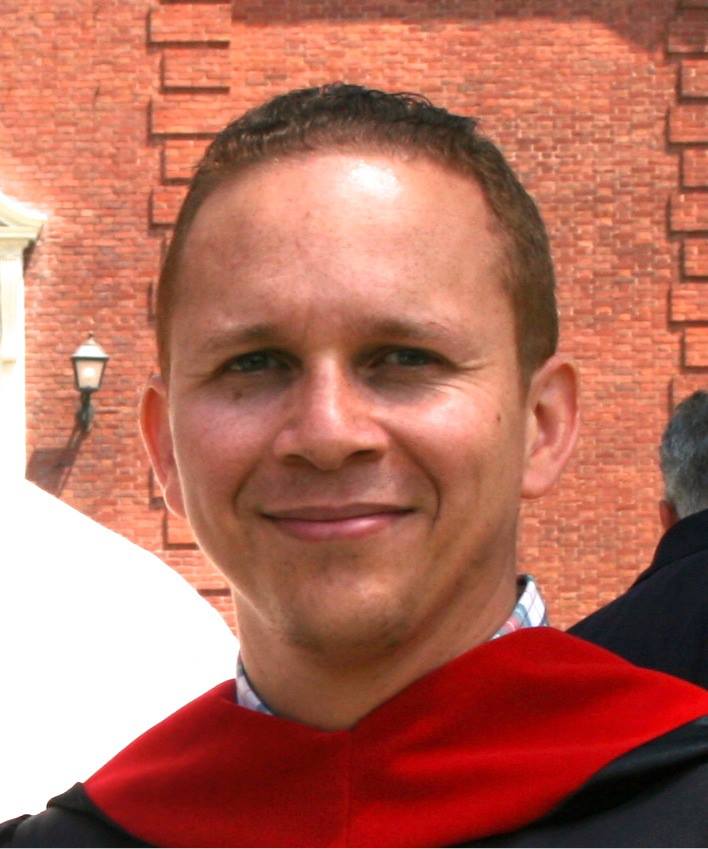
Samuel Caraballo
Summary: Samuel L. Caraballo grew up in Villa Prades, a small community in Puerto Rico plagued by violence and drug abuse. Despite the chaos, he found faith in Jesus Christ and was empowered by the Holy Spirit to create alternative spaces for young people in academics, sports, arts, and culture. The Holy Spirit's manifestation in Villa Prades was confrontational, challenging the social structures that kept people submerged in fatalism and pessimism. Today, Samuel is a graduate of Yale University, but he recognizes that his success is a result of the supernatural force that empowered the humble and simple people who shaped his life in Villa Prades. He calls for a new generation of Christians to be empowered by the Holy Spirit to confront the social structures that keep communities in despair.
Samuel L. Caraballo is a husband, father, evangelical minister, and musician committed to the 'Great Commission' of Jesus Christ to take the gospel to every creature everywhere. Samuel is a native of San Juan, Puerto Rico. He currently resides in the state of Massachusetts with his wife and three children. For more information about his ministerial plans and projects, you can visit his personal blog www.samuelcaraballo.com
Samuel is a graduate of Yale University Divinity School. He holds a BS in Biological Sciences from the University of Massachusetts and a Masters in Public Health from Boston University. He is also President and Founder of All Ability, Inc., a ministry initiative that promotes the inclusion of people with disabilities in the communities of faith.
An autobiographical essay by Samuel Caraballo: Could Something Good Come Out of Villa Prades?
In the 4th precinct of Río Piedras, Puerto Rico there is a small community called Villa Prades. That's where I grew up! It all began with a ministerial assignment from my father in 1983. At the age of 30, my father became the Pastor of the United Evangelical Church of that community. For twelve years we lived in a simple urbanization, without access control and without opulence. In Villa Prades I grew up surrounded by people with a high sense of dignity. People with their own dreams and stories. Unfortunately, the 1990s was a very bloody era for Villa Prades because there was also a small group of people dedicated to criminal activities. The drug wiped out many of the young people my age. Crack was in full swing and competition between the various drug spots [1] in the area was fierce. Such was the magnitude of the problem that several nights my family and I had to sleep on the floor (having a bed) because of the hail of bullets that came every time there was "war" between enemy "points." I still remember that Wednesday night where I couldn't attend the prayer service because of my homework. That night hitmen executed a young man whom I did not know in front of the pastoral house where I lived. The ruthless left the body right in front of the entrance of my house. The scariest thing was to see how 3 minutes later my dad returned from the prayer service. If he had arrived 3 minutes earlier, he would surely have met with execution. Those of us who lived there knew that hit men rarely left witnesses alive.
It is there in Villa Prades that I accepted the Lord Jesus as my Savior at the age of 10 on April 19, 1989 in a bell by Evangelista Alberto Motessi. I was baptized in the United Evangelical Church of Villa Prades on November 10, 1991. It was in the midst of problems, violence, and lack of resources that the Holy Spirit touched me and revealed to me the Only Begotten Son of God. It was the Holy Spirit and its manifestation on a small community of faith, who forged in me a vision of life very different from the chaos of my neighborhood. And when I say it was "The Holy Spirit" I don't mean an act of "magic" disconnected from reality. Rather, I refer to the transforming work of said Spirit in the lives of those who were in charge of caring for and forming me; my parents, my sister, my uncles, grandparents, the elders of the church, the Sunday school teachers, the counselors, and many others. In other words, The Holy Spirit is not a ghost that gravitates in outer space. The Holy Spirit is God himself who seeks to cover our corporeality and our social context with his supernatural essence pointing to the incarnation of God the Father in the person of Jesus Christ. This is how fallible people, with various limitations, were "empowered" by God to create opportunities for many young people like me. These spaces were opened not only in the spiritual sphere but also in the contextual sphere; in academics, in sports, in the arts, and in culture.
This spiritual move leads us to reevaluate the essence of "Pentecost" presented in Acts chapter two. In this story we see the Holy Spirit breaking into the social context of the disciples of Jesus. As a result of the powerful manifestation of the Spirit, the 120 cease to be the "invisible" and become "the Galileans". [“Are not all these who are speaking Galileans?” (vv.7)] This is a statement loaded with contextual meaning. The Galileans carried a negative social reputation, (John 1:46, 7:52). Nothing good came out of Galilee! Ironically, the Holy Spirit puts the marginalized at the epicenter of the second most powerful divine manifestation in human history, (Jesus' birth being the first). Said demonstration of power had a confrontational character, both physiological (Glosolalia exceeding the cognitive limits of the human being) and sociocultural (the Galileans becoming the spokespersons for the new divine order on earth). Therefore, the manifestation of the Holy Spirit is confrontational by nature.
In the case of Villa Prades, the work of the Holy Spirit was to impregnate the life of the church with the supernatural force of the Father and the Son in such a way that they could open alternative spaces in the midst of the chaos that prevails in society. And while the spectators wondered: "can something good come out of Villa Prades?" the Holy Spirit moved people like my mother to confront the inappropriate school system for children. That Spirit led my father to confront the criminals who plagued the community. This divine force inspired our missionary Zaida Aquino to become certified as a registered nurse to serve the sick in the community. This natural force inspired Edwin Montalvo to form the “Un Diamante para Cristo” children's club. The power of the Spirit moved Ramona Lebour and Amada Rivera to intercede and work in the hamlets of the area. That same Spirit led the United Evangelical Church of Villa Prades to create the Association of Family and Friends with AIDS Patients (AFAPS) in a historical moment where "HIV" was a taboo in our society.
Can something good come out of Villa Prades? Today, after many years of struggle, that same Holy Spirit that moved in Villa Prades allows me to graduate from Yale University. But what the people of Yale and those outside must understand is that the space and the opportunity to be here was not given to me, nor was it given to me by any other created being; but rather the supernatural "empowerment" of the Holy Spirit in the lives of the humble and simple people who shaped my life in my years in Villa Prades. I am just one of the many beneficiaries of this miraculous move.
Today, a new generation of Christians yearn for substantial changes in our communities. However, the materialization of change cannot take place unless a supernatural force “empowers” us again and gives us a new alternative vision of life that confronts the social structures that keep our people submerged in fatalism and pessimism. A vision that does not monopolize spirituality on the academic, cultural, sports, and social transformation that our peoples so need.
Prayer: We praise you Holy Spirit because you are God and in your strength is our hope and our salvation. Keep synchronizing our lives to your divine frequency.
[1] "point" is the term used to refer to the geographical place where the transactions for the sale and distribution of illicit drugs of a certain narco-gang are carried out.
Publications
Let's Run to Win!
Special Olympics bring joy to the lives of people with intellectual disabilities who are often looked down upon by society. Winning in these competitions means helping others and celebrating camaraderie. Scripture uses sports metaphors to describe the Christian life, and we win by helping others reach the goal, which is Christ. Join the effort of All Ability ministry to encourage inclusion and participation of people with disabilities in faith communities. Let's run with patience, but above all, let's run to win!
Surrendering Our Personal Agendas
In Matthew 22:15-22, the Pharisees try to trap Jesus with a question about whether or not it is allowed to pay taxes to Caesar. They wanted Jesus to say "no" because they believed that anyone sent by God would support the overthrow of the Roman occupation of Israel. However, Jesus responds by saying to give to Caesar what belongs to Caesar and to God what belongs to God. This means that Jesus did not see any value in the coin because his responsibility was to do the will of the Father who sent him. The passage invites us to submit ourselves entirely to God's will without any hidden personal agendas. The author concludes with the lyrics of a hymn that expresses surrender to Christ.
Cheer Up, Young Man, but ...
Ecclesiastes 11:9 offers a warning and advice for young people. Firstly, it reminds them that God is sovereign over all stages of life, not just something to be turned to in old age. Secondly, it calls for caution and discernment when pursuing pleasure in youth, as all actions will be judged by God. The key to living a life according to God is discernment, which can be achieved by keeping the word of God, materialized and fulfilled in Jesus Christ. Despite the judgment of God, forgiveness and transformation can be found in Jesus. Therefore, young people should rejoice in their youth, but keep in mind the direction offered by Jesus.
Being a Neighbor - the Question Is Not Who? but How?
Jesus' pedagogical sagacity is impressive during his ministry in Galilee. In Luke 10:25-37, Jesus uses the parable of the good Samaritan to teach that it's not about identifying who our neighbor is, but rather being a neighbor to those in need. The priest and Levite identified who their neighbor was but didn't act on it, while the Samaritan was moved by compassion and took the risk of being a neighbor to the stranger. Jesus invites us to be the kind of neighbor he was, but it's only possible through the regenerative power of the Holy Spirit. We should focus on being a neighbor instead of identifying who our neighbor is.
Our Priorities
Paul advises Timothy not to prioritize wealth and possessions, as it can lead to perpetual dissatisfaction and a neglect of God's precepts. This ideology also affects those who ignore the evils that affect vulnerable communities. The value of every human being is incalculable, regardless of their wealth. Paul presents justice, piety, faith, love, constancy, and humility as an antidote to the corrupt vision of the world towards human life. We are called to challenge the way in which the "world" assigns value to human life and strive for a more equitable future for all, especially the poor and marginalized. In doing so, we honor the limitless sacrifice of Jesus Christ for all humanity.
God's Providence in All Aspects of Our Lives
The author's son wanted Thomas the Train toys for his birthday, but they couldn't afford them due to financial struggles. However, his wife found a bag of 27 Thomas trains for $7 at a thrift store on her birthday. This small act of providence gave the family hope and courage to fight their other battles. The author encourages readers to have faith in God's sovereignty and not give up in difficult times.
The Consequences of Our Decisions and Actions
The story of Jonah teaches us about the consequences of our decisions and actions. Jonah's disobedience had consequences for those around him, just as the collective decisions and actions of the people of Nineveh had consequences for everyone in the city. However, God's character is one of mercy and grace, and he offers redemption to all human beings through the sacrifice of Christ. To fulfill God's will for our lives, we must be willing to renew our minds and change our actions. This may be an individual or communal challenge, but we must allow the Holy Spirit to work in us to synchronize our decisions and actions with God's sovereignty.
The Lord's Prayer and Its Implications for Our Lives
The "Our Father" prayer is important in Christian faith as it was the model Jesus used to teach his disciples to pray. The prayer has an invocation and seven requests, three focused on God and four on human nature. The invocation highlights the filial relationship between believers and God. The three requests focused on God highlight the importance of giving honor to God's name, committing to furthering God's kingdom on earth, and embracing God's plan for our lives. The four requests focused on human nature emphasize our dependence on God's provision, forgiveness, and guidance to avoid temptation and evil. It is important to take time to reflect on the implications of this prayer with other believers in our community.
A King Has Been Born to Us
The Magi sought a "king" in the palace but found Jesus in a manger, revealing the semantic transformation of the concept of "king" defined by humility, simplicity, marginalization, fragility, and vulnerability. Today, we must not make the same mistake and seek Jesus in the comforts and riches of the world. Christ is a king born in the "mangers" of this world, where the power of God is perfected in vulnerabilities and disabilities. We are called to live the example of our King and pay attention to the dispossessed and marginalized, honoring the example of Jesus.
Give Them Something to Eat!
In Luke 9:12-17, Jesus feeds more than 5000 people with just five loaves and two fish. This miracle shows that Jesus' ministry was not just about meeting spiritual needs, but also bodily needs. As Christians, we are called to follow this example and help mitigate the basic needs of our neighbors, such as providing adequate food, housing, health, and education. Even if we feel like we only have a little to offer, Christ can multiply our efforts to make a significant impact. We are called to proclaim a comprehensive gospel that meets all aspects of people's lives.
So Let's Go to Bethlehem
The shepherds in the Gospel of Luke made an important decision to move towards Bethlehem to see baby Jesus. They became co-participants in God's divine plan for humanity by taking the initiative to go to the manger. Every announcement and call from God can produce mishaps in our routine, but with faith and courage, we can participate in the message entrusted to us. The Holy Spirit is present and ready to give us strength to move forward in faith and courage. Let us move firmly and with determination towards Bethlehem.
Boa: My Uncle Pichi Key
The author recalls a funny incident with his uncle who repeated the word "BOA" in a funny tone. The author learns that "BOA" stood for Bible, Prayer, and Fasting, which was used in his uncle's faith community as an acronym to refer to the three essential components of the Pentecostal faith. The author realizes that these practices are still essential for Christians, especially pastors, and enrolls in the "BOA Institute" to reach new levels in his walk with God.
A Call to Empathy: Reflecting the Light of Christ in the Lives of People with Disabilities
In the face of the uncertainty experienced by families of people with disabilities, the Church is called to reflect the light of Christ with empathy, not sorrow or pity. Empathy means sharing emotionally in our neighbors’ joys, sorrows, and needs; it moves us to walk alongside individuals and their caregivers. Because this care demands constant effort and may keep them away from the congregation, we need a proactive, intentional, and creative response from both pastors and laypeople. We can make it easier for them to attend, accompany them to appointments, visit them, ensure accessibility, and teach others how to interact with warmth and care. The goal is not to meet every need, but to build an inclusive community that walks alongside these families through the different stages of life.
Samuel Caraballo: Testimony of Healing
At the age of twelve, I was diagnosed with a congenital kidney disease that had already caused the deaths of family members. During a prayer service in Puerto Rico, we prayed for healing, and twelve years later, I have no kidney problems whatsoever. This answer to prayer confirms that the Lord has plans for our lives beyond illness and that he can heal, break chains, and give us abundant life. He does not promise a life without pain or problems, but rather that he will walk beside us through every situation. Therefore, we can trust him and praise him at all times, both in sickness and in joy, recognizing him as the giver of life and the source of salvation, hope, and joy.
Featured Speakers

Dr. Roberto Miranda
Resilience: Competent in Christ
In this sermon, the speaker continues the theme of resilience and focuses on the ability to face challenges in life, even when they seem too big or in...
Resilience: Calls for Transformation
The sermon is about resilience, how to be resistant to adversity, and how to use pain and life struggles to become stronger. The Apostle Paul talks ab...
Living in the Power of the Resurrection
The resurrection of Jesus Christ is the crowning event of the drama of salvation. It is the basis of everything in Christianity and gives hope for the...
Faustino de Jesús Zamora Vargas
Supernatural
We are designed to experience the supernatural, but this comes from truly knowing God personally, not just intellectually, by actively engaging with H...
A Touch from God
For a long time I have prayed for those around me, but I often found myself selectively wondering whom God truly wanted to save. However, I realized t...
Decisions in the Fear of God
Believing in God's Word renews the mind and frees us from guilt and sin. We have a new identity in Christ and are no longer slaves to sin. However, de...
Charles Spurgeon
God's Precious Treasure: You!
My beloved friends, what a grand paradox unfolds: God's truth reveals His greatest power most brilliantly displayed in our deepest weakness. Though we...
Kept from the Evil One
Beloved, we hear two voices of keeping: the Father’s promise and the Son’s prayer, both flowing from one heart of love. Our preservation comes not fro...
Hark! the Opened Ear
My beloved friends, the very root of all true faith and enduring obedience is the blessed posture of receptive listening, an "opened ear" to God's voi...
Omar Soto
Lord, Let Your Light Shine on Our Plans
In Psalm 90:16-17, the writer asks God to bless their plans and bring favor and glory to their work. This type of prayer can be beneficial in addition...
Finding Comfort During the Day
In this passage from First Thessalonians, the Apostle Paul expresses his impatience and desire to see his spiritual children in Thessalonica, despite ...
Our Responsibility - Prepare the Way for the Lord
The passage from Isaiah 40 speaks of preparing a way for the Lord in the deserts of our lives. It calls for reversing things, going in a new direction...
Milagros García Klibansky
I Am
Have you ever wondered who you are? In the Gospels, Jesus repeatedly declares "I am" and defines his identity as the bread of life, the light of the w...
Planning
We often make plans without considering God's will, and when they don't work out, we become frustrated and fight against the current. However, when we...
The Hug of the Father
When we hit rock bottom and feel like we can't continue, open arms are waiting for us at the cross. God will receive us no matter our past or circumst...

Gregory Bishop
Love and Respect in Marriage
We are discussing Ephesians 5 and the importance of living a life filled with the Holy Spirit. This includes purposefully seeking God with a spirit of...
A Life That Shines
The book of Ephesians reminds us that we are a blessed people, with every spiritual blessing in heavenly places in Christ Jesus. We are spiritually al...
The Gift of a Tender Heart Towards Others
The Book of Ephesians begins by saying that we are blessed in the spiritual, heavenly, and supernatural environment, but also ends by saying that we h...

Samuel Acevedo
Christmas - the God of the Impossible
In Luke 1:46-49, Mary sings a song of victory and war, known as the Magnificat. She exalts God for looking upon her baseness and promises that all gen...
God Rewards Those Who Seek Him
The message discusses Hebrews 11:6, which states that it is impossible to please God without faith and that those who seek God will be rewarded. The m...
Be Still, and Know That I Am God
In Psalm 46, the key text of Palm Sunday, the prophetic Word of Zechariah 9:9 is echoed. The message is about waiting for our King and Redeemer to res...