Haggai 1:2–7
Author
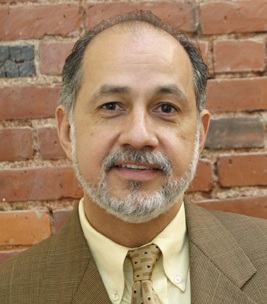
Dr. Roberto Miranda
Summary: Our lives unfold in three dimensions of time. First, we are engaged in a personal process of formation: God continues his work in us through all our experiences, although painful ones require sensitive support and can only be understood with perspective. Redeeming the time means discerning how God guides each stage and decision. Second, we must understand the present social moment. Consumerism creates needs, multiplies options, and encourages us to do whatever we want, displacing the question of what God asks of us. We must therefore examine our priorities, live with firm convictions, and relate wisely to those who do not know Christ. Third, reflection must lead to decisive and obedient action. Doing God’s will may bring anguish and is not always recognized by a feeling of peace. Nor is it enough to become emotional when God speaks: we must take his word to heart, also using reason and logic to understand it and respond. By reflecting on our ways, giving God his rightful place, and acting according to his call, our lives can have an impact on those around us.
We have already offered our praise and worship, and the Lord has definitely begun to minister to our hearts, so let us now prepare ourselves to hear the Word and see how the Lord guides us through His Word.
I would like you to turn with me to the book of Haggai, chapter 1. I am going to begin reading from verse 2 through verse 7, Haggai, chapter 1. It is time, brothers and sisters, isn’t it? It is time. We hear that phrase many times: It is time. And today I would like to reflect with you on some aspects of that word time, and on how we can divide the word time into three different dimensions with respect to our lives.
This is what the Word of the Lord says. I will read, and you can follow along. Verse 2 says: “...this is what the Lord Almighty says.” It is an oracle. A declaration like that already shows that it is a prophetic oracle, that is, a prophetic word coming to the people. It says: “These people claim that the proper time has not yet come to rebuild the house of the Lord.” And this word of the Lord also came through the prophet Haggai, saying: “Is it the proper time for you to live in paneled houses while this house lies in ruins? Once again, this is what the Lord Almighty says: Give thought to your ways. You sow much but harvest little; you eat but are not satisfied; you drink but never have your fill; you put on clothes but cannot keep warm; and the laborer’s wages disappear as though through a bag with a hole in it. Once again, this is what the Lord says: Give careful thought to your ways.” I repeat that phrase once more: Give careful thought to your ways.
Brothers and sisters, I recognize that many things in our lives are measured by time. Time with respect to our individual lives, in which we are going through a process, a season. Time with respect to the present moment in which we are living in today’s society. And time also with respect to our taking certain necessary actions that we must take.
I had already shared part of this message at the men’s retreat. I also shared another part with the youth ministry, but now I want to bring this reflection and share it with all of you, the entire church. If you noticed, in the passage we read, the prophet Haggai is issuing a call from God to the people of Israel concerning the priorities in their lives. The time he is speaking about is when the people of Israel had returned to the land of Jerusalem after having spent a long time in exile. Imagine returning to a place that has been destroyed by enemies. What is the first thing you would want to do? You see what used to be your house, which is now nothing but ashes and is lying completely flattened on the ground, and your natural tendency is to rebuild your own house. Obviously, you need somewhere to live; therefore, out of a sense of survival, you will want to build the place where you are going to dwell.
But at this time, the people of Israel were devoting too much attention to their own affairs and were neglecting the house of the Lord, the temple. For the people of Israel, the temple represented the heart of their society; that was how it had been before they went into exile. The rest of the entire city was built around the temple. Now, judging by how their priorities were arranged after the people returned from exile, it seems that they had undergone a change. Instead of giving primary attention to the house of the Lord and to what it represented in their lives, they were giving greater attention to their own personal lives. And you know what? I am not saying that it is wrong to pay attention to your own life and to what your family and your home mean, but there is a principle being communicated here through God that we must understand, and that is the principle of priorities. How have we arranged the priorities of our lives? What comes first, second, and third? And how is the time of our lives influencing those priorities in one way or another?
I want to speak to you about that first dimension, about the time of our lives. The Bible says in Philippians 1:6—and, in fact, we had sung about it—that God has begun a work in us that He will complete until the day Jesus returns. Each one of us is a work of art in the hands of the Lord.
Tell the person next to you: You are a work of art. I do not know whether you are a work of art made of clay, iron, or paint, or what, but you are a work of art. But I can tell you for certain that the artist who is working on us is an expert in all those materials. So you can rest easy.
There are artists who dedicate themselves only to painting, and if you give them a piece of iron, all they will do is melt it completely. But God, as our great artist, is an expert at working with every kind of material. And each of you is one of those materials. God is doing such a beautiful work in each of you that when the moment of its perfection arrives, I want to be there to see it.
But this means, my brothers and sisters, that our lives—everything we go through, the good, the bad, and the really bad—have everything to do with the Lord’s timing and with how He is working in each one of us. And although many times, when we have negative experiences, we tend to view those experiences as though our lives were a disaster—as though our lives were worthless, had no meaning, no direction, and no purpose—simply because we see all this negativity around us. If I see that someone tells me I am a zero on the left, then I am going to spend my whole life thinking that I am a zero on the left, worth nothing. But if someone tells me, “You are a zero on the right, and you are going to add a great deal of value to the whole equation,” then I am going to live that way as well. I think accountants understand that very well, don’t they?
Now, brothers and sisters, I believe that we need to develop a very deep appreciation for all those experiences in our lives. And I know that I am saying something very radical here, because I imagine myself telling someone whose child may have been killed in an accident, “You know what? You need to develop an appreciation for what happened.” How could I tell that person that? They would slap me if I said that. Obviously, there is a proper moment, place, and time for saying these things. I believe that when a person has gone through such a process, the best thing to do at the time is simply to offer the silent presence of companionship. Share a prayer for strength. It is not a matter of coming up with an entire essay’s worth of things to say to the person in that situation. But once the appropriate time has passed and you can look back with that person and see how God has been at work at different stages in that person’s life, then you can indeed say that there is an appreciation for all of it. But all of this means, my brothers and sisters, that our lives are a complete process of formation.
You may have a list of studies, experiences, and jobs, but despite all that, your life is still being formed. All of this marks a season, and within that season there comes a time when we must reflect. And what we must reflect on is how we are living our lives from day to day.
There is a version of the Bible that says that we must redeem the time well. Redeeming the time has much to do with discerning the moment in which we are living and seeking to understand how God is directing each stage and decision in our lives. And that is a process that must remain constant in each of your individual lives.
That process will then lead you to the second dimension I want to discuss with you regarding time. The way you discern your personal life will be greatly influenced by the time and moment in which we are living in society today. So the first aspect of time is the aspect of your personal life, and the second is time with respect to the present moment in which we live.
There is a very interesting passage in the book of Colossians. Colossians chapter 4, beginning with verse 3. Paul is speaking to the Colossians and tells them the following: “At the same time, intercede for us so that God may open doors for us to proclaim the Word. Pray that I may proclaim it clearly, as I should.” Paul is asking the Colossian church to intercede for him so that he may know how to discern the proper moment and time to communicate the Word of God and do so in the most appropriate way. Then Paul speaks to the church and says in verse 5: “Behave wisely toward those who do not believe in Christ.” Exactly—in other versions it says, “Watch how you conduct yourselves toward outsiders,” meaning those who do not know Jesus.
Look at what it says: “Make the most of every opportunity. Let your conversation always be pleasant and in good taste, so that you will know how to answer everyone.” You know what, my brothers and sisters? As we meditate on our path, on our personal lives, and on the time in which we find ourselves, that will then influence how we meditate and reflect on the times in which we are now living. I was sharing with the group this morning that the society we live in today is distinguished by many things, but there is one that is very important: consumerism. I know that politics is a very important factor that defines how many people govern their lives. Intellectualism or higher education is another means by which other people define their lives. There are also those who live by a philosophy that I do not like at all: the “whatever” philosophy—whatever comes along, I just go with it. They are the ones who are carried along by every wind of philosophy in the world.
But you know what? There is a large percentage of people whose lives are defined by consumerism. And I can give you a very simple example. I often use Pastor Greg as an example in this regard. Pastor Greg had one of the first laptops that came out. I think he bought it in ’96, if I am not mistaken, or sometime around then. Obviously, it has a black-and-white screen. I think the screen is about 13 inches, if I am not mistaken. But the thing is, my brothers and sisters, that his computer is now completely obsolete. Sometimes it does not even work; it will not even turn on. But look at how that kind of industry operates: one month they give you a product, and at that moment it is the latest and greatest—I have to get it. Three months later they add another component that makes it better, and it costs you 300 dollars more. Perhaps it has a little more memory or at least a color screen. And the point is that they sell it to you as the latest and greatest, making whatever you already had seem completely useless, so now you have to get this new one.
A laptop used to weigh perhaps 21 pounds; now that one weighs 5 pounds, they tell you, “Look, now you have to get one that weighs 5 pounds.” Right there they are charging you another 1,000 dollars simply because it weighs less. But the point is that this entire dynamic of consumerism is creating needs within us that we do not really have. And you can see that in every area, even in toothpaste. Colgate used to have only one flavor and one purpose, which was to clean your mouth and keep you from getting cavities, right? Now Colgate has about six or seven different toothpastes, supposedly to give you better breath, keep you from getting tartar, prevent your gums from becoming infected, and on and on. So when a person goes shopping, they face a dilemma, because all they want is a toothpaste to clean their teeth, but then they find themselves wondering, “Okay, what do I want? Do I want my mouth to smell good, my gums not to get infected, or fresh breath for 24 hours? Which one should I choose?” Look at this last example; look at this: I do not know how many of you have gone into a Walgreens or a CBS or some other pharmacy, but when you go to pay at the register, I do not know whether you have noticed that directly in front of you is a section containing every kind of cigarette imaginable, and right next to it are all the methods imaginable for avoiding smoking or quitting smoking.
So a person who may be struggling with the habit or addiction of smoking goes to pay while thinking, “I want to quit smoking,” and when they look straight ahead, they face a dilemma. Consumerism places two alternatives directly in front of them: you have Nicorette gum, patches, or injections to help you quit smoking; or you have Winston, Marlboro, and all the other brands out there, with peppermint and cinnamon too. Which way are we going to go? In other words, American industry needs to make up its mind. That is what I tell myself. I mean, if you see that cigarettes harm people, why put someone in that predicament? If you are going to make a product to help people quit smoking, then just sell that product. Or if you are going to sell a product that will finish killing someone, then sell it, but do not put both choices in front of them.
And, brothers and sisters, that is the time in which we are living. Each one of you has a choice before you. Everything is laid out there in front of you so that you can decide what you are going to do with your life. They present it to you in every color and every flavor so that you can try them all and then make a decision.
There is a television commercial about an asthma pill from Avir, I think that is what it is called, and the thing is that the little song they play in the background says: Do what you want, go where you want.... It is as if an asthma-pill commercial were playing a subliminal message in the background telling you: you have the right to do whatever you want and to go wherever you want. And brothers and sisters, without our realizing it, those messages slip by unnoticed like that and remain engraved in our minds. And many times, that mindset of the world in which we live chokes out the mindset God wants us to have, which is to ask ourselves: Lord, what is it that You want and ask of me?
It happens very subtly; little by little it draws you in until you completely lose your sensitivity to ask yourself: Lord, what do You ask of me?
And because this is the time in which we are living, I turn once again to that passage from Haggai, where God Himself asks us: you must consider your ways. The Lord is telling us: look, consider your priorities and where I am in all those priorities. It may sound like something we learned in kindergarten, but, brothers and sisters, it remains a message and a principle just as effective now as it was when we first learned it, and it will continue to be so.
That then leads me to that third dimension regarding time: it is now time for us to take action. If a mother asks a son or daughter, “Can you wash the dishes?” and she has to wait three hours, and then after three hours the child washes the dishes, what do you say to the child? Wow, it was about time, it was time..... Brothers and sisters, it is all about time. Right now, we are in a time when we must take firmer and more decisive actions concerning what God asks of us. And yes, they are actions that you must take concerning your family lives, actions concerning your individual lives, actions concerning how you are going to take your place in society, but also actions concerning how I am going to respond to what God is asking of me. No matter how difficult it may be, what answer am I going to give God? I always remember this, and I have mentioned it before: doing the will of God is not easy at all. And many people think that the way I discern whether I am in the will of God is by whether I have peace in my heart. But do you know what? Peace will not always be an essential or determining factor in knowing whether or not I am in the will of God.
Look at Jesus’ example when He was in Gethsemane. When He was there, weeping and lying on the ground, saying, “Lord, let this cup pass from Me.” Do you think Jesus had peace at that moment? I believe what Jesus had was very deep anguish, which was being reflected in drops of blood running down His face. Therefore, brothers and sisters, I recognize that we, as individuals, as families, and as a church, are approaching a time when God will begin to ask something of us. God will begin to call many of you to reach a level beyond what you may have experienced up to this day. And, brothers and sisters, I hope that when that moment comes, we will be able to obey His call.
Brothers and sisters, this may seem like a very familiar message. Perhaps you are saying to yourself, “Omar, I have already heard that message so many, many times that I am even bored of hearing it again.” But I rebuke that thought right now. Do you know why? Because I am speaking to you about principles from the Word of God that never lose their meaning or their direction. And these are principles that have the capacity to shape your life in a way that you cannot do on your own. It is only when we submit to those principles of the Word of God that we can truly experience that blessing from God which comes out of nowhere and does something new in our lives, leaving us saying, “Wow! This truly is from God.” We certainly must follow what this passage says; we must take time to reflect. But that time must not remain mere reflection; rather, it must lead me to take actions in my life that I need to take.
Look how interesting this is. In chapter 2 of Haggai—I am going to close with this, brothers and sisters—in chapter 2 of Haggai, verse 15, look at what it says: “...now then, consider”—where?—“in your heart.” He is no longer telling you to consider your ways; now He is asking you to consider in your heart. I had to stop and analyze something here. Do you know what? It was a prophetic word, right? God was speaking a prophetic word to the people through Haggai. And I do not know about you—I imagine it is the same for you—but when someone receives a prophetic word, you get excited, don’t you? The first reaction is one of excitement; it is like, “Wow! God spoke to me.” And you feel something surge through you, as though your juices begin to flow in a different way, and it is as though you cannot contain yourself; it is like, “Wow! God spoke to me.” But if I remain in that mere emotionalism, I am not doing anything with that prophetic word. A person who remains in emotionality has only that: emotion.
When I see the prophet Haggai telling the people, “Consider now in your heart,” do you know what he is telling them? It is as though he were saying: yes, you know it is very exciting when God speaks to you, but do not leave it there. Take that experience much deeper into your being so that you can learn what God is asking of you through that word. If we remain in mere emotions, brothers and sisters, the purpose of that prophetic word will remain only half fulfilled. When that word is taken deep inside, and reason and logic—which are gifts God also gives us—are used, you will become, do you know what? A more balanced Christian, better prepared to share the Word at the right time and in the right way.
Brothers and sisters, our life is about time. Many times, many of us have a tremendous struggle with time. When will this happen? When will that happen? When will the other thing happen? When will that person stop treating me the way they do? Or when will I stop being the way I am? But, brothers and sisters, knowing that a new year has begun, I invite you to follow the prophet Haggai’s counsel: consider your ways. Consider the time in which your lives find themselves. And may that reflection on this time in your lives lead you to discern how you are going to interact effectively and positively with society and in the time in which we are living. May we not be ambivalent in the different areas of our lives, but rather be people of firm convictions who know how to live a life based on the principles of God’s Scripture. And once you have reflected on that, my brothers and sisters, may the third dimension also be brought to completion, which is taking action. Let us take action regarding our lives and the calling God has for us. And in this way, my brothers and sisters, our lives will be different. That is what I believe, and that is what I profess. Only when we obey God positively do our lives have the capacity to make an impact on those around us.
Let us stand, and let us pray. Thank You, Jesus. Brother, sister, you are in a particular time. God has you in a particular time. And in that time, there are purposes that will be fulfilled. Only through how we respond to that time will we be able to see the greatness of the Lord in the midst of our lives. Lord Jesus, we present Your people before You now. You know the heart and the condition of every one of them: children, young people, men, and women. Father, I ask that in this year 2005 You would come and meet with every one of them. It does not matter how long they have been in the Gospel; it does not matter if they have just arrived today. May they be able to encounter You, Jesus. An encounter with You transforms everything. An encounter with You makes our lives something entirely new. Lord, I present these people before You now. Just as You did with Zerubbabel and Joshua in the book of Haggai, awaken our spirit, Lord. Awaken our spirit, Lord. Father, may we not be indifferent to Your voice, but may we respond positively to You, Lord. Father, I believe that if great things happened in 2004, even greater things will happen now in 2005. The glory to come will be far greater than the former glory. And I declare this not only for the church; I also declare it for every family and individual present here today. May Your glory be greater than what has already been experienced, Jesus. Surprise us all. Surprise us, Jesus. We thank You, Lord. Amen, amen, amen. Thank You, Jesus.
Brothers and sisters, let us prepare now; we are now going to partake of the Lord’s Supper. Do you know what? For me, a time of praise and prayer, baptisms, and this—these are times when God is at His fullest potential. It is a symbol, brothers and sisters, just a little piece of bread and a small cup of grape juice, but that symbol has transforming power. It is a symbol of the body of Jesus, which was broken for us to give us the freedom many of us experience today. It is a symbol of His blood, which cleanses us, forgives us, and restores us from every sin. Lord, I consecrate these elements to You now, Jesus. And may You make Yourself present and real now, Lord, in the midst of our lives. May this be a moment of encounter with You, Lord. Amen, Jesus.