5 Steps Toward a Life Filled with the Holy Spirit
Author
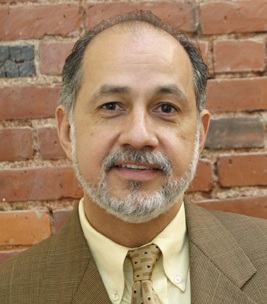
Dr. Roberto Miranda
Summary: We must not settle for a generic Christian life or for a limited measure of God’s power. Receiving Christ brings salvation and the presence of the Spirit, but the baptism and filling of the Spirit are an empowering experience, like still waters that begin to move and become rivers of living water. Under the new covenant, this anointing is not reserved for a few leaders: we all have access to it and must fan into flame the gift we have received.
Although Moses enjoyed profound intimacy with God, he acknowledged his inadequacy, asked to know God’s ways more fully, and dared to ask to see his glory. In the same way, we need to admit that our responsibilities—as parents, servants, and workers—exceed our own strength. God’s presence equips us and gives us rest in the midst of them. We must seek fresh anointing each day, take responsibility for our spiritual lives, and pay the price of surrender, prayer, the Word, and obedience. God calls us to ask boldly, live saturated with his presence, and leave a fruitful legacy for his glory.
Parents: we have the great privilege of inspiring our children, investing in them, teaching them, mentoring them. As never before—listen carefully to this—our sons and daughters need parents who are present, parents who are active, parents who take their job seriously. Enough of the days—and I am going to use a very strong word here—when fathers leave the work of educating the children to the mothers.
You do not just bring home the bacon, you know? You also bring counsel and an example, and strength for your son or daughter, amen? Our daughters also need the warmth of that father, and our sons need it more than ever, when masculinity is under greater threat than ever before.
Let me tell you something—and forgive me for getting into another subject already—but the other day Meche and I were out walking around Summerville one afternoon. We took a pathway where many people walk in the afternoon and during the day, a beautiful place near our home, and we walked quite a distance. And I can tell you that during the hour or so we spent on that path, we saw at least seven or eight young homosexual couples, both women and men—if not more—seven or eight of them. They were attractive, good-looking young people; there were men holding hands and women. It was truly shocking. And you know, brothers and sisters, in saying this, I do not mean to express any contempt. These things always need to be clarified in case someone here is dealing with this. In my heart there is no sense of superiority or contempt, no judgment or rejection. If someone is involved in an inner struggle in that area, we simply bless that person and do not judge them in any way. How wonderful that you are here; continue seeking the Lord.
Now, having said that, it is clear that we know this lifestyle is not in accordance with the Word of God, and if you are struggling with it, we want to help you stand firm in the Lord. In other words, the comment I am making is not an expression of contempt—please understand me clearly—but what struck me was seeing so many young people. This is becoming a very serious epidemic, which is what we have feared for years. And more than ever, our children need to be covered by the protection of a father and a mother, by healthy marriages, so that they can grow up with a clear idea of what it means to be a man and a woman, and of the benefit and blessing of a balanced home in which the man has his place, the woman has her place, and masculine and feminine energy work together to produce something beautiful. But our children need mentoring—to be mentored, to have mentors, right?—discipleship, warmth, and the persistent care of a father and mother who are committed to their children.
Being a parent today requires a great deal of time, investment, and sacrifice. Dad and Mom, God has also entrusted to you something more precious than any jewel in this world: your son, your daughter. And whatever you can do to make sure that you fulfill your role as a father or mother well, no matter what you have to pay, pour yourself out, lose sleep over it, but do your job well, because those wells Sarah spoke about—they will remember them again one day. Life may cover them up one day, but they will remember them again and return to those wells. But you have to sow that seed in your children’s hearts.
So, parents, let us appreciate the incredible privilege we have of mentoring our children, and do not put a price or a limit on whatever it takes. If you have to get up at four in the morning to pray, if you have to go out in a snowstorm to take your child to a Bible study or to church, or to I Wanna, or take them to a museum so they can become cultured, or whatever it may be, pay the price in the name of God and sow that seed, amen? There you have two sermons already, so you cannot complain (laughter), one and two—and there is still another one coming. Forget it; this is a supermarket here (laughs).
Let us continue with the Word of the Lord, and I want to invite you to continue with this meditation on living lives filled with the Holy Spirit. To be effective parents, we need the anointing and fullness of the Holy Spirit—and we need them to undertake any aspect of life.
You have heard me speak about my personal and pastoral experience, about our church and its journey, and about how the Lord has led us on a pilgrimage toward having more of the Holy Spirit. We have spoken about the need for the fullness of the Holy Spirit. We have spoken about how, throughout Scripture, we see this pattern of the great men and women of God being endowed with the power of the Holy Spirit to carry out their tasks, whether as kings, prophets, or priests. We have discussed many things; we have spoken about taking authority ourselves and cultivating the gift of God within us, and about how it does not depend solely on God, but that there is also a part we must do.
My goal this afternoon is, I hope, to complete a presentation on five steps that must be followed in order to be filled with the Holy Spirit and receive the anointing of the Holy Spirit. Over the coming Sundays, as much as possible, I will speak further about this fullness. My intention is to cover that wonderful territory of the Holy Spirit and His movement in our lives in different ways. We are going to go through different Scriptures; in a sense, we are going to comb through the entire territory until we are sure it has been thoroughly covered, although it is an extremely profound subject. And there will be many more moments like these—moments of anointing, of impartation of the Holy Spirit. I know this is going to revolutionize our lives.
One of the things we must clearly understand, brothers and sisters—especially those who are new to the faith and others who perhaps have not yet understood this—is that we cannot be content with a limited measure of the anointing, the power, and the movement of God in our lives. We must always be eager and desirous. As for that impartation of the baptism of the Holy Spirit, Pentecostal churches and great men of God throughout the centuries have identified the moment when a person receives the fullness of the Holy Spirit as a moment distinct from and subsequent to the moment when that person receives Jesus Christ as Lord and Savior. They are two different experiences.
What separates the Pentecostal world, in all its variations, from the traditional evangelical world is this idea that the baptism and fullness of the Holy Spirit are not something that comes automatically with receiving Christ as Lord and Savior. Rather, the baptism of the Holy Spirit is an experience that follows and is secondary to receiving Christ as Lord and Savior. Although a person is saved when they receive Christ as Lord and Savior, and although they already have the Holy Spirit—because it says that He enters our life and abides with us, and we with Him—the baptism of the Holy Spirit is, let us say, the difference between a placid, tranquil lake with a clean, crystalline surface and what happens when a wind comes over that lake, blows across it, stirs it, and lifts its surface: that water begins to leap. What did the Lord Jesus Christ say? He said that rivers of living water would flow from within those who believe in Him, and the Bible says that He was speaking about the Holy Spirit who would be in us.
Do you know that the Bible describes Jesus Christ as the One who baptizes with fire? That is Jesus’ specialty, and He initiated His disciples into that experience of baptism in the fire of the Holy Spirit when He told them, “Do not leave Jerusalem until you have received the impartation of the Holy Spirit.”
There is an illustration of this in Scripture, in the healing of a paralytic. The Bible says there was a place—I believe it was Bethesda—and it says that from time to time, unpredictably, an unseen angel would come to that pool and stir up the waters of that well, that pool. And when those waters began to move in a supernatural and unexpected way, the people knew that at that moment the power of God was moving in those waters, and the first person to jump in was healed.
Now, do not ask me why the power of God operated like a lottery, where the first one to jump in was the one who got it and no one else, because, incidentally, that is the difference between the Old and New Testaments. In the Old Testament, the impartation of the Holy Spirit was very limited and restricted solely to the Kingdom’s distinguished athletes: the prophets, kings, and priests. But what happens when Christ comes? Now we are all kings, and we are all priests, amen? The Bible says that the Spirit is no longer given by measure; He is universally accessible. That is the difference between the time of the Old Testament and that of the New Testament.
In the Old Testament, the Holy Spirit was very limited in His transmission, but when Christ comes, He democratizes—ooh, what a lovely word, democratizes; I had never used it before, but I must remember it—He democratizes the distribution of the Holy Spirit. Now everyone has access to the Spirit, and that is what happened at this pool.
Do you see? In the Old Testament, in the time of the prophets and all of that, only an occasional person was healed when the water began to move. And here two things have come to me, but look at this. That pool, as it lay there calm and still, was unmoving in its ordinary, everyday state. But when the power of God came, the waters began to dance and move, and the people knew: the Spirit is here.
That is the difference between a Christian who has the Holy Spirit in a general, universal way—we all have Him and are like the pool of Bethesda: there is water, it is clear, there is no problem—and what happens when, from time to time, we need the Holy Spirit to begin to blow and those waters to begin to move. And that is what I believe the baptism of the Holy Spirit is.
It is taking water that is already there—it adds nothing—but sets it in motion, stirs it, energizes it. And that is what we need: for the Holy Spirit who is within us to become a river of living, flowing water. That is the difference between a Christian who has water in the form of the pool of Bethesda and a Christian in whom the angel of God has come and stirred those waters. And we need God to stir the waters in a baptism of the Holy Spirit, even if only once in our lives—but as many times as He may wish to do it. And that is what we want to invite you to do: live amid the stirring of those waters.
Now, the other thing I did not want to lose was this idea: in that account of the pool, it says that the Lord Jesus Christ passed by that pool and there was a paralyzed man there. Do you remember the story? And the Lord says to him, “So, my friend, how are you?” “Well, Lord, here I am. I am paralyzed; I cannot move, and I have been here for many years waiting for this angel to come and for the water to move. But I have no one to take hold of me and throw me into the water, so by the time I manage to get moving, others have already gotten ahead of me.” And the Lord says to him, “Do you want to be healed?” And He heals him at that very moment, by grace.
He did not have to make any effort; he did not have to agonize; he did not have to jump in before the others. The Lord simply healed him. I believe that therein lies the difference between the Old and New Testaments. In the Old Testament, the distribution of the Holy Spirit was a privilege reserved for a few, but now all you have to do is ask the Lord. The Lord comes and says, “Hey, I want to baptize you. You do not have to agonize; simply receive and let My Spirit fill you.” And that man was completely healed at that very moment.
So that is the difference between living in a limited dimension of the manifestation of God’s power and living in a more powerful and profound dimension. And what we are asking of the Lord for your lives is that you learn how to enter that dimension. And as I say these things, I already realize that it is going to be difficult for me to complete the task I have here concerning these five steps. But that is all right, because it is all good and it is good material; if the Lord gives it, we must receive it.
Here is another image of that, because if I can simply instill in you what the difference is between living in the fullness of the Holy Spirit and living a merely ordinary life—why? Because if we are honest, many of us, many of those sitting here right now, without any judgment whatsoever, need a powerful encounter with God. I see you come Sunday after Sunday, but the Lord still needs to come into your life, underline it twice, and emphasize it—do you understand what I am saying?—so that you rise to the surface and enter that level of power, agency, and authority where you cannot be ignored because you are magnetic, radioactive, and dangerous, because your life is filled with the power of God, amen? And that is what God wants for you, amen? Oh, hallelujah.
I know that there are many people here who, like the pool of Bethesda, need the angel to come and stir the waters. And when you experience that, you will stop placing limits on the Lord. God is not going to give it to you with a teaspoon; He is going to give it to you with a ladle and tell you, “Open your mouth,” and you are going to have to do this to fit in all the anointing that God wants to give your life. This is not going to be bland water or milk, right? It is the anointing, the fullness of God in your life.
And that is what we have to seek more and more: that distinction, what makes the difference in the life of a man or woman of God and takes us out of the ranks of Sunday-only Christians and the specialty of warming pews, so that instead we become hot and melt the pew when we sit on it—it is the fullness and the anointing of the Power of the Holy Spirit. Brothers and sisters, what I want is to keep turning that screw again and again until you understand what I am talking about.
There is another image that the Lord provided for me this morning; it is found in Exodus chapter 3, so that—well, we will get to that point. Right now I simply want to follow what God is doing at this very moment, the way He is speaking, amen? If we speak of the Spirit, do we believe or do we not believe? It is prophesying; preaching in the Spirit is prophesying, it is saying the things God wants us to say without any restraint. One has a purpose, and then God does the rest.
Exodus 33—let us go there for a moment so that you can see another way of looking at this difference, because if I can dramatize that difference in your heart and you leave here saying, “Wow, Pastor Miranda is right; I have to—I cannot settle merely for receiving Christ and being a generic Christian. I have to start fighting for my own salvation,” not in the sense of becoming saved.
The Bible says, “Work out your salvation with fear and trembling.” Does it say that or not, or am I the one saying it because I have suddenly become a heretic? It says that we should work out our salvation with fear and trembling, that we should strive in our salvation with fear and trembling. Many of us Christians have allowed ourselves to be lulled to sleep by this idea: “Ah, now I am saved, and what I need now—I have already punched my ticket; I am getting on the next plane so they can take me to heaven.” There is still much work to do here, much to accomplish, and God needs you. God needs you as a passionate, activated Christian, burning in the Holy Spirit. And unless you understand that you have to seek your own food every day—do not depend on the food the Pastor gives you, or so-and-so, or some anointed person; you have to seek your own food. A time comes when you have to stop being fed by others and find your own food, and when you come to church, it should then be to share the blessing God has given you during the week. That is a different idea.
Moses—Moses was a man anointed, called, and gifted by the Lord, and here we see him in Exodus 33, beginning with verse 7. In verse 7 we see Moses going about his ministerial duties, and we see that there is a very great manifestation of the Power of God in his life. It says: “And Moses took the tabernacle and pitched it far away, outside the camp, and called it the tabernacle of meeting.” They are in the wilderness. The tabernacle is the people’s meeting place; it is like this temple. The people would come there and gather around that tabernacle of meeting. The tabernacle was like a gigantic tent, and the articles and instruments of worship of the Hebrew people in the wilderness were kept there. It says: “And everyone who sought the Lord went out to the tabernacle of meeting, which was outside the camp”—just like us.
Why are you here? Because you are seeking the Lord, right? And Moses was the Pastor of all those people who were in the wilderness. “And it came to pass that whenever Moses went out to the tabernacle, all the people rose, and each one stood at the entrance of his tent and watched Moses until he entered the tabernacle.” And something occurs to me here about that which I did not share this morning with the brothers and sisters in the English ministry. I am discovering it as I develop it right now: the difference between the Old Testament model and the new experience in the Holy Spirit in the New Testament.
Who is the principal actor? Moses. And the people are witnesses to Moses’ anointing and to what Moses is doing; but Moses is the agent, and the people are like the object. The people see what God is doing in Moses’ life and through Moses’ life. That is the model—and I say this with all due respect—of the Catholic Church and the Catholic Mass, where the priest is at the front, or in the middle where the host and all those things are, and the priest is the one officiating the Mass, right? And before, when it was in Latin, it was even worse because the people did not even know what he was saying. And that is good, because then you can preach and the people do not know what you are saying, and you do not have to prepare; it can be nonsense and the people do not know what you are saying (laughter). That is how the Mass used to be in Latin. But now, even with the Mass translated into the vernacular, the priest is the big shot of the Mass. The priest is there doing his things, the people are watching, he is officiating, and the people are witnesses. That is the model.
In fact, the Catholic Church has largely followed the Old Testament model. That is why all the vestments, incense, and liturgy belong more to the Old Testament. In the New Testament, God democratizes—He democratizes that—and now everyone participates.
But here we see Moses. The anointing of God is upon him, and he is officiating; the people draw near, while he directs, leads, and channels the anointing of God. “And they watched Moses until he entered the tabernacle. When Moses entered the tabernacle, the pillar descended and stood at the entrance of the tabernacle, and the Lord spoke with Moses.” Again, that model—God is telling us that it served for the time of Moses, but now we are in the time of Jesus Christ. It is not only when the priest, the man of God, arrives that the cloud descends.
Brothers and sisters, God uses us, the Pastors of the congregation, for certain things, but do you know what? We are only instruments in the Lord’s Hands; we are midwives. Do not look at us with any kind of great reverence or anything like that. We are craftsmen of the things of God; we are workers, laborers. God uses us for certain things, but you—you have the same anointing, the potential that each one of us has. Stop looking for the Pastor to anoint you, pray over you, put you in a wrestling hold, and throw you to the floor. You have the anointing of God in your life. The New Testament model is that we are all kings and priests; we all have the anointing of God. I am not the only one, nor are the Church’s Pastors. Everyone—you have the Power of God. I advise you to fan into flame the gift of God that is in you.
The days when only one man led, embodied, and channeled the Power of God while the rest of the people stood there amazed at that manifestation are over. Now, in Christ Jesus, we are all kings and priests, and the anointing of God is manifested in each one of us.
“And when all the people saw the pillar of cloud standing at the entrance of the tabernacle, each one rose at the entrance of his tent and worshiped.” And look here at what it says about Moses’ life, because I still have not gotten to the main subject: “And God spoke to Moses face to face, as anyone speaks to his friend. And he returned to the camp; but the young man Joshua, the son of Nun, his servant, never departed from the midst of the tabernacle.”
What I want is for you to look at this: Moses was quite an anointed man. When it says that God spoke with him face to face, it does not mean that he saw Him face to face, because we are going to see something interesting later; rather, it means that He spoke with him in a very intimate, very profound, and direct way. Moses was a very anointed man, and he carried out his work day by day with a great level of intimacy with God.
And many people might have said, “You know what? This is enough for me already. I do not want anything more, and I do not need to go to any deeper spiritual level.” But what interests me is for you to see that, despite having that level of intimacy and being directly connected with the Presence of God, Moses knew that there was still another dimension. Do you see where I am going? That is what I want us to look at for a moment: we have to live thirsty and hungry for a greater dimension of intimacy with God in our lives. We cannot settle for yesterday’s anointing. As that chorus says: “Yesterday is already gone; I need You today. Holy Spirit, breathe on me.”
Yesterday’s anointing, like the manna—as I was saying, though I do not know whether it was here or in the other service—yesterday’s manna is no good for you today. When you get up in the morning, God will say to you, “No mo’, now you have to look for fresh manna.” “Oh Lord, where is the fresh manna I ate?” “There’s no mo’; now you have to look for it over there, go into the wilderness and look for your manna.” That is where the word comes from: “man-na”—meaning you ate it one day and now there “ain’t no mo’.” That is the Roberto Miranda Bible concordance (laughter). Manna has to be sought each day, and the anointing that served you yesterday will not serve you today. Today you have to seek fresh anointing from God.
Moses did not settle for the anointing he had; he wanted something more. And look at what he says to the Lord in verse 12: “And Moses said to the Lord, ‘Look’”—wow, how many dare to say to the Lord, “Look”? Moses spoke with God the way anyone speaks with a dad. How do you approach your dad? You do not say, “Oh Father, thank You because You brought me into life and used Mom, and a special encounter that you and she had, and now I come to ask You to open the refrigerator and give me a little sweet that is in there” (laughter). You say, “Dad, I am hungry. I need something.”
Moses says to Him: “Look, You tell me, ‘Lead this people out,’ but You have not told me whom You will send with me.” If only we had that level of intimacy with God, so that we could speak to the Lord, weep before Him until our noses run when we come to Him, let ourselves go, and lay out our burdens, our failures, and our fears before God; speak with God as we speak with our father, our daddy. That is what the word “Abba” means. Abba means Daddy, and that is another difference between the Old and New Testaments. Before, in the Old Testament, God was that terrible fire thundering on the mountain, and the people said, “No, do not come near us, because we will die.” Now God is Abba, Father, Dad.
And so Moses speaks with that intimacy, that boldness. The Bible says that we should approach the Throne of Grace with confidence. Do not be afraid of God; speak to God with complete freedom. Ask Him; dare to ask the Lord for great things. Do you know why we do not receive more from Him? Because we do not ask the Lord, because we do not envision terrifying visions. How many have ever dared to ask the Lord for something and, after asking, became terrified and said, “What did I ask for?” Ask God for things that frighten you and make you say afterward, “Lord, I think I went too far, didn’t I? Wait—do not give me that.”
That is how I asked the Lord more than thirty years ago: “Lord, my life is Yours.” I was at the university; I remember it well. God had transformed me. I was in a time of being in love with God after having practically been born into the faith, having strayed for a while, and then having been brought back by God to His path. And around my second year of graduate school, I said, “Lord, You have given me many things. Do whatever You want with my life. I place it before You; take control.” And look where He has me now (laughs). If I had known, I do not know whether I would have asked for it, but glory to God. If you ask God, be careful, because we have a generous God, and sometimes when we ask Him for things, He grants them to us—great things. Dare to ask Him. That is why it says, “Let us approach with confidence.” Ask the Lord for daring and audacious things.
Moses asks Him for something daring. The thing is that Moses is not satisfied with the anointing he has had up to this point, with the anointing of God he has had up to this point, or with the experiences of God he has had up to this point. He knows there is something more. So he says, “You have told me, ‘Lead this people out,’ and yet You have not told me whom You will send with me. ‘Yet You say, “I have known you by name, and you have found grace in My sight.”’”
In other words, Moses is saying to Him: “Lord, You have promised me a number of things. You have told me this; You have told me that; You have told me that I am going to go out. But I still do not know what You are going to give me or how I am going to do this. We have to enter a land of Canaanites and strong people, and I do not know how we are going to do that. I do not have the anointing I need, and You have not told me; You have not given me instructions about how to do these things.”
And in the same way, I believe that many times we have to come before God and say to Him: “Father, You have entrusted me with leading a people in ministry. You have given me four children, and I do not know how to raise them in the fear of God. You have given me a marriage, and frankly, I do not know how to be a good husband and a good father. You have placed me in a school to teach young people who are rebellious and whose minds have been polluted by the internet and all the things, all the filth they see, and by a system that does not allow me to give them the instruction they need. You may work at a company or drive a taxi and not know how to manage somehow—whatever it may be. You have to come before God and say, ‘Lord, You have placed a task in my hands. You have asked me to do things. You have placed a ministry, concerns, and dreams in my hands, but You still have not told me what You are going to give me so that I can carry this out.’”
Because sooner or later, brothers and sisters, a moment must come in our lives when we recognize that we do not have what it takes to carry out the tasks God has entrusted to us and that we must perform in life.
I believe that until you reach a moment of desperation in the Christian life and recognize that you do not have what it takes, God cannot truly use you in your life. Until you disqualify yourself and recognize that you do not have enough, God is not going to use you.
I tell you: I am clear that I am clear, that I am clear, that at this stage of my life I do not have what it takes to lead this people where God wants to take them. Do not be scandalized or frightened by what I am telling you, because I believe that this is the best place a pastor can be: at the point of recognizing that he does not have what it takes. And I can tell you that neurologically, temperamentally, intellectually, I do not have what is needed for the dreams God has given me, and I am glad to be in that place, and I am glad that God is tightening that screw more and more, and that this awareness of my ineptitude and disqualification is becoming unbearable, because that is when we come before God and say: Lord, give me what I need; give me an additional anointing; give me provision for the journey.
And many of us believe—the problem is that we believe we have enough. We come to church on Sunday, toss a bill of some denomination into the offering plate, sing three or four watered-down little choruses there while thinking about the movie we are going to put on Netflix tonight or whatever, and we think that is all there is to it. We do a mediocre job there as fathers, mothers, workers, and servants of the Lord, and we are very happy with that. But only when we realize the great task God has for us, how much it requires, and how little we have can we truly receive an endowment of the Power of God in our lives.
I believe that the believer must live with a deep and haunting sense of deficiency in his life, and until we learn to live with that sense of deficiency while at the same time also knowing that we are under grace—because it is a combination; it is not that you should live worried and agonizing and paranoid—no, live with hunger, but also know that God will fill you.
Then Moses comes and says to Him: Lord, You have not told me whom You are going to send with me, and You say that You have known me by name and that I have found grace in Your sight. And look here at the bold request Moses makes of the Lord. He says: “Now therefore, if I have found grace in Your sight, I pray that You would now show me Your way, that I may know You and find grace in Your sight.”
I do not know whether that verse is underlined in your Bible, but it is in mine. I do not know when I underlined it there, but I believe that this is an emblematic verse for every genuine and authentic believer. Underline it and make it part of your life: show me now Your way, that I may know You and find grace in Your sight.
And then it says: “And consider that this nation is Your people.” He feels overwhelmed by a sense of responsibility. Do you know what it is like to lead a people of one million men and women, not including women and children, and to guide them through an inhospitable desert with snakes, scorpions, and more scorpions, and a scorching sun during the day, without houses or wells of water, or machinery or devices that would make it possible to feed a people of that size, and to have to sustain them, and to know that one day you will have to enter the land God told you about, which is full of giants there, or people armed to the teeth, powerful and skilled in war, who will resist you to the death, and God has told you, that is the land I have for you, and you have to lead them every day and give them counsel and teaching and an example?
And that is why he says to Him: and here are these people; they are Your people. What answer does God give him? “My Presence will go with you”—wow, how beautiful—“My Presence will go with you, and I will give you rest.” Wow, God is speaking to me right now as I read that passage: My Presence will go with you, and I will give you rest. How many need rest right now? Many of us are overwhelmed by the next water or electricity bill that we will have to pay, yes or no? Say it; confess it. Many of us are lacking work; we have children who need much from the Lord right now; we sometimes have marriages that are limping; we are fighting giants in our minds, addictions, burdens of every kind, yes or no? We are burdened, weary, and tired many times. We live in a culture that, from the moment the day begins, sets about wearing us down and slowly exhausting us, and that is why we need two things: the Presence and the moving of God in our lives, the anointing of God that rots the yoke, in good Pentecostal language—rots the yoke. We need the moving of God in our lives and rest.
How can we minister in the dimensions God has for us, whether that means directing an agency, heading a household, a classroom, or whatever it may be? How can we do it without wearing ourselves out, without burning ourselves out, without spending sleepless nights filled with anxiety? With the Presence and anointing of God refreshing us each day, the Holy Spirit who dwells in us and moves within us.
We Christians must be like camels that carry water inside the tutuma. Whew! How lovely that sounded (laughter). The word tutuma is not very beautiful, but you know what? The camel has one virtue, and that is that it treasures—it stores the water, keeps the water in those tutumas—and it cannot be quenched. Tutuma is a good word. That is where they keep water in reserve, and that is why they can walk through the desert for hours and hours and hours in the desert, because they continually have a portable vessel of water there. And I believe that we should be like that with the Holy Spirit.
The Spirit of God must dwell within us so that we can walk through the desert and have a reserve of water that always preserves us and nourishes us, and that is why we must treasure the Presence and the anointing of God. That is why I see no other way to live powerful and perpetually fresh lives in the Spirit except by renewing those wells. Perhaps the Word Sara brought this morning is prophetic, because many of us do not have wells from which to drink water, the water of the Spirit.
That is why the Bible compares the Spirit to fresh water, and I want to encourage all of us, brothers and sisters, to make a covenant unto death with the Holy Spirit and to know that we must go to the fountain and seek fresh water from the Lord every day of our lives. And that water comes with the baptism of the Holy Spirit, that seal God imparts to us, that conviction, that closeness, that continual intimacy with the Holy Spirit. That is the water we need to refresh us every day of our lives, and it is obtained only by your pressing in to seek the Presence of God in your life, taking responsibility for your own spiritual life, maintaining intimacy with God, and paying the price. There is a price to pay for the anointing, brothers and sisters.
The anointing of God has a cost: a life of perpetual surrender, sacrifices, self-denial, not enjoying everything you feel like enjoying. The price must be paid: fasting, prayer, the Word, obedience, gathering together, giving, serving, dying. That is the price for the fullness of the Holy Spirit in our lives. We must live Spirit-filled lives. That does not happen simply through a generic congregational life. It is lovely, but that is not the source of the waters. The source of the waters is within you as you personally and individually seek the Presence of God in your life.
And that is why God says to him: “My Presence will go with you, and I will give you rest.” I ask the Lord right now that this may be the motto of our lives: if the Presence of God is in our lives, we will be rested and restless. Beside still waters You will shepherd me, says the Word of the Lord—the Power, the anointing of God.
And then Moses answers Him: “If Your Presence is not going to go with me, do not bring us up from here.” And he adds—because Moses, like a good Jew, was a businessman and a negotiator—and then he says to Him, he bargains with God, he says: “Well, how then will it be known here that I and Your people have found grace in Your sight, except by Your going with us, so that I and Your people may be set apart from all the peoples who are upon the face of the earth?” “And the LORD said to Moses: I will also do this thing that you have spoken, for you have found grace in My sight, and I have known you by name.”
And then look at what Moses says to Him. Here we come to the punchline, to the very heart of the sermon: “Then he said: I pray You, show me Your glory.” And the Lord said to him: “I will make all My goodness pass before your face.” How beautiful, how poetic! “I will make all My goodness pass before your face, and I will proclaim the name of the LORD before you.” Listen to me: if you want a precious poetic, artistic image, there it is: I will make all My goodness pass before you. Why did the Lord say that to Moses? Why did He put it in those terms? What is “all My goodness”?
“All My goodness” means all My property. I am going to display before you all the good things I have. I am going to pass everything I have in My treasury before you in a single moment. I will make it all pass by in a moment like this—all My goodness before you.
You know, brothers and sisters? It occurs to me that this is what comes with the fullness and the baptism of the Holy Spirit. The gifts of the Holy Spirit come with the fullness of the Holy Spirit, and God endows us with all His goodness in potentiality. He impregnates us with all His good things and deposits them within us. We already have them there; we are pregnant with God’s endowment. All the gifts, all the implements of the temple, enter our lives. All God’s attributes in potential impregnate us and fill us in an outrageous way, and they are already there within us. Now it is simply up to us to live in them.
The Bible says that God has blessed us with every spiritual blessing in the heavenly places. Every good gift, every perfect gift, God has already placed within us. And God says to Moses: I will make all My goodness pass before you and will proclaim the Name of the LORD before you, as though He meant: I am going to seal you with My Presence; I am going to seal you with My personality. I am going to speak one word—LORD—and that word is going to fall upon you and saturate you with My character, My Presence, My endowment, My Power.
I believe that, once again, this is that baptism, that immersion. It is when we immerse ourselves in the personality of God and He saturates us inside and out. There is a water God gives that does not remain outside the skin. That water penetrates through every pore and enters your neurological system, enters your muscles, enters the tissues of your body, enters your brain, your personality, your memories, your emotions, your wounds. The water of God enters and bathes you in every smallest corner and hidden place of your being. I will cause My Presence to pass by and declare My Name over you.
How good that Moses did not settle for merely a partial experience, because that is what this passage is about, isn’t it? He wanted more, and God gave him more. It says: “And I will have mercy on whom I will have mercy, and I will be gracious to whom I will be gracious.” Wow, how beautiful are the love, the Power, and the generosity of God toward those who believe Him and seek Him and are not content with only a measure.
God wants you to ask Him for the waters above and the waters below, and not to be content with only a little. Today I want to impregnate you with a desire for more of the Lord. I feel that God is speaking prophetically to this people right now and that God wants us to leave here desperate for the Presence and the Name of God upon our lives. He wants us to leave here with a mission, and that is to be saturated with the Presence of God, as Moses was when he came down from the mountain. It says that his face shone because he had become so saturated with the Presence of God that people looked at him and saw the glory of God in him. And it is the only way. Oh, may the Lord turn us into monks of the Spirit, priests and priestesses of the Spirit, seeking the Lord day and night, trembling with the desire for the King to visit us in our chamber. We need the Lord to show us His Face.
And as I was telling you, this was simply going to be one verse on the way to the message, but I believe that God stopped us there with a prophetic Word. God says: Do not be content with the first position, Moses’ first state, even though it may seem to you that perhaps you already have a lot. Go to the second stage, the stage of glory, the Presence, the Face, the endowment, the good things God wants to give you. Do not remain in the first place; go to the second; go to the new stage.
The Disciples on the mountain saw the glory of God and said: Lord, let us make three tents and stay here. He said: No, there are other things. Do not stay here. Enter into the adventure of beheading giants, of having adventures with Me. Go there; there is a demon afflicting a boy. Go there; set him free. We must go deeper—more, more. We must be insatiable in our appetite and in our hunger and thirst for God. And that is what God wants: an ambitious people, a people who dare to ask God for things that terrify them. That is the Word of God for you.
Ask me for up to half the Kingdom, and I will give it to you. Do you have the courage to say to the Lord: Father, I want something extraordinary for my life, and I want You to do something beyond anything ever done before with me, in me, and through me, and I want Your anointing in a greater measure than I have had it thus far; like Moses, perhaps I have been enjoying good times with You, but I want something more, I want to see Your Face, I want intimacy. I want You to give me such a powerful manifestation of Your Person that I have to squeeze into the crevices of the rocks so they can protect me, because the explosion will be so great that if I am not protected, You will incinerate me and turn me into charcoal; that is what God told him: Get into the corner of that rock and into that crevice so that, when you see Me, what you are going to see will not destroy you.
I say to Him: Lord, I want that; if I die looking at Your Face, amen, but at least I will have seen it, even if only for a second—or give me something for which there is no example or precedent. Let us ask the Lord for great, daring, and bold things; this afternoon, that is what we desire for you.
If you have not had an experience with Jesus Christ, and you want to come forward here, if you want to stand up, if you want to come here, you may do that as well. We are not going to make a great fuss, but if anyone does not know Jesus at that initial level and wants to give their life to the Lord right now, this place is open. If you know someone beside you who came here and does not know Jesus, look, invite that person to come up here and pray for them; if you know that you do not know Him, come here. And if you do already know Him but, like Moses, want to go to another level, I am going to ask you to do something daring: stand up and say, Lord, I want to know You at another level, I want to know You in another dimension. Do it as a prophetic act; do not do it casually. I want to hear those bones creak when you stand up, because you are going to be doing something very serious, okay?
And right now I have stood up in my spirit to ask the Lord to frighten and overwhelm me with His provision, and I ask the Lord that this Church be made up of men and women radically committed to the Kingdom of God, and that the least of them be like those men of David. I do not remember the exact expression, but the least puts a hundred to flight—people who are dangerous to this city and to the forces of the devil, dangerous in the sense that all the enemy’s wickedness trembles before the presence of a member of this Congregation, not for our glory but for the glory of God.
May God level out this Congregation; may there be no cold and hot places—everything passion, everything surrender. Oh, my brother, if you are not there, ask the Lord to take you there; if you have not felt that hunger and thirst for God in your life, ask Him to take you there. I can tell you that this is where I live, and that nothing can satisfy this hunger I have for the anointing and the Presence, and the approval, and the desire to see God manifest Himself as never before.
I am holding on there because I want the grand prize. Do not give me second- or third-rate prizes; I want the grand prize, I want to hit the jackpot, and I am willing to wait until it comes—and that is what I ask for you. Christianity is no game; this is no game. We have turned it into a game, but it is not a game; it is an adventure, a heroic saga that God wants us to live. God wants people in future generations to say of your life, “I knew her, I knew him”; He wants your children to remember you as a man who left an image stamped upon them that lasts their entire lives, and for them to feed on that image every day of their lives. That is what God wants: for us to leave something here on Earth.
Most Christians die and no one even notices that they existed; we want to make a difference. I commission you in the Name of Jesus Christ. Raise your hands right now. I commission you in the Name of Jesus for something extraordinary, and I declare the goodness of God over your life. I declare the endowment of the Holy Spirit, the fullness of the Spirit of God, gifts being distributed, stirrings, longings—oh, a profound dissatisfaction with where you are, and a plea: Lord, give me more, give me more.
Give me children, or else I die. Help me give birth to something good, something great, something admirable, something You approve of, something that brings delight to Your heart before I die, Father. I declare the goodness of Jehovah rushing before this Congregation right now—all the goodness of God rushing forth, the Presence of God giving us rest, and may we move in that rest of God, that rest pregnant with God, where all the nutrients of a powerful, fruitful life are found.
Oh Lord, this is a sacred moment, and we ask You to seal it in Your Book, Father; write it in Your Book, Father. May this not be merely something fleeting. We make a covenant with You, Lord: we want to see Your glory, and we want the Name of Jesus to be written, engraved in the central place of our will and our being, in that hidden place within the foundations of our being. There, on that cornerstone, may the stone and the anointing of the Holy Spirit be in us, in this people, Father. Seal us and write the Name of Your Son; we are His property.
This Church consecrates itself to You, Lord. Do not let us live lukewarm, mediocre, general, generic lives, but specific lives, consecrated lives. Oh Lord, pass before us and proclaim Your Name in front of this Congregation, Father, and seal us, for Your glory, for Your glory. Hallelujah, thank You, Lord, thank You, hallelujah, amen and amen, glory to God, thank You, Lord, thank You, God.