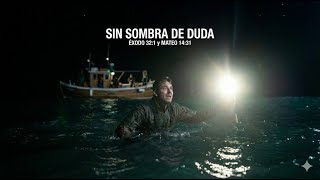
Standing Firm in the Gap: Trusting the Unseen Savior Amidst the Storm
And when the people saw that Moses delayed to come down out of the mount, the people gathered themselves together unto Aaron, and said unto him, Up, make us gods, which shall go before us; for as for this Moses, the man that brought us up out of the land of Egypt, we wot not what is become of him. — Exodus 32:1
And immediately Jesus stretched forth his hand, and caught him, and said unto him, O thou of little faith, wherefore didst thou doubt? — Matthew 14:31
Summary: Our journey of faith inherently involves tension when our divine Mediator appears absent or delayed. This often sparks a crisis of trust, revealing our desire for tangible proof and immediate reassurance. In such unsettling moments, our hearts are truly tested, and we risk succumbing to paralyzing doubt or seeking visible substitutes for the unseen God. Both the ancient Israelites at Sinai and Peter on the Sea of Galilee vividly illustrate this timeless challenge: our fidelity is most profoundly tested when the Lord seems distant, and our reliance on sight becomes an enemy to true faith.
The temptation to create "Golden Calves"—visible institutions, securities, or ideologies—remains ever-present in our own "gap" between Christ's ascension and His promised return. However, unlike the covenant of Law that brought judgment in times of perceived absence, Christ, our divine Mediator, extends a hand of grace, not condemnation. The antidote to idolatry and doubt is not self-reliance, but the humble cry, "Lord, save me!" We are called to reject a divided mind and instead fix our gaze solely on the living Person of Christ, trusting His authoritative Word and His readiness to lift us from any storm, ushering us into His peace.
The journey of faith is inherently marked by a profound tension between the divine presence and moments when God, or His appointed mediator, appears absent or delayed. This inherent human struggle often precipitates a crisis of trust, revealing our deep-seated craving for tangible evidence and immediate reassurance. When the visible leader, whether the prophet on the mountain or the Son of God on the sea, withdraws from immediate perception, a vacuum emerges. It is within this unsettling space that the human heart is most tested, often leading to the twin failures of seeking visible substitutes or succumbing to paralyzing doubt.
This timeless challenge is vividly illustrated by two pivotal narratives: the Israelites' corporate lapse into idolatry at Sinai and the Apostle Peter’s individual crisis of doubt on the Sea of Galilee. Separated by centuries and covenants, these stories converge on a singular truth: our fidelity is truly tested when the divine Mediator seems distant. By examining these accounts, we uncover profound lessons for believers navigating their own seasons of waiting and uncertainty.
The Crisis of Perceived Delay and the Allure of the Visible
Both the ancient Israelites and Peter faced a perceived delay from their leader. At Sinai, Moses' extended absence for forty days on the mountain, though part of God’s perfect timing, was seen by the people as abandonment. The Hebrew word describing this delay carries connotations of shame and disappointment, reflecting the people's feeling of being leaderless and exposed. Their impatience and reliance on the visible man Moses, rather than the unseen God, led them to demand a tangible deity—a golden calf. This was not merely outright paganism but a dangerous syncretism: an attempt to worship the true God through forbidden, visible means, reducing the transcendent to something manageable and controllable. Their cry, "make us gods who shall go before us," betrayed a desire for a visible vanguard, a palpable comfort to assuage their fear in the wilderness.
Similarly, the disciples on the Sea of Galilee found themselves struggling for hours against a storm, alone and exhausted in the "fourth watch" of the night—the darkest hour before dawn. Jesus, like Moses on the mountain, was intentionally absent, allowing their self-reliance to crumble. When Peter steps out of the boat, his faith initially empowers him to walk on water, sustained by the Lord's command. Yet, his gaze shifts. He "saw the wind" – the overwhelming visible threat – and began to sink. His failure was not a complete absence of faith, but a "little faith," a brief, interrupted trust that couldn't sustain itself against sensory evidence. This state is vividly described by a Greek word meaning to "stand twice" or be "double-minded," torn between the miraculous word of Christ and the natural reality of the storm.
The Problem of Sight-Based Faith
In both narratives, the reliance on sight proves to be the enemy of faith. The Israelites' faith was contingent on what they could see. When the visible mediator disappeared, their trust collapsed, leading them to fabricate an idol that could be seen, touched, and carried. Peter's momentary triumph on the water was an act of non-visual faith, trusting an auditory command. His subsequent sinking was an act of visual fear; when his focus shifted from the Lord to the overwhelming spectacle of the storm, the laws of physics reasserted themselves. This teaches us a crucial theological axiom: idolatry and doubt are often consequences of elevating the visible and immediate above the invisible, authoritative Word of God.
The Contrasting Mediators: Law and Grace
The true theological brilliance of juxtaposing these stories lies in the dramatic contrast between Moses and Jesus, the two mediators. Moses, though a powerful intercessor, was limited by his humanity. His "delay" led to the people's judgment. When he descended the mountain, his hand held the tablets of the Law, which he shattered in righteous anger, symbolizing the breaking of the covenant by Israel's sin. His response was to command the Levites to consecrate themselves with swords, bringing a severe judgment upon the unfaithful. The covenant of Law, while revealing God's will, exposed and condemned the sinner.
Jesus, the divine Mediator, transcends Moses. While initially appearing "absent" on the mountain, He possesses divine omniscience, seeing His struggling disciples even from afar. He does not remain distant but actively invades their crisis, walking on water, demonstrating His sovereignty over chaos. When Peter cries out in doubt, Jesus does not condemn. Instead, He immediately stretches out His hand to rescue him. This act is profoundly symbolic: the hand of Grace grasps the sinking sinner, not to judge, but to save. It signifies a profound shift from a covenant that breaks the sinner to a covenant that holds the sinner. The crisis of doubt in the new covenant leads not to massacre, but to salvation, peace, and renewed worship.
Lessons for the Believer in the "Gap"
The Church today exists in a similar "gap" – between Christ’s ascension to the Father and His promised return. Like the Israelites, we await the Mediator from the heavenly mountain. Like the disciples, we often find ourselves in the "fourth watch" of spiritual struggle, battered by cultural storms, when the Lord seems delayed.
In this season, the temptation to build "Golden Calves" is ever-present. These can be visible institutions, political ideologies, material securities, or even sensory experiences that we demand to alleviate the anxiety of Christ's perceived absence. We crave a "god to go before us" that we can see, control, and understand on our own terms, rather than trusting the unseen King.
The antidote to this idolatry and doubt is not mere willpower, but the desperate cry of Peter: "Lord, save me!" It is the humble acknowledgment that we cannot navigate the storms of life or endure the delays of divine timing on our own strength. True faith means fixing our eyes not on the overwhelming "wind" of our circumstances or the "calves" we might be tempted to create, but on the living Person of Christ, the true "I AM," who meets us in our chaos.
We are called to reject the "double stance" – the divided mind that attempts to serve both the visible world and the invisible God. Instead, we are summoned to stand firm, even on the turbulent waters, sustained solely by the living Word of the One who says, "Take heart; it is I; do not be afraid." Our faith, though often "little," is infinitely powerful when it turns towards Him, for His outstretched hand is always ready to lift us from the depths and usher us into His peace.
What do you think?
What do you think about "Standing Firm in the Gap: Trusting the Unseen Savior Amidst the Storm"?
Related Content
Never Will I Doubt
Doubt, an Obstacle to Receiving an Answer
Doubt and fear are the twin enemies of faith. Sometimes they even usurp the place of faith, and although we set ourselves to pray, the prayer we offer...
The Crisis of Absence and the Immediacy of Grace: an Exhaustive Intertextual and Theological Analysis of Exodus 32:1 and Matthew 14:31
Exodus 32:1 • Matthew 14:31
1. Prolegomena: The Hermeneutics of Absence and the Visuality of Faith The relationship between the divine and the human is inevitably mediated throu...
Read in Context
Click to see verses in their full context.
Song (Other Languages)