Women’s Ministry Seminar: a Woman of Great Influence
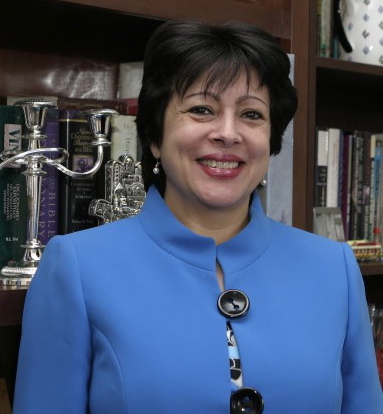
Author
Mercedes López-Miranda
Summary: We all have numerous circles of influence—family, neighborhood, workplace, church, and nation—and our everyday interactions can draw others closer to God. To exercise a godly influence, we must first examine which ideas control us, reject worldly lies, and give more attention to our inner life than to our outward appearance. Abigail’s story presents four essential qualities: reputation, emotional balance, wisdom, and leadership. Her good reputation made her a trusted resource; although she lived with a wicked man, she did not allow pain to defile her or cause harm to others. Her wisdom was not mere knowledge, but the ability to discern and act rightly at the proper time. Faced with a deadly crisis, she took responsibility, mobilized resources, and spoke to David with humility and truth, preventing bloodshed and future guilt. Likewise, as Christian women, we must seek healing, master our emotions, listen to God before speaking, and respond promptly to the needs around us. In this way, our conduct will be a light, our words will give life, and those who observe us will be able to imitate values that glorify God and become agents of transformation themselves.
“A Woman of Great Influence” is our topic for today. We as human beings are highly relational, especially women, right? Wherever we are, we are always making contact with other people, and we have a circle of influence, and that large circle of influence is made up of many smaller circles of influence.
Think right now: where do you spend your time? Think: what are some small circles of influence? Raise your hands, and I’ll ask you to name them. Let’s see. What is the most obvious one? Family, right? And within the family we could mention the relationship with one’s husband, the relationship with one’s children, and the extended family, right? So even within the family there are many small circles.
What other circle do we move in? Exactly, your neighborhood, the area where you live. And there are different people there, right, with whom you interact in different ways. Work—and even at work there are coworkers, customers, right, and the customers’ parents. There are all kinds of connections.
If you attend school, then your school; and if not, your children’s school. You can belong to the parents’ association and interact with people there. You go to pick them up and drop them off, and there you interact with other mothers.
What other places? The shopping center, the mall. Sometimes we run into people there whom we haven’t seen for a long time, or we have an opportunity to interact with an employee, a man or a woman, so.... And if we go somewhere regularly, we sometimes develop a relationship and even know each other by name: “Oh, how are you, so-and-so?” “Very well, and you?”
We can also exert influence in the country where we live. That means having vision beyond where we are, because from where we are locally, we can think globally and make a global impact, right? And sometimes small efforts have repercussions throughout the nation, so we must also think big, right? When you pray for the president of your nation and for your leaders, you are exerting influence in some way, even if you never have contact with that person.
What else comes to mind? The church, right? And within the church there are many small circles: small groups, the women’s ministry, discipleship, the people with whom you talk on Sundays. So there is another circle, the children’s ministry; there are so many circles that we would not have time to mention them all.
Can you think of anything else? Work, home, the hair salon, right? I have been going to the same hair salon for about six or seven years. I have had the same hairdresser for about ten years, but she has had her own salon for about four, so we know each other by now. We ask about each other’s families and talk about the Lord. She is a charismatic Catholic and puts little pamphlets there, and we have some very deep conversations.
The bank too. In other words, all the businesses we frequent, right—the supermarket, restaurants, the neighborhood—all of them are small circles of influence that make up our larger circle of influence. So no one can say that they do not have interactions in which they can exert influence in some way—and, we hope, a positive influence.
And the world has taken advantage of our capacity to be influenced, right? All human beings have that capacity; we are influenceable. We have been influenced by the Gospel, which is a positive influence. What we must learn is which influences we should reject and which we should embrace.
Why do you think companies pay billions of dollars every year to advertise their products, telling you that their toothpaste is the best and the one that suits us best; that their car is the one that suits us best; that clothes in this style are what suit us best? That is why: because they know that human beings are highly impressionable.
In fact, companies sometimes know that a movie is going to be a great success, and they pay millions of dollars for their product—let’s say a soda—to appear for thirty seconds in that... or for a product to appear for thirty seconds during the Super Bowl. But they know that if people are exposed to it and see it that way, they will think, “Ah, this product is worth trying. I’m going to try it.” And ultimately, their expectation is that people will not merely try it but endorse it.
So, in other words, there are influences even of that kind, and there are other influences.... Those are, let’s say, perhaps a little more neutral, although nothing is neutral in the Christian world. I learned that, that there is nothing neutral in the world. And I used to look at him a little strangely because at that time he was more spiritual than I was. He was far ahead of me, so I did not understand that. And he would tell me, “No, there is nothing—nothing at all—that is neutral in the world; nothing has a neutral value.” And I have learned that this is indeed true. Everything we do leaves either a positive or a negative mark, but in reality nothing remains in the middle, spiritually speaking.
Likewise, in the world we are exposed to many negative influences, worldly concepts that harm us. To mention just a few—although we could mention thousands of them—one example is finances. I have to maintain my lifestyle; therefore, if I receive five different credit card applications in the mail, I am going to fill them all out. As long as I pay the bill every month, there is no problem. But then one is entering into a relationship with materialism that is not beneficial, right? And many of us fall into that in the subtlest way. Before we know it, we open our wallets and already have five or six cards—not merely the one we needed at first, but five or six. That robs us of our peace and sometimes affects our marriages, all because we are embroiled in debt, right? That’s a good Caribbean word.
Another lie, or another worldly concept, is: marriage is fifty-fifty. My husband does fifty percent, I do fifty percent, and that applies to every aspect of marriage. That is not how it works, right? We know that each person has to give one hundred percent, right? Otherwise, it becomes something legalistic.
Another idea might be: I can live with one foot in the church and one foot in the world; after all, the Lord understands. He knows about my struggles; He understands. So one day here and one day there. Someday, perhaps when I am an old lady, I will fully commit myself. That is another lie or another worldly mindset.
And another is giving greater priority to the natural aspect of my being than to the supernatural aspect, right? In reality, we are supernatural beings who live in natural packaging. In other words, it is the other way around. Our truth is that we are eternal natural beings. God created us eternal and placed us in this packaging because it is what enables us to speak, move from one place to another, get into the car, bless others, walk, and work. In other words, this body that we have enables us to do all those things, right? But in reality, we must devote much more attention to the supernatural part of ourselves.
That is what truly determines a woman’s beauty: what she has inside, right? Not the outward appearance, although the outward appearance should be cared for through exercise, diet, makeup, and a little hair dye to cover the gray, if she wants to cover it. All those things are holy and good, but first we must devote more attention to what is inside, right?
So if we truly want to be healthy and exert a holy influence on others, we must first examine which influences we have allowed to dominate us. And it is very easy—extremely easy—to fall under a worldly influence. We do it every day, and sometimes we have to stop and realize, “No, that is not what God wants,” then go back, get on the right path again, ask forgiveness, and move forward.
In other words, we have to remain watchful about that—about which ideas and thoughts are dominating our being. And we must be responsible in that process, not only for our own well-being but also for the well-being of others. Because the more you are influenced by the Gospel and the less you are influenced by the world, the better your influence on others will be, right? It will be a purer, healthier influence on others.
And the interactions we have day after day are excellent opportunities for us to exert a positive influence on others. We often underestimate the importance of that, and sometimes there are little things you can do—a brief interaction with someone—that can change the course of that person’s life forever. Sometimes they are seemingly insignificant things.
I’m going to give you an example from my mother’s life, many years ago when I was a child. I remember being there one Sunday when there was a woman at church who was suffering from depression and was completely overcome by it. My mother approached her, and the only thing my mother did was embrace her and ask, “How are you?” She unburdened herself a little. My mother embraced her, wept with her, and spoke words of life over her. It was a very simple thing; it lasted four minutes at most.
That woman, some years later, became.... She still preaches; she is now seventy-five or seventy-six years old. She preaches, and on many occasions she has testified that this was the moment when God raised her up. You see, she had lost hope in her life and in her purpose for God, and that small gesture of love from a person who did not even know her helped her rise again and have hope. Such an insignificant thing. Isn’t that true? What does it cost any of us to spend a little time like that with another person? So we should not underestimate the influence we have on others.
In fact, we are ambassadors of the King; we are not just anybody. Wherever we are, an ambassador of the King has arrived—not out of any pride, but because God has granted us the privilege of serving Him. And there is a verse in Matthew 5:13–16. You can listen if you like, or you can mark it as well. It is a very familiar passage that supports what I have just said: that each one of us is part of God’s army.
It says: “... You are the salt of the earth; but if the salt loses its flavor, how shall it be made salty? It is no longer good for anything except to be thrown out and trampled underfoot by men. You are the light of the world. A city set on a hill cannot be hidden, nor is a light lit and placed under a bushel, but on a lampstand, and it gives light to everyone who is in the house. In the same way—and this is the challenge for you and for me—let your light shine before men, so that they may see your good works and glorify your Father who is in heaven....”
So notice that we have often learned, “No, you have to be humble. Whatever I do, I have to do it in secret so that no one knows....” But we have to be.... Of course, it is not as though one should boast, saying, “Look, I gave this and helped so-and-so....” No, those things should be kept private, but at all times our good conduct should show that we are the light of the world and the salt of the earth, as this passage says.
And today, as I said before, we are going to reflect on how we can be women of influence, or be even more successful in this task of being women of influence. And as our starting point we are going to consider the life of a woman who, although she lived many years ago during Old Testament times, remains a model of an excellent woman of influence. This woman was able to have a very powerful impact on her circle of influence, and we are going to connect with the fascinating story of Abigail, which is found in 1 Samuel, chapter 25. It is quite a long passage, so we are not going to read it; instead, I am going to give you some background and describe some features of her life.
Just out of curiosity, how many of you know the story of Abigail’s life? So I would say perhaps about a third of you do; others have heard her mentioned, and.... It is a very beautiful story; I recommend it....
He was worse than stingy—I wish he had merely been stingy.... He was wicked and foolish.
So when you have time, I encourage you to read the complete story. It is found in 1 Samuel, chapter 25, verses 1 through 39. It is very, very interesting. In fact, those who know us a little better know that our youngest daughter is named Abigail. We gave her that name because we thought the story was very beautiful, and we decided.... We did not name her after the soap opera that happened to be airing when she was born. And sometimes people would say to me, “Oh, you named your daughter Abigail after the soap opera.” I would say, “No, not after the soap opera.” I named her after 1 Samuel. I’m going to tell you the story so that you can see where that beautiful name comes from.
So here is the story of Abigail in broad strokes, and then you can read it yourselves. About three thousand years ago in Israel, days after the great prophet Samuel died—and you must have read about that prophet—David and his warriors were moving from one place to another and living out in the open. They had nowhere to live and suffered great scarcity; they endured hunger and need. They slept in the wilderness, in caves, and in the countryside because at that time David was not yet.... Although he had been anointed king, he had not yet assumed the position of king, and Saul—King Saul, who was king at that time—was still there. Fleeing.... David was the one fleeing, while Saul continually pursued him to kill him, right? That was the historical context of what was happening at that time.
And David and 600 of his warriors were moving from place to place, and at one point they were near a town called Carmel, and they learned that Nabal was there. He was a very, very rich man; the Word says that he had many sheep and many goats, and he was exceedingly wealthy, a landowner. He was there with his shearers. You know, a shearer is someone who cuts the wool off the sheep once the sheep have reached a certain size and their wool has grown; since the wool grows back every so often, they cut it again, and they used it to make woven goods, right? So it was a means of livelihood, a line of work.
And they were shearing the sheep in Carmel, on Nabal’s estate, and after this took place there was always a feast. At the end of the sheep shearing there was a great feast. So David, as an intelligent man who was very aware of what was happening around him, would send people to find out what was going on.... —And remember that he was fleeing, so he had to keep his little antennas finely tuned in order to know what was happening around him.— .... He decided to ask Nabal—sending ten of his warriors out of the 600 he had—to provide him with food. In other words, he sent these messengers to give Nabal a personal greeting from David, and he also asked him for food, basically: ‘We are hungry. We know that you have food, so please, humbly and courteously, please help us with food.’ He also reminded him that he and his warriors had protected Nabal’s shepherds very well while they were out in the fields with them.
Remember that in those days there were many dangers: there were wild animals and there were thieves. So these warriors served as a protective barrier around Nabal’s shepherds; they had served him in that way. He therefore sent his ten messengers to Nabal, but Nabal took the request very badly, and not only did he refuse it, but he also sent an insult back to David.
Just imagine: sending an insult to a warrior with 600 armed men is a little dangerous. But he did it. He was a foolish man, as you... as we will see later. So he denied David’s request. When David found out, being a warrior, he was naturally filled with anger, and his first impulsive reaction, without thinking about anything, was: ‘Four hundred of my men, come and strap on your swords, because we are going to avenge this affront. We are going to kill Nabal and all the men of his household.’ That was David’s reaction.
So each man mounted his horse, sheathed his sword, and they set out toward Carmel, where Nabal and his men were. But meanwhile—remember that there was some distance between one place and the other—a man, one of Nabal’s servants who had heard and had been present when those ten warriors arrived to ask for food, realized the imminent danger descending upon his household. So he ran—not to confront Nabal, but to the house, to the estate—to speak to Abigail and urge her to do something, because death was coming upon her household.
In other words, that man understood what Nabal had failed to understand: We have just insulted a man—a warrior, one of the Lord’s anointed—so there are going to be consequences for this action of my master. And so he ran to Abigail to alert her to what was happening. She immediately mobilized her household, and I don’t know if you have read the story and seen everything she gathered. She prepared or set aside a very generous offering for David and his men, which included cooked sheep, raisins, fig cakes, and other things as well—roasted grain. So she prepared all of it at once and said, ‘Load it onto donkeys and hurry out to where David and his men are.’
...they knew the road they were going to take on their way here.
And she did not stop there; she did not merely send the provisions. She immediately mounted her donkey as well and took a shortcut she knew through the hills so that she could arrive first, or at least arrive at the same time as the material provisions. And when she saw David, she humbly bowed down to the ground, and the first thing she did was apologize to him, saying, ‘Look, forgive me. I wasn’t present, and that is why this happened. If I had been present, if I had been a more responsible woman and had been there when your men arrived, this would not have happened. I would have given them the food.’
And in a way, she excused her husband’s foolishness, right? So, thank God, everything turned out well. She expressed herself very well; she spoke prophetically into David’s life, proclaiming prosperity over the calling David had, and she made him see how terrible the massacre he was planning would be.
David realized that it was not from God, and he thanked her. He expressed his respect and gratitude to her because she had intervened on the road in time, before he committed such an atrocity by killing innocent people. And then she—Abigail—finished speaking; he accepted the offering, and the soldiers went back the way they had come. Relief came: there would no longer be a slaughter in the household. She returned home as though nothing had happened and attended to her guests—remember that there was still a great feast at the house—so she took care of things there.
At that moment she decided not to speak to Nabal because Nabal was drunk—he had gotten drunk—and in addition to his other bad qualities, the poor man also had the bad quality of being a drunkard. There was simply no way to deal with him. So she did not tell him anything at that moment because she intelligently recognized, ‘I am not going to speak to this man now, because he will not understand what I tell him.’ She waited until the next day, when the effects of the wine had worn off, and then she told Nabal what had been about to happen.
What happened? The shock was so great—the fright over what had been prevented—that the Word does not say exactly what happened to him, but it seems that it was either cardiac syncope, a heart attack, a stroke, or some other major event of that kind. The point is that he died ten days later.
So that is the story of Abigail. It is very interesting, isn’t it? You could make a good novel out of it.... a good movie out of such an interesting story.
So what we are going to do now is look at what enabled Abigail to be a woman of influence—of such great influence in that situation in her life, or in her life in general. There were four things: first, she was a woman with a good reputation or a good testimony; she was a woman who had emotional balance; she had leadership; and she had wisdom. Those are the four things we are going to examine, qualities Abigail possessed that we want to emulate.
The first is that she was a woman with an excellent testimony. Verse 3 of the passage we have just discussed says, ‘...that man—that is, the husband—was named Nabal, and his wife was Abigail. That woman was discerning and beautiful in appearance, but the man was harsh and did evil deeds, and he was of the lineage of Caleb....’
So that verse establishes a contrast, right, between two reputations: Nabal’s reputation set against Abigail’s reputation. They were completely different from each other. One wonders how those two could be mixed together, just as vinegar and oil do not mix. However much they may appear to mix, they separate immediately; there is really no cohesion between the two substances. That was how Abigail and Nabal were: completely different.
Each one of us has a reputation. You knew that, right? Each one has a reputation. We influence others through who we are and, above all, through our testimony. Testimony is very important. No one can say, ‘I don’t care what people think of me.’ There is a saying that goes, ‘Let them think whatever they want; they don’t pay my rent.’ But that is not true. What people think of us really is important, isn’t it? It hurts me when someone thinks something incorrect about me, and if it is correct, I fix it right away so that I can be a better person.
So our testimony or reputation is so important that it even arrives somewhere before we ourselves do; sometimes our reputation precedes us. Right? Before we arrive somewhere, people may already be saying, ‘Oh, how wonderful, Aunt So-and-so is coming here. She is so good. She makes delicious tostones, and she is so kind, and she tells us stories....’
In other words, it can be something positive, and it also remains in a place even after we have left, because people are still making comments: ‘Look, when So-and-so came through here, this happened....’ They may say positive or negative things. So we all have a reputation, and we must protect and guard it, right, as much as we can. Because a bad reputation drives others away from God, while a good reputation becomes the platform from which we minister the presence of God. That is so important everywhere because, as we said at the beginning, ‘We are ambassadors.’
Our present conduct, in a certain way, may lead someone to ask us, ‘And how did you resolve that very difficult situation in your life? When you were going through that, how was it that I didn’t see you going around saying ugly things about So-and-so, but instead I saw you exercising self-control and saw you praying? How did you do that?’ It is an opportunity for us to say, ‘Look, I did not do that in my own strength; I did it through the power of the Lord, out of obedience.’ But, well, you did it, and look at the good results. In other words, it gives us an opportunity, a platform from which to speak about God, His purposes, and His power. So that is extremely important.
If you were to think about this transparently and humbly before God, you would ask yourself this question: What do others think of you? In English there is a concept called ‘fly on the wall’—‘a little fly on the wall.’ If you could be a little fly on the wall while others were talking about you, what would they say? What would you hear them saying about you? Would they say positive things? Would they say negative things? A mixture of positive and negative things? What would they say? Would they think that you add something to their lives or take something away from their lives? Do they receive something when you are there, or do you instead drain something from them while you are there and carry everything away? It is a very valid question that we all have to ask ourselves because, once again, it is... not only our testimony and our name that are involved, but the Lord’s name as well. So it is something we must always keep in mind, continually asking ourselves whether the way we conduct ourselves in all the different contexts of our lives brings honor to God. At times, perhaps, we do so in some contexts, while in others we take liberties that are not ours to take, right? In other words, let us remain very alert to that—to how we manage our presence, so to speak, in the different contexts in which we move.
If we were to compile a list of the qualities in Abigail’s life, even from that limited number of verses—it is only one page—we could still make a list of the qualities we see in that woman’s life. So imagine how much more this applies to you, whom people are seeing in three dimensions, right? We see Abigail from a perspective 3,000 years later; it is only written down, and we are not actually seeing her. We, however, are seen in flesh and blood, in spirit—that is, in every way—so people are going to form an opinion about us.
From the account, I can discern that Abigail had several qualities. Among them, as the Word itself says, she was a discerning, wise woman. She was diligent, she understood her times, and she knew about David’s life. We are thinking of a woman tucked away on an estate somewhere, yet she knew everything that was happening politically in her day. In other words, she was attentive to the times. She was organized, courageous, and self-confident. Perfect? Surely she was not, right? Just as none of us is perfect. But she was a woman who gave a good testimony at all times.
When we are born, I have this idea that God, as it were, gives each one of us a scroll, right? A scroll of our life. On one side, all of God’s purpose for our life is written, because we know that even before we are born, God already has a purpose for our lives. He has already determined what gifts He will deposit in us throughout our lives. He has already determined many things, including how He will use us. But then there is that part of our scroll; the other part is where we write, because we are not God’s puppets, right? God made us free beings, meaning that we have the option to choose. So on one part of the scroll is what God says, what God has written—God’s purpose, God’s desire, God’s will—and on another part is what we decide to write on the scroll of our life.
And I believe that, at times, what God has written agrees with what we write on our part. But on many occasions that is not the case. God has written one thing, and we have decided to live in a completely different way. And in Abigail’s life, well, I assume that in many respects she did live a life in keeping with God’s purpose. So that is another thing we have to keep in mind: how we live our lives, because they are a book that others read.
There is a verse in the Bible that says this, that we are open books. So no matter how much you may want to close it or keep it covered, there is no way. Others are going to read it because you are an open book; the Word says so.
So we have already seen that Abigail was able to exert influence first of all because of her reputation, or because of her testimony. That is the first thing.
Secondly, she was also able to be a person of influence because she learned to combat the weight of emotional wounds and develop emotional balance.
If we look at whom Abigail lived with, right? A man who was wicked, who did evil deeds, whom no one could approach, a fool—do you think she did not have a hard life? Of course she did, right? It would be impossible to think that she could be married to that man and live a rosy life. It is impossible. She must have experienced a great deal of rejection, sustained many wounds in her marriage, and all the other wounds that would have been added to them. And despite being married to Nabal—as I said before, his name means, Nabal means fool—despite being married to him, a man who was harsh and did evil deeds, she did not become filled with depression, she did not become filled with anger, and she did not take out on others the mistreatment she received from her husband. In other words, we see none of that. Remember what her reputation was like: she was known as a woman of good understanding, so she had a good reputation on the estate and in the town where she lived, unlike her husband.
And yet she did not allow that to throw her off balance, and we see in the story that an unbalanced woman does not function the way Abigail functioned in that passage. In other words, she did not allow herself to be contaminated by Nabal’s evil and, unlike her husband, Abigail’s balanced character allowed her to be a resource to others. People stayed as far away from Nabal as possible; with Abigail, Abigail was a magnet. She attracted others because she always had something... she was a resource to others.
That is one of my goals in life: to be a resource to others. You can be a resource for three minutes, for one, for five, or for years, but you should have something within you that allows you at some point to offer a helpful word, some advice, share a testimony, whatever it may be. But all of us should be a resource to others within the circles in which we move.
I believe that most wrong decisions, or attitudes that damage or destroy relationships, are based on our resistance to embracing God’s truth. The Word of God says that we should forgive, that we should love even our enemies; yet many times we decide to remain in our comfort zone, in what is comfortable for us. And then we do not forgive; we do whatever we want.
And what happens because of that? We add more wounds to the wounds that already exist, right? Because we are not breaking that cycle of problems in which we have become trapped. And many times, instead of desiring the healing of our wounds, we insist on getting mileage out of them. How sad that is, because years and years go by; we are 20, then 25, 30, 35, 80, and we are still carrying the same sack of wounds we had 20 or 25 years ago, only now it is even heavier because more years have passed. The bundle, that bag we carry, is heavier, and on top of that, things get worse.
That is why you sometimes see elderly women who, instead of reflecting beauty and lightness, freedom of spirit, carry a burden; their faces show bitterness and resentment, and you do not see a serene face. None of us wants that; we want to be free of all that.
Look, wanting to be healed of our wounds is the hardest thing. That is the greatest struggle for a human being: reaching a point in life when we recognize that we need help in that particular area. And I know that if we could talk about the things that have happened to each of you, you would have much to tell about those times in your life when there was such a deep wound that the temptation was to remain there, submerged in the wound. But that is not what God wants.
And, in fact, remember when the Lord was at the entrance to Bethesda and called to the paralytic who had been there for many years? He addressed him directly. He did not ask him, ‘Oh, you poor thing, how long have you been sitting there without moving? Did you eat today? Has anyone brought you a little sandwich?’ No, He did not ask him any of that. What did He ask him? He said, ‘Do you want to be healed?’ That is the fundamental question for all of us: do we want to be healed, or do we want to remain there in that situation? And a point comes when, instead of mastering our emotions, we allow our emotions to master us.
In Abigail’s life, she must clearly have endured a great deal of pain, but she did not allow the pain to sink her. Instead, she used it to grow in many areas, and she mastered it rather than allowing it to master her. That is the struggle. It happens to men too, but I know that it happens especially to women. It is a continual struggle, because we are thinkers to the highest degree. The tiniest little thing happens to us, and we keep going over and over it... The wheels of the mind keep turning and turning... the inner monologues, the memories of the past.
In fact, I remember, I remember a little joke I once heard: there was a man telling another man about his marital problems, and he said, ‘When I do something wrong, my wife gets historical.’ The other man said, ‘Historical? You mean hysterical.’ He replied, ‘No, historical—she reminds me of everything I have done over the last 20 years.’
And truly, aren’t we like that? I do not know whether it happens to you, but sometimes I even remember the clothes I was wearing, the clothes the man who offended me—or the woman who offended me—was wearing, where we were, what day it was. I have a remarkable memory in that regard. I wish it were like that in other areas too. But that is the way we are, right?
So what happens? First there is the mind, the battle in the mind, but then it remains there like a wound that is never resolved. And many times we cannot resolve our wounds with other people. There are many occasions when we will not be able to talk, when we will not be able to go to the person and tell them about it and reach a resolution. Many times that is not possible, especially in situations in which one has been abused in some way; it is not possible. But it is possible to go before the Lord and deal with it together with Him, because we are responsible for which wounds we allow to nest in our hearts and minds and dominate us. And it is a struggle, many times an all-out battle.
And it happens to all of us, in big ways and small ways. I know that—you all agree, don’t you?—we all deal with that kind of thing, sometimes more often than we should. Yet we have an exceedingly powerful God, and in Him are the resources. What we have to do first is recognize our need and go before the Lord, ask forgiveness for our part—because many times we have played a part in the matter, right?—ask forgiveness for our part, invoke God’s wisdom and forgiveness over it, and let Him be the one in control. Then we must adopt a long-term mindset and understand, ‘Look, this will not be resolved between now and tomorrow, but soon; by tomorrow it will already be better.’
And I have had situations like that in which I say, wow, when is this sadness I have going to go away? But I declare it to the Lord. I tell Him, ‘Lord, when I get up tomorrow, this will be better; the burden will no longer be as heavy.’ And that is exactly what happens: the next day I get up, and the burden is lighter. And I tell Him, ‘Lord, and tomorrow it will be even lighter than it is today.’
And so we continue walking with confidence, without allowing what has happened to us to harm others, right? Because many times homes become contaminated. Have you noticed? Why? Because one person contaminates the atmosphere, another reacts to what is happening, and before you know it, the home is in a state of imbalance. The peace is gone, and people become so bound up because showing hardness is more important than simply wanting to improve the situation. As the courageous women we are, we must face those things and do our part; let us not wait for someone else to do it.
How can we remain in the same situation for years of our lives? The same thing, the same thing, the same thing. No. Tomorrow. Tonight you must be better than you were this morning. Tomorrow you must be better than you are today, because in God there is power for all of that. Although it is a difficult process, it yields great dividends. And when you look back, you rejoice and almost thank God for what happened—almost—because sometimes you say, I do not want to go back there; I do not want to go through that again. But when you look at what you were like before and what you were like afterward, you realize that you have grown, that you are now a better person. You can exert a better influence because of the experience you learned to handle well.
Because there are experiences that are sometimes small, but when handled badly they become big... they do a great deal of harm; they harm us and they harm others. So do not let anyone tell you, look, there is no solution to that. No. Sometimes the situation will not be resolved, but even when the situation remains unresolved, our hearts can rise above it and have joy. That is what we have to recognize: if God requires us to be clean, pure people or to have good relationships with others, He would not ask it of us if it were impossible, would He? God does not require anything that is impossible. And everything He asks of us is because He knows that in Him there is power and because He knows that, with Him, we can do it.
So when you find yourself there in the barracks, wherever you may be, when you are on the battlefield, remember that tomorrow will be better if you know how to master that which is strongly tempting you to let it master you. So when the Lord asks you, ‘Do you want to be healed?’—when you hear that voice of the Spirit saying, ‘Do you want to be healed of that, or do you want to remain there?’—you tell Him, ‘I want to be healed,’ and do battle in prayer. Share it with someone; do not suffer alone. Sometimes we have this tendency to want to suffer alone, and sometimes that is part of the very picture of depression, for example: we feel isolated. Let us not suffer alone. There has to be someone; there has to be a woman with whom we can share our hearts and get that out of us. So if the Lord asks us, ‘Do you want to be healed?’ what is the answer? Yes, of course I want to be healed.
So we have already seen two things: Abigail was influential because of her reputation and because she possessed emotional equilibrium or balance—two of Abigail’s qualities. The third quality Abigail possessed was that she was a wise woman. She had wisdom; she had understanding. And in fact, understanding is the same as practical wisdom: it is how one resolves situations in life. That is wisdom.
What good does it do anyone to have great knowledge up here if it does not translate into effectiveness in life? Right? It is really no use at all. So from the beginning of the passage we saw that she was known—her reputation was that she was a woman of great understanding, of good understanding. Because wisdom is not merely knowing, but putting what we know into practice at the precise moment when we need to do so. Because if we put it into practice at the wrong moment, it is no longer wisdom; it is putting our foot in it, making a mistake.
And wisdom is gained day by day, right? Have you ever met a child who was born wise? Of course not, right? I have never met one. Quite the opposite. You look at them and say, let them grow so that they may have a little more wisdom. We are not born with wisdom; it is something we acquire with the passage of time, but not merely because of time. Because we all live through the same amount of time, right? If you compare two 40-year-old women, perhaps one is wise and the other is not. It depends on how each one has used her time and what she has allowed to influence her, right? There is a difference. It is something we gain directly through our relationship with God.
I remember things I used to think when Christ was not my personal Savior, and then how I began to think afterward; it was completely different. I was sound before knowing the Lord—sound in the sense that I was not thinking immoral things or anything of that sort—but there was no wisdom in me. By contrast, when I came to know the Lord and began to understand more of His Word and observe how mature Christian women conducted themselves, I began to learn. My life became something completely different, and I began to be a woman of influence, which I had not been before because I did not have that grace from the Lord. That is available for everyone. The Lord is there for all women, to guide us and give us wisdom.
She was a woman who knew God, and in fact her name, Abigail, means ‘the joy of my father’; that is, the joy of my Heavenly Father. That is what Abigail means, which is why we gave that name to our little girl: the joy of my father. Because every wise woman is the joy of her Heavenly Father, and she is also the joy of those around her because they benefit from her wisdom, right?
And the Word says that the fear of the LORD is the beginning of wisdom, and the knowledge of the Most High is understanding. So it is not a matter of how many books we have read, how many universities we have attended, or what degrees we hold; rather, the fear of the LORD is the beginning of wisdom. And the Word asks us directly in James 3:13—there is a verse that deals with exactly this—which says:
“...who is wise and understanding among you?....” And the question is asked in that same verse, and the answer to the question is there; it says, “....let him show his works by his good conduct, with the meekness of wisdom.”
In other words, once again it has to do with conduct, because wisdom is something that can be seen. You can see who is wise, who is not wise, who makes wise decisions, and who does not make them wisely. And the Word also tells us that if anyone lacks wisdom, what should she do? Let her ask for it, and it will be given to her. And it will not be given to her in a small measure, but abundantly and without reproach.
So, in other words, wisdom is there so that all of us may attain it, feed on it, and grow in it. So that is for everyone; it is not for a chosen few, but for each one of us. And wisdom is not meant merely to adorn us intellectually, but to help us make beneficial decisions that will serve as the foundation for even better decisions tomorrow.
As I told you, it does not happen overnight. Rather, we make good decisions today, and that serves as the foundation for better decisions tomorrow. And that is how we grow in wisdom. As the Word says, when Jesus was growing, He grew not only in stature but also in wisdom, right? That is how we should be, always growing in wisdom.
Because we forget that life consists of a multitude of decisions that we make every day. You see, every day you have to make hundreds of decisions, beginning with: What time am I going to get up tomorrow? The night before, I sit in front of the clock and say, “What time do I have to get up tomorrow? I’m going to squeeze every last bit of sleep out of it that I can; let me see. Instead of six, could it be six fifteen?” And on I go. I have this kind of personal negotiation with the alarm clock until we finally settle matters, and then I do everything possible to get up at the time the clock tells me I have to get up.
So there are many decisions, right? Do I get up earlier to pray? Do I speed up the car when I see the light turning orange, when it is almost red, or do I slow down so that when the light turns red, I am already there with my car fully stopped at the stop sign or the red light, right? Things like: Do I buy the dress that looks very sexy on me, or do I buy the other one that looks good on me, is not so provocative, is modest, and better represents who I am as a daughter of God? I mean, there are tons of them. In fact, once I went to..... I know I have told this story before. I went to some stores with a friend, and there was an outfit that looked far too good on me, far too tight. I looked at myself and said, “Wow, this outfit looks good on me.” So I called her over and said, “Come here, how does it look on me?” And she said, “Oh, it looks great on you! It’s really pretty. Buy it.” And I said, “I reject that; I’m not buying it at all.” No, and I did not buy it because I realized that I could be—that outfit could cause me to be a stumbling block to someone, right? And I said, “No, I cannot do that.”
So they are decisions like that, sometimes things as simple as something I remember from many years ago, when my oldest daughter was still little. I had sat down.... I am one of those people who takes so long to hem pants that... by the time I hem them, they have already gone out of style, in other words, because I buy them and do not have time to let out the hem. So that day I was already comfortably seated in my chair with my sewing box beside me. I had already marked them, I was ready to hem them, I was all settled in, and suddenly I heard a.... sort of fight among children beside the house, down on the street next to the house. And I said, “I have to do this,” and I kept working, while the argument among the children continued. Then something happened—the Spirit spoke to me and said, “Put that down. What is going on over there with those children? You have to go and see; you are an authority here.” And when I went downstairs, there were some little children in the neighborhood who were new to the neighborhood and were a different color from all the other children. What I was seeing was the children who already knew one another rejecting these two little children who had just moved there.
So I went over, treated them lovingly, invited them inside, and gave them.... I had ice cream in the freezer, so I gave each of them a little ice cream, and the atmosphere changed immediately. Instead of continuing the argument and the fight they were having, they became little friends, and from then on... they remained friends. If I had not intervened, what would have happened? Those little children might have gone away hurt, thinking, “This neighborhood is hostile; nobody here likes us,” and I would not have taught them a lesson. And children—you know when our children fight, right?—we had better intervene, because sometimes they can hurt one another. Not all the time, right? When they are insignificant little things, you let them learn to negotiate on their own, but you stay there and keep an eye on them. So, things like that: deciding, “Look, I have not done this for some time, and now I finally made time for it, but that other thing is more important right now.” We must decide which things are important at each moment.
That is what wisdom is. Whether or not my pants were hemmed had no consequences of any kind, except that I could not wear them; that was all. But the other thing—the intervention I made with the children—could potentially affect the future of those children’s lives. So we must live always conscious of what God wants us to do at every moment, and that is what wisdom is: being able to observe things and determine, to discern, what action we must take here. Do I leave it alone or intervene? Do I act or not act? Do I make my presence known, or would it be better for me to leave? We have to make all those decisions.
And we saw that, like every woman, Abigail also faced great difficulties in her time, right? For example, dealing with her husband and protecting herself from any negative influence on his part. Everything she learned helped her face her greatest crisis, right? That was the crisis that occurred in the story. Because wisdom is recognized by others. That servant of Nabal would not have gone to her otherwise.
Imagine if that servant, instead of recognizing that she was a resource and going to her, had run away. He could have kept quiet and saved his own skin, right? He could have gone somewhere else, fled to another field or another place, and washed his hands of the matter. Nevertheless, he knew. Why did he do it? Why did he go to Abigail? Because he knew that she was a resource. He knew that, as a wise woman, she would know what to do and that she had the position and authority to do what needed to be done. That is why he immediately ran to ask her.
And he warned her about the slaughter that was coming upon the household, which Nabal did not discern. Yet he, even though he was a servant, discerned that something very, very serious was coming. The servant knows; he recognizes his master’s foolishness and goes to her, a woman of great understanding.
And notice the words he says to her. In verse 17 of that chapter, it says: “...now therefore, reflect and see what you are going to do, Abigail, because evil has already been determined against our master and against his entire household, for he, Nabal, is such a wicked man that no one can speak to him....”
So he goes to her, and Abigail, who up to that point had been so busy preparing for the banquet—just imagine, we were saying that this was not a small birthday party or anything like that; this was something on a very large scale and without the conveniences we have: no modern ovens, no microwaves, none of that. And yet.... she was very busy, but at that moment, when the servant came to her, what did she have to do? She immediately had to devise a strategy: What am I going to do?
We are talking about a life-or-death situation. And she had to leave everything, discern that the danger was real, drop everything, and immediately go and do what she had to do. So, let us see, what does this man want? Food. Come, load up the food. And what does he need? He needs me to speak to him so that he will change his mind, and that is what she then does. In other words, she makes wise decisions and uses her skills and resources wisely.
She could have thought, “Oh, this is too much for me. I don’t know what to do.” She could have gone to her husband and made a grave mistake. Notice that one of the things she decides is not to go to Nabal and tell him about this, but to resolve it herself. She decides to resolve it herself because she knows that he will make the wrong decision, since he was a foolish man. So at that moment, she makes wise decisions right on the spot. I imagine her considering, “What are my options? Well, this is what I have to do.” And she faces something—a very difficult situation—but she does so with the power of God and with determination, because she knows she is a wise woman. Everything she has accumulated is put to the test at this moment.
Many times we have situations in our lives, right, that are so difficult that it is there where whether we are what we claim to be or not is put to the test, right? Those situations often come into our lives, but if we have accumulated that wisdom, then we will be able to press on.
The fourth element in Abigail—we have already seen that she was a person with an excellent reputation, emotional balance, and a wise woman—and the fourth is that she rose up as a leader and faced the crisis. So she had all the elements, and then she also rose up as a leader. And she not only exercised leadership over her own household, ordering the servants, “Do this, do that,” but she also exercised leadership over David’s life, right? Because her words completely changed the purpose David had in mind. So that is one of the things she did as a leader: she assumed responsibility, which is what a leader does, right, and spoke wise words to change the situation.
As a leader, she faced David with the right attitude. In other words, she did not speak arrogantly to a warrior. She went humbly because she knew that this man, at that moment, had the power to declare life or death over her household. He was coming with 400 warriors. But she knows, “I have to speak humbly to this man because that way he will listen to me.”
Sometimes we must discern that as well: How will they listen to us best? This way or another way? As a leader, she demonstrated knowledge of who David was. They did not have the Internet, newspapers, television, or radio as we do now; there was nothing like that. Nevertheless, she was very aware of what was happening politically in her time, and she knew who David was.
And as a leader, she declared with great depth the truth concerning David’s plan for revenge. She confronted him and spoke very eloquent words to him. In verses 30 and 31, it says: “....and it shall come to pass”—speaking to David, she says—“...and it shall come to pass that when Jehovah does for my lord according to all the good that He has spoken concerning you and establishes you as prince over Israel, then, my lord, you will have no cause for grief or remorse for having shed blood without cause, or for having avenged yourself. Therefore, let my lord refrain, and when Jehovah does good to my lord, remember your maidservant....”
In other words, she tells him, “This is an impulsive decision you are making; do not shed innocent blood.” That is, she already anticipated seeing David established as king over Israel, thinking about his past deeds and reflecting that this should never have happened, that slaughter should never have happened, because they were innocent people, and it was based solely on the decision of one foolish man.
So in those few ways, we see that Abigail assumed a leadership position that was necessary at that moment. In fact, David thanks her and says to her: “....blessed be Jehovah, the God of Israel, who sent you to meet me today, and blessed be your reasoning, and blessed are you, who have kept me today from going to shed blood and avenge myself with my own hand....”
In other words, he himself acknowledges with his words that he respects Abigail, that he is grateful, and he basically tells her, “You were an instrument in the hands of God. You came promptly and diligently, you took action, and you came to prevent what I, in my flesh, had decided to do—not as God’s plan, but in my flesh.”
So how much more of a leader could she have been than that? She was a woman who assumed leadership. So we can learn many things from her, such as recognizing the moments, right? When are those key moments when we have to rise up as leaders and take action? We have to understand that leadership is not acquired overnight, right? It is like wisdom; it does not come overnight. It comes from taking small steps in obedience to what God wants, and then a leader gradually arises. Before you know it, a person who did not have leadership—that is, who did not have authority among others—becomes a person of great authority and great leadership, respected by others.
And that is because she has been building leadership, not as a position but as a way of life. That was what Abigail used, and she used the gift of verbal communication. We have to learn to communicate, right? She knew what attitudes and what nonverbal language to use and, at the same time, what words to use.
Ecclesiastes 10:11 says, “the mouth of the righteous is a fountain of life....”
She spoke as a righteous woman. In other words, her mouth was a fountain of life. A fountain is a place where one goes to be refreshed. You think of a fountain and feel the spring flowing over the stones; it is fresh, clean water. Well, that is what our mouth should be: a fountain of life. And for David, Abigail’s words were precisely that—a fountain of life.
In Isaiah 50:4 there is one of my favorite verses: “...Jehovah, the Lord, gave me the tongue of the wise, so that I may know how to speak words to the weary. Morning after morning He will awaken; He will awaken my ear so that I may listen like the wise...”
So a woman who exerts influence through leadership first hears from God, listens to God, and then speaks. Because when we first listen to God, we discern the need that exists, and then we can act according to that need.
You know, impulsive people, those who do things just like that without thinking, almost always make mistakes, and sometimes serious mistakes. So that is not a way of life for the Christian, for the mature woman. First, we must think: each day God will awaken my ear so that I may listen like the wise, and therefore I will then speak words of wisdom.
And Abigail did something: she studied... I believe she knew herself very well, knew what was happening around her, understood the times, and was knowledgeable about God’s prophetic movement, because she was able to speak prophetically to David. So that is another lesson she teaches us. We have to remain alert, to keep our radar on at all times, and not merely concern ourselves with our own lives and our own problems. No, we have to go beyond that; we have to pay attention to other things, because otherwise we will not be influential. If we are simply going to remain in our tiny cubicle without looking at what is happening around us, then we will not be influential.
So, to recap, Abigail was a woman of excellent reputation, right? She was an emotionally balanced woman; she was a wise woman—that is, she made wise decisions. And she was a person who rose up as a leader. In fact, her life is like what Psalm 90:12 says: “Teach us to number our days in such a way that we may bring wisdom to our hearts...”
She lived a wise life. Abraham Lincoln once said, in the end, it is not the years in your life that count, but the life in your years. In the end—I am going to repeat it again—in the end, it is not the years in your life that count, whether you live 60, or 70, or 80, but the life in your years.
In other words, she lived a life that allowed her to impact others. And I believe that you will know whether you are making an impact on the lives of others if others long to have what you have. Other women look at you, come to you, and desire to have what you have; then you are already influencing others positively.
Are others imitating the values of the kingdom because they see how you model them in your life and then repeat them? I have seen among you how many of you have risen up as spiritual mothers, and I see spiritual daughters who sometimes even begin to dress like their spiritual mother. That is the interesting thing: sometimes they even dress alike and have certain ways of saying things and praying, because that was what they saw modeled by their spiritual mother. Therefore, they say, “This is something good; this is something of value. I want to imitate it.” And so they do.
They also begin to make decisions that glorify God; in other words, they begin to use wisdom in all their decisions, to weigh their decisions instead of acting impulsively. And they also become agents of transformation. They are no longer merely transformed by another woman’s influence; they themselves also become agents of transformation.
So, if you have all of that within you, you are already an influencer of lives. Therefore, keep doing it more and more and more, so that you may influence many more women through those four things.
Once again: reputation, emotional balance, wisdom, and leadership. Those four things—if we grow in those four things, I assure you, one hundred percent guaranteed, the Lord is with you, and you are going to accomplish great, great things. So do not remain where you are; do not remain in the comfortable place where you are, but continue growing more and more.