The Practice of Forgiveness
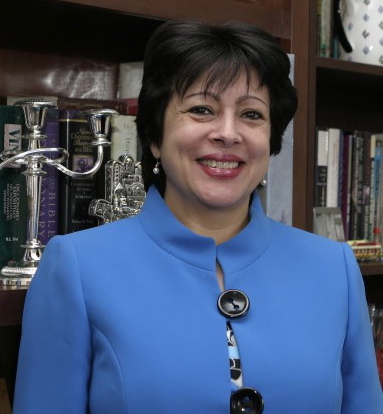
Author
Mercedes López-Miranda
Summary: We all need forgiveness, and we will all have to forgive, because in our relationships we inevitably offend others and are offended ourselves. The foundation for doing so is that Christ paid for our sins on the cross: we freely receive God’s grace and mercy, and therefore we are forgiven in order to forgive. It is not primarily a matter of feeling like doing it, but of humbly obeying God and trusting in his help.
Forgiving does not mean denying the seriousness of the harm, removing its consequences, or immediately restoring trust. Nor is it always the same as reconciliation: forgiveness requires only the decision of one person sustained by God, whereas reconciliation requires two people and may be impossible or even dangerous. With deep wounds, healing and rebuilding are processes.
Withholding forgiveness fuels resentment, bitterness, and spiritual stagnation; granting it frees us from that burden and can open paths toward family restoration. Like Joseph, we can prevent the past from determining our future, renounce revenge, and bear fruit even in affliction. We must approach the throne of grace with confidence, decide by faith to forgive, and then allow God to transform our emotions.
Roberto has been talking about principles and practices that help us maintain and grow in our emotional health. And today I want to continue more or less along those lines by adding one more practice, and that is the practice of forgiveness. Before we are struck by the Word, I want to acknowledge that in this church there are thousands—hundreds—of testimonies from people who have practiced precisely what I am going to share today: forgiveness.
I have been ministered to by the forgiveness I have seen you exercise and extend so generously in your lives. Among us are people who have been betrayed by a husband or a wife, who have been betrayed by a child, and people whose children have died because someone else murdered them. And I want to honor you by letting you know that your testimony is powerful among these people and does not go unnoticed. And if I, a human being, do not overlook it, much less does the Lord. The Lord is pleased with you when you have exercised that privilege you have, that command to forgive, in your lives. So I thank you for the living testimony you give among His people through those acts of forgiveness.
Who does not need to be forgiven? Have any of you never committed an offense that needed to be forgiven? No one would dare raise a hand, would they? Who among you has not been offended and had to forgive? We all fall into that category; no one escapes it. As long as we are in this mortal world, we will be offended and we will offend others, sometimes unintentionally, but it is part of human nature.
And I recognize that one of the practices we need to take into account and grow in is the practice of forgiving others. When we do not forgive others, we become stuck; we stop growing. And I believe there is no marriage, no relationship between spouses, between parents and children, between siblings or relatives, or between one believer and another, in which someone will not have to forgive at some point. It is impossible. We agree on that: it is impossible to live this life without having to go through the experience of forgiving.
For all those relationships to survive, we have to forgive, because we are all sinners. From childhood, we begin to display behaviors showing that we are sinners. One story my husband and his family have told me—I have heard it several times—concerns how, even as children, we already show that we are sinners. Roberto, my husband, and his brother Virgilio are only 10 months apart, and so they used to fight constantly: “You took that from me!” “Look what he did!” “Look what he said to me!” A punch because, “You hit me first, so I have the right to hit you.”
We continually see all those kinds of situations in our homes, and Toñita, my mother-in-law, had had enough of the matter; it was constantly the same thing. That was the last straw. She tried to have a conversation with them: “You, Roberto, forgive your brother; forgive Roberto.” But nothing worked; they kept fighting. She said, “Okay, you do not want to forgive each other and you want to keep this up; now you will see what I am going to do.” And what she did was put both of them on a bed covered by a mosquito net and leave them there for hours and hours and hours. At first, not much happened; each was angry with the other. Then they began to play, and by the time the punishment ended, they were the best friends in the world. “Oh, little brother, here, take my toy car; you use it first.” And there was friendship and love... That is mosquito-net therapy, in case you want to try it at home.
To this day, they are good friends. There are forms of therapy we receive in childhood—the wisdom of our parents—that help us grow specifically in forgiveness and develop skills in that area. These things are learned; they do not come naturally to us. Whenever someone knows that another person has offended them, the first thing that wants to come out is the little monster we all have inside. We have to bring it under control and say, “No, old woman, old man, you have already died. Now I know that I can forgive because Christ forgave us.”
And we know that forgiveness runs throughout the Scriptures. Not only in the New Testament, but beginning in the Old Testament, there are many references primarily to God’s forgiveness, but also to practicing justice by forgiving one another. So it is a central concept; there is no way for us to study the Word without seeing the concept of forgiveness very clearly.
And what is the basis for our forgiving? Obviously, the basis is that, in order for us to forgive, we have to recognize that we were forgiven first. Why were we forgiven? On the cross, Christ paid the price so that we might have eternal salvation through our repentance and reception of God’s forgiveness. It is wonderful. The very instant you say to Him, “Yes, Lord, come into my life; be the Lord of my heart,” and come before God in repentance, at that very instant our sins are forgiven. That is wonderful. After having that experience, it is wonderful how differently you see the world. There are still struggles, plenty of challenges, and many things to put right, and there will continue to be until the Lord takes us from this world, but it is different because we have experienced how delightful God’s forgiveness is.
And when He offered His life on the cross, what did we receive? We received forgiveness for our sins; He freed us from slavery to sin. In a sense, He paid the price with His own body, shedding His blood so that we might be free. And through that act of saying, “Yes, Lord, be the Lord of my life,” we are then also called children of the Father. We are part of God’s family.
So many miracles occur simply because we receive what Christ already paid for us on the cross. Therefore, if we have received that, then obviously we also have to do the same for others. First John 1:19 makes very clear the offer God gives concerning how readily available His forgiveness is. It says:
“...If we confess our sins—notice what it says—He is faithful and just to forgive our sins...”
Clear, right? We confess; He forgives.
“...and cleanse us from all unrighteousness...”
The Lord wants to do a complete work in each one of us. Our role is to invite Him and give Him permission, because He respects us so much that if we say, “No, Lord, I do not want You to cleanse me from my sin,” He will not do it. We are not puppets in God’s hands. He respects us, and that is why He extends this invitation. If you confess your sins, I am faithful to forgive your sins and cleanse you from all unrighteousness.
And we are forgiven not because we deserve it, because we do not. We are all sinners, and what we would deserve because of our sin is death, spiritual death. Nevertheless, we are not forgiven because we deserve it or because we do good works; why, then, are we forgiven? Because of the grace and mercy God gives to each one of us. I believe that there is nothing in the world, no good thing we have received that we could name, that is greater, more important, or more influential in our lives than being forgiven by God.
To know that the God of the universe, who knows everything about us, knows us inside and out, knows our words even before we speak them, knows where we came from, and knows where we are going—to know that He gives us His forgiveness. I think one of the key things in our Christian life is always to meditate on that and remember where the Lord brought us from, because sometimes, after we have walked with the Lord for many years, we forget where the Lord brought us from. Then we treat others with a certain contempt: “Oh, look where you are,” when perhaps we ourselves were in an even worse condition. May we never forget where God brought us from or the grace He poured out in His mercy.
He does not want any of us to perish. The prophet Micah once said, “Who is a God like You, who forgives wickedness and overlooks the sin of the remnant of His inheritance? He did not retain His anger forever, because He delights in mercy. He will again have mercy on us; He will bury our iniquities and cast all our sins into the depths of the sea.”
What a beautiful image. Just think: those sins do not remain floating around somewhere. Rather, once we repent and come into His presence, the Lord grants forgiveness at that very instant and casts them into the depths of the sea. Someone once said that the Lord throws our sins to the bottom of the sea and then puts up a sign over them that says, “No fishing.” Once we have been forgiven, let us leave them there. Let us not flirt with that sin again or take up the burden again, because that is what happens to many of us. The Lord gives us His forgiveness so freely, yet we go back and pick up the burden again as though the Lord had not done His work in us.
That is the concept people refer to when they speak about forgiving ourselves. Sometimes the sense of guilt is so great that we let those sins go and then grab hold of them again, even though the Lord has already thrown them to the bottom of the sea and put up that sign saying, “No fishing.”
Now, that does not mean that we do not sometimes have to resolve certain things or make restitution for certain wrongs we have committed. In other words, it does not mean that forgiveness was granted and everything immediately returned to normal. It is not like that. In reality, it is not like that. But it does mean that I can, with complete confidence, rejoice in the forgiveness God has given me and sin no more, as Jesus said so many times when He spoke during His earthly ministry.
Psalm 32 speaks about the joy of forgiveness and says:
“...Blessed are those whose transgressions are forgiven and whose sins are covered. Blessed is the one whose sin the Lord will not count against them.”
The forgiveness of sins brings happiness. We are more than blessed to be able to savor God’s forgiveness. Forgiveness transforms the mind, transforms the heart, the body, the spirit—everything; it covers everything. It is something wonderful. God’s forgiveness is something supernatural. And it is final. As I was saying, the Lord does not wake up one day and say, “Oh, I forgave you yesterday, but today I changed My mind; today I am putting the burden back on you.” He is not like that. Once we sincerely confess our sins, the Lord grants His forgiveness at that very instant, and that is it: it is forever; it is final.
In Christ’s ministry, we see that He not only healed illnesses, but accompanied the healing of the body with the healing of the soul. And obviously, He began with the forgiveness of sins. One example of this is, if you remember, when some friends carried their paralyzed friend to the place where Jesus was preaching to the people. He was inside a house, and there was a crowd. They could not reach the Lord, so they came up with an idea: “Let us remove the roof, make a hole, and lower our friend through it so that he can get close to Jesus.” And one would think that the first thing Jesus would do was heal his body, but notice that the first words Jesus spoke to this man were, “Son, your sins are forgiven.”
For what good is it to receive healing for your body if you do not also receive forgiveness for your sins? It is much more important; it is essential; it is for eternity. This body remains here, but the forgiveness of our sins carries us through all eternity with the Lord.
And at the end of His earthly ministry, we see Jesus at a moment when He was being scourged, reviled, and mocked. Jesus’ words were, “Father, forgive them, for they do not know what they are doing.” That is our God, a forgiving God. We only need to have a sincerely repentant heart, and the Lord is immediately ready to grant us forgiveness.
And we know that every privilege—we have the privilege of being forgiven by the Lord—but every privilege carries a responsibility. And what is the responsibility we have because we have been forgiven and continue to be forgiven until the last day of our lives? It is to forgive those who have already offended us and to continue forgiving in the future those who offend us in the future. In other words, we are forgiven so that we may forgive. One goes with the other.
The famous author C. S. Lewis wrote the following: “To be a Christian means that you forgive the inexcusable in others because God has forgiven the inexcusable in you.” Forgiven so that we may forgive.
God commands us in His Word to forgive. It is not a suggestion; it is a command: forgive those who have offended us. If you remember the Lord’s Prayer, the model prayer known as the Lord’s Prayer, one of its verses says, in Matthew 6:12:
“...Forgive us our debts, as we also forgive our debtors...”
And He does not stop there regarding forgiveness. A few verses later, He speaks words that remove all doubt that forgiving is a command. He says in Matthew 6:14:
“...For if you forgive others their offenses, your Heavenly Father will also forgive you...”
Notice the “but.” It is one of those enormous “buts” in Scripture: but... if you do not forgive others their offenses, neither will your Father forgive yours. It could not be clearer. We have to forgive. We have received an undeserved gift from God, and our obligation, in obedience to the Lord, is that we also forgive others.
But oh, oh, oh, how hard it is to forgive. Is it just me, or do you also sometimes have trouble forgiving? Not long ago I was talking with a Dominican brother about forgiveness, and he said to me, “Oh, but it’s easy.” “No.” It truly is not easy; it is not easy to forgive, especially when serious offenses are involved. There are little things that we overlook and do not pay much attention to, but there are offenses that make us say, oh, oh, oh, how hard it is to accept this command to forgive.
But we do not do it because it is easy; we do it because God commands it, and we have to do it. Quite simply, God is pleased by our obedience. And whether we like it or not, our ideas about forgiveness will be influenced by our own humanity, by who we are, because we are sinners, and also by our life experiences. That also influences how easy or difficult it is for us, or how willing we are to obey. We often say things in a very arrogant tone, such as, “There are things that cannot be forgiven.” “I forgive, but I don’t forget.” Some forgiveness, right? Or, worst of all, “Whoever does something to me will pay for it.”
We often say that even though we know the Lord, even though we have experienced the joy of His forgiveness; that is how we behave. And why is it so difficult? Why is it so difficult to forgive others when they offend us? And I am not telling you this as someone who has attained some degree of perfection in this area. Not long ago I had an experience that made me see, wow! You still have a lot of growing to do, Meche. And the key is to review these concepts so that we know. I did the right thing in that situation, but how difficult it was for me. My pride rose up: “Who does this person think she is, after I did this and that for her, and now she does this to me?”—and all those kinds of things that all of us do and feel. It is our humanity, our selfishness, but then the Spirit of God must immediately come and say to us, “Aha, okay! But… are you going to obey or are you not going to obey?” We have no choice but to obey the Lord in humility, to humble ourselves before Him and obey.
So first we have to recognize that it is difficult for us to forgive because we are sinners, because there is pride and selfishness within us, and sometimes we decide not to give freely what we ourselves have freely received. And so we withhold the forgiveness that we can give in obedience to the Lord; we say, “No, I’m not going to do it.” Many of us say, “No, I don’t feel like forgiving, and that is why I am not going to forgive,” as though this were a matter of emotions. Forgiveness is not a matter of emotions; ultimately, it is a spiritual matter with spiritual consequences. That is the reality. It is not merely… emotions are involved, but it is not a purely emotional matter.
Some people do not forgive because they think that by doing so they are making themselves vulnerable to being offended again, or that the other person will think they are weak. There again, our pride is present. Others believe the myth that, in order for them to forgive, the offender has to come, get down on his knees before them, and plead, “Please forgive me.” That is not how it is; often, the person who has offended us will not come and ask us for forgiveness. The truth is, do you know how many people it takes to forgive? Just one. Well, two: you and the Lord—you need the Lord’s help—but in reality, one.
Now, we often confuse forgiveness with reconciliation. It takes one person to forgive; for reconciliation to take place, it takes two people. And ideally, there should be reconciliation in most situations, but many times it is not possible for many reasons. Sometimes reconciliation is not even advisable because the person could be placed in danger—there could be mortal danger from murder, danger because there has been sexual abuse, or whatever the case may be. But it is not always possible, and sometimes it is advisable not even to seek reconciliation; yet that does not cancel the fact that I, as a person, have to forgive the other person. There are situations in which it is not advisable, but whenever possible—which is true of most situations—we should seek reconciliation.
Many years ago, a young adult came to me seeking counsel about the difficulty of forgiving a family member, and she confessed that she was stuck. She felt she could not grow spiritually and was struggling because, when she was a child, a family member took advantage of the trust he had been given within the family and touched her inappropriately, sexually, on repeated occasions. So after all these years—we are talking about roughly 25 years having passed since this happened—her inability to forgive this man was still tormenting her. She told me that the mere thought that, once she forgave him, she would have to resume a normal personal relationship with him made her sick. She was definitely experiencing emotional torment because of what had happened.
And so what she did was choose to harden her heart, but that affected her in many areas; she was not free in the Lord. She did not have the freedom God wanted her to have because of her desire not to forgive this person. When I explained the difference between forgiveness and reconciliation to her, it was as though a weight fell from her shoulders, because she recognized that her duty, her responsibility before God, was simply to forgive this man. As soon as she understood that difference—and I believe it is very important for us to understand this—we cannot always achieve reconciliation. Sometimes the person has even died; how are we going to be reconciled with someone who is no longer here? There are situations in which it cannot be done. But whenever possible, we will seek it.
The point is that this young woman took the first step: she forgave. Right there, she prayed while I supported her in prayer, and she was able to forgive this man. And that burden fell from her shoulders, and she became free in that specific aspect of her relationship with God. Years later, God gave her the opportunity to see this man at a family gathering, and she was able to greet him briefly and quite normally, and that was all. But what a difference forgiveness makes. She chose to forgive, and the Lord honored her forgiveness and took away the burden she had been carrying for so long.
When we withhold forgiveness, when we firmly decide not to give it, we open ourselves up to bitterness, to resentment, and sometimes that resentment is like a snowball rolling down a mountain, gathering more and more snow until it becomes something very large. That often happens to us, which is why it is so important… this is a matter of daily hygiene: forgiving those who have offended us and seeking reconciliation whenever possible so that we do not carry bitterness.
Look, bitterness gives you more wrinkles. Who wants more wrinkles? Nobody. Do not do that; lay down your burden, leave it with the Lord. Do not carry bitterness when the Lord has already paid that price on the cross.
I have known people who have embraced bitterness almost as part of their identity, so that this refusal to forgive becomes such a part of them that it affects every area of their lives. I have seen people become sick because they have not forgiven. Who wants something like that? Who wants all their emotional growth and spiritual growth cut short, to suffer, to have nightmares, not to sleep, to become wrinkled before their time—all those things? Who wants that? Let us practice good hygiene every day in that regard; let us lay all those things down and truly extend to others the forgiveness we must give them in obedience.
Someone said that refusing to forgive is like drinking poison and waiting for the other person to die. Why? Because that is what unforgiveness is. It poisons you inside. Do not drink it and hope someone else dies from the poison, and do not drink it yourself either. It is ridiculous.
I have seen people who still refuse to forgive those who have died and who hurt them, and they keep reliving it… I once knew a person who, 30 years later, was still reliving every day the harm inflicted by someone who had already been dead for 30 years. How terrible! What a waste of energy! What a waste of one’s potential for growth, to do something like that! May the Lord deliver us from that. We have to remember why we forgive: because we want to be obedient. Why are we able to do it? Because Christ has already paid the price on the cross so that we can do it.
Again, it is not easy. I am not saying it is easy, but once we do it, what we can see is wonderful. I recognize that many of us have suffered wounds and deprivation in childhood that have created a rejection complex within us. And what happens when we have a rejection complex? In order to protect ourselves, we have built walls around ourselves, and then we begin to become very sensitive. Someone may make a comment or behave in a way that we interpret a certain way… perhaps it is innocent, but the person with a rejection complex thinks it is because someone wants to hurt them.
That is a very important area in need of healing, and it is very easy to recognize people who have a rejection complex because very small things escalate very quickly, and they go around harboring resentment. It is very sad, and they are the kind of people who sometimes have a problem with everyone when they are in a group. It is an area in need of healing; in the name of Christ, even those experiences that shaped us this way must be healed, and we must move forward so that they no longer hurt us.
And there are people who have simply had terrible experiences; we recognize that. But sometimes these are experiences through which we open a very large door to Satan so that he can cause more and more destruction. Do you think Satan wants you to forgive those who have offended you? Does that please him? No, quite the opposite. What does he do? He whispers in our minds, “Oh, but you forgave him, and he did not deserve it.” And it is true; perhaps he did not deserve it, but we do not do it because the person deserves it. We do it because we are being obedient to the Lord; we do it because we have received that grace from God, and it is also our responsibility to forgive others. It is not a question of whether anyone deserves it or not.
A long time ago, through my work, I met a young woman who had undergone some horrible experiences in life. She came from El Salvador and had lived through the civil war there, the guerrilla war. Just one of the terrible experiences this young woman witnessed was seeing someone, right at her feet, kill her own father—first torturing him and then killing him. We are talking about a very young girl. In addition, at home her mother physically abused her with beatings and words, so she came from a tragic background and was very sensitive to rejection.
She emigrated to Boston, married here, and had four children, who were young when I met her. When I met her, she and her husband yelled at and insulted each other every day. It was not a matter of one day yes and the next day no; it happened daily. That was the daily bread in that house. She confessed to me that she could not forgive him for things he had done earlier in their marriage, and that this was her way of taking revenge—because not all of us take revenge by killing someone or hitting them. Sometimes we take revenge in ways so subtle that we deceive ourselves into thinking we are not taking revenge, but you know what I am talking about, right?
The point is, she told me that her way of taking revenge was to call him “crazy,” among many other things that I cannot say here. They were insults. She ignored him. He would speak to her, and she would roll her eyes and… ignore him. She yelled at him every day and did not cook for him, among other things. In other words, she cut off this man’s water and electricity. During one visit, I felt it was time to address what she had already told me she was doing, and I spoke to her about the restorative power of God’s forgiveness toward her and the restorative power of forgiving one another.
And I remember her look of disbelief: “What?” I gave her a suggestion about the things she could do to heal her marriage. I spoke to her about forgiveness, and I saw her look of disbelief when I told her the following: “Look, you do these three things, and I assure you that your life will change; life in your home will change.” I began by asking her, “The first thing you have to do is ask the Lord for the grace to forgive your husband.” Then I told her, “Bite your tongue and overcome the temptation to respond to your husband’s yelling and insults in kind.” And third, “Cook every day and eat together as a family.” I remember her look of… “Uh-huh, sure.” “You think I can do that?” I assured her, “Yes, you can do that. I know you are a spiritual woman; I know God has the power to help you do those things.”
The point is that she obeyed. She followed the prescription to the letter. And in that process, even though she had not yet seen any fruit, her faith in God as a forgiving God began to grow, and her hope that her home could change began to grow. And after just two weeks of following this prescription, she began to see changes. A few months later, she managed to get her husband to allow her to go to church once a week, because he controlled everything in the house. He told her, “You can go to church once a week if you cook first.” But her desire to grow in the Lord was so great that she said, “Well, this is a small price to pay; I can pay it,” because she had seen that the Lord had begun to change her home.
One year later, her husband also became a disciple of Christ, and no longer did she alone go to church with the children; he went too. And to this day they remain committed to a church in Boston. And not only that, but... when God enters a family and begins to do things, He often does not limit Himself to the thing we initially asked for. This was an extremely poor family. I know for a fact that many times there was nothing in the refrigerator, there was no money to buy anything, barely enough to pay the rent, even though it was low. And after 4 years, they were able to buy their own house. It is a wonderful thing, one of the clearest examples I have seen in my life of how God moves in a family when one person in that family takes up the challenge of forgiving. It is something wonderful.
Just as it happened in this woman’s life, I know it can happen in the lives of many others. One of the clearest examples in Scripture concerning forgiveness is the life of Joseph, which we find in Genesis. We cannot examine it at length directly from Scripture because his story spans chapters 37 through 48; it is quite long. So what I want to do at this moment is give you a very quick summary of his story and then address the matter of forgiveness.
We know that Joseph was one of the two youngest sons of Jacob, the patriarch Jacob. His mother, Rachel, who was his father’s favorite, had died while giving birth to Benjamin, her youngest son, who was Joseph’s only younger brother. We know that he had 10 older brothers and that Jacob always showed preference for Joseph.
And obviously, when this happens in a family—when a mother or father shows preference for one child—they are already creating a toxic situation in the family. And obviously, what happened? Out of jealousy and envy, the older brothers began to despise Joseph. On one occasion, to show his preference even more, he gave his son a very beautiful robe, which Joseph made a point of wearing often and which obviously brought out the little monster in his brothers every time they saw it.
The thing is that one day Jacob sent Joseph to find out how his older brothers were doing, since they were tending the flocks very far away. He sent him, saying, “Go and see how your brothers are doing.” And when they saw him coming from a distance, they recognized him by the robe he was wearing—and you wonder, why would anyone put on such a beautiful robe for a long journey, when it was going to get dirty? Joseph perhaps had his own problem with pride; we do not doubt that. The thing is that his brothers began talking among themselves and decided to kill him. But when the moment of truth came, one of them intervened and said, “Let’s not kill him. After all, he is our own flesh and blood; he is our brother. Let’s not kill him.” Then a caravan of merchants passed by, so they sold Joseph to those merchants as a slave.
And we know from the story that God protected Joseph. He did not die in obscurity as a slave in Egypt. Rather, at the age of 30, divine providence brought him into Pharaoh’s presence, where he interpreted two dreams for him, and from that moment on he was appointed second in command in Egypt. It is a fascinating story, and among his responsibilities was storing food in Egypt during 7 years of abundance and then knowing how to distribute it during the following 7 years, when there would be a famine.
And the story becomes very interesting when one day, a day like any other, Joseph is carrying out his duties as second in command and sees his brothers enter—all of them except his younger brother Benjamin. Obviously, what happens when your immediate memories are that the last time you saw these people who are now standing before you was during moments of betrayal, when your own brothers spoke words of death against you, tried to kill you, and sold you as a slave? What a terrible scene, right? You think that all of that is already part of your past, and suddenly you find yourself once again facing the people who betrayed you in such a terrible way.
It was an ordinary day, and what happened was that Joseph did not immediately reveal his identity to them, but he did so later, on his brothers’ third visit. And can you imagine the terror these men must have felt when they realized that this man of great power in Egypt who stood before them was the same man whom they had tortured and tried to kill many years earlier? And they thought... Obviously, what do you think if you have wronged someone? You think revenge is coming. But we know from the account that this story did not end in revenge and death, but in forgiveness and reconciliation.
And we can infer that Joseph’s journey of forgiveness did not begin when his brothers came to him. I believe that many years earlier he had begun making decisions that had allowed him to live an emotionally and spiritually healthy life. Something that makes me think so is the names he gave his two sons. He gave his firstborn the name Manasseh, which means, “God made me forget all my toil,” or all my trials, all my sorrows, and all my father’s household. And he named his second son Ephraim, which means, “God made me fruitful in the land of my affliction.”
He had already processed part of it. There is a great deal of wisdom summed up in those names. They express that Joseph did not allow—he was determined to prevent—his past from determining his future. He said, “I have gone through many trials; I have been betrayed by my own family; I had to leave my home and my relatives.” Even in Egypt he suffered greatly; he was betrayed in Egypt too. “But I am not going to allow that to hinder the blessed future God has for me,” which is something all of us must do. We cannot allow the past we have lived through, the experiences we have had, to dictate what we are going to do today.
And another thing he did was decide to rebuild his life and bear fruit wherever God had him at that moment. He did not allow the past to determine how he behaved at that time. And one thing we see throughout the account, time after time, is Joseph giving thanks to God and acknowledging that the gifts he possessed—for example, the gift of interpreting dreams—did not come from him and were not his own; God had given them to him. And several times the passage repeats that humble acknowledgment that God had given him what he had.
And the fact that he had a heart full of gratitude toward God helped him fight the bitterness that, quite understandably, he could have felt because of what he had gone through. He acted justly within the bounds of his humanity; he acted with justice. And he was able to forgive, not because he was a spiritual giant—just as none of us here is a spiritual giant—but because he knew God and, in that situation, was able to say, “I am going to forgive,” because he recognized the dangers of not forgiving.
One example that sometimes occurs in families is adultery. And I use this example because forgiveness is often a process. Forgiveness is not linear, as though, okay, now I do this, and then this happens, and then this happens. Often it is not like that. Sometimes the wounds we have suffered and the betrayals we have endured are so severe that it is a process that takes time, even when we have sincerely forgiven.
And the example of adultery comes to mind because someone once told me, “I don’t think my wife has forgiven me because she doesn’t behave the way she did before.” I knew for a fact that this woman had sincerely forgiven him, but what often happens? Forgiveness takes place, but then trust has to be earned. Little by little, we have to begin rebuilding the relationship. And I am telling you this because I know there are many people who think, “Okay, I have forgiven, so things have to go back to the way they were.” Or, “I have already been forgiven, so now everything continues as before.” No. Sometimes offenses are so serious that things cannot continue as before. Spiritually, things are indeed the same because we have already taken a step of faith by forgiving, but on the human level we must begin building again—rebuilding, healing, and restoring.
It is good to understand that this is a process, and it is good for both people to understand it—the offender as well as the person who was offended. Part of that happened with Joseph. I believe he did not reveal his identity to them at first, first because he wanted to test them and wanted to know whether they had changed, and also because the emotions he felt were so intense. There was so much anguish in his soul when he once again faced the memories of what those men had done to him and of all the loss that resulted. He did it to test them and to give himself time to process his emotions.
Nevertheless, in one of the brothers’ comments we see that 22 years had already passed, and they still had a clear awareness of guilt in their minds. Once they said, “We are truly guilty concerning our brother.” And they did not know that Joseph understood what they were saying to one another because Joseph had not yet revealed his identity and was speaking through an interpreter. “We are truly guilty concerning our brother, for we saw the anguish of his soul when he pleaded with us, and we would not listen to him. That is why this anguish has come upon us.”
And Joseph had mercy on them, not only in obedience to God, but because he could understand their need and he desired reconciliation. Later on, he says, “Look, I am Joseph; I am your brother Joseph,” and that is when terror obviously comes upon them. But he does not ignore what his brothers have done to him; nevertheless, he gives them words of comfort. Look at what he says to his brothers in Genesis 45:
“...But now, please do not grieve any longer or reproach yourselves for having sold me, for it was actually God who sent me ahead of you to save lives. For 2 years now the region has been suffering famine, and there are still 5 more years to come in which there will be neither planting nor harvesting. That is why God sent me ahead of you to save your lives in an extraordinary way and thus ensure that you would have descendants on the earth...”
Joseph was a man of faith. By speaking this way to his brothers, he comforts them. That brings comfort. And he helps them see that God redeemed the suffering, and God can do that with every situation in our lives. That points us to Romans 8:28, very familiar words which say:
“...And we know that all things work together for good for those who love God, that is, for those who are called according to His purpose...”
Those words fill us with hope because they remind us that when our walk with God is sincere, He works in the midst of every circumstance. For God, nothing in our lives is wasted, no matter what we have gone through. So he made that decision; he made the decision not to withhold forgiveness.
Can you imagine what would have happened if Joseph had not forgiven? The picture would have been completely different. What if he had taken revenge and carried out the famous “eye for an eye, tooth for a tooth”: “You did such-and-such to me, so I will do the same to you.” But Joseph did not choose that; he chose to forgive and reconcile. He chose to forgive and bear fruit in the midst of his affliction, to reject the temptation to fall into bitterness, because we all face that temptation. He renounced revenge, and as I told you before, not all revenge involves death; some forms of revenge are very subtle. He showed grace and mercy. He understood his brothers’ need, and because he was able to do all of this, he reaped much fruit.
And one of those fruits was being reconciled with his brothers and being able to spend time with his beloved father, whom he had not seen for 22 years. During the final 17 years of Jacob’s life, Joseph was able to spend time with him and had the privilege of having his father meet and bless his own sons. That could not have happened if he had not forgiven his brothers. He was an instrument of salvation for his entire household. He was a channel of blessing for future generations.
You never know... the forgiveness you grant today may be the key to your family’s future. It may be the key to saving a marriage; it may be the key to your children having fruitful lives in the future; it may be the key to unity in your family. Sometimes all it takes is one person in a family who is obedient by forgiving for God to heal a whole multitude, as we see in Joseph’s life.
Again, this is a command; we have to do it because God commands us to. It is necessary. By forgiving, Joseph was able to continue the fulfillment of the promises God had made to the earlier patriarchs—to Abraham, Isaac, and Jacob. He was able to carry forward the blessing that God had already... He was walking in promise. Because he said yes to forgiving his brothers and sought that reconciliation, he was able to see that fruit.
Can you imagine what your sincere forgiveness can do in God’s hands? Many wonderful things. Perhaps some of you are here today, and someone has offended you, and you have not been able to forgive him or her. I tell you today that God knows your heart. He knows that it is difficult; He understands; He knows your condition; He is not unaware of it. He knows the struggles within your heart; He knows the offense committed against you. But precisely because He knows, He has also given you in His Word everything you need in order to forgive. If you have been born again, you know that your sins have been forgiven. Do you remember that at the beginning I said we are forgiven so that we may forgive? And you know that at all times you have access to the Heavenly Father.
Hebrews 4:16 says it this way: “...Let us therefore come boldly to the throne of grace, that we may obtain mercy and find grace for timely help...”
I say to you, then, approach the throne of grace with confidence, so that you may obtain mercy and find grace for timely help. Timely help is... God already knows what you need, and there at the throne of grace He already has a little package prepared with your name on it, so that you can simply claim it and receive it. Many of us go to the Lord to ask forgiveness for our sins, but let us not do only that; let us also go to the Lord’s throne, confidently entering His presence to ask Him for the grace we need in order to forgive others.
Grace is there; it is ready. The little package is already there with your name on it. The Lord knows all things; He knows what you need today, and He knows what you will need tomorrow, but it is already there waiting for you. All you have to do is take hold of that grace from the Lord. He has already given the word; Christ has already given His life on the cross so that all our afflictions may be healed.
So today I invite you to make the decision to forgive, and do not wait... Sometimes people talk about... as though forgiveness were something linear and automatic, and everything were already resolved. No. Many times, the first thing is to make the decision to forgive, and often we leave the rest to the Lord. Sometimes our emotions are not aligned with the forgiveness we want and need to extend. That happens to us many times, but by faith we forgive, and in faith we wait for God to give us that additional timely help, so that our emotions may begin to change and come into harmony with that forgiveness, allowing reconciliation to take place in all our relationships.
God is wonderful. God never falls short. Everything you sincerely ask of the Lord, He gives you. I know this from my own experience. Things have happened in my life that I thought would never happen to me, and they have confronted me with the reality of whether I will forgive or not forgive. But when we are in the Lord, there is no other option, my dear sister and my dear brother. No matter what has happened, the only option we have is to humble ourselves, obey the Lord, go to His throne of grace, receive the grace to forgive, and continue moving forward on our path.
God is going to bless you for that. The Lord once told me clearly, “Because you acted justly”—because I forgave in a particular situation—“I will bless you.” And that is exactly what He has done: He has blessed me greatly. And in the same way, He will bless you if you do that.
Lord, thank You for Your word, God. Thank You for the forgiveness of our sins, O God. Lord, we humbly come before Your presence. Lord, I represent my brothers and sisters here, asking You for the grace we need today to forgive everyone who has offended us, Lord. Lord, we want to be humble before You; we want to be obedient. Help us, Lord; take us by the hand along that sometimes difficult path, and give us the grace to do what You have commanded us to do, Lord. Thank You, Father. Amen.