Sometimes Miracles Require Time and Effort
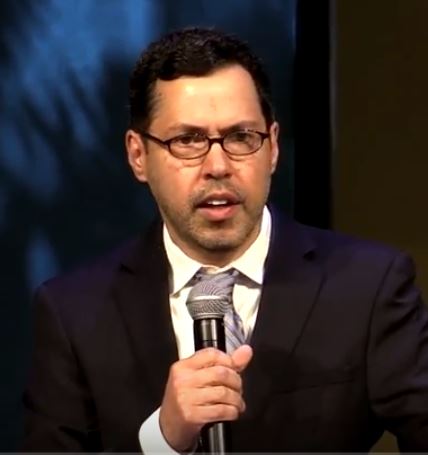
Author
Benjamin Valentin
Summary: We long for miracles that heal the body, the mind, the marriage, the community, and the church, but we often expect to receive them immediately and without effort. The culture of instant gratification makes it difficult to accept that some changes require patience, sacrifice, perseverance, and work. Naaman sought healing, but he had to acknowledge his need, humble himself, travel a great distance, accept unexpected treatment, reach the Jordan, and immerse himself seven times. Although he became angry and probably saw no change during the first attempts, he obeyed to the end and became completely clean. In the same way, we must not abandon hope when the answer is delayed. God is also at work during the waiting: He shapes our character, teaches us to persevere, and leads us toward spiritual maturity through struggle, prayer, and daily faithfulness. If we truly desire transformation, we must bring it before the Lord, stand firm, and be willing to invest time and effort. Before the miraculous and spectacular, we need to learn daily obedience, fulfill our task, and remain faithful to God’s calling.
Reading from 2 Kings chapter 5, verses 9 through 14: “So Naaman came with his horses and his chariot, and stood at the door of Elisha’s house. Then Elisha sent a messenger to him, saying, ‘Go and wash seven times in the Jordan, and your flesh shall be restored to you, and you shall be clean.’” 2 Kings 5:10
“But Naaman went away angry, saying, ‘Behold, I said to myself, “He will surely come out to me, and standing there, he will call on the name of the Lord his God, wave his hand over the place, and heal the leprosy.”’” 2 Kings 5:11
“Are not the Abana and the Pharpar better than all the waters of Israel? If I washed in them, would I not also be clean?” And he turned and went away angry.” 2 Kings 5:12
“But his servants came near and spoke to him, saying, ‘My father, if the prophet had commanded you to do some great thing, would you not have done it? How much more, then, when he tells you, “Wash, and you shall be clean”?’” 2 Kings 5:13
“So he went down and dipped himself seven times in the Jordan, according to the word of the man of God; and his flesh became like the flesh of a little child, and he was clean.” 2 Kings 5:14
How many can say glory to God? And before I begin, I want you to do something: I want you to turn to someone beside you, and I want you to say the following Word to that person beside you: sometimes miracles require time and effort. Now remember those words, because they are the title of my sermon and they also constitute the central theme of my sermon.
In 1997, the renowned salsa singer Domingo Quiñonez released a very interesting album with an interesting title as well as a very intriguing cover. The title of the album was “A Miracle Is Needed,” and, as we can see here on the album cover, Quiñonez could be seen with his hands raised and his face looking upward, as though he were crying out for a miracle.
Historians of Latin music consider this album and its cover to be among the most captivating in the entire history of Latin music. There is no denying that the title and cover played a very important role in Domingo Quiñonez’s career and also had a great deal to do with the album’s success. The record company that produced this album estimates that more than a third, or at least a third, of its sales could be attributed to the album’s title and that striking image of Domingo Quiñonez looking toward heaven, waiting for a miracle.
Now it is worth remembering that Domingo Quiñonez is a man of God, a devout Christian man, a believer who is not ashamed to proclaim his faith and his deepest convictions concerning Christian music and his belief in Jesus Christ, and that is what I believe this song signifies and expresses.
When we examine the lyrics of that song, we find Quiñonez lamenting the rise of violence in our society, its increase not only here but throughout the earth and all over the world, and the premature loss of so many young lives because of that rise in violence. In this song, we find Domingo Quiñonez lamenting that persistent distance and disparity between those who have too much and those who have little, and he also complains about the corruption of government systems that, before coming to power, promise every kind of change and improvement, but afterward become part of the problem themselves.
Quiñonez also laments that instead of improving and accepting one another despite our differences in race, gender, religion, ethnicity, and culture, we continue fighting with one another precisely because of those differences. And after lamenting all those things that he points out in his songs, Quiñonez raises a prayer toward heaven and asks God to perform the miracle of change.
Now, another interesting thing is that the fear we see reflected in Quiñonez—of a world that is getting worse and worse—and that same hope for miraculous change are also repeatedly expressed in our own times through popular music and popular culture. Well-known films such as The Matrix, Children of Men, World War Z, I Am Legend as well, District 9, In Time, The Hunger Games, and Divergent—these and other films reveal a deep fear that instead of things getting better, and despite all our learning, science, and technology, we human beings seem to be headed toward a destiny of deterioration and final destruction. But these expressions also seem to cling to that idea and that hope that change may yet be seen and confirmed in our time.
That same expression of anxiety about the human condition and that desire for a miracle to change everything can be seen in some of television’s most interesting series. For example, we can think of television series such as The Walking Dead and also The 100, Continuum, Gotham, and there is still one more that must be mentioned: Penny Dreadful. But even if we turn to the world of literature or to our newspapers, we will see the same thing, and that is a significant level of concern in our collective and individual lives, always looking ahead for that miracle that will heal our individual and collective lives.
Now, I have mentioned all these secular examples because they illustrate something and tell us something. I believe they are expressing the entire world’s collective anxiety and a common longing for collective change in humanity.
Now, during the rest of my time with you this afternoon, I want to focus on that desire we see and understand for transformative change, because what we see in this desire is that we are longing for different kinds of miracles in different forms. We would like to see miracles that transform and cure our collective diseases; miracles that improve the local communities in which we live; miracles that bring healing and transformation to our marriages; miracles that heal our minds and bodies; and miracles that bring revival and spiritual maturity to our congregations. We can see that desire for these and other miracles in everyone around us.
But unfortunately, what I do not normally see is that ability to bounce back, that ability to keep moving forward, to persist—the perseverance, the dedication, that readiness to continue, that willingness to fight and remain in the struggle—and also the patience required to wait for the miracle to arrive, to remain committed to the task, and to work with God to make possible that miracle we want to experience.
Many times, it seems as though we want to obtain magically the miracle for which we are longing—a magical mindset. All that is required is for me to sit down, lean back, and simply wait for God magically to provide the miracle for me. It is as though we expected the miracle to happen instantly, magically, of course, and not to require much effort on my part. But I believe we must get into the habit of accepting the fact that there are miracles that require time and effort, amen. I am getting Pentecostal now (laughs).
It is a very important lesson that we must learn, you know? It is very easy to succumb to the mindset that miracles are always things that happen immediately, in a flash. After all, we find ourselves immersed in a culture that always expects what? Immediate gratification—a culture accustomed to convenience, a culture that is not very familiar with the idea of patience, of waiting, of having to sacrifice, of having to struggle in order to obtain what we want. Our age is the age of the instant, the age of instant fast-food restaurants, the age of going through the drive-through, buying what you want, and continuing to drive; the idea of shopping on the Internet; and also that idea, right, of purchasing something and having the merchandise we buy arrive the next day. So we have grown accustomed to the idea of what is comfortable, quick, and convenient.
We have our microwaves—and notice how many people sometimes use them more than they should. (Pastor Roberto: May the Lord rebuke that.) We have instant coffee—nothing compares to a good cup of genuinely brewed coffee. We have restaurants there with food already prepared for us to take away. We are in such a hurry that we do not even have time to sit down and enjoy the food; we simply grab it, take it home, or eat it on the way. If we want to buy clothes or shoes or an electronic appliance for the home, we do not even go to the store anymore. And if we do not want to wait for regular mail, we simply order those things so that they arrive the next day. And sometimes, when we want to lose weight for health reasons, we have pills that promise we will lose weight very quickly without making any changes—no changing the tortillas, the refried beans, the pupusas; none of that. We leave all of that there—the salt too.
Well, you are already catching my rhythm and understanding the point I am trying to explain, right? We have grown accustomed to receiving everything so quickly, so easily, so conveniently that it has become tremendously difficult for us to wait. It has become very difficult for us to reconcile concepts such as patience, perseverance, firm resolve, struggle, and sacrifice in order to obtain things. And generally, well, we tend to think that the things of life will come to us instantly.
But I believe we must get into the habit of accepting that sometimes changes will take time and effort to come into our lives, that often the changes we desire will not come so easily. In that same way, we must get into the habit of accepting that some of those great miracles we desire and some of the miracles God wants to perform in our lives are going to take time and effort.
I believe that we, Lion of Judah Congregation, need to get into the habit of thinking that some of the things God wants to accomplish in our lives cannot be put into a microwave so they will cook instantly in a flash. Some of the things God wants to do in our lives cannot be put into an instant coffee maker to be enjoyed and savored within a few minutes. Some of the things God wants to accomplish in our lives cannot be hurried or rushed. They must be cooked carefully and slowly on an ordinary burner; they must take their time. They must be baked slowly in a regular oven, and they will probably require patience, perseverance, and work on our part. Amen. Are you receiving it? Amen. Put it right there in your heart.
In fact, I think the Bible is full of texts that convey precisely that message. For example, in the Old Testament we see passages such as the following. Psalm 37, verse 7: “Be silent before the Lord and wait”—say, “wait”—“wait for Him.” Psalm 40, verse 1: “I waited patiently for the Lord; He inclined to me and heard my cry.” Isaiah 40, verse 31, as well: “But those who wait upon the Lord shall renew their strength; they shall mount up with wings like eagles; they shall run and not grow weary.” If we go to the New Testament, we will also find similar passages. Romans 5, verses 2 through 4: “We rejoice in the hope of the glory of God, and not only this, but we also rejoice in our sufferings and tribulations, knowing that tribulation produces patience, or perseverance; patience produces strong character; and that proven character produces hope in us.” Amen.
We also have Romans 8:25: “For if we hope,” the Word says, “for what we do not yet see, with patience we wait for it, and we shall receive it.” We could continue with many similar passages. Passages like this remind us of the importance of patience and perseverance in pursuing our goal.
I believe that the passage that best expresses the message and the theme we are addressing is the one we read at the beginning of our meditation. And the passage we read earlier tells the story of a military commander named Naaman. Unfortunately, he had contracted a terrible disease called leprosy.
Now, as you may know, in Naaman’s time, contracting leprosy was practically a death sentence. It was a terribly degrading and humiliating disease. People who developed this disease often exhibited very ugly, oozing sores. Sometimes those people lost limbs and extremities because they literally rotted and fell off their bodies: fingers, parts of their hands, the nose, toes, and even parts of the ears themselves.
And on top of all this, because some forms of this disease were believed to be contagious, there was also a social stigma, and people who suffered from leprosy often had to live isolated lives outside ordinary society.
Now, when Naaman realizes that he is suffering from this terrible disease and, knowing his ultimate fate, decides to travel from the northern region of Damascus down to the land of Israel in search of that miracle of healing. He was a very important man, a soldier highly esteemed by the king. He goes directly to the king of Israel, who then sends him directly to the prophet Elisha.
It says that this is where things get interesting. Scripture says that Naaman suddenly appears before the prophet Elisha with his chariots, his entourage, and so on, made up of bodyguards and servants. And of course, Naaman expected that, since he was a general, the prophet would run out of his house to receive him personally and then, of course, would proceed to heal him immediately. But instead of coming out and greeting him, it seems that the prophet simply looks at him through the window: What is this guy doing here, thinking he is such a big deal with that huge group of people accompanying him, Trump-style or something like that? I think Naaman was a better guy than Trump, but anyway, that is purely my personal experience; this is purely—León de Judá assumes no responsibility (laughs).
And then we see that the prophet decides to give Naaman a very large dose of humility, so he simply sends his messenger, his servant, with very specific instructions: Go to the Jordan River and immerse yourself in the waters of the Jordan River seven times. The story says that Naaman became furious and walked away grumbling, saying something like: Good grief, I thought the prophet would certainly come out to meet me. Not only would he come out to meet me, but he would move his hand over my body and heal me instantly. But instead, the prophet tells him: Hey, walk 25 miles to the murky waters of the Jordan River and immerse yourself there; get in there seven times. He needed that kind of humiliating treatment, and now here comes the interesting part.
I must confess that by this point in my life I have heard and read dozens of sermons about this very story. Almost always, what these sermons do is attack, insult, and ridicule Naaman for his supposed arrogance, for being like a spoiled person who is always accustomed to preferential treatment, with a bad temper and a negative attitude. I understand; I know that is the case. I can see that Naaman does display some of these characteristics, and it is evident that he was expecting a quick, made-to-order miracle right there. But I want to show the character of Naaman and his story a little love; I want to extend a little understanding and compassion to him. We should not be too harsh or too demanding with this character either. Why?
Because if we are honest, we have to admit that most of us would have reacted in the same way, yes or no? Some of us might have said to the prophet: Do you know whom you're dealing with? I'm from Brooklyn! Some would have said, I've got my knife right here, ready to—(laughter). Or we would have told him: I am a guitarist for León de Judá, or I am a seminary professor, or I am a deacon in the church, or an associate pastor, an usher at Congregation León de Judá. Well, I have a bachelor's degree, or a master's degree, a doctorate. I am the head of an important company. Many times we have used that same kind of argument.
Oh, I am an American citizen with certain privileges or rights. Or perhaps we might say: I am a grown man or woman, and I demand a minimum of respect, et cetera, et cetera. So, hey, let us not be so hard on poor Naaman. We probably would have reacted in the same way in his situation.
Furthermore, I now want to focus on the difficulties and obstacles Naaman had to overcome in order to obtain his miracle. Let us see; let us count the ways. First, he had to acknowledge: I need healing, and he had to humble himself in order to receive any kind of healing. Some of us would have been finished right there, unwilling to admit that we need help. Second, he had to travel approximately 260 miles from Damascus southward to the land of Israel in order to meet with the prophet Elisha.
Now bear in mind, brothers and sisters, that 260 miles is a considerable distance in a time when there were no Uber taxis, no JetBlue, no Greyhounds, and no cars. My point is that his journey was neither easy nor brief.
Third, we have to take into account that at that time lepers who were suspected of suffering from leprosy could not pass through certain public places. There were laws; there were regulations that had been established which sometimes required these people to take an out-of-the-way route, and that evidently meant that his journey would have been tremendously difficult.
Fourth, when he finally arrives at the prophet's house, the prophet proceeds to humiliate him and make him feel like a second-class citizen.
Fifth, the prophet tells him: If you want to be healed, you now have to travel another 25 miles to reach the Jordan River. So we now see that the journey grows longer.
There is something else that we also need to bear in mind. Sixth, we have to take into account the condition of the river where he had to wash. The Jordan River had the reputation of being one of the murkiest and dirtiest rivers in all Israel. It is a little like the Charles River here—treacherous as it is for diving into. I was exaggerating a little, but that is all right. Yes, it is like a river there—as he said, the Charles—let us say it is as though you had to go to the dirtiest and muddiest place. But you see my point, right?
And finally, seventh, we have to remember that Naaman was instructed to immerse himself in that very murky water not twice, nor three, nor four, nor five, nor even six times, but seven times. Everyone say, seven times. As you can see, things were not made easy for him.
Nevertheless, to his credit, after complaining bitterly, Naaman decides to follow the prophet's instructions. And I imagine that when Naaman immersed himself the first time, he immediately examined his skin to see whether anything had improved. There is no doubt that the second time he did the same thing, and the third time, the fourth time, and the fifth time as well. I suspect that by the sixth time he made the motion, he began to think: I do not believe this miracle is going to happen.
Nevertheless, we see that he obediently proceeds and immerses himself a seventh and final time. And Scripture says that this last time, after emerging from the waters, Naaman noticed that his skin had been completely restored. And not only had his skin been restored, but it had been restored to the point of regaining the smoothness, softness, and vitality of a baby's skin.
And of course, Naaman's skin was restored to that point, because that is what one would expect to happen: when God performs a miracle, He does it well, and that is something we can always count on. But the point of my sermon is that Naaman's miracle did not come easily; it did not come quickly or without resistance. And perhaps the same is true in your own life.
The miracles, the changes that perhaps we too are desiring, the changes and transformations we are awaiting in our lives, require time; they require effort. But you know what? God is willing if you are willing. Say it with me: God is willing if I am willing.
Perhaps you are going to have to make that journey from Damascus to the land of Israel. Perhaps you are going to have to humble yourself before God. Perhaps you are going to have to reach the turbulent waters of the Jordan River. Perhaps you are going to have to immerse yourself seven times in those waters. But God is willing if you are willing. I firmly believe that God is still in the business of performing miracles if we are willing to invest the effort and time in them.
I want to close with the following: What miracle of transformation have you personally been longing for? What transforming miracle have you been crying out to the Lord for in your life? What transforming miracle have you been asking the Lord to carry out in your life? Have you been crying out for harmony and healing in your home? Have you been longing for a change in the situation of your troubled marriage? Have you asked the Lord for one of your loved ones to change their self-destructive lifestyle? Have you been trying somehow to free yourself from some kind of addiction, but have been unable to do so? Have you been dealing with some problem of depression or anxiety? Have you been dealing with some sense of loss, sadness, or grief and been unable to break free from that sadness? Is there an illness in your life, some health condition you have been grieving over? Have you been asking for true, genuine revival to visit your church, your spiritual community? What miracle of change have you been crying out to the Lord for and asking Him to bring about in your own life? God is willing if you are willing.
God is always willing; He is willing to bring about some change, some miracle. But the question that matters is: How ardently are you longing for a miracle of change? Do you want it enough to present it to the Lord today? Do you want it enough to persevere and wait for it patiently? Do you want it enough to remain firm in that hope of receiving it, enough to show perseverance and persistence? Once again I tell you: God is willing if you are willing. God bless you. Amen. Glory to God. Amen, amen. Glory to the Lord. Give the Lord a round of applause. Hallelujah. Thank You, Lord Jesus. Thank You, God. We receive Your word, Father. We receive Your message, Lord. Glory to God. We internalize it.
Brothers and sisters, it is a challenge for all of us. Throughout all these years, especially as Pentecostals who believe in the power of the Holy Spirit and in God's overwhelming interventions that we see throughout Scripture, we have learned—we have become accustomed to waiting for things, for miracles served up piping hot right there. And it is also clear throughout Scripture that God is interested in working on our character, creating Christlike men and women, developing the virtues of the Gospel in our spirits. And the only way that is done is through experiences that teach us, through brokenness, waiting, prayer in the middle of the night, that predawn darkness in which we wish the sun would rise already and which has so often grown far too long. We have cried out to God; we have simmered in the slow fire of our anxiety, our agony, our waiting, and we ask: Where is the Lord?
We are like the disciples, tossed by the waves on the lake and saying, We will perish. And we are there from the time night begins, and we spend the entire night rowing because the wind will escort us, and we wonder: Where is the Lord? The Lord is there cultivating patience. That is the challenge of this message for you and for me. The Lord is there teaching us that He is the victorious God over the waves, over the storm. When He is on that boat, that boat is not going to sink.
The Christian has to learn to wait, to persist, and sometimes the Lord prolongs our waiting so that we may mature, so that we may develop psychological and spiritual complexity. And the only way it is cultivated is through waiting, through struggle, through effort, through investment. God does not want to create little chicks that open their mouths and then the young eagle comes and immediately stuffs food into them. He wants to create wild beasts that search for their food, eat it themselves, and proceed to digest it. He does not want children in the spirit, but mature people who can eat solid food.
Receive that message in the name of the Lord, a foundational, formative message for our congregation. For decades, we as a church have continued pressing on, doing our work, working hard, giving, persevering, waiting, and praying for a powerful visitation from the Lord. And God has allowed us to grow as a church in many ways. Internally, we have seen many of you grow and mature, and as a church we have also grown. We are a relatively strong people, in a very humble, very ordinary way, one day at a time, putting one foot in front of the other.
I know that God wants to perform that miracle of proliferation, of flourishing, and also to make our calling a reality in an instant. But we too have to immerse ourselves seven times in the river. I believe that this entire time of waiting has been God's formation, because God gives us the miraculous and the thunderous after we have learned the everyday things: day-by-day prayer, hard work, paying the price, investing, giving without expecting anything, but simply being faithful to the Lord's calling. And when we have paid the price, when we have done our work, the Lord will say: Your leprosy will be healed instantly.