For Fathers
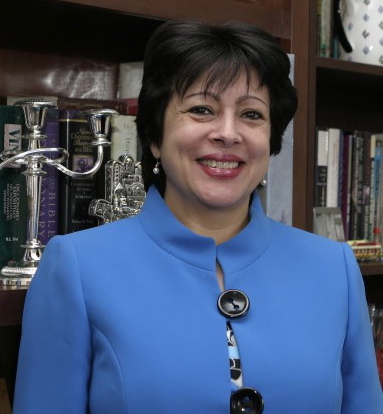
Author
Mercedes López-Miranda
Summary: Fatherhood is a gift and a calling that requires emotional, spiritual, and material presence. Neither physical separation, divorce, nor conflict should prevent a good father from remaining connected to the hearts of his children; mothers can foster that relationship without using their children as an outlet for their own wounds. We can also be father figures to children who have no father, and young men should begin preparing now to live with integrity, honoring the future mother of their children.
The blessed man of Psalm 1 turns away from sin and draws near to God. He does not try to walk simultaneously in the way of the righteous and the way of the wicked; rather, he exercises discernment, obeys, and allows the Word to permeate his decisions. He humbly acknowledges his weaknesses, shows mercy to those who fall, and rejects the cultural lies that justify authoritarianism, emotional distance, or unfaithfulness. Like a tree planted by streams of water, he receives sustenance from God and must bear fruit through his words, attitudes, and actions. Amid frustrations and at crossroads, we can trust that God sustains us as we establish integrity in public and private and grow in purity.
I want to thank fathers for what you do. Sometimes you receive a lot of criticism, but many fathers truly want to do what is right and sacrifice a great deal for their children, and I want to congratulate you and thank you. I know that, as a woman, I would not be half of who I am if I had not had a father who, even today at the age of 85, invests in my life, so I am deeply grateful for the gift of fatherhood.
And I know that, as women, we have a great responsibility to support the fatherhood of our husbands or of the fathers of our children. There are many cases in which Mom and Dad are no longer together, but even then we women have a role in facilitating fatherhood, because we understand that, as an immigrant people, parents and children are often separated: the father is in one country, you are here, there has been a divorce, or there have been other circumstances that have separated you from your children. But that does not justify a rupture or distance between you and your children.
Even so, you can continue being a father to those children. So it is very important that you not allow anything to hinder the gift of fatherhood from flourishing—nothing, not physical separation, not anything else. Over the past several years, a current of criticism against fathers, and against men in general, has emerged in our society, suggesting that men should no longer occupy the place of honor that the Word of God says they should occupy. We have moved from a place of traditional values to thinking that we can do without fatherhood and the presence of men, and that cannot be. I believe that, in this season, the pendulum is swinging back again, drawing closer to its rightful place. I see many agencies developing programs to help men be fathers.
In fact, there have recently been many studies examining a father’s impact on the lives of his children, as though we needed to invest thousands of dollars to discover that fathers are important. We already know it: fathers are important. Not long ago, I read about a study examining the impact of a father’s rough-and-tumble play with his children, and they discovered that this is a very important element that fathers provide for their children by playing roughly with them. Did you know that when your children’s father grabs the girls by the feet, turns them upside down, spins them around, and tosses them into the air, we women have to look the other way because it frightens us? Well, those things are important. Fathers are generally the ones who do that, and the study said it is important for both boys and girls. I thought only little boys liked those games, but they are essential to girls’ development, because they awaken certain fear responses that a child must confront when being tossed into the air, and they reinforce the assurance that the child will fall into safe arms—someone is there to protect and care for them.
So someone spent thousands of dollars to discover what we already knew, things that are just common sense. So, Dad, do not allow anything to hinder you in your role as a father. Make the effort. I know that for many men it is difficult to reconnect with their children when there has been distance. It is easier for women because our language skills and certain qualities are more developed, but when a man feels there is distance, especially with the mother of his children, it is difficult for him to return to his children. That is where we women have an important role. We cannot block the path of a good father—obviously, one who has something good to provide for our children—and prevent him from reaching them. I know that this is sometimes an unacceptable message for many women, because when we have problems with the father, by extension we sometimes use our children to vent our emotions, and we must not do that. Our husbands remain part of our children’s lives, because a day will come when there will be weeping and pain because their father was not part of their life.
So, as women, we can fulfill that role of drawing fathers closer to our children. People refer to this generation as the fatherless generation; in English, it is called “the fatherless generation,” the generation without fathers. In the United States, 43% of children do not live with their fathers; their fathers are completely absent. That percentage is even higher among African Americans and Hispanics, so it is possible that as many as half of Hispanic children do not live with their fathers and do not even have regular contact with them. Therefore, we, the Church, must reverse that trend and find a way for those fathers to be joined to the hearts of their children, and for those children to be joined to the hearts of their fathers. That is what God desires in His heart.
Not long ago—in fact, just three or four days ago—President Obama was being interviewed. They discussed three or four subjects, but fatherhood in particular, because today is Father’s Day, and he took questions from the audience. A little boy in the audience asked him, “President Obama, are you going to miss your father?” His father had already died. “Are you going to miss your father?” Obama answered, “No, I am not going to miss him, because I never had a relationship with him. I will miss my grandfather, my mother, and my grandmother, but not my father.” And that is the experience of many children, of many people: they cannot miss a father they never had. So, as a man, carry this message. Make sure that the men around you, the men under your influence, also act responsibly toward their children—not only by paying child support, by sending them money for their expenses, but by caring for their hearts and emotions and being spiritual fathers to them. Because you, as a dad, are both a physical father and a spiritual father to your children. You have a responsibility and a great calling, and you should know that your children’s concept of the heavenly Father will be based, to a great extent, on the kind of father you are.
So there are many things we can do, exercising fatherhood with great responsibility, so that we will not be part of this fatherless generation but, on the contrary, will rise up as fathers. If you do not have children around you, there are countless children who need a father. Someone who heads a Christian organization commented the other day that he grew up without a father. His father left his home when he was very young, and he became attached to a man who owned a little store near his house. As that man taught him how to work in his store, because he had given the boy a job, he also became like a surrogate father to that young man. So if you look around at your nephews, your grandchildren, and your neighbors, there will be someone—there will be a child who needs a father. And if you are still young and are not yet a father or married, grow up with the thought that one day you will be a father. The work begins now, while you are still a boy. Do not start making mistakes now only to have to repent of them later. Begin preparing yourself early so that you may be a man of integrity, and the best gift a man of integrity gives his children is to honor his wife, to honor the mother of those children.
They are not two separate roles: “Here I am a husband, and over there I am a father.” A truly upright man must first give them the security of a stable home by honoring the mother of those children. So there are many different aspects and facets of fatherhood, and today I want us to read Psalm 1 together, a very familiar psalm, the first of the one hundred and fifty psalms that are recorded, possibly a psalm of David. Since you are going to sit down again, let us read the psalm together while we wait for the others. It is only six verses. Everyone is ready, right? Okay. “Blessed is the man who did not walk in the counsel of the wicked, nor stand in the way of sinners, nor sit in the seat of scoffers, because his delight is in the Lord, and on His law he meditates day and night. And he shall be like a tree planted beside streams of water, which yields its fruit in its season, and its leaf does not wither, and everything he does shall prosper. Not so the wicked, who are like the chaff that the wind drives away. Therefore, the wicked shall not stand in the judgment, nor sinners in the congregation of the righteous, for the Lord knows the way of the righteous, but the way of the wicked shall perish.” Father, at this moment we unite to ask that the message of this psalm sink deeply into every person present, Lord, particularly the men here, the fathers, Lord, whatever role each person may have, and may this message go straight to the heart. Thank You, Father, in Jesus’ name, amen. You may be seated.
This psalm reveals to us, in a very poetic way—the Psalms make extensive use of symbolism and poetry—what it means to be a blessed person. Although the condition of being blessed is a gift from God, it must be supported by two actions. The first is to disassociate ourselves from sin, that is, to separate ourselves from sin. The second action is to associate ourselves with God, to draw near to God. In fact, this morning, as God always brings everything together in such a creative way, most of the choruses we sang referred precisely to that: the pursuit of purity, separating ourselves from evil and sin, and drawing nearer to the Lord.
Verse 1, which we just read, says very clearly that, as a child of God, you cannot walk in the counsel of the wicked, you cannot stand in the way of sinners, and you cannot sit in the seat of scoffers. Later we will see what a scoffer is; it is not a word that you or I use very often, is it? In other words, the blessed man, the child of God, must reject all company that is not fitting for a child of God. It is very easy to fall into sin; it is very easy to slip into sin. It is a process that often unfolds little by little, very subtly, and over the past year we have seen many public examples of this. Sometimes you wonder, “But what was that person thinking?” And I know that just by saying that, you are already thinking about the news reports you have heard. We have heard about a man who was having extramarital affairs while his wife was suffering from cancer. We heard about a woman who used a great deal of the people’s money—obviously illegally—to pay for luxuries.
And we heard what is perhaps the most recent case, of a man who was sending sexually explicit text messages to women on his list of political contacts. I mean, you wonder what that person was thinking, how he got to that point, especially when he had everything and occupied a position of privilege. What makes a person apparently want to throw it all away and expose himself to evil in that way? And obviously, what happens? Everything is affected. Those people caused harm; some are in prison, some damaged their marriages, put their relationships with their children at risk, harmed society, and saw their reputations fall through the floor. But why? Why did those people do it? What was each one of them thinking? And I know it is easy to take a position from which we criticize what we see, but you know what? It is only by God’s mercy that you and I are not there.
That is why I did not even mention these people’s names, because it is very easy to point a finger and throw a stone. But what does the Lord tell us? Let the one who is without sin cast the first stone. Every one of us, in one way or another, has some area of weakness; we have a tendency toward some area of sin. That is why we must have mercy on the person who falls, lest we too fall while accusing them, right? That is a warning the Word gives us. So, to avoid falling into those things, we must be vigilant. We must discern good and evil in everything, even in the things we regard as private, as our own business. Even there, we must discern whether something is of God or not of God, whether God calls it good or calls it evil. We must always examine our hearts and see, as the Word says, whether there is any wicked way in them. That is a daily task; we must examine our hearts.
Our morality has become very lax; it has been stretched, and many times even we Christians call good what God has said is evil. We must be careful, and you, as a man, must be different. As a single man, you must be different; as a married man, as a father, as a worker, you cannot embrace the principles and values of this age. You must be different; you must shine for the Lord. Do not allow the influence of the world, of the wrong counsel that may surround you, or of your own carnality—sometimes that can cause us to fall—and we must be very vigilant. We must yearn and have a passion for purity, with a strong desire in our hearts to please the Father’s heart.
A scoffer is someone who lacks the wisdom of God. If he has any common sense, it is a very worldly kind of common sense. He has no principles grounded in God’s law, lives according to his own law, and, moreover, delights in mocking what is good and pure. Many of us know people like that, people who mock the boundaries established by the Word of God because they think their freedom lies in resisting what the Word of God says. That is a scoffer. Such a man cannot be blessed, because he has chosen the wrong path, and we know there are only two paths. The psalm tells us this clearly: the way of the righteous or the way of the wicked. And many times we—men, women, and even children—find ourselves at a crossroads, in those moments when we do not know what to do.
Do you remember the video, where the little boy said there would be moments when he would have doubts about what to do, but then he would remember what his father taught him in moments when his father had to show integrity before his son. So we are going to have those moments at a crossroads, and you are going to have to choose. The devil will want to deceive you and will want you to believe that you can have one foot on the path of the wicked and one foot on the path of the righteous, but that is not possible; both feet have to be on one path, because if you have one foot on the path of the wicked, it means you are already there, you have already been corrupted by the values of this age, and in those moments when we find ourselves at those crossroads, wondering what to do and what is right—not necessarily what I want to do, because sometimes there are difficult decisions that involve a cost, a price—even then, we have to ask God, “What do You want me to do?”
And we have to be obedient; there is no other alternative. It is in those moments that we have to prove and confirm that our desire to draw near to God and take refuge in His mercy is stronger than our desire to taste what the world offers you on a silver platter. Many times those things look so easy; the devil offers them to us just like that, on a silver platter. But may God help us discern. To discern means to understand what is good and understand what is evil. May God help you, man, father, husband, to discern what is good and what is evil. And the blessed man has a completely different way of thinking from the scoffer, and that is what we are going to see now. Blessed means favored, happy; that is what it means. So the psalm says that it is speaking about the blessed man, the favored man, the happy man.
This man has joy and gratitude in his heart, because he recognizes that the gratitude he has in every area of his life does not come from his own effort but from the hand of God. That is the first thing that identifies him. He cannot live as he lived before. When a person is walking in the ways of the Lord, many times even the little things that he used to do, which perhaps were not big sins but tiny sins—although there is no such thing; sin is sin, right?—or perhaps things that were lawful for us to do at one time, as we continue walking with the Lord, the light of His Spirit shines within our spirit and we begin to recognize that there are things that no longer please God. And it is a desire for purity. I remember that a few years ago, in January, God continually spoke to me about purity and about how I, as His daughter, had to purify every area of my life, even those that seemed innocent, because He was requiring something different of me. A saint is a person set apart to serve God, and that is what we are talking about: that you may discern what is no longer fitting and make changes, transforming yourself so that you live differently—not as you lived before, but as God requires you to live today. That is obedience: when we make those changes, even when they hurt us, we have to let go of things that once gave us pleasure and delight. It is not an easy process, but it is a process with great rewards from God.
And the blessed man lives with confidence because he knows that God’s blessing is not something emotional based on something capricious. No, it is something that is there with you, that will pursue you, because you are seeking and desiring it. In the Word of God there are countless examples. We can think of Abraham, King David, and the apostle Peter, among many others, who were men with human weaknesses, just as you and I have them, but despite those weaknesses they managed to enter into covenant with God. They were blessed men because even amid their weaknesses, even amid their mistakes—some of them serious—when you think, for example, of Abraham’s case, lying was one of his weaknesses, as was following his wife’s recommendation and going in to her maidservant and having a son instead of waiting for God’s promise.
In Peter’s case, it was lying, saying that he did not know the man at the moment of his Lord’s greatest need. In other words, we are in good company; that is what I mean. You, as a man, are in good company. The Word of God is very transparent; it portrays men in three dimensions: the good they did, how holy they were, and also their weaknesses. So recognize that God’s blessing is there upon your life. You are blessed, even in the midst of your struggles. God’s salvation and blessing are not something that comes and goes, comes and goes. No. When we have made a covenant with the Lord, we are awaiting His promises, and along that path of awaiting the promises, the Lord cleanses us. A blessed man knows that.
Verse 2 tells us about the identity and character of the blessed man, and it tells us that the righteous man uses his time in a certain way. That verse says that the righteous man meditates on and reads the law of the Lord day and night. The righteous man meditates on and delights in the law of the Lord day and night. For the righteous man is identified by his association with God’s law. That is his primary identity: he is associated with it; he wants to separate himself from sin, he has separated himself from sin, and he is associating with his own people and drawing near to God. And that verse does not mean, well, he is meditating on the law of the Lord day and night—what does that mean? Do I have to shut myself in a room, read the Word of God, and think about the Word of God day and night? Obviously, no one can do that, right?
But what it means is that the Word of God will permeate every area of our lives. It will be present; it will help us make decisions; it will help us at the crossroads we spoke about earlier. That is the purpose. And it is by meditating, by keeping it present in our minds, that when difficult situations arise in which we have to do what is right, the Word of God will show us how we should act. That is what this verse means when it speaks about meditating on and delighting in the law of the Lord day and night. Over time, you learn that God’s law becomes like a lens through which you view every situation and every circumstance in life. Then you decide what to do: whether to go down this path or the other one. That is what it is about—keeping it so present in your mind, heart, and spirit that, over time, doing what is right becomes easier for us.
I have had the privilege of witnessing the journey of many people in our congregation who arrived here with rebellion in their hearts, mocking many things of the Lord, sometimes not even wanting to serve Him actively. And I have seen how, when those people entered the waters of the Lord, their lives were transformed, and today their lives, even their faces, are completely different. Sometimes you look at certain people and say, “But what happened to these people?” Sometimes you see a weight, a scab—to use a strong word—a scab that has fallen off, and that person is fully displaying and reflecting the grace of God. That is what happens when a person meditates on and delights in the law of the Lord day and night. It is a beautiful process in which we should all remain every day of our lives, until our final breath.
Verse 2 of the psalm speaks about delighting. Obviously, when you delight in something, it is something that gives you pleasure, something you enjoy; it is something foremost in your mind and has priority in your mind. That is what delight is. And today I ask you: as a man, as the head of your household, as a single man, as a father, what is your delight? Where do you find delight? The one who delights in the law of the Lord is not merely a hearer of the Lord but a doer—and many times not because he wants to or desires to, but because he wants to be obedient and wants to bring joy and delight to the heart of the heavenly Father. When one of our children is attentive and respectful and gives us a place of honor, doesn’t that touch our hearts in a special way? That is how the Father is. When we delight in Him, when He is first in our lives, when we desire to bring joy to His heart, that is the reason for our existence. The reason for our existence is to bring glory and honor to the Father; it is to delight in His heart taking delight in us. I believe there is no greater joy a child of God can have than knowing that God delights in you, that your heavenly Father delights in you—in your work, your attitudes, how you treat others, and how you draw near to Him and want to be one with Him.
What do you meditate on? Because the Word says that you must meditate day and night. What do you spend your time on? What occupies your mental space? That is a great question. What do you think about? The answer to that question often shows us where our heart stands in relation to God: the time, effort, and thoughts we devote to certain things, some of which we recognize do not please God. And that is where we have to make changes, even within our own minds, asking God to enter there and heal. Not long ago, we sang that He is here to set free, to heal. That is possible. It is possible to live free in mind and free in heart, to worship Him and serve Him with all our heart. It is possible.
God always desires to cleanse the hearts and minds of His children. He desires to unmask lies that we have believed since childhood. He wants to do those works. He wants us to continue growing and to have complete integrity in every area of our lives. A man often believes certain lies, and I want you to examine yourself to see whether one of these is yours. Have you heard yourself say or think, “In my house, we do what I say”? It seems so. “My wife and children have to be content with the fact that I work myself to death for them, and they should not demand anything more from me.” “The house, the kitchen, and the children are women’s business.” “It is good for my children to be afraid of me; that way they will behave even when I am not there.” “It is not good for a man to be affectionate; he must keep his distance from his wife and children.”
“Even though I am married, I can live as if I were single.” And the last one: “As a man, it goes without saying that I can allow myself certain liberties; that is what my father and my uncles did.” Is there any one of those lies that you have believed? Because even though they are things in your mind, and some of them may seem very subtle, they will have an impact on how you behave. Many times we hide our sins behind the false screen of culture. “That is just the way my culture is; that is how I was taught; that is where I come from; in my country, that is how things are done.” And God demands something more. God’s world is much broader than the small world of the culture with which you have affiliated yourself. We have to begin making changes even in those things. And I tell the men that there is nothing sexier in a man than seeing him in the kitchen cooking. So, a word to the wise is enough.
Those changes—leaving behind our culture and certain things—do not happen overnight. We know that, right? But if our purpose is to please God, then when that crossroads presents itself, we will be able to leave behind all those lingering influences of culture, the way we were raised, and even our own wounds, and begin to grow in the Lord. I have seen the transformation of maany men whose entire way of thinking, acting, and treating their wives and children has changed. That is possible. Do not allow what is in your past or what you have learned to determine how you will behave in the present and in the future. We can go further and always desire to please God.
The psalmist declares that the wicked man is like chaff. “Chaff” is another word we do not use nowadays. Chaff is the equivalent of straw; it is like when grain is threshed and straw remains. And it says here that the wicked man is like chaff, like straw, without value, which is swept away by the wind. In other words, he has absolutely no value; he is useless. Chaff is good for nothing, and it says that the wicked man is like that. But then it uses another beautiful image to declare the opposite. It says that the righteous man is like a tree. Verse 3 says that he is like a tree planted by streams of water, which yields its fruit in its season and whose leaf does not fall, and everything he does will prosper. Trees are marvelous organisms; in fact, we need them in order to live. A tree is responsible for oxygenating and purifying the air; it provides shelter for wild animals, raw material for building, and food; it prevents soil erosion, provides shade, and produces visual delight through its beauty. I am a lover of nature, as is my husband, and instead of going to cities, what we truly desire is to go and be in nature. And how beautiful a tree is, planted there beside streams of water, offering its shade, pleasing to the eye, and even better if it offers its fruit.
So that beautiful image—it does not surprise us that God, being the creative God that He is, would say that the righteous man is like that: he is like a tree planted beside streams of water. And the Psalm says that it is a planted tree; it is not a wild tree, not a tree that just happened to grow there by accident, a little seed that the wind blew away and that fell wherever it happened to fall. It is not like that. This is a planted tree; God intentionally planted this tree beside streams of water. God Himself takes care of providing the water, the spiritual irrigation necessary so that you, like this tree, will neither dry up nor wither. God takes responsibility. John 7:38 says that whoever believes in Me, rivers of living water will flow from within him. So you, as a blessed man planted beside streams of water, know that the Spirit of God flows within you, that you will not lack water, that even when you are in a desert, in a severe drought, you still know that you will not lack water, because those rivers are already flowing deep within you.
And besides being a tree planted intentionally, this is a tree that bears fruit, the Psalm says, and a tree is known by its fruit. If you are walking and see that a tree has apples, then you already know that it is an apple tree; or if it has pears, or mangoes, which may be more pleasing to all of us, then it is a mango tree. You know that a tree is known by its fruit, and the same is true of us: the kind of tree we are is known by our fruit. Through our actions, our words, and our attitudes, fruit will be produced that will define our character, because we all have fruit, whether good or bad, healthy or diseased. We all have a character, and there is nothing hidden under the sun; sooner or later, the condition of your tree will become known.
When we went away for the summer, we saw a tree that looked quite healthy on the outside. Its bark looked beautiful, and it had a good number of leaves, and suddenly the tree fell and destroyed the roof of a house as well. And I said to myself, “How is it possible for a tree that has roots and is so large to fall?” When we approached the tree, we realized that it was hollow inside; its substance was gone. The center of the tree had been eaten away, and that was why it fell and caused destruction. That is why, sometimes, when the termites come, we can allow them to take possession of our tree, and that tree falls and causes destruction. Whenever a tree falls, something is destroyed; something in its path will be destroyed, unless it is an isolated tree, but trees are generally together.
There is always something that the tree destroys when it falls, so nothing is hidden; it always comes to light. We must be watchful—that is why we spoke earlier about good and evil—we must discern so that this does not happen to us. We have to see where we are planted, whether there is good irrigation, whether the nutrients our roots absorb are good, whether our fruit will be desirable or undesirable. And what do you want? You want desirable fruit, don’t you? You want others to draw near to you. In fact, the Word of God is very clear in saying, first of all, “You will know them by their fruits.” That is clear. And furthermore, it says that the branches of those trees that do not bear fruit will be taken away, removed, destroyed. In the same way, if you plant some little tomato plants in your yard for the summer, what are you expecting? That they will bear fruit, right? That they will give you tomatoes. And what happens if July arrives and the little plant has not produced any tomatoes, or they are green, ugly, and inedible? How will you feel? Disappointed, right?
In the same way, God is disappointed with us, and in order for us to prove that we are disciples of Jesus Christ, the Word of God says that we are required to bear fruit. There is no other alternative. If you are a tree planted beside streams of water, as a blessed man of God, you must bear fruit; that is nonnegotiable. And this tree is also a tree whose leaf does not fall. Have you ever seen a dry, ugly tree and said, “Oh, what a beautiful tree! I’m going to sit down, spread out a little blanket, and have a picnic beneath it”? No, quite the opposite; you have no interest in going near that tree. But we all feel good around a thriving tree, with very deep roots, large branches, and green leaves—a beautiful tree that provides shade. We are all drawn to that tree.
In fact, when Roberto and I had our first apartment in Cambridge, there was a very lovely tree outside the window where Roberto would sit and pray in the early morning hours. It was a beautiful tree, with very lovely branches. When the snow fell, it looked beautiful; the tree was spectacular. And sometimes the blue jays, those blue birds, would come and nest there; there were little eggs in the nests. It was a beautiful tree, and we were in love with that tree. But one day we came home from work and, to our surprise, the tree had been cut down. We just stood there; we did not know what to say. When we asked what had happened and why they had cut down the tree when it had been so beautiful, the maintenance man said, “The owner told us to remove it because he wanted the center, where the grass and everything else was, to be more visible.” So that tree appealed to us because it was very beautiful. It ministered to certain needs of ours; there was privacy in the living room where the window was because the tree was there providing protection. So a tree has a purpose, and when that tree is gone, it is missed. And in this case, it was a tree that met many of our needs.
Because we all like to take shelter beneath that tree, beneath a tree with these qualities. A tree like that shelters us from the cold and the rain. The Word of God says that a righteous person is a tree of life; that is, you, as a son of God, as a blessed man, are a tree of life. And if you have the Word and feed on the Word, you are a tree of life, and you will likewise be able to give life to others. You are that tree for which everything you do will prosper. The verse goes on to say, “Everything he does will prosper,” and it seems to me that the Lord is emphasizing the word everything. And what is everything? It means that everything the blessed man does will prosper, and everything means everything. It includes your marriage, your fatherhood, your work, the way you provide for your household, your ministry—everything.
For a blessed man who is like this tree, everything he does will prosper. God has a very great vision for your life. God is not a limited God who looks at you and is satisfied with what you are now. God wants you to grow. He has a beautiful vision for each of you as a man of God, as a single man, as a married man, as a father. In every area of your life, God has a very beautiful vision. And there is an illustration I want to share with you that I read recently. Quite a long time ago, there was an African American man who was the son of slaves and lived on a cotton plantation. One day God placed in his heart, as a man of faith, the desire to leave that place and seek a better place and a better future for himself. And do you know what he did? He found two very large containers, and everything he earned he deposited in those containers, one on one side of the bed and the other on the other side. And he put up a sign that read, “What my eyes do not yet see.”
That is based on Hebrews 11:1, which says, “Now faith is the assurance of things hoped for, the conviction of things not seen.” And he kept putting money in them until one day both containers were full. After some time, he moved to the northern United States, found a suitable wife, and had six children. And every time one of his children was born, he bought three frames, the kind of frames people use for displaying photographs in stores. He bought three frames and placed them on the wall, empty, without putting anything in them, and they were filled as his children graduated from elementary school, high school, and university. So it was a very interesting-looking wall, with all those full frames and empty frames.
That is how God is toward you as well. In heaven, God may have many frames for you to fill as you draw closer to becoming the upright and blessed man He wants you to be. And I imagine that, as a man, you sometimes feel incompetent, powerless to do certain things, frustrated in some areas, even in the area of fatherhood, for example, or as a husband. But stay there, you know. The same Lord who sustains that tree planted beside streams of water will sustain you. You do not have to be afraid. He will do the work. If you are in the Lord’s hands, He will do the work. And in conclusion, I want to read over you, over you, León de Judá congregation, a few verses from Psalm 92. That Psalm says this:
It says that the righteous will flourish like the palm tree; he will grow like a cedar in Lebanon. Planted in the house of the Lord, they will flourish in the courts of our God. And look how beautifully it says this: even in old age they will flourish; they will remain vigorous and green, to proclaim that the Lord, even in the fortress, is upright. That is God’s promise for your life. And if you can, place the image of the tree in God’s hands. Just like the image you see there, your life, your tree, is in the hands of your heavenly Father. In Him you are safe. In Him you will have that continual water, like rivers flowing deep within you. So you do not have to be afraid. Take the risks God has called you to take. Establish integrity in every area of your life, in private and in public, and be, as the Psalm says, that blessed and fulfilled man who blesses because he is planted beside streams of water, because he bears fruit, because his leaf does not fall, and because everything he does will prosper. May God allow that to be the man you are increasingly becoming.
When life’s frustrations come, when you think, “I cannot do it; this is too difficult; I do not know what to do,” when you are at a crossroads, remember what God says about you, so that it will encourage you, recharge your battery, and draw you closer to continue seeking more of God. Let us pray for a moment, and afterward we will have a song to honor fathers on this day. Lord, thank You for Your Word. Thank You for these beautiful images. Thank You because Your Word is so clear in guiding our path. Father, I present the fathers of our congregation to You. Thank You, Lord, for their ministry. Now, Lord, I bless them in every facet of their lives, wherever they may be, Lord, in all their struggles and weaknesses. Father, at this moment I ask You to minister to their spirits, the purifying water of Your Spirit in their hands. Father, may they know that they are firmly planted, that in You they need not be afraid, that You have given them purpose and permanence in the kingdom, Lord, through the sacrifice You made on the cross.
Lord, may Your purity become greater and greater in them; may the desire to be pure rule over them, and may You help them establish the right priorities. Lord, may Your Word establish positions. Lord, as they leave here, take them safely. Send them out with the Word they have heard and determined, Lord, to delight more and more in You. Lord, may You be their delight. Lord, may their delight be to delight Your heart. Lord, may that be the people You are forming on this corner of Boston, Lord: an obedient people who delight in doing Your will, Lord. Thank You, Lord. Thank You for this people. Take them safely to enjoy time together as a family, to spend the rest of the day, Lord, and guide every day of their lives, Lord. Just as You sustain that tree, Lord, may You sustain the life of each one of them, Lord. Thank You, Lord, for Your Word, for Your presence in this place and in our lives. Thank You, O God. Amen, in the name of Jesus. Amen.