Esther Knew How to Work as a Team with Others
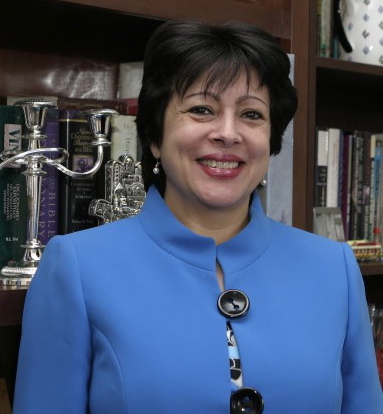
Author
Mercedes López-Miranda
Summary: God is at work even when He seems absent or slow to act, and in Him each of us has an identity, a purpose, and the spiritual resources needed to fulfill it. Esther understood that she had come to the kingdom for a decisive hour. Faced with the threat against her people, she neither gave in to despair nor acted impulsively. She sought direction through fasting, prayer, and intercession; then she moved forward with wisdom, courage, and faith. She also worked in unity with Mordecai within a relationship cultivated through respect, love, and mutual submission. Together, they stepped out of their comfort zones, used the resources available to them, and collaborated in the deliverance of their people. The life of faith is not free from trials, but God gives us wisdom to face them in a way that pleases Him. Therefore, in times of crisis, we must avoid the weapons of the flesh, wait for His strategies, and act obediently when we receive direction. As we embrace our purpose, strengthen harmonious relationships, and dare to obey, our gifts can bless not only the present but also future generations.
Never stop fixing your eyes on the Lord, because He will always come through at some point; even though you may think He is taking too long, at some point what you have longed for and what you need will come.
Always know, as we were telling the young girls yesterday, that none of us is an accident; we are not here simply because one day our parents came together and we were the result.
Each of us has a unique, special purpose, a destiny in the Lord.
And sometimes, when we lose sight of that purpose and do not have the conviction that we have an identity, that God has given us a new identity—we are not today what we used to be; once the Lord comes into our lives, He gives us a new position, a new identity according to the riches in glory—meaning the standard is not something small; it is according to the riches in glory, to the spiritual resources that exist in heaven for each of us. So when you find yourself in those moments of weakness, when you seem to lose your focus and confusion comes into your mind, always remember who you are and what resources you have.
And today we are going to meditate on the book of Esther, the story of Esther, in the Word, in the Old Testament. While we were here during the time of praise, Avi, our daughter, told Caleb to bless me: “Ima—that is what he calls me—is going to preach a sermon today, so please bless her.” And Caleb came over to me and whispered in my ear, “Ima, may God bless your salmon.”
So I hope that today you will feed on the salmon that has been prepared and set on the table (laughs).
The book of Esther, as I was saying, is in the Old Testament, between Nehemiah and Job. It is a short book, only 10 chapters, so if you turn the pages too quickly, you will pass right over the book. But it is a treasure—what we might call a hidden treasure that should not be so hidden. I encourage you—obviously, in the time we have, one can only touch on certain principles and part of the story—but I encourage you to look for it and read it. It is extremely easy to read; I don’t know, in less than an hour you will have already read it, and quite attentively. So I encourage you to read it for the benefit of your own lives, so that you may edify others and draw lessons from it.
Yesterday, as the sisters who so beautifully interpreted that song were saying, we had a fairly large group of young girls here, about 90 girls between the ages of 12 and 18, and what a precious time it was.
And in an event like that, you can see how, when the Word of God is proclaimed through song, when there is an atmosphere filled with the Lord’s love, with a team that knows what it has to do, that knows it must demonstrate love and affection through every aspect of its work toward the people who are going to be invited to the celebration, where the Word of God is preached with anointing—with so many things taking place here—we saw a process of transformation in the young girls in a very short time. At first, of course, they arrive a little, well, they feel uncomfortable. Many of them do not know this place because they are from other churches; they did not know anyone else, so they come with a certain discomfort, a natural one, right, that we all go through. And perhaps they do not know what this is about, what is going to happen: “My mother brought me here; I’m not sure this is where I wanted to be; I would rather be sleeping”—all those things that even we adults sometimes think.
But the point is that we watched as they received from the Lord—what a beautiful thing—and the Lord did wonderful things. We saw broken hearts. I believe the young girls gained a new determination for their lives: not to make certain mistakes and to honor God in many ways in their lives. And their spirits softened; they kept softening, to the point that the event was supposed to last until 2:00, and they did not want to leave. We almost had to turn off the lights, because they began talking with one another and having conversations. You could see that there was an atmosphere of joy among them that had not been there at the beginning. It was something they also received, that impartation, through what they had received.
And part of what happened here—obviously, we know that the Lord’s presence was in this place in a very special way—but a good measure of it was what each person who worked here yesterday imparted to those young girls.
It was so, so, so beautiful for me to see young women, many of whom are busy with many things—they study, they work—who gave their time to be here and minister to the lives of these young girls. And that was it: they understood, “I have to set aside time to devote to this generation that is beginning to rise up.” And how beautiful it is when the people of God come together and give of the gifts within them.
And obviously, yesterday a people were not saved from genocide as they were through what Esther accomplished in her collaboration with God, but one never knows what beautiful seed was sown there in the lives of those young girls. So all of us who were here, in a sense, are continuing to fulfill Esther’s legacy, and that is what each one of us must do in our lives.
But again, let us return to Esther. We know that Esther—her name means “Star”—lived 2,500 years ago in the Persian Empire. It was an immense empire, 127 provinces stretching from India to Ethiopia, a vast expanse of land held by this empire.
And Esther was a simple young Jewish woman from among the people, whose ancestors had perhaps been exiled to the Persian Empire, specifically to Babylon. And she was orphaned—we do not know at what age—but she lost both her father and her mother. Then Mordecai, who was possibly an older cousin, I imagine, adopted her; he was her adoptive father.
So this book is about the lives of these two characters and how they found themselves making a life-or-death decision, where that was what hung in the balance: life or death, not for one person but for an entire people.
Interestingly, this book does not speak of or specifically mention the name of God. Nevertheless, throughout it—if you read the story—you see how God is present in everything, moving the pieces, linking one thing to another, performing miracles, and bringing unexpected results in a situation of great crisis. And that is often how it is in our lives. Doesn’t it often happen to you that you are down in the pit and think that God is absent? Sometimes we believe, we pray, and we feel as though our prayer does not rise beyond the ceiling, and we ask, “But God, what are You doing?” And perhaps that is how they felt. But we know by faith—and it is precisely a book about faith and God’s providence at work—we know that God is indeed acting, even though we cannot put our finger on exactly what He is doing. God does act.
So then, it is the story of these two people, Mordecai and Esther, Mordecai being Esther’s adoptive father. And what happens at that time? The book begins with some great celebrations where, I imagine, everything that should not have been going on was going on—celebrations lasting many, many days, which King Ahasuerus was sponsoring in different parts of the province. And at the last of these celebrations, this king, Ahasuerus, sends a eunuch to fetch the queen, basically to put her on display, so that all the princes he had there in his court could see how beautiful, how wonderful Queen Vashti was.
What happens? Vashti seems to have read feminist books, even back in those days, and she said, “No, I am not going over there.” Perhaps she did not like that, and she resisted; she decided not to go. That evidently brought matters to the point where the king, acting on the advice of his other princes, removed Vashti and dethroned her. They took away her crown; she was no longer queen, and she no longer had the option of appearing before the king or being summoned by the king. And then what happened? There was no queen; Queen Vashti was no longer there, so there was a vacancy. And the king wanted to have his queen, so they basically convened what we would call a beauty pageant, in which he asked various rulers to present—to bring to the court—the most beautiful women, obviously the most beautiful virgins, so that he could choose from among them.
And that is how she arrives at the court.
It is a fascinating story. I think there are many soap operas—or what are they called, novelas in Spanish—that pale in comparison with this fascinating story, so I encourage you to keep reading it.
So she comes to the palace because of her beauty; that is the reason she is there, because of her beauty. And she found herself competing with many other women for the title of queen, women who were equally beautiful. We see in the book, in Esther 2:17—look at what happened—it says, “The king loved Esther more than all the women, and she found grace and favor before him; and he placed the crown on her head and made her queen instead of Vashti.”
One might think it was her physical beauty that motivated the king, but there were extremely beautiful women there in that place as well. I believe it was her inner beauty, the spiritual beauty that Esther projected, that immediately set her apart, because not only did the king show favor toward her, but even earlier, those who attended to the women, who took them through the process of preparing to appear before the king, had already shown a preference for her. So she had something that distinguished her; there was a beauty, a depth of spirit, that set her apart. And it is very interesting that it says here, in that verse, that she found grace and favor before the king. And according to historians of that era, Ahasuerus was not the most benevolent person, nor one who showed much grace and love. He was a bloodthirsty, cruel, womanizing man; just imagine every bad attribute you can think of, and there you have it in that man’s life. And yet it says here that she found grace and favor. She awakened something in this very evil king because there was something within her that moved him to it.
And we know that even the fiercest lion, when God says, “Calm down, be still,” and He wants to change it, even that can happen.
So Ahasuerus believed that he was the one choosing Esther, but we know that long before that, God had already chosen Esther for that purpose.
And what happens? Just as she is beginning to adjust to her life as queen, terrible news reaches her through Mordecai.
Haman, who is King Ahasuerus’s prime minister—an extremely evil man as well—hates Mordecai. And notice the reason he hates Mordecai: as a son of Israel who honors God, Mordecai did not pay homage to any man. And because Haman was prime minister, he demanded—and I believe the law also stipulated—that whenever he passed through a place, those around him had to pay him homage as a sign of honor and bow down before Haman. And what happens? Mordecai refused to do so, and that enraged Haman so much that he plotted not only to kill Mordecai, to remove him from the picture, because that kept him awake at night, but he also plotted to kill the entire Jewish people. Just imagine that. We are talking about many, many people whom this man wanted to wipe from the face of the earth merely because he did not feel honored by Mordecai.
And so he meets with King Ahasuerus and they plot. He manipulates the matter, speaking about these people without even mentioning that they were the Jewish people. He speaks about these people and asks the king for authorization to eliminate them because they were supposedly harming the kingdom. And that is how it happens, just like that, as though it were nothing. And they cast lots—in Hebrew, the word for “lot” is pur, which you will understand later why I am mentioning—and they cast lots and determine exactly in which month, I believe, if I remember correctly, about 11 months later, this slaughter of the Jews would take place. And they send letters, edicts, throughout the kingdom, across the 127 provinces, declaring that all the citizens of the kingdom had every right to eliminate every person of Jewish descent found in those provinces. Just imagine that: you are perfectly calm, and imagine receiving the news that, in El Salvador—let us say you are of Salvadoran descent—they are going to kill your Salvadoran brothers and sisters in El Salvador, in Mexico, in the United States, in many places. That would grieve anyone’s heart, and one would want to do something to resolve it. Well, that was the news Mordecai received as well. They cast lots and determined that these lives would be eliminated. And look at verse 4:3 of the book of Esther. It says that “all the Jewish people were in great mourning, with fasting, weeping, and lamentation” in the face of the imminent genocide, because they could not even defend themselves or prepare to defend themselves; it was certain slaughter at Haman’s hands.
And this was happening outside, while Esther was in her palace, amid her luxuries and opulence. She no longer had daily, everyday contact with her people because she had been removed from that life. It was not that she did not care; she cared very much, but her life was now very different, to the point that these matters were not discussed in the palace itself. She was unaware of what was happening, of the imminent slaughter of her people. And it is through Mordecai—she sends a servant to speak with Mordecai—that Mordecai informs her of what is happening.
And we are going to read that; that would be a passage we can read. In chapter 4, let us go to verses 7 through 17, Esther 4:7–17, and it says: “And Mordecai told him everything that had happened, and informed him of the amount of silver Haman had said he would weigh out for the king’s treasuries in exchange for the destruction of the Jews. He also gave him a copy of the decree that had been issued in Susa, which was where they lived, for their destruction, so that he might show it to Esther and explain it to her, and charge her to go before the king to plead with him and intercede before him for her people.”
So the servant receives this very organized information from Mordecai; he even gives him the edict: Look, show it to her so that she can see what is happening.
Hathach, who was the servant, came and told Esther Mordecai’s words.
Then Esther told Hathach to say to Mordecai, “All the king’s servants and the people of the king’s provinces know that for any man who enters the king’s inner court to see the king without being summoned, there is only one law regarding him: he must die, except the one to whom the king extends the golden scepter, who shall live; and I have not been summoned to see the king for these thirty days.”
So she gives Mordecai the reason: Mordecai, I cannot do that. We are talking about my head here; I mean, if I go in before the king, he can decide to kill me, not to spare my life.
And Esther’s words were reported to Mordecai. Then Mordecai said that they should answer Esther—those are words of life, both confrontation and life at the same time, that Mordecai gives her—and he says: “Do not think that you will escape in the king’s house any more than any other Jew. For if you remain completely silent at this time, relief and deliverance will come to the Jews from some other place, but you and your father’s household will perish”; and then the famous phrase, “And who knows whether you have come to the kingdom for such a time as this?”
Words inspired by God.
You think you are there for a reason, but who knows whether this is why you came to the kingdom.
And Esther said that they should answer Mordecai, “Go and gather all the Jews who are found in Susa, and fast for me; do not eat or drink for three days, night or day. I and my maidens will fast likewise, and then I will go in to see the king, even though it is against the law; and if I perish, I perish.”
Then Mordecai went and did everything Esther had commanded him. What a fascinating dialogue, right? There is a lot to unpack there.
It does not happen every day that an ordinary woman and an ordinary man, as Esther and Mordecai were, come to occupy a position of such great influence, with such a terrible crisis on their shoulders—a crisis that, as we were saying a moment ago, was a matter of life and death. And in the midst of that desperate situation, Esther did not despair; she chose not to despair. She trusted in the faithfulness of her God.
And God provided everything necessary so that she could exercise effective leadership at that moment.
And then she confirmed what she already knew: It was not my beauty that brought me here; rather, I came to fulfill a sovereign purpose. I am here in the kingdom for such a time as this. That was confirmed to her.
And throughout the story we see—and I encourage you once again to read it—how God displayed His power toward her, giving her a special and very necessary measure, a full and abundant measure, of wisdom, courage, and discernment. And for what purpose? So that she could deliver her people from an enemy as terrible as Haman.
I know that many of us sometimes find ourselves in very difficult situations. Perhaps they are not matters of life and death like those Esther and her people faced, but they are other difficult situations that tend to make us despair and lose sight of what God is doing, of how God can help us, of the fact that He is more than strong enough to help us, and that we can do all things in Him.
And when those moments come, when they are there before us, we must remember that we have the mind of Christ and that He has all wisdom and all resources for us.
The Word encourages us to ask for wisdom. It says that everyone who asks for wisdom—what does it say? That God will withhold it? No. God will give it, and He will give it abundantly.
God loves it when people ask Him for wisdom.
And that is what Esther did at that moment.
She enlisted others. Notice that verse 16 says, “Go, gather all the Jews who are found in Susa, and fast for me.”
And it says that she was also going to do the same, and she tells him exactly how long: three days and three nights. Everyone was to begin fasting. It does not mention the word prayer, but we presume, we assume, that it also included prayer. She asks them for that; in other words, she uses weapons—not the enemy’s weapons, but God’s weapons. What does she immediately call for? The people’s fasting, prayer, and intercession for her.
And that is often what we have to do. Again, she did not immediately lose focus and make a decision, hide, flee, do nothing, or become terrified. Instead, the first thing she thinks is: What weapons do I have at hand? I do not have many earthly ones, but I do have at hand the weapons of fasting, prayer, and intercession. And what happens? She is strengthened. Three days later, now strengthened by their effect, the strategies come. God gives her spiritual strategies; He tells her what she must do to defeat her people’s enemy, to mount a counterattack against Haman’s evil strategies.
And it is then that she goes in before the king without being summoned, and once again the king extends his scepter toward her and looks upon her with favor. He opens the doors of his heart and allows her to come to him; in other words, he spared her life. She was doing something for which she could have been condemned to death, and when the king saw her, she once again found favor in his eyes and was able once again to enter the king’s presence and proceed with her plan to save the people.
And we see in the story that Esther looked for the right moment. She devised—the strategy God gave her was to invite the king to two banquets and also to invite the enemy, Haman, to those two banquets. And who does not like attending a banquet, right? So that is what she invited them to.
And at the second banquet she unmasked Haman; she disclosed to the king the evil plan Haman had against her people.
Until that moment, the king did not know that she was Jewish because Mordecai had instructed her, “Do not reveal that you are Jewish,” and she very obediently complied. She was a woman who submitted herself. I believe that is why God blessed her so greatly, because she knew how to submit to her adoptive father. Likewise, later we see that Mordecai also submitted to her and followed the strategies she determined.
If you want someone to submit to you, first show that person what submission is. God blesses us when we have a spirit of submission; God blesses that, and because of it He brings peace to our surroundings.
And then we see in the story that after the second banquet, the king himself ordered Haman’s execution. So Haman, this wicked man who had it in his mind to destroy Mordecai, was himself executed on the very gallows he had prepared to kill Mordecai. It is one of those completely unexpected things. Haman had built those gallows with the intention of hanging Mordecai there, and it was he himself—the very man who had ordered the gallows built—who died on them by order of King Ahasuerus. A man who occupied a place of prominence, from which it did not seem that he could be removed, ended up being hanged, once again because God intervened in the life of this people and gave Esther the exact directions.
When moments like that come into our lives, difficult moments, we must seek through fasting and prayer, ask the Lord for strategies, request those strategies, not despair, not lose focus, and never use the enemy’s weapons.
You know that many times, when difficult situations come into our lives, we lose focus and make the wrong decisions, and what often happens is that a downward spiral begins: things start getting worse and worse because we are not moving in the Lord’s wisdom. And that happens to us in small family situations, major family situations, marital situations, at work, everywhere, in the church, and in ministries. Those things happen: there is a difficult situation, and we act impulsively; we act in our own flesh, with our own weapons, and we forget to seek what the Lord wants us to do and what strategies He wants, because often the strategies He gives us require us to put our own flesh to death first, and that is difficult. Dying to self is very difficult; it is a lifelong process. And when we face urgent situations, sometimes it becomes difficult for us and we act in the flesh. But I believe that the example Esther gives us through her life is precisely that we should first seek what God wants, develop spiritual strategies, and then act.
Once we have God’s plan, we must act, moving in faith.
In the Word we see an example of a situation in which this did not happen. Do you remember Abraham and Sarah? What happened? God’s promise came that he would have descendants, but the years went by. It was not months that went by; it was years, decades, until Sarah said, “But nothing is happening. Could the Lord have forgotten that He promised us this?” And then she presents her servant Hagar to Abraham, and the servant becomes pregnant. And there we see, I mean, all the problems that have occurred for generations because of one bad decision—because she acted; she did not wait on the Lord, did not wait for the Lord’s strategies, did not wait for the Lord’s timing. She got ahead of Him and acted impulsively. After waiting, yes—we have to give her credit for that—she waited a long time, but she did not know how to continue waiting on the Lord, and because of that she made such a terrible mistake.
And in life we make bad decisions, and then that spiral of bad consequences begins, from which it becomes even more difficult for us to recover.
So when trouble or a trial comes into our lives, let us consider: What must I do? What weapons would God use? Do I act immediately, or do I wait? What does God want me to do? How can I manifest the fruit of the Spirit in this situation? Do I allow my flesh to act, or does the fruit of the Spirit—the Spirit of the Lord within me—act?
These are everyday questions involving little things, such as when someone cuts us off on the road. What do I do? Do I speed up, honk at him, and curse him to death, or do I wait calmly and say, “Go ahead. God bless you, brother. Have a good day”? In other words, what are we going to do? We always encounter these things in our lives. Even though we are children of God, even though we are believers, there are always difficult situations in our lives. It bothers me when I hear someone tell a new believer, “Come to Christ and everything will go well for you.” That is not true. It is not true that everything will go well for us. But it is true that when trials and difficulties come, God will give us the wisdom to resolve things in such a way that the glory will be His, that He will be pleased with us, and that at the same time we will be blessed more and more.
That is what the Word promises us—not that everything will go well for us. That is not true. Many people sell that gospel, and when things go badly for people, do you know the first thing they say? “Those people are liars. They told me everything would go well for me, yet everything is going wrong.” So let us never tell anyone that, given the complexity inherent in the gospel itself.
As an example of how we can act impulsively, a sister once told me that she was going through a divorce after, I do not know, about ten years of marriage. And God told her—she is a prophetic woman, a woman of God—that her marriage was going to be restored, and He gave her the specific strategy that she had to wait for a period of time. He was giving them a considerable period, about a year, before they began relating to each other again as friends, reestablished a relationship together, and remarried. The thing is, what happened? Impulsively, she fell back into the relationship with him. She did not wait; she did not wait for the changes God wanted to make in her life and in his life, and it was ruined; it was damaged forever. There had already been some good signs that things were changing and that the marriage could be restored. Nevertheless, she knows that through disobedience she cut short God’s plan.
So that is one small example. I know that in our lives there are many examples like that of how we depart from God’s perfect plan through impulsiveness, because we think we know more than God. That is what happens to us. It is unbelief; we do not believe God, and we think we know more than He does, and that cannot be.
One thing that impresses me about Esther’s life is that she knew how to work as a team with others. We see that she first called for this fast, and we see how she worked as a team with Mordecai; they made a wonderful team. A little while ago I was talking about submission. She was able to work so well with Mordecai because, in good times, she had developed a good relationship with him, a relationship of respect and love. It was a mutual relationship of respect, love, and submission. And we see in the story how she submits to Mordecai’s instruction, and how Mordecai later follows her instructions; in other words, he submits to her. That is so important, and that teamwork can be achieved when you develop harmonious relationships in your daily life. That is so important. When we have harmonious relationships at home, in our families, at church, and at work, everything becomes so easy, doesn’t it? Because in a moment of need, it is much easier to know what resources I can count on, and then we unite to plan strategies together and support one another.
Obviously, Esther was a very young woman. Mordecai was a man who was possibly older than she was—I do not know by how much, but he was older than she was—a stable man who thought things through very well, a man of integrity and a man of his word. And he helped her through this very difficult process. Yes, he confronted her, but he was like an anchor for her. The stability he brought into her life helped her think clearly, focus on what she had to do, and do the right thing.
So we can be that kind of influence in the lives of others; we can be like anchors for them.
I do not know whether you have seen how, in families, when everyone gets worked up, there is always a need for one person, or several people, to provide that emotional and spiritual stability, people who declare the Word as it is in order to help situations improve and be resolved—perhaps not immediately, but at least they do not get worse; at least they do not get worse. Because the problem with crises is that when we act in a crisis mode, in a time of crisis, with our minds in crisis, the crisis grows more and more. Mordecai was a stabilizing force in Esther’s life. God grant that we may also be like that, that we may be stabilizing forces in the lives of others.
We have had situations in the church and in the family when something difficult happens. What a blessing it is to sit down at the table, in the living room, or wherever it may be, to sit down with others close to us, work as a team with them and resolve situations, pray together, and give one another words of comfort, so that the other person knows, “Look, I am here for you.”
That does not happen overnight. It is something we have to cultivate throughout our entire lives. In other words, let us always keep this firmly in mind: God blesses where there is harmony. So it is very important to establish a sense of teamwork wherever we are.
As a result of all that, Esther goes back, risks her life once again, and asks the king to do—to take—one more step. She asks him to sign an edict allowing the Jews to defend themselves. Until then, they knew that the slaughter was coming at an appointed time, on the day determined when the lots were cast.
Then one more step, one more strategy God gave, was: present yourself before the king again and ask him to sign an edict that would serve as a countermeasure to the edict that had previously been proclaimed.
And here we see how everything was set in motion. Esther used the resources she had at hand, she and Mordecai worked in unity, and she discovered resources and wisdom within herself that she did not know she had.
That happens to us sometimes. We think, “No, I cannot do that. If I were in the situation my sister is in, I could not do that.” But what happens when the moment comes? If we have cultivated a heart that is perfect toward the Lord, then we discover that we truly do have the Lord’s weapons within us and that we have gifts the Lord wants to uncover.
Once I heard a story about two little seeds that were in the ground, and one of them asks the other, “What are you going to do, little seed?” And the other says, “Well, I am going to break through the soil. My roots are going to break through the soil; my roots are going to break through the soil and go very deep, roots deep in the ground, and I am going to grow into a large tree and bear fruit for everyone.”
And it asks, “And what are you going to do, little seed?” “Nothing. I am going to stay here. That is too risky. I do not know what is down there, and I do not know what is up there, so I am going to stay right here, safe and sound, doing nothing.”
Do you know what happened? One fine day, a hungry hen came into the field, and which one did it grab? It grabbed the little seed and ate it, because it had not taken the risk.
So you know that you have many things within you. Take a chance; take a risk to do what God wants. Grow and put down roots. There are things that are unknown to us, but if God commands you to do it, if God is calling you to do it, do it in the name of the Lord.
Throughout the story, we see that Mordecai and Esther saw a need, joined in the people’s pain, and desired to be obedient to the Lord. They were obedient.
They used the resources God had given them, and because of that, they were able to bring deliverance to the people.
They stepped out of their comfort zone; they left that zone and put their lives at risk.
Many times, we will have to stretch ourselves a little further and step out of our comfort zone.
And God rewarded their efforts greatly. First, the people were saved. Second, even Mordecai, who was simply an ordinary Jewish citizen—do you know that he ended up holding the position of prime minister that Haman had held? Imagine what an unexpected outcome that was in Mordecai’s life. Who could ever have imagined it?
So the deliverance of the people was accomplished. There was not only the decree allowing the people to defend themselves, but she, Esther, was also able to issue another decree, another edict, and this was an edict of celebration. Verse 9:22 says that “they commemorated the days of Purim as the days when the Jews had rest from their enemies, and as the month when their sorrow was turned into joy, and their mourning into a good day, that they should make them days of feasting and gladness, sending portions to one another and gifts to the poor.”
How beautiful! There had been an edict of death hanging over them, and afterward it became an edict of celebration. Those are the feasts of Purim, the feast of lots, which the Jewish people still celebrate to this day, 2,005 years later. And as part of the celebration, they read the entire book of Esther. I know this is true because I have a Jewish friend, and I asked her whether it was true that this was still done today. She told me yes, that to this day the book of Esther is still read, commemorating what Esther did in faith and obedience and what Mordecai and she did together for the deliverance of the Jewish people.
And one of the things said there, later on in verse 18, is that these days would be remembered and celebrated throughout every generation. So even today, 2,005 years later, it is still celebrated throughout all generations.
That means Esther and Mordecai did something that we are still hearing about today, on this very day, the first of May, and even today that celebration of Purim is still observed.
And to me it is revolutionary to understand—and it seems so beautiful to me—that God can use my efforts, that my efforts in the Lord today, the platform of faith and action that I build today, have an impact on generations; in other words, not only on today, but on generations.
And to finish, I want to read to you the passage in Isaiah 44:3–5, which says this: “For I will pour water upon the dry ground, and rivers upon the parched land. I will pour out my Spirit upon your generation, and my blessing upon your offspring, and they will spring up among the grass like willows beside the riverbanks.”
What a beautiful promise for us.
You want God to pour water upon your dry ground, don’t you? We all do.
You want Him to pour rivers upon your parched land, don’t you? And to pour out His Spirit upon your generation and your offspring? Isn’t that right? We all want that. To me, that is a powerful verse. That is what I want: for the Lord not only to renew my life, but also for what I do today to have an impact on generations.
So, in order to accomplish that, what do we have to do? Returning to the lives of Esther and Mordecai, we have to embrace our purpose and our destiny in God, right? We must understand what our position is and understand that God has brought us into this world for a purpose. None of us is an accident, nor were we born at the wrong time or in the wrong place. We are exactly where God wanted us to be. We all have God’s purpose and God’s destiny in our spiritual DNA.
So then, let us move within that identity. Let us seek to obey the Lord in everything, to carry out the calling He gives us, to go further, to stretch ourselves, and often to take risks. I hope that many of you will not have to give your life to save the lives of others, but if that is what it costs—the missionaries, missionaries today, that is what they do in terrible places. I read their stories, and I bless them, and I say, “How is it possible for someone to be willing, with so much love, to give their life for people they do not even know, people who are even of a different race from them?” But that is what God does. When we go further, when we step out of our comfort zone as Esther and Mordecai did, there God meets us along that path and gives us everything we need for the purpose He has for our lives.
I bless you and declare that this is how it will be in the life of each one of you. Imagine if each of you took risks like that, if you were willing to fulfill God’s will one hundred percent. What a revolution! Boston would be revolutionized, Massachusetts would do the same, the nation, the nations. So let us have that attitude of obedience, of seeking the resources of heaven.
And instead, we are going to finish with a prayer, and we will have Communion in a moment. Perhaps we can do the last song during Communion, okay? I know we have gone a little over time. Allow me to declare a word of blessing over you and over my life. Lord, thank You for the word You have declared on this day. Lord, thank You for the lives of so many biblical figures who inspire us and impact our lives so that we may do Your will.
Lord, I bless my brothers and sisters in Your name, and I declare that it will be just the same in their lives, that You will give them the wisdom and the resources of heaven that they need, even in difficult moments.
Father, I declare that before making impulsive decisions, they will be able to come before You, seek Your resources, fast, and seek Your direction, so that every solution to their problems and every strategy may be a blessing, may provide a solution to the situation, may truly save the situation, and, first and foremost, may bring glory and honor to You, Lord.
Thank You for my brothers and sisters, Lord. Thank You for the beautiful gifts You have placed in each one. May those gifts blossom more and more each day for Your glory.
Thank You, Father. We bless You and thank You for everything You have done on this day and for what You will continue to do in our lives. Thank You, my Father. Amen.