An Exhortation to Parents
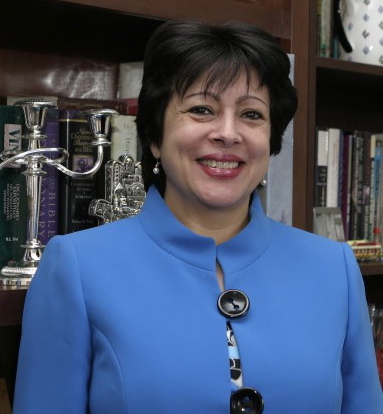
Author
Mercedes López-Miranda
Summary: Jesus welcomes, embraces, and blesses children, showing both their spiritual value and our primary responsibility: to bring them to Him. From the womb, every child possesses a spirit full of potential and may have a calling from God; therefore, we must recognize their gifts, nurture their spiritual sensitivity, pray, speak words of life, and set concrete goals for their development. The home is the primary place of discipleship. The church provides community and resources, but it cannot replace a genuine faith modeled daily by parents, grandparents, and other adults through their integrity, relationships, correction, affection, and conduct. We must take advantage of natural opportunities to teach, listen, and guide without rigidity or legalism. We must also discern weaknesses, correct them through prayer and action, oversee children’s involvement in church, and set practical limits on harmful influences, especially uncontrolled access to media and the internet. Although the fruit may take time to appear or the children may already be adults, it is never too late to keep investing in them, blessing them, and praying for them in faith.
This morning I want to speak to you and offer an exhortation about fatherhood and motherhood. I know that today is Mother’s Day, but we are going to include everyone, mothers and fathers, because the message is for both. And to begin, I would like us to start by reading a passage in Mark 10, verses 13 through 16. This is an extremely familiar passage. I believe that practically all of you know it; it is the passage that says that Jesus blessed the children, a passage very familiar to many of us.
And I want us to imagine the scene. Something that helps bring the Word of God to life is to imagine it, to close our eyes and imagine that we are there, to see it in full color. Sometimes we read the Word in black and white, but we can read the Word three-dimensionally, in high definition, with beautiful colors. That is how God wants us to read the Word. So let us imagine that scene. Jesus is there, possibly in a field, an open field. I picture Him sitting on a large rock. I imagine people all around Him, but with an open space that the disciples themselves, and perhaps Jesus Himself, have left so that people can come to Him. So He is surrounded by people. I picture Him looking at the people, making eye contact with them, and desiring to give them the words of life that those people needed to hear.
So let us read it that way, and I want you to view this passage from the perspective of a father and a mother. This is what the Word says in Mark 10:13–16:
“...and they brought children to Him so that He might touch them....” That was a custom in those days. When there was a person of some importance, whether spiritual or political, parents often wanted to bring their children to that person so that the person might touch them—just a touch. You have seen politicians today; you have seen it on television. It happens all the time, especially during election season: barriers are set up so people cannot go beyond a certain point, allowing politicians to have their space and security, and parents are often there with their little children, wanting the politician at least to touch their child briefly. But obviously, in this case, they wanted someone whom they clearly knew possessed spiritual depth and a message to touch their children.
The disciples rebuked those who brought them. The disciples took it upon themselves to tell the people who were bringing the children, “No, no, no.” I imagine their reasoning was that the Teacher was busy, this was not for children, His time was limited and therefore had to be devoted to adults rather than children, this was a waste of time, and, after all, what would the children get out of it? It would be better for Him to proclaim His words and His message without the interruptions children cause. And evidently they had not listened to Jesus’ messages about humility.
And then it says that when He saw this—Jesus was obviously always aware of everything; He had eyes on every side of His head, right? Just as many of us mothers and fathers do—we know that we have eyes in the backs of our heads too. Well, Jesus was aware of the entire scene, and when He saw this, when He saw that the disciples were rebuking the people who were bringing the children, what does the Word say in the next verse? It says:
“...when Jesus saw it, what does it say? He was indignant and said to them...”
He was indignant. What does it mean to be indignant? We are talking about intense anger, right? And it is an anger that, as the word here indicates, means that He became angry, but at the same time there was pain in His spirit because of what He was seeing, because of what the disciples were doing. In other words, it was not simply like when we become angry because we are frustrated over something superficial. No. When it says that the Lord was indignant, it meant that He saw that this could not be allowed to happen, that He had to do something at that very moment, that He had to teach them that this was wrong. And it caused Him pain in His spirit to see what the disciples were doing to these children. And Jesus said:
“...let the children come to Me, and do not hinder them...”
Many times I have heard people read this passage and say, “Let the children come to Me, and do not hinder them,” in a tone something like.... When you are indignant, you do not use that tone; you use a firm, forceful tone. So I believe the Lord said it perhaps even more forcefully than this:
“...let the children come to Me, and do not hinder them....”
He says it twice, in case you did not understand: “Let the children come to Me”; I am telling you, “Do not hinder them.” It is a twofold command for greater emphasis. Then look at why:
“...for the kingdom of God belongs to such as these.” Then He continues adding to this idea that the kingdom of God belongs to such as these, saying, “Truly I tell you, whoever does not receive the kingdom of God like a child will not enter it....”
In other words, children are a model for all of us. You see, when I read this passage, I journeyed back quite a few years to when I was a child, and I remembered moments that I still recall, when I felt the presence of God in my life, when I had a desire to know God, to hunger for God, and to serve Him. We are talking about a little girl three, four, five, or six years old. I remember sitting my little brothers down so that we could play church; I was the pastor and they were the congregation. And I taught them the Word, and we prayed together, and I ask myself, where did that come from? Children are like that. Try to take that mental journey so that you can see the sensitivity children possess. Obviously, children also bear the stain of sin; we see it in their selfishness. Children are not perfect, so I do not believe that is what the Word is pointing to. Rather, it is saying that they are an example for us because they trust their mother and father as we ought to trust our heavenly Father.
If you tell a child, “Sit there, and I’ll bring you a little cookie in just a moment,” what does the child do? The child stays right there, keeping an eye on where the cookie jar is, because the child knows that if Mom really says, “I’ll bring you the little cookie in just a moment,” she is going to do it. That is trust. And the child is not wondering, “Will she give it to me or not? What motives might my father have for giving me the cookie? Could it be that he wants something else? Could it be that...?” No, the child simply trusts, and not only that, but goes to his father and asks.
Our little grandson comes to our house, and now he has a new little trick. He is always saying, “Tita, tita”—that means a little cookie. He knows where they are and everything, and he points toward the titas. So now, because sometimes we tell him there are no cookies because it is not time for one, he says, “One.” And obviously, who can resist him when he looks at you with that little face and says, “One”? No one. So he trusts that he will obtain what he wants from those who provide for him, from those who love him. So I believe that is the quality of a child to which the Lord is referring. A child believes without questioning.
We live in an age when we question everything. A child believes without questioning. If you simply tell a child, “Yes, little one, this is red, that is blue, and the sun sets at five or six,” the child believes it and has no problem with it. The child is not questioning it. So that is the quality we must possess in order to enter the kingdom of God. And children are a model for us.
And then verse 16 says, “...and taking them in His arms, He placed His hands on them and blessed them....”
Taking them in His arms, He placed His hands on them and blessed them. That tells me that, in this instance, Jesus did far more than those who brought the children to Him were expecting. Notice what the first verse, verse 13, tells us. Why did they bring children to Him? So that He might touch them. These parents, or whoever they were, would have been satisfied if Jesus merely touched them. But Jesus did not merely touch them. He did not place His hand on them lightly in some superficial way; rather, He took them in His arms, placed His hands on them, and blessed them.
Imagine the scene: He is sitting on this large rock and takes each child individually, or perhaps two at a time. It is possible that there were.... No, it could not have been two, because He would have needed many more hands. So He took them one at a time. If there were—I do not know how many—30, 50, or 100 children there, He did that with every one of those children: He took them in His arms, placed His hand on them, and blessed them.
In other words, He used many ways to reach their spirits. Physical contact is so important for our children; it is essential. It has even been biologically proven that physical contact helps digestion. So something that seems so simple—and that is why, when you see children in orphanages or in homes where they are neglected and receive neither proper care nor affection, those children suffer in every way: emotionally, physically, and in every area of their being. So physical contact is important. Jesus took them in His arms; they felt the presence of the Lord. He placed His hand on them. I do not know; I imagine that perhaps He placed it on their little heads, as many of us do, right? We place a hand on a child’s little head and bless the child. And He blessed them. So He also declared words of life over each one of them.
And when you see that, you then have to ask yourself, well, who brought the children? We assume that it was their parents, right? Perhaps older siblings; that is possible. But I assume that it was mainly the parents who brought the children to Jesus. That is one of our principal purposes in life—or rather, the principal one, not merely one purpose but the principal one: to bring our children to Jesus.
And this is a model for us. What Jesus did with these children is a model for every one of us: to take our children in our arms, place our hands on them, and bless them. To bless them is to declare words of blessing. Many times they are prophetic words about what God has told us that child is or will become.
I sincerely believe that if I were to ask every one of you—parents, grandparents, aunts, uncles, and older siblings—every one of you wants the children in your life to have a personal relationship with Jesus, isn’t that right? There is no doubt about that. And every one of us, upon seeing danger—if you see a car approaching a child, what do you do? The child is in danger. You run, leave behind whatever you are doing, and place yourself between them to protect that child, right? Or if we see any danger—a dog lunging at them or anything else—we immediately become alert and take action. That is part of our role as parents: precisely to protect our children. The problem is that there are many things. A car is obvious, a dog is obvious, and many other dangers facing our children are obvious, but others are not so obvious.
So what I want to do this morning is exhort you in various areas concerning the upbringing of our children, so that we may broaden our vision. Let us say that these are things I have learned; that is one of the benefits of age. When we live in the Lord and make the most of our time as God desires, that gives us wisdom. We ask Him for wisdom, and the experiences we have lived through in the Lord bring us greater wisdom.
So today I want to share with you what I have learned. And one thing that I believe is very important is to understand that God created human beings with mind, body, and spirit, and this is no different in the life of a newborn baby or a small child. In other words, a child’s spirit is not smaller than your spirit now that you are an adult; it is not smaller. It is the same, filled with potential in the Lord. It is a living spirit, already defined by the Lord before the foundation of the world.
I believe that makes a difference, because if we understand the material we are working with, that should motivate us to be more responsible and more intentional in how we raise our children. That is very important. For me, it was a revelation when I realized, “I cannot be careless. I cannot waste time on other things. I have to focus on raising and nurturing the spirit of my child,” or of those young children and even teenagers. The children in my life must be nurtured, and that must be done from the time they are very young.
Sometimes we have a tendency to think that children should simply be kept entertained when they are little, and that later on we will concern ourselves with teaching them spiritual truths. That is not so. I believe that from the womb we should begin to bless that child’s life and to speak prophetically over the child’s spirit.
Notice how sensitive children are. Studies have proven that a child hears music and that a child who listens to music while inside the mother’s womb will be more sensitive to music after birth. So if that is true—and we are speaking merely about auditory mechanisms and brain mechanisms—how could it not also be true that the spirit receives even while the child is still inside the mother’s womb? So that is the first truth I want to share with you: see that child, understand the child’s potential, and resolve from an early age to nurture that potential.
I had an experience—and forgive me for bringing up my grandson again—but you know, at these stages, sometimes you laugh at grandparents because all their stories are about their grandchildren, but when you get there, you realize why that is. It is simply another stage. Those of you who have not reached it yet will see. Anyway, one day I was taking care of Caleb at home, and he was five months old. He had fallen asleep in my arms, and I had simply remained there enjoying him, holding him like that, when suddenly the Spirit of the Lord led me to prophesy over his life.
And so I began, very softly, in a very quiet voice—I mean, I was not going to wake anyone up—I began very quietly to declare God’s favor over his life and what God was going to do in his life. Whatever the Lord told me, I declared over him in a very quiet voice. You know, that child was sound asleep. You know that five-month-old babies sleep and sleep. And suddenly, as soon as I began to prophesy over him, he opened his eyes wide, looked straight into my eyes, and kept looking at me. As soon as I finished, said the last word, and said amen, he closed his eyes and went right back to sleep. We could say it was a coincidence, but I know it was not a coincidence. I know he was responding to the Spirit of God, who was speaking to him through me. That taught me a lesson: now I never miss an opportunity concerning his life, the lives of other children, and the lives of adults as well. If God tells me something, let us bless the person right then and there.
So in the Word we also have many foundations for knowing that a child’s spirit and God’s calling upon his life are there from an early age. Look, let us go to the Scriptures. You do not have to look it up; you only need to write it down. Isaiah 49, verse 1, says:
“Listen to me, O coastlands”—this is Isaiah speaking—“and give heed, you peoples from afar: the Lord called me from the womb; from the body of my mother He remembered my name…”
And if we go to verse 5 of that same passage, chapter 49 of Isaiah, it says:
“And now says the Lord, who formed me from the womb to be His servant…”
What does that tell us? God’s calling and His eyes were already upon Isaiah from the womb—not when Isaiah was fifty years old, or forty, or thirty, but from the womb. Does that not change your perspective on what we should believe about children, even from the womb?
Jeremiah is another example, and there are many more examples in the Word, but these are the only ones we will look at today. In Jeremiah, chapter 1, verse 4 says:
“…then the word of the Lord came to me, saying, ‘Before I formed you in the womb I knew you, and before you were born I sanctified you; I appointed you a prophet to the nations…’”
Wow! So there was already a full calling upon Jeremiah’s life. It says, “Before I formed you in the womb,” meaning that we are not even talking about the womb; even before then, God can already have plans and purposes for our children, because God does not call only adults. As those verses in Isaiah and Jeremiah tell us, God calls even before birth.
And I believe that part of the privilege we have as parents is asking God what He has for each of our children. If we do not ask Him, He will not answer us, so we have to ask God, “Lord, what do You have for this little one who only says, ‘Goo, goo, goo,’ and cries, and whose Pampers I have to change every two hours? What do You have for this baby?”
I know from experience that I was unaware of this truth when I had my first daughter, but by the time the second one arrived, I had already learned. And the Lord spoke to me about my child. Later He also spoke to me about the older one, when she was a little older. But when she was born, God revealed her calling to me. So if we have the willingness and the understanding to grasp how these spiritual matters concerning our children work, God will reveal it to us. He will reveal what He has for each of our children and how He wants to use them.
So we as parents are observers, constantly watching: What is my child like? What tendencies does he have? What is his temperament like? What do I see that he enjoys? What spiritual sensitivity does he have? In other words, we have to see and nurture all of that. Just as we nurture our children’s minds, let us nurture their spirits as well.
If we return to the passage in Jeremiah, the first chapter of Jeremiah, verse 6, we then see the response Jeremiah gave to this calling, to the Lord’s words that he would be a prophet to the nations and that He had known him even before he was born. Notice what Jeremiah answers Him in verse 6. It says:
“…and I said, ‘Ah, Lord God! Behold, I do not know how to speak, because I am a child…’” And what does the Lord tell him? Listen to the answer in verse 7. It says: “…do not say, ‘I am a child,’ because you shall go to everyone to whom I send you, and you shall speak everything I command you…”
In other words, what does the Lord Himself, God Himself, do? Jeremiah limits himself, saying, “But I am only a child.” And what does the Lord tell him? Not to take his youth into account, because the fact that he is a child is not a factor. Of course, we know that Jeremiah’s calling developed over time. We understand that. A child who has been called to be a prophet is not necessarily a prophet at three months old or even at ten years old—perhaps—but he is being prepared. So we have to nurture that; we have to take part in that process of limitation.
And another example of this is found in the first chapter of Luke, verse 76. There we find Zechariah speaking prophetic words over his son John, whom we know would later become John the Baptist. Look at the words that Zechariah, this father, declares over his son in Luke 1:76. It says:
“…and you, child, shall be called the prophet of the Most High, for you will go before the presence of the Lord to prepare His ways…”
This is a father prophesying over the life of his baby, and at that time this baby was a newborn. So that is what God calls us to do: to prophesy over our children’s lives, to observe the condition of that child’s spirit and how we can help nurture it. And as one part of this, I encourage you to choose the name God wants for your children.
Many people give names without discernment and decide, “Well, I am going to take the name of this grandmother and that aunt over there and make up a new name,” and we do not ask ourselves… If you want to do that, you have every right to do so; I know that. But seek—seek what God is telling you about that boy or girl so that you can choose the name accordingly. The Jews practiced that and still practice it to this day. I believe it is a good practice, and it gives me joy to see that, within our congregation, over the last several years, people have been doing precisely that. I do not know whether you have noticed, but I pay attention to the names of the young children in our congregation, and I have realized that there is a desire to honor God through the name and prophetically imprint a personality upon the children’s lives.
So if you have anything to do with that, please seek the Lord to know what name to give the children—especially if they are yours. Do not name other people’s children, but do name your own. Yes, because some people also want to choose the name themselves, and we must respect what the parents want. There is nothing more important than our children’s salvation. There is nothing more important than their spiritual life.
Many times we have very specific goals concerning our children’s education. Everyone wants their children to study for a trade or a profession; we want them to grow in different areas, such as sports. But do we also have goals regarding the character of God that we want to see formed in that child and regarding the depth of his relationship with the Lord? That is important. Just as we have goals for everything else, we must have goals for that. We must be very consistent and work toward those goals every day.
I remember that when my oldest daughter was two years old, God confronted me with the reality that I did not have very clear goals for her life in the spiritual sense. I remember going into her room to pray for her, and God convicted me. He told me, “You have to be more specific about what you ask for concerning your daughter’s life.” I learned afterward; with the second one it was different. It was a learning process. So I am giving you pearls of wisdom.
Start now. Ask God, “Lord, what goals should I set for myself? What practices should I incorporate into my life so that my children will grow spiritually from the time they are young—not waiting until they are older, but from childhood?” One trap in this world is this idea that they have to choose. “When my daughter or son is older, then they will choose how to serve the Lord and what gifts God will give them.” That is not how it works. Imagine how foolish it would be if we took textbooks—mathematics, science, language, and literature books—threw them there on the floor, tossed them into our child’s room, and said, “Sweetheart, whenever you feel like it, when you grow up, when you feel inclined to study mathematics, well, there is the book. Pick it up whenever you want.” That would be foolish, wouldn’t it? None of us would do that. There is an order, and things have to be done; the assignments have to be completed. There is order and discipline. We must apply that same thing to the spiritual realm. Of course, without rigidity. We are not talking about rigidity or legalism. Because the best-learned lessons are those learned in a natural environment and at a natural moment. Those are the best lessons, not the ones imposed on us with a smack from a board or a whack on the head with a Bible. That is not the idea. But let us stay attentive and guide those little ones from the beginning and even… regardless of how old they are, it is never too late to sow into our children’s lives. But if we begin early in life, the results will be much better.
And look, we are going to read a passage. This passage is in Deuteronomy 6. We are going to read verses 1, 2, and 5 through 7, because it is a key passage about how the home is the true place of discipleship for our children. These are Moses’ words to the people of God. Deuteronomy 6 says:
“…now these are the commandments, statutes, and decrees which the Lord your God commanded me to teach you, so that you may put them into practice in the land into which you are crossing to possess it…”
The people were about to enter the Promised Land, so Moses was there giving the people the final instructions from God.
“…so that you may fear the Lord your God, keeping all His statutes and His commandments which I command you…” And notice what it says now. It says: “…you, your son, and your son’s son…”
In other words, we are talking about how this is not only for you; it is for your children, your grandchildren, and everyone else.
“…all the days of your life, so that your days may be prolonged. And you shall love the Lord your God with all your heart, with all your soul, and with all your strength. And these words which I command you today shall be upon your heart, and you shall repeat them to your children and speak of them while”—say it with me—“you are in your house, and as you walk along the road, and when you lie down, and when you rise…”
Okay, so who is responsible for discipling children in spiritual matters? The parents—the family—at all times. Notice that all of those are everyday moments of life: at home, walking along the road, taking them to school, picking them up from school, taking them to the dentist, taking them to soccer practice, whatever you do, and when you lie down. Those lovely moments when the child is already lying quietly in bed and it is as though you see him differently—what a relief. I do not know what it is. I do not know whether it is because of love for the child or because of relief. He is finally going to sleep; now I can carry on, now I can have a little peace and quiet. I think that is part of it too. But in your home, as you walk along the road, when you lie down, and when you rise. In other words, at all times we must tell them about the wonders of God and declare the statutes and decrees of God’s Word to our children. And, as I said before, we should do it in organic and natural ways.
And I want to tell you that the church is not the one responsible for discipling children—our children. Some people believe that. But it is not the church. Of course, it is important—essential—for a church to have discipleship programs for every age, particularly for children and young people. That is essential in a church; it is part of the life of a church. I am not underestimating the importance of that. But those ministries walk alongside us as parents, grandparents, aunts, uncles, or whatever the case may be. They walk alongside us; they are resources that help us enrich what we are already doing in our homes. They are not a substitute. It is not that this is where they come to read the Bible, or this is where they come to pray. No, that is not how it is. At home we guide them and disciple them, and then the church becomes another resource we can make use of—and it is good for us to use it—to enrich our children’s lives even more.
Because what children really need are daily role models, the daily example of a faith in action. Our faith in our mouths, in our hands, in our feet—a faith in action—is what children need to see every day. We are God’s fellow workers in that sense, in the spiritual realm. And as we model the Christian life for them, children will learn; they will imitate what they see us living out. So we have the immense privilege and responsibility of teaching our children how the Christian life is lived.
Each one of us is an open book to our children, an open book, and our children are going to read every page, even the ones you think are stuck together and no one can see. Our children have better than 20/20 vision, and they are going to read those pages too. That is why we have to keep growing, we have to be careful about our integrity, and we have to be careful about how we treat our wife or our husband, how we handle our money, and how we conduct ourselves, because children will learn much more from that than from what we tell them. So we have to be extremely careful about that.
And in Timothy there is another example from the Word, where Paul speaks to this new pastor, this young pastor, Timothy, who has been under his covering. He has been mentoring him, and the Apostle Paul tells his disciple that he remembers him without ceasing in his prayers, and in verse 5 he says:
“…calling to remembrance the unfeigned faith that is in you….”
In other words, that is what Paul says about Timothy’s faith: it is unfeigned, natural, genuine.
“…which first dwelt in your grandmother Loira, and in your mother Eunice, and I am sure that it is in you also…”
That is what a healthy family life does—a faith lived out with integrity, not perfection. Look, I know there is no one perfect here, beginning with me; there is no one perfect. But we must always do the best we can with what we know and what we have, the very best we can, and always keep growing and improving, casting off everything that prevents us from living the Christian life as we ought to live it. Because our children will see that too; they will see the before and the now, and they will be happy with the changes they see. So that is one more example: Timothy, whose faith first dwelt in his grandfather, then in his mother, and then came to him—a genuine faith, which is what we want our children to attain.
We do not have to teach our children religion. Religion is something that is stuck on with cheap tape; in other words, it gets stuck there, and before long some dampness, a little water, or some wind comes along and the tape peels off. That is not what we want. We want them also to imitate the relationship with God that we model, and for it to be deeply instilled in their spirit—not stuck on with tape, but deeply instilled in their spirit, as happened in Timothy’s case.
At home, countless opportunities present themselves. I call them teachable moments—in English, “teaching moments”—teachable moments that we have to take advantage of. In the Word there is a very well-known verse that I believe is displayed here every Sunday when it is time for the children to go up to their classes. Proverbs 22:6 says:
“…Train up a child in the way he should go, and even when he is old he will not depart from it….”
So once again, we read earlier in Deuteronomy that this is a matter of being on the road, at home, going in, going out, lying down, and getting up. And that is what it means to train. To train means that the person who trains—the instructor—does so purposefully, with discernment, order, discipline, and intentionality. In other words, it is not random; rather, it is something that happens because we plan it, because we seek God about it, and then we train the child.
We do not train them through sermons where we sometimes go blah-blah-blah-blah-blah, talking away, and after 30 words the children have switched off their brains. It is not only through words, though words are obviously important, but also through the way we affirm them and correct them, through the time we spend with them, asking them about their dreams, looking at them together, sharing pleasant things, talking about the situations in their lives and their concerns, bringing them with us to worship, and making them part of our spiritual life. In other words, all of those are very good ways…teachable moments. We have to look for that moment when our children’s spirits are receptive and willing to receive, recognize those moments, take advantage of them, and then impart life to our children.
We live in such a tremendous rush, don’t we? For many of you, there is work, the house, sports, and the other things we allow into our homes that take up time—so many things. The rush we live in often keeps us from doing precisely that: being present, discerning which moments are teachable moments, and taking advantage of them.
I want to give you two examples from my life, when my girls were little, in which I saw this clearly and took advantage of the teachable moment so they could make their decision for the Lord. One day, when my oldest daughter was 6, we were… It was something completely ordinary. I was feeding the little one, who was less than a year old—just a few months old—and she was in her high chair. I was talking to her about how wonderful it was: “Look how lovely it is that we now have a little sister, a little daughter, one more member of our family. We have to be so grateful to God for that.” And she was… She herself added her own words of happiness because she was happy; she did not know what to do with the fact that she had a little sister. And at that moment, I led her into a conversation about Jesus, about God’s blessing upon our lives and upon her life, and I guided her so that she could make her decision for Jesus at that moment, when her spirit was open and receptive to receive the Lord.
I know that later, in time, she had to make another decision, right? Because they mature. But it is important to look for those moments when they are little and instill that in them at that moment. With the younger one, it was a similar situation. We were on our way somewhere; I was taking them to school. They attended a school far from our house, and on the way I turned on the television to a Christian station, and there was a song she liked, a song about spiritual truths. I saw how she reacted to the song, and she began to sing it, and we began talking about the song. I asked her, “Would you like to accept Jesus as your Savior right now?” And I remember her little face nodding that yes, she wanted to do it, and I said, “Well, now is the time.” So I pulled over—I had been driving. I stopped the car under a tree; to this day, she remembers where that tree is. And there she made her profession of faith.
That is what I mean by looking for moments like those, when the child’s spirit is open to receive, so that we can teach them something or impart some word of life to them. And if we are rushing around all the time, we will sometimes miss those moments. So once again, look for the teachable moments.
And again, you do not have to have children. Perhaps it is your little neighbor who came to your house, or your niece who came to visit. It does not matter—your grandchildren, whoever it may be—you can be an influence in that child’s life.
Another thing that I believe is very important is for us to give our children the gift of a community of faith. Many people come to church as though they were punching a time clock on Sundays. They come, often arrive late, sit in their seats, participate, and listen, but then, sometimes before the service is over, they are already rushing out. That is not community life. It is better than nothing; we are glad, and if that is all you can do for now, glory to God. We are happy that you come even if you do not participate in anything else. But that is not what the Christian life is. The Christian life is also lived in community. So it is very important for you to create in the child a desire to come to church, for their friends and their spiritual mothers and fathers to be here. It is so lovely to see children who always want to come to church because they know it is a fun place, a place where I have a good time, a pleasant place where I receive, where I am part of a community, where I have a name, where people know me and love me. And that does not happen by rushing in, spending an hour and a half or two hours here, and rushing out. A little more time has to be devoted to that.
And at the same time, when you bring your children, it is important for you to supervise them during the worship and discipleship activities you attend. Sometimes we have this mentality that we come to church for ourselves: the adult is the one who receives, while the child is entertained. And that is a lie from the devil. Children do not come to church to be entertained; they come to be discipled by the Lord and through the resources available here, in addition to what they already receive at home. So it is very important for them to come knowing what they are coming for. They need to understand that this is a place of reverence, where the Lord’s presence is here, where there is power in the fact that the brothers and sisters gather and worship together. As parents, we have to explain that to them. They should not simply come; we should not bring them in a rush, sometimes drop them off here and keep going, while you do not know what the child is doing or what they are receiving, and we do not ask them, “What did you learn in Bible school today?” We have to follow up. If we are communicating to them that it is not important, do you know what the child will learn? That it is not important, that it is simply something we do on Sundays. And we are making a mistake and failing to make use of a very important resource.
Look, about three months ago I went down to the basement when half an hour of the service had already passed—the service had begun half an hour earlier—and in the basement, around a table, there were 8 youngsters, preteens and early teens, having a party, listening to an iPod, talking, and laughing. The service had already started, and we were half an hour into the worship—anointed worship in the presence of the Lord—while they were downstairs doing their own thing and laughing. And worst of all, when I spoke to them respectfully and asked them what they were doing there, told them it was time to leave and that each one had to go find their parents, the worst thing was that none of them moved. I had to raise my voice to get them to respond. Wow, what are we doing? Such a precious resource.
And look, that is not the ushers’ job; it is not the teachers’ job. That is the parents’ job: they have to go find them, they have to pay attention to where they are and what they are doing. If there are no classes, where should they be? They should be by your side, serving too.
There is a young woman who spends many Sundays here at the front. She comes up with her young daughter, an elementary-school-aged girl, and a boy, and I think it is so beautiful. They dance together, they pray together; it is very special to see how she comes.
And another day, going back to the less pleasant examples, it was—once again, the service had already begun—and there were 4 youngsters, one of them deeply engrossed in a video game device. He had figured out how to plug it into the wall up there, somewhere in the back—very plugged in, very clever—and there he was playing video games. There were 4 of them in all. And I said, “Don’t the parents know that this kid brought a video game and is using it in church?” I think we need to put up a little sign that says, “It is 9 o’clock, the service is about to begin—do you know where your child is?”
It seems that struck a chord. That is the parents’ job more than anyone else’s. Okay, I know that… I had much more to say, but just a few more minutes. One extremely important thing is to take advantage of the resources the church offers. Come; bring your children. Go to the trouble of bringing them; do other things as well. Buy them Christian materials, Christian videos, and Christian music that they like. Do something to nurture your child in that area. Pray with your children and for your children. Ask God to give you the discernment to know what your child’s spiritual needs are.
Look, all of us have cracks in our armor, beginning with the adults; we have cracks. We are not perfect; we have inconsistencies. And parenting is a very important arena. We have to see what my inconsistencies are and how they affect the way I raise my children.
One example is being too permissive, letting children do whatever they want. Many times it is because we grew up in such a rigid home that we then want to compensate with our children by giving them everything they want. Obviously, that will not lead to anything good. There are countless examples we could give of things within us that limit the way we exercise our role as parents.
And then let us also look at the cracks in my child’s armor. Even from a very young age, it may often be excessive shyness—children who do not want to interact with anyone and who are afraid of people. Well, pray for the child and provide natural experiences to help them overcome that. They may be children who perhaps tend to be angry, a little selfish, or not very generous. In other words, let us identify those things in our child—the cracks in their armor—and let us help discern them and, through prayer and action—“pray-er and action,” as Roberto says—help the child overcome them.
And also, look, we are going to observe what traits of spiritual sensitivity that child has, and we are going to guide him more and more along that path. He may be a child who is very sensitive to the needs of others, so then we are going to provide opportunities for that child to grow in leadership by responding to the needs of others.
So there is so much one can do with a child, practical things. Another thing is to discern what influences are competing for our children’s hearts. That is so important. We have to look at what we are allowing our children to take in. You would not allow a garbage truck to come and dump its filth in your living room, would you? You would not allow a garbage truck to enter your home and, boom, dump all that foul-smelling garbage, all that contamination, in your house. No way; we would do everything possible to put up barriers, to prevent that from happening.
And yet, as parents, we often fail to stand in the gap and allow harmful influences to enter our children’s lives. And obviously, it is easy to think of many of them. I am not necessarily talking about drugs, mind you, or other things; sometimes they are things like television, the use of the internet, the iPod, and all those devices. It is not that I am against them—quite the opposite, I use them every day—but many times we do not set rules, we do not teach our children how to use those resources, and we allow them unrestricted access.
And I want—I know we are running out of time, but allow me, just to open your understanding to this reality—to share a few statistics with you. I am not going to give you all the statistics I had prepared because of the lack of time, but one important fact, for example, is that in the last 5 years, the daily use of media among young people ages 8 to 18 has increased dramatically. Children ages 8 to 18 use media for at least 7 and a half hours every day. And that includes everything: television, internet use, the iPod; it does not include using a cell phone to make calls and receive texts. They say that, on average, children ages 8 to 18 receive and send messages for an hour and a half every day. Just text messaging—can you imagine what that is? An hour and a half. And 7 and a half hours of media.
I do not know about you, but that alarms me quite a bit. And they say that 30% of the children interviewed in this study—that only a third, that 30% of the respondents, of the children who participated in this study—only 30% of those children have parents who place any limits on their use of media. In other words, 70% are using their iPods however, wherever, and whenever they please, using the computer without any restrictions whatsoever, and watching all the television they want to watch.
That seems quite alarming to me. Sixty-four percent say that the television is on during dinner. Forty-five percent say that the television is on almost all the time. I have been to many homes where the television… no one is watching the television, but it is on; it is as though it gives them comfort, as though it fills the space with something—I do not know what. The point is that, obviously, children in homes where the television is on most of the time watch more television than others.
Farther on, in another statistic, we see that Hispanic children watch 5 and a half hours of television a day, more than white children. So that applies to us. And you know, I think part of that is soap operas—and who turns on the soap operas? Okay, that is all; we will not say anything more about that.
The point is that watching television, the media, all those things—that is what harms our children. We could make a very long list of the things they cause. They cause increased aggression and violence; academic performance declines because, obviously, their brains are dulled, filled with everything they see. They have no room; there is no room left for mathematics and science to get in. There is no room; everything is crammed full of things that should not be there.
And so on. Another thing, one of the harms, is a lack of family time. Have you visited families where everyone is doing their own thing? One person is over here, watching television so as not to bother the others, sometimes wearing headphones. Another is over there, doing assignments with an iPod on. Each one is doing their own thing. In other words, we have media bombarding our home, but there is no communication. Communication in the family is eroding and disappearing; it is almost like an extinct animal.
But you can do something about that. You can set limits: do not give your child a cell phone; do not give him that privilege without giving him a list of rules for how it should be used. And one of the things that concerns me most is the last statistic, the one from the Enough Is Enough page. One of the things that concerns me most is that another study says that 79% of children are being exposed to pornography in the home.
We are not necessarily talking about children who are actively searching for pornography. Rather, while using the internet without rules and without any guidance from their parents about how to use it, they are entering these websites by mistake. I remember that once I typed—I was looking for information about the fruit of the Spirit on the computer, on a website, and I entered something about love; I do not know what I typed into the computer. The point is, do you know what came up? A pornographic website for women… just so you know, I did not look at it or search for it, but I found it without looking for it, completely innocently.
So just imagine: these are children using this media at home, alone. What are they doing? They have every kind of access. So I am telling you this so that you will exercise discernment and establish order in your home. For most children who are addicted to pornography, it begins at home; it happens in our homes, in Christian homes. And then, if they see that the television is on and showing questionable programs, where there are scantily clad women and scenes that children should not be watching, with their parents present, then what does the child say? This is not bad; my dad and mom watch this during the day. So I am telling you this as a mom, as a mother: please be careful. Do not allow garbage to enter the living room of your home. Do something; say no to this. It is for your children’s good.
Your children are like a sponge. If they are full of garbage, if that is what they are absorbing, there is no room in the sponge for them to absorb the truths of the Spirit and what God wants to do with them. Those two substances do not mix. So it is our responsibility to prevent that from happening.
And the last thing I want to tell you is to encourage you not to underestimate everything you do for your children’s spiritual growth. You may not see the result of what you are doing today, but do not worry, because one day what you are doing for your children will bear fruit. I know; I know it from my own life. Even today I enjoy the benefits of what I received from my parents, spiritually speaking. And I have the example of my sister. My sister Sonia is 16 years younger than I am, so I was like a mother figure to her. We had our mother, but I was a maternal figure to her. I remember that, from the time she was very little, when she went to sleep, I would lie down near her and read Bible passages and Bible stories to her. And she says that when she later became a believer, at about 27 years old—God allowed me the privilege of bringing her into the ways of the Lord—after having lived a difficult life, with many struggles and bad decisions, she finally accepted the Lord at around that age, in her late twenties. And she says that one of the things that most helped her finally make her decision was remembering the stories I read to her as a child. That may seem like something that is not very important, but it was still there. And today she is married to a pastor; she and her husband pastor a church, and they have 3 beautiful daughters whom they are raising for the Lord. So what we thought would be impossible to accomplish, because of the path her life took in her youth, has turned out to be exactly the opposite. God has used everything that was invested in her.
So do not be afraid. You may even have a son or daughter who is already past childhood; do not be afraid. Keep investing in your child’s life, praying for him and blessing him. Not long ago, I was speaking to a mother who has 4 children. I told her, “Bless—we were talking about this, about today’s topic—I told her, bless your children.” And she just stood there like this: “It had never occurred to me,” and she is a Christian woman. “It had never occurred to me that I can bless my child, that while he is there with me I can declare prophetic words and words of blessing over him.” And in fact, she did it with one of her children and was delighted. She said, “Wow, how beautiful. I felt the presence of the Lord as I declared these words of life over my child.” And the benefit was received, I believe, not only by my child, but by me as well.
So we, as parents, are positioned in the best place, the most strategic place, to impact our children’s spiritual lives. No one else has that privilege—no one else, only us.
So discern what the Spirit is telling you. Put up barriers where you need to put them up, in very practical ways. The Christian life is not only about praying for our children; sometimes it means disciplining and confronting them. But let us do all of that in the Spirit of the Lord, knowing by faith that He will do what we want Him to do. Be blessed.
We are going to finish by praying about everything we have discussed, and if you would like to stand, I know you have been sitting for a little while.
Lord, we thank You, Father, for Your presence in this place. I thank You for Your presence in the lives of all the mothers and fathers here, Father. I ask You, Lord, to bless the life of each one. Lord, I know that from on high You place Your loving hand upon every father and mother present. Lord, I know that You embrace each one; I know that You bless them; I know that You declare words of affirmation and love over each one.
Lord, I thank You because Your Word contains the answer to all of life’s dilemmas, Lord, especially in this area of raising our children. Father, I ask You, Lord, to work in a powerful way. I present the sons and daughters, the children, even those who have not yet been born, Lord, the little children, those of every age, and the young people of this congregation to You. Father, I ask that not one of them be lost, Lord, and that every one of them, Lord, have a personal experience with You. I ask You, Father, especially to use every person here, whether they are a mother or father or not, Lord, as an instrument in the life of a child, of a young person, to bring that child into Your ways, Lord, and guide them.
Father, in addition to being biological fathers and mothers and doing everything else a father and mother do, I ask You, Lord, to raise up spiritual fathers and mothers in this place, Lord—men and women filled with Your presence and with Your anointing, Lord. I ask You, Lord, that this be the way this land is healed, Lord: that these children be raised in homes where fathers and mothers are focused on presenting their children to You, Lord.
I ask You, Lord, that no obstacle, nothing the world may invent, nothing Satan may devise—nothing, nothing, nothing—stand in the way of the work You want to do in the life of every child in this congregation, Lord. Thank You for the privilege of being a mom and a dad. In Your name, Lord, I bless that ministry, that calling of being a mother and a father, Lord. Thank You for Your love, Lord. In the name of Jesus. Amen.