A Faith Made Evident
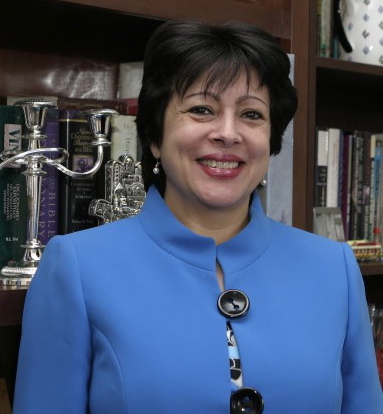
Author
Mercedes López-Miranda
Summary: Faith should not be kindled only at certain moments, but should continually permeate our decisions and every circumstance of life. It is a gift from God that we must cultivate through a process of discerning, determining, and defining ourselves. We discern by carefully examining the situation, our hearts, and what pleases God; then we adopt a consistent course of action; finally, we affirm who we are in Christ and establish clear boundaries.
Rahab made this faith evident: she recognized that the God of Israel was the true God, did not allow fear to control her, protected the spies, and diligently obeyed the instructions she had received. Her active faith brought salvation to her family, peace amid danger, and a new identity among the people of God. Her past was not hidden, but neither did it determine her future: grace transformed her from a condemned woman into a redeemed woman who was useful for God’s purposes.
In the same way, our past may have consequences, but it no longer defines who we are. The blood of Christ gives us salvation and new life. Therefore, we must live in obedience, reject self-condemnation, and seek to please God both inwardly and through our conduct, giving him glory and honor with our whole lives.
This morning I want to speak to you about a faith that becomes evident. If I were to ask you, what is faith? I know that the first thing that comes to mind is Hebrews 11:1, which says: “Now faith is the assurance of things hoped for, the conviction of things not seen.” That is faith.
But my experience tells me that what many of us do is press the faith button at one moment and turn the faith button off at another. Many of us are not continually living on the foundation of faith. At one moment we have it; at another, we do not. And God does not want us to do that; He wants us to live continually in faith. In fact, I see faith as a spiritual posture that must permeate our entire being, must permeate all our decisions, and must be present amid every circumstance or situation in life. It is not yes at one moment and no at another, but always.
Because faith in Jesus Christ is not something we apply only in certain areas of life, but in all of them. Faith is what enables you to worship God in times of adversity. When everything tells you, “Get depressed, throw in the towel,” faith tells you, “No, keep going, worship Me, fix your eyes on Me.” And in this community I have seen many examples of that, many people. I specifically remember a woman who lost her husband after thirty-some years; she lost him that week, and on Sunday she was here worshiping the Lord, seeking comfort from her Lord. That is a miracle, because at a time like that you would not think that this would be the human response.
Faith is what makes it possible—as happened this morning, when a sister named Flor, who was returning to Honduras, had lost her little daughter a few days earlier—for her, despite that terrible situation, to be here today saying goodbye. Yes, with great sadness—of course there is sadness—but declaring her trust in God and declaring that, in faith, she is returning to her country to continue doing the Lord’s work.
That is the faith we have. The faith we have is a vital faith. It is the faith that, when temptation comes, when sin calls, enables you to say, “No, I am not going to go through that door; I am going to resist it, I am going to flee from it.” And faith is also what enables you to be a source of support during the most difficult times, a source of support for others when you yourself are the one who needs someone to lift up your arms.
So that is the faith we have: it is a vital faith; it covers every circumstance of life. And something I have learned is that faith must shape circumstances. Circumstances must not affect faith, but rather the complete opposite, because otherwise we are like weather vanes; we do not make progress in our walk with the Lord.
So that is the faith we must cultivate. And the Word tells us that faith is a gift from God. It is not something we can produce through our own strength; it is a gift from God. And we know that every gift received must be cultivated by the person who receives it. That is true of all the gifts the Word says God gives us: we must cultivate them. In a certain sense, we have to—“work” is not the right word—but we have to nurture it and grow in what God gives us.
And part of faith is a process. Faith is not something magical—not a magic wand, ding! Now you have faith, everything is resolved, and it will not hurt. No, faith is not like that; it consists of processes. And this afternoon I want to propose three phases of faith that I believe Scripture supports in this analysis.
The first phase is to discern, the second is to reach a determination, and the third is to define ourselves. So there are three—easy: discern, determine, and define. Those are the three phases I see in cultivating faith and exercising our faith.
So what is discerning? What I am going to do is define them briefly, give you one or two examples, and then go into Scripture so that we can apply these principles. Discerning is something that is not done often enough. Many times, situations arise in our lives and we act just like that, reflexively, based on mistaken patterns we have learned in our lives. It is an immediate reaction. The Word invites us to reflect, to examine. And the process of discerning is based precisely on that: carefully examining something or someone. It means examining ourselves. It also means distinguishing among and passing judgment on our own thoughts and feelings. The Word encourages us to do that as well, to examine ourselves.
Many of us do not examine ourselves enough. Sometimes people think they are stronger than they are, and when temptation comes, they fall because they do not recognize their areas of weakness. And so the Word encourages us to examine ourselves, to examine. The Word encourages us to distinguish between good and evil, between what is true and what is false, between what is beneficial for us and what is not. Part of our walk of faith is discerning.
The next stage after discerning is that we reach a determination. That is when we establish a purpose for ourselves, a course of action that is consistent with what we have learned through discernment.
And third, the defining phase is when we clearly demarcate our boundaries. Where do we stand, and who are we in Christ with respect to the situation we are facing? So, once again, it is: discern, determine, and define.
And I want to give you a very everyday example to illustrate these three steps. I am going to give an example involving a young person: a young woman is asked out by a young man, a young man who is very attractive and very popular at school. During the process of discernment, she notices, “Wait—he has a sticker, a decal of a naked woman, on his car.” She hears that he is a young man who has broken many hearts. From another source, she hears—and has seen—that he mocks God.
Well, during the discernment stage, that young woman begins to think: “Is this good for me or not?” And she begins to compare the good and the bad: “Well, he is an attractive young man; I would like to go out with him. My friends are encouraging me, saying, ‘You’re so foolish! How could you not go out with him? Look, this is your opportunity,’” and all those things. And this can happen in other ways at other ages, right? But at this moment we are talking about a young woman.
So during the discernment stage she is observing; it is the phase of acquiring insight and knowledge and determining what is beneficial and what is not. The next phase, determining, would be: “This is not good for me. Since it is not good for me, I am not going to accept this invitation. Very kindly, I am going to say to him, ‘Thank you for the invitation, but I cannot,’ or whatever, and I am going to begin praying for that young man, that the Lord may touch his heart.”
And in the defining stage she defines herself: “My priority is to serve God; I must overcome temptation at all times, and I must set an example and bear witness that I am a daughter of God.” So that is a simple example from everyday life in which we see all three of those phases take place.
Let us now turn to the Book of Joshua, chapter 2, to see faith in action, a faith that is evident in the life of Rahab, a woman from Jericho. Because of the limited time, I am going to give you a brief application concerning the context of this book and this passage. In Rahab’s time, Israel was at a crucial point in its history. After wandering through the wilderness for forty years, it was finally ready to cross the Jordan, the river that separated it from the Promised Land. They are ready, preparing in every sense—militarily and spiritually—to cross the Jordan.
And Joshua is the leader of the people of Israel, now that Moses is dead, and this is a new generation embarking upon what they call the conquest of the Promised Land, the land God had promised to Abraham and to all his descendants from then on. So that is the general context of Rahab’s story. But before crossing the river, Joshua sends two men, two spies, into the city of Jericho. These two men stay at the house of Rahab the prostitute; she was the city’s prostitute. God providentially leads them to the only house and the only person in that city who was going to protect them, and He had prepared the heart of Rahab, this woman, beforehand so that it would happen that way.
The spies’ presence was discovered, and the king sent soldiers to Rahab’s house to look for them. But what did Rahab do? She hid the two spies on her roof and told the men who were looking for them: “They have already left. They were here, but they are no longer here. Go quickly, follow the road and look for them, because you will be able to catch them.” That is what Rahab did.
And now we are going to read Joshua 2, verses 8 through 11, to continue the story from where we left off in the account I shared with you. Verse 8 says: “Before the spies went to sleep, she went up to the roof and said to them: I know that the LORD has given you this land, because the fear of you has fallen upon us, and all the inhabitants of the land have already fainted because of you. For we have heard how the LORD dried up the waters of the Red Sea before you when you came out of Egypt, and what you did to the two kings of the Amorites who were beyond the Jordan, Sihon and Og, whom you destroyed. When we heard this, our hearts fainted, nor did any courage remain in any man because of you.”
And look at what Rahab, a prostitute and an idolater, says: “For the LORD your God is God above in heaven and below on the earth.” That is her declaration, Rahab’s declaration of faith. And so we see—notice that she makes that declaration and speaks about an event that had taken place forty years earlier. It had been forty years since the Lord parted the Red Sea so that the people of Israel could cross.
So she had been examining and discerning what had been happening here, possibly for a long time beforehand. And we ask ourselves: Why did this woman of ill repute, a prostitute from an idolatrous people known for its immorality, risk her own life to save the spies of an enemy people? Because remember, if she had been discovered, it would have meant certain death for her and the spies. Why did she do this? I believe the reason is that she discerned God at work.
First, she discerned that these two men were different. Remember that this woman was a prostitute; she had a brothel—that was what she did. She had dealt with many men and knew male psychology very well. And she looks at these men and immediately knows that they are different. These men have the grace of God; they are not men who have come to use her, but men who have a calling to serve the living God, the God of Israel.
So she received them; she discerned that they were different. What else did she discern? She discerned that the God of Israel was the true God and that the gods she had worshiped for a long time were false gods. Because she herself says it—what is her declaration again? “For the LORD your God is God above in heaven and below on the earth.” She made a doctrinal declaration without knowing anything about the Word—without knowing anything, because the Word had not actually been written—and she made that declaration of faith. And she discerned her own heart.
Notice that in the passage she speaks about the fear that spread among her people. She says that they were practically immobilized; they could no longer do anything, and they had no courage left in them. And since she was part of the people, she obviously also had that same emotion, the emotion of fear. But notice that she—do you remember that I told you that a person must examine himself?—discerned her own heart, the fear that was in her heart. And she decided to let that fear be dealt with by God and not to follow what her people were going to do at that moment. Instead, she chose her own course of action, separated herself from what the people were thinking, and decided that her fear could be used as something positive.
She examined the consequences of fear and did not allow it to control her. That is an example for everyone, right? When difficult circumstances come, we must not allow fear to overwhelm us and take away our courage, but rather let it help move us toward a posture of faith in that circumstance. So she discerned many things, as we have just said.
Once she had discerned all those different positions, those different situations, she arrived at a course of action. She determined to do something, which is what we have to do. Sometimes that “something” is to remain calm and quiet at the Lord’s feet; sometimes that “something” is precisely to do something. And God gave her the strategies.
Once she had determined, based on what she had discerned, to follow a course of action, then God gave her the strategies—and we are going to see that a little later—then God showed her how to act. Let us continue the account in that same chapter, Joshua 2; we are going to read verses 12 through 21. It says: “Now therefore, I beg you”—this is Rahab speaking to the spies—“by the LORD, that as I have shown mercy to you, you will likewise show mercy to my father’s household, and you will give me a sure sign of it.” The strategy came to this woman immediately; when she determined to do something, the strategy came, and she determined to establish a covenant with the spies.
She knows that the covenant she is making, the agreement she is making with the spies, is before Jehovah. There she is once again declaring that her faith is no longer in the false gods she had worshiped before, but in the true God. And verse 13 says: “And that you will save alive my father and my mother, my brothers and sisters, and all that belongs to them, and that you will deliver our lives from death.” And look at what the spies say: “Our lives for yours, if you do not betray this business of ours; and when Jehovah has given us the land, we will deal kindly and faithfully with you.”
They establish a two-way covenant, right? When the Word says kindness, it means a manifestation of practical love. She says: I have shown you practical love by saving your lives and putting my own life at risk as well; please do the same for me. Let us make a covenant with God as our witness; let us make a covenant. And the spies see this woman’s faith in action and enter into the agreement she has proposed to them.
Verse 15 says: “Then she let them down by a rope through the window, for her house was on the city wall, and she lived on the wall.” So God took care of even that small detail. The house was not in the center of the city, but on the wall, which made it easier for them to escape with Rahab’s help. And she told them: “Go to the mountain, lest those who went after you find you, and hide there for three days, until those pursuing you have returned; afterward you may go on your way.”
An even more specific strategy comes: they have to do this—go specifically this way, hide there for three days, very specific, and afterward continue on your way. And verse 17 says: “And they said to her: We will be free from this oath you have made us swear. Behold, when we come into the land, you shall tie this scarlet cord in the window through which you let us down, and you shall gather into your house your father and your mother, your brothers, and all your father’s household. Whoever goes outside the doors of your house, his blood shall be upon his own head, and we shall be guiltless; but whoever is in the house with you, his blood shall be upon our heads if anyone lays a hand on him. And if you betray this business of ours, we shall be free from this oath you have made us swear.”
That is the fine print; they set out very clearly what both sides had to do because this was a matter of life and death. She answered: “Let it be as you have said.” Then she sent them away, and they departed, and she tied the scarlet cord in the window. And what I see there is—consider that earlier they tell her: when we come into the land, you shall tie this scarlet cord. And yet it says that they left and she ran to tie the scarlet cord. If only we were like that, going immediately to do what God asks of us.
I imagine her tying the knot of all knots, fastening it extremely well so that the scarlet cord would not come loose, because her salvation depended on it. So she was diligent; she determined to do something, the strategies came, and she immediately did what the spies had told her to do. And Rahab understood; she knew that the Hebrew people would destroy the city and that her only salvation was to make a covenant with the spies. And we saw that God gave her the strategies to accomplish precisely that.
By making a covenant with the spies in the name of Jehovah, Rahab redefined herself; a new definition entered her life. Who was she before? She was the idolatrous prostitute, a woman of ill repute. By entering into this covenant with God, she is no longer that, but becomes a woman loyal to the God of Israel, because by making a covenant with the spies, who in this case are God’s representatives, she has now become a woman loyal to God. And she is a woman used by God for salvation, whom God was going to use for the salvation of her family.
So we see those three phases there and how they unfolded in Rahab’s life. And chapters 3 through 5 and part of chapter 6—we were in chapter 2—chapters 3 through 5 and part of chapter 6 of the Book of Joshua recount how Israel miraculously crossed the Jordan. It was something similar to what the Lord had done at the Red Sea. It also describes the strategy that God gave the people of Israel, who were a people walking in God and in faith: how God gave them the strategy—you already know, the seven days, one circuit around Jericho on each of the first six days, and finally, on the seventh day, seven circuits until the wall fell and they were able to enter the town and conquer and destroy the city.
So that is the story between the account of Rahab that we saw back in chapter 2 and chapter 6, which is where we reconnect with Rahab. And if we would please turn to Joshua, chapter 6, verses 22 and 23, look at what it says here: “But Joshua said to the two men who had spied out the land”—this was after the walls had fallen—“Go into the prostitute’s house, and bring out from there the woman and all that belongs to her, as you swore to her.” A God who keeps His promises. “And the spies brought out Rahab, her father, her mother, her brothers, and all that belonged to her; they also brought out all her relatives and placed them outside the camp of Israel.”
So Rahab believed the spies’ promise and defined the place where she obeyed; the spies told her: you have to bring your people into this specific space, into your house, and that is exactly what she did. And because she obeyed the Lord, she was able to remain safe, and so was her family. So we see that Rahab’s faith led her first to discern God’s movement, then to determine upon a course of action that led her to make a covenant with the spies, which helped her save her family, and to define herself no longer as a prostitute but as a woman whom God could use—a woman now separated from her former people, with a new identity among a new people. So that is what Rahab’s living faith, which became evident, did in her life.
Many hundreds of years before the following verse was written in Hebrews 11:10, which says: “But without faith it is impossible to please God, for the one who comes to God must believe that He exists and that He rewards those who seek Him.” So she, hundreds—I do not know how many hundreds of years—maany years before that was written, was already living that reality in her budding faith, because it had only just begun. And in verse 25 of the same chapter we see that it says: “But Joshua saved alive Rahab the prostitute, her father’s household, and all that she had; and she lived among the Israelites to this day, because she hid the messengers whom Joshua had sent to spy out Jericho.”
So imagine everything that had happened because she grew in her faith and determined to act upon the discernment she had gained concerning who the God of Israel was. Rahab’s faith evidently found grace with the Lord. That is what happens to us: we find grace in the Lord when we accept Him as Lord and Savior, when we put Him first in our lives. That faith we have consequently always brings the grace of God into many areas of our lives, or into every area of our lives.
We see that Rahab did not save only herself, but also saved her family. In that verse, she found a new family in Israel. She went from being a pagan woman to being a daughter of God. She went from living in shame and sin, because we already know what she did for a living, to having a new identity among her new people. In other words, from A to Z—is that not exactly what happened in our lives, that we were one thing and now we are another? And as we continue hand in hand with the Lord, even more wonderful things keep happening.
And the extent of the reward Rahab received from God does not end there. We know that her name is recorded in the Book of Hebrews, chapter 11, which is the great chapter of faith. If you wish, you can turn with me to Hebrews 11. We are going to read only verses 30 and 31, but I want to point something out to you. In that chapter, which they call the chapter of faith, the chapter of the heroes of faith, look at the company Rahab is in: there are Abel, Enoch, Noah, Abraham, Sarah, Jacob, Joseph, Moses, and David; and you think, what is a Canaanite prostitute doing among that illustrious group? Because that is how God is. God delights in doing that, in using our weakness and our past to lead us into the future He has for us.
And let us read verses 30 and 31 of that same chapter 11: “By faith the walls of Jericho fell after they had been encircled for seven days. By faith Rahab the prostitute did not perish together with the disobedient, having received the spies in peace.” And I find that final phrase very interesting. I know that in the Word of God there are no words too few or too many; precisely the words that need to be there are there. And notice that it says: having received the spies in peace.
Why, if she is in a situation of war, facing the imminent possibility of death, why can she receive them in peace? Because she was a woman of faith; she put her faith into action, and that is why she could be at peace. Because when we move in God’s timing, in obedience to God, that is what comes: there is peace. It does not matter if there is a storm around us; we feel and can perceive peace.
Rahab is also mentioned in James in a context of faith; we are not going to read it right now, but it is James 2:25. And finally, in the chapter of the Gospel of Saint Matthew where the Lord’s genealogy is detailed, look at what verses 5 and 6 say. There we discover several things: that Rahab married a man named Salmon, who did not see her as a prostitute but as a woman redeemed by the power and grace of the Lord; that she had children; that she was King David’s great-great-grandmother—we could mention some other little details that I am going to omit now—and that she is included among the ancestors of the Messiah, the Savior of the world.
Imagine that for a sinful woman from a people who lived thousands of years ago; and notice, we are still talking about her and drawing lessons from her, all because she decided to move in faith. And again, notice that she did not have a developed faith; she had only just come into faith, yet God honored Rahab’s faith. Throughout the ages there have been people who wanted to deny that Rahab was truly a prostitute because they think, how is it possible for there to be a prostitute among the ancestors of the Savior, of Jesus Christ? It cannot be. She was not a prostitute; she had an inn, she managed an inn. But we know that the Word says things as they are.
If you read the Bible, there are examples such as Abraham. Abraham lied on several occasions; on one occasion he even denied his own wife, and it is written there in the Word. King David committed adultery and ordered the husband of the woman with whom he committed adultery to be killed. Paul was a murderer; he murdered Christians, and yet those people—the things they did before are there. And one wonders: what possible reason could there be for describing Rahab as “Rahab the prostitute”? Yes, she was redeemed; she was no longer a prostitute, but it is there to show us that just as God worked in her life and in the lives of those figures I have mentioned, so He can also work in your life and in mine.
When we come to the Lord, we come carrying a sackful of things, right? Some of us have significant baggage, perhaps containing things as serious as those we have discussed, right? Perhaps sexual promiscuity, abortions, murders—who knows—addictions, so many things. And sometimes they are not things like that, but even so, the Lord’s faith covers them—things as simple as having a tendency to use our tongue improperly against people, to gossip, to lie, whatever it may be. Each person knows; each person could write their own book about where the Lord brought them from.
But the important thing is that, as in Rahab’s example, we are no longer that. When the Lord comes into our lives, that past no longer has any effect. Yes, there are obviously consequences from what we have done in the past—we cannot cover the sky with one hand—but we are no longer that. We have already discerned what the Lord wants to do in our lives; we have already determined upon a new course of action and purpose in our lives; and we have already defined ourselves as what God says we are. In other words, we are no longer that person, even though we may still be resolving matters from the past; we are no longer that person.
That is wonderful. To think how God can take a life that was condemned—in her case, condemned to death, and before that, to living a life of bondage—and to see how God was able to bring her out of there and place her in a position of honor in all those passages we have read in her original story. When we speak about Rahab, we cannot fail to mention the scarlet cord; no message about Rahab can leave the scarlet cord unmentioned.
That was a symbol of salvation. We have already seen that, in obedience, she tied it to her window as a sign that the people of Israel were going to spare her life, that she and her family would be saved. At the same time, it was a symbol of faith because she had already entered into an agreement of faith with the spies of Israel. And every time the people marched around that city, the city of Jericho, they passed by that scarlet cord hanging in the window and said: Rahab the prostitute lives there; the woman who saved the spies lives there; the woman who in faith is awaiting salvation lives there, and her family through her. It is a symbol of Rahab’s faith.
But we also know that this scarlet cord reminds me of a verse that is one of my favorite verses. It is in Isaiah 1:18, and that verse says: “Come now, says the Lord, and let us reason together.” That is such a gentle invitation from God, like: Come now, come to Me now, and we are going to settle accounts. What is in you? What do you have, and what do I have that I am going to offer you so that you will no longer be as you were?
“Though your sins be as scarlet, they shall be made white as snow. Though they be red like crimson, they shall become like white wool.” That is a promise for all of us. No child of God should sink into self-condemnation and remain stuck when we have such a generous, loving God, who establishes those covenants with us, makes those covenants, and does not look at what we deserve, but instead gives us salvation and a new life, and eternal life as well. That is the God we serve.
That scarlet cord is also a symbol of Jesus Christ, of the blood of Jesus that He shed on the cross for your sins and mine. Aren’t you grateful? We must be infinitely grateful. We were one thing, and now we are no longer that; we have acquired a new identity. We were in darkness, and now we are in the light; we were in sin, and now we have purity and a new life. That is something wonderful.
I encourage you every day to sit in your lap and hear from Him about obedience. The longer I walk with the Lord, the more I realize the importance of obedience, and the more I desire to please God in my thoughts. Not only outwardly, but also inwardly—in my innermost being—may I live an inner life of faith as well. Not only what I demonstrate, what my outward life makes evident, but also what I am. Because remember that God does not care as much about what you do as He does about who you are. That truly is important to God: who you are in Him, not what you do for Him.
And what you do for Him must be founded on the platform of faith, on what pleases Him. That should be the desire, the delight, the passion of a child of God: to please his Father. There was a preacher who said that he lived to bring a smile of delight to his Heavenly Father each day. That is our calling. We have come into this world to bring glory and honor to our God; that is our reason for being: to give glory and honor to our God. And what better way to do it than with our lives—with the way we behave, with the way we bring others to the knowledge of Him.
So I invite you: let us stand and close this Word with a prayer of faith about where we stand in the Lord. Father, thank You for Your Word. Thank You for the lives of people like Rahab, whom You placed in Your Word as a model for us. Father, on this day, each person has different circumstances in life, different situations, but in all of them, Father, we declare and agree that we want to bring delight to Your heart.
Father, help us to be people who discern Your movement in everything—in the world, in history, in our family, and in our own conduct as Your children. Father, may we be people determined to take steps of faith that please You, Lord, that bring glory to You. And Father, we declare that we are a defined people, a people with definition who are not moving from one side to another, but a people who want to bring delight to Your heart. A people who testify in everything to who we are—not through our own strength, but through what You have said in Your Word that we are. Thank You, Father. We are a people grateful to You, Lord. Thank You, Lord. Amen.