Dwelling Under the Shadow of the Almighty
Author
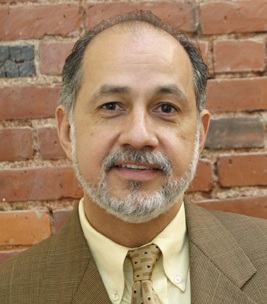
Dr. Roberto Miranda
Summary: In a world marked by terrorism, violence, illness, instability, and anxiety, Psalm 91 calls us to live under God’s protection without being paralyzed by fear. Dwelling in the shelter of the Most High means keeping our thoughts, affections, and values continually centered on God, his Word, and his Kingdom. We can quiet our minds through prayer, Scripture memorization, uplifting music, and meditation on his power. We must also confess God’s truth in faith, even when our emotions say otherwise, and place our trust in him rather than in our own ability. His motherly love covers and protects us with fierce tenderness. This trust neither ignores real dangers nor promises the complete absence of illness, tragedy, or death; it recognizes that we live in a fallen world and that God acts in history, even using crises to humble human pride. Divine protection, peace, and care are our normal inheritance, and even if we suffer or die, our soul and eternity remain secure in Christ. Therefore, we can live naturally, hopefully, courageously, and with compassion for those who suffer.
Let us turn to the word of the Lord in Psalm 91. It is a beautiful psalm, and I recite it many times during my prayer time. I memorized it years ago, and it has been a source of strength for my life, and I want us to meditate on it this morning. Also as part of our... this psalm is good because it kills two birds with one stone—or gives life to two birds with just one little piece of bread. One is that we are talking about emotional and spiritual health, about how to live healthy lives and prosper in the midst of a hostile world, and that we need to find practical advice in the word of the Lord for living a healthy life.
Number one, it is part of that series, and secondly, there are the events that have so deeply affected the world this weekend, what happened in Paris with these terrorist attacks in which more than 120 people have died, and the number will probably rise a little more, given that many people were seriously injured. And this event has obviously shaken the world for very obvious reasons, and it affects us as well. And I know that when we come to a service like today’s, some naturally feel somewhat affected by something of this nature, and we think about our own nation and the threats against it as well. But that is foreign neither to God nor to human history, and the word of the Lord has good antidotes, good remedies for fear.
In Psalm 91 the psalmist says:
“...He who dwells in the shelter of the Most High shall abide under the shadow of the Almighty. I will say of Jehovah, ‘He is my hope and my fortress, my God, in whom I will trust.’ He will deliver you from the snare of the fowler and from the deadly pestilence; he will cover you with his feathers, and under his wings you will be safe...”
Why don’t we stand? Let us all read it. Let us read it as a declaration of trust in the Lord. Let us wait for one another; let us do it in unity. Let us begin at the beginning and declare it in the name of the Lord, with conviction in our hearts and as a confession of faith and trust in the Lord. Let the message of this psalm penetrate your innermost being and banish all fear and anguish. Let us read it in a firm voice, like an army declaring God’s truth against the enemy’s lies.
“...He who dwells in the shelter of the Most High shall abide under the shadow of the Almighty. I will say of Jehovah, ‘He is my hope and my fortress, my God, in whom I will trust.’ He will deliver you from the snare of the fowler and from the deadly pestilence; he will cover you with his feathers, and under his wings you will be safe. His truth is shield and buckler; you will not fear the terror by night, nor the arrow that flies by day, nor the pestilence that walks in darkness, nor the destruction that lays waste at midday. A thousand will fall at your side and ten thousand at your right hand, but it will not come near you. Surely you will look with your eyes and see the reward of the wicked, because you have made Jehovah, who is my hope, the Most High, your dwelling place; no evil will befall you, nor will any plague come near your dwelling. For he will command his angels concerning you, to guard you in all your ways; they will bear you up in their hands, lest your foot strike a stone. You will tread upon the lion and the asp; you will trample the young lion and the dragon. Because he has set his love upon me, I also will deliver him. I will set him on high because he has known my name; he will call upon me, and I will answer him. I will be with him in distress; I will deliver him and glorify him. I will satisfy him with long life and show him my salvation...”
Give the Lord a round of applause. Amen. That is a beautiful promise God has for us. Read that psalm and fill yourself with the confidence the psalmist expresses through it. Brothers and sisters, I now want to begin the sermon.
Brothers and sisters, fear and anxiety are two of the great enemies of humankind in the twenty-first century—of modern man. The twentieth century was called—and this still applies very well to the twenty-first century—the century of anxiety. Today, psychiatry, psychology, and everything related to counseling constitute a multibillion-dollar industry because there are so many people—and sleeping pills, tranquilizers, and all these things are part of modern life—because anxiety and fear are things that overwhelm and fill the modern psyche.
The terrorist attack we witnessed in Paris on Friday illustrates this: terror—that terror by night of which the psalmist speaks in Psalm 91—is part of the culture in which we live. In fact, terrorism is a phenomenon that really belongs more to the twentieth and late nineteenth centuries, to modern times. It is when modernity enters human history that terrorism truly begins to rear its head as a technique for destabilizing societies.
We have the first ones, the anarchists of the nineteenth century—anarchism, the desire to create disorder. Anarchy means precisely that: lack of order. The use of terrorism as a technique for destabilizing societies also arises with the modern mind. For example, World War I in 1914 was initiated by an act of terrorism, in which a member of the Austrian nobility was assassinated by a terrorist, an anarchist, to provoke a conflagration, a conflict among the nations of Europe. And in fact, he succeeded, and it was one of the events that triggered it, although Europe at that time was already like a powder keg and it was known that war would come at some point. But this terrorist attack, this assassination of that member of the nobility, began it; it was like the spark that ignited World War I.
And throughout the twentieth century and into our own time, terrorism has continued growing and becoming a part of our lives, in which very small groups—or a single individual—can do this. We saw it here, for example, in the Boston terrorist attack a couple of years ago, when two practically crazed young men, with no apparent connection to any larger terrorist system, simply decided to turn themselves into two weapons that destabilized our city. We remember the terror: Boston locked down, it shut down, and you could feel the silence throughout the city as a result of just two people who could hold an entire nation hostage.
And terrorists know this, and groups like ISIS resort to it when they cannot do what they want, because that is one of the things happening now in the Middle East. Consider how ISIS began... ISIS, this group that initiated this act of terrorism and that has been beheading so many people and causing terror throughout the Middle East. ISIS discovers that the Western nations are arming themselves against it and have halted its advance to a certain extent.
At first they emerged so suddenly that they caught everyone by surprise, and they spread rapidly through Iraq and Syria and occupied a great deal of strategic territory. They thought they were now going to establish this caliphate, as they call it, throughout the Middle East and continue with the conquest of the world, because that is what they want to do. The Muslim mind wants to recover the former glory it possessed during the time of Muhammad, when Muslims conquered a large part of the world. But then the same thing happened: the West got its act together, and after centuries of Muslim ascendancy and irresistible conquest, it finally halted the advance of the Arab empire.
Because Islam and its desire to conquer the world are nothing new. Centuries and centuries ago, they nearly achieved it. That is why you see Islam in India, in the Middle East, in Indonesia, and in many parts of Asia; it is not found only in the Middle Eastern region, because Islam spread like an army at war, and Islam always expanded through war—by subjugating nations and imposing its empire. They did it in Europe as well. Today we do not speak Arabic because, in the fifteenth century, the Spanish halted Islam’s northward advance in a part of Spain whose name I do not remember, and they stopped it there; that was like putting on the brakes. Islam was stopped there, because they intended to continue expanding northward into France and other countries.
So the Western world—and I tell you these things so that you will also be somewhat informed about all this, because we think, ‘This is something new.’ No, this goes back centuries and centuries. So Islam, the Arab world, was actually the aristocracy of the world; it was the United States of its time. The Islamic world had acquired incredible power and an utterly dazzling culture. But it was stopped, and the West, which was then regarded as barbaric compared with Islam, began to arm itself and use science and technology, and it was able to halt the Islamic advance. And then Islam entered—and the Middle East entered—a time of great darkness and a great lack of technological and intellectual progress, until today it has become a rather primitive world, it must be put that way, in many respects. But they have always wanted to recover that pride, that former glory, and they resent it.
Resentment is one of the key elements in the Muslim and Arab mentality. It begins with Ishmael, Abraham’s first son, from whom the Arabs descend. They know that this is so. It comes from their envy of the second son, Isaac, from whom the Jews come, and that jealousy, that envy, that sense of rejection is what lies at the heart of Islam and at the heart of the Arab world: resentment, low self-esteem, the feeling of being despised by the world.
Brothers and sisters, if you allow yourselves to be ruled by jealousy, envy, bitterness, and a sense of having been wronged, the same thing that has happened to the Muslim world will happen to you. It is a world possessed by hatred, and the more they hate, the more hatred they generate, the more they kill one another, the more they devour one another, and the more incapable they become of making progress, because at the heart of that culture are rebellion, hatred, envy, and resentment of the progress and blessings of others.
The healing of the Muslim people lies in forgiving, forgetting hatred and bitterness, and seeking reconciliation, but they do not want to do it, and therefore they will continue sowing hatred, because hatred sows more hatred and more bitterness. And what we have today is a culture trying to resolve... all these groups that are so powerful, such as ISIS and other groups like it, are trying to recover the former glory they lost practically seven centuries ago and return to it once again. And there is fundamentalism, the idea held by many of these men that, by returning to the original foundations of the Quran and to what gave Muhammad and his warriors their original glory when they conquered the world, they must return, in a sense, to the ancient path. They are just as fundamentalist as we are. We say that we are going to return to the ancient path; they are saying the same thing: we must return to the Quran, we must return to the foundations of our religion and our faith.
That is why I do not subscribe to the claim that Islam is not a religion of violence. It is a violent religion, and these men know it; that is why they want to return to the violence that gave Islam its original glory, and that is why they kill in the way they do and use violence as a weapon, because in the heart there are resentment, hatred, bitterness, envy, and an eye-for-an-eye-and-a-tooth-for-a-tooth mentality. These people still live in the Old Testament.
Many say, ‘Well, Christianity also has its violence, and look at all those things there...’ Yes, that is true, but Christianity also has the New Testament and the Old Testament, and the two are in dialogue with each other. There is much violence in the Old Testament, that is true, but Christ came precisely to give humanity a fuller perspective on the heart of God. And Christ said, ‘You have heard that it was said, “An eye for an eye and a tooth for a tooth,”’ referring to the Old Testament, ‘but I tell you: love those who persecute you, bless those who curse you; have mercy and grace.’ So, in the pages of the Bible, although there are indeed instances of violence because it was a particular time in humanity’s history... I find that God has always wanted to lead humanity through a process of growth and development. And Christ came to bring humanity the perfect revelation of God, and that is why the New Testament speaks so much about love, grace, mercy, forgiveness, patience, the fruit of the Spirit, kindness, goodness, and peace—those values that distinguish Christianity.
In the ancient Bible, in the New Testament, there is a complexity and nuance that are not present in the Quran. The whole revelation, the whole Word—which is what we must consider, the different texts of the Bible speaking to one another and mutually qualifying one another—is what gives us this synthesis that is ultimately Christianity, which is a religion, a faith, of grace, love, and mercy. Although it also has its historical elements in the past, and it does not completely eliminate the use of violence either, because we live in a fallen world, in a sinful world as well, and there is a place for violence too—but not the vengeful, bloodthirsty violence that we see manifested in ISIS and in many people in the Muslim and Arab world.
I have wandered far afield, but I only wanted to... that is a little bonus; I am not going to charge you for what I am telling you now. But it is good to understand these things so we can understand where we are, and we could say much more about this in order to understand that it has a history. This is nothing new. Violence is a reality of the world and of human history, except that today it is manifesting itself in a very concentrated way, and this is also part of the fulfillment of the times.
But is all this terrorism and what is happening in the world part of a plan of God? Perhaps I will not get to everything I wanted to say about a word of confidence and faith, but I also want to tell you this, because it is very important: I believe that God is also allowing Islam and Islamic terrorism in order to discipline modern nations, to remind them of their fragility, and to humble the haughtiness of modern secular, rationalistic man, who believes that his technology will provide him with tranquility and peace and that he can do without God for his well-being.
We have always seen this, that God uses and God allows. I am going to tell you that God uses them, because I do not want to make excuses for God: God uses these harsh, brutal, and violent nations to discipline his people. He used the Assyrians, he used the Babylonians, he used all these nations that we see in the Old Testament to discipline his people and to bring them to an awareness and confession of their need for God.
I believe that in this time, in the twenty-first century, Islam is being used as God’s hammer against Europe and against nations like the United States, which are arrogant and full of rationalistic pride, to remind them of their inherent fragility. And many more things will come in this time. We have to prepare ourselves for many things, but we must not be filled with fear or terror. We have to live confident lives, brothers and sisters; go out into the street. I do not want to sound like President Bush: go shopping, as he said at that time, “Come on, folks, let’s go shopping.” No, we do not have to… but let us indeed live natural, normal lives. Never allow yourself to be crushed by fear, because these things have another background behind them.
God is using this; God is in the midst of history. God is moving in the midst of history. God is in control of history, and these things that are happening are part of a process of God to discipline the nations. France is a completely secularized, arrogant, proud nation. When have you heard that president mention God in one of his speeches, even at this time? It is a secular nation. France has a terribly rationalistic streak, and God is hammering those liberal nations, and he is going to force them to abandon many of their liberal principles in order to protect themselves, because Islam is a plague, a pestilence that has entered those nations. And I believe God has blinded many of these nations concerning the things that make for their well-being, to make it even more difficult. Because now Islam is embedded in the heart of Europe, and they will not be able to get it out. The Muslim world is embedded there, and those people hate the West. They will keep doing their things, their underhanded schemes.
Fortitude is required; a strong West is required, and unfortunately Europe is not strong, because they have abandoned the source of moral and spiritual strength, which is God. That is another piece—I am straying into other areas.
Again, that terrorist attack in Paris on Friday illustrates many of these things. As never before, we feel the fragility of life in the twenty-first century, the dangers surrounding us, the many things that are beyond our control. Nowadays we are all well informed about germs, viruses, the many diseases in the world, the violence in the city, the gangs, the maras right here in the city of Boston, in the nation of the United States. All the time on the news, while we eat dinner, we see that so-and-so killed 30 people, that a man entered a university and killed 30 students, that there is a sniper in a tower shooting at young people at a university. That is part of our daily diet.
We continually see the wars in the world on the news. The climate dangers that are supposedly going to destroy the world, the ice in the north that is melting, terrorism, fluctuations in the economies, rumors of economic depressions and economic disasters—that is our diet. As never before, we need the message of the Word of God: that we, the children of God, can enjoy a sense of security, permanence, and protection that others who do not know God cannot enjoy.
And that is what I see in this psalm. The psalmist says in Psalm 91 that whoever dwells in the shelter of the Most High will abide under the shadow of the Almighty. There are several points that I see in this psalm. The first thing I see is that it says, “whoever dwells.” Pause for a moment over the word dwell. To dwell means the person who keeps his mind, keeps his heart and his life fixed and centered on God, on his Word, and on his Kingdom. To dwell in the shelter of the Most High means that to me, something like remaining within. And I believe it is not so much physical, although God surrounds us in everything; rather, it is the person who keeps his mind, his thoughts, his values, and his affections centered on God, on his Word, on his Kingdom, on his teaching, on his power, on his person—the one who continually meditates on this—who can then enjoy that sense of divine protection, that security, that confidence amid the threats of death surrounding us.
Only through that continual remaining, that continual dwelling and meditating on the things of God, can our minds be filled with a sense of the divine presence and foster in us a sense of confidence and security in him. When you cannot tell your mind, “Mind, be still; I want to sleep. Stop this fear, this anxiety,” stop cursing the anxiety and concentrate on God. Find a good psalm and recite it. Put on some good music that reminds you of the love and peace of God. When your head will not let you sleep, pray, and you will see how the moment will come when you fall asleep and do not even know when you fell asleep.
On many occasions I have felt anxious like that, and what I do, instead of tossing and turning here in bed, is pray. Listen to me, I do not know, but for me praying is better than any sleeping pill; it is as though it never fails. A few minutes later I lose consciousness, and I do not remember when I fell asleep. And I believe part of it is that when you are praying and keeping your mind on the Lord, the endorphins and all the chemicals that induce peace begin to flow; those declarations about the good and positive things of the Kingdom of God begin to work on your chemistry and physiology and quiet your spirit, because you are abiding, dwelling in the presence. That continual remaining.
I like the words of Isaiah 26:3, a verse that I have also memorized. By the way, one of the most beautiful things—if you want to have peace in your heart and your spirit—is to memorize good verses from the Word of God.
God has been speaking to me lately about memorizing more of the Bible, because with those verses you do not have to go to the iPad, you do not have to go to the Bible; you have them right there, and they will be running through your subconscious. There is a verse in Isaiah 26:3 that says:
“…You will keep in perfect peace—everyone say, ‘perfect peace’—the one whose mind remains steadfast on you…”
When your mind, like a wild animal, wants to bolt after anxiety, pull it back and center it on God again. Keep your thoughts on the Lord. If you can meditate on something, meditate on God; meditate on the values of the Kingdom of God; meditate on good things. What do you spend your time on? In what do you invest your thoughts? Invest your life and your thoughts in positive things that fill you with the peace of God, that build you up spiritually, that strengthen you spiritually.
Many of us suffer from so much anxiety—not always, because that is very complex—but many times it is because we are filling our heads with all kinds of things. Before going to bed, we watch the news: 300 people were killed in such-and-such a place, there is a war somewhere else. Then we turn off the television and go to sleep. Just imagine. What is happening in our subconscious? Meditate on positive things so that your mind can lower its revolutions per minute and you will then be ready to surrender to sleep.
But this matter of persevering, of keeping our minds and our thoughts on the Lord, is important. Through the use of the word also…
A second thing—number 1: concentrate, remain, dwell, abide in the values and things of the Kingdom of God. The second thing I see here is that it says: the one who dwells in whose shelter? The Most High’s. He will abide under whose shadow? The Almighty’s. Those are two very strong words: Most High, Almighty. They are two words that speak about the great might of God.
Through the use of these words, the writer already reveals his lofty view of Jehovah, of his power, of his superiority over every other force. As for the people who allow themselves to be so intimidated by what is happening in this time, I believe part of the reason is that they have taken their eyes off the God who governs history, the God who is in control of ISIS, is in control of the United States, is in control of France, is in control of Africa, is in control of every continent.
The Bible says that the earth is like a little ball in God’s hands. In fact, it says that the earth is his footstool; God is the Lord of history. These men can do whatever they please, but in the end it has to fit within God’s plan, and God is in control of everything that is happening; none of this is by accident. God is guiding this entire global economy and human history and everything else. We know that God is guiding it all toward an end, and we are witnesses to that. And you know what? We are part of the team that wins at the end of the story. That is the beautiful thing: God is in control of everything, and you have to keep your eyes fixed on a God of power, a God who controls history.
It is important to be saturated with a sense of the glory, power, and magnificence of the God we serve. Think each day about that powerful God you have. Fill your mind with the God who is in control.
The psalmist says in another psalm, “My help comes from Jehovah, who made heaven and earth.” He is not just any god; he is the God who created the universe. Many times in Scripture I see this invitation, when we are in trouble, in tribulation, in anguish, to fix our eyes on God’s power and concentrate on that power of God, because what the devil wants is for you to focus on his power and on what he is doing, on how he is wagging his tail at you. No, focus on God and tell the devil to go over there and do what he has always done. Forget about him. Bless God and invoke the power of God over your life.
Again and again, I see that invitation in the Word to forget our fragility and fix our eyes on the power of God. Psalm 40 says:
“…Do you not know? Have you not heard? Has it never been told to you from the beginning—a rhetorical statement—have you not been taught since the earth was founded? He sits above the circle of the earth, whose inhabitants are like grasshoppers. He stretches out the heavens like a curtain; he spreads them out like a tent to dwell in. He reduces the powerful to nothing and makes those who rule the earth into a vain thing…”
No president, no prime minister, no king holds power over the world. God holds the power. They are minuscule; they are insects before his presence and power, compared with the might of God.
“…as though they had never been planted, as though they had never been sown, as though their trunk had never taken root in the earth; as soon as he blows on them, they wither, and the whirlwind carries them away like dead leaves…”
ISIS, Al Qaeda—all those groups will decline; they will disappear. Others will come, but they are not eternal; they are not as powerful as they may appear. Al Qaeda was the big thing a few years ago, and nowadays people do not even talk as much about Al Qaeda. Now the new gunslinger is ISIS. And the devil, in fact, will never tire of throwing other things at us. That is why we cannot allow ourselves to be so distracted by his schemes.
In that same psalm there is a very beautiful verse, verse 27, Psalm 40, which says:
“…Why do you say, O Jacob, and speak, O Israel, saying, ‘My way is hidden from Jehovah, and my justice has passed unnoticed by my God’?”
Never doubt; never sink into worry and fear and terror, saying, “Oh, God has forsaken me,” or, “This is going to happen—disaster.” It says:
“…Have you not known? Have you not heard that the eternal God is Jehovah, who created the ends of the earth? He does not faint or grow weary, and no one can fathom his understanding…”
That might of God—never sink into despair and fear. Fix your eyes on the Lord; he is infinite, and that infinite power of God, which has been on our side, is what guarantees our security. So there are two things there for battling fear, anxiety, and anguish. Number 1: keep your mind, keep your thoughts, keep your emotions centered on God at all times. Meditate on the Word, the values, the sounds, the harmonies of the Kingdom of God. And secondly, fill yourself with that sense of the great power of God; cultivate that sense of God’s might. Read and meditate so that your mind will be filled with that sense of the powerful God you have, who can protect you from any evil, no matter how powerful it may seem.
Number 3, another point I see here in this psalm is the power of positive confession in God. That is why, when we were here and I decided that we should sing that chorus, “I Have a Voice in My Soul,” the last thing many of you have is joy in your soul on a day like today—at least some of you; I do not want to exaggerate either. We come in feeling a little down, understandably, because of what we feel. And to some it may feel as though it is jarring; I myself sometimes feel that it is jarring. Saying, “I have joy in my soul,” at this moment may even seem irreverent.
But you know what? I have learned in life that precisely one of the things we must do when we are afraid, anguished, or sad is to use the confession of God’s Word to push back against it. I cannot control what is happening inside me, but I can control what my mouth says; I can control the kind of music I choose to play in my home when I am depressed or sad; I can control what I am going to do—whether I stay tucked in bed or leap up and jump into the shower to take a bath that wakes me up and gets me functioning in the world again.
I say that there are two kinds of evangelicals in the Kingdom. There is one kind of evangelical—and I will say this with all the respect I can—there is an entire sector of the Christian world whose music and worship are conditioned by the times and circumstances and, for example, if something terrible has happened… they celebrate a lot. It is very difficult to explain this with all the nuance I want. But that music, their music, can be somewhat mournful, somewhat somber. When you think, for example, of all the magnificent music of Bach and Mozart and the entire Western world, you see much of that music in a solemn minor key because, of course, the world is sad and somber, and much of that music reflects the world’s pain.
For example, on a day like today, the easiest thing would be to sing subdued little choruses, sad and very gentle little choruses. Sometimes I want to hurl a stone right at the devil’s forehead with one of those raw, full-throated Pentecostal choruses that violate my entire sense of rationalism and aesthetic elegance, because I believe that those crazy Pentecostals know something many of us do not know about the power of saying things brutally and openly in the name of the Lord. I believe in that, brothers and sisters, and I believe that many times we must declare who God is even when your heart does not feel it.
Give yourself an electric shock by singing a little chorus that startles you when it comes out of your mouth, and that will help you take off and recover the joy of the Lord. I believe in that, brothers and sisters. Instead of setting out to sing something subdued and sad—although that obviously has its place. There are also times when, in the midst of your sadness, you have to declare the things of God; hurl a stone at the devil with a good Pentecostal chorus.
Why do I say this? Because in this psalm the psalmist says, “I will say of the LORD”; that “I will say” speaks to me of the power of the positive word. We must learn to speak confidently and declare positive things over our lives and our minds as an antidote to fear, even when we feel exactly the opposite. This sends a positive message to our brain, our neurological system, and our emotions, and it calms anxiety and fear. Yes, it may feel jarring, just as medicine often tastes sour or bitter when you take it, but your body responds.
For example, the psalmist says in Psalm 42, “Why are you cast down, O my soul, and why are you troubled within me? Hope in God, for I shall yet praise Him, my salvation and my God.”
He is cast down, sad, troubled, and depressed, but he says, “Wait a minute; I cannot go on like this. My soul, my neurological system, my emotions, why are you like this? Hope in God, because I know that at some point I will come out of this, I shall yet praise Him, and I will say, ‘My salvation and my God.’”
When you are immersed in your depression, your sadness, your struggle, your fear, say, “I am going to come out of this.” Do not see yourself as condemned to remain there and then pitch a gloomy tent there so you can live inside your sadness. No. Say, “I am going to come out of this in the name of the Lord. I shall not die; I shall live,” and declare His goodness… Speak to your soul, speak to your mind, speak to your brain: “Why are you cast down and troubled within me? Hope in God.” You have to tell yourself that many times in your life. Hope in God; though He delays, wait for Him, because He will come and He will fulfill His promise. Use your mouth; speak to your mind, speak to your heart, speak to your emotions. Fight; do not submit to depression, do not submit to fear. That is what the devil wants. Declare things with your mouth by faith, even when you do not feel them, and act accordingly.
There is a fourth thing. So, also use positive confession. Center your mind on God; center your mind on the power and greatness of God. A fourth point: the psalmist says, “My God, in whom I will trust. I will say of the LORD, ‘My hope and my fortress, my God, in whom I will trust.’”
My God. We must put our trust in God and not in ourselves. That is part of a single mechanism. Removing our trust from ourselves and placing it in God—both things must go together. Removing your trust from yourself must be something active and deliberate that you do. The distinguishing mark of every wise man and every wise woman is that they do not trust in themselves; they are keenly aware of their fragility and weakness. What is more, they cultivate a sense of fragility and delicacy in the face of the brutality of the world in which we live.
Paul said, “I have learned that when I am weak, then I am strong”; therefore, I will rejoice in weaknesses, insults, suffering, and afflictions. There is something powerful in cultivating your sense of fragility and placing your trust in God, because when we place our trust in God, we remove it from ourselves and place it exclusively in Him.
The child of God knows that he is a perishable creature and, like a child, needs his Father’s protection at all times. Paradoxically, in cultivating our own fragility—the sense of our own fragility, our evanescence, our transience—there is a Sunday word for you—as you cultivate that sense of your own fragility in contrast with the absolute power of God, there is great protection and great strength in that.
In the psalm preceding this one, Psalm 91, there is Psalm 90, which also says this, because that psalm is a declaration of God’s power:
“…Lord, You have been our refuge from generation to generation…”
But there is also an invitation to meditate on man’s transience and fragility in contrast with that power of God. The psalmist says in verse 3:
“…You reduce man to brokenness and say to him, ‘Return, you children of men’”—later, verse 5 says, speaking about humanity—“You sweep them away as with torrents of water; they are like a dream, like the grass that grows in the morning. In the morning it flourishes and grows, and in the evening it is cut down and withers…”
The psalmist says here, “With His feathers…” That image of God is astonishing: “With His feathers He will cover you, and under His wings you will be safe…”
A hen. I know that many people were upset some time ago when I spoke about the hen. You are never going to forget that sermon. But it is in good company: here God is compared to a hen. Hens can be quite fierce. Have you ever tried to take a chick away from a hen? Many of us have peck marks that remind us of those hens, from when we tried to take away one of their chicks. Hens can be fierce in their love and tenderness toward their chicks.
It says, “With His feathers He will cover you; under His wings you will be safe.” It is a wonderful image of God’s maternal love surrounding us, covering us, and protecting us. God is fierce in protecting His little chicks, who are you and me. And that is important.
The Lord Jesus Christ also said, “O Jerusalem, Jerusalem, how I wanted to cover you,” as a hen covers her chicks. The tragedy of Jerusalem and Israel is that they have always been too self-sufficient. Look at them even now, at everything they are suffering over there. And He says, “And you were unwilling; therefore, your city is now left desolate, and your walls will be broken down.” That is what happened to Israel with the Roman destruction in the first century.
But the Lord wants to cover us as a hen covers her chicks. The Lord loves you. The Lord loves you with a fierce love. It is also important for us to meditate on God’s love for us. When you enter the Kingdom of God, when you take shelter under the wings of Jesus Christ, God covers you with His maternal love. God’s love is a mother’s love, not only a father’s love but also a mother’s.
When we are possessed by a sense of God’s great love for us, this also becomes an antidote to anxiety and fear and a source of power and protection. Our active faith in God’s protective love draws that protective love and makes it real in our lives. Think about God’s love and fill yourself with that awareness; saturate yourself with the awareness… God loves me, God is love. In fact, God loves you with an invincible love, and He knows your struggles, He knows your sufferings, He knows your tears, He knows your anxiety, He knows your sins, He knows your weakness, He knows every minute event in your life, and He is with you, He loves you, and He also suffers with you, I would say.
When you are suffering, do not ask yourself where God is, because God is right there beside you and within you, suffering with you, and perhaps He is also weeping with you. God’s love is such a powerful love. Fill yourself with that sense of God’s love: God loves you and will love you, because, as with the prodigal son, even if you leave Him, fail, and make mistakes, God’s love will never leave you. When you repent, He will be there like the father receiving the prodigal son, ready to wrap you in His hands once again.
A sister said to me just today—and I bless her for it—she said, “Pastor, I love you so much because when I stopped coming to church for a long time and came back…” She came to ask my forgiveness, and I told her, “Sister, you never… This church is always your church; it will always be your church, ready to receive you at any time.” That is always my policy. I am not going to stand here saying, “Oh, you unredeemed sinner, why did you leave? Now come and sit in the last seat for 10 years.” No. Amen, welcome. Glory to God, this is your home; we love you. Come and rejoin us.
I believe that; God’s love is like that. We may leave Him for a time, for whatever reason, but God’s love is always invincible. It is there with us; it is with you. That love will fiercely protect you at all times.
The sixth thing I see in this psalm is that the powerful confidence illustrated by this psalm—the confidence I see here—is not ignorant of the reality of danger and the power of evil in the world. It is not an ostrich that buries its head in the sand and pretends that if it does not see the danger, then it does not exist. No. It is an informed confidence; it is an intelligent confidence that knows it dwells in the valley of the shadow of death. The psalmist is aware that evil is a very powerful reality all around him. In fact, he names many kinds of evil in this psalm, from all of which he says God will protect him.
When we declare this, it is not that I am ignoring reality. No, the world is a terrible world. We could go out and perish out there right now, and that is a reality. Everything I am saying does not ignore the fact that our life is contingent and that we live in a terrible world. In fact, the psalmist speaks here and says:
“…You shall not fear the terror by night, nor the arrow that flies by day, nor the pestilence that walks in darkness, nor the destruction that lays waste at midday…”
He also speaks of the lion and the asp: “…You shall tread upon the lion and the asp, upon the young lion and the dragon…”
He takes the time to illustrate and enumerate all the dangers in the world. And I am sure that, if we had time, we could see that each of those images depicts aspects of the evil moving through the world—the terror by night. What a poetic, beautiful expression! The terror by night: nightmares, anxiety, that heart of yours that races when you wake up at 2:00 in the morning, pounding as though it wants to burst out of your chest. The terror by night.
In the days when the psalmist lived, an enemy army could come at night, seize a city or a village, destroy it, and kill everyone. The terror by night that moves in that way. The destruction that lays waste at midday: war, destruction, an earthquake. The arrow that flies by day: a blind arrow, a cancer developing blindly inside you. That cell that becomes cancerous neither hates you nor loves you; something simply went wrong with it, and it began reproducing disobediently against you, and it can kill you. It is a blind arrow that flies by day; it can come and—boom!—slip through the seams of your armor, as happened to King Ahab. Someone shot an arrow, and it blindly struck him.
And that is often how it happens: there are arrows in the world that can strike you, but it says, “You shall not fear” that arrow that flies by day—the pestilence, all the plagues of our times, viruses, all those things. The lion, the young lion, the asp, the devil, the demons, the destructive powers that want to destroy man. You are going to trample them; you are going to walk over them; you are going to rule over them all.
One last thing concerning this. This psalm, therefore, does not constitute an absolute promise that we will never suffer disaster or tragedy or illness or some kind of evil or physical or spiritual attack. I am not guaranteeing here that you will not suffer illness or some tragedy; this psalm simply points out that this security, this confidence, this defense is what I call the natural and normal inheritance of the children of God. In itself, that is the basic inheritance. It is the default condition of the children of God.
That is the foundation, the platform from which there may be exceptions and from which one may stray, but that is where you have to keep your eyes fixed. Do not worry so much about so-and-so who was diagnosed with cancer; do not worry about so-and-so who was hit by a car; do not worry about the person whose house was taken away; do not worry about the person who has a diabetic condition, to the point that you take your eyes off the God who says, “I am with you. I love you, I defend you, I declare health over your life.”
Because many times we look at all the things that are happening, and then we stop praying, we stop declaring, we stop trusting. I believe that the basic, fundamental, normal condition of the children of God is sufficiency, health, goodness, protection, care, joy, peace—that is the inheritance. And that is why, again and again, in the psalmists and throughout the Word of God, one sees that: the promise of God.
Think about that, focus on that, and if evil should come into your life, if financial trouble should come, if illness should come, if tragedy should come, if loss should come, there are many other things that the Word of God also promises you can do during that time. And to me, one of the most beautiful things of all is that even if these things come into our lives, our soul is secure with the Lord.
If right now there is a terrorist attack out there in the street, look, I already have my passport stamped. One thing we are not—we are not undocumented in the Kingdom of God. We have all our documents in Christ Jesus, and that should be a source of great security for us, brothers and sisters.
If something happens—because things do happen, because that is what happens in this world full of evil—I am confident in the name of the Lord. My soul is secure; my eternity is secure with God. I am going to die of something, and at some point I am going to die, but I have the greatest insurance of all: the blood of Christ, which covers me and guarantees me an existence completely free of every contingency in eternity.
That is the inheritance of the children of God. So the Bible says that we should not fear those who can kill the body but can do nothing to the soul. ISIS cannot touch your soul. ISIS can take your life and cut off your head, but it does not have a knife that can decapitate your soul. That is in God’s hands, and if they were to decapitate you, from the moment your head was cut off, life would flow out to the world, and your martyrdom would be like Christ’s martyrdom and would give more vitality to the world. The devil is defeated wherever he wags his tail. He is completely defeated. Christ defeated him totally, and our faith, our security in Christ—that is the last card we play.
If all the other cards have failed us, the last one is this: my life is secure in Christ Jesus. If we die, we die for him; if we live, we live for him. Whether we live or die, we belong to the Lord. Hallelujah! That is precious. So where is the problem? What is the problem, child of God? Trust in your Lord. Amen. And do not let any devil in this world make you take your eyes off that loving, powerful, faithful God whom you have, who loves you with an everlasting love. Amen.
Do not attach importance to it. There is a degree of importance to what has happened, but fill yourself… and when these things happen, lift up your head, because the day of your redemption is near. Stand up. Give thanks to God.
Oh, Lord, thank you. Father, this morning we swallow a few pills from the medicine cabinet of your Word, and we choose peace in our hearts. We remember France; we remember those families, Father, who are grieving right now, who have lost their young people. Lord, have mercy on them. We pray for that French nation, and we grieve with them and bless them, Father. We bless the very foundations of that nation, and we ask that its leaders be endowed with divine wisdom to lead their people well, and that the churches in France, Lord—the pastors, the priests—may receive a word from God for their people, a word of hope, and that those French leaders may look to you and receive some spiritual nourishment during this time.
May you turn what the devil intended to use for destruction into life for that nation, Father, so that in their sense of frailty they may turn to you and seek you, Lord. And we also ask for mercy for those Muslim Arab nations, which need to know the Christ whom we know, the only one capable of bringing them out of misery and poverty and humiliation.
Have mercy on them, Father. Allow there to be a day of reconciliation and an awakening to what truly ensures the prosperity of nations: not hatred, not war, not death, not oppression, not exploitation, but the love of Christ Jesus, who gave himself on the cross and, through his crucifixion, unleashed the power for the redemption of humanity.
Today we receive new strength from you, Father—courage, joy, peace, hope, optimism for the future. Thank you, Lord. Thank you because you are in control of history, and we declare it: may your Kingdom come, and may your will be done on earth as it is in heaven, without any resistance, Father. I bless this people, Lord; establish your Spirit in them, in their families, in their homes. Thank you, in—in the name of Jesus. Amen. I bless you, my brothers and sisters. May the grace of the Lord be with you.