Year of Consolidation
Author
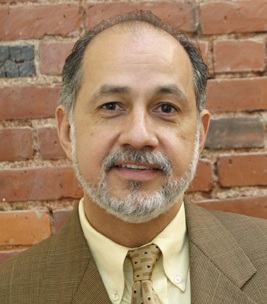
Dr. Roberto Miranda
Summary: This year must be a time of consolidation: before conquering new territories, we need to secure what has been achieved, review the path we have traveled, and return to the altar. Like Abraham, we have gone through a journey of promises, uncertainty, mistakes, provision, and growth; God is interested not only in the destination but also in shaping our character throughout the process. Great visions require patience to wait, persistence to keep going even when we are weary, and generosity to sustain the work of the Kingdom. Through trials and delays, we learn dependence, gratitude, and intimacy with God, whose provision may come in simple yet sufficient and miraculous ways. We must also examine ourselves, humble ourselves, and ask forgiveness for any disobedience, walking in reverent fear before His holiness. The congregation is called to uphold the values of Scripture in daily life and reflect them in relationships, families, and conduct. After an exhausting season, we need to strengthen what remains incomplete and prepare to move forward. God’s promises remain great, but the next step arises from a firm spiritual foundation, from the presence of God, and from a community shaped by Him.
I want to share a Word with you tonight, and I want to share with you some words that I hope will serve as a kind of frame of reference for us in terms of what God has for us this year, how I see this coming year for us as a congregation, as the family of God. And I want to go to the Book of Genesis, chapter 13, and we are going to read verses 1 through 4.
And it concerns a moment in Abraham’s life and the journey through which God had led him. Verse 1 says: “Then Abraham went up from Egypt toward the Negev, he and his wife and all that he had, and Lot with him. And Abraham was exceedingly rich in livestock, in silver, and in gold. And he journeyed from the Negev toward Bethel, to the place where his tent had been before, between Bethel and Ai, to the place of the altar that he had made there before; and there Abraham called upon the Name of Jehovah.”
The Lord placed this Word in my spirit as I sought something to share with you while we look toward the coming year, and as I thought about the direction in which God was leading us over the next twelve months and looked back over the journey on which God has brought us during these past three and a half years, almost four years, since we first broke ground right here in this very place where we are now.
The word consolidation came to my spirit, and that word consolidation is used in evangelical circles, especially in Latin America, in reference to when a harvest of people comes into the Church: a person comes into the Gospel, and then one proceeds, as it were, to make that person firm and root them in their faith.
But the word consolidation can also refer to tightening things that are a little loose after they have been brought together. Think of a person selling sugar or flour or rice in ancient times, when a container was used, and then the person would proceed to shake that grain and pack it down tightly so that the container would hold the proper measure. I firmly believe that when we begin something, we must also stop to strengthen it and, as it were, consolidate the ground that we have just occupied.
We should never try to cover a great deal of territory and then continue covering even more territory without first making sure that what we have attained is solid and secure, so that we can use it as a starting point for the next conquest. Many times, before moving forward, we have to go backward; and many times, in these proclamations that one makes at the beginning of the year, the temptation is merely to speak in dynamic, aggressive, and militant terms about moving forward, right? People expect those very optimistic and positive proclamations about the future, something to which we can freely say: Glory to God, hallelujah!
But you know me by now, and you know that I also like to speak soberly and in a way that fits the reality one is living, rather than simply giving people superficial proclamations that ultimately have little effect on reality. And that is why this passage about Abraham touched me, and I wanted to use it as an illustration of what we are talking about tonight, because notice that before Abraham reaches this moment when he offers an altar to the Lord, he has just come through a long journey, and we do not know how many years it lasted or how many miles he had covered on that journey.
In the preceding chapter, Abraham appears in Scripture for the first time, and we are told that God called him to leave what was familiar in order to embark upon a journey, and that He would give him these things as he walked along that journey; but Abraham did not really know where he was going or what awaited him along the way. God makes him certain promises, but He does not tell him everything that he will experience within that greater promise. And think about the journey that we have lived, that I and the pastors have lived, during these past few years. God called us to construct a building, with blessing and support for what we were going to do, but I knew that it would be a journey filled with uncertainties and adventures, and I did not know what awaited us on the road ahead.
We have had a sense that God has called us to bless us, to enlarge our territory, and to give us a great family, just as He promised Abraham the first time He appeared to him. But we have also always known that when God sends us on a journey, He is interested not only in the point of arrival and the destination, but also in the very process involved in traveling to the place where He intends to lead us. In fact, I would say that what interests God most is the experience, the process, what happens within us when we set out in pursuit of a vision that He gives us.
What interests God most is the character of the man or woman, becoming more like Him and His Son Jesus Christ. That is what God truly wants to accomplish, because He already knows and guarantees the outcome, but it is the process that brings Him glory and honor.
You have heard me speak many times about the fact that God is a God of travels, God is a God of journeys, and I always see the Lord sending His servants on journeys that are physical but also inward, journeys within the person. And there is no clearer example in the Bible of a journey that has physical as well as spiritual and personal aspects than the journey of Abraham.
So we see that God, I believe, has wanted to do that very thing with this congregation and in the lives of its pastors. And I believe I can speak personally: in my own life, I have seen that these years have also been a process through which the Lord has guided me, dealing with me as well and teaching me many things. I believe that the Lord has wanted, first of all, to instill in this congregation vision and the capacity to see a great future and not be intimidated by the greatness of the vision, not to limit ourselves merely to what we see at the moment, but to try to see what things can become through the Power of God.
Brothers and sisters, if one lives only according to what one has at the moment and what one is at the moment, one will never become what God wants one to be. What distinguishes a man or woman of God, an anointed congregation, is the capacity always to be thinking about what lies beyond the horizon, beyond what is immediately visible. God will always work in our lives according to the longings and desires that we have in our hearts.
Very rarely will God visit a person who is content and satisfied with what they have and has no ambition to go beyond it. And again, I am not saying that one should always be dissatisfied—that is not what I mean, as though saying, “Oh, I have something, but I want what is over there so badly that I do not care about what is here.” It does not mean that. Rather, I am saying that, yes, we can be satisfied with and grateful for what God has given us, while at the same time, in a seemingly contradictory sense, eagerly longing for the next stage; and precisely because we know the God who has blessed us here, we know that we can ask and desire something beyond what He has already given us.
You will remember that the Lord placed within me this desire to build a sanctuary in this space when we had not even properly begun to build the first sanctuary. I was very grateful for what God had done over there, but in my heart I felt that God was going to lead us into something greater. And I always said: When our Church fills the old sanctuary twice every Sunday, it will be time for us to have something larger that can accommodate a larger congregation, and by then we will have the resources to undertake that task.
And we began to plan, research, investigate, and make arrangements, I would say, about eight or nine years ago, or perhaps even longer. The first time I contacted Glenn Noss, our architect, was at least nine years ago. Samuel, were you there that day when we went to the Presbyterian church in Roxbury? I do not know how many years ago it was, but it was at least nine years ago, something like that. I believe Gonzalo was also there that night when we went there a long time ago, and by then I had already thought about it a great deal beforehand. Twelve or thirteen years—but I do not want to exaggerate.
But I tell you this only so that you will understand that—and I knew why—because it was going to be a very complex, difficult, and dangerous task, and that was why we had to begin it a long time in advance, because there were many things to resolve and overcome in order to reach this moment. And in that regard, I was not mistaken at all; we have had to defeat many giants, and I do not have time to explain to you all the giants that have had to be defeated in order to reach this moment. I do not know whether you have seen the movie Alien, about that monster: every time you think they have killed it, it comes back again, revives, and keeps going. That is what this process has been like for many years.
And so it is important, brothers and sisters: we must be a visionary Church, a Church that sees beyond present reality and the present moment, and we must dare to pursue the visions that God places in our hearts. And God has wanted to teach us something else as well: patience. How many times we thought we would already be in this place by now.
I remember that the year before last, near the end of the year, I said: Brothers and sisters, how wonderful it would be to be in our sanctuary to celebrate the New Year last year. And now, confess, brothers and sisters: how many of you have had doubts about what has been happening, about how long it is taking, and about all these things as the process drags on? If you are honest, I believe many of you could confess it, but I am not going to ask you to raise your hands right now, so do not worry.
And God has wanted to teach us to be patient, because God’s processes and great visions, as I have preached on recent Sundays, take time to be fulfilled, and we must pursue the vision patiently until God makes it a reality. Another thing that the Lord has wanted to teach us through this process is persistence, which, incidentally, is not the same as patience; because when I think of persistence, I think of determination. I think of enduring even though one is tired, exhausted, and discouraged, continuing to walk through sheer discipline and the simple decision not to allow oneself to be defeated.
I do not believe that God can create a man or woman who is a true warrior without that capacity to persist despite weariness and discouragement, simply continuing to put one foot in front of the other and waging war against everything that comes against them. And how does God form a man, a woman, or a congregation possessing that quality which is so necessary if God is truly to use them in the great things He wants them to do?
The only way is by putting us through exercises that develop within us those spiritual muscles, that endurance which enables us to continue despite what the flesh says, and simply to say: God called me to this, and I will continue until I see His vision fulfilled in my life.
And another of those qualities that a man or woman of God and a congregation also need, and which can only develop through a process into which God places us, is the generosity of God; and you have had to exercise that generosity during these past three and a half years or more. How many times, since we began this financial campaign, have we had to come before you and invite you time and time again to be generous with your money specifically so that this vision could be carried out and fulfilled? How many times have I had to exercise persistence and self-discipline in order to come before you and simply ask you to give a little more to this campaign? Because it is something I absolutely detest and abhor, but I have had to do it because I am asking for the Work of God and not for myself.
And I have been encouraged by many of you who gave once and not only gave once, but gave two or three times, and came with your exceedingly generous offerings, which I know you could not easily spare, to make possible this work that we are enjoying tonight. Brothers and sisters, let me tell you that God will not use a congregation in this city or anywhere else in the world if it is not generous toward the Work of the Kingdom of God. Incidentally, my brothers and sisters, let me tell you that you cannot be truly blessed in the Kingdom of God if you have not learned to be generous and openhanded with your money and your time in the service of the Kingdom of God. Brothers and sisters, there is no true blessing for a person who is conservative and timid about giving to the Lord.
The things to which God has called this congregation in the future cannot be attained unless they are founded upon a Church composed of men and women who place no limit on what they are willing to give to the Lord. And tonight I want to encourage you, my brother, my sister, during this coming year, to make a promise in your heart, in your spirit, that you will enlarge your capacity to give to the Lord and to believe the Lord. Dare to open furrows and channels through which the glory of God can flow in your life, expanding your capacity and giving generously to the Lord, so that through that generous surrender God may then send His Spirit and bless you and prosper you.
Many of us have learned, brothers and sisters, that there is nothing like living with the faith that, if we are generous toward God, the Lord will take care of our needs and give us more than we expect. Can you say amen to that? And so, all these things and many more are the lessons God has wanted to teach us through this long journey, like Abraham’s, that we have lived through. Many times during these seasons I have said, “Lord, I think I have learned enough already. Could You give me a little break?” But the Lord continues to teach me other things, forcing me to see other aspects and to depend absolutely on Him, even humbling me many times in order to break my pride and my sense of personal dignity, to teach me that I am not what I often think I am.
I always remember—and you have heard me read—the passage from Deuteronomy chapter 8, where God speaks to the Hebrew people about what He had been doing in them during the forty years in the wilderness before bringing them into the Promised Land. The Lord says to Israel, “And you shall remember all the way”—there is the journey—“by which the LORD your God has led you these forty years in the wilderness, to humble you, to test you, to know what was in your heart, whether you would keep His commandments or not.”
You see here that the Lord was using Israel’s physical journey through the wilderness to do a work in their collective spiritual character, because that is what I am telling you: God is always interested in the formation of a man or of a congregation. That is what interests Him most throughout these journeys. In verse 3 it says, “And He humbled you and allowed you to hunger, and fed you with manna, food which you did not know, nor did your fathers know, that He might make you understand that man shall not live by bread alone, but man shall live by every word that proceeds from the mouth of the LORD.”
It is as though God wants to train us, as an animal is trained to be grateful and depend on its owner, by allowing it to experience need and then meeting that need, so that through that process a bond, a deep connection between the master and his creature, may be formed. That is, God takes us through those exercises in order to create within us a dependence, a sense of intimacy and deep connection with Him, as has happened in this process.
Many times, the trials God takes you through, the long waits, the seasons in the wilderness, are God preparing your soul, preparing your character, so that as you wait for Him and He then comes and brings you out of affliction and trial, you may learn to depend on Him more and more and to be more grateful and more loving toward the God who brought you out. That is the person God can use.
In verse 4 it says, “Your garment did not wear out on you, nor did your foot swell during these forty years.” It says here, then, that God sustained them with manna, which was very plain, very simple food, and also with the clothes they had. He did not give them luxurious garments falling from heaven, but He gave them enough. The clothes they had never wore out, but remained exactly as they were on the day they left Egypt, through a miraculous process of preservation.
And certainly, throughout this process, I tell you frankly that I have not received any—and I can say this with complete gratitude to the Lord—God has not given us, let us say, some magical solution in which someone suddenly said, “You know what, Pastor? I want to donate one million dollars to the church’s construction project.” There has been no such provision, but it has been enough and has come at the necessary time.
And when one thinks, brothers and sisters, about what God has allowed us to do in this place, in this space, I know that the vast majority of you do not know what a miracle it is that we have been able to construct a building like this for the amount of money with which we have built it. What has been saved in the construction of this building is as though God had given us an additional five million dollars for its construction. We began with an agreement with the bank that we would only be able to build this space in here. The fourth floor would not be touched until some future time when we had more money to finish that fourth floor.
And the money the bank would provide, and the budget that was submitted to the bank, covered only this space in here—the two floors we currently occupy. Nevertheless, from very early on, the Lord clearly gave me the instructions and the faith to work on and finish the fourth floor as well, which we were also able to complete with the same money we had at the beginning.
By the way, I never told the bank that we were doing that, because it would have given them a stroke. I did not tell them because they would have become very suspicious. I told them what we were doing only toward the end of the process, but I knew that the Lord was able to give us enough even to finish that fourth floor, and to the glory of the Lord, that is what happened. We have finished it as well.
So, as I say, there has not been some magical and absolutely spectacular provision, but God’s provision has been humbler: through human resources and through opportunities that have presented themselves in very simple and almost everyday ways, yet in a very real way that was also supernatural and miraculous.
I believe that in verse 5 there is also something we must not forget. I see it now and have to acknowledge it. It says, “You shall also recognize in your heart that, as a man chastens his son, so the LORD your God chastens you.” And I wonder whether, in this process, there have also been mistakes we have made. I do not recall anything particularly specific like that. At times I have had my doubts as to whether we have somehow offended the Lord in something we have done or failed to do. But I believe we must always understand that, in the processes through which God leads us, we have a God who is an exceedingly holy God, and we must take great care in how we walk with Him and how we carry out His will.
God was evidently speaking to an Israel that had offended Him several times in the wilderness, and God had been compelled to punish them in spectacular and terrible ways. And I believe that we too, both as a congregation and I as the principal leader of this project and of this congregation, must come before the Lord. I believe we have not been perfect in this process, and we must also humble ourselves before God. And now, as we bring this process to an end, we must also say, “Father, in any way that we may have offended You, in any way that we may not have done everything You wanted us to do in the way You wanted us to do it, forgive us.”
It is important for us to humble ourselves, and I will be doing that soon, coming before the Lord and taking stock in my spirit of everything that has happened over these last three and a half years, because it is important for us to conduct this kind of inward spiritual examination.
And let me tell you something. I already know that time is getting away from us. God has given me more material than I expected, but while we were there worshiping the Lord, I looked back and felt that God wants this church to be an exemplary church, brothers and sisters. God wants our congregation, brothers and sisters, to be an example, as difficult as it is—and I tell you this from personal experience—to walk in holiness and honor a holy God.
At a time when this nation and the Christian Church in this nation are casting aside many important values of Scripture at an extremely accelerated pace, God wants there to be peoples who take hold of and cling to the truths of the Gospel. God wants a church that distinguishes itself, in a very humble and very simple way, by upholding the values of Scripture. This includes walking with fear and trembling before a terrifyingly holy God, who chastens us when we violate His law, and ensuring that there is a difference in the way we dress, the way we entertain ourselves, the way we treat one another, and the way we conduct ourselves in our families, in our marriages, and with our children, and that we reflect the values of the Word of God.
So I am going to end there because our time is running out. There is much more, and perhaps next Sunday I will continue these thoughts. But what prompted me to enter into this subject of Abraham is that God led Abraham through a process in which Abraham makes serious mistakes. Read chapter 12 and chapter 13. Abraham is formed by God through that journey on which He takes him, and Abraham offends God. But even amid all those things, God brings him back from his travels enriched and enlarged in his possessions and in his stature as a man.
Likewise, during this time God has brought us through and brought us out literally expanded and enlarged, and we are not the same congregation that began this journey. And what the text we just read tells us is that Abraham, after traveling through Canaan, traveling through Egypt, and having his experiences, returns to the same place from which he originally set out and builds an altar there.
Chapter 13, verse 3, says, “And he went on his journeys from the Negev as far as Bethel, to the place where his tent had been at the beginning, between Bethel and Ai.” It says, “To the place of the altar which he had made there before; and there Abraham called on the name of the LORD.” And that is why I speak about this matter of consolidation, and I am going to develop that concept a little further, because I believe that what God wants is not so much for us to say in this coming year, “Okay, now we are going to conquer; we are going to do this; we are going to do that.” Rather, this should be a year for reflecting on the road along which God has brought us, revisiting certain places, and strengthening ourselves so that we may then continue into the next stage God has for us.
There are many things we began last year that we did not develop as fully as we needed to. The journey has exhausted us. It has exhausted me emotionally and spiritually, and the journey has also exhausted you in other ways. It has been tiring; it has been exhausting. So God wants us to return to the ancient altar, stop for a while, consolidate many things, and then prepare ourselves to move forward into what God has, because what God has is great, and His promises will be fulfilled, and they are extraordinary promises for us.
So I invite you to come next Sunday and hear the other part of what God wants—specifically, how God wants us to invest our time and what some of the major issues are that we must address in the coming months that lie ahead of us. Brothers and sisters on the worship team, come quickly. I already called you earlier; please come over here. Forgive me if I am a little forceful sometimes, but I think you have become accustomed to that by now. Amen, amen. We have to be a battle-hardened people, brothers and sisters. That adrenaline has to keep flowing continually. That is part of being a warrior people of the Lord.
We have another member of the worship team here. If Raquel and others are around, come and come up as well. And let us stand. There are barely three minutes left, and we are going to hold hands and ask the Lord—we are going to ask the Holy Spirit—to visit us as a congregation, to visit us in mighty ways this year. Take a moment there to pray and bless. Think about your families; think about your loved ones.
Let us ask the Lord to bless our families, bless our countries, wherever we may come from, bless this city of Boston, and fill this church with His glory. So, Father, we bless You; we worship You, Lord. We remember our loved ones, wherever they may be tonight: our husbands, wives, children, fathers, mothers, and siblings, wherever they may be, Lord. If You do not go with us, Lord, do not bring us out of obscurity; do not bring us beyond being a medium-sized congregation. We need You, Father. If You do not bring us out, we will not go out. We want it to be Your glory, Lord, that is manifested in this city. May Your name be glorified, Lord; may Your name be glorified. Thank You, Lord. Thank You, Lord Jesus. We worship You.