When God Does Not Heal—complex Truths of the Kingdom of God
Author
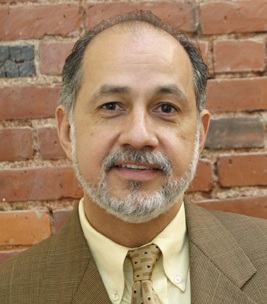
Dr. Roberto Miranda
Summary: God does not want us to be ignorant or childish in matters of the Spirit. There are different kinds of gifts, ministries, workings, and styles, but the same Spirit distributes them as he wills. Therefore, the church should not imitate models, denominations, or personalities, but discern its particular calling in Scripture and pursue a biblical, supernatural, mature, and balanced spirituality.
We passionately believe in healing, miracles, spiritual warfare, and all the manifestations of the Spirit; we pray for the sick and acknowledge his works. However, the Bible also shows that some people are not healed, others receive partial healing or are healed through doctors and medicine, and even anointed servants of God become ill and die. The cross demonstrates that God’s greatest power can be manifested in weakness, suffering, and apparent defeat.
Pastoral care requires order, discernment, and room for the entire congregation—not spectacles or rigid formulas. We need to know the whole counsel of God in order to navigate both his blessings and life’s difficulties. As we await eternity, let us remain anchored in the truth, growing as a wise, discerning, and faithful community.
1 Corinthians chapter 12—we have preached about this passage before. I want to approach it from a different angle. As you know, the Bible is multifaceted, and you can preach from a single verse 100 times and never come up with the same thing. God always gives other perspectives and other things. And I want to approach this differently from the way I have approached it before. It says here:
“...I do not want you, brothers and sisters—I would say, brothers and sisters of Congregación León de Judá—I do not want you to be ignorant concerning spiritual gifts...”
God does not want us to be ignorant concerning spiritual gifts. You know, I am going to resist the temptation to touch right now on something in that very point. Let me read it, and then perhaps I will remember to come back to it afterward. It says:
“...You know that when you were Gentiles, you were led astray, being carried away—as indeed you were carried away—to mute idols. Therefore, I make known to you that no one speaking by the Spirit of God calls Jesus accursed, and no one can call Jesus Lord except by the Holy Spirit. Now there are varieties of gifts, but the Spirit is the same. And there are varieties of ministries, but the Lord is the same; and there are varieties of workings, but God, who works all things in everyone, is the same.
But to each one the manifestation of the Spirit is given for the common good—that is, for constructive purposes, for benefit—because to one is given through the Spirit a word of wisdom; to another, a word of knowledge according to the same Spirit; and to another, faith by the same Spirit. And to another, gifts of healings by the same Spirit; to another, the working of miracles; to another, prophecy; to another, discernment of spirits; to others, various kinds of tongues; and to another, the interpretation of tongues. But one and the same Spirit does all these things, distributing to each one individually as he—I was going to say, however he feels like it—as he wills, it says here. For just as the body is one and has many members, but all the members of the body, though many, are one body, so also is Christ. For by one Spirit we were all baptized into one body, whether Jews or Greeks, slaves or free, and we were all given one Spirit to drink...”
May the Lord bless his holy Word. Do you know why I chose this text and this subject this morning? Because I have actually been thinking about it for many months, and it has always been one of the themes of my pastoral ministry and of this congregation: how to communicate to our people what Congregación León de Judá is, and what its senior pastor—this servant—believes about subjects such as the gifts of the Holy Spirit, the Pentecostal experience, healing, spiritual warfare, deliverance, prosperity, social justice, political involvement, and so many different issues that are complex to explain and on which our church does not occupy a completely obvious and clearly defined position. It is defined, but it is not as though we are a thoroughly, dyed-in-the-wool Pentecostal church, as people say; yet neither are we merely an evangelical church that gives no place to the gifts of the Holy Spirit, for we do believe in the Pentecostal experience.
And that often causes confusion for people because they do not know what we are. Do you understand what I mean? I often suffer because of that, because over the years I have continually seen people come to Congregación León de Judá—and, in fact, many times I suffer not so much because of those who come from outside, although that does happen sometimes, but often even because of people who came to know the Lord Jesus Christ here at León de Judá, had their first Pentecostal experience here at León de Judá, began to move in the gifts of the Holy Spirit and in supernatural power here at León de Judá, and acquired a supernatural mindset here. A point comes when it seems the disciple wants more than the teacher is willing to give, and then they feel that the teacher no longer measures up, that he has become too limited for them. They then feel uncomfortable within the framework that the congregation allows, establishes, or cultivates, and they seem to want something more, but the pastor is not providing it.
They become more Pentecostal than the pastor himself, as they perceive it. Then they are like caged bulls that want to break through the fence and go to another level, and they look at the pastor sitting there like neglected little animals that are not being fed, wondering why the pastor does not bring more fire and why every service is not a free-for-all, with everyone jumping, prophecy over here, this over there. Sometimes I look at them and know what they are thinking, and sometimes I am tempted to give them what they want. But my understanding of the Word, of pastoral care, and of the life of a church as a whole leads me to bring together the matters of the Spirit in a different way from how they see them.
And so, many times we see one another and cross paths in the church hallways, and we know what each of us is thinking—make no mistake about it. But we do not say it to one another. And many times these people remain there feeling restricted, and they have to go somewhere with a little more flavor. They sneak off somewhere where the volume is a little higher and then return, but they feel constrained because there is not enough prophecy, because there is not enough ministry time, because not as many people fall down during the ministry time as they would like, and so on. I have seen that kind of development in people many times. I have been pastoring this congregation for 27 years now, and I have seen all the different processes.
Sometimes there are even brothers and sisters who come from other congregations, who come from outside. And, by the way, let me tell you that this will possibly be one of two or perhaps three sermons in which I will speak about this subject. I do not want anyone here to think that I am taking an indirect shot at you, okay? Please relax. I promise you in the name of the Lord that I am not thinking about anyone in particular. Do you believe me? Because sometimes I preach and people think that I am throwing stones at them.
Look, I have so many things to do that I do not have time to go around throwing stones. If I throw one at you, I will throw it directly and let you know that I am throwing it at you. Truly, I am not thinking about anyone in particular. If I refer to something and it resembles you, that is purely coincidental. I am not concerned with that; I genuinely do not have it in mind at all. I simply want, as a pastor, to have a dialogue with you. And if you are visiting us, all the better, because that way you can understand what kind of church we aspire to be and what kind of person is leading this congregation, at least doctrinally.
So, there are also people who come from outside, perhaps from a super-Pentecostal, traditional congregation with a well-defined traditional denominational Pentecostal stance. And since that dimension of the Spirit also moves here, and the Lord often visits us in extraordinary ways, and it is known that there is openness to the gifts here as well, and many people here also come from that tradition—and León de Judá is also a Pentecostal church. I consider myself Pentecostal. You know the journey our church has gone through over the years and the price we have paid so that our worship, our times of intercession, our openness to the gifts, and our preaching would reflect that.
Not long ago, how many weeks did I spend preaching about the supernatural mindset through the book of Acts? And I have not even finished that yet, because I believe in the gifts. If someone asks you, “Is Pastor Miranda Pentecostal?” please tell them yes. Tell them that he believes in the gifts of the Holy Spirit. Tell them that he believes in spiritual warfare. Tell them that he believes in the manifestations of the Spirit in all their dimensions.
Because there are also people who come from outside, become acquainted with us, and hear our preaching concerning these things, but they come carrying the patterns and mental models of their Pentecostal denominational background. Then they think they are going to find the same thing here, only with a slightly different flavor. It is true that here women wear earrings, put on makeup, and wear pants—and sometimes they wear them too much—but in any case, this church is also open to the gifts. But then people arrive and start wondering, “Why does the pastor not allow this? And why does the pastor not allow that?” And this also lends itself to confusion.
There are also brothers and sisters who come from a more traditional background. Since there is also a certain order here, and this is also a church concerned about social justice, and the preaching of the Word is emphasized, and we often preach exegetically, and the pastors have theological training to one degree or another, or whatever it may be, they also think this is a more evangelical-style church. Then, when the gifts are manifested, or someone here falls to the floor, or there is some extraordinary manifestation, they feel like saying, “Wait a minute—then this church is not for me either.”
So, as Guatemalans say, we are neither chicha nor lemonade. We are neither one thing nor the other. But no, it is not that we are neither one thing nor the other; it is that we are one thing and the other—we are both. What I seek, what Congregación León de Judá seeks, and what I believe all the people of God ought to seek—what God desires his people to seek—is a spirituality and a congregational life drawn from the model established by Scripture, not from what a denomination establishes, nor from what some ministry appearing on Enlace or another television program establishes. I am not interested in imitating another person’s gifting, and neither should you be.
Because God distributes his gifts as he wills and to whomever he wills, and God is infinitely creative. He may give Cash Luna a gift different from the one he gives Harold Caballeros, different from the one he gives César Castellanos, different from the one he gives Maldonado in Florida, different from the one he gave Billy Graham, and different from the one he gave John Wesley or Jonathan Edwards. If you look at each of those figures, they are sui generis; each one is very different from the others.
Each one has his own gifting, and the Spirit of God is infinitely creative. He has given this church a calling; he has given it a specific anointing and gifting. I am not interested in imitating anyone’s anointing. I want our church to be what God wants it to be.
And that is one of the things I see Paul speaking about extensively in this passage: the diversity of manifestations that the Spirit has. Some people think that the only genuine way for a congregation to pray is for everyone to pray at the same time with a great roar. That is beautiful, but it is not the only way. It is a style. Sometimes it can be cultural; sometimes it can be denominational. And glory to God—I love it when I hear the congregation spontaneously rise in worship to the Lord and everyone praying together—but it is one way of worshiping.
There are also other ways to worship the Lord, to pray, and to cry out to the Lord. There are churches that are very quiet; they would not hurt a fly, not even a chair moves, yet they too are filled with the Holy Spirit.
And throughout all the years of my life, I have learned to respect the different ways in which the Holy Spirit moves and manifests himself. But the important thing is that all these different forms and styles are produced by one and the same Spirit, as the apostle Paul says here.
He says here in this passage that there are varieties of gifts, but the Spirit is the same. There are varieties of ministries, but the Lord is the same. And there are varieties of workings, but God, who works all things in everyone, is the same.
One thing I have learned is that the manifestations of the Holy Spirit are potentially infinite and that the gifts of God are potentially infinite in their various manifestations.
Before developing that point—and I hope I do not forget it—what I always seek, brothers and sisters, as a pastor, in my preaching, in my sermon repertoire, and in my style, is to draw from the Scriptures the tone that they themselves establish. In other words, I want to play in the same key in which Scripture plays. I want to put my ear very close to the voice that comes from the pages of the Bible and try to sing in that same tone, at that same tempo, with that same feeling.
As I say, my point is that I certainly do learn from models. Of course I do. Who does not need mentors, teaching, and an example? Of course. But nowadays there are so many failed, false models that appear good and even produce large and financially prosperous churches, with huge sanctuaries and major television ministries and all of that. But I say, “Lord, I will not allow myself to be impressed by any of that. What I want to see is this: does it agree with what I see in your Word?” Do you understand?
And if it does not conform to the gifting God has given me—my temperament, character, experiences, study of the Word, cultural and intellectual studies, all of that packed into my bag—I shake it out, and what comes from there is what I am and what I can convey to you. I will never sing in the style of another singer—forgive me, Omar, since you are here, because I am thinking... You sing with your own voice; you sing in your own style; you play the message God has placed in your life. And León de Judá must play in the key God has given it to play in.
And what is happening among evangelical people today is that we are not looking closely enough at Scripture, and what we are doing is being lazy and trying to imitate the models of another person, another ministry, another denomination; we are like parrots, repeating any number of things without even understanding what we are saying, much less the grammar of the language we are using. We are imitators.
One of the things you need to understand about me is this: I will always do everything possible to continue in my message, in my style of pastoring, and in my life, I hope, as fully as possible according to what I see in Scripture. And what I see in Scripture is always complexity and balance.
Scripture is a universe more complex than the largest galaxy you have ever seen in the universe or know to exist in the universe. For me, the Word of God is a dynamic universe, much more dynamic than the atomic universe, which is an incredibly dynamic thing. It is incomprehensibly complex, multifaceted, and composed of many different layers, and I always try to give God’s people the whole counsel of the Word of God. That is why people often cannot understand, because they say, well, what is he? Is he this, or is he that? Does he believe in healing or not?
For example, look at the subject of healing. I absolutely and passionately believe in the God who heals; I believe in the God of health; I believe in the God of miracles. If there is one thing I believe, it is that I will yet see greater things than what we have seen in the world. I believe that what we are seeing is just a tiny straw compared with everything God wants to give His people in terms of healing. And our church will believe in healing; we will pray for the sick.
Just yesterday I was at a meeting of a precious small group in Jamaica Plain, and these brothers and sisters… it was a Pentecostal meeting, and several of them testified. They were people new to the Gospel who are being converted—an entire family, a whole tribe—as well as others who were there. It was something straight out of the Book of Acts.
One sister spoke about how God had healed her of the depression she had suffered from all her life, a terrible depression, and when she came to know Christ, she was healed. An entire family had demonic manifestations and all the amulets and all those things Dominicans wear around their ankles and things like that, which held them captive. And when the Lord entered their lives—they came to know the Lord here at León de Judá Church—God delivered them and gradually healed them of demonic manifestations among both the young people and the adults, noises and things in the house, and now all of that is a thing of the past.
Others spoke about physical healing they had received. That happens continually in our church; there is physical healing in this church. Many times these things are spoken about publicly, and other times they are not, but people pray for healing in the small groups. On Mondays, a body of brothers and sisters comes here to pray. On Wednesdays, people pray for healing. We hold prayer vigils; we pray for the sick. We see manifestations and believe in healing, but do you know what? I also see in the Bible that healing is an extraordinarily complex subject, and that if a pastor wants to serve his church well, and if a church wants to be thoroughly biblical and Pentecostal, it must consider every dimension of healing. And all of them must be discussed so that a church may have proper wisdom regarding sickness and healing.
That is why I say that this is a very broad subject, and it is good to talk about these things. Why do I say this? Because I believe that one of the dirty secrets of the Pentecostal world that believes in healing is sickness: the fact that there are people who are not healed, and there are people for whom much prayer and fasting is offered, who themselves pray and fast, and who, for some reason, are not healed. Whether God actively decides that they will not be healed or God allows them not to be healed, in truth, those are questions of semantics to me. But the fact is that they are not healed, and the number of people who are not supernaturally healed is possibly greater than the number who are—perhaps much greater.
But that secret is often kept quiet in Pentecostal churches. Why? Because people feel that if they talk about those who are not healed, the people’s faith will be affected, and the pastor himself will sound like a spiritual tadpole because he is saying that people might not be healed. And then what will they think? “Ah, well, then he has no faith.” So everything is positive, positive, positive. No one talks about the fact that many times, for one reason or another, God decides not to heal, because people are not healed.
But then what is often done—and on other occasions as well—is that people pray for so-and-so: “Oh, so-and-so was healed.” And then a month later we go to so-and-so’s funeral because, after all, he was not healed, but we remain silent. No one says, “Come on, glory to God! He entered the Kingdom of God in victory.” We sort of put a little makeup on the dead person and move on, and no one talks about it.
We do not look at the cases in the Bible where tremendously anointed people become sick and die. Listen to me, someday everyone has to die of something. At some point, someone is going to die, and it will probably be from an illness. We must talk about sickness; we must talk about the times when you pray and pray and pray, and God does not intervene with a healing. And about the many families of godly people who have congenital problems and take pills—that is another thing. In the Pentecostal church, people often do not talk about the fact that so-and-so is taking medicine, and that this pastor, the great preacher, the great evangelist, the great healer, also takes his pill from time to time. But no one must know; it is a secret that must be guarded like some out-of-this-world military secret, because if it becomes known, then people will not have faith.
And so, brothers and sisters, this creates a superficial people, an immature people, a childish people in the things of the Spirit, who are not talking about the complex universe involved in the subject of the gifts, the manifestations of God’s gift, and how God moves. Because the Bible speaks about everything: it speaks about the God of healing power, the God who provides and brings prosperity, but it also speaks about the God who sends His almighty Son and turns Him into a man so that He can die on a cross, crucified and shamed, to save humanity.
And what about the cross? Many Pentecostals do not like the subject of the cross unless they perfume it heavily and cover it with a lot of makeup. But the cross is fulfilled in the life of every believer; it manifests itself in some way. Sometimes it manifests itself in illnesses, sometimes in failures, sometimes in times of difficulty, in a rebellious child, in a difficult marriage, or in the loss of a job or a house. And in all of those things, God may also be working and doing His best work in your life precisely through those things.
But we do not talk about those things because they are inconvenient, because they complicate our preaching. And what we pastors like is for people to say, “Glory to God! Hallelujah!” and, at the end of the service, to tell us, “Pastor, that is the best sermon I have ever heard in my life.” And we are willing to sell our soul to the devil and take our people along with us too, just so that they will be happy. Give them what they want to hear.
And we create childish people, immature people, unbalanced people, people who do not know the whole Word of God. What I want to provide—or facilitate—is a church of learned people skilled in handling the whole Word of God, so that when healing is discussed, the different aspects of healing are understood. When prosperity is discussed, they learn about the different texts and themes.
That is precisely what the study of theology is. Do you understand what the study of theology is? The study of theology is the systematization of the diversity of themes found in Scripture, taking them and examining them in their interrelationship with one another—what the different pages of the Bible say about a particular subject, viewing it as a whole instead of viewing its parts in isolation from one another.
And unless one has a little training in that way of viewing life and the Word of God—systematically considering what Genesis says and what Revelation says, what Paul says and what Peter says… Look, for example, at something as complex as works and faith. That is a subject addressed in many passages throughout all of Scripture.
James says one thing, Paul says another; both say the same thing, but they appear to contradict each other. These things must be taken and placed side by side, and studied in their relationship to one another. But some churches go entirely after grace, grace, grace. Others go entirely after works, works, holiness, holiness, holiness, and they do not see the complexity of Scripture regarding grace, works, God’s justice, God’s mercy, love, and truth.
And to create complex people—my desire is to bring forth through our ministry a congregation of mature people, people deeply grounded in the Word of God. And there is a price to pay for that: the price is that many times you will not be understood, and the people who want mangú will leave upset because you gave them something more complex than that.
People who want to drink a little warm milk so they can fall asleep in the pew and go home happy because God loves them and has good things for them will not like that kind of preaching. But God does not call us simply to be given a little bottle—the pacifier, as some call it. No. God wants to create strong men and women for the work of the Gospel, people who also know how to navigate the sometimes difficult waters of life because they know where to go in Scripture for a passage that applies to what they are going through.
Because if all you tell people is, “No, God heals, and God’s only desire is for you to be healed,” I believe that up to a point; but the truth is that if that is the only truth I have, then when I spend years sick, begging God to heal me, and He does not heal me, I will come to believe that God hates me or that He does not have for me what He has for everyone else. I will think that if He did not heal me, it is because I did something, because I sinned, or because He is not as faithful as He said He was—instead of my also giving that person a text from Scripture that will help them navigate the waters they are passing through at that moment.
The pastor’s calling is to nourish his people, equip them to navigate all the different areas of life, and provide them with the whole counsel of the Word of God. And unfortunately, what I see today in many evangelists who have become pastors is that they do not truly know the Bible in its entirety, and they are often the ones who dominate television screens and draw the crowds, and people fall in love with that. What they are eating is little pieces, little morsels from here and there, and they are not seeing the whole, the grammar of Scripture. All they know are prayers and phrases they have learned and recite, but they do not know the process behind them.
And my desire, rather, is for you to be able to go directly to the Word, wrestle with its complexity, and see modeled from up here a way of viewing Scripture, so that you can do the same in your own life.
So that you will not need me. Come here simply to celebrate with me, but you should already have eaten before coming here to church. Many people depend on the food here at church. If you depend only on the food served to you here, you are lost, let me tell you. You must learn the Word of God in your own life and know how to handle it in its entirety: turn it upside down and right side up, open up its innards, and put it back together as it was in the beginning, like a mechanic who knows his automobile well and knows what every little tube and every cable does, and therefore, if something breaks, knows how to repair it.
That is what a good church should do: a good pulpit teaches God’s people the whole counsel of God and how to handle the different complexities of life. That is why, incidentally, Paul says here in Chapter 12, in the first verse, “I do not want you, brothers and sisters, to be ignorant concerning spiritual gifts.”
Do you know that the translation “spiritual gifts” is incorrect? Or at least it is not exact. Paul does not say, “I do not want you to be ignorant concerning spiritual gifts.” The word translated into Spanish as “spiritual gifts” is pneumatikon, which means pneuma, spirit. What he is saying is, “I do not want you, brothers and sisters, to be ignorant concerning the things, the affairs of the Spirit, spiritual matters, the affairs of the Spirit. I do not want you to be children, childish in the things of the Spirit.” Then he goes into the subject of the gifts as an illustration of that, but what he is saying is that God does not want you or me, or anyone in the León de Judá congregation, to be childish in the way you handle the matter of the gifts and spiritual things. Rather, God wants mature people who are given all the tools to be…
Today, I believe that there are many Pentecostals and many churches—and there are also such churches in the non-Pentecostal evangelical world—that are childish churches. Some are like the disciples in Ephesus, whom Paul asks, “Were you baptized by the Holy Spirit?” They answer, “We do not even know what that is or what you do with it. What is the Holy Spirit? We know only about John’s baptism.”
There are many churches in this world that know the Holy Spirit as something generic, but they do not know about the gifts, they do not know about spiritual warfare, they do not know about fervent worship, they do not know about the supernatural mindset. If they encounter a demon along the way, they do not even know how to recognize it, much less cast it out. And they are immature children in the gifts of the Spirit.
But there are other people who believe they are handling the gifts of the Spirit, and they are immature too. There are many churches that have invented a show, an act, and now everyone knows all the parts of that act. And when they come, they already know how to speak, they know the tone they have to adopt, they know what they have to do when they go to the front, they know how to move their heads when the Holy Spirit is supposedly moving inside them, and the pastor does certain things. There is a whole ritual that is supposedly what happens when God moves, but it is a ritual like any other. It is a pantomime.
Many times God certainly moves among them. Understand me clearly: I believe we have much to learn from that world, but do not get carried away; do not let anyone sell you a pig in a poke. We must be mature; we must be complex. God has given us a brain and a theological capacity to judge the spirits, the Word says, to evaluate them. When you are in a meeting, do not allow yourself to be intimidated, cowed, or impressed by all the movements and everything else.
No, remain… one question: Do I sense the presence of God here? Does this manifest the Word of God? Does this express the tone of God? Do I see the fruit of the Spirit manifested in the atmosphere of this congregation? Or do I sense positivity in the spirit from the person who is preaching? Does what that person is saying reflect my understanding of the Word of the Lord?
None of those questions are illegitimate. You have the right to ask yourself those questions, because God wants mature, complex people who know all the different strands and nuances of the various subjects found in Scripture.
Let me return for a moment to the subject of healing; I am going to isolate that. There are two passages in Scripture that have always made an impression on me concerning the subject of healing. I am going to tell you about one of them; it is in Second Kings, chapter 13, verse 14. How many have heard of Elisha? Elisha is one of the most powerful prophets in all of history, with the anointing of Elijah. Great miracles were performed through Elisha, great healings. Not many people who have walked the earth have had Elisha’s anointing and Elisha’s faith.
But look at what it says here in Second Kings, chapter 13, verse 14. It says here:
“…Elisha was sick with the illness from which he died…”
How many have ever thought about and paused over that sentence? To break it down theologically, biblically, spiritually, and supernaturally. It says here that “…Elisha was sick with the illness from which he died…”
The poor man had to die somehow, and I imagine that he prayed to the Lord, “Father, I want to be healed. I still have much to do in this world; I have much good to do, and if you are going to kill me, if I am going to die, please do not put that verse in the Bible, because I do not want it to be remembered that I died of an illness.”
There it is. Elisha was sick with the illness from which he died. I do not see that as a scandal. His time had come. God had other things and other people to work with; he had already fulfilled his task, and God took him to heaven. And at some point, you and I have to die. Actually, look, right now, as much as I love my family, my ministry, and life, if God wants to call me today, I am happy, amen. I graduate and go on to something much better.
But Elisha died of something. Let me tell you a secret here: there is another one of those issues concerning these men. Someday I would like to write a book with this title—you may laugh—“Elijah Was Bald.” You know that Elijah had some young men laugh at him because he was bald? And if Elijah was such a great man, why did he not say, “Lord, give me an absolutely luxuriant head of hair”? Nevertheless, he was bald. And he was a great servant of God.
That reminds me of a time when I saw a great, very well-known African American preacher, an evangelist, healer, and all that, and for reasons I knew, she used glasses to read; she was nearsighted, or whatever it is called—reading glasses—she needed glasses to read. But look, perhaps I am simply too suspicious about these things, but she had her attendant. You know, nowadays that is a status symbol for many preachers: they have someone carry their briefcase and take care of their manual tasks and all that; that is part of being a great Apostle. Many of us feel that we need that to give ourselves a little more… forgive me if I am cynical.
But the point is that this woman had developed something I had not seen before in her repertoire: when she had to read the Bible, she had this sister read the Bible to her. She would tell her to read, and then the woman would read aloud. And look, forgive me, but I am almost certain that she did it so she would not have to put on her glasses in front of the people. Why did this supposedly great healer need to wear glasses to read the Bible? And she did not want to confuse her people or create limitations in their understanding.
And I tell you, I do not want to dwell on this; it was merely an illustration. There are reasons why I believe this even more strongly. It is not simply that I am being unkind in my interpretation. But there is this fear that the person who serves God—or that in order to be this super-Apostle, this super-prophet—you have to be absolutely invulnerable and perfect, and have one-hundred-percent health.
God can use you, paralyzed in a wheelchair, to heal someone, because the manifestations of the Spirit of God are utterly unlimited and mysterious. Amen.
Where was the most powerful work in the entire history of the universe accomplished? Where did the greatest manifestation of power and release of energy in all of history take place, one that will remain the greatest in the history of the universe? Where was it? On the cross, with a man—God—with nails in his hands and nails in his feet, bleeding, possibly almost completely naked; and there Christ, totally unable to move and apparently defeated, defeated the principalities and powers and canceled the record of decrees that stood against us. On the cross.
The greatest manifestation of God’s power, mercy, grace, and faithfulness took place through an act of terrible limitation and suffering and shame and failure. So much so that those who knew Jesus said, “This is it; we are ruined. All this time invested in him, and he was the presidential candidate who was going to win,” because they did not understand. Because a person who is spiritually immature cannot understand the complexity of the things of the Spirit.
When the Lord offered to wash Peter’s feet, Peter, who still had a carnal, rational, human, masculine mind, said, “Lord, never; I will never allow you to wash my feet.” Because he could not understand how absolute power could wash the absolute ugliness of an absolutely insignificant man. And how God could be the servant of a mere man. And the Lord said to him, “Well, look, if you do not let me perform this act that exemplifies the entire mystery of my relationship with humanity, you are not worthy to be my disciple, because it is the very essence of my ministry.”
Who knows whether the greatest manifestation of God’s power will come at the moment of your greatest humiliation or in the deepest darkness of your life. Perhaps that is where God will be doing something that will then enable you to enjoy the blessings he has for you afterward.
God is infinitely mysterious. One last passage—I am about to finish—because this, as I have told you, is such a vast subject that one can get lost in it. Look up another verse that is also mysterious regarding healing; it is in chapter 5, verse 23, of First Timothy.
Do you know why I love Paul so much and why God gave Paul…? Paul was an honest man. Paul was not interested in showing off; he was not interested in perpetuating his image for eternity or before the public that would read him. In fact, I do not think he even knew that so many people would read him. But Paul is a very complex man. Paul is a man whose shadow sometimes healed people. Paul was a man before whose rebuking voice demons fled. Paul was a man who one day began to sing while confined in a prison, whipped and bleeding, and nevertheless decided to acknowledge God’s goodness and mercy and began to sing. And when he began to sing with his friend Silas, the place shook, the chains of all the prisoners fell off, and the jailer ended up being baptized by him. That is the power of this man. A man who had so much wisdom and so much revelation from God that many of the revelations he received were not even permitted to be shared on a human level, so great was the revelation God had given him.
Nevertheless, that man who did great things and whom God used in so many ways has a little moment of extreme everyday humility, and it is revealed in his pastoral role. That is what people do not understand. The role of the pastor is very different from the role of the prophet, the role of the evangelist, the role of the Apostle, or whatever it may be. The pastoral care of souls—the ecclesiastical, congregational context—imposes limitations on the manifestations of the gifts that do not exist in the same way when it happens in a home, at a cell-group meeting, when you are alone in your prayer room, or when you are with four or five spiritual frosted allies, close friends of yours. There, take off your clothes, jump, stand on your head, whatever you want; but when we are in the context of the church, of pastoral care, I have to look after the elderly, the children, the newcomers, the old-timers, the Central Americans, the Dominicans, and the Caribbean people. The church has to look after everyone and provide space for everyone. That means it has to restrain itself a little. It cannot manifest everything it wants to, because the idea is… this is a space where everyone can find a place.
Now, afterward, create all the commotion you want and party however you like on Wednesday, or at an all-night vigil, or whatever. There are different times for different things. God is not going to break into twenty thousand pieces because at a given moment you decide to remain calm for the blessing of the whole congregation and bite your tongue because you want to say something, but it is not the right time. On the contrary, God blesses you for that. That is the complexity of pastoral care. Look at how Paul, that great Apostle, that anointed man of God, in a moment of honesty says to Timothy—in 1 Timothy 5:23:
“…Timothy, no longer drink only water, but use a little wine for the sake of your stomach and your frequent illnesses…”
For the sake of your stomach and your frequent illnesses. Why did little Paul not send Timothy a handkerchief anointed with oil by Federal Express so that Timothy could touch it, be healed, and have all his illnesses disappear? Instead, he chooses this: “Timothy, look, drink a tiny bit of Chardonnay or whatever; buy yourself a little bottle of brandy, a small one, but buy it, and from time to time take a little sip for the sake of your stomach.” That was what they had in those days; there was no Walgreens or CDS to go to and buy [inaudible] or whatever. In other words, drink a little wine because of your frequent illnesses. Even the great Timothy and the great Paul, his mentor, had to submit to the reality of life.
And that is something I see throughout the New Testament. There is a development from Matthew to Revelation, and I can almost see Paul’s mind—the mind of the man—being woven over the years around the complexity of the Spirit, the gifts, the supernatural manifestations of God, the pastorate, and the assembly of a church that takes shape over the years and becomes institutionalized and has to do institutional things in order to perpetuate itself and conquer the world.
And then that raw, wild, innocent energy of the Spirit has to be channeled through wiring in order to build the church system. And then we have to recognize that not everyone is healed, and that if they are healed, sometimes it does not happen immediately when you pray. And some die, and others God heals partially but does not heal completely, and for others we have to pray four times before they are finally healed, or God will enlighten a doctor so that the doctor can tell them what is wrong and give them the medicine they need. Or he will give wisdom to a medical researcher so that the researcher can invent a formula that heals.
The manifestations of the Spirit are many and come in different ways, and we have to learn to navigate those waters, brothers and sisters. And that is what I want to leave you with. When you are asked what Pastor Miranda believes, the pastor believes in the whole enchilada. I believe in everything the Bible says. I believe in all the gifts and in everything, but I also believe in all the other things that complicate my life. I have to acknowledge them.
Just to make my life easier, I am not going to draw a black curtain over them. That is another passage of Scripture, nor will I draw one over the reality of life, or over the limitations of my pastoral experience—or yours, either. Do not do it. Always remain bound to Scripture.
And that is what we desire. What does León de Judá believe? We want to be a complex church, an eminently biblical church, a balanced church, a church of extremes that seek to meet and sustain a living organism—for that is what living organisms are: contradictions that are somehow miraculously held together and make life possible.
God wants a wise, mature people. Not children, nor people ignorant of the things of the Spirit. People of God, I hope that something I have said makes sense to you or is of some use to you. I do not know whether you understand my heart. At this time in history, God wants—he has always wanted this, but now more than ever—mature churches, pastoral churches, complex churches, biblical churches that are not afraid of the truth and that, even when the truth complicates matters for them, bind themselves to the truth of God, because there is security there, there is true power there, there is prosperity there, there is the presence of God there, there is inviolability there. Demons do not know what to do with a man or a congregation that is bound to the truth of God. That congregation will always prosper; it will always be blessed. That community will always go from strength to strength, because the truth of God will be its covering and its protection.
Let us stand, and receive that word from God this morning, and ask the Lord to give us wisdom to express these truths in a way that is understandable to you and that nourishes your lives, so that in practical terms you can get something out of it that will enrich your lives. That is the kind of church you attend. In the struggle, you will find me, and you will find Congregation León de Judá. You will not find it resting comfortably at the extremes; you will find us there in the heat of contradiction, tension, and the agony of life, where eternity is trying to squeeze itself into this tiny funnel and cannot because it is infinite.
That is where we are, and that is where we will remain until Christ comes. And one day all these problems will be resolved, because then we will be as we are known, we will know as we are known, and all mysteries and all questions will be resolved in an instant. And you will know everything you need to know. In the meantime, live amid the complexity of the reality you inhabit, and thank God that your passport has been stamped and everything is all right, because you are going to enter eternity with Christ Jesus, for he paid the price.
Father, thank you; we love you, we bless you. Give us your peace, Lord. Forgive us for anything that may not have pleased you, any comment or any way of expressing things that may not have been in accordance with your desire. Remove from the minds of your children any error that was uttered, and let only that which will bless and strengthen them remain.
Bless our congregation, our community, Father, and deliver us from pride; deliver us from unjustly criticizing our brothers and sisters, but keep us always close to your truth, and guide us, guide us and give us your wisdom. We love you, Lord. Thank you for being so merciful to us. Blessed be your name. Send us forth from this place, Lord, with the faithful manifestation of your grace wherever we go, in the name of Jesus. Amen and amen.