We Must Have a Supernatural Perspective
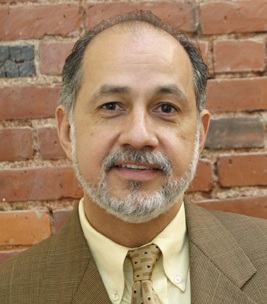
Author
Dr. Roberto Miranda
Summary: The Spirit-filled life requires a supernatural mindset: a broad way of interpreting reality that recognizes God’s activity, gifts, and power. Merely formal religion focuses on external structures, while spiritual life springs from an inward, living relationship with Christ. Doctrine, reason, and education are valuable, but they cannot be the foundation; they must interpret and guide a genuine experience with God. Paul centers faith on Jesus Christ crucified because the cross reveals the divine paradox: in apparent weakness, the greatest victory was accomplished. Those who cultivate the mind of Christ can discern what the natural mind considers foolishness and gain access to the depths of the Spirit. We must therefore broaden our expectations, break free from rationalistic frameworks that limit God’s work, and seek transforming encounters with the Holy Spirit. Our faith must rest not only on words but on a demonstration of power, producing healing, freedom, love, service, and tangible testimonies. Such a church shows the world another model of life: God’s restoring and transforming reality.
I want to invite you to turn in your Bibles to 1 Corinthians, Chapter 2, and I want to continue this exploration of what we call the Spirit-filled life.
And I want to remind you that the Sunday before last, I believe it was—yes, the Sunday before last—we were talking about the differences between a merely religious life and life in the Spirit, between formal, superficial religion and the vibrant, living spirituality that God wants us to live.
And you will remember that I was saying that, for me, one of the key differences is that the formal, religious life is a life oriented toward external things: places, rites, people, teachings, doctrines. Whereas life in the Spirit is a life oriented inwardly. We used the Samaritan woman as an illustration, and the Lord spoke of how “whoever believes in me, rivers of living water will flow from within him.” And the Lord spoke to her about how it is not a matter of external places of worship to which one must go. She said, well, we Samaritans worship here, and you Jews worship over there, so who is right?
And the Lord Jesus Christ says to her, “Look, woman, it is true that the place where the Jews worship is over there, in Jerusalem. We have the truth, because there is such a thing as truth, and doctrine certainly has its place. But,” he says, “the day will come when the true worshipers will worship the Father in spirit and in truth.”
That is, they will not be limited merely to that, but the Spirit will be within them, and their lives will be inwardly oriented, with the Father dwelling within them, and they will be able to go continually to that fountain they carry inside. That was the idea of the well: the woman had to go outside to draw water, with great effort, like formal religion, which requires great effort. Whereas he says, I am going to give you water that will be within you; it will spring up into eternal life.
And another thing we said is that this spiritual, vital religion, unlike formal religion, is a faith that depends on a relationship with a person rather than with a system of beliefs. Nothing illustrates this more vividly than the moment when the Lord says to the Samaritan woman, as they are talking about the Messiah, “I, the one speaking with you, am he. I am the Messiah.”
And suddenly this woman is confronted with Jesus’ messianic identity, and then she runs away transformed. She goes from being a solitary, isolated woman, working arduously to draw water, to being instantly transformed when she has an encounter with a real, divinely endowed person, who is Jesus. She runs off and then becomes an instrument of God.
Because that is what happens: when a person has a vital experience with God, with the Spirit of God, with Christ Jesus, with the person of Jesus, one changes from being a mere consumer into a producer of life. And then she runs to her village, shares her experience with others, and tells them, “Come and see; perhaps this is the Messiah.”
Then they come, encounter Jesus, receive from him, and say, “You know what? Now we believe, not only because of your word, but because we have experienced it ourselves.”
Do you see? That is experiential life, what I would call the life of Christian experience. It is so important, so necessary, that we understand these differences. And this afternoon I want to continue by speaking about the mindset God wants us to have: a supernatural mindset.
Everyone say, “Supernatural.” I want to talk about the differences between a natural, merely intellectual mindset and a supernatural mindset. What is a mindset? A mindset is a posture, a way of looking at things. Someone might call it a worldview, to use a ten-dollar philosophical word—a worldview, a way of conceiving the world. Others speak of paradigms, which are ways in which we conceive the world, sometimes so deeply integrated into our sensibilities and psyche that we do not even realize they are there. It is like a frame of reference; it is a series of principles through which we make sense of life. And it even includes the expectations we have about the world.
For example, the rational, scientific, merely logical mind believes that the world is nothing but matter and that only what can be confirmed through experiments and through the senses is real. Everything else is questionable. That is a secular mindset; it is a rational mindset; it is a merely scientific mindset.
Whereas the supernatural mind, the spiritual mind, knows that there are other dimensions. That is, it is a general attitude, and I want to speak to you about that mindset which we, as Christians, ought to have and to which the Word of God also calls us. I am increasingly convinced that much of what happens in our lives depends on what is here, in our minds. Our experience in the world—even our experience with God—will depend on our attitude, our expectations, and the things we assume about the world.
And that is why it is so important for us to establish the right platform—what I would call an interpretive platform, a frame-of-reference matrix for approaching the world. And many of us Christians enter the Gospel but do not make the proper transitions needed to think, make sense of, and process life correctly.
You know that in the world of computers there is something called software. Look, for example, at Microsoft Windows. It is a world installed on the computer, and when you turn on the computer and activate that software, what that system does is simply make a host of possibilities suddenly available. Then you begin to write: you open a document and start writing, and before you know it, you can produce a document. And while you are writing the document, you erase things, remove words, move text from one place to another, delete things, and so forth. What makes all those specific operations possible is the software; it is the platform surrounding everything you are doing. When you finish the document, you close it and it disappears. But what made all the miracles of that moment possible is what lies behind it: the program.
And the same thing happens with us: our mind and our worldview, our mindset, are the program. And depending on the program we have—if it is a material, scientific, logical, rational, materialistic program—it will allow only certain things to occur in our lives, because we will restrict our experience to that interpretation. I hope I am not making this too complicated. Are you following me?
Now, if our program is a broad, supernatural program, then a whole range of other operations can take place there: miracles, revelations, contact with God, visitations of power, fruit in the Holy Spirit, gifts operating in our lives—because our platform is much broader, much larger. Do you understand me?
This platform measures, I would say, about twenty-something feet—twenty-five feet by eleven, nine, or ten feet, more or less—and only certain things can take place here. Why do our brothers and sisters dance down there and not here? Because the platform is too narrow to allow them to dance up here. So only a number of very passive activities can take place here: people standing, with just a little space for someone to move around. Why? Because the platform limits the possibilities.
If this platform were twenty-five feet deep and thirty feet wide, people could dance, dramas could be performed, and we could have a whole orchestra. We could even bring a horse up here to stand on its hind legs. But because it is small, it allows only modest, small-scale activities. And that is what I mean: as you expand your world of expectations, God will be able to act within it accordingly.
How many of you understand what I am saying? Amen. And that is why it is important for us to broaden the spiritual realm in which we move, so that God can do everything he wants to do.
I believe the Holy Spirit is eager to enter entire congregations, entire regions, and make the world explode with his power, but many times we hold him back and say, “That cannot happen.” And sometimes God wants to come in and burst into a service, move, touch hearts, bring healings, and convince people of his power and his reality, but we are so locked into our pattern, into the way we believe a service should be conducted, that we say to the Holy Spirit, “You know what? If you want to work, work within this little box we are opening for you.” And the Lord says, “No, sir. I am not confined to the schemes of men. I am much more powerful, much broader.” And God wants to expand our frames of reference, just as he expands the frame of reference of this person Stephanie presents to us here.
God wants there to be a powerful experience with him, and brothers and sisters, all these sermons we have been preaching in recent days are aimed precisely at expanding our mindset. One of the... If you want to get into the text for reference, turn to 1 Corinthians, Chapter 2, beginning with verse 9.
But let me share another text; I am already in the main body of the sermon. In Isaiah 54, one of my favorite passages, the Lord speaks to a person who is a barren woman and says to her, “Enlarge the place of your tent; spread out your curtains; do not hold back; lengthen the cords of your curtains, and strengthen and widen your stakes, because you will spread out to the north and the south, to the east and the west.”
And notice that I have always been captivated by the first thing it says there—and I do not believe I am overinterpreting the text. It says, “Enlarge the place of your tent...” It is talking about a tent, using a Bedouin or nomadic context in which many people lived in tents. It says, “Enlarge the place of your tent,” and afterward it says, “Spread out your curtains, lengthen the cords of your curtains, and strengthen your stakes...”
Why does it first say, “Enlarge the place of your tent”? What does “the place of your tent” mean? The place of the tent is the space where the tent is going to stand. One could say, enlarge your lot, enlarge the plot, the land. Why? Because if you want to put a larger tent or house in a place, what must you do first? You must enlarge the place, yes or no? You are not going to put a house of, say, one thousand square feet or two thousand square feet on a five-hundred-square-foot lot. It will not fit. First you must widen the space. And that is how it is, brothers and sisters: many times, if you want to have powerful, transformative, expansive experiences with God, you must first enlarge the mental space—the expectation, the mindset, the platform, the matrix that will contain everything else.
Can you say amen? Do you understand? That is why it is important. I am not speaking about mere theory here; I am speaking about things with very profound practical implications.
Let us now turn to 1 Corinthians, Chapter 2, beginning with verse 1. I will not have time to expound all of it, but at least I believe I have already laid the foundation for what I want to say. This is the Apostle Paul writing to the Corinthians. He says:
“And so, brothers and sisters, when I came to you to proclaim the testimony of God...” —he is speaking about a visit he made to the city of Corinth, and he is interpreting what he did there when he visited that church in Corinth— “...when I came to preach to you, to teach you, I did not come with eloquence or wisdom...”
Paul was an extremely learned and erudite man. He had been trained in all the theological fencing of the Pharisees at the feet of one of the great teachers of his time, Gamaliel. Paul had a very substantial theological and intellectual framework, and as we see in many of his writings—for example, in the Epistle to the Romans—he could very easily speak with words of wisdom and impress people with dazzling theological complexity. He could craft very complex sermons with many points and subpoints and clauses and subclauses, as, in fact, many passages of Scripture do.
But he says here that when he went to the Corinthians, he did not go with eloquence or wisdom—not because eloquence was bad, nor because wisdom is bad. Now, when he speaks of wisdom here, he is talking about that superficial, merely rhetorical wisdom in which so many sermons are often clothed.
He says, I did not come to you with a great deal of complex preaching. He says, “For I resolved to know nothing among you...” —that “I resolved” is very significant, because it means he made a firm decision beforehand; he made up his mind to go there in a very simple way— “...I resolved to know nothing among you except Jesus Christ...”
Look here at how important this dimension is... If someone could attend to that little boy up there, I would be immensely grateful, since he is interrupting me a little. Thank you, brothers and sisters.
Again, he sets out to do two things. He says: I wanted to isolate just one thing—Jesus Christ—and I wanted to present Jesus, because, brothers and sisters, I always tell you this: the Christian life is an immensely rich and complex life. I would say that there are very few theological systems among the world’s religions as complex as Christianity. So much so that, I would say, tens of thousands of volumes have been written dealing with Christian theology. Christianity is an extremely complex faith, rich in every way.
Nevertheless, Christianity is not a religion of doctrine alone; rather, its true foundation is a person, the person of Christ Jesus, and its foundation is a series of deeds, actions that God has carried out, which are recorded in his Word. That is why I believe a large part of the Bible is written in narrative form, because it recounts the deeds of God, the acts of God.
The Jews always spoke of the acts of God: when they crossed the Red Sea, when they were freed from Pharaoh’s yoke, when God sustained them in the wilderness, when he opened the Jordan River before them, when he defeated the enemy tribes that inhabited the land of Canaan. They were deeds, they were acts, they were actions on God’s part that, when later interpreted, produce a theology and a system of thought; but what comes first is that experience with God.
And I believe this is very important. I have always said that, of course, we do need a theological frame of reference, but you know what? Many times people put the cart before the horse, and so, very often in the church, in the church’s experience, and in churches generally and ministries, we ground people in teaching and doctrine, and what we produce are people with very big heads but with very small hearts and spirits.
Whereas I personally believe—and this may sound controversial—that the first thing we have to give people, to provide for them, is an experience with the power and reality of the Holy Spirit, of the Spirit of God. And when people are confronted, broken, and shattered by the power of God and his reality, then come introspection, interpretation, and knowledge.
But many times, I believe, in the evangelical world, we bring people in and ground them in a series of teachings and doctrines, and then what we create, again, is a people who are indeed ethical, very moral, and very knowledgeable about certain dimensions, incidentally, of the Word of God, but they have no experience; they do not have the power they need to decapitate the devil when he comes to attack their lives; they do not have that intensity, that vibrancy—to coin a word—of the true Christian life.
I believe that first—and every day I reflect more on this—first there must come a confrontation with the power of God, and then there must come instruction that interprets it and frames it in the right way.
There are many passages I could use to illustrate that. I was thinking, for example, about a passage concerning the blind man whom Christ heals at one point. The Lord Jesus Christ heals a blind man, and that blind man encounters the Pharisees, who are jealous of what Jesus has done. This blind man does not know who Jesus really is. When Jesus heals him, Jesus does not tell him, “Look, I am the Son of God, the promised Messiah,” or any of those things; he simply heals the blind man. Then the Pharisees come and tell him, “Give glory to God; confess that the miracle this man performs is by demonic power, because the devil enables him to do it.” And the blind man says—look at what the blind man says, with that instinctive theology of a man who has had an encounter with the power of God—he says, “Whether he is from God or is not from God, I do not know, but one thing I do know: I was blind, and now I see.”
But the matter does not end there. You see, look, there are many people who cannot articulate why they believe in God in systematic, theological terms. They could never debate a materialist or non-materialist theologian—because otherwise he would not be a theologian—but sometimes there are theologians who are in fact materialists. Materialism is a theology, an inverse and negative one, but it is a theology. But there are people who may not be able to articulate their faith systematically, although it is very good for them to do so and to be able to do so; yet when they have received the seal of the Holy Spirit and have had an experience with God, no one can move them from that. They may be left stammering and brought to a halt in an argument, but you cannot dislodge them from the fact that God is real, that God has sealed them with his Spirit.
And brothers and sisters, I tell you the truth: I prefer that kind of believer at any time, although that is also why we have discipleship classes and do so many things here in this church to indoctrinate the people concerning the truth of the Word of God, because we believe it is important... it is a matter of establishing priorities. But what happens? The Word says—look it up later, I believe it is Luke 6—that when Jesus finds out—incidentally, they throw this blind man out of the synagogue; they tell him, “You may never return to the city synagogue”—and the poor man is wandering around, perhaps a little depressed and demoralized, it says that when the Lord learned they had expelled him from the synagogue, he went to meet him. How wonderful the Lord is, how merciful. The Son of God seeks out this little blind man there—he is no longer blind, but he is an insignificant citizen—yet he is interested in ministering to this man.
I think it is worth it; look quickly in Luke—I think it is Luke 6. I think this passage is important. Well, I am not going to waste time; I do not think it is there. But the point is that he meets the blind man and talks to him about the fact that he has been expelled from the synagogue, and he says, “Do you know the Son of God?” And he says, “I do not know who he is, so that I may believe in him.” And Jesus tells him again, “I am he who is speaking with you.” And do you know what the blind man does? It says that, prostrate before Jesus, he worshiped him.
In other words, there is something important here, and it is this: notice that the first part was a bare encounter with the power of Christ. There was not much theological understanding at that moment, but after the encounter with God, after the healing effect of Jesus Christ—I hear the Bible; now you are curious to know where it is, aren’t you? If anyone finds it, raise your hand and let me know. Look up “blind” in your concordance; you will find it somewhere in there.
The point is that once he has experienced the healing power of Christ, then, after the healing and the encounter, comes the theological interpretation. Then Christ tells him, “You know, the one who healed you—I am the Son of God; I am the Messiah.”
That is the teaching and doctrine part. And there are so many similar passages in which we see that same kind of process. The woman with the flow of blood knows that Jesus—there is power in him, there is healing power. She does not know that he is the Son of God; perhaps she does not even care who he is. She knows there is a power of God in him, and she pushes her way through the crowd, doing all kinds of things to touch the edge of Jesus’ garment. There is a blind faith in her. And when she touches the edge of Jesus’ garment, she is immediately healed. And what does the Lord do? He stops, then turns toward her and speaks to her and ministers to her and gives her peace and tells her, “Your sins are forgiven; go in peace.”
And then that woman can leave, having had her emotional need resolved as well. Because the power of God comes first, and afterward come knowledge and a more informed ministry of the Word of God.
Brothers and sisters, I always want to encourage every one of you not to allow yourselves to be overwhelmed and embraced solely by a life of religion, by what you hear here on the platform, or by what the people up here do, by what you read, by the books you read. There are people who read and read and read, and they will not take one step forward even if you kill them. They are consumers.
The Apostle Paul says there are people who are continually itching to hear, but there is no power in their lives; there are no transformations in their lives.
And brothers and sisters, I tell you again and again: the Christian life requires confrontations; it requires experiences with the power of God. And on the basis of that power, we then proceed to understand many things. I encourage you toward a spirituality that is not satisfied with mere religion—which has its place, glory to God for that; it is better for people to be educated ethically and morally.
I believe in a moral, ethical Christianity; it produces an orderly and blessed society. But how wonderful it is when that firewood of theology and intellectual education is ignited by the fire of God that comes down... fire fell upon Elijah’s altar, and there was transformation in the community.
I believe that the power of God in hearts that have had an encounter with the power of God, united with reflection on the truth of God, makes an atomic combination—more than atomic—it completely turns the world upside down, and we must aspire to that powerful combination that blends those two elements of the Christian life.
How many say amen to what I am saying? Let me continue with the text. No one seems to have found it. I will find it; do not worry. We will find it at some point. I do not want to get sidetracked by that.
But let us go back again to chapter 2 of First Corinthians. I am going to move forward because there are many things we want to address. It says:
“...I determined not to know anything among you except Jesus Christ and him crucified...”
Why does Paul say “Jesus Christ” and not stop there, not put a period and continue with a new sentence, but instead says, “and Christ in his crucified form”? Because we can speak of the risen Christ, we can speak of the Christ who performs miracles, we can speak of the Christ who taught the multitude. There are many forms of Jesus, but Paul singles out one: the crucified Christ.
Why? Because when we meditate on Christ crucified, we are compelled to see the divine in a way that reason can never understand. And what Paul wanted was to break the yoke of reason, as it were, by taking the stick and bending it completely in the opposite direction. I believe this is one of the things we must continually do, especially with modern man. Modern man possesses a critical capacity unlike that of any other generation that has walked the earth, because of all the information that reaches us, the television programs we often watch, and our exposure to the diversity of cultures through which we move in the modern world.
We have an incredible critical capacity to compare, to see the flaws in different religions, including Christianity. And so we create a terrible intellectual, rational shell around ourselves that prevents the truth of God from penetrating our sensibilities. And I believe one of the things that we pastors and Christian educators must do is subject people to exercises that break that tendency, that addiction to reason and intellect.
Do you understand what I am saying? We have to scandalize them in order to compel them to exercise another way of seeing the world, which is the supernatural way. And the world cannot understand, for example, the fact that a God could come down to earth, become a man, and allow himself to be crucified by the very creatures he created. That violated the logic of the Greeks, and it violated the messianic expectations of the Jews, and it presented the Greco-Roman hearers in Corinth with an intellectual dilemma that was very difficult to understand, and Paul wanted to wean them from reason. And that is why he presents Christ in his crucified form and says:
“...I resolved not to teach you anything else or show you anything except Jesus Christ and him crucified...”
It is marvelous, you know, because the deepest paradox of the Gospel is this: Jesus on the cross, incapacitated, bound, completely weakened in his power, humanly speaking—there he accomplished the greatest victory in the entire history of the universe. It says that there the Lord defeated the principalities and powers. It says that there the Lord canceled the record of decrees against us that stood opposed to us. And it also says there that he publicly exposed the demonic powers and put them to shame on the cross of Calvary. All of that while bound, weak, incapacitated. That is the paradox of the supernatural mindset, the mystery of God that can be fully understood only through the supernatural mind.
Brothers and sisters, we must learn to think in supernatural terms. The person who learns to think in supernatural terms can enter the heart of God and receives a key for understanding mysteries that the intellectually trained person cannot understand. And that is why I tell you, brothers and sisters, learn to trade in the economy of the Kingdom of God, because with that currency you can buy and sell in the world of the spirit.
And even if you do not have great theology, with that currency you can go to Jupiter, and there you can find the power of God. You can go to hell and speak with authority there, while the material, natural man does not understand the things of the Spirit. His mind is incapacitated and can dwell only in the world of matter, time, and space.
Meanwhile, the spiritual man or woman navigates the mysteries of the Spirit. And if God gives him or her grace, that person can also navigate the intellect and science and all other things. That is why Paul, in this very passage, says the following—he says in verse 14:
“... but the natural man does not receive the things that are of the Spirit of God, because they are foolishness to him, and he cannot understand them because they must be spiritually discerned; on the other hand, the spiritual person judges all things, but he himself is judged by no one....”
In other words, the man or woman who knows how to move in the realm of the spirit can understand things that the natural man cannot understand, because he moves on a very limited platform.
I encourage you in the name of the Lord, brothers and sisters, to develop a hunger and thirst to know deeper things of the spirit. Paul says in First Corinthians, Chapter 12:
“... brothers and sisters, I do not want you to be ignorant concerning the things of the spirit....”
They translate it as the gifts of the spirit, but it is pneumatic; it means spiritual things, spiritualities. God does not want us to be ignorant of the things of the spirit. There are many ignorant people in the Christian world, there are many superficial congregations, there are many Christians who only know how to navigate the most superficial layers of spiritual reality, and God wants us, like divers, to be able to enter the depths of faith and understand mysteries that only a person initiated into the things of the spirit can understand. That is why Christian theology has the concept of mysterium, of those depths to which only the initiated can have access.
And you do not need to have great theology to do that. In fact, many times, brothers and sisters—although I love, understand me well, I love knowledge, I love reading, I love the intellect, I love education, I love Christian indoctrination—what I am saying, like Paul here, is that this cannot be the foundation of our Christian life. That is simply the superstructure; the foundation has to be a spiritual foundation, contact with God, because that is what enables you to gain access.
Let me give you an example of this. The woman who broke the jar of perfume over Jesus Christ—there is a contrast here between this woman and Simon the Pharisee. Simon the Pharisee is a man highly educated in the theology of his time; as a Pharisee, after all, he knew many teachings very well. He was a tremendously upright man, well-behaved in the world, respectable, learned in religious fencing, but what happens? When Jesus Himself, the Son of God, God Himself, enters his house, his dulled understanding is incapable of discerning the Son of God, and he treats Him with indifference, formality, and lukewarmness. And the Lord quietly lets Simon the Pharisee neglect Him and remains silent.
But suddenly, into that passive scene enters—bursts in—an uninvited person, an anguished and dramatic figure, and she makes her way through that distinguished company, throws herself upon Jesus, and breaks an alabaster jar containing very expensive perfume; who knows where that woman got it. This woman is the complete opposite of Simon the Pharisee. She is a poorly educated woman; she is a woman, a woman with a questionable moral past, possibly a prostitute, a woman who is completely the opposite, not theologically educated, but evidently she had previously had an encounter with Christ Jesus. The Lord had communicated hope to this woman, had forgiven her sins, had spoken to her of a God who had mercy on her and who did not reject her because of her sins, but opened His heart so that she might have an encounter with Him.
Christ communicated worth to this woman, and that changes her life; and she, consumed by a burning gratitude, comes and wants to honor Jesus, and she recognizes Him and worships Him, the Word says. You do not worship anything that is not God. This woman, I am sure, would not have been able to verbalize Jewish theology and say, yes, this is the promised Messiah according to the promise in such-and-such a book and what do I know. She knew nothing about that, but in her heart she knew that she was standing before the divine person, the Messiah. Experiences.
But the interesting thing is this: Simon, whose mind is dulled, because it is the religious mind whose platform is too small to understand the mysteries of God—Simon sees this woman pour her perfume over Jesus, press herself against Him, a woman from the streets, press herself against Jesus, embrace Him, and she establishes something sensual. It is something, brothers and sisters—one of the things about spiritual faith is that it is a faith of the senses as well; it is a faith that includes dance and includes the body, includes shouting, includes tears, includes laughter, even includes saliva, brothers and sisters.
The faith of the spirit is, paradoxically, a faith that makes room for the senses as well; it is a tremendously sensual faith. This woman presses herself against Jesus, weeps over Him, anoints His body with her hair, dries the tears she has shed with her hair, and anoints Him with the costly perfume. The house, I am sure, was filled with the fragrance of this woman’s worship, and Simon, with his small, limited, dulled religious understanding—look at what he thinks, like Judas when... in other cases like this, who thought about the money: oh, how much that perfume must have cost; we could have used it for other things. Because the religious mind, the mind that has no contact with the true God, is always thinking in material or mathematical terms, or in terms of mere morality and cheap, superficial ethics.
And Simon the Pharisee says, “... if this man were truly a prophet,” he says, “he would understand that this is a bad woman and would not let her come near Him.” And the Lord senses and knows the thoughts of Simon the Pharisee, who is spiritually thousands of miles away from Him. But He says to him, “Simon, come here.”
Two debtors were forgiven by a man; which of those two people do you think will have more love for the one who forgave him? And Simon, with his intellectual mind, performs a logical calculation and says, “Well, the one who was forgiven more—that one will have more gratitude.” And the Lord says, “You have answered correctly.” Then He says to him, “When I entered your house, you did not even serve Me a Coca-Cola; you gave Me water, and it was lukewarm,” He says. “You did not wash My feet,” which was a basic custom when a person came in from those dusty roads of the Middle East; his feet would be washed.
He says, “You did not give Me a kiss; you did not give Me any special sign of regard, but simply gave Me a formal and courteous entrance into your house. Whereas this woman, from the moment I entered, has not ceased to bless Me, has not ceased to kiss Me, has not ceased to pour out her perfume and anoint Me. And I tell you something more: what this woman has done, she has done in anticipation of My burial. She has anointed Me for My burial, and I tell you something: what this woman has done will be spoken of until I come again.”
Look today, two thousand years later, we are still talking about what that woman did. This woman’s supernatural mindset allowed her to gain access to a transrational revelation of the spirit. She herself did not understand what she was doing, but she was doing it prophetically. A person who has an encounter with the power of God may not be able to systematize what he believes, but he believes what he believes and knows that he believes it, and he can operate in the power and energy that this belief and this experience provide.
Whereas the merely rational, linear, numerical mind is clumsy; it is like a computer that can only perform certain transactions, like those computers from years ago compared with what one can do today. In fact, it is much more than that: the mind sanctified and broken by the Spirit of God is a mind that moves at light-years and can immediately come into tune with the heart of God.
That is why the Pharisees could never understand the transactions Jesus carried out. They saw Jesus heal on a Sabbath and robotically said, oh, that cannot be done. Remember what I was saying: the religious mind is a robotic, rigid, mechanical mind. It only operates within boxes, at right angles.
Whereas the spiritual mind is a fluid mind. The Lord would take that and say, hey, fools—I was going to say another word, but I am not going to say it—fools, if you have an ox and that ox is tied up and has to eat, and it is the Sabbath, do you let the ox starve to death? Do you not take it out? The Jews would say to Him, Lord, why do You let Your disciples eat without washing their hands? And the Lord would say to them, look, forget about that; the important thing is for them to be clean on the inside. That is what matters.
And the mind of Jesus computed and brought spiritual reality together. The person who is filled with the Holy Spirit will sometimes do things that will seem scandalous to the robotic, religious mind, because sometimes God will give you an understanding through which you will be able to understand the deep heart of God, enabling you to go beyond the human mindset.
All of that is good, but listen to me: if I am given a spaceship that can travel thousands and thousands of light-years, why would I get into a Volkswagen? And that is what God wants us to have—have. Look at what it says here, again, in verse 16: “... for who has known the mind of the Lord? Who will instruct Him? It says, but we have the mind of Christ....”
The mind of Christ—that is the mind we have to cultivate. We have it; it even says so. It is already within us. That mind, if we exercise it, will help us more and more each day to understand the reality of the spirit more and more. That mind of Christ, that Logos, was what constructed the universe. The Logos is the principle of cohesion; it is the constructive principle of everything that exists.
In the Jewish mind, in Jewish philosophy, the Logos was what fashioned the entire universe and imparted its coherence to it. And I have that Logos, and you have it in your life: the mind of Christ. Then the mind of Christ in you will understand the mind of Christ in Him, if you understand what I am saying. The Spirit of God in you will be able to understand the Spirit of God that He is.
That is why Paul says, in verse 10, “... but God revealed it to us through the Spirit, because the Spirit searches all things, even the deep things of God. For who among men knows the things of a man except the spirit of the man that is within him? In the same way, no one knew the things of God except the Spirit of God....”
And we have not received the spirit of the world, that mental, rational, legalistic mind, but the Spirit who comes from God, so that we may know what God has granted us. You know that God has granted you a great many things—a powerful inheritance that you have within you, a legacy, properties, rights, authorities that you possess, decrees of power, letters of authority with which you can navigate life in order to receive healing, give healing, bless others, proclaim shalom, the peace of God in the world, bring down giants, heal emotional illnesses in your life, free yourself from demonic oppression and free others, bless yourself materially and professionally, and move in a world of miracles, in a magnetized territory filled with the power of God.
All of that is there; God has granted it to you. That is the power of God. And you will not be able to understand those things or use them until you cultivate a supernatural mind, the mind of Christ.
And I will finish with this. That is why Paul—let us return once again to Chapter 2, the first verses—says:
“... And I was among you in weakness and much fear and trembling, and neither my speech nor my preaching was with persuasive words of human wisdom, but with a demonstration of the Spirit and of power....”
Brothers and sisters, the Christian life is a life of power. Paul said, the Gospel does not consist of words, but of the power of God. No matter how many words you have, if you do not have the power of God, if you do not have an effective life in the Gospel, you are missing something very important. That is why I believe more and more each day, brothers and sisters, that we must be a people of power, that we must have a mindset of power.
That is why Paul says, our struggle is not against flesh and blood, but against principalities and powers; therefore, let us put on the whole armor of God, because we navigate a world of conflict, a world of opposition. We navigate a world where the devil has hold of all God’s blessings and will not release them unless a greater power forces him to release them. And that is the power of the Holy Spirit that is within you. You will not be able to receive, to be blessed, or to bless others until you neutralize that giant who stands before you and says, you cannot have access to the power of God.
But when you have the magic word, you tell him, get out of the way in the name of Jesus, and you can pass through and enter and eat from the table and drink from those deep waters that God has granted you. And you can know all of that through the mind of Christ Jesus.
Neither my speech nor my preaching was with words of human wisdom, but with a demonstration of the Spirit and of power, so that your faith—this is the culmination of it all—so that your faith may not be founded on the wisdom of men, but on the power of God. Hallelujah!
Glory to the name of the Lord. A rational, natural mindset and a supernatural mindset. Which of the two do you want to have in your life? Which of the two do you want to adopt? We have to fight; we have to battle for that; we have to break down ossified structures in the mind. The world has taken it upon itself to erect a petrified building within us that prevents the power of God from flowing through us. And I ask the Lord: Father, destroy every structure that rises up against the Spirit of Jesus Christ.
The Apostle Paul speaks of tearing down every argument that rises up against Jesus, and we must bring down the giant of misdirected reason that is gripping New England, this nation, and the entire Western world, preventing the power of God from being manifested in those nations. The devil has entrenched himself and erected an intellectual, rational, materialistic structure that prevents modern man from entering into communion with God; God wants modern man to have contact with Him.
God does not want to destroy humanity, but what is needed is a church that exemplifies the power of God. A church that can move in the power of God and set the reality and life of God against that rationalistic, materialistic model and say, look over here, look at God reflected in the life of this community, look at the love of God, look at the mercy of God, look at the redemption of God, look at the God who transforms, the God who raises people up, the God who takes the lowly and seats them in the dwelling places of kings; look at the God who takes a selfish man and turns him into a man who loves and forgives and shares.
And when the world sees that healing, liberating, restoring, transforming God at work in our lives, the world will say, there is another model, there is another alternative to the reason that kills me and dries me up and corrupts me and destroys the image of God in me; it will want the bread that we are eating.
May the Lord grant that this community, every one of us, may eat of the bread of life, which is Christ Jesus, eat His body, drink His blood, and go out revitalized to show the world another model of life.
Receive this morning in the name of Jesus; receive the grace of God, receive the challenge of the Word of God. Stand up and worship the Lord. Stand up and say to Him, Father, change my mind, transform my mind, transform my way of seeing things, transform my way of computing the world, of processing the reality I inhabit, and change my framework; make it larger, broader, deeper, longer, more complex, more comprehensive. In the name of Jesus, I declare the mind of Christ.
Say with me, I receive the mind of Christ, the power of God, the reality of the Spirit, the mysteries of God within my life, and I ask the Holy Spirit to fill me, baptize me, and transform me. I renounce the mind of the world and receive the mind of Christ, the power of God, the power of the Holy Spirit in my life.
Give thanks to the Lord. Amen. Hallelujah! Glory to the name of Jesus. Glory to the name of Jesus. A supernatural mind, a supernatural mind—that is what God wants for His people. The Spirit-filled life.
People of God, God has not called you merely to be a people of theories, teachings, doctrines, formalities, programs, and systems. All of that is very good, but if that is the basis, the foundation of your experience with God, you are eating the peel and setting aside the fruit itself. Change your way of thinking; change the order of things. Ask the Lord to give you experiences in the night; ask the Lord to give you revelation; ask the Lord for the fruit of His Spirit and the gift of His Spirit to be manifested in your life. Ask God to give you power over your illnesses, your neuroses, your bondages. Ask the Lord to give you your own stories and testimonies of power, powerful interventions by the God who will enable you to cross the river on dry ground, who will open the sea before you, who will defeat Pharaoh’s army, who will set you free to leave the wilderness and enter God’s Promised Land. In the name of Jesus, receive the mind of Jesus, the power of God, the supernatural mind, the supernatural attitude. That is what we want: a people of power, a Pentecostal people, a people of the Spirit, a people hungry for the fullness of the power of God, a people who know where to go to eat and drink from the waters of the Spirit, who, though they may not be very attractive according to man’s aesthetic standards, possess within him or her the beauty of God’s creativity. In the name of Jesus, we declare lives of power, lives of transformation, lives that exemplify the fullness and the reality of the power of God. Thank You, Lord. Thank You, Jesus; we worship You, Lord, we bless You. Glory to God.
By the way, the passage is John 9, for those who would like to study it more deeply. Thank You, Lord; we worship You and bless You, Father. Thank You. Amen.