We Must Always Be Prepared to Testify to Our Faith
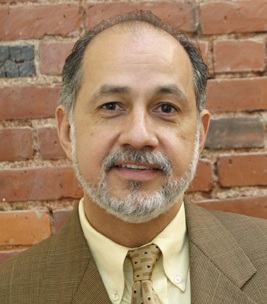
Author
Dr. Roberto Miranda
Summary: We must always live prepared to testify to our faith, because we do not know when God will call us. That preparation requires prayer, fasting, holiness, and a deep knowledge of the Word, so that in a crisis the Holy Spirit can remind us of and show us what is needed. When the opportunity comes, we must not allow fear to paralyze us: if God calls, He also equips.
Christian service requires humility. Prominence does not increase our worth or justify seeking recognition; God raises up His servants, and we depend entirely on His grace and mercy. When speaking amid public suffering, we must exercise tact: it is not a time to condemn, but to communicate love, hope, and the sovereignty of God. Evil is real and can harm even the innocent, but it does not ultimately rule; God is more powerful and guides history toward His purposes.
The church must illuminate human perplexity with a credible Gospel, without denying evil or yielding ground to it. Instead of desiring judgment, we should feel compassion, contend for souls, and present a good God who still desires to save. Therefore, we must prepare ourselves without rushing: God will open the doors in His time.
I want to talk about this experience I had Thursday morning at this ecumenical service held here at the Cathedral of the Holy Cross in Boston, where, as you know, the president and a number of other dignitaries were present, and I was allowed to offer a reflection, a meditation concerning this terrible terrorist incident that we experienced here in the city of Boston.
I have continued thinking about that, and as you know, on Sunday we had some glorious services where the congregation was able to express what was in its heart, and it was a time of healing; as a church, I believe we had a very therapeutic, very healing time.
We also had the opportunity to pray and minister on behalf of these lives that have been so terribly affected by this entire incident. But I was thinking, and what I wanted was to share with you what I learned—some lessons I learned from this experience—which I hope will be a blessing to you.
Jokingly, if I had to give this meditation a title, I would say, “My Day with Obama,” which is very pretentious, because it was not my day at all, but rather a brief moment with him; nevertheless, there are some things I want to point out about it.
Number one. In terms of what I learned from this, the first thing is that we must always be prepared for when the Lord calls us to testify about our faith. There is a passage in Scripture that I did not have time to look up, but I know it in my mind, where it says that we must always be ready to give an account of the faith that is in us.
And you do not know when the Lord is going to call you to testify about your faith, about your belief in the Lord. You do not know when you will be called to give your testimony, when you will meet someone along the way, and it may be your boss at work or a professor at the university. And we must always be ready; we must always be prepared.
Our identity as children of God, as witnesses of the Lord, must always be there in our minds, and we must live a lifestyle that keeps us prepared so that, when the time comes for us to testify or speak about the faith that is in us, we do not have to run desperately to fast and seek the anointing we do not have because we have not been praying, we have not been fasting, we have not been reading the Word or meditating on the things of the Lord, and we do not have the wealth of knowledge and the anointing we need. Rather, we must always be ready, so that when that moment arrives, we know exactly where to go to find the word we require. That is very important: you must always live your life as though today were your day and today might be the moment for which God has been preparing you. Do not let it catch you unprepared, whatever it may be.
It is very important; we must always be ready. We must always be preparing ourselves like a soldier for war; we must always be prepared to be called at any moment and activated, as happened on this occasion.
In one sense, I was completely unprepared—or rather, unaware—that I might be part of that. They called me on Wednesday morning to invite me to it, and I said, “Of course; I will gladly go.” It was in the afternoon that they extended the invitation to me, and at night, when I was here—it is a long story—they confirmed that they wanted me to testify or speak that day at such an important event, something I myself had never even imagined. When I asked you to pray for me on Wednesday night, I did not even imagine the magnitude of that moment. When I found myself there with two thousand people in the Cathedral and with a tower camera, and I realized everything this meant, that was when…
But we do not know when God is going to call us. I believe that in these times in which humanity is living, when so many things can happen, we must be more alert and vigilant than ever, prepared at all times to fire if the Lord wills it. That is one thing.
The other thing I have learned is that you cannot say no when the Lord calls you to do something. If you are afraid—I have had to struggle all my life with fear regarding certain interventions, certain things—but I have always promised myself that I cannot allow fear to rob me of my willingness to serve the Lord. My temptation was to say to them—and in fact, I did say to them when they invited me that day—“Look, aren’t there other, more qualified people out there?” Sincerely, God knows it, I told them, “Let me pray about them; I will call you back in a few minutes if I can.”
But I clearly felt that I could not say no and that, if this was what God wanted, amen, we were going to do it that way and move forward. Never allow fear to keep you from doing what God wants and what you need to do. If God calls, God also equips. We must entrust ourselves to the Lord’s grace and believe that God is faithful to provide everything we need.
A third thing is that I believe we must always allow ourselves to be guided by the Holy Spirit and remain alert to the voice of the Spirit in our lives. As I was preparing to come up to the pulpit here on Wednesday night, my eyes fell upon Psalm 125, verse 3. By then, all of this was already taking shape—the passage that speaks about how the scepter of wickedness will not rest upon the land of the righteous, lest the righteous be led to do evil.
When my eyes fell upon that passage, I clearly felt that there was something in it for me concerning what I had to say the next day. I did not have much time to prepare it. I had to go home, and thanks be to the Lord, it flowed beautifully, and in a short time that meditation had been developed.
I have always learned in my life that God is a God who speaks, and every time I am going to preach, I always ask the Lord, “Lord, what is it that You want me to say? Not what is easiest for me, nor what I have already worked on before and does not require much effort.” Sometimes God changes my sermon on the way to church. Sometimes He changes my sermon while I am sitting there. And I have learned to allow myself to be guided by the Spirit. Like tonight, for example, the only thing I have had in my mind…
Every day, I have learned more and more to allow myself to be guided by the Holy Spirit. We must live a life guided by the Holy Spirit. Brothers and sisters, God speaks; the problem is that many times we do not hear Him. We must always remain alert to the Holy Spirit in our lives, have fellowship with the Holy Spirit, and hear from Him.
Many times, it will not be an angel who comes to you and says in a radiant voice, “My child, do this or that.” God speaks in many ways. God continually speaks to me, for example, through His Word. When my eyes fell upon that text, I did not know exactly what it meant, but it was as if it were in boldface, as if that text suddenly stood out; and so I left it there quietly, left it soaking, working in my spirit. When I got home, I prayed to the Lord to give me the meditation and the word, and then, when I looked at it, I understood clearly.
The Lord began to guide me through the text. The first thing I saw in the text was that: the scepter of wickedness. Then I said, that is where this idea was born—that, yes, wickedness is a reality in the world. Because it says, “The scepter of wickedness will not rest.” Wickedness is a power; it is an authority; it has a scepter. Who has a scepter? A king, a person of power.
So when the Bible acknowledges that there is wickedness in the world, that is very important; but what that text also says is that it will not rest there for too long. What it is saying, then, is that it will not remain, that wickedness may come for a while and God may allow it. There is wickedness in the world. The devil is real, spirits are real, demonic powers and the powers of hell are real, but the important thing is that God is more powerful. And that is what we have to understand.
Satan is a defeated being. He has power in the lives of those who acknowledge his power, but if you know that you are washed and bathed and saturated with the blood of Christ, there is no devil, no demonic power, that can have supremacy over your life. The enemy may come for a moment, but the Lord makes him flee again, if you stand firm in your position. It is very important for us to understand that.
So God unfolded that text before my eyes that night, and when the text began to speak to me, my problem was not that I did not have enough to say, but rather that I had too much to say. And so I had to cut it down. But that is very important when we are in contact with the Word of the Lord.
It is important for you to live that Word. Máximo, for example, who is now beginning to walk in the ways of the Lord, and other new people—brothers and sisters, the Bible, the Word of God, this is your world, this is your life, this is your universe. You have to learn to swim in the depths of this water. This Word must be your daily bread. You must read it and study it; that is why it is so important for you to take your discipleship courses whenever you can.
We are soon going to begin a series of lessons, about six lessons for new believers, people like Máximo who receive the Lord. My desire is for those people to sign up and, for six weeks—only six Sundays—to come for one extra hour. We will probably hold it between eleven and twelve, between the two services, so that those who finish the nine o’clock service can stay, and those who come to the twelve o’clock service can arrive an hour early and be instructed in the basic things of the Gospel: what salvation is, repentance, salvation by grace, the baptism of the Holy Spirit—very basic things about the Christian life. Because if we do not understand the things of God, we cannot grow. It is not simply a matter of coming to church and listening Sunday after Sunday. You have to enter into the Word and know the Word, because then that Word will speak to you.
When you have problems in life, when you are in crisis, texts will come to your mind. When you are going through a difficult time in your life, the Lord will speak to you through the Word that is already within you and that you know in depth. That is very important, because then, in moments like this, the Lord… I know where to look in the Word for those things. And that is very important.
And those deep roots in the Word gave my presentation, my meditation, a specificity that enabled me to pack many biblical concepts into what I said, often without referring directly to the Bible. But that Word speaks and makes an impact on hearts and lives.
I thank the Lord because so many people outside Lion of Judah, in many parts of the world, were impacted, even though they were not believers, or some were simply exploring the Word of God, simply searching. When the Word and the concepts of the Word are present in what you say, that gives any counsel you may offer a very powerful weight. It is important for you to live in the Word and for us always to remain in the Word.
Another thing I have learned from all of this is the following: many people have congratulated me because I was beside Obama, because I shook hands with him, and because I was beside these great celebrities. Brothers and sisters, thank You, Lord, and I appreciate your congratulations and all of that, but let me tell you—this is not a correction; thank you—but, brothers and sisters, I can tell you before the Lord that it does not affect me in the slightest.
We are not movie stars. The Gospel is not a matter of suddenly having been there in the presence of this great man and now your ministry has risen in stature. I am the same person; before coming up here, I ate mashed plantain with tuna and onion. I have learned that one must not allow oneself to be dazzled by anything or anyone in this world. Being a servant of the Lord is very different from any other kind of work in the world. A servant of God must never seek glory for himself, nor should he allow himself to be affected by it.
Just as this happened, amen, God can simply make me return to ordinary things. Look at me here among my people; I am happy this way, and our hearts should always be like that. I sometimes see so many pastors seeking personal glory nowadays, and that has happened throughout all of human history—lobbying, seeking to have a large church, to make a name for themselves, or to have a television program. Sometimes we invest so much of our own people’s money in a program or whatever it may be that does not even have the impact it should have, and then we are taking money from our sheep simply to promote ourselves. Not everyone does it, but there is a great deal of ego in ministry nowadays.
We must absolutely reject that. I repudiate that attitude in the name of the Lord. For me, my great joy is simply to have been able to share the Gospel with many people through that moment and to be a blessing. But I want you to be clear about that.
I have always told the Lord, “I will never have cards made calling me a prophet or an Apostle and go around handing them out.” I have always learned one thing: it is God who raises people up, not man. When I look at Scripture, I always see God bringing His servants out of obscurity. He brought David out from among the sheep, so hidden away that even the prophet Samuel did not dare think he could be his father’s son; he did not even suggest him.
He took Moses out of the desert, after 40 years of anonymity. He found Gideon tucked away in a cave somewhere, threshing wheat. He took Elisha away from the oxen, from his work. He also brought Saul out of anonymity while he was persecuting the church. He called some of his disciples away from a money changer’s table, and others from fishing.
God is the one who calls. God is the one who brings people out of anonymity, brothers and sisters. And no one should ever put himself forward as though… no. Now, I tell the Lord yes; God knows my heart, and God knows that if he wants to use me, I am more than willing and eager. I have always told the Lord that God… I thank the Lord because God has invested a great deal in my life; he has given me many opportunities to educate myself, to do many things, and to gain a great deal of experience, and I believe he could use me. But I have always declared what is in my heart to him: I want him to be the one who brings me out of anonymity, not me. Because I believe that is the biblical pattern.
Now, I do everything within my power so that God knows I am available, and I prepare myself, and I feel there is a calling, but he is the one who has to do it. We have to set our egos aside; the world is already tired of men with oversized egos. The world wants humble people, people who are simple at heart, modest people, people who are conscious that we are nothing, that we are worth nothing.
In an instant I can make a mess of things, as the Dominicans say—a disaster. And we cannot—we are fragile. We must continually entrust ourselves to the Lord’s grace and mercy. It is God’s mercy, and when God places us in positions of prominence, we must be deeply aware of our fragility and that only through the Lord’s grace and mercy can we do anything that will bring glory to his name.
I believe one has to cultivate a sense of weakness—weakness in the sense of what Paul says, that when I am weak, then I am strong. When a man or a woman knows that he or she is fragile, and that it is only the Lord’s grace and mercy that enable us, then that covers us, and the devil cannot attack us because we are…
Who can denounce someone who has already denounced himself? That aspect of things is important. I thank the Lord and appreciate your joy, but brothers and sisters, I assure you that the most appropriate thing is simply to give glory to the Lord and continue with our lives in a completely simple and normal way.
Another thing I have learned from this whole process is the following: as a church, we have to be very careful when we are bearing witness in certain situations in the life of a nation or a culture. At a time when so many people are afraid and filled with panic, when some who are not Christians feel guilty, wondering whether God is truly punishing this nation, and feel vulnerable, that is not the time for us to offer words of condemnation or judgment.
There are many prominent Christians who, for example, when the Twin Towers fell, went first on television and into public forums to talk about how this nation’s sin was what had brought it about, and how God brings judgment. That may be true, but we should reserve that kind of comment for the intimacy of our own family of God. Because we understand one another, and we know what we mean by that and what we are talking about. But what the world hears instead is people who seem to be taking pleasure in its pain, and at that moment the world is not prepared, I assure you, to hear words of condemnation and judgment.
For example, if you go to see a patient who has just had an accident because he was driving drunk on the highway, and he is lying in bed with one leg propped up, pins everywhere, and his mouth wired shut so that he can drink only through a little opening, you are not going to say to him at that moment, “You see, so-and-so? Look what happened to you because you were drinking, and this and that.” Of course not. What he will do is struggle free as much as he can and try to hit you with that very cast as hard as he can. Because that is not the time for you to say that to him.
It is the time for you to pray for him and tell him about the good purposes God has for his life, how valuable he is, that God loves him, that God will bring him safely through this, and that God has a purpose for him. Even if you know that he is a scoundrel and that it serves him right, at that moment you have to offer… you have to exercise tact, brothers and sisters.
And we evangelicals are very quick to proclaim judgment and condemnation to people who already know—they are not stupid; people know what is happening in their lives. That is often the moment for us to win them over. And that was one of the things I set out to do in those few minutes I had there. I had to make the most of the 6 or 7 minutes I had been given before a worldwide audience and before the president of the United States himself and his wife, as well as so many other dignitaries. At a moment like that, you cannot—and 6 minutes is not the time; what can you say in 6 minutes? You are doing well if you do not end up tripping over your own tongue. All you want to do is leave a good taste of the Gospel in people’s mouths.
At that moment, people want to know something. Look, what I wanted to convey during those minutes was the following.
1) Evil exists, and it is genuine; it is real. There is pain in the world; there is tragedy in the world. There is wickedness; terrible things happen in this world.
2) Those terrible things can happen to innocent people who have done nothing to deserve them.
3) God also exists, and God is almighty, and God is the one who is in control of the universe, not evil. Why? Because people are thinking that the world is coming to an end, that other bombs are going to explode, that when they get home they will find it burned down because some other madman decided to set off another bomb in their neighborhood. People are filled with fear, and we have to tell them, no, God is in control. Bad things can happen for a time; as it says, the scepter of wickedness may prevail for a time, but God sets limits on it. God is in control.
Now, the question many people ask is, if God… Another thing I also want to tell you is that God is good and God is benevolent; God is merciful; God does not want anyone to perish. God loves humanity. Then the question arises: well, if God is so good and if he is in control of the universe, then why does he allow these things to happen? Why is my little boy dead, or why am I missing both legs when three days ago I was running a marathon? It is a good question.
Because if he is good and is in control, then why does he allow that? Because he is cruel? Because he likes it? Because he delights in suffering? No. We have to tell them: look, we live in a mysterious world, a complex world in which evil and good are locked in conflict, in which there are three—I always tell people, though the trouble is that one does not have much opportunity to say this—when people ask, “Why does God allow such a thing to happen?” it is as though God were the only player in the universe.
You know that, yes, God is almighty and he is ultimately in control, but there are two other protagonists in the drama of history. There is God, with all his power and his absolute control of the universe. There is also Satan, and there is a mighty power, a kingdom of great power that is at work on the earth: evil, wickedness. Satan, with all his demons and all the power of wickedness, is a psychopath who, like those young men who were under Satan’s power, delights in destruction—in, as the Bible says, killing, stealing, and destroying.
And Satan could not do good even if he were paid to. He is a completely pathological, sick being. Satan defines what a psychopath is. He does not harbor hatred for humanity; he simply does not know how to do good. All he knows how to do is evil, and his demons are the same. They are beings who do not enjoy a single drop of God’s grace, mercy, or love. What enables a human being, no matter how evil he may be, to love his child—even if he then goes and kills 10 people, or his brother, or his wife—what enables that being to have a drop of love for someone and keeps him from being a perfect demon, devoid of all grace, is the touch of God that is still present in his life. But demons do not have that privilege.
Those fallen angels are already condemned. There is no alternative for them. None of them can repent. In them there is not a single drop of God’s grace or mercy, love, goodness, or beauty. They are pure evil, totally empty of every good thing. Just as he is the totality of good. And those spirits are preternatural spirits; they have access to forces and mechanisms that we do not understand, and they move throughout the world with an ability that is by no means equal to God’s, but is indeed superior to man’s. And that is a subversive kingdom that moves throughout the world and manipulates governments, corporations, cultural movements, universities, university professors, journalists, powerful people, and criminals.
That power moves throughout the entire world, and for some reason it is permitted to influence history and the daily events of humanity everywhere in the world, throughout creation. Why? Because there is a third player in the world, and who is it? Man—humanity. God gave humanity dominion over the earth.
When he said in the Garden of Eden, “Have dominion, be fruitful, multiply, and subdue the earth,” God delegated authority over humanity’s domain to man, to humankind. So God created man with a freedom that God himself cannot violate—that he does not allow himself to violate—because God plays by the rules.
If God is going to change the universe, he has to change it while playing by the rules he established. God does not cheat, as the Puerto Ricans say; God does not deceive. God does not begin a game and then change the rules halfway through. No. When he says it must be a certain way, then even though it is difficult for him, he abides by the rules of the game, and those rules dictate that he cannot prematurely strip man of his power over the earth. Man will always have the right to choose between good and evil, to choose to whom he hands over the earth. And for now, humanity has handed dominion over to Satan.
So when we see these things happening in the world—wars, oppression, slavery, death, poverty—all of this is the result of the interaction among those three great powers: God, who is guiding history toward a benevolent culmination; the power of the devil, who wants to undermine God’s benevolent purposes in history; and man, who, like an heir who has handed his power over to someone else, is simply an incompetent person who has great authority over the earth but does not use it and does not appeal to Christ, whose blood and work on the cross of Calvary are the only power capable of subduing the powers of the devil.
As long as humanity remains caught up in that game and does not humble itself before its Creator, these things will happen, and the first to suffer when they happen is our heavenly Father, as he sees his creatures suffer and die in the ways they do.
Satan does many of these things to cause pain to the heart of that loving Father who is God, who bleeds when he sees his creatures dying and suffering unnecessarily. So when we ask, “Why does God allow it?” No. Many times the question is, “Why does man allow it?” And why, in his mystery, does God permit these things to happen as he leads this world and man’s history toward the point where he wants them to be?
So we have to help people understand these things. The church has been placed here as an illuminating voice for humanity. When humanity finds itself perplexed, the church has to say, “Look, this is what is happening,” and present to them a God of love and mercy, and offer them hope. And at the proper time, it must also tell them, “But look, this is mysterious; there are powers, there is evil in the world, and you have the right to choose one thing or the other.”
I hope the Lord gives me more opportunities in the future to speak about these things, because I feel that the world is ready to hear the Gospel proclaimed in a complex and credible way, one that does not deny certain realities of the world in which we live. Do not give them more importance than they deserve, but do not give them less importance than they deserve either; then use the word of the Lord and express his love to them.
Do you know what has been quoted most from what I said, and one of the few quotations from any of the people who spoke, except for the great figures like Obama, to the glory of the Lord? It was when I said, “God has not abandoned Boston. God has not abandoned this nation. He is merely weaving a bright, colorful tapestry, even though he sometimes uses dark threads.” That has been repeated over and over. Because it encapsulates this idea of God’s love: God has not rejected us; God has not finished working yet. God does not want anyone to perish. God has not yet consigned this world, this nation, to hell. I still refuse to yield this nation to Satan.
We still have to fight for these souls. I believe God still has great things He wants to do in this nation, and when the church says that this nation has already gone to hell... I believe there are many of us who secretly want this whole thing to erupt into a great inferno so that we can secretly delight in watching people burn to a crisp. Honestly, I believe there are many of us who, if the world repented, would go home and kick over the soup because we are upset with God that all these people repented, like Jonah.
Do you know the story of Jonah? He did not want to speak to Nineveh because he was afraid that if he spoke to them, they would repent and God would forgive them. They were so evil! There are many Christians who are like that. We secretly harbor ill will toward people, and we almost want another terrorist act to happen, because how interesting it is... how much we enjoyed watching television that Friday, glued to the screen; it was better than any soap opera. Yes, indeed.
And many of us secretly like these things. Look, what we need to have... that is why God said to Jonah, “Listen to Me.” That is why He gave him a gourd, and when it withered and the sun began beating down on him, he became furious, and God said to him, “Look, if you are upset that a gourd died and withered, how much more am I grieved that thousands of people might die who sometimes do not even know how to distinguish their left hand from their right.”
To me, it has always been a mystery, because we still do not know what God wants to do with this nation. I feel that what God wants, rather, is to save many souls before Christ comes—and He is going to come, and there will definitely be a judgment—but before that happens, I feel in my heart each day a growing, great love for this humanity, and I feel that God still wants many people to be saved.
And instead, I am preparing myself. I am preparing my nets to save many people. The apocalyptic scenario, in my book, is still a little while away. In the meantime, let us save lives; let us proclaim the love and power of God. I will not yield a single square inch of ground to Satan. He is defeated in the name of the Lord.
God is more powerful. God’s love is more powerful, and what I want is to be filled with a great sense of fatherly compassion toward so many people who are lost. I want the opportunity to speak to them about the love of God and to show them a generous and kind church that wants people to repent of their sins, come to the ways of the Lord, and be treated by Him.
These are some of the things I learned from my day with Obama. And there are other things like these as well, but at least I wanted to clarify some of those things that were in our hearts, because God also wants to speak to us as a congregation at this time so that we will be ready. Because I know that other moments will come.
God is doing something we have been waiting for a long time, and God will do it in His own way. There is no need to rush. There is no need to go around breaking down doors. No. God does it. God is in control. But let us keep preparing ourselves. Prepare yourself: study the Word, pray, fast, sanctify yourself, cleanse yourself, so that when the Lord calls you, you can be ready. Amen.
God bless you. Let us stand and thank our heavenly Father for His presence. It looks as though everyone is awake; no one fell asleep on me. Glory to God. We ran a little overtime, I know. I felt from the Lord that this had to be proclaimed into the air and remain there on the internet simply as a testimony, for the glory of the Lord.
Father, we surrender this time to You. Thank You for the privilege of coming into Your presence as Your people, Lord, and rejoicing in being part of a glorious family. Thank You, Father, because this bus we are riding is not going over the cliff. We are on our way to our heavenly homeland, and there is no demon that can make us plunge over the cliff or lead us away from the path You have laid out for us.
Thank You because we are secure in You, and as Your Word says, Lord, no one will be able to separate us from the love of God that is in Christ Jesus: neither death nor life, neither angels nor principalities nor powers, neither the future nor the past nor the present, nor any other created thing will be able to separate us from the love of God. And that is clear, Lord, and for that we thank You.
May our hearts be filled with confidence in You tonight. I bless Your people. Thank You for the privilege of serving You. You are a good God, and each day we want to enjoy Your goodness more. To You be the glory and the honor, in the name of Jesus. Amen and amen.
Brothers and sisters, God bless you. May the grace of the Lord be with you. Greet one another; you are dismissed.