Touching Jesus We Can Rewrite Our History
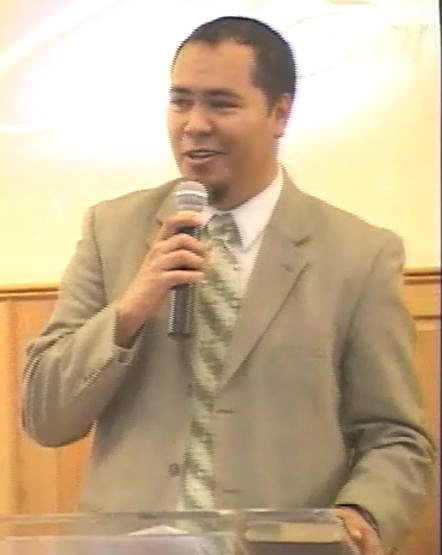
Author
Roberto Mata
Summary: Roberto Mata, a Mexican immigrant who worked in California fields before attending seminary and eventually obtaining his Ph.D. at Harvard, spoke at a church about the challenges faced by the Hispanic community and the importance of faith. Mata discussed the economic, social, and political obstacles that Hispanics face and noted that these factors can lead to disappointment and a lack of confidence in political leadership and the church. However, he argued that the solution is to be proactive and to have faith, citing the example of the woman with the issue of blood in the Bible who heard about the miracles of Jesus and had faith that touching his cloak would heal her. Mata emphasized the importance of listening carefully to testimonies of God's power and experiencing the reality of God in one's life.
The importance of listening to testimonies of God's power and work in people's lives is emphasized, as it can be a seed of hope in our hearts. The story of the woman with the issue of blood is used to illustrate the need to overcome fears and stigmas in order to approach Jesus with a focused goal. The speaker also addresses the tendency to not listen due to laziness, distractions, and cynicism, and encourages the congregation to take action and not just hear but act upon what they hear. The message concludes with a reminder to forget criticism and negativity and focus on the goal of approaching Jesus.
This sermon focuses on the story of the woman with the issue of blood who touched Jesus and was healed. The speaker emphasizes the importance of overcoming obstacles and fears to reach Jesus, even in the face of criticism and negativity from others. The woman's faith and determination ultimately led to her healing and a new understanding of who Jesus is. The speaker encourages listeners to also touch Jesus and rewrite their own histories.
Roberto Mata worked on California land, in California fields harvesting fruits and vegetables like so many Mexican and Central American brothers who come to the United States to seek a better life. I don't think it bothers him that we say that he was undocumented for a while also working hand in hand, a young Mexican, without papers and God has led him in a very beautiful way to study in a seminary of the Assemblies of God at a university, the Assembly of God, I also think he was part of the seminary, began his studies there, put his papers in order. And it's taken him all the way to Harvard where he's doing his Ph.D. today, so it's a very interesting career, he's in divinity school.
He is a man seeking God, he has been a member of our church for several years. He is married to our sister Noemí Blanco, I think she is originally, but now she is Noemí Mata, Spanish, Galician, from Galicia. And Roberto and Noemí are a very beautiful couple that God does many beautiful things through them here in the church. Roberto teaches in our discipleship program, he also teaches in Cume and is a person who is growing a lot in the Lord. He is very hungry for the thing of God. He has been a resource for our church as well and he is, as I said, doing his doctorate right now in divinity and we are always looking for ways for our brothers to be impregnated with the word of God from different resources that God places in our congregation and we also want them to those talents that God has placed there have an opportunity to develop and have an opportunity to bless others and use the gifts that God has given them.
So Roberto and I met recently, we were talking and I told him, look Roberto why don't you come, bless us with a word from the Lord. And this is the day that God has chosen. Give a round of applause to welcome the soon to be doctor Roberto Mata, and we are going to hear the word of the Lord from us, Roberto welcome, a pleasure to have you with us, God continue to bless you, my brother.
God bless you, brothers. It is a privilege to be here with you and I want to first thank the pastor for the opportunity and the confidence he has given me to be able to share with you this morning what the Lord has put on my heart, and what I believe is the message for you in this day and as the pastor says, I am Mexican. I came to this country at the age of 14 and I did work in the fields of California picking all kinds of fruits and vegetables, all the fruits you eat, even carrots too. And thank the Lord, the Lord during that time took me there from the fields, from the vineyards of California and put in my heart a desire to seek him and follow him. And I felt the desire to go to prepare myself, to the university and finish a bachelor's degree in social sciences and biblical studies. And from there the Lord also opened doors and gave me a scholarship to Harvard University and I am studying there to this day.
Glory be to the Lord. We are in home. Amen. Glory to God. This morning I want to share with you a concern, an analysis, a discernment that I had a few months ago that is still ongoing, concerning the social, political, and economic condition of the country in which we live and perhaps also to a certain extent of the church. .
In the present time I think the church and the Hispanic community face great challenges and I think that it is not a surprise for many. These challenges are educational, social, economic challenges. At an educational level, 19% of Hispanic students do not finish school. On a social level, 6 out of 10 adults in this country are not legal residents or citizens, but rather illegal, as I once was. I remember the pure hispanic center, at an economic level 9% or 1 in 10 Hispanics who are homeowners, during this economic crisis have been late at least once with their mortgage payment. 3% say they have received news of a foreclosure and 36% live in fear of losing their home.
These are real concerns that still plague God's people. In this scenario, I think that all these factors also sometimes come together and fall on us and create a certain burden on many people, create a certain disappointment, even a lack of confidence in the political leadership and in the church in certain areas, perhaps even a cooling off. spiritual. But most of the time it creates a thirst and a hunger for something that is real, a hunger for God.
I remember the prayer of the prophet Habakkuk when he said, Lord, revive your work in the midst of time. And I think that the times we live in is a more than appropriate prayer, Lord, I am thirsty and hungry for you. Revive your work in my life. In which times, Lord, are unstable that I can be firm and cement myself in your word.
But how are we going to achieve that? How are we going to survive in those times and not only survive, but rise up and also be a beacon of hope for others. Maybe for the neighbors who don't know about God. How are we going to achieve this? Well, this morning from Marcos, chapter 5 to 25, when you find it tell me amen for…. Mark 5:25 comes a woman who is well known in our circles as the woman with the issue of blood and this woman tells us that to survive these times, to keep our spiritual life alive, we need to be proactive and dare to touch bye bye. And not only that, she also gives us the recipe, the steps to follow, an example of how she, even in her life, living in times similar to ours, was able to touch God.
But what does it mean to touch God? That is precisely what I want to discuss with you. We are going to verse 25 and I will be reading the word of the Lord until verse 30, it reads this way:
“….but a woman who had suffered from blood flow for 12 years and had suffered a lot, from many doctors and spent everything she had and had taken advantage of nothing, but before things were worse. When she heard about Jesus, she came from behind in the crowd and touched his cloak because she said, if I only touch his cloak I will be saved. And immediately the source of her blood dried up and she felt in her body that she was healed from that scourge…”
And as the sermon progresses we'll dig a little deeper. Why don't you bow your head with me and let's say a prayer to commit this into the hands of the Lord.
Heavenly Father, we thank you Lord for your word, Lord, we ask you, Lord, to open our hearts, to open the ears of our understanding, Lord, our hearts so that we can receive, Holy Father, what you have for us in this tomorrow. We ask you, Lord, that your name be glorified, Holy Father, that our hearts unite, Lord, with your church, and with the spirit that says, come, yes, come, Lord Jesus. Amen.
In the times in which this woman lived they were not easy. I know that many times when we see the biblical text, we say, oh, well, these biblical characters had it very easy in their time. They don't have the problems we have now, all the stress, they didn't go through the tests that we go through. And sometimes we kind of underestimate what those characters went through. But when we delve into the biblical text we see that reality is different and in fact they have a lot to teach us and if we are willing to learn we can receive a blessing.
At the time this woman lived, Israel, ancient Israel, the land of Palestine, was suffering from an economic, social, military, and religious crisis. Militarily Palestine was under Roman occupation. The Romans were not very good people to say. They were not going to come to his town and they were going to treat him very well. Politically, the Romans removed and installed kings at will. And economically during the Roman occupation of Palestine, the poor usually bore the brunt. Because? because they had to pay at least three types of taxes. We complain today that we pay certain taxes, right? But imagine you pay three taxes. And to three different entities. The first tax was the tax on the Romans, imagine that you have to finance the occupation of your country by an invader and apart from the fact that they are oppressing you, they are occupying your country, you have to finance their actions.
The second tax was the Herod tax. At that time Herod had been involved in a large construction project. He had built ports, cities, but all that burden fell on poor people. The third tax was the temple tax. Herod had also built certain areas of the temple and once again the poor had to pay that tax. A certain part of that tax also went to the priestly class that is the Sadducees.
Imagine, Marcos tells us that the woman had suffered from this hemorrhage for 12 years, 12 long years. And that it was even worse. You know that sometimes when science fails, when we lose our confidence things fail, people get disoriented and suddenly everything goes, a few cod liver pills, some shark skin cartilage pills, something like that, and I don't know how much thing And people sometimes can't find something that can quench their thirst, that they can use to be healed.
At that time there were certainly no income tax returns, you know. The woman could not expect that after paying all those taxes they would be returned to her. No. Once she gave the money, it was gone. Understands? And there was no health insurance either. An insurance that she could say, well, I have this disease, I'm going to go to a doctor and I'm going to take my health insurance. No, there was no health insurance, there was no Blue Cross, no Harvard Pilgrim, forget it. Nothing of that. The woman was basically staring hopelessness in the face.
He was facing his end. As we say in English, she was coming to the end of her road. It was almost his end. And I don't know if you've ever been in a situation where you feel like your world is falling apart, little by little. I don't know if at some point, perhaps in your spiritual life, in your daily life, you have suddenly seen how all the foundations of your life are vanishing. I am blessed by the testimonies this morning. I am blessed by the testimonies this morning because they speak of a real experience with God, but they also speak of a crisis, of a struggle that had to be sustained to reach this new understanding of God. And the woman in front of us was having that fight.
When I was 8 years old, my mother became chronically ill. Precisely from a similar hemorrhage. And it was already common in my house to see the ambulance arrive and take my mother away. It was like daily bread. Until one time I got home from school and the ambulance was there and the doctors had told my mother, I was hopeless. My mother came home only to spend the last few days with us and before that there was a process of watching our world fade away. We saw how my father had to stop working to take her to different hospitals in Mexico City and the doctors said, there is no cure, there is nothing we can do, we really don't know how to stop this. And suddenly my father had to sell his tool. Imagine you, he worked as a bricklayer in construction. Suddenly, he had to sell his tools, suddenly the furniture. There was a particular piece of furniture, a particular artifact that when I saw it being sold, I said, we are in crisis and it was my mother's sewing machine. You know those machines that you gave him with your foot, they weren't even electric, you just moved them with your foot and they started to sew. When that device left the house, we all understood that we were in big trouble.
But fortunately, brothers, when we are in these situations there is still hope. In the case of this woman and she tells us, very clearly, one of the things that we can do when we find ourselves in difficult times like these and we can overcome it is first to listen carefully. Say with me, listen carefully.
In verse 27 we see that it tells us, when he heard about Jesus… the first clause, when he heard about Jesus. In the original Greek it reads, …………. He heard about Jesus. The Reina Valera remains for us to see from that aspect because it translates it very generally, only that she heard about Jesus. But in the original Greek we are told that she heard about the things that Jesus did. Do you notice the difference? In one there is not necessarily an emphasis, you could have heard anything. But in the original Greek she heard about the things that Jesus did.
This woman heard testimonies of the miracles that Jesus performed. I don't know, maybe he heard about that leper that the Lord Jesus healed. Perhaps you heard about that paralyzed man that his friends had to cut a hole in the roof and lower him down so that the Lord could heal him. Perhaps he heard about the deliverance of the demoniac. And I'm sure you must have heard of that moment when Jesus calmed the storm.
And you know that faith comes by hearing, and hearing the word of God. That is why testimonials are important. It is important to listen to the brothers, to the people because we are listening to someone who has experienced the power of God at that moment and God has become something real for their lives. Amen. It is a precious thing to listen to God, to listen to talk about the things that God made.
What does it mean? Listening can also be translated to some extent as understanding the word of God, as understanding, as discerning almost. What did this woman discern? This woman discerned who it was that was passing through those areas of Galilee. He understood who it was who was walking near his town. And unlike the priests, the Pharisees, the religious institutions, she believed in her heart.
You know that the biggest mistake that the Apostles continually made in the Gospel of Mark was that they did not understand very well, they did not capture the person of Jesus very well. Jesus is continually telling them, well, who do you say that I am? They say, well, some say that…. No, no, no, but who do you say that I am? And if you look carefully at the Gospels, the Apostles did not give one, they did not give one. Now until the end that the Lord says, Peter, let's see, tell me, who do you think I am? You are the Christ, Lord. You are the Christ.
But the Pharisees, the Sadducees, these people, never understood who the Lord was. For this reason, when the Lord had conflicts with them, they said to him, how can you be greater than Abraham, than our father Abraham, who has lived so many years? And the Lord says, verily I say unto you before Abraham was, I am.
You talk so much about Solomon, that Solomon goes there, Solomon here, but here is someone greater than Solomon, in this place. That was what the woman discerned. Listening is also discerning. Hear what is said about the Lord, the testimonies about God.
In the case of my mother, there was a small Pentecostal church near the house and my mother liked that the brothers came to talk with them. We were not Christians at that time. But my mother liked it, so they would come, and suddenly the nuns, because we were also Catholics, well they would get angry, they would get angry. And they came and said, but how can you let those people come? And my mother said, but it is that I like to listen, I like to listen to the testimonies of the word of God.
And they know that the day the doctors came to drop her off, the ambulance came to drop her off at the house, the day they told her no more, the brothers were there. I was little but I remember, we had a small room in the house and on one side were the nuns with their rosaries and on the other side were the Pentecostal brothers praying for healing so that my mother would get up, and in the room was the priest with my mother. And I was giving him something that is known, I don't remember very well, like extreme unction, like holy oils. And there was an incense there and I remember that they called us all. I was outside, I did not want to enter. I hadn't seen my mother for a month. I didn't know how it was going to be. And I didn't want to go in and my father came and says, come on, maybe this will be the last time.
And we went in and my mother was there and she was going in and out... she would faint at times, at times she would come back again, my little brothers were there. We are 7. We were all there and I heard when the priest told her, woman, it's time, it's time. Rest, die and rest. Those were the priest's words. Die and rest. And I can hear, and I still remember until now when my mother said, no, no, no. And the Pentecostals kept praying, Lord, do the work. lift her up Faith comes by hearing. And hearing the word of God.
Did you know that one person can listen 4 times faster than another person can speak? If you are really willing to listen, you can digest 4 times faster than the most talkative person, and you know that from time to time we find people who, look at this and that…. If you are really interested in what this person has to say, you can digest it. Do you know why? because when we listen it means that we are interested, that we are interested in what he is saying, but also when we listen it means that there is hunger, that there is a need to see, that there is thirst and that there is also hope. And we cling to it, we cling to life. Those times, no matter how difficult they are, if we listen, if we attentively open our ears and our hearts to hear what the Lord is doing in the lives of different people, we can feed on that. That can be a seed of hope in our hearts. Do not you think so? And we can continue day by day.
I imagine that this woman, when they were telling about the things that Jesus had said and done, was digesting them, perhaps 8 times or 16 times faster, because imagine being in bed for 12 years, 12 long years suffering, all suffering from stigmas that this disease entailed. But in fact, one of the biggest problems in our society today is that we don't know how to listen.
How many here know how to listen? How many are good listeners? When the wife is talking to you and you are watching the football game. Oh, yes, oh, yes, yes… and suddenly you are having a monologue because the wife has already realized that you are not paying attention to her and you are yes, oh.
And according to scholars, note, the cause of the problems for which it is difficult for us to listen is simply, as we Mexicans say, laziness. I don't know how they will call it lazy in Dominican or Caribbean Spanish. What do they call you? Laziness? the laziness For sheer laziness, for sheer laziness. And also perhaps because of the distractions of life. Oh, games and if you're a fan of boxing, all of these things, they can distract us and take away from us, really, a blessing, but also many times we don't listen because of cynicism. Because when all these things happen and we lose Jesus, our hearts harden and sometimes we say, oh, I already heard that and nothing ever happens. Or that already happened and no... the heart hardens.
I ask the Lord that this morning as a congregation, as beloved brothers, that the ears of our hearts be open so that we can hear what the Lord is still doing in our midst. Amen.
I know that we went through difficult things but I am also convinced that if we listen like this woman, neither death nor life, nor the payment of a mortgage, nor spiritual dryness, or some physical ailment will be able to separate us from the love of Christ.
Glory to God. But still listening is not enough, not enough. How many of us have not heard a good story and say, oh, yes, that's great. We must act. We must take action and this is precisely the woman's message to us this morning. Yes, listen, sow hope, see what the Lord is doing but also accept the challenge. And it is the challenge that it presents us, to take the appropriate action. What action did she take?
If we look at chapter 27, in the second clause, we see that when she heard about Jesus, what did she do? He came, he came and played. But before playing she came and now we see the verse and we say oh, yes, that's easy, surely someone told her and she said hmmm, I'm coming. But what happened this morning, if we also delve a little deeper into the text, we will realize that there was a powerful internal struggle, which she had to overcome before she could go to the Lord. She was willing but you know the spirit is always willing but the flesh is weak. And let's see, what did it mean then to make the right decision to go to Jesus? It meant, I suggest this morning, facing your fears, facing the stigmata. After 12 years they had those burdens, those religious and social stigmas because given her illness she was considered an impure person. Did you know? According to Leviticus, chapter 15:19 when, I am going to read it:
“…when a woman has an issue of blood and her issue is in her body, she shall be separated for 7 days, and whoever touches her shall be unclean until evening…. Verse 25 says that when a woman continues to have a flow of blood for many days, outside of her usual time, or when she has a more than usual flow of blood, all the time of her flow she will be unclean, as in the days of his habit…”
It's one thing to be unclean for a few days, don't you think? But 12 years, 12 years. And not only that, but everything you touched was also going to be unclean and everyone who touched you was going to be unclean. What would that have done to that woman's psyche? Don't you think that this will have affected you negatively in some way? And could it have taken away her strength, her confidence? I imagine that in order not to contaminate anyone, and for no one to be contaminated, the woman must have stayed at home for a long time and that she was still ashamed to go out into the street because the flow did not stop. And it's serious, it's serious.
I remember on one occasion, when I was a child, before my mother got more seriously ill, we used to go to Mexico City to see my father every week and suddenly he had a discharge from his illness. And at that moment I would have wanted to be bigger, stronger, almost like now, to protect my mother, to give my mother some kind of confidence, so that she wouldn't feel so weak, because I looked into her eyes, still child discerned some concern, like not knowing what to do and I remember that she went in desperation. We left the city and went to where the neighborhoods are, and he knocked on a random door and asked the lady, ma'am, please I need to use your bathroom, it's an emergency. And this lady began to insult my mother. And when I was a child, seeing that, I said, but how can people be like that? and my mother explained to her, look ma'am, you are a woman, you understand and the woman reluctantly opened the door for her and let her in.
It must not have been easy, I imagine for this woman to carry this disease for 12 years. But this morning I want to ask you too, is there any moral or religious stigma that you are still carrying and dragging? I know that as a Hispanic community, as Hispanic believers we are sometimes subject to all kinds of harassment. In such a way that for many the term Hispanic is synonymous with poverty, ignorance, and violence. The reality, for many, is the past, the past that we never finished getting rid of.
In my New Testament class I have a brother who came before the class started and seeing that no one was there and he tells me, teacher, I want to talk to you. I say, yeah, what's up? He says, I really want to learn, I really want to study and this book that you have seems to be very good but I don't know how to read very well and it's not that I don't want to, it's just that my dad always told me that I was a donkey and that I was never going to learn anything in life. And I'm still struggling with that. I know that we have been told this, we have been told that.
Imagine when I was in the third grade my math teacher humiliated me greatly, she embarrassed me in front of the students, in front of the parents, in front of my mother and said, this boy is never going to be anything in life. I'm going to send him a letter saying, look, greetings from Harvard. Glory to God.
But it is necessary to break with the past, it is necessary to overcome those stigmas. To go to Jesus we have to deal with those problems, no matter how difficult they may be, going to Jesus also meant having an objective, focusing on the goal. It surely must not have been easy for this woman and I don't know if in her mind she said, how am I going to do it? If I touch Jesus, it will be that he too, but no…. If he is the Son of God in no way is he going to be unclean because his holiness is greater than everything, greater than life. I will be transformed. And I think that somehow the woman did not want to cause problems for the Lord as well, because remember with the Lord Jesus all the people who followed him, not necessarily all believed, many followed him because he gave them food, others followed to criticize him , like the Pharisees and the Sadducees, and others followed him because he had called them.
The woman had some conflict but she had a goal and her challenge for us this morning is to focus on the goal. To go to Jesus we have to focus on the goal. It must not have been easy.
If you would walk with that disease in that world, people would have come out into the streets telling you, get away from me, or there will also be people pointing at you and saying, unclean. But the woman had to forget about her surroundings, she had to forget about the people, about the criticism, about everything with a goal in mind, and it is clear, brothers, that to touch the Lord sometimes we have to forget everything. We don't have to listen to all those words they say, you can't, you're never going to be anything in life, you're a donkey, you're a good-for-nothing, all those things have to be left behind while we walk towards Jesus. Amen.
Touching Jesus also meant being daring, having courage. This woman, brothers, gives us a tremendous challenge because the circumstances where she found herself required immediate intervention. If you realize in this passage your story is enclosed within another story. When she went to touch the Lord Jesus, the Lord Jesus was on his way to heal the daughter of Jairus. Do you know Jairo's daughter? The 12-year-old girl who was dying. It was an urgent situation. Imagine if you are a little shy and embarrassed and saying, well, I can't go interrupting the Lord because he is already on his way to another miracle, I better wait for him next time around. But this woman will have said, for 12 years I have been suffering from this, I can't wait, I have to go and touch Jesus. The Lord has power to raise the dead, Jairus's daughter can wait.
And went. If you read the story carefully it is as if the woman opened a parenthesis by force and there are fulfilled, I think, the words of the Lord that say that the Kingdom of Heaven suffers violence and the violent take it away. And this woman in her last effort, with the last strength she had, the last breath she had, got up, overcame her fears, left her house and went to the goal, which was to touch Jesus.
And finally, brothers, we see that in order to ultimately touch Jesus we have to do it. It is one thing to reach the opportunity but another thing to complete the job, ah, how many of us when we are already in the middle of a situation, as the Mexicans say, it is time to dance, suddenly our legs shake and we say, no, well, And sometimes we kind of go backwards.
But this woman, brothers, when she arrived, she got the job done. She did what she had to do. And in doing so, brothers, he experienced the power of God. According to Marcos, he says that immediately the fountain of her blood dried up and she felt in her body that she was healed from that scourge.
When we touch Jesus we know him in a different way, he is no longer just a story we hear, or that great character, but he becomes a reality for our lives, a tangible reality. And the woman also discovered a new revelation about Jesus, she discovered, as I suggest this morning, that Jesus cannot resist human need. Jesus cannot resist human need. Therefore he also said, come to me those who are worked, loaded and tired that I will give you rest. Come to me all you who are thirsty. Let him who is thirsty drink.
The Lord turns back and sees the woman asks, who touched me? The Lord cannot resist human need. They went ahead of him, the only thing left for the Lord was to bless the woman and tell her, woman, I imagine that the Lord has said, well, you already touched me, now all that remains is for me to bless you. Go away. Your faith has made you healthy. And the woman says, at that moment she was freed from his whipping, she was healed and not only that, when she was healed she rewrote her story and from the moment she touched Jesus she would no longer be known as the woman with the issue of blood but as the woman who touched God.
I suggest to you this morning that if, like this woman, we listen attentively, come to Jesus, overcome all these things, and touch him, we can rewrite our history in such a way that we are no longer defined by circumstances, neither social nor politics, nothing but the Lord. And the word of the Lord to us is the same as it was to the woman, go in peace. Your faith has healed you.
Why don't you stand with me this morning. Father, I want to thank you, Lord, and I want, Lord, that your word this morning also become a reality in the life, Lord, of all the people who are present here. Look at your people before you, Lord, we carry a long history, Lord, many fears, many stigmas, how many things, Holy Father, perhaps childhood abuses, unfortunate circumstances, Father, but you calmed the storm, you healed the paralytic , Lord, I ask you, my God, that as in that time also in this time, Lord, you become real in our life and that we can also reach a new understanding, Lord, of who you are, that we can take your word , Lord, in our hearts, meet your gaze, my God, who tells us, go in peace, your faith has healed you.
Amen. Glory to God.