Give Without Fear
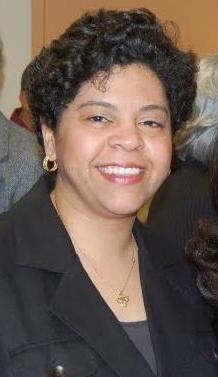
Author
Patricia Sobalvarro
Summary: Sister Patricia Sobalvarro shared a message from the heart and the spirit about the book of Exodus and how God longed for the Israelites to know him through a personal relationship. She emphasized how God provides a solution for every need and that being wise of heart means understanding that the way we manage our financial resources affects our relationship with the Lord. She encouraged the congregation to participate in cell groups and to prioritize their finances as part of thanking God for what He has done in their lives.
This sermon is about the importance of giving tithes and offerings to God. The speaker emphasizes that everything we have belongs to God, and giving is a way to thank Him for His blessings. He also points out that God is in control of our lives and is our provider. The speaker encourages us to trust in God and to be good stewards of our money. He reminds us that God doesn't need our money but wants our hearts. Finally, the speaker shares a story from Exodus about how the Israelites gave generously to build the Tabernacle, and he encourages us to do the same.
Brothers, we have something very special left now. Our sister Patricia Sobalvarro blessed us this morning with a beautiful message from the heart and the spirit and I told her "Look," the plan was not for her to preach in the afternoon, but I told her: "Patricia you have to share that message again ," and she, always well disposed, told me: "Okay, Pastor, that's how I'm going to do it".
How good that these new men and women preachers are developing! Glory to God.
This morning we also had the Crown Financial Ministry graduation. There are dozens of people who are receiving instruction on stewardship, how to use their money, their finances. We celebrate the graduation of thirty-odd... 34 people in those classes because we believe that God's blessing is for those specific things as well as our finances.
I know that Patricia has a word of encouragement and wisdom for us. So welcome and we bless you in the name of the Lord.
Patricia S.: My brothers, may God bless you on this precious afternoon. I thank God for cell groups because I think that was where, since we were younger, one goes there, develops, practices. I never forget that I had a group and the first time I was going to share a word I started crying and it was like, 'That's not a good sign' right?
So I thank God for those little groups and I also echo those words that many times accuse us of the large Churches of not having a community. Well, you know what? No excuses now, she's heard and she knows there's a group in every corner of this state. So I also encourage you to participate in the cells.
Well, my brothers, I'm going to do something because some of you were here in the first service. This afternoon I also want to be faithful with the use of time, but if you are one of the people who already knows the story of the book of Exodus, I am going to challenge you at this moment to ask God to give you discernment, to reveal something to you. new, a new thought, a new promise and if you have been in this Church for a short time or have little knowledge of the word, I also encourage you, I urge you to have an open mind and an open heart because what I am going to share is not a preach. I don't even like to say a preach, I feel that it is a word that God gave me in my life and I thank the Lord for allowing me to share it with you, so we are going to be reading from the book of Exodus chapter 35.
But let us pray to the Lord.
Father, in the name of Jesus we thank you, Father, for this banquet that you give us, Lord. We ask my God that you open our understanding. Father, may you reveal new things to us, Lord. Father, may it not be merely information that we are processing but may Your spirit connect with our spirits, Lord, and let us leave this place refreshed. With a new perspective on this uncertain world, Lord, and we entrust ourselves to you, Father.
In the name of Jesus, amen.
I didn't do this in the morning but I am going to, so the title of this thought is: 'May God allow us to be wise of heart.'
I was saying this morning that there are books in the Bible or passages or thoughts that bless you, of course, because it is the word of God; but there comes a time when you open the Bible and start reading and take out a commentary and listen to some beautiful preaching by Pastor Roberto and put two, three little things into perspective and you say 'Wow! This is good. This has really marked my life'.
And from the book of Exodus, I believe that in these times, it is doing this in my life. It's transformed me in the way that I think, it's doing things in my life in what is one of those areas that is so difficult to handle sometimes.
Many of us think that relationships or life situations are difficult and sometimes we have trouble presenting them to the Lord, but guess what? There is a topic, there is an issue that is even more difficult to control or surrender to the Lord and that has to do with finances.
And something very interesting about the Book of Exodus that we are going to see in the course of these minutes is that God has a word for all times and here there is a lot that we can learn from how such a small people, so poor, so traumatized to a certain extent: the Israelites who came out of Egypt; They could be a blessing and are still a blessing for our lives these days.
One of the most fascinating things that I have found about the book of Exodus is the main focus of this book which is: how God longed for the Israelites to know him through a personal relationship and that is what I want to teach or share with you. the present day. To see how it is that God is so intimately committed to you, to your needs, that He in advance - we must emphasize this - God already prepares a solution for that need that is in your life. Especially when that need has a spiritual principle.
So many of us already know the story, right? We know that God raises up a leader named Moses to free the Israelites from the oppression of the Egyptians. There comes a time in history when God speaks directly to Moses on Mount Sinai and says: "Look, I love my people so much" -and this is the way I'm processing it- that I want to dwell in their midst. They are not in the promised land. It's time but I want to get closer and dwell with them and I want a tabernacle to be built, a center of worship."
It wasn't because God was a self-centered God, He just longed to have those times with His people. Well, Moses comes and has to share this word with the people.
So we go then to Exodus Chapter 35, verse 4 and it says like this: 'Moses spoke to all the congregation of the children of Israel saying: "This is what the Lord has commanded. Take among yourselves an offering for the Lord, all generous of heart and the LORD will bring gold, silver, bronze, blue, purple, crimson, fine linen, goats' hair, rams' skins dyed red, badger's skins, acacia wood, oil for the light, spices for anointing oil and for the aromatic incense and onyx stones and setting stones for the ephod and for the pectoral”.
Why so much detail? Because this was not going to be just any tent or any tabernacle. This was to be a place where the divine presence of the Lord was to dwell.
And there are people who have studied this and say that the price of that tabernacle in terms of our economy today was more or less like 10 million dollars. Imagine a town that is in the desert and overnight Moses -their spiritual leader- comes and tells them: "We have to build a tabernacle that is going to cost 10 million dollars."
What do you think Moses' question was? 'Well, how are we going to raise this money? Where will these resources come from? What could Moses expect economically speaking, from an immigrant community that was released but practically fled because they wanted to kill them?
Speaking a little more about the tabernacle, in Chapters 35 and 36, that is where we are going to see where it comes from or how they were going to pay for this great need. And reading these passages, my brothers, this is where I ask the Holy Spirit to make that spiritual transaction in our hearts.
In these chapters we realize that if God allows a need to arise in his people, especially when he has a spiritual purpose, my brothers, He promises to give us a solution to this problem.
Let's read how Moses communicates the news to the Israelites. Well, we actually already did. He tells them: 'We are going to build and this is what we need.'
What happened in verse 10 of Chapter 35? And the Word says: "Every wise hearted among you will come and do all the things that Jehovah has commanded." And 20: "And all the Congregation of the children of Israel came out before Moses." OK? What's going on? Moses has this conversation: 'Our brothers come, listen to the sermon, they go home. He says: "Okay, honey, what do you think about this? Do we give, do we not?" In other words, what are the conversations that you think are taking place in this process?
They are assimilating the information that Moses tells them. What kind of conversations do you think took place in the families? Remember that the Israelites were a community that for many years lived as slaves. They were in poverty and were oppressed by Egyptians.
How do you think they are reacting to this huge challenge? Almost absurd, I would say, right? To ask that a tabernacle be built whose cost could be in the millions of dollars. Do you think these Israelites have something hidden out there? That maybe Moses knew that they had something?
I was saying this morning, do you think that these Israelites have a small account putting a little bit of money under the mattress or something like that? I mean sometimes when we read the Bible we don't take the information for granted. God's word is very logical and makes much, much sense.
Well, later we are going to see how God provides for that need.
How would you have reacted if you were in the midst of the community of Israelites and were asked to do so? Remember that no more than three months have passed since they left Egypt and are literally "in transit to" another point: the promised land.
Let's see what happens, then, in Exodus in that same chapter in verse 21.
And it says like this: "And every man came to whom his heart stirred and everyone to whom his spirit gave will with offerings to Jehovah for the work of the tabernacle of meeting and for all its work and for the sacred garments. Thus came men like women, all the willing of heart and brought chains and earrings and rings and bracelets and all kinds of gold jewelry. And they all presented an offering of gold to the Lord. Every man who had blue, purple, scarlet and fine linen, goats' hair, She brought rams skins dyed red or badger skins, and everyone who offered an offering of silver or bronze brought the offering to the Lord, and everyone who had acacia wood brought it for all the work of service, and all the women. wise of heart they spun with their hands and brought what they had spun: blue, purple, crimson or fine linen."
What a relief! Glory to God, right? You can imagine the happiness of Moses to say: 'Father, thank you because your people listened.'
There is no doubt, my brothers, there is no doubt that in this period of the life of the Israelites there was much gratitude in their hearts. I imagine myself; for having come out of a place where they were being oppressed and yes, perhaps never in their life before had they had gold or silver or all these beautiful things.
But I imagine that the time came when they put this up, right? or they took something and, "Lord, this is nothing compared to all that You are going to give me. If this is the only way for me to show my love and gratitude for saving my life, of course I will!" I'm going to do!"
What a beautiful lesson, my brothers!
If we in the 21st century with 41K accounts, accounts in the Cayman Islands, if we were a little generous like these Israelites, I think our lives and our finances would be less complicated.
Now my question is what does it mean to be wise of heart?
I thought about this phrase a lot and the best way I can describe it is: using some of that same biblical knowledge that we have learned through Crown's finance classes. And I believe that being wise of heart means understanding that the way we manage our financial resources affects our relationship with the Lord. Using the words of the Lord Jesus, we can say it this way: "Well, if you were not faithful in unjust riches, who will trust you with what is true?" Luke 16:11 and that may be a quote for another day.
I think we have learned that the way each one of us makes these economic decisions shows our principles, our values, and there is a little thing here that is not going to let me lie, I can be a deaconess, I can teach but If this booklet, my checkbook says other things about how I manage my money, how I manage my time, what my priorities are, I think I'm going to be in trouble and a discrepancy.
A sister in the morning said that in order for me to minister outside -and this is not critical my brothers, this is a word that I am applying in my life-, I first have to put my house in order and it is a very profound principle . And I say this with great respect because it is something that cannot be achieved as they say "overnight".
God is calling the Lion of Judah Congregation to experience that holiness and that does not mean only in the emotional area or in the spiritual area, I believe it has to do with finances.
This church has a redemptive call not for a person or a group, but God expects us and it is time, my brothers, that we stop... or rather it is time that we understand that bringing our tithes and our offerings is not an obligation, we are not complying with a mandate, it is not a law. It is part of simply thanking the Lord for what He has done in our lives.
Never come in and put down a dollar because you feel manipulated or feel like it's the way to do it. Because, my brothers, God saves and I do not believe that this is given but you have to recognize that at the moment that you are putting that offering, that tithe, that gift you are doing it because you believe that it is a small way of telling God thanks'. Thank you for life, thank you for what you give me. I recognize that what I have I do not have on my own merits, it is You who gives it to me and it is a small part of my gratitude to you.
I believe that the Israelites were very intelligent or were wise of heart to understand that when it comes to finances God has a part and we have another part. First of all, there are three little things that I think they realized.
The first, I think I just said: Everything or absolutely everything we have belongs to God: my abilities, intelligence, my car, my house, my brothers, there is nothing that is mine, it does not exist.
I believe that the Christian should start using another language and stop saying, "What am I going to do with my money today?" No, "Sir, what do you want me to do with your money?" "Lord, what do you want you to do with this property that you have placed on me?" "Lord, what do you want me to do with these gifts that you have given me?" And when we come to understand that God owns everything, our perspective on money changes.
Money is simply a tool that God uses to shape our character and draw us closer to Him.
The second point that I think the Israelites kept in mind is that they realized that God was, is, and will always be in control of their existence. There was nothing that was surprising to the Lord. There was nothing that they thought could happen just like that, because the presence of God was undoubtedly in their midst.
My brothers, there is no news that CNN or Wall Street can report that surprises God. I want to let you know that despite the economic crises, despite the migratory crises, things are supposedly getting more and more difficult. Despite the bad news we hear, my brothers, there is nothing that surprises the Lord. Do you think this is new for the Lord? Of course not.
But in the process we have to learn that if I am going to be part of that difference, if I am really going to be part of that supernatural people, I have to understand that it is God who is in control, not me. It's nothing I can do.
And finally, my brothers, regarding the attributes of the Lord, the Israelite people were very clear that God was their provider. There are over 250 different names, many of which we prophesied this morning by the way. There are many ways that we can talk about God and it is precious to know that the name Jehovah Giré, which means "The Lord provides", was the way that God wanted to manifest himself before this Israelite people and they knew that.
How can you not believe that if I have needs today, God can get me out of trouble? Of course not, I mean, some of us may be going through difficult situations. It is easier to say when we have our job or when we know what to see in a house but, my brothers, situations do not arise, how then am I going to know that my God that I come and praise every Sunday is a real God? It's nice to come to worship the Lord on a Sunday, but what happens on a Tuesday night when you run out of money to put gas in your car? Even in those situations God can glorify himself and wants to glorify himself.
The problems are as the Pastor says: 'platforms for God to teach you' that He is in control, that He is your provider, that if He allows situations it is to mold our character, to take us to new places.
My brothers, we cannot put all the responsibility on the Lord either. We cannot expect that 'Well, Lord, I have been in the church for 25 years. Oh! Please help'. No, my brothers. Our duty is also to realize that there are two economies: the world's and the Lord's.
It is incredible to know that almost 43% of people who bought houses before this crisis, nobody put a downpayment. 43% percent of thousands of thousands of thousands of thousands of thousands of people. Why is there so much debt!
We know, my brothers, that God expects something more from us. We cannot continue spending uncontrollably as we are the owners of the money. We cannot say: 'No, I am not going to save because I do not belong to this country.' My brothers, God has plans for your life. Maybe God is giving life to a ministry in your spirit right now, maybe God is waiting for you to do something but because sometimes we are so chained with our finances, it does not allow us to get to the other point.
My brothers, it is time for us to leave the economy of this world and focus on the economy of the Lord. Recognize that He expects me to be a steward not only of 10 percent but 100 percent of what He put in your hands, my brothers. He expects us to start changing our mindset. He doesn't need anybody's money, He doesn't need this building, He doesn't need anybody doing things. He just wants your heart. He wants you and I to recognize, my brothers, that if we are in this place it is because He died on the cross one day to give me life and life in abundance.
The desire of my heart in all these days has been that God transforms our interior, that God makes a spiritual transaction, that he molds us, that the Lord may stir up our hearts, that we may be able to understand that is not about giving a percentage it's saying 'God, everything that I've got belongs to you, nothing that I have stays here because I'll die'.
Everything I have, Lord, I want You to give it life. That's why I give you my money, I give you my education, I give you my gifts. I still give you what I don't have, Lord, because I want you to bless it. Lord, on this day I ask my God that our Church, the León de Judá Congregation, understands that when the Pastor asks that they bring offerings and tithes, it is not because we want to manipulate or remove something.
My brothers, it's an opportunity to worship the Lord, it's an opportunity to say 'God I love you' and you know what? It doesn't matter if you have one dollar or one hundred dollars. This is what the Lord wants to see: how you come before the presence of the Lord.
My brothers, let's not be afraid. Don't be afraid when the Lord asks you to be generous because he already has a solution. I didn't get to read this but... in the Book of Exodus in chapter 3, God many years before the people go through this whole transition of being oppressed, God had told Abraham that his offspring were going into captivity , but He was still going to use the possessions of the Egyptians and His people were going to come out with their hands full.
All the gold and all the silver that was in Egypt was to belong to the Israelites. Imagine that! It's like I think that the same immigration agents would tell the immigrants: 'Don't go, don't go, come, stay, I'm going to give you this. Please, we need you.'
That was a promise that God made to Abraham and later he reconfirmed it to Moses and that is why it was my brothers, that in chapter 36, and with this I am ending, look how God works in our lives when we give to God from the depths of our hearts.
And it says like this: "And they took from before Moses all the offering that the children of Israel had brought for the work of the service of the Sanctuary in order to do it and they kept bringing him voluntary offerings every morning. So much so that all the teachers who did all the work came. the work of the Sanctuary, each one of the work that he was doing and they spoke to Moses saying, 'The people bring much more than is needed for the work that Jehovah has commanded to be done.'"
Brothers, did you hear that? A people who crossed a desert, a people who were oppressed in a miraculous way were able to bring beyond what was necessary to build this tabernacle. Only a God who provides, only a God who is in control, only a great God can do these miracles, my brothers.
And that God of the Old Testament is the same God who dwells in our lives. It is that same God who tells you: 'Do not be afraid.' Even though you may not have a job, allow me to continue molding your character, allow me to continue letting you know that I am your God, your Father.
My brothers: Do not be afraid when the Lord asks you to be generous, because the Lord already has that way. He simply expects you to walk with him and experience it in a different way.
May the Lord have mercy on us and allow us to understand the sweet and sublime blessing that is to say to him: 'Father, do you know what? Maybe today I didn't have much money, maybe this week I only had two houses to clean and not three; maybe I couldn't buy all the milk I wanted but I made sure to set aside my 5 bucks to say 'I love you, Lord.'
And let that be the attitude that marks this church, my brothers.
God bless us!