The Secret of a Life of Prayer—spending Long Hours Alone with God
Evening, morning, and at noon, I will cry out in distress. He will hear my voice. — Psalms 55:17
And shall not God avenge his own elect, which cry day and night unto him, though he bear long with them? — Luke 18:7
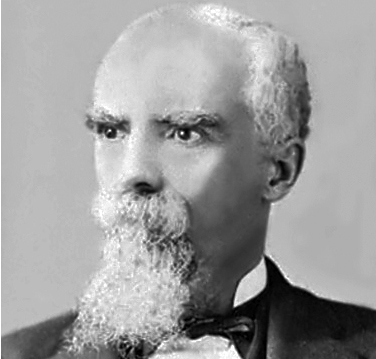
Author
E. M. Bounds
Summary: Although brief prayer has its place, effective prayer springs from prolonged and constant communion with God. We do not come to know him through hurried visits, but by persevering alone with him in faith and fervor. Christ is our model: he regularly spent long periods, even entire nights, in prayer; likewise, the biblical saints and numerous believers made prayer a daily priority. Its value is not measured mechanically by the clock, but devoting time to it reveals the depth of our faith. We must therefore reserve our best hours for seeking God, meditating, and interceding, rather than relegating this essential occupation to leftover moments or times dominated by weariness.
Although many private prayers, by their very nature, must be short; although public prayer, as a rule, should be concise; although brief prayer has its value and place, nevertheless, in our private communion with God, time is of essential value. Much time spent with God is the secret of effective prayer. Prayer that becomes a mighty force is the direct or indirect product of long hours spent with God. Our short prayers owe their reach and effectiveness to the extended prayers that have preceded them. A short prayer cannot be effective if the person offering it has not wrestled continually with God. Jacob's victory of faith would not have taken place without that all-night struggle. Knowledge of God is not acquired through brief and unexpected visits.
God does not pour out his gifts upon those who come to see him casually or in haste. Constant communion with God is the secret to knowing him and having influence with him. The Lord yields to the persistence of a faith that knows him. He bestows his richest blessings upon those who demonstrate their desire for and esteem of these gifts through both the constancy and the fervor of their importunity. Christ, who in this as in everything is our Model, spent entire nights in prayer. It was his custom to pray much. He had a customary place of prayer. Long periods of prayer shaped his life and character. Paul prayed day and night. Daniel, amid important duties, prayed three times a day. David's prayers in the morning, at noon, and at night were undoubtedly very lengthy on many occasions. Although we do not know exactly how much time these saints of the Bible spent in prayer, we have indications that they devoted a good portion of it to prayer and that, on some occasions, it was their custom to consecrate long periods of the morning to it.
We do not want this to be taken to mean that the value of prayers should be measured by the clock; rather, we wish to emphasize the need to spend a long time alone with God. If our faith has not produced this distinguishing mark, it is because it is a weak and superficial faith.
The men whose character has resembled Christ's and who have impressed the world with him have been those who spent so much time with God that this habit became a notable characteristic of their lives. Charles Simeon devoted the hours from four to eight in the morning to God. Mr. Wesley spent two hours a day in prayer. He began at four in the morning. A person who knew him well wrote: "He regarded prayer as his most important occupation, and he could be seen emerging after his devotions with a serenity on his face that almost glowed." John Fletcher moistened the walls of his room with the breath of his prayers. Sometimes he prayed all night; always, frequently, with great fervor. His entire life was a life of prayer. "I will not rise from my seat," he would say, "without lifting my heart to God." His greeting to a friend was always: "Do I find you praying?"
Luther's experience was this: "If I fail to spend two hours in prayer each morning, the enemy gains the victory during the day. I have many matters that I cannot dispatch without spending three hours a day in prayer." His motto was: "He who has prayed well has studied well."
The Reverend Leighton was accustomed to spending so much time alone with God that he always seemed to be in perpetual meditation. "Prayer and praise constituted his occupation and his pleasure," says his biographer.
The Reverend Ken spent so much time with God that it was said that his soul was in love with the Lord. He was in the presence of the Most High before the clock struck three in the morning. The Reverend Asbury put it this way: "As often as possible, I endeavor to rise at four in the morning and spend two hours in prayer and meditation."
Samuel Rutherford, whose piety still spreads its fragrance, rose before dawn to commune with God in prayer. Joseph Alleine left his bed at four in the morning to devote himself to prayer until eight. If he heard that some craftsmen had begun working before he arose, he would exclaim: "How ashamed I am! Does my Master not deserve more than theirs?" He who is well acquainted with this kind of activity has the inexhaustible bank of heaven at his disposal. One of the most pious and illustrious Scottish preachers said: "My duty is to spend the best hours in communion with God. I cannot relegate the noblest and most profitable matter to a corner. I use the first hours of the morning, from six to eight, because there are no interruptions during them. The best time, the hour after afternoon tea, I solemnly dedicate to God. I do not neglect the good habit of praying before going to bed, but I take care that sleep does not overcome me. When I awake in the night, I must get up and pray. After breakfast, I devote a few moments to intercession." This was the prayer plan followed by Robert McCheyne.
The famous Methodist prayer league puts us to shame: "From five to six in the morning and from five to six in the evening, private prayer." John Welch, the holy and wonderful Scottish preacher, considered the day poorly spent if he had not devoted eight or ten hours of it to prayer. He had a dressing gown in which to wrap himself at night when he arose to pray. When his wife lamented finding him on the floor weeping, he replied: "Oh, woman, I must answer for three thousand souls, and I do not know what is happening in many of them!"