The Second Coming of Christ—the Lord Is Not Slow
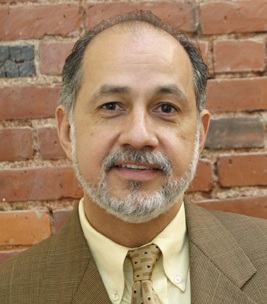
Author
Dr. Roberto Miranda
Summary: The second coming of Christ is a fundamental doctrine that we must know, remember, and live by. Although the Old Testament prophets did not fully understand the sequence of what had been revealed, they foretold the Messiah and the events of the end times; the New Testament enables us to understand them more clearly. The apparent delay does not invalidate the promise: God is not bound by our measure of time and waits patiently so that more people may attain salvation. Nevertheless, Christ will come unexpectedly, like a thief in the night. Then the heavens, the earth, and human works will be dissolved, but believers await new heavens and a new earth where righteousness dwells. This hope should produce joy, steadfastness, and a holy life—not speculation or attachment to the world. Since everything material will pass away, we must set our priorities in order, invest in the Kingdom, proclaim the Gospel, and dedicate our time, money, profession, and talents to God. We cannot settle for a superficial faith: we must take a stand, grow in grace, remain without blemish, and make our peace with Christ, receiving him as Lord and Savior.
Three Sundays ago I touched on the subject that “The Lord is near.” This subject of the nearness of the coming of the Lord Jesus Christ is very important, very urgent. The Second Coming is a fundamental doctrine of the Church of the Lord Jesus Christ, and we have to know what the fundamental elements that make up that doctrine of the Second Coming are.
You will remember that my meditation arose from a sermon I preached before that one concerning Paul’s call to the Church to rejoice. Paul says, “Again I say: rejoice. The Lord is near,” right? So, in the mind of the apostle Paul, there is a connection between that rejoicing which we should feel as a distinguishing feature of our lives as Christians and the coming of the Lord.
And the fact is that, when you know that Christ is coming and that this world, with all its difficulties, suffering, and pain, will pass away; when we know that this world is relative, that it does not have the power men ascribe to it to make us happy or unhappy, but that our happiness depends on something else—it depends on God; when we know that one day all this will end, that should be a reason for us to rejoice, to know that there is something much better: a land where, it says, there will be no weeping, no sickness, no sorrow, no poverty, no injustice, as we declared earlier this morning. That should make us rejoice; it should enable us to adopt that posture of joy to which the apostle Paul calls us.
And that is why there is a connection between rejoicing and “The Lord is near.” It is a doctrine that we must always keep close to our hearts, because that way we do not fall in love with the world, with this Earth. The Lord says that friendship with the world is enmity with God. Life invites us to adopt a posture of not becoming too attached to anything in this world, to live lightly as we walk upon the Earth, because the Word says that we are pilgrims and strangers; we are just passing through, amen?
And knowing that helps us maintain the posture God wants us to have: knowing that one day everything will pass away and that another time will come, the eternity God has destined for His children. And in that sermon we took time to read and study Daniel chapter 7, as you will remember. As I was saying, there are many texts in the Bible that speak about the Second Coming of Jesus Christ. And I told you that we should remember that the doctrine of Jesus’ Second Coming is not something that appears only in the New Testament, but that, since ancient times, the prophets in the Old Testament had repeatedly spoken about the Second Coming of Jesus.
Now, they spoke about the coming of the Messiah because, remember, when these prophets received these revelations, they did not have a completely clear, down-to-the-last-detail understanding of what they were about. They saw certain things, but they did not understand. They knew, for example, that there was a doctrine about the Messiah who was to come; that much they did know. But they did not know that His name would be Jesus, for example, nor did they clearly understand that this messianic being would be God and man. They did not clearly understand that He would die on a cross, that He would rise again on the third day, that He would ascend into heaven, and that He would return once more in a Second Coming.
They saw things the way you might watch a movie with no sound: seeing images and trying to describe them and make sense of them. You are simply reporting what you see, but you do not understand the chronology; you do not see how one event links to another. So these men of God, these prophets, wrote down and reported what they saw, but they did not clearly understand what the sequence of all these things was. Haggai said one thing; Zechariah wrote a short book about the events of the last days, the vindication of the temple. Isaiah recorded many things about the Second Coming. Joel spoke about that great visitation of the Spirit of God, and that the male and female servants would prophesy, the young would see visions, the old would dream dreams, and so on.
Then Daniel wrote a great deal about the Antichrist and the war of the nations, the restoration of the people of God—all these things—but they did not know what the sequence among all of it was. But what is important is that we understand this: what we call the Second Coming, which we understand more fully through the lens of the New Testament, the Word of Jesus, and the words of the other apostles—we understand more than the Old Testament prophets understood. But it is good to know that this had already been foretold, already established beforehand in the Old Testament.
I encourage you to study those prophecies because I believe that many of the errors evangelicals are making today concerning Israel, the Palestinians, the new temple, the division of Jerusalem, and all of this—many doctrines that, in my opinion, are erroneous regarding Israel and Jerusalem—are due to a lack of knowledge of the prophetic books and what the prophecies say about the last days, about Israel, the construction of a new temple, Jerusalem and the role it will play, and all these things. It is important to know the prophetic writings in order to understand how we should relate to these times.
So I took the time to elaborate a little on the words of Daniel, which constitute one of the great prophecies about the last days. And over the next few days we will be reviewing different prophetic texts, both in the Old Testament and in the New Testament, that refer to this great doctrine. What I want to do is to comb through all these teachings, drawing out the essence of each one and what each cumulatively adds to the overall knowledge of this doctrine. I will be studying different texts and commenting on them, while emphasizing some key, recurring elements that arise in these different teachings.
So it will be like an exegesis—or rather, an inductive study—of these great texts of the Bible that speak to us about the Second Coming of the Lord. And I want to invite you now—because I do not have time right now—to go online to the “Sermons” section of our website. The title is “The Lord Is Near.” Listen to it so that you can follow the continuity of my teaching. We will now turn to another very short text, but one with a lot of meat concerning the Second Coming, found in Second Peter, the second epistle of the apostle Peter, chapter 3.
Peter is not necessarily known as an apocalyptic writer, because his teaching was directed more toward the Church in his own time, when it was under persecution as he wrote, and his letters were meant to encourage the Church and urge them to remain steadfast under persecution. But at one point, in chapter 13 of Second Peter, he also writes some things that we would do well to keep in mind and that help us fill in a few more of those gaps in our knowledge concerning the Second Coming of the Lord Jesus Christ.
So in Second Peter chapter 3 it says: “Beloved, this is the second letter I am writing to you, and in both of them I stir up your pure understanding by way of exhortation, so that you may remember the words previously spoken by the holy prophets.” Notice there again what I was telling you: the Second Coming is not a new subject for the New Testament Church. The prophets had already spoken about it, and the Jews were very aware that the Messiah was coming. They did not understand that this Messiah was Jesus, but they did know that there were prophecies concerning that millennial time, that apocalyptic, eschatological time—whatever you want to call it—of the last days.
Then he says: “Remember the words that were spoken by the holy prophets.” Another very important thing you will hear me repeat continually in these studies is that we must remember these things. We have to know them; we have to study them; we have to understand them. If we do not study the prophecies, if we do not study the doctrines concerning the Second Coming and the last days, we will not know how to truly conduct ourselves in life according to the Word of God.
The study of prophecy and the Church’s knowledge of the last days is not a luxury; it is a very important necessity. So Peter says: “Brothers, I want to stir up your sound understanding by way of exhortation” so that you will remember, keep these things in mind, study them, and pay attention to the words previously spoken by the holy prophets. “And the commandment of the Lord and Savior given through your apostles, knowing this first: that in the last days scoffers will come, walking according to their own lusts and saying, ‘Where is the promise of His coming?’”—that is, His Second Coming—“because from the day the fathers fell asleep, all things have continued just as they were from the beginning of creation.”
One very important thing: when the Bible speaks of the last days, when it speaks of the end times, the latter days, it is referring precisely to that final era, the time close to the Second Coming of Jesus. It is referring to a period that could be years or could be weeks, but I believe that the last days, the latter times, are quite a long period. It is an era in which humanity and creation itself would be drawing near, and there would be a sense of expectation among men. Nature itself would indicate that something was happening, like a woman’s womb before she gives birth, when it begins to move and convulse and to have pulsations and discharges; so it would be as well.
It says that in the last days there will be a great—something will happen in those times. That, then, is what is meant by the last days. It says, “Scoffers will come according to their own lusts.” Look up Jude verse 18, if you would like. This is a little bonus I am going to give you here, because this was not in my plan. Jude verse 18, because this is interesting. Why do I say Jude verse 18 rather than Jude chapter such-and-such, verse 18? How many chapters does Jude have—for those who know—just one? There is another little bonus for you. The Book of Jude has only one chapter, and, incidentally, it was not Judas Iscariot who wrote this. Jude, the brother of the Lord, was another apostle named Judas.
Jude verse 18 says: “But you, beloved, remember the words previously spoken by the apostles of our Lord Jesus Christ, who told you that in the last time there would be scoffers who would walk according to their ungodly desires.” These are the ones who cause divisions, sensual people who do not have the Spirit. “But you, beloved, building yourselves up on your most holy faith, praying in the Holy Spirit, keep yourselves in the love of God, waiting for the mercy of our Lord Jesus Christ unto eternal life.”
One of the things it says—there is also another passage that speaks about this—is that in the last days people will have itching ears and will heap up teachers willing to teach us according to their lusts. People will have a hunger, a desire to hear about God. And nowadays, for example, there is a great hunger; the number of religions in the world today is incredible. There is one for every color and every taste. And if there is not a doctrine you like, someone will come along very soon to invent it; perhaps you will even invent it yourself.
The number of variations among different religions today is incredible—subtle versions of the same thing. And anyone who does not like a doctrine comes here to Lion of Judah, we teach something, they do not like it, and they go right around the corner, where there is another church, another little stand that will teach them something else according to what they want. And it says that in the last days there would be many people questioning, scoffers, people who would not love their parents, traitors; humanity’s character would degenerate tremendously. That is what we are seeing in this time.
But here, in Second Peter 3, Peter says that one of the characteristics of that final generation is that many people, walking according to their own lusts, would say: “Hey, what is this about the promise of Christ’s Second Coming? That is foolishness; that is a lie, because they have been telling us for a long time that Christ is coming, and everything remains exactly the same.” Haven’t you heard that going around? For 2,000 years evangelicals have been saying that Christ is coming, and He still has not shown up.
Let us eat and drink, for tomorrow we die. Let us forget about that; let us go on living; let us enjoy life. Forget that doctrine. How many of us ourselves have sometimes doubted in our hearts? Wow, could it really be true that Christ is coming? It has been so long. I remember when Yiye Ávila used to say that Christ was going to come on such-and-such a date—or not on a specific date, but that He was indeed coming very soon—when so-and-so set a date. Many people out there say, “Ah, that is nonsense; it is something people made up.” Prophetically, the apostle Peter says: that will be one of the characteristics of humanity in the last days—that people will say, “But so much time has already passed, and Christ has not come.”
Notice another interesting thing here, which is another of those points on which I will insist a great deal, and it is this: in the Bible there are what seem to be two contradictory messages, but in reality they complement each other, and I already suggested this the last time I spoke with you. It is this: on the one hand, the Bible often says, “The Lord is near,” as Paul says in Philippians. The Lord is near; the Lord is coming; His coming is at the door. Christ said that this generation would not pass away before the Son of Man comes.
And yet there is also another voice in the Bible that says: do not get ahead of yourselves too much; take it easy. There is still time; this is not going to happen immediately. Wait—there are signs you must watch for so that you can be sure. The Bible was not mistaken when it said that the Lord is near. What it was saying is: look, the Lord can come at any moment; be prepared. His coming is much closer than it was before the Messiah came. And when Christ came to Earth, died on the cross, and set the plan of salvation in motion, humanity was definitely given a tremendous push toward the Second Coming, because that whole plan—that part the prophets had been waiting thousands of years for, that the Messiah would come—had come to pass, and suddenly God’s plan was entering a more intense stage of fulfillment.
I believe that this partly explains this sense that the Lord is at the door, that the Lord is near. Because it did feel like, wow, something great has happened and the Lord is drawing near. But there was also an awareness that it could take a long time. So we see that here when Peter says: in the last days there will be people who will say, “Hey, what is this? We have been hearing the same nonsense for a long time—that Jesus is coming soon—and where is He?” Ever since the fathers fell asleep, since the days of Abraham, Isaac, and Jacob, people have already been talking about that.
Now look at the beauty of this. In verse 5 it says: “These cynical scoffers deliberately ignore”—in other words, because they feel like it, because they want to ignore it, because it suits them to ignore it—“that long ago the heavens were made by the Word of God, and the earth as well.” What does “long ago” mean? Well, creation, the time of creation. Long ago, God created the heavens and the earth, as Genesis chapter 1 says. “The earth was formed out of water and subsists by water.” It says that the earth “was formed out of water and subsists by water.”
You know what? I did not have time to research that, but I know from things I have read before that when Peter says that, he is stating an incredible scientific truth. Do you know, for example, what percentage of the world—of the Earth—is water? Who can tell me? Seventy-five percent; three quarters of the Earth is water. Only 25 percent of the terrestrial globe—wow, if you want to impress someone, say “the terrestrial globe” and you will see how right away they go, “Wooo!” (laughter). The Earth—I got stuck on “globe” and said, “How do I finish it?” “Terrestrial.” It is a real expression; in fact, it is in the dictionary. Another little bonus for you there.
So three quarters of the Earth is water, and only 25 percent is land. Here is another interesting thing: did you know that the human body—you—are made mostly of water? That is the truth, so be careful; do not get too close to the fire, because you will melt and dry out. But I am not going to exaggerate: we are about 70 percent water or more. Not only that, but hydrogen and oxygen, which are the two components of water, also make up a large part of the Earth, both among the elements that compose it and in the air, the atmosphere. So the components of water are everywhere, in the very fabric of creation and matter.
So Peter, a first-century Jewish Bedouin, is saying something scientists have only come to confirm in recent decades: that the fabric, the makeup of creation is mostly water, in one sense of the word or another, right? So Peter says: “Long ago, the heavens were made by the Word, and also the earth, which was formed out of water and subsists by water.” Of course, because without water, forget it—there is nothing, you know?
Here is another little bonus. What are scientists looking for on Mars, for example? They have already abandoned Mars as a possible place where life might exist, but what they look for in the universe as evidence that there is life, or that life is possible, is water. Water. They say that if there is water, there is the possibility of life. They have not found it yet, but these stubborn people keep looking anyway, to see whether they can find a Martian out there or someone somewhere. There is an entire branch of science that studies the possibility of life elsewhere. But what they always look for is some indication of water. If there is water, they say, there is life.
All right, then it says: “And subsists by water, through which the world that then existed perished, being flooded with water.” When did the world perish, flooded with water? In the days of Noah, isn’t that right? It is as though God, in an ironic twist, destroyed the world by using the world’s fundamental element. The world is made of water; I am going to destroy it with water. And He flooded the world and destroyed it with water. “But the heavens and the earth that now exist”—in the twenty-first century—“are reserved by the same Word, being kept”—for what?—“for fire.”
Oh, glory to God, I am not going to die full of water, but I am going to be burned to death. Thank You, Lord; how merciful You are. No. The point is that it says that when God destroys the earth, He will do it not with water but with fire. Do you remember the rainbow that appeared when Noah and his family had already—when the water had receded a little—a rainbow? What does the rainbow mean? A promise of peace and that God would no longer destroy the earth with water. So whenever you see a rainbow, remember the origin of the rainbow.
The rainbow is the most beautiful and mysterious thing in the universe. Scientists can explain it through the refraction of light by moisture—which is also interesting, because it is the water in the air that breaks up the light and separates it into its components, its colors—but it is the same thing, right? It is an exceedingly beautiful sign from God. Listen, who can see a rainbow and not smile? The rainbow is the most childlike, beautiful, and promising thing there is. Even if you did not know the origin of the rainbow, you would see a rainbow and say, “How beautiful!”
What artist could have dreamed up something as incredible as a rainbow? Nowadays other groups have taken the rainbow and tried to pervert it, because the devil is ironic, you know? He is cynical. May the Lord rebuke him; he is evil. Did you know that the devil is evil, brothers and sisters? He takes something so beautiful from God and seeks to pervert it and ruin it by turning it into a symbol of something else.
But the point is that the rainbow was as though God took a paintbrush and went “whoosh!” just like that—His signature, a rainbow saying: “You know what? I am never going to destroy the earth with water again. I am calm; My wrath has subsided. Water will no longer be what destroys the earth.” But the Earth will indeed be destroyed. How many of you know that everything we have—that chair you are sitting on, the mountains, the atmosphere, the Museum of Fine Arts here in Boston, the great symphony halls, all the creations of humanity—will all burn, and nothing will be left, so that new heavens and a new earth may take their place?
One day everything will disappear, brothers and sisters. Everything will burn and blaze with an energy far more powerful than nuclear energy, and it says that everything will melt. God will return creation to its constituent elements and dissolve it all in order to replace it with a perfect, brand-new heaven and a brand-new earth as well, uncontaminated by human wickedness—human wickedness, the Fall. That is coming; get ready! Listen, doesn’t that fill you with joy? Doesn’t it make you want to rub your hands together and say, “Wow, glory to God, that is coming”? It is a promise from the Lord, hallelujah.
Then it says: “The heavens and the earth that now exist are reserved by the Word.” Notice the tone of authority. Peter is not speculating here. He has received a revelation and is speaking with apostolic authority. “Kept for fire on the day of judgment and the destruction of ungodly men.” Underline “ungodly.” If you are ungodly, be afraid; if you are not ungodly, rejoice, because that is not meant for you. We are destined for salvation, not for wrath; we have to understand that.
Those who must tremble at and fear the Second Coming are the ones who have not made their peace with Christ Jesus: the rebels, those who are rejecting Him as the Son of God and the Savior of humanity, the headstrong, the stubborn, the scoffers. Judgment is for them, not for us, okay?
So yes, as the end of the age draws near, a day will come when creation will be melted down, dissolved, and replaced with new heavens and a new earth. Now you may be wondering, “And where will we be?” We will be with Christ. I do not have the exact address, so please do not ask me, but we will not be here when that happens. Nor are we entirely clear about it, but it appears that the Earth will indeed be inhabited, brothers and sisters; listen carefully. There is some uncertainty as to whether we will be in heaven or on earth. I do not know; perhaps there will be something like a bridge between the two. We will do something like Star Trek: we will go down there, be up above, and travel from one to the other without any problem. But the point is that God will create new heavens and a new earth, and I do not care where we will be, as long as I am not down there.
Okay, verse 8 says: “But, beloved, do not ignore this.” Listen, he takes up the subject of the delay once again: “Do not ignore this: with the Lord one day is like a thousand years, and a thousand years like one day.” In other words, it is possible that, for the Lord, these two thousand years since Christ came are like two days to Him. The Lord does not understand time or space as we do. Scientists can tell you clearly, especially through the theory of relativity, parallel universes, and all these things, that, look, time and space are constructs of human intelligence. We use them as categories that make it easier for us to refer to things, converse, and understand this reality we inhabit.
But in reality, time does not exist for God, and the deeper science goes and the further it delves into the study of physics and other things, the more it realizes that time and chronology are things whose nature we do not clearly understand. Much less is God bound by them. God inhabits an eternal present. To Him, today is tomorrow, tomorrow is today, a hundred years is right now, and a thousand years is like nothing. We have been here for two thousand years, biting our fingernails; the Lord is up there—He blinked and two thousand years had already passed. Time does not exist for Him; He can afford to take His time.
That is why we have to be careful. We are here saying, “Oh, Obama won, and now we are going to kill ourselves; we are going to shoot ourselves.” What are four more years to Him, during which He can do whatever He pleases? You never know, right? So God is an incredible artist and strategist. He sets His pieces in place, and He is in no hurry. He does not become anxious; He is not insecure. He knows how the novel ends because He wrote it, okay?
So to Him one year is like a thousand years, and a thousand years to Him are like a single day. That is why we are the ones who look and say, “Oh, two thousand years,” while from God’s perspective it is two days—and not even that, but a second. You see movies that deal with this, in which something that seemed to take a long time was actually one second, or something like that. The fact is that humanity is understanding this more and more. Science is allowing people to understand the nature of time and eternity and all these things. The problem is that they are stubborn and refuse to give in.
But Peter says: do not worry. Although all that time has passed, to the Lord it is like nothing. We are the ones who worry and say that a great deal of time has passed. God is in no hurry. Now look, he continues here, and look how beautiful this is. It says: “The Lord does not delay His promise.”
Brothers and sisters, it is not as though the Lord forgot and was having a cup of coffee, stopped looking at the clock, and now suddenly realizes, “Oh! Oops, two thousand years! Oops! Forgive Me,” and then He is going to—no. The Lord does not delay His promise. It says, so beautifully: “But is patient toward us, not wanting anyone to perish.” What is the Lord giving? He is giving an opportunity for the greatest possible number of people to come to the knowledge of the Lord Jesus Christ, for this rebellious race to awaken to the fact that He is the Lord and the King, to humble themselves before Him, and for more people to enter the ways of the Lord.
That is what God wants: for the Church to get moving, proclaim the Gospel, preach it, and spur people on so that many souls may come to know Jesus. He wants us to cry out to the Lord, “Come.” The Lord holds back the fulfillment of His promise not because He has fallen behind, but because He deliberately restrains His wrath and holds back the destruction of time, matter, and history so that the greatest possible number of people may come to know Jesus. He has a plan, and that plan must be fulfilled.
So Peter says that this is what explains the Lord’s apparent delay. It is not that the promise is untrue, but that God has a merciful and patient plan and purpose. It says: “But the day of the Lord will indeed come like a thief in the night.” And that expression, “like a thief in the night”—who had used it before Peter? Jesus Christ had used it. And later we will look at these passages. For example, that expression also appears in Matthew 24 and in Luke chapter 12. Later we will spend some time specifically on those passages that speak about the coming of the Lord.
How does a thief come—by writing you an email saying, “Get ready, because tomorrow at midnight I’m going to break into your house and take your television”? (laughs). No, the thief arrives unannounced; in fact, that is his modus operandi: surprise. When you are not expecting him, when you are having dinner with your wife at a restaurant, that is when the thief carries out his operation. You do not expect him; the thief is counting on you not expecting him. And it says that this is how the Lord will come. It says that they will be eating and drinking. They will be saying, “We got away with it.” There will be all kinds of peace treaties, and it will seem as though the world has finally...
I believe the Lord will come when it seems least likely that He will come. When humanity believes that it no longer needs God. That science has already replaced God, that everything has already been worked out—that is the moment when the Lord will appear. We will look at that later. One quality, one distinctive feature of the Second Coming, is this: He will come when people do not expect Him. And that is why He tells the Church, “Be prepared.”
Remember the famous parable of the foolish virgins and the wise virgins. The foolish, silly, senseless virgins did not prepare oil for their lamps, and the bridegroom arrived suddenly, unexpectedly, and they were not prepared. Remember the other passage where the Lord says: Do not be like the servant who, when his lord goes away, begins beating the other servants and behaving badly because, ah, he is gone; then the lord comes back—ah, I forgot something—finds him behaving badly, throws him in prison, and has him flogged. He says: You behave yourselves.
You know, one of the things it says about the Second Coming is precisely that. There are implications for how we ought to behave and conduct ourselves in life in light of Christ’s Second Coming. That is very important. The Second Coming of Christ is not something merely theological and speculative; it has implications: how should you and I live in light of the Second Coming of the Lord Jesus Christ?
So it says here, right?: “The Lord will come like a thief in the night, in which the heavens will pass away with a great roar.” Prepare yourselves for thunder unlike anything ever heard in the history of humanity. Terrible natural manifestations in those times: the sun will be darkened, the moon will not give its light, the seas will rage—storms, earthquakes. Great manifestations, natural cataclysms, creation itself reflecting the twistedness of humanity, of life, and of everything. It is such a radical change that everything, including nature, will express the terrible nature of that change.
“But the heavens will pass away with a great roar, and the elements will be destroyed by fire.” What are the elements? In Greek science there was already an idea of what today are called particles, atoms, and subatomic particles. Physics has developed this teaching to a very great extent, but the Greeks already knew that matter was composed of more basic elements than what one can see. A very large block of granite was composed of a substance. They did not know, because electron microscopes had not yet been invented; they did not understand exactly what matter was made of, but they knew that all matter had things in common, constituent parts that they called stoikheia, I believe it is—basic elements, the basic things of matter.
Then Peter says, very interestingly, speaking almost in a prophetic trance, he says: “In which the heavens will pass away, and the elements”—the atom itself, brother, the micronuclear substances will melt and burn. It will be something at the level of the chemistry of creation. “They will be destroyed, and the earth and the works that are in it will be burned up.” The great skyscrapers, brothers, will melt. The great museums and symphony halls, as I was saying, the great works, Cervantes and all the great writers, all those books that are there in libraries, humanity’s libraries—all of that will catch fire. Brother, the airplanes that exist at that time, the great ships, the seas—everything will melt; it will come apart. Everything, everything, everything.
I do not believe there is a cinematographer who could clearly depict what it will be like when all the elements melt and everything comes apart. The earth and the works in it. Everything mankind creates. That is why we cannot fall in love with anything. That house we work ourselves to death for and go without food for five years to have the down payment—that house will burn, brother. That closet, those fifty pairs of shoes you have in your closet, sister—that will burn too. What a shame, but do not work yourself to death buying so many shoes. Invest in the Kingdom of God, where moths do no damage, where the thief does not come. That is what the Bible says.
All of that will burn. Do not work yourself to death over so much of it, because it is garbage; it is good for nothing. All of it will come apart. That is why it says that you must live life with one eye toward eternity. People live with both eyes focused here on the material world like laser beams, but no—all of that will burn, and all those things will be burned up. “Since all these things will be destroyed, what kind of people ought you to be in holy and godly living?”
Do you see the moral and ethical conclusion of all this? In light of the fact that all of this will disappear—wow—should this not fill you with holy awe and fear, and cause you to live your life in light of all that? We must live holy and godly lives, preparing ourselves for the coming of the Lord, living in light of eternity, putting into perspective this world that fascinates and attracts us so much and consumes so much of our attention. “In holy and godly living, waiting for and hastening the coming of the day of God, in which the heavens, being set on fire, will be destroyed, and the elements, being burned, will melt.”
Wow. He repeats that same apocalyptic vision of the destruction and dissolution of all the constituent elements of the universe. Ah, but now here comes another moment of relief: “But we”—say, “I”—“but we, according to His promises, are waiting for new heavens and a new earth in which righteousness dwells.” Glory to the name of the Lord.
Let us not be so frightened by the idea of a world that will be destroyed, because what should concern us and what should fill us with joy is that God will replace it with new heavens and a new earth, and we will be there, brother. We will swim in pure, uncontaminated water, purer than any pure water of this century, of this age, you know? We are going to have a house with the most advanced stereo system in the world, a toaster, brother, that will never burn your bread, a stove that will turn itself off exactly when the food is done. Glory to God! But the point is that this will be wonderful. Get ready, because what is coming is good. Rejoice, child of God. It is worth paying the price.
It is worth paying the price and making sure that our passport is stamped, that our visa is ready, amen? And that graduation gown is in the closet, awaiting the coming of Jesus’ day. That is important.
“Therefore, beloved, while you are waiting for these things, be diligent to be found by Him spotless and blameless, at peace.” Church, Congregation Lion of Judah, that is God’s call. God is speaking to us, brothers and sisters. Something is happening. Something is happening in this time; my heart is overwhelmed by the sense that we are living in pregnant times. This is the kind of time we are living in. What we felt this morning when we sang that chorus, “Didn’t you see the mountains tremble?” That time proclaimed by that beautiful chorus, and how we are moved by it, because I know that something is in the making.
I do not know, but I see dark skies, and I do not know whether this is the last storm or one of several storms, but I know it is going to rain. That I do know, and we have to be preparing ourselves. Gentlemen, ladies, brothers and sisters of this congregation, let us get moving. Let us stop playing at being evangelicals; that time has passed. We have to live as a prophetic people. This Church is a prophetic Church—listen to me—and you have to live up to where you are.
I tell the Lord: Father, I want to take my stand now; I want this Church to take its stand now. We want people who are radically committed to the Kingdom of God. Brothers and sisters, it is going to get harder; Sunday-only Christians will not be able to endure what the Lord wants. You have to live the Christian life at a radical level—listen to me. Either you become a disciple, or you stop believing that you are fooling God or the devil. Let me tell you, neither of those two titans can be fooled.
The time has come for us to take off that little evangelical suit and put on the prophetic garment of a people who know what is at the door, and for us to live our lives with our priorities clear, our conduct clear, our expectations clear, our values clear, our service to the Lord clear, the evangelistic role God has called us to play clear, our money clearly placed where it needs to go—our time, our profession, our talents. We have to surrender it all because, yes, the Lord is coming. The Lord is near; He is at the door.
We have to shed that little baby skin and become Christians radically committed to God, because Christ is at the door. And I desire that our Church increasingly display that radical character, brothers and sisters—that we are not playing games, that when people look us in the eyes, they will know: these people are not playing games. Let what is seen here come through a people who are clear about who we are and what we have. I love the fact that there are new people here who are seeking God and are going through a process, but I tell you: do not wait too long to take your stand. Some people spend ten, twenty years and still have not decided whether they are in or out.
You have to take your stand. I beg you in the name of Jesus Christ: take your stand, surrender yourself, consecrate yourself to the Lord once and for all. Do not look back like Lot’s wife. God told her: run forward; do not look back. She thought of her house, her little garden that she had left behind—one last look—and she ended up like a pillar of salt. That is what happens with many Christians. We are always looking at what I have, what I am leaving behind, this and that. God wants you to look forward only, leaving what you have behind; press on toward the goal.
One thing alone: Christ is coming. I tell you, I am speaking to you right now in a prophetic tone. The imminence of something terrible is in every one of my bones. I do not know exactly what it is, but I hear the roar of the waters. That I do hear, and I see the clouds; they are dark. It is going to rain. Prepare yourself; live up to that reality. Consecrate yourself, surrender yourself, declare yourself, take your stand, because Christ is coming. “Understand that the patience of our Lord”—verse 15—“means salvation, just as our beloved brother Paul also wrote to you according to the wisdom given to him. So also in all his epistles.”
Skip to verse 17: “Therefore, brothers and sisters, knowing this beforehand, be on your guard, lest you be carried away by the error of lawless people and fall from your steadfastness. Rather, grow in the grace and knowledge of our Lord Jesus Christ. To Him be glory now and until the day of eternity.” Amen and amen. Glory to the name of the Lord.
Let us stand, brothers and sisters. Do not go home now and say, “Oh, what a lovely sermon. Where are the rice and beans?” then go eat and forget about it. Pay close attention, brother; live in light of what you have heard. Put that prophetic Word into your spirit and your heart. Root it deeply in your inner being. These are not fairy tales; these are not empty myths, brothers and sisters. This is reality; this is God’s truth. I make no apology for anything that Word has declared.
And I encourage you in the name of Jesus: if you have not made your peace with Christ, make things right now. Stay still for a moment; do not move a muscle. Set your coat aside for a moment and let us focus. If there is anyone here who, before leaving this place, has not surrendered his or her life to Jesus and wants to do so this morning before we finish, in light of this message I want to give you the opportunity to declare your allegiance to the Lord Jesus and invite Him to enter your life, so that you will not look toward that destructive future as something you have to fear, but instead see it as: Glory to God, how wonderful! The process is speeding up; now I can enter into the glory God has destined for me.
But that comes when you surrender your life, acknowledge Him as Lord and Savior, and enter into the economy of the Gospel. Then you can look toward the future with healthy expectation. I want to ask whether there is anyone here who wants to settle that matter in his or her life, get things straight with God, and invite Jesus into his or her heart. If you have not done so before, I would love to see you raise your hand, and I would like to pray for you this morning. God bless you, young man. Is there anyone else? If there is anyone else who, in light of this solemn and weighty sermon, wants to surrender his or her life to Jesus—God bless you, brother, there in the back. Is there anyone else who wants to surrender his or her life to the Lord Jesus Christ?
Anyone else? There is room, there is time; for these things there will always be time—come forward. If anyone else has it in their heart to make things right with Jesus right now, in light of that call toward eternity, do not hold back. We want to pray for you, place your life in the Lord’s hands, and send you away from here confident and at peace, knowing that judgment is not for you. There is no condemnation for the children of God; for the children of God there is simply a great hope of blessing, a tremendous smile that says, “Oh Lord, I am already longing desperately to see You; I desire to see Your Glory.”
Father, we bless my brothers and sisters. I bless this sister and the man who have come forward, and I declare the Lord’s Grace over their lives. Open their eyes, Lord, so that they may understand what it truly means to receive Jesus. May their hearts be opened—this sister’s as well. I ask both of you right now: confess Christ as Lord; say, “Lord, I acknowledge You as my God, my Savior. You are the Son of God, the Savior of humanity; You died on a cross for my sins, You gave me salvation, You rose again on the third day, and You are coming again to judge the living and the dead.”
That is the confession of a believer, of a Christian. There is nothing strange there, nor anything different from the confessions of biblical Christian people throughout the centuries. You can say amen to that in your heart. Invite Jesus to be the Lord of your life. I bless you in the name of Jesus Christ. Keep seeking God, surrender your life to the Lord, and in everything we can do to serve you, we are more than eager to bless your life. Take the Christian walk seriously and keep seeking the Lord, and may this not be something for just one day, but the daily bread of an entire lifetime: seeking Christ and surrendering your life to Him. May it be so in the name of Jesus, amen. Brothers and sisters, may the peace and grace of the Lord be with you, amen and amen.