The Project of Personal Transformation
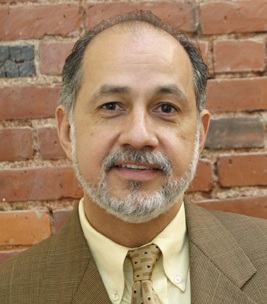
Author
Dr. Roberto Miranda
Summary: Personal transformation must be undertaken as a conscious, clearly defined, long-term project—not as an instantaneous change or a life left to chance. God grants us dignity, freedom, and the ability to act; therefore, he does not do everything for us. We can cooperate with his purposes or limit what we receive through indifference, as Joash did when he achieved only partial victories because he responded with mediocrity.
Growth requires energy, determination, discipline, patience, analysis, wise counselors, and continual investment in opportunities for learning and service. We must recognize and name our giants, write down specific goals, divide them into steps, and submit every area to prayer, the Word, and small daily efforts. Repeated habits gradually reshape our minds, although breaking old patterns and establishing new ones takes time.
Our dignity before God should not produce pride, but rather a healthy self-esteem balanced by humility and dependence on grace. We are not doomed by age, culture, the past, or our flaws. Through the power of the Holy Spirit, we can rise, persevere, and move toward a life aligned with Christ and the values of the Kingdom of God.
Brothers and sisters, I want to speak to you about how to live powerful lives, lives that reflect the Lord’s grace, that reflect the power of Christ, that reflect the character of Jesus, that reflect the abundance Christ came to give us.
You will remember that I was saying that when we are going to change in life, when we are going to take those leaps to become what God wants us to be, we must go through a series of processes, a series of transformations. There are a number of things that we must take on, and it is a long journey, a long-term process. Last Sunday we spoke about the long-term vision that we must embrace and forge for ourselves if we truly want to become everything the Lord wants us to be, and about the need to be patient. There are a number of qualities we need in order to succeed on the path of self-transformation.
And I think that several weeks ago I mentioned some of them to you; for example, we spoke about the need for qualities such as determination, for staying focused on the goal. Energy, because we have to be dynamic; we have to be enterprising. If we are people who conserve our energy and do not dare to invest it or seek new things...
For example, one of the things I often see is that a church like ours offers a great many opportunities to grow, to learn more about the Word of the Lord, and to learn about ourselves. We offer workshops for families, training for parents, things for children on Fridays at I Wanna, retreats of every kind, and events like this one for women, where you can spend an entire day meditating on the Word of the Lord, receiving inspiration, and receiving vision for your life.
And unfortunately, many people—sometimes the very ones who most need these nutrients for their personal growth—do not take advantage of them, and I think that is what happens throughout life. Many people whom I believe could benefit from these teachings and experiences, when the time comes to attend one of these activities, always come back at me with: “No, I’m tired; I work very hard. I have to do this, I have to do that; Monday will be here in two days, and this is the only day I have to rest.”
So that lack of energy, that lack of an entrepreneurial vision, as they call it in English, makes us conservative with our energy, and we do not invest enough in our own growth, our own personal transformation, and so we always remain small.
I think of what the writer of Ecclesiastes says in chapter 11: “Cast your bread upon the waters.” I believe I alluded to that in one of the presentations: “Cast your bread upon the waters, for after many days you will find it.” It says, “Give portions to seven, and also to eight,” and it continues speaking about that vision of continually sowing in different places, going here, going there, reading this, meeting someone there, taking this step, because you do not know the day when one of those investments will yield its dividends.
I believe that the life of a person who is continually developing is a life in which seeds are always being sown along the way. That person sees every contact, every person who comes along, every opportunity—an opportunity to serve others, to become known, to be in a position to hear something new or different—and that person who is in a perpetual state of growth sees all those investments, all those things, as possible opportunities to receive something from life or from the Lord.
And it is incredible how, throughout life, those investments you make by faith in different areas continue to yield dividends. It is like an investor who diversifies his investments and does not put all his investments into a single product, but invests a little here and a little there because, since economies are so unpredictable, one may fail him, but one of the others may yield everything he lost in the rest.
That is why I say that energy is so important, isn’t it? Because the Bible calls us to be energetic. The Lord says, “I have given you every place on which the sole of your foot treads,” but He tells Joshua and us, “See, I command you to be strong and courageous.” God definitely honors and rewards diligent people.
And I believe that one of the areas in which we sometimes fail in the Christian life—in receiving everything God has for us, all the benefits God has for us—is that we do not understand what I am about to tell you: the authority that rests upon us and the respect that God, so to speak, has for us. We do not understand how important I am in the equation of personal growth and development, and that God does not do everything.
I believe that sometimes our sense of God’s sovereignty and absolute nature is so great—and He certainly is sovereign and absolute—that we forget that God takes us very seriously. Do you understand? I will take some time later to develop that idea further, because it seems to me to be one of the most powerful and important ideas in personal development within the framework of the Christian life.
The fact is that I count before God and that He treats me like a young person, like an adult, like a grown child. He does not treat me like a worm or like a puppet He manipulates. He has endowed me with dignity, He has endowed me with free will, and He has endowed me with a freedom that He does not dare violate. And part of God’s difficulty—again, to use that expression—in bringing the world to where He wants to bring it, which is the complete fulfillment of His plans for life, love, peace, and the resolution of conflicts, is this: God’s challenge is how to bring creation to complete regeneration without violating the freedom and dominion He has given humanity over creation.
That is what I would call God’s dilemma: the fact that God is Almighty and, ultimately, the owner of everything and powerful enough to do absolutely whatever He pleases, but that He has limited Himself to the framework of the freedom He has given us. I am always captivated by one of the psalmist’s statements, which says, “God has made us a little lower than the angels.”
I have always liked that poetic expression, “God has made us a little lower than the angels,” alluding to the inherent dignity found in every human being. And when you take yourself seriously, as God takes you seriously, then that means a couple of things: that you have the power to harm yourself, and that God will sometimes want to protect you from certain things but will not be able to. Not because He cannot in absolute terms, but because He does not permit Himself to do so, since you are free. Do you understand? And He must respect the freedom He pronounced over your life.
And likewise, you have the power to cooperate with God in the purposes He has for you and, in quotation marks, to “help Him” bless you. Because did you know that God may want to bless you, but you may not allow God to bless you—yes or no? Some people say, “No, if God wants to bless you, He will bless you; you have nothing to do with it.” That is not true. The Bible is full—and I do not have time to prove it, but you already know what I mean—of people who lost the destiny God had for their lives because they did not know how to make a decision at the right moment.
And let me tell you: I know that is a somewhat shocking thought, so let me give you a very simple example. Joash, King Joash—do you remember the story of Joash? When Elisha is dying on his deathbed and King Joash comes to pay his respects to this great national prophet, he approaches Elisha, and Elisha, in one of those impulses of power and prophetic action, tells him, “Take some arrows in your hand.” King Joash takes a handful of arrows in his hand, and Elisha tells him, “Now strike the ground.” He does not tell him how many times; he simply says, “Strike the ground with the arrows.”
And Joash, who was a spiritually mediocre man—neither very bad nor very good, and without much spiritual understanding—strikes it while thinking, “Well, let me humor this man, who is already dying and who, who knows, may even be delirious.” And he strikes the ground three times with the arrows, and Elisha tells him, with annoyance, I believe, “If you had struck four or five times, you would have completely destroyed the Syrians until they disappeared.”
The Syrians were the most powerful nation oppressing the people of Israel. “If you had struck four or five times, you would have completely destroyed them, but now you will defeat them only three times. That is, you will have a certain number of victories, but you will not be able to get rid of them.”
What does this show us, then? God wanted this man, who had come there before His presence—Joash was at a decisive moment in his life, when he wanted to do something revolutionary in his reign—but there was a part he had to play. He had to discern how exceptional that moment was, and he had to see that God was giving him an opportunity to do something. And what would it have cost him? If the prophet says, “Strike the ground,” strike it four, five, or six times, because there must be something of God in that striking. But because he struck it only three times—his freedom, you see?—he had the ability to decide at that moment.
God wanted to give him total victory, but in his indifference and spiritual mediocrity he received only limited power and a limited blessing. That is why I believe that we can determine the level of blessing we receive. I believe salvation is free, but God’s blessing for your life also depends greatly on you. Do you understand what I am trying to tell you?
And so, again and again, the Bible repeatedly calls us to invest, to be generous, to be dynamic, to give more, because many times you do not know at what moment God will intervene in your life. And if you are mediocre, comfortable, and conservative, and you do not discern that your life is continually before the eyes of God, God is always working with you, speaking to you, testing you.
Do you remember what I said last Sunday—that God takes us on a journey to shape us and bring us where He wants to take us, and that part of life and success is growing, developing, knowing ourselves, and knowing our limitations so that we can make a true and honest diagnosis of where we are, what we need to obtain, and where we need to grow, and then from there set out on the process of self-transformation?
So it has been a great help to me throughout my life to understand that I cannot take anything for granted. I have to live an alert life, fully committed to the process of my transformation, and understand that I live a serious life before God and before people, that God takes me seriously, and that I can even affect God’s dealings in my life.
Human beings, humanity, have more power than people think. I believe that many of the foolish things we do in life, and many of the times we soil ourselves through improper actions, happen because we do not understand the power we have before God. In one sense, our self-esteem is low, because when a man or a woman feels important before God—not in the sense of being proud or vain or better than anyone else, but of knowing that he or she has an inherent dignity under God’s gaze—that makes us walk with a certain authority, a certain deliberateness, a certain intentionality, because we know that we are very important in God’s eyes. Do you understand?
I believe that part of life is understanding that there is a tension we must continually maintain between knowing that, in God’s eyes—look, compared with God’s greatness, I am nothing; compared with His holiness and His power, I am nothing—and yet, from God’s perspective, I am very important. And part of life is having healthy self-esteem and a healthy sense of our worth, of who we are, and of the dignity we possess, while also knowing that we are instruments in God’s hands and that He is sovereign and absolute, and that there are hundreds and thousands of people who are better than we are, more accomplished than we are, and more powerful than we are. That keeps us humble too, you see? We also know that we are sinful people and that it is only by the grace and mercy of God—but there must be that balance.
I think of Nehemiah, one of the great heroes of the faith. Later I want to speak about Nehemiah as an illustration of these principles we are discussing. If you read Scripture, Nehemiah is a man who is humble, simple, and tender before God, but he is also a man who takes himself seriously.
There is a story about Nehemiah in which his enemies are threatening to kill him, and someone comes to frighten Nehemiah and says to him, “Look, they are going to kill you; they are looking for you. Take refuge in the temple and grasp the horns of the altar,” because there was a law, an understanding, that a man could not be killed if he took refuge in the temple, a sacred and holy place. If he grasped the horns of the altar, it was as though no one could breach that place.
And so these people, who wanted to instill fear in this man so that he would stop rebuilding the walls of his country and his city, tell him, “Take refuge.” And Nehemiah’s words always make an impact on me. He says, “Should a man like me take refuge at the altar? Never.” Wow! He says, “A man like me.” There are no overtones of low self-esteem there, are there? Nor of an inferiority complex. “A man like me?” And I believe that you and I should continually say that to ourselves in our lives.
Is a man like me or a woman like me going to stick a syringe into myself to inject drugs, or commit a morally base act, or hurt someone? We have to ask Him: Lord, Lord, help us every day to understand that we are living our lives before You. We have to make an effort, brothers and sisters, because we matter in the Presence of God; we can affect the heart of God, and that should help and encourage us to keep moving forward in life.
But actually, that aspect does not interest me as much as, once again, the idea that we must live life with that continual investment of energy, persistence, discipline, the ability to think systemically, the search for allies in our struggles who will mentor and counsel us, and analytical ability. These are some of the qualities required for self-perfection, mastery over ourselves, and personal development—personal transcendence, we might call it.
Now, I am not telling you this so that you will become frustrated and say: Wow, these things—when in my life? I do not have any of them. But that is all right; there is hope for you. Do not throw in the towel yet; do not hang your head in defeat. What I mean is that it is important for us to understand that we have to acquire these qualities along the path toward self-improvement and growth, and that this is why we must make life a project of continual growth and continual improvement.
You may remember that at some point I told you that one reason many personal-development and motivational talks do not produce as much fruit or have as much influence on us is that the people who specialize in giving motivational and personal-development talks are already successful—that is why they are giving those talks. And so these talks limit themselves to telling us: Okay, what you have to do is this; what you have to do is that; you have to do this and that.
But it is as if David Ortiz, for example, stood before a young man aspiring to become a home-run hitter and told him: Do not worry, look—the only thing you have to do is hold the bat like this, stand like that, and when the ball comes, you hit it and it flies and jumps over to the other side. But behind David Ortiz’s swing there are many other things: personal talent, physical gifts, a series of experiences, continual practice, the physical therapy he receives, and coaches who measure every one of his movements down to the tiniest detail and have taught him how to coordinate his body—20,000 different pieces that make up the marvel of this man who stands there and hits a home run and puts five people on base, or four, or whatever it may be.
Again, I believe that what we often have to do is break self-improvement projects down into their component parts and understand that there are many intermediate pieces we have to acquire in order to get where we need to go—to become a powerful person who can then benefit from these teachings on self-improvement—and some of those things are there.
So many people do not possess these qualities because their upbringing did not instill them in them. Perhaps you grew up in a home that did not help you; you did not receive that guidance. Many of us grew up in very basic, very humble homes, and so we have not acquired this experience, right? And although they want to make progress, they do not possess these necessary personal skills. So very often, despite attending seminars, we are unable to get out of the rut.
How do we develop those skills? That is the question—the ones I have just pointed out there. This is one area where I want us to concentrate this Sunday, and perhaps next Sunday. How do we develop those skills? How do we become fertile soil for the seeds of motivation, healthy ambition, and God’s good purpose for our lives?
Well, I believe the key is that we must conceive the project of personal transformation clearly. This morning, I invite you to say to yourself: Okay, where am I? Where do I find myself at this moment in my life? And I promise myself and commit myself to making my life a project of personal improvement, growth, and development.
I want to go from this point where I now find myself—in my personality, my development, my relationship with God, my usefulness to the Kingdom of God, and my ability to benefit from the nutrients of the Kingdom of God—from where I am now to becoming a powerful woman or man, successful in my life, in control of my appetites, my emotions, my wounds, and my defects; continually growing through the Word of God; known by God and knowing God and the intimacies of the Kingdom of God; and to be a person who takes advantage of every day to rid myself of my defects, my bondages, and my limitations with the help of the Holy Spirit. Every day, every day, I will keep improving, improving for the glory of God and in the Power of the Holy Spirit, until I become a man or woman conformed to the image of Christ Jesus.
Can you say amen to that? Give the Lord a round of applause. Believe it; receive it now, because that is what we have to do: we have to make life a project. Do you remember what I used to say? We have to go from a vision to a project, and from a project to a design, and then take the design, break it down into its constituent parts, and proceed to carry them out one by one by one.
That is what we have to do, because most people live life at random. They live life; life is simply a flow without parts, merely a process. It has no labels, no component parts, just a shapeless mass. And the person who grows is the person who can stop that process, or slow it way down in order to study it, or pause it from time to time, study that phase of the process, and continue on to the next phase until reaching the goal.
So that is what we have to do, right? We have to conceive the project of personal transformation clearly, as something very well defined. And another very important thing—and this is like a mantra to me, a very great truth—is that we have to believe that the human brain, my brain, my mind, my neurological system, will be reconfigured over time if I subject it to the right exercises and efforts.
Read that as I speak about it, and engrave it on your mind. Do you know that God has made the human brain tremendously plastic, malleable, and flexible? There is no machine, no organism more incredibly alive than the human brain. No machine in this universe will ever compare with its complexity. Today scientists and neurologists are developing all kinds of knowledge about the human brain, but it is plastic, it is flexible, and when we think we have exhausted it, there is much more.
No one knows what the human brain is—this question of whether it is the mind, whether it is the brain, or what it is; it is too complex. Some physicists speak of the quantum brain, the brain that is like a—it is that subatomic particles have such tremendous plasticity, as do the neurons and the way the brain is configured, that it is capable of continually changing, changing, changing, and processing.
So if you understand that, you will never say: No, I am too old to change; or, No, I no longer have the temperament; or, I cannot—I have been this way for too long; I am too poor, too educated, or whatever it may be. You can change. Tell yourself: I can change.
And when you understand that you can affect—you can affect the development of your brain. Many things, you know what? Sometimes, through the force of habits and practices, the brain changes its wiring, so to speak. What begins as an isolated practice can become a habit, and what becomes a habit over time establishes neurological connections, synapses that are configured in a certain way. And as you continually reinforce a practice throughout your life, the brain begins to establish grooves.
What happens when the same people repeatedly walk through a passageway? What happens in the countryside, for example? A path is created, isn’t that right? That ground is trodden on so much that a path opens up. No one built it; thousands of people built it by passing over it. They kill all the seeds there, kill everything that might grow; the earth is flattened and does not allow anything to spring up, and a virtually permanent path is created. I believe the same thing happens with the practices of life.
When we begin a practice, a habit, little by little it becomes biology, and then it becomes a constituent part of our being, because that is how the human brain is. Then we can affect our brain and restore things that were there before. It takes time.
Look: it takes time to undo things, and then perhaps it takes a long time for things to become neutral, and it takes a long time to put other new things there, to replace them. So very often we have to undo and dismantle in order then to build and restore, do you understand? And that takes time.
If you are accustomed, for example—if you are bound to some practice, whatever it may be, call it whatever you want: if you are wrathful, if you are depressed, if you have a spirit of rejection and feel that everyone is against you and does not understand you, if you live a life of fear and timidity, if you have low self-esteem, if you are addicted to cigarettes, if you are addicted to food, if you are addicted to pornography, if you are addicted to whatever it may be, if you are too conservative in the way you do things and feel that you should go a little further, if you spend too much money and do not know how to use it properly.
Give whatever name you want to whatever area you choose, and many of us could apply two or three of the things I have mentioned to ourselves. The question is: With the help of the Holy Spirit, in the Power of God, and with the resources I have received from the Kingdom of God, how can I take authority over those things and then launch out—energized, equipped, and empowered by the Holy Spirit—to conquer my land? How can I uproot all those weeds and make a new path, a new furrow that reflects the glory and excellence of the Holy Spirit and the Kingdom of God?
And then, when you make up your mind and name your giants—there is a principle there: name your giants. Most people do not name the things they are confronting in their lives. My life is far too long for me to share with you all the giants I fight, the little demons I am continually fighting in my life, the ongoing agenda of personal struggle that I have. But I have decided to name them, acknowledge them, and look them in the eye, like David when he approached Goliath: “You come against me with sword and javelin, but I come against you in the Name of the Holy Spirit,” and I am going to strike you down, cut off your head, and make you food for the birds.
Do you think David did not know whom he was facing? Do you think he did not know that this man stood more than seven feet tall, that he was an experienced soldier, and that David was merely a young man with no martial experience? But he also knew what was inside him, right? So, any area of your life, any aspiration—because, incidentally, it is not only about killing giants but also about advancing in your land. Perhaps your project is: How can I buy a house in five years? How can I have a fruitful, communicative, intimate, and blessed marriage?
How can I raise children who will be a blessing to the culture and society in which I live? How can I graduate from college in four years, or earn a graduate degree, or whatever it may be? There are projects that are positive, not merely defensive and negative. But then you have to name the project specifically, give it a name, and make a list of everything you want to accomplish in your life. Write down all the defects and bondages within you; visualize them, describe them in detail, break them down into their constituent parts, and then immerse and bathe all of that in the light of the Holy Spirit day by day.
Pray about it, fast over it, undertake small efforts each day to develop it, and remember that as you do so, your brain, your mind, your neurological wiring will be reconfigured, because there is a biological equivalent to spiritual goals, since we are biological beings, you know? In case you did not know, you have a body and a mind and a neurological system and wiring.
Sometimes we are too spiritual about all of that: Oh, Jehovah, help me, hallelujah! And we forget—remember the other concept: God takes you seriously, but He does not do everything for you. He does not take a magic wand, open the top of your brain, and boom! Now you are a paragon of virtue. God delights in the process, delights in the journey, delights in the effort, delights in the falls and in getting back up, delights in the wounds, delights in the sweat, delights in the cry, delights in the blood, delights in the warrior who, filthy, rises once again and presses on: In the Name of the Lord, I will keep pursuing until I win the victory. And the Lord is glorified in that.
For Him there is no fun in simply saying, “Okay, that’s it, you’ve arrived.” God is an actor, and His delight is to enter into His creation and behold these creatures whom He has endowed with tremendous power and greatness and beauty, and to see them using the skills and resources He infused into them when He created them in the Garden of Eden, and to say, “I created that.” That man who fell and gets back up and keeps moving forward in My Name and learns certain things and keeps going and gets better—I created that.
That woman who was sexually abused as a child and who now says in the Spirit, “You know what? I am ridding myself of that wound. I am new in Christ Jesus; I am renewed, and now I am going to use that wound and that harm to bless a young woman who is going through the same thing, and I am going to be a counselor, a spiritual mother”—I created her. Do you see? So God rejoices in the drama we live out. God delights not in giving you things immediately, but, as I said last Sunday, in putting you on the journey, and throughout the journey you learn many things.
You learn to know yourself; you learn your limitations; you learn to love God more; you learn to be more tender, more compassionate, humbler, more generous, more like Christ. And then you become that powerful creature God wants you to be, and God delights in that. That is why He is not going to give it to you just like that; you have to do your part, and you have to work and make an effort. That is why, once again: “See, I command you to be strong and courageous, because I am with you wherever you go.”
Believe, then, that your brain and your sensitivity will gradually be reconfigured over time if you submit them to the right exercises day after day—a tiny bit at a time, one simple little thing at a time. But what you have to do is practice it, practice it continually, because the day you stop doing it, right then you have lost a small opportunity to reinforce that formative process by a milligram, a thousandth—I do not know what to call it—a little bit more, to remove a little plant or a weed from that path you want to build in your brain that reflects that particular habit. Do you understand what I am saying?
Do you want to learn a language? Well then, devote yourself to it every day. “Oh, I want to learn English,” but you know what? When people get home and turn on the television, what do they watch? All the soap operas, all the programs in Spanish, in Spanish. They never watch a program in English; they never read a newspaper in English. They never take advantage of an opportunity to speak English with their children or with their wife or whoever. At the factory they sometimes have the opportunity to try out three or four little phrases, but they are embarrassed: “Oh, I don’t dare, because they are going to laugh at me,” or whatever.
The person who wants to develop that skill says, “No, I can do all things through Christ who strengthens me. The power of God is in me. I am not going to fail. I know that one day I am going to speak English better than anyone because God is with me.” And so every day you devote yourself to it, and instead of watching a program in Spanish, watch a program in English for 15 minutes. Train your brain, your ear, to listen. Use two or three phrases with your children; ask them, “How do you say this? How do you say that?” Read a magazine in English. When you are driving along, ask, “What does that say? Oh, why does it say it that way and not another way?” when you see an advertisement.
Then you have a project, and you know that with the Lord’s help you are going to complete it, and it will take three to five years, but you will achieve it. And who knows whether, instead of three years, it might take one year, depending on how deliberate and diligent you are. But you know that you can achieve it incrementally, little by little, right? So there is this idea that there are things we have to do in our—right? The brain will gradually be reconfigured as we keep subjecting it to these things, okay?
All right, then, I am almost finished, but let me add a few more little things because I see that I still have two or three left—no, I do not have any left; we have to—something very important, and I do not want to tire you. I think you have plenty of material there. Well, let us leave it there. Once again, brothers and sisters, if the Lord has told us anything through this moment, it is this idea: I matter. Tell yourself right now, there in your spirit: I matter; I am important in God’s eyes.
I have what they call in English agency—agency. I have ability; I am an active agent. I am not merely, how shall I put it, an object of God’s blessing; I am one who interacts. Hey, God takes me seriously. I have the power to subvert God’s plans for my life or to advance and reinforce them. I have to name the areas of my life that I need to improve and acquire, naming them specifically and in detail. I must write down my projects, because by writing them down I am reinforcing them and breaking them down into their constituent parts.
I must believe that if God is with me, I will never fail in anything I undertake in the Name of the Lord. And if I do not reach the precise goal I set out to reach, I will reach one quite close to it, or something even better, because the Lord is with me, okay? And I am going to believe that God has made me flexible and capable of changing, or whatever the case may be. I am not condemned to remain where I was born, or bound by the culture I come from, or by my sex or gender, or by my habits or my flaws. I can change, amen?
And my goal is to align myself with the values of the Kingdom of God. I am going to say that with fear and trembling because there is a great deal to unpack there, and I do not want to get into it, but my standard is Christ; my standard is the values of the Kingdom of God; my standard is the Word of God. Everything that is not aligned and in harmony with the values of the Kingdom of God is an enemy to me; it is a giant that I am going to name, and I am going to bring it down, and I am going to eliminate it from my life through the Power of the Holy Spirit and with God’s help, because I can change.
I cannot say, “I am a victim of my biology, or my culture, or the deformities of my past.” In Christ Jesus I can do all things. “I can do all things through Christ who strengthens me,” says the Word of the Lord, and if you say it, you had better believe it and then put it into practice. That “I can do all things” allows no doubts, questions, or asterisks: I can do all things through Christ who strengthens me.
So I tell you: do not waste the gifts; do not waste the nutrients; do not waste the weapons God has placed in your hands. The Bible says that the weapons of our warfare are not carnal but mighty in God for the destruction of strongholds, and a stronghold is anything that becomes a refuge for the enemy in your life. The weapons God has given you are for destroying and tearing down everything that does not resemble the image of Christ Jesus. Therefore, launch out in the Name of Christ to build that man and that woman who will be fertile soil for the blessings God wants to place in your life.
Receive right now: Father, in the Name of Jesus—open your heart, open your mind. Tell yourself: “Lord, I receive Your Grace. Thank You for making me strong; thank You for making me fertile; thank You for making me receptive to Your Grace and Your goodness. Thank You because there are no limits for me if I undertake things in Your Name, Lord, and this morning I renounce fatalism; I renounce the determinism of the world. I will not let anything enslave me.” Tell the Lord.
I will not allow anything in this world to dominate me, because God has made me free and has made me powerful through the excellent spirit that dwells within me, the Spirit of Christ Jesus. And God made me to soar through the skies like an eagle, to acquire great things and reach great heights for the glory of the Name of Jesus, whom I serve. Therefore, I am going to launch out and live a life of excellence and greatness, and I will not be afraid along the way, because the Lord is with me.
So, Father, thank You, thank You for Your Words. We receive them, Lord; that seed goes deep into our soil. It is Your Word; it is Your Word that is life; it is Your Word that is potential, and I receive it. Not the word of man, but the Word of God, which is living and effective and accomplishes everything for which it was sent. And I take it into my heart this morning and launch out into the project of my life. Thank You for making my life a powerful adventure, and thank You for making me a knight-errant, a lady of honor and power. And I am going to live my life with excellence, honoring the excellent God who created me, and I receive that seed of life in my heart now.
Thank You, Lord. In the Name of Jesus we say: amen.