The Importance of a Life Fully Surrendered to the Lord
Author
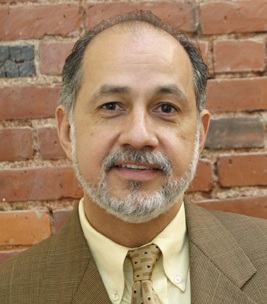
Dr. Roberto Miranda
Summary: The foundation of a blessed, prosperous, and victorious Christian life begins with total and unconditional surrender to God. Presenting ourselves as a living sacrifice means daily acknowledging His lordship over our destiny, body, desires, possessions, relationships, profession, and social standing. A past decision or habitual religious attendance is not enough: our consecration must be renewed many times, especially when the flesh draws us toward dishonesty or places something created above the Lord.
As long as we live, we will not eliminate the demands of our biology and material appetites; we must choose whether we will be ruled by the flesh or by the spirit. Sacrificing ourselves does not mean taking our own lives, but deliberately surrendering everything human in us to God while we continue to live, seeking for it to be holy and pleasing to Him.
This surrender also sustains a blessed church. Each believer cultivates personal and intimate fellowship with God throughout the week and comes to the congregation with his or her own spiritual offering. Then individual acts of consecration come together in a collective celebration filled with love for God, His Word, and His house.
I want to spend a few minutes speaking on the basis of the text in Romans chapter 12, as I did this morning, because, in the process of this new 9 o’clock service, I have wanted to add my own words, which I know I already contribute, and I have done an extraordinary job of teaching that ministry; but now that we are larger and there are other groups as well, I have also wanted to instill in the heart of that service, as I do with you, certain values that are important to our church—values that we hope our church will always hold as paramount in its constitution, its spiritual DNA. These are the things we consider fundamental, which I believe are the foundation of a blessed life, a prosperous life, a successful life, a life spiritually sensitive to the things of the Lord, a life capable of receiving from God and moving powerfully in the world, dealing with the inevitable attacks that come into a believer’s life and prevailing in every situation—in other words, a prosperous life, which we believe is the destiny of every believer.
What is the secret of a prosperous and blessed life? What is its foundation? Where does that process of blessing begin in a believer’s life? And I hope this meditation will help us understand this. Romans chapter 12, verses 1 and 2. Some time ago I preached on this passage, but it is very fitting to recall it again: “Therefore, brothers, I beseech you by the mercies of God that you present your bodies as a living sacrifice, holy, acceptable to God, which is your reasonable worship; do not conform to this age, but be transformed”—that word is very important—“be transformed by the renewing of your mind, so that you may discern what is the good, acceptable, and perfect will of God.” May the Lord bless His holy Word, amen.
“Therefore, brothers, I beseech you by the mercies of God.” That is how Paul begins this solemn and very important passage. What I want to speak to you about is the importance of a life totally surrendered to the Lord, a life radically committed to God, a total surrender of one’s being to the Lord, an unambiguous, unconditional commitment to God—the total surrender of our being to the Lord. When you surrender—when I surrender—we surrender our being to God, our destiny, everything we have, everything we are, to the Lord, and we give Him lordship, first place; that is where victory in the Christian life begins.
A total consecration of our being, which then enables us to receive all the nutrients of the Word of God—total commitment, total surrender, the total yielding of our being to the Lord—that is the beginning of a believer’s invincibility. And I also believe it is the source of a prosperous and blessed church: when a church is made up of men and women who know what it means to be a disciple of Jesus Christ, who know what it means to be a believer, a follower of Jesus, a Christian—not a group of religious people who come to church simply because it is Sunday and because that is what a decent person does, but convinced people, consecrated people, people who would not want to be anywhere else but in the House of God, who can say, as the psalmist says: “Better is one day in Your courts than a thousand elsewhere.”
How wonderful it is when there is a people who love the Lord so deeply, who know the Word of God, who have had dealings with the Holy Spirit, who know His calling, and who are so deeply permeated and saturated with love for God and total surrender that coming to the House of God is not an obligation but a privilege, a celebration. We come to celebrate; we come to acknowledge God’s lordship in our lives; we come to look at one another and say, “Wow, I can hardly believe how fortunate we are to be part of this group of people who are saved, sanctified, consecrated, and on their way to the heavenly homeland and eternity with God.”
When there is such a people, a people in which each person has had his or her moment of crisis with God, that moment of coming face-to-face with the Word and the Spirit of God—we must seek that, brothers and sisters; we must seek that conviction. Until you feel that sense of commitment to God, the personal nature of your spirituality, the personal, the intimate.
Because when we come here together to the House of the Lord, each one of us has to come—it is something individual, and it is something collective. On the individual level, you are there receiving from the Lord, loving the Lord, loving the Word of God, receiving this Word as it applies to your life, bringing to the Lord your offering from an entire week of communion with God, of longing for Him, for His courts, for His principles. And then you come charged up; you come with your battery fully charged, and then we unite in this beautiful organism that is the Church of Jesus Christ, and together we bring the Lord an offering composed of our individual offerings. Do you understand?
But first there must be that sense of commitment in each one of us, and what I desire for you and for my own life is that Lion of Judah be made up of people who have presented their lives to the Lord as a living sacrifice, as it says here: “I beseech you to present your bodies as a living sacrifice, holy, acceptable to God.” He does not say this as a one-time thing. It is not as though he were saying, “Well, one day I came here to church, the pastor gave an altar call, I gave my life to the Lord, and okay, now I simply put the car on cruise control until I die and go to heaven.” No. Presenting our bodies as a living sacrifice is something we do every day, even many times a day. Sometimes your flesh, your biology, inclines you in one direction, and like a horse that wants to bolt, you feel the impulse pulling you that way, and you rein it in and say, “No, I have to present my body as a living sacrifice, holy, acceptable to God.” How many times must one do that?
An offer of dishonest gain promises to free you from many financial burdens, but you say, “No, that is not from God, because my life belongs to the Lord.” An act that dishonors the Lord—and you feel the impulse, but you say, “No, my life...” That is what it means to present your body as a living sacrifice, holy, acceptable to God.
When the Apostle Paul speaks of the body—here he says, “your bodies”—the word in the original Greek is somata, which means your flesh. It is not simply a matter of the biological body; rather, it concerns biology, everything that is human, everything that belongs to time and space, everything material, everything opposed to the spirit—that dichotomy between body and spirit, right? The Apostle Paul speaks right there in Romans about how our flesh directs us one way, while our spirit pulls us another way, and we have to choose which of those two principles will govern our lives.
We cannot completely eliminate the body’s call, because we inhabit a body and a biology, and that body can sometimes betray us. It will not give up until we come into the Presence of God one day, when we are freed from it. While we are here on Earth, we contend with the body’s demands, but God says, “Present your flesh.” And the flesh can mean not only, let us say, sexual appetites, but material appetites as well: love for a profession, love for beautiful clothing, love for people’s affection, for your social position, for your career, for a man or a woman to whom you are married and whom you sometimes adore more than God. And God says, “Take all of that and sacrifice it to Me; present it to Me as a living, holy, acceptable sacrifice.”
‘Parestesai,’ which is the word translated “present,” ‘parestesai,’ in the original Greek means precisely that, right? To deliberately present something to a person or an owner, to hand it over to him and surrender it to him, just as the priests presented to the Lord a victim sacrificed to God and offered it to the Lord as a burnt offering in the middle of the sanctuary. Paul says, “Look, I am not asking you to stab yourselves with a knife, take your own lives, and then present yourselves to the Lord. No, I am asking you, while you are living your lives”—that is why he says a living sacrifice—“thank God; thank You, Lord, that You are not asking me to take my own life. No, a living sacrifice, a living sacrifice.”
Our life as Christians—and if you are a Christian, that calling is for you and for me—our life as Christians must consist each day of presenting our biology, that lower part of our being, the part that calls us to want to remain here in the world and to want to make a god out of the world, the part that wants to place what we are above God. And Paul says, “I invite you to take that and present it to the Lord as a living sacrifice, holy, acceptable to the Lord.” And that, as I say, is something we must do every day of our lives, each day, in order truly to receive what God wants us to receive in our lives.
Paul makes his appeal for that kind of attitude in light of everything God has done for us and everything God has invested in us before we go back in.