The Desire for Change
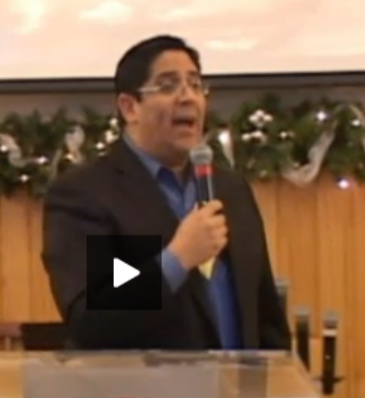
Author
Andrés Cisterna
Summary: We all desire change, but we often ask God to change others first. True change begins when we submit ourselves to God and acknowledge that we need renewal in our character, thoughts, words, feelings, and actions. God turns mourning into dancing, replaces the old, and makes all things new; he does not leave his work unfinished.
This transformation depends on our intimacy with God and an active life with the Holy Spirit. He wants to give us a sensitive heart, renew our spirit, and enable us to obey, serve, and also influence those around us. Therefore, we must submit our emotions, soul, spirit, and body to his rule, leaving behind family, religious, social, and cultural patterns that hinder his purpose.
Like Joshua, we must declare that our household will serve the Lord; like Gideon, we must believe that the Spirit can overcome whatever tries to rob us of the blessing. There is no specific age for change: this is God’s time. If we want better marriages, families, and a better church, let us begin with ourselves and pray: Lord, renew my heart, my way of thinking, and my way of speaking; change whatever hinders your glory.
“…You have turned my mourning into dancing; you removed my sackcloth and clothed me with joy…” When I saw this text, it came after a sequence of many situations, but there is one word that caught my attention: the word “change”; “changed,” it says here. And I titled this sermon “The Desire for Change.” All of us, in one way or another, desire change. One way or another, when fall comes, winter follows, and then spring. Some of us urgently desire a physical change. We go on a diet so we can at least wear a T-shirt in the summer; if not, some of us need a change in our character, in our personality. We are always struggling with something. The world needs change.
This reflection was born a few months ago, when I called my church to a time of fasting—21 days of fasting—and we called it “I Desire Change.” Whenever we talk about change, Lord, and we spiritualize it: Lord, change the pastor. Lord, this cell-group leader—open another cell group for me or replace him, Lord. Lord, change my brother, who is not pleasant at all.
We always pray for God to change others. Lord, change him; look at how he sings, Lord. Lord, make him mute because he sings terribly. When we talk about change, the people we often pray for the least are ourselves. It is always everyone else who has a problem. It is everyone else who causes the problem in society, in the church. Look at that brother; look at how that sister came dressed. Look at how the brother styled his hair. Look at how they cut the pastor’s hair; he could sue the barber.
But this expression, “I desire change,” is nothing other than submitting myself before God and recognizing that I am the first one who must bring about changes in my life. Let us read the text again:
“…You have turned my mourning…”
Whose mourning? Mine. You have changed, Lord, the mourning of my brother Pedrito; thank you, Lord. As though we ourselves were the joy of the world. Lord, change my anguish. You can translate that in many ways. You can paraphrase it in many ways. Change my character, my personality, in whatever hinders what You want to do with me. Change the way I speak, because some Christians here are going to heaven, but out there we are the first ones on the list for the other place. Change my way of thinking, because while we are singing here, the glory of the Lord even fills our evil thoughts. But as soon as we go out, it has already vanished.
Change the way I look, feel, and think. Change me, Lord; turn my mourning, turn my mourning into dancing. We must be the first to express that desire. We must ask ourselves some questions concerning change. What does it mean to change? How does it begin? What implications does it have for my life? One very important question: am I willing to accept the changes the Lord wants me to accept? When must I change? Where must I change? Why must I change? What must I change for? And another very important question: do I truly desire change before the Lord?
Look at some meanings of the word “change.” When you read this text, you will recognize this meaning: it is a modification; it is modifying something in order to turn it into something different. In other words, what does our mourning become? Dancing. And what is our sackcloth clothed with? Joy.
A second, very interesting meaning is to vary or alter one state into another. It also has to do with emotions or with an appropriate spiritual character. It is to substitute or replace one thing with another. It is to exchange one thing for another. Look here: the concept is a little deeper. It is to give; God is giving you a process in your life that will bring radical changes to who you are.
Second Corinthians 5:17 says: “…Therefore, if anyone is—what is he? And what happened? What were the old things exchanged for? For something new. How many things were changed? All of them. But they were not merely changed; they were made new. The Lord’s work in our lives is never done halfway. Tell your brother or sister: the Lord never does things halfway.
And there is also a fifth concept that really caught my attention: the gearshift is a mechanism used to change speeds. Does anyone have a standard-transmission car? I saw someone there, right? First, second—there are some who stay in third and drive down the highway like that, mile after mile. “This car uses a lot of gas,” they say. And this concept really caught my attention because it has to do with the concept of speed.
When I desire a change, and I desire that change from God, I want to tell you something: God does not move at the same speed we do. So the change we must experience is also a change of speed in our intimacy and in our relationship with God through the Holy Spirit. Defining a change and its relevance in our lives depends—listen carefully—solely and exclusively on our relationship or intimacy with God and an active life with the Holy Spirit.
Look, when the Holy Spirit came upon the first church in the book of Acts, chapter 1, verse 8 said, “But you will receive”—what? What for? What for? “But you will receive power”—for what? Acts 1:8: to be witnesses. And being witnesses brings about changes in our way of seeing and in our way of presenting things.
When the Lord comes to us, it is as though the Lord places dynamite in your heart through the Holy Spirit, and it explodes; and the shock wave that the presence of the Lord brings and generates produces changes around you. I do not know whether you have experienced the presence of the Spirit, the baptism of the Holy Spirit. I recommend it to you.
If the Apostle Peter were here, he would tell you, “Do it; it worked for me. I never denied Him again.” Changes bring about in us—or rather, the changes proposed by the Lord must necessarily bring about in us—a shock wave that will even affect those who are watching us from out there.
Look at what Psalm 51:10 says. Do you know it by heart? It will appear here. “Renew within me a new spirit of uprightness.” What does it say there? Create in me, O God, a clean heart, and renew a right spirit within me.
Renew; change. I have it in another version: “Renew within me a spirit of uprightness.” Look at what Ezekiel chapter 36, verses 26 and 27 says. I am going to read it from the version I have; do not think that I am talking about another Gospel.
“…I will give you a heart”—in other words, what is He going to take out? The heart. Do not say “the old one,” because someone might be offended; some may think they are going to be thrown out of the house. That is not what it means. “I will give you a new heart.” Therefore, it is understood that there is a change of what? Of heart. They are going to take out the old heart and replace it with a new one. “And I will put within you”—what? “A new spirit.” Therefore, there is another statement about what? Why? Because our spirit grows old; it gets a little older.
I will remove the heart of stone you now have and give you a sensitive heart—a heart of flesh, the version says. I will put My Spirit within you and cause you to keep My statutes, obey them, and put My precepts into practice.
When I desire change, God wants to change my heart and my spirit so that His Spirit may come within me, so that we can experience true and powerful change in our lives. To carry out a series of changes that, through the process, make a total difference in us, we must consider some things—at least two: conquer and submit.
What must we conquer? And what must we submit? Our emotions, our soul, our spirit, and our body to the lordship, government, and power of the Lord’s Holy Spirit. We must humble ourselves before the Lord so that God may establish His changes in us.
In the book of Joshua, chapter 24, verse 15, there is a declaration of change—not only for Joshua’s own life, but for the people. At the end it says, “But as for me and my house, we will serve the LORD.” Joshua makes a declaration of change. He finds himself facing what many of us face every day. We surround ourselves with people; and even we ourselves bring family legacies, religious traditions, legacies from the world, and the teachings of our friends onto the path of the Lord. In the dialogue Joshua has here in Joshua chapter 24, he says to the people:
“I do not know about you. If you want, keep living according to the model of Egypt; if you want, keep living according to the model of your fathers—a model that has already passed, a model that does not please God. But I do not know how you are going to choose to live from this point forward; as for me and my house, we are going to serve the Lord. My household and I desire change. We do not want religious models to come and hold us back. We do not want social and cultural models to hold us back. We do not want family models to hinder us. We want to serve the Lord with all our heart, with all our trust, and with all our conviction.”
To make changes, to desire changes, you must declare those changes. Even Gideon, in the book of Judges, was a man tired of the situation in which his family and his people lived, and God met with him. Today the Midianite empire represents the spirit of Midian, since the spirits of Jezebel and so many other spirits are so fashionable. The spirit of Midian is the one that takes away the blessing that is coming to you. It waits until you are completely full and then steals it from you, as if to say, “I am not going to let you enjoy the blessing.”
And there are many of us who, for some reason, leave the service and something happens, and this Midianite spirit comes to steal the spiritual harvest we have gained during this time. How many of us have had that happen? Anything at all, the simplest thing: a bad driver cuts us off and we have already lost the blessing, because we not only said things to him, but also showed him some things.
A bad word or a bad thought, and Midian comes and gradually steals our blessing—that Midianite spirit that rejoices in it. It does not live happily and does not let anyone else live happily. And if they are Christians, they are its main target; it aims at them. “This one is a Christian”—one way or another, it steals his blessing. And Gideon was tired of that and believed the Lord. Do you know why? Because he desired change for himself, for his family, and for his generation.
And there you have one of the first expressions you can embrace: it is not by might nor by power, but by the Lord’s Holy Spirit. With 300 men, Gideon was able to defeat an army as numerous as the sand of the sea. Look, do you know how he did it? By declaring praise to the Lord, blowing trumpets, and breaking jars, he caused the spirit of Midian and the Midianites to become confused.
Today you have the opportunity not to let Midian take away your blessing. If you want to change, tell Him, “God, I want to change; I desire change. And Midian, the spirit of Midian, will not prevent me from being changed into the image of the Lord.”
There is a need to understand that without God in our lives, everything dies. For our human nature, the desire for change is a different experience; and something very important is that all these changes begin with oneself. Create in me, O God, an upright heart.
In Ephesians chapter 4, verses 13 through 16, it speaks to us about a measure: until we attain the measure of the perfect man, and that man is Christ. Do you desire change? Let the Holy Spirit bring conviction into your life and let Him bring about those changes.
Thank You, Lord. There is no specific time; there is no specific time. You do not necessarily need to be young for God to bring about changes. Just ask Sarah, Abraham’s wife: when she was already very old, God brought changes to her life. And ask Samuel’s mother and Jochebed, Moses’ mother. Do not waste the opportunity to make the changes God is bringing about in your life.
This is the best time. It is God’s time. It is God’s time. Tell your brother or sister, “It is God’s time.” Close your eyes for a moment. Thank You, Lord Jesus; it is time to make changes. Do you want to be a better husband? Do you want to be a better wife? Do you want a better marriage? Do you want a better family? Do we want to be a better church? Let us begin to bring about those changes in ourselves.
Thank You, Lord. Lord, renew us. Renew us with Your Holy Spirit. Renew us, Lord. Let us stand. And we are going to say to the Lord, “Renew me, renew me, Lord Jesus.”
Take your brother’s or sister’s hand. You know, when all is said and done, we are all always struggling in different areas, but almost always with the same things. And we are going to say to the Lord, “Lord, renew my spirit. Renew my heart. Renew the way I speak. Renew the way I think. Renew my actions. Lord, change in me whatever does not please You. Change in me, Lord, whatever hinders Your glory. Change me, Lord.” Tell Him; tell Him.
If you truly believe that you need or desire change, tell the Lord. Jesus, You know their life better than anyone. None of us can guess; perhaps someone may have a prophetic word concerning your life—declare it. Do not wait for someone to come and recite a whole book of prophecies to you. The Lord has given you the Word so that you may build yourself up through the Spirit, so that He may remove the mental and spiritual patterns that contaminate what the Lord and God’s purpose want to do in us.
Lord, renew us, and may it be Your Holy Spirit, Lord, who leads us into that renewal.