Sometimes Our Ego Is Too Big
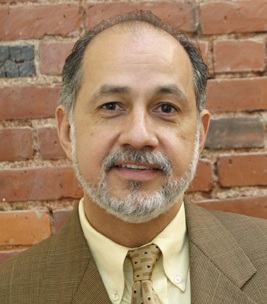
Author
Dr. Roberto Miranda
Summary: We hunger for the Holy Spirit to manifest himself, and for that to happen, we must allow God to break our ego, leave comfort behind, and make ourselves small. Although Paul was highly educated, he chose to preach Christ crucified in weakness, fear, and trembling, so that faith might rest on the power of God rather than on human eloquence. The cross reveals this mystery: God displays his greatest power amid humiliation and apparent powerlessness.
Therefore, no one should be ashamed of their simplicity or turn education, money, technology, leaders, or the congregation into reasons for pride. We all enter through the same door of humility, and all praise belongs to the Lord. Order, excellence, preparation, and good stewardship are valuable, but they are no substitute for the divine presence. We need both excellence and openness to the dynamic work of the Spirit, giving priority to the latter.
We must not be content with past blessings. We must persevere in prayer, fasting, and seeking God; consecrate our lives, homes, and church; and depend on a supernatural visitation that will make us a humble, anointed people, fully available for the glory of God.
I hunger for the Spirit of God to manifest himself among us, brothers and sisters. I am willing to make a fool of myself if I have to, so that the Lord may manifest himself in this place. I want to make myself very poor and very weak so that the Lord may do what he wants to do among us. And sometimes, through those humiliations and those discomforts, through the breaking of our ego, the Lord then has the opportunity to manifest himself. Sometimes our ego is too big, and we protect it too much, and the Lord says, well, I am going to let your ego be the one that remains and not my ego, which is the Holy Spirit whom I want to manifest.
And so, through our stammering and doing awkward things, the Lord glorifies himself through the gestures we make. And it is because we desire the Spirit of the Lord to have control of our congregation. I believe the Lord is already tired of the same old thing. I am tired. I have been pastoring for more than 30 years, and God has blessed my ministry and has blessed this church, but I feel that God has something else; God has another mountain to climb; God has another stage, because the Kingdom of God is always a process—going farther and farther and farther, not being content with what we have.
I could say, well, I am going to retire now, and in just a few years I will go off to a little house we have in Maine, to grow vegetables and live with the bears. But I have no plans to do that. I intend to give the Lord the last drop of life and energy I have, right up to the final moment of my life, and I want more of the Lord, and I want more for this church. We cannot rest on our laurels, and sometimes, in order to enter the next stage God wants for us, we have to leave behind what is comfortable and predictable and throw ourselves into that new land that the Lord will show us as we walk in it.
The Apostle Paul says in First Corinthians, chapter 2, “And so, brothers and sisters”—speaking to the Corinthians, to that church located in the city of Corinth—and the Apostle Paul is speaking about a journey he had previously made to that city, and he is explaining to them why he behaved the way he did when he made that journey. And we have to do the same. As spiritual leaders, we have to explain to people why we do what we do and what lies behind the things we do.
For example, why we have done what we have done this week. It is important for us to know, because otherwise we are merely doing things mechanically, simply because the pastor said that we should pray this week, and that is all. If we do not understand the reason why we are doing things, then we cannot do them with all the fullness with which we must do them.
Then the Apostle Paul says, “And so, brothers and sisters, when I came to you”—on that previous journey—“to proclaim to you the testimony of God”—that is, to preach, to teach you—“I did not come with excellence of speech or wisdom, for I determined”—that word is very important—“not to know anything among you except Jesus Christ and him crucified. And I was among you in weakness and much fear and trembling, and neither my speech nor my preaching was with persuasive words of human wisdom, but with a demonstration of the Spirit and of power, so that your faith would not be founded on the wisdom of men, but on the power of God.”
Amen. So Paul is explaining to them why he behaved the way he did on that previous journey he had made to the city of Corinth. And in other passages of Scripture, he develops a little further what he presents here only in a very compressed and embryonic form. The Corinthians, like all the cities that had developed within Greco-Roman culture, were accustomed to listening to these preachers who came with great grandiloquence and who trained in professional schools of declamation.
In the Greco-Roman world, there were schools where people were instructed in how to speak in public, how to express themselves in a way that would impress people, how to use their tone of voice, hand gestures, body language, and striking and grandiloquent phrases so that people would be impressed by the way they taught, declaimed, gave a lecture, or preached a sermon.
And many of the itinerant preachers who were traveling throughout the church as it developed further, especially in the Greco-Roman world, used these methods to impress people with their very forceful, fiery way of preaching so that people would be impressed. The same thing sometimes happens in congregations today: we pastors feel as though we must continually manipulate people, shout, and pressure them with our physical gestures and our eloquence so that they will be impressed and receive what we are teaching.
And Paul says, when I came to you to proclaim the testimony of God, when I came to teach you, when I came to preach, I did not come with excellence of speech or wisdom. In other words, I did not come to you with great theological terms, complicated expressions, or complex and obscure things so that you would think I was a great preacher, a great teacher of the Word, a great Apostle.
In other passages, in fact, he speaks about that. He says that people see him as an insignificant person. Some say that Paul was very short in stature. Others say that he was even slightly hunchbacked; others have said that he stuttered a little. We do not know. And there are expressions in his writings that lead us to think that some of these things were true. And when he appeared before these congregations that had already heard of the great Paul, the great Apostle Paul, and perhaps appeared with a less-than-impressive appearance and with a natural, teacherly style of preaching rather than that of a great preacher, people would say, but this is not Paul; this is little Paul, rather. We thought he would be someone very impressive in stature and manner of speaking, who would delight us with a very poetic and eloquent sermon, and instead he is teaching us in a natural and simple way.
Paul could do that if he wanted to, by the way. Paul had been trained at the feet of Gamaliel, one of the most distinguished teachers and rabbis of his time. And we know that Paul lacked none of these things. Paul wrote two-thirds of the New Testament; he was an incredible theologian. The church today, two thousand years after his life, is nourished by the teachings of the Apostle Paul. He was a man who lacked no intellectual, academic, or rational training. He was also a man of great passion, a persecutor of the church, and a man of incredible physical courage. He was a man who had received extraordinary revelations from God, visions so profound and so supernatural that God himself had forbidden him to share them with most people because they apparently were not meant for general consumption; they were privileged things that God had communicated to him.
He had undergone so many supernatural experiences, and to such a degree, that God had to give him a spiritual affliction that would humiliate him in order to keep him humble. Imagine that. I believe it is in Second Corinthians, chapter 12, where he speaks about a thorn that God gave him so that the greatness of the revelation he had received would not exalt him beyond measure, as he says. God gave me a messenger of the devil, he says, a thorn to buffet me and keep me humble. And it was something that humiliated Paul so much that three times he came before God and said to him, Lord, deliver me from this. And three times God said to him, my grace is sufficient for you, because my power is made perfect in weakness.
That is why Paul then learned deliberately to cultivate weakness, humility, and simplicity so that God could magnify himself all the more through him. You know that God likes humble and simple people. If you come from a humble family, if you did not receive a great education, if you spent a good part of your life behaving shamelessly here and there and later repented and are now walking in the ways of the Lord, you are exactly at the center of God’s love, because God loves the humble. God loves repentant sinners. God loves those who have disqualified themselves. God loves those who deserve nothing of his grace and have humbled themselves and asked the Lord for the crumbs that fall from the table, like the Syrophoenician woman.
Do not feel ashamed that you did not attend a seminary; do not feel ashamed that you do not have your papers. God loves those who are simple and humble in heart. And God delights in working through humble and simple people. Cultivate humility; cultivate simplicity, because then the power of God will be able to manifest itself greatly through you.
I love having simple, humble people in my congregation. And I want you to know that this will never be a church of the aristocracy or exclusively of people of high birth. Here we all have to enter this church through the same very low door and humble ourselves so that, when we enter the church, we will all be the same height, brothers and sisters. That is a foundational value of this congregation. Listen to it, because I always want that to remain clear in your minds: never listen to anyone who tells you that this church is only for professionals. Those are lies of the devil. This church is for every person—the educated and the uneducated, those who have papers and those who do not, the Dominican and the Salvadoran, the Guatemalan and the Chilean, the Mexican and the Colombian. All are one here in Christ Jesus. All the little ones of the earth have a place, because the point is for the Holy Spirit to be the one who manifests his power—not human strength, not human intelligence, not human wealth, not the aristocratic background of a man or a woman, but what you are in God and in the Spirit of God at this time.
This is a time when God wants to use the little ones of the earth, the humble. Governments today seek highly intellectual people or people with money, as we see in the most recent governments we have had in this nation. Either we worship intellect, reason, and rational sophistication, or we worship people who talk tough, are tall, and have a great deal of money—and the Lord laughs at both. The virgin of Israel shakes her head at you, because the spirit of the devil manifests itself both through lofty intellectualism and through great wealth and imposing stature.
And the people of God who discern the Holy Spirit will always cultivate weakness in the spirit—or rather, weakness in the flesh—so that the power of the Spirit may manifest itself through us. That is why this church can never boast about anything. Many people outside this church love and admire it, and they see this church as an exemplary church.
Brothers and sisters, I hear those compliments and blessings from people. I thank God that we can be people who are an example and an inspiration to many, but I immediately pass that praise on to the King of kings and the Lord of lords, who alone deserves it. May the name of Congregation Lion of Judah never resound in this church with fleshly pride, brothers and sisters.
The Bible says that if anyone boasts, let him boast in the Lord. Never praise this church more than you should, whether in the community outside or anywhere else. Never say, oh, I attend Congregation Lion of Judah, as though it were some great thing. This is a church like any other, in need of the Lord’s grace. And I, who lead you spiritually, am a man like any other, in need of the Lord’s grace and compassion. Never praise a man; never fix your eyes on a man; fix them on Christ. The greatest harm you can do to a pastor like me is to praise me more than you should or to believe that I am more than I am. Pray for me; pray for your pastors, and instead ask the Lord to keep me and have mercy on me. Never present me to anyone as an example in every possible way, brothers and sisters. And never single me out, because that is the greatest harm you can do to me.
Thank you for respecting me. I am happy to receive the love of my people, but know that what I truly need is for your prayers always to rise before God on my behalf, and for this church always to see itself as a very small church in the flesh, and for us to cultivate humility and simplicity of heart. May we know that we are no better than any other congregation. We have our flaws, like any other church. People outside look at the grass and say that from a distance it looks very thick and beautiful, but when they come in and become acquainted with all our warts and wrinkles, they know that we are human, like any other congregation.
Let us cultivate humility instead. Let us denounce ourselves, and then the devil will never be able to accuse us, because if you denounce yourself before God, what will he accuse you of if you have already denounced yourself, if you have already accused yourself? Then the grace of the Lord can flow over your life. Let us ask the Lord; let us be a church that is simple and humble in heart. Let us exalt the little ones, and let those who are greater lower ourselves so that we may all be the same height.
And Paul had understood that mystery of the Christian life: actively making oneself small so that the power of God could then be manifested. When a church… and that is the danger when God blesses a congregation. The church in the United States in the twenty-first century is a church that is greatly blessed in many ways; it is blessed with large, very modern buildings. Here at Lion of Judah, we enjoy enviable physical facilities: three buildings in the heart of the city. We have beautiful equipment that projects images of our choirs and the Scripture readings; we have excellent, very comfortable seats; we have air conditioning and heating; we have excellent teachers; we have beautiful, well-organized worship; we have computers everywhere; we have a social-service program that is admired and respected by many people in this city.
But that also has its negative and dangerous side, which is that we can grow accustomed to all those things and become accustomed to the well-organized program, the highly orderly environment, and the well-structured sermons, and we can forget that this is not where the power of God and the ability to affect the world out there truly reside.
If I had the courage, one day it would be good for us to turn off all the lights, turn off the heat, turn off the projections and all the microphones, and hold a service the way people did for centuries. Until recently, people had neither microphones nor loudspeakers. Charles Spurgeon was one of the greatest preachers. I recently watched a documentary about Charles Spurgeon, who once preached to 25,000 people and had to do it without a microphone; microphones did not yet exist at that time. There were no projection screens. People had to exercise their memories and learn the hymns by heart.
Nowadays, we do not learn even one little chorus by heart. We cannot even remember that chorus, “Great Is Your Faithfulness,” and that is all it says: “Great is Your faithfulness.” And we do not remember the blessed little chorus because we are atrophying; we depend on all these things. And unfortunately, in this nation, where there is so much eloquence, where the church has more technological resources than ever before, the church is more decrepit and lacking in influence and a voice in this nation than ever. Does it not seem ironic to you that the more progress the church experiences, the more resources it has, the less efficient and effective it often is in proclaiming the Gospel? Why? Because we grow accustomed to the comforts; we grow accustomed to the program.
When the first disciples met in the first century, they affected the entire world and changed the course of history, setting out from a tiny city after the Holy Spirit fell on the day of Pentecost. Do you know how the people met? People met in homes; they gathered in little groups. They did not have the Bible; in fact, they had no Bible because the New Testament had not yet been written. The New Testament was written little by little, and even if they had some letter that Paul had written, there was no printing press, no computers. They could not even read the Old Testament, which had been written much earlier, because a manuscript was something worth an entire year’s wages.
And I imagine the absurd things that were said in those homes about Christ and the Holy Spirit and the Gospel, because there was no teaching. These were people who would hear… an itinerant preacher would come to a mountain or a little village and preach that there had been a man named Jesus who died for humanity, who was the Son of God, and that everyone who believed in Him was saved. And he would ask four or five people in that village, “Do you believe that?” and they would say, “Yes, yes, amen.” “Receive the Lord.” And then he would leave. And now those people had to live a church life among themselves, with no theological education, no instruction beyond who Jesus was theologically, and no other kind of teaching.
And that is how the Gospel spread throughout the whole earth until the Roman Empire itself fell flat on its face before the power of the Gospel and of those people who loved the Holy Spirit—saying stupid and foolish things, babbling, making up incoherent little choruses, but filled with the Spirit and loving the Lord. And ultimately, that is what God seeks. It is not grandiloquence, as Paul says; it is not great technology; it is not things that are well organized, although I love all of that.
Many of the problems I bring upon myself in this church come from my insistence on order and excellence, but I know that, at the end of the day and when all is said and done, none of that counts if the Holy Spirit is not in it and bringing it to life. And that is why we move uncomfortably between those two extremes: between the extreme of order, systems, good administration, excellence, and preparation, and also the fruitful chaos of the glory of God when He wants to step in and do whatever He desires among us.
We have to do both things. Paul could move in both worlds. He moved in the world of reason, intellect, and theology, but he also knew when it was time to let the Holy Spirit manifest Himself. And he knew that this was the most important thing: a congregation that discerned the Spirit, knew the Spirit, and moved in the Spirit, because of the two, that is the one that is worth more. When all is said and done…
Look, I have my quarrels with the hard-line Pentecostal world because it commits many atrocities and does many harmful things, and there are many people who trample the Gospel, many harebrained people pastoring churches who should not be pastoring churches. But you know what? Let me tell you something: if I have to choose between those dead, ultra-rational churches that know only reason, intellect, and theology, and those churches over there that are babbling and diving in but loving the Holy Spirit, I will take the latter. I love Pentecostals. I love people who, bare and foolish and making mistakes, nevertheless love the place where the presence of God is.
Thanks be to the Lord, we do not have to choose between one and the other; we can inhabit both realms. And sometimes we will talk about order, systems, good administration, the intellect, and high theology; and sometimes we will take off our ties, open our shirts, leap like little lambs in the midst of the congregation, and glorify the Spirit of the Lord so that we may learn and practice what it means to be a people of the Holy Spirit. Both things are necessary, and that is what keeps a church balanced: a healthy church, a church filled with the Holy Spirit that also displays the excellence, symmetry, order, and balance of the Kingdom of God, which is a beautiful and lovely kingdom. When people see it, they see the order that exists in the universe, but they also see the dynamism that exists in the universe, because God created that too. Both things are necessary.
And I ask the Lord to help us do that. That is why this week we have been fasting and praying and seeking there. What we have offered the Lord is a mere pittance, in good Dominican parlance, just a little something. We do a little bit and immediately think that we have crucified ourselves and thrown ourselves to the lions to be eaten alive. We have done a few little fasts and some half-baked prayers; we have not suffered to the point of shedding blood, as the apostle Paul says in another passage. But glory to God; how wonderful. The Lord is pleased with our efforts; we could do more.
But what I am saying is that this week has been an exercise in the technology of the Holy Spirit. This week, I hope that it has helped us as a church, you as an individual, and me as a pastor to revisit the foundations of life in the Spirit—the ABCs, the arithmetic of the Holy Spirit. Those minutes we spent at morning prayer on Thursday, or at the semi-vigil on Friday, or on Monday with the group led by our sister Mayra, or on Wednesday at our midweek prayer service, are exercises; they are the babblings of a baby trying to learn to speak.
And I hope these things help us understand this: we have to be a church of the Holy Spirit. Our faith has to be primarily in the Spirit of God, in supernatural life. And that is what Paul is telling the Corinthians here. He is telling them, “Brothers, when I went to preach the Gospel,” he says, “I resolved”—in other words, he had to make a prior determination to rein in those powerful intellectual horses of his and speak a simple Gospel so that people would not look at him, so that people would not place their delight and attachment in the complex words he might preach, or in his eloquent way of speaking, or in merely human things. And so that, as they listened to the weak and simple man he chose to become, brothers, he would be a transparent figure, so that people would not look at him. He wanted to become transparent so that when people looked, they would look through him and see the Christ who stood behind him.
And that is what I believe every pastor, every preacher, and every servant of God should do. They should become transparent so that people do not look at him or her. Beware of anyone who draws too much attention to himself. Beware of any church that says, “We are the church God has chosen, and the others do not know what they are doing.” Beware, because that is not the Spirit of the Lord. People who truly serve and glorify the Lord never draw attention to themselves; they always redirect attention toward the One who is the source of all power and all grace: Christ Jesus and the Holy Spirit.
And that is why Paul says, “When I went to you, I did not go drawing attention to my skills or my technology. Instead, I resolved, I decided, I determined beforehand, through a prior personal decision of my own, to know nothing—to set aside my entire framework, my entire intellectual and theological arsenal, to set it all aside—to know nothing whatsoever except Jesus Christ, and Him crucified.”
Do you know that crucifixion was the greatest humiliation? The cross was the most terrible, most humiliating thing a human being could experience. A person was practically naked, raised upon a piece of wood, his body exposed, bleeding and groaning. Do you know that the cross was something so shameful that the Roman government did not allow any Roman citizen to be crucified? No citizen of Rome could be crucified because the Romans thought the cross was so shameful and so horrible that if a Roman citizen were crucified, it would, by extension, bring shame upon Rome.
And that was the destiny of our Lord Jesus Christ: the most extreme humiliation, the most extreme suffering, the most complete shame. And out of that shame, out of that total abasement, God brought forth the greatest deliverance and achievement that has taken place in the universe since the universe was created: the salvation of humanity and the defeat of Satan. On the cross, the Bible says, Christ defeated the principalities and powers, and it also says that He canceled the record of decrees that stood against us.
Every accusation that the devil had the right to hurl at us, the Lord canceled on the cross. It says that He made a public spectacle of the principalities and powers on the cross. In the place of greatest humiliation, greatest powerlessness, greatest shame, and greatest nullification of all power, immobilized there, the Lord manifested His power as never before or since: on the cross, in weakness, in crucifixion, in shame.
And that is why Paul says, “I resolved to teach nothing except Christ”—and not the Christ of power, not the Christ who will one day come on a white horse, as Scripture portrays Him, not the Christ the Jews were expecting, who would rise up, defeat the Romans, and restore Israel to power as it had been under David. That is what they expected: a victorious Messiah. No, He came as a humble lamb, riding on a donkey, unrecognizable as the Son of God, and in that state God used Him to bring redemption to humanity.
And so Paul says, “I therefore resolved that in my preaching you would know not the powerful man, but Christ—and not just any Christ, but Christ crucified. And I was among you in weakness and much fear and trembling. Neither my speech nor my preaching was with persuasive words, but with a demonstration of the Spirit and of power, so that your faith might not rest on the wisdom of men but on the power of God.”
And that is what we have been doing this week, brothers. We have been trying to remove all the scaffolding. That is what we wanted to do today through this clumsy babbling, this exploration to see what happens. That is why I tell you that sometimes it is good. I would love to be able to sit there quietly, wait until it is my turn to preach, and not have to be up here like an athlete, jumping around, handing a microphone to so-and-so and then to someone else. Many people see that—I know they view it somewhat critically: “Why does Pastor Miranda have to do that? Not many pastors do that.” But I do it to humble myself and force myself to depend on God, so that my church may learn to be a church led by the Holy Spirit, so that my church may learn to come here and say, “Hey, what is going to happen today? What is God going to do today?” And then you come and say, “And what if He does not show up? What if it turns into a great embarrassment, and I do all these things up here and nothing happens?”
It is good to feel that way from time to time. It is often good to come to church afraid; it is good to come to church with a great sense of insecurity and to make oneself small and humble. I know that the Lord sees those things as a deposit, and the Lord blesses those things. Because sometimes pastors make themselves much greater than they should, even though there are so many other ways one could pursue greatness if one wanted to. But when one humbles oneself before God, one says, Lord, I do not know what I am doing; I do not know whether you are going to show up or not; I do not know whether what we are doing will work, but we love you so much that we want to give you an opportunity. If you want to, come and visit us; move among us.
I believe the Lord honors that. I know that through that crucifixion of the self, God can do great things among us. This week, my brothers and sisters, let us leave here… I want you to pray continually, so that this week will not be an exceptional week, but rather that God will help us as a congregation to be the people of God. This is what we should be doing every day; we should be seeking more and more… agonizing before the Lord and asking God to truly make us that anointed people, filled with the Holy Spirit.
Let us keep praying; let us keep seeking that cry from God, and may it not be limited to this week or to today. Let us ask the Lord not to let us lose this vision of a people who come open to whatever God wants, like radar trying to pick up a signal from eternity and from the kingdom of heaven, so that God may speak to us and use us for his glory, because that is what is needed at this time.
The walls of Jericho that exist in this world right now are shut tight, and the church is not capable of tearing them down on its own. The church does not have the strength to break the cultural patterns of this twenty-first-century culture. What is required is a visitation of the power of God—supernatural power, an invasion of the Holy Spirit, a latter rain like the one Joel promises for this time in history. It will happen only through a visitation of God’s supernatural power; it will not happen through incremental increases in energy or through human techniques. It will have to be a landing of God’s power even mightier than the one that took place on the day of Pentecost in Jerusalem.
Let us ask the Lord to bring it. Let us groan and cry out before God like a woman in labor until the baby is born. This is the time of visitation. Let us be the people of the Spirit.
Stand up, and let us ask the Lord to bring this time to fulfillment and consume it. Leave here, and I pray that tonight, before you go to sleep, God will place a thought in your heart: Father, remind us; visit us; visit my church; visit me; visit my family. I consecrate myself to you. Consecrate yourself to the Lord right now; consecrate your home to the Lord right now; consecrate yourself as an instrument in God’s hands, an antenna capable of receiving the emanations of eternity, a voice of God here in the city of Boston.
Right now I consecrate my home; I consecrate my church. Meche, come over here. Consecrate your home to the Lord. Consecrate the walls of your home, the floor of your home, the roof of your home. Brothers and sisters, hold on there for just a moment. We are doing something truly sublime. If you can wait a moment back there, wait a second. This is important. Your car will still be there waiting for you when you arrive. Do not worry; no one is going to steal it. Wait a moment. This is a sublime moment. Consecrate yourself to the Lord if you feel led by the Lord to do so. Give your home to the Lord.
I give my home, our two daughters, our grandchildren, our marriage, and our household to the Lord; we give to the Lord this church that he has appointed us to lead together with its other pastors and leaders. As for our household, I and my house will serve the Lord. Say that: I and my house will serve the Lord. This city will serve the Lord. Our households will serve the Lord.
You may be single and may now be going home alone to an apartment, but your household will serve the Lord. You are going to serve the Lord; you are going to be an instrument of God; you are going to be a warrior with a mighty sword in the hands of God. Your children will be used by God. Father, we consecrate this church. We consecrate this place to you, Lord. Use us for your glory, Father. Land in this city, O God.
You who have given us all these resources, Father, and these spaces, fill them with your presence and use us for your glory, Lord. We want your glory to descend upon our city, upon our church, upon our home, and upon our nation, and to fill the whole earth, like fire racing across a pasture and filling everything with the glory of God.
We bless you; we consecrate ourselves to you. Use us, Lord. We consecrate ourselves to you. Remove all lukewarmness of heart; remove all spiritual mediocrity; remove every divided mind and every divided spirit, Father, and make us completely passionate for you alone, looking to you alone, desiring you alone, Lord, and serving you alone for the glory of your name. Thank you, Lord. Hallelujah! We bless you. And the people of God say, amen, glory to God.