Presentation, May 1, 2009: in the Land of the Pilgrims
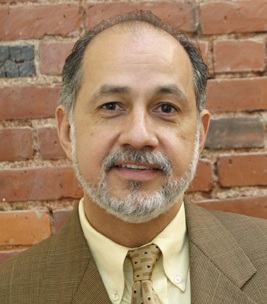
Author
Dr. Roberto Miranda
Summary: God has brought the Hispanic people to the United States with a twofold purpose: to bless them through the opportunities this nation offers and to use their spiritual and cultural richness to renew it. Because of its reach, moral authority, and influence, the Latino church is called to guide the community in spiritual, family, social, political, and economic matters rather than remaining confined within church walls. To fulfill this redemptive calling, it must raise the level of theological and administrative training among its leaders, develop the new generation of professionals, make use of technology, address social problems, and collaborate regionally and nationally. Like the exiles in Jeremiah 29, we must put down roots, work, build enterprises, seek the welfare of the city, and overcome a mindset of rejection or paralyzing nostalgia. This vision also requires self-criticism: we must not idealize the first pilgrims or forget that secularism arose, in part, as a reaction to the failures of religious communities. Healthy integration does not mean that Latino culture should disappear, but rather that there should be mutual learning and enrichment. Rooted in the Word and the values of the Kingdom, we can turn our gifts into concrete service and blessing for others.
Celebrating the publication of the book "In the Land of the Pilgrims—The Hispanic Evangelical Church and Its Redemptive Calling" (Dr. Roberto Miranda)
Welcome……. Pastor Omar Soto
Prayer……. Fanny Rodríguez
Introduction of Pastor Roberto Miranda by Omar Soto
Presentation and Reading of the Book...Dr. Roberto S. Miranda
Comments from the Panelists
Rev. Eliseo Noguera, Dr. Benjamín Valentín, Pastor Sergio Perez
Open Question-and-Answer Session
Closing and Words of Thanks……. David Díaz
TRANSCRIPT
Omar Soto: We would like to begin tonight’s event with a Word of Prayer, to dedicate to the Lord everything we have already been doing and what we will continue doing tonight. For that, we have our sister Fanny Rodríguez, one of the deaconesses here at the church and also one of the church’s founders, who will lead us in prayer. Fanny...
Fanny Rodríguez: Good evening, brothers and sisters. God bless you. I want to briefly share something that happened to me one morning while I was meditating during this time, when I remembered a story—I don’t know whether you have heard it—about a street child who, as a street child, wandered the streets every day, searched for food in the garbage, and slept on the street at night, covering himself with newspapers. A family took him in, brought him home, bathed him, put pajamas on him, gave him a good dinner, and put him to sleep in a room with new blankets and everything nicely arranged. The next morning, when the mother got up to check on him and bring him breakfast, she did not find him in the bed. She thought he had gone back to the street, so she called her husband. They both came, and when they went down to the first floor, the boy was under the stairs, covered with a newspaper and sleeping.
And I felt from the Lord—perhaps it is a somewhat simplistic example, Pastor, forgive me—but I felt that the way the Pastor presents the Hispanic community in the book is that we often fail to recognize the place God has given us.
We have a very special place in the Kingdom of God, and we do not want to take advantage of all the resources and wonderful things God has given us. I want to pray, thanking God for this book, thanking God for our Pastor and for the vision God has given him, and also for the nation to which He has brought us.
Let us pray, brothers and sisters. Before praying... forgive me, excuse me, I want to read a passage from the book to provide context for the prayer I am going to offer.
The Pastor says here in his work: "The greatest blessing we bring to this country, the one that holds the greatest moral and spiritual potential, is the pure and humble Gospel that so many Christian immigrants bring with them. Our poor believers know how to give their money sacrificially to the Lord. These oppressed people of the earth know how to celebrate and abandon themselves to the joy of worship and dance. The exhaustion from the hard work they do during the week does not prevent them from serving generously in their churches during their free time; their limited education does not prevent them from studying the Scriptures with eagerness and discernment and sharing the profound concepts of the Gospel as they disciple our believers and lead home groups. Like the faithful believers of Macedonia whom Paul praised so highly, the Grace of God has abounded so greatly in them that, amid a great trial of affliction, the abundance of their joy and their deep poverty abounded in the riches of their generosity. For they willingly gave according to their means, and even beyond their means," Second Corinthians 9:1.3.
Let us pray: "Most loving Father, at this hour we come before You with gratitude, Lord, acknowledging that You are the giver of every good gift and every endowment, Lord. We thank You for our Pastor, Heavenly Father, for the gifts You have placed in his life, Lord, and because he, Lord, has placed these gifts at the service of Your Kingdom, Father.
Thank You, Lord, for the blessing he is to our church, Lord, and thank You for the Apostolic calling You have given him, Holy Father, because You have given him a calling to proclaim the truth, Lord.
Lord, we ask that he never shrink back, Lord, from speaking the truth in whatever context he may find himself, Father. Thank You for the call he has issued to us and the challenge, Lord, as a Hispanic community, Lord, to carry a complete Gospel, Lord. To carry Your Shalom, Heavenly Father, and that we may see that social action, Lord, is part of the Gospel, Father. Help us, Lord, to impart Your Word, Lord, and to impact, Lord, not only the community but also political institutions, Lord, and social institutions, Lord. Thank You for the awakening You are bringing about in the midst, Lord, of this nation, Father. We pray that this work, Lord, may reach lives, Father, that they may be activated, Lord, that they may be renewed, Holy Father, and that they may understand that in Your Word, Lord, there is freedom, Lord, and that only through You, Lord, can we be, Lord, the salt and light of this earth, Father.
Father, we ask You to help us change our way of thinking, Lord. Lord, may we think biblically and not culturally, Lord. Lord, may we think theologically and not humanistically, Father. Father, keep us, Lord, and release, Lord, release Your blessing, Lord, upon the Hispanic community, Lord, throughout this nation, Heavenly Father. Allow many to be impacted, Lord. Lord, and may the Pastor be able, Holy Father, to impart to Pastors and leaders the vision and calling You have established, Lord, for the entire Hispanic community, Father. Thank You for this time.
Bless us, Lord. Remain with us, because we ask it in the name of Jesus. Amen, amen."
Pastor Omar: Thank you very much, Fanny. Well, brothers and sisters, I just want to let you know how we are going to proceed tonight. Of course, we will begin with a presentation and also a reading from Dr. Roberto Miranda’s book. After his presentation, we will hear from the panelists, beginning with Pastor Dr. Eliseo Nogueras, who is here with us from Rhode Island. He will be followed by Dr. Benjamín Valentín, and finally we will have Pastor Sergio Pérez, who will also offer a response to Pastor Miranda’s presentation.
In fact, we excuse Dr. Eldin Villafañe, who was unable to be with us tonight because of a health issue. Thank God he is all right, but he is in somewhat delicate health, so he thought it best to rest quietly at home today.
But again, before introducing Pastor Miranda, I would like to share a few words with you.
And I could very well say that each of us has a particular person, whether a man or a woman, who has had a great impact on our lives. Tonight we recognize the work of a man, a servant chosen by God for a time such as this in which we live, who has also touched our lives in one way or another.
This man, originally from the Dominican Republic, earned both a master’s degree and a doctorate from Harvard University in Romance Languages and Literatures, specializing in Latin American Literature. For the past twenty-five years, he has pastored—and will continue to pastor—Congregación León de Judá, where we are today, and that emphasis is intentional. Twenty-five more years...
... Moved by an impulse of the Holy Spirit, this man founded and presides over what is now known as COPANI, or the Fellowship of Hispanic Pastors of New England, to promote the unity and comprehensive development of the Pastors in our region. This man, in the words of Dr. Villafañe himself: "Is characterized by a personality constantly seeking that balance between the dimension of Faith and Spirituality and how it is translated into concrete actions capable of transforming the human person.
His life reflects that constant tension of what it means to live at a crossroads where Faith is not necessarily something black or white, but where there are also those gray areas in which God constantly challenges us to live.
He is distinguished by an ongoing desire to learn about the mysteries of God and how to make them known to His Church. He is a man of humble Spirit, with a teachable heart, and his warm smile demonstrates a true sense of brotherhood toward those around him."
Ladies and gentlemen, it is my pleasure to introduce to you a great servant of God, a tremendous husband and father, an inspiring Pastor, and a tremendous colleague and fellow soldier: the Reverend Dr. Roberto Miranda.
Rev. Dr. Miranda: Thank you, brothers and sisters, thank you. It goes without saying that we give the Lord all the Glory and all the honor. And although I do not believe that what I am going to say will necessarily require me to open this Bible, I brought it and am placing it up here as an acknowledgment that, ultimately, brothers and sisters, every worthwhile Word anyone can speak comes from here, and we always give the Lord the Glory and the honor.
The only thing we can do is elaborate on what God has already said and draw from here life, energy, and wisdom for the events of life. That is all; everything else is simply elaborating and circling around what God has already declared.
And thank you for coming tonight, each one of you who are close to our lives and our Ministry and who have been such a Blessing over the years. You enrich our lives, our family, this Church, and this community with your gifts, your efforts, and your sacrificial labor. For me, it is a privilege to be united, to be in community and communion with each one of you.
I thank the Lord for this very special moment, which is the culmination of many years of waiting for God’s timing in doing things. I am grateful for the presence here of my fellow Ministers, Pastors, Seminary Professors, and people who are laboring, such as Pastors Michele of Woodford Centre.
Rudy, thank you for bearing with us through the Spanish part of this whole thing. I’m grateful that you are here today, and Adam Juárez and the Prophet Rigoberto Rojas, who have been traveling and who apparently have just returned from a very long trip. So I appreciate these gestures of fellowship and solidarity.
That blesses me greatly. So, brothers and sisters, it is a privilege to be with you tonight, and there are so many things in my heart. The only thing I can say is this: for years—and I once shared this with the Church—when the Lord called me to pastor this Congregation toward the end of 1984, I was preparing for my academic career and had a great desire to devote myself fully to teaching and intellectual work. Since childhood, my dream had been to write, publish books, and live a rather "pseudo-intellectual" life, let us say, in the academic world. Then the Lord called me to pastor an emerging community, as Central Baptist Church—which is now León de Judá—was at that time, and I had to take a very hard look at where my priorities truly lay: whether I would give the Lord my life and do what He told me or fulfill my dreams and what I had felt since childhood that I wanted to do.
And I had to decide, and I made the decision. It was not too difficult, I assure you, to surrender myself to the Lord and to the Ministry, and I had to set aside those dreams I had of writing and continually swimming in the world of the intellect. Nevertheless, in my heart I said: "Father, if it is within Your purpose and what I have done pleases You, then someday You will give me the opportunity to teach or write and to fulfill this part of my life and my calling," and I left it there.
I always ask the Lord to direct my life as though it were a text from the Bible, with all the wrinkles, sufferings, triumphs, glories, surprising appearances—everything He knows how to do in His writing, which is so dense, so complex, and so beautiful. I have seen many cases in which the Lord blesses those who surrender something they love to Him and later gives them more than they expect.
I have lived my entire life with that vision, with that paradigm in mind. And now, 25 years later, the Lord gives me the privilege of writing this, which I hope will be my first book, and then of writing many things that are in my heart. But I had been longing and waiting for God’s time, for when He wanted that moment to come, and now it has. I am grateful to God to be able to do it in this way.
When I began this book, the goal was different, but it took on a life of its own and guided me along the path God wanted it to follow, and I ended up writing something a little different.
But there is a vision that animates it. Some people have asked, "What do the title and the cover mean?" Well, I am going to begin there because there are so many things I could say, and I want to be very precise in what I say.
The title, "In the Land of the Pilgrims"—that word "pilgrims" clearly has a double meaning. The Pilgrims were those people who came here from Europe in the year 1620, in the seventeenth century, to the Plymouth, Massachusetts, area with a vision from God to settle here and establish a land that could exemplify—a nation that could exemplify—the values of Scripture, and to be able to serve the Lord as they felt in their hearts.
To establish a nation without parallel, a nation that for a long time has even blessed the world spiritually. That nation has gone in another direction, and every day it moves farther and farther away from the original vision of those pilgrims, of those Puritans in the good sense of the word who established this country. It is continually moving away and declining spiritually.
We—people such as the Latinos who have come here to the United States—I insist in this book that we have come with a divinely determined purpose: we come to bless this nation, to enrich it, and to connect with the vision God gave those pilgrims. We are pilgrims too; this is a nation of pilgrims, this is a land of pilgrims, and we Hispanics come here with dreams as well, just as those people did, and we also come with a vision. Many of us, particularly believers, come with a vision from God, and we certainly come to renew those bonds, to renew and reopen those spiritual wells that the first pilgrims established here.
And we come to be a source of blessing to this nation; that is where the title “In the Land of the Pilgrims” comes from. The cover, the front cover, is a somewhat abstract urban image; it refers to the fact that we Hispanics are found in the great cities of the United States. We are mostly an urban community—Miami, Chicago, New York, Dallas, Boston. We live in the great cities, and what is needed is a church with an urban vision and the ability to minister to these Hispanics who are in our nation’s cities, one that has the capacity to navigate the turbulent and complex waters represented by the cities where we find ourselves.
So that is the vision, and what I am going to do is read. This afternoon I took a few paragraphs and different segments from the book and put them together here, and I hope they make sense, because what I have wanted to do is present some of the book’s central ideas and read from it so that you may know a little about what I say throughout it.
And I hope that if you have not bought it, you will not leave tonight without your own copy of the book as well. I am losing my embarrassment about promoting things, so I have learned in that regard; but I hope it will be a great blessing to you, and I deeply appreciate the great interest you have shown in it.
“God has a special calling for the Latino church in the United States. The growing presence and influence of Hispanics in this country—which can only continue to increase in the coming years—constitutes one of the most important social phenomena in the life of this nation.
At this time, Hispanics constitute the largest minority group in the United States: 45.5 million people, according to the 2006 annual report of the United States Census.” And that is probably higher, by the way. “According to figures from this same agency, between 2005 and 2006 one out of every two people born in the United States is of Hispanic descent.” Say, “Wow!”
“By July 2050, the United States Census Bureau projects that the Hispanic population in this country will reach 102.5 million people, 24% of the total population. This is found in a study entitled ‘Hispanics by the Numbers,’ Census Bureau 2007.
The purchasing power of Hispanics is increasing every day, and the major corporations in this country have adjusted their production and marketing strategies in recognition of this fact. The Hispanic church is positioned to exercise decisive leadership over that Latino community, which right now is emerging as a sleeping giant in this nation.
No other institution in this country has the institutional infrastructure, leadership, ideology, and geographic reach to influence the Latino community as a whole in the way the Hispanic church does. No other institution or group of Hispanic leaders in this country possesses the moral authority or influence that the Latino church has. According to a recent study commissioned by the PIU Forum on Religion and Public Life, a survey published in April 2007 entitled ‘Latinos and the Transformation of American Religion,’ 20% of Hispanics in the United States identify as born-again evangelicals and 68% as Catholics; an additional 3% practice some other form of Christianity, bringing the total number of Hispanics in this country who identify with some expression of Christianity to an impressive 91%.”
If we take into account that more than 50% of Hispanic Catholics identify as “charismatic Catholics”—that is, very committed people, with values very similar to those of evangelicals, by the way, and with a spirituality very similar to that of evangelical Pentecostals—that implies that a majority of Hispanic Christians in this country profess a living faith, which significantly influences their values and behavior.
According to the PIU Forum study, and I quote: ‘The role Latinos play in United States politics and public affairs is deeply influenced by the distinctive characteristics of their religious beliefs. Most Latinos see religion as a moral compass to guide their own political thinking and expect the same from their political leaders. Moreover, across all their major religious traditions, most Latinos see the pulpit as an appropriate place to address political and social issues.’
“By far, the Latino church is—or has the potential to be—the most important resource for informing and guiding the Hispanic community in this country concerning its ethical, political, moral, and spiritual decisions. Whether that potential is fully realized will depend largely on the ability of Hispanic Christian leaders in the coming years to bring the Latino church in the United States to the level of spiritual and institutional development it requires.”
Given the complex role that this community must play—or rather, the complex role that this church must play within our community.
What I am emphasizing here, brothers and sisters, is simply the fact that, because of the Hispanic church’s great influence over our culture and the value Latino people place on faith, it has tremendous potential to influence a community that, by virtue of its sheer numbers and cultural influence, is already exercising great leadership in this nation and will continue to do so in the future.
It is important for us to grasp the Latino church’s potential to influence our community positively. “The Hispanic church in the United States has the possibility of playing a decisive role in the standard of living our community attains in the future. We can powerfully influence the destiny and performance of our young people, the health of the Hispanic family, our economic progress, the moral and spiritual health of our people, the values that shape their political and social decisions, as well as a whole range of other important elements that will determine the overall destiny of our community.
At this time, the Latino community has no other moral or political resource capable of speaking authoritatively across all the cultures, nationalities, and ethnicities that compose it. It can be said that at present, apart from the Hispanic church, the Latino community lacks adequate leadership”—and I emphasize—“at the national level, with the capacity to represent and guide it at this crucial moment in its development, as it acquires ever greater political and social power while at the same time facing serious challenges concerning its collective health.”
In other words, if you look at the Hispanic church as an institution, it is the only one. We have Hispanic leaders, but the only institution that can speak to all the races, cultures, nations, and geographic regions where we find ourselves is the Latino church. It seems to me that this goes beyond the fact that I am a pastor; it is simply a sociological fact.
“More interesting still, it can be said that the redemptive calling of the Hispanic Church in this country extends not only to the Latino community itself, but also to all of American society. As we will see in greater detail later, the growing cultural, political, and spiritual influence of the Hispanic community could be an element of considerable importance in that fundamental internal debate within American society, which is poised indecisively between a sacred and Christian worldview on the one hand and a secular and humanistic worldview on the other.”
Right now, the balance hangs there. Where will this society go? Will it go to one side or the other? And through our influence and our values, we can play the role of an arbiter.
“That possible influence of the Latino community on American culture in general could be extremely beneficial, helping to halt this nation’s growing spiritual and moral deterioration and contributing to reorienting it toward its spiritual origins—those spiritual origins from centuries ago.
That essentially Christian sensibility which Hispanics bring with them into American society has the potential to strengthen it significantly in its Judeo-Christian foundations and to tip the balance decisively toward orthodox Christian faith. The moral values of the Hispanic community still generally lean toward the traditional side. Its understanding of family and sexuality, for example, still follows the basic patterns of the Christian faith.
In both the Catholic and evangelical sectors, Hispanics still look to their church authorities for moral, political, and spiritual guidance. That attitude could change in the future as the cultural influences of this secularized society, suspicious of religion, begin to make themselves felt in our community.
For the moment, however, the balance still leans toward a profound respect for religious truths and authorities. It can be said that the Latino community’s potential to integrate healthily into the broader society of this country is very high. Our Hispanic people do not carry the emotional wounds and historical traumas borne, for example, by the African American community, which make its relationship with the majority society very conflict-ridden and problematic. Racially, our Hispanic people carry in their blood and physically reflect a mixture of races: Africa; Asia, through our Mesoamerican past; Europe; and even the Middle East, if we take into account the profound influence of Arab culture on our Spanish past.
This gives the Hispanic people a universal sensibility, a certain ease in communicating comfortably with a wide range of cultures and races such as those found in this country. All this makes it easier to establish harmonious relationships in the future and facilitates the Hispanic people’s potential integration into the majority culture of this country. On the other hand, this also facilitates the possibility that Hispanic culture, with its moral and spiritual values, may exert an important influence on that majority culture.
After all, the point is not for Latino culture to disappear or merge indistinguishably with the predominant culture, but for a process of mutual learning and enrichment to take place between the two.”
So I am going to end with this last... Toward the end of the book, I speak about Jeremiah 29, where God sends a letter to the Hebrew people who are in exile in Babylon—a letter that I call a love letter—through the prophet Jeremiah, in which He tells the people in exile: ‘Do not give up and die.’ Do not adopt the mentality of a captive, rejected, alienated community. Enter fully into the life of the nation to which I have sent you. Conduct business. Give your children in marriage, buy houses, do business, because, He says, ‘For I know the thoughts I have for you—thoughts of good and not of evil.’ And He also says, ‘And pray; seek the peace—the shalom—the blessing of the city to which I have sent you.’ In the same way, brothers and sisters, God calls us to become fully involved, to be an aggressive community in the best sense of the word—ambitious, with healthy aspirations for advancement—to do great things, to undertake great things, because He has great purposes for us.
And He tells us, “You know what? I want you to bless the nation to which I have sent you.”
Now, as I analyze that text, I am struck by how applicable it is to the central thesis of this book. Like the Hebrews exiled in Babylon, God has brought the Hispanic people—He has caused them to be carried, as Jeremiah says—to the United States with a profoundly spiritual purpose.
“Our presence in this country is not simply the product of blind geopolitical or economic forces. Ultimately, we are not here because of the actions of oppressive dictators, greedy landowners, or oppressive oligarchies. In the final analysis, it is not civil wars, consuming poverty, or terrorist violence that have exiled us to this nation so foreign to us. We are actually here because God wants to bless us and because He wants to bless this nation, whose historical spiritual roots are so deeply embedded in the soil of His Word.
The covenants and prayers of those devout Pilgrim Puritans who laid the spiritual and intellectual foundations of this nation are still in force, and God is sending reinforcements—us, people like us—to rekindle them in this time. Babylon was simply the physical instrument God used to carry out His fatherly discipline upon Israel.
But behind the imperialistic actions of that powerful nation was the benevolent hand of God carrying out His will in order ultimately to bless His people. As this passage makes clear, God was using Babylon as His instrument of discipline, although He would later also execute His discipline upon it because of its cruelty and lack of mercy toward His people.
As we were saying, God has a twofold benevolent purpose in bringing us to this country: He wants to bless us by allowing us to share in the opportunities and resources this prosperous nation offers, but He also wants to bless this nation, fertilizing and renewing it with the spiritual wealth we embody.
Brothers and sisters, God wants the Latino people to assume a visible and positive role in the physical and spiritual life of this nation. As in the case of the Hebrews in Babylon, He calls us to multiply and not diminish.” I do not think we are going to have a problem with that part. “To joyfully embrace the call to work, do business, and celebrate. The exiled Jews were to concentrate on putting down roots in their new land for as long as the exile lasted and not allow their nostalgia for the homeland they had left behind to rob them of the energy they needed to live successfully in their new place of residence.
We too must look resolutely ahead; we must resist the temptation to live divided lives, with one eye here and the other on the homeland we left behind, exiled in an emotional limbo that prevents us from fully embracing the challenge before us. We are moving within the active will of the Creator God; our times are in His hands, and He knows precisely how long the historical process we are living through must last and how it must unfold. Our part is to discern His will, accept it obediently, and enter fully into that spiritual adventure opening before us.”
I am going to finish here. I am skipping a couple more paragraphs.
“In Jeremiah 29:11 through 13, God underscores His purpose to bless His people with an unequivocal affirmation of His goodwill toward them and tells them: ‘For I know the thoughts that I think toward you,’ says the Lord, ‘thoughts of peace and not of evil, to give you the end you hope for. Then you will call upon Me’—says the Lord—‘and you will come and pray to Me, and I will hear you; and you will seek Me and find Me, because you will seek Me with all your heart, and I will be found by you,’ says the Lord. These words must have been a spiritual balm to a people who felt guilty and justly abandoned by the God whom they had so openly disobeyed and offended. God was promising them that His intentions toward them were not destruction or abandonment but quite the opposite: He had the firm purpose of blessing them, hearing their prayers, and having fellowship with them. He would deal with them and bring them to a new spiritual level so that they would call upon Him and seek Him with all their heart.
In the same way, the idea that, as a community in this country, we are moving within God’s good purpose, that we have the wind of the Spirit behind us in everything we undertake, should give us courage to live optimistic lives and dream great dreams. God’s will is for us to prosper and for our prosperity to overflow in blessing to others.
A people rooted in the Word of God and the values of the Kingdom has no limits on what it can achieve. The spiritual and cultural wealth contained within the Hispanic people is a beautiful gift that can contribute to the renewal and enrichment of this nation. All that is needed is an anointed, equipped Church capable of preserving, strengthening, and unleashing that profound endowment lying within us.”
Thank you, brothers and sisters. May the Lord bless you. Read the book for the rest.
Pastor Omar: Now we are going to have the moment when we give each of the panelists here with us an opportunity to respond based on their reading and on what they have just heard Pastor Miranda say.
Each of them will have approximately six to eight minutes to deliver their presentation and, as I mentioned a few minutes ago, we will begin with the Reverend Eliseo Nogueras, who is a pastor over in the Rhode Island area. He will be followed by Dr. Benjamín Valentín, Professor of Theology at Andover Newton, and then Pastor Sergio Pérez, Pastor of Ministerio Cosecha in Weymouth.
But first, we begin with the Reverend Eliseo Nogueras.
Rev. Nogueras: It is dangerous to give a Pentecostal pastor a microphone and tell him he only has six minutes. Let’s see how we manage this.
God bless you all. Good evening. It truly is an honor to be part of this magnificent occasion. I want to thank Dr. Miranda for considering me for this presentation. Greetings to all my colleagues who are here tonight.
We need many more evenings like this in the Hispanic community, and we urge everyone who is preparing themselves to continue, because this truly is our time. And we thank God for Dr. Miranda, who blazes new trails and continues the craft of writing, because our stories too will be worth a great deal, and we need to tell them at this time.
When I also saw that Dr. Villafañe was going to be part of this, I was very glad, because he is one of those men in our history who has truly made a considerable mark on our lives and who has provided us with timely counsel, so that we too may be here at this time, preparing ourselves to continue our studies and carry out a plan that we truly consider divine. It was given by God to this people, and this people must take it seriously; it is very serious. I am not going to take any more time because they gave me very little time, right?
I was asked to speak a little about this book, and what a good title he gave it, right? “In the Land of the Pilgrims.” The Hispanic Church Made a Redemptive Call—this project being presented has arrived at precisely the right time. This book is, as we used to say in Puerto Rico, “like bread fresh out of the oven, hot and delicious.” The subjects discussed here are current issues.
Like León de Judá, Gethsemane—the church I pastor by the grace of the Lord in Rhode Island—and many other congregations across the United States are facing the same challenges and the same difficulties. How do we lead a people in a state of flux and change? How do we provide an engaging ministry, one directed not only toward spiritual needs but toward the whole range of needs, ministering to people for the healing of the whole person?
I believe the exposition aligns the new waves of migration with the historic ideal of the Puritan dream that a city might be created upon a hill, shows the gradual but constant departure from the original plan, and presents a divine design for reinforcing those principles with immigrants who arrive in these places more firmly attached to those principles than the descendants of those very Puritans.
Though it may not be accepted, it only needs to be examined, as has been done in this work, and it will give people much to talk about.
He has truly dotted the “i” and said, “Aha!” One of our arguments in our immigration work over the last few years has been to make the Republican Party of this nation see that it truly has turned its back on Hispanics over the years. The point is that Hispanics have much more in common with them, and they should pay attention to those truths; and fears perhaps driven by racial tensions should not be what takes center stage at this moment, right? Instead, they should look at the principles that we Hispanics are bringing to this nation.
And on this matter, I want to say that this point truly opens up a dialogue, a way of speaking and presenting, and I truly recognize it as: “God is in control.” In my opinion, this book presents a modus operandi for many other congregations that are ministering in the United States, and perhaps around the world, at this very moment. In seeing the development of this Church through these pages, readers will receive not only practical information but also the inspiration that it is possible and, yes, we can do it.
The legacy that must be established is that the Hispanic church has the calling to keep the fire of God alive for this time. It is an argument that will inspire many to accept the challenge and run with it as well.
I also want to congratulate him on the very appropriate way in which he presents several of the arguments set forth here. First, the courage to address one of the most controversial issues to have arisen even within religious circles: homosexuality. I believe our brother Miranda’s discussions allow us to see that we can take a position on this issue without offending. We can present conservative biblical truths without denigrating people who are trapped in this lifestyle. This recognizes that those who participate in these lifestyles tend to denigrate everyone who disagrees with them; yet here we see an attempt to do it in a godly manner and with a truly pastoral spirit.
With the perspective of a man of God who sees all God’s children as people who need someone to minister to them, help them, lend them a hand, and lift them up. This truly is an art that all pastors must develop in our daily lives.
Let us pray that in future works you may continue developing a teaching that can be evaluated by both sides and received as it is being presented.
Second, the presentation of the Hispanic church—its development, its achievements, and its need to advance. Great care was taken to give concrete advice that can be followed. At times it is very difficult to offer constructive criticism without offending those being criticized, but I believe the advice given here is offered in a spirit of mutual help and born of lived experience. This gives the writer great credibility. One can see how he has moved from experience to theory and from theory to experience. Well done; it will be well received.
Finally—and I left it until last because I believe it is one of those topics that have defined the holistic church in recent years—there is the topic of immigration and how to correct this system that, since its inception, has perpetuated the level of racism that has existed in this country.
Beginning with its misguided and tragic decision to enter the business of selling human beings, putting a human face on those who suffer because of the injustices of this system will go a long way toward getting people to evaluate the decisions being made, since people continue to be seen only as numbers—and this is a strategy that has been used time and again in this nation.
If you take away a person’s name and face, you are basically granting permission to dehumanize that person, to treat that person as something rather than someone. And truly, seeing the human face through the pages of this book makes us realize that these are not numbers; this is not something we can correct simply by passing a law, but rather by looking at human suffering, at the day-to-day life of each person striving in this country to become a citizen who can contribute to this nation and be respected.
It is interesting to see the achievements recounted in true stories, such as that of the Santos family. This will lead readers to see that these are families just like their own, and that all they need is to be given an opportunity to become productive members of this American society; and they will continue making this nation a powerful nation.
I will conclude by saying this: I believe it has been divinely ordained for this time that we Hispanics take the place that rightfully belongs to us, given by God.
Roberto, you have placed in our hands a tool we can use, one we can take to our churches, and we can instruct our teachers so that they recognize the place where God has put them and cry out everywhere: God has placed this nation in our hands so that it may continue to be that experiment God once forged.
And one last quick piece of advice: publish it in English too. God bless you.
Pastor Omar: Thank you very much, Pastor Nogueras. Following him is Dr. Benjamín Valentín, Professor of Theology at Andover Newton Theological Seminary. He is a good colleague of mine and also a teacher, so, Benjamín, we give you the opportunity to make your presentation.
Dr. B. Valentín: God bless you all. Good evening, and blessings to my church, León de Judá. My church.
I’m telling Omar not to start that clock yet, you know. At least let me greet my people, and then you can start it. But seriously, I think this is wonderful, my people, truly wonderful. As an academic and as someone who moves in the world of ideas and the world of literature, I am very pleased that the arrival of a book—a good work like this one—is being celebrated, and in the context of the church.
Agreed, it would be very good if this type of event could be seen more often in our churches, to foster greater enthusiasm, I believe, for reading books, for critical reflection, and for developing new ways of thinking.
I warmly congratulate the Reverend Roberto Miranda on the achievement of his masterful work and this important book entitled—a very catchy title; that’s a big part of writing books—“In the Land of the Pilgrims,” and I also congratulate the leaders of Lion of Judah Church for organizing this event. I believe they also deserve a big round of applause at this time.
Now you may begin. I am going to take a few short minutes to comment on the book by my pastor, the Reverend Dr. Roberto Miranda, and the first thing I want to emphasize in a more general way, before getting into the book, is that the arrival of Reverend Miranda’s book helps us, I believe, to correct two somewhat negative tendencies that sometimes appear within some of our churches.
The first is that I believe it helps us overcome a kind of anti-intellectualism that sometimes appears within our evangelical churches. I always tell my students at Andover Newton that we must learn that we can please God and praise God with beautiful thoughts. With song, with many other things, but also with reason and beautiful thoughts such as those found in this book.
The second is that the book helps us overcome the tendency to focus on supposedly spiritual matters and to ignore the social, cultural, and material dimension of the Gospel; and I believe the two must be very well connected, and this book does that very well and therefore gives us a model for doing the same.
As for our pastor’s work itself, I believe it is a very well-written, very well-argued, and highly convincing book; it is a scholarly book.
I will quickly say that every month some six, seven, or eight books arrive at my office, which I sometimes have to read, if I choose to read them, in order to write reviews for journals, magazines, and things like that. In other words, I am always reading books, and this book is honestly one of those I have most enjoyed reading in quite a while.
The book’s thesis is clearly set forth on page fourteen, and, if you will allow me, I would also like to read from the very words of the book.
The book’s thesis is clearly set forth at the top of page fourteen, where it says: “The main thesis of this book is that God has called the Hispanic people to play a spiritually renewing role in this nation,” and throughout the rest of the book Reverend Miranda makes it clear that there are several factors that give the Latino-Hispanic people the capacity to play this renewing role in our culture. For example, there on page fourteen, you will see that Reverend Miranda mentions three factors.
These are, number one, the essentially Christian sensibility that Hispanics bring with them into American society.
Number two, the moral values of the Hispanic community, such as, he mentions, its traditional conception of family and sexuality; and number three, its respect for ecclesiastical and governmental authority.
On page forty-nine, our pastor mentions another factor; allow me to read it to you quickly: “It is possible,” he says, “to affirm that the Hispanic community’s potential to integrate healthily into the broader society of this country is very high,” and the reason is what we might call mestizaje or mulatto identity, that is, the mixture of ethnicities seen within the Hispanic community. Then, from pages 288 to 295, he alludes to several other important factors, such as, for example, the importance of family to the Hispanic people. Number six, the average age of the Hispanic people. He notes that it is a young community and therefore has plenty of energy. Oh, I hope we use that energy well! Right?
Seven, the rhythms, he mentions, and of course, as a musician, I loved that he added that there. The rhythms and chords of our music and our craftsmanship. The instinctive hospitality of the Latino people, and then he also mentions the people’s spirituality.
I believe he mentions several other factors, and they are very well argued, and one of the paragraphs that struck me most—and I believe it is one of those paragraphs I would call ingenious and very nicely written—is on the last page of the book, page 296.
For me, I believe it is the paragraph that had the greatest impact on me, both because of its content and the beauty of its articulation.
There I quickly read: “At the darkest time in the spiritual history of this nation, God prepares the conditions for the most powerful revival ever seen. It is quite possible that God, in His customary irony, has resurrected the pilgrims of old, this time with darker skin and with the blood of the original inhabitants of this land flowing through their veins, to come to this country and help reconquer the land and return it to the spiritual mission that originally gave birth to it.” Isn’t that a beautiful paragraph?
I believe I have two or three more little minutes left, right? Okay.
Of course, even a scholarly work such as this one leaves doors open for certain unanswered questions, and perhaps on another occasion, in another context, when I do not have someone watching my time, I will have the opportunity to dialogue with our pastor about my questions.
But here, in conclusion, I only want to allude to two possible questions, and I present them simply because you have said that you are thinking of writing other works, which is also my wish, and I am already looking forward to them. And the two questions I have regarding the work are as follows:
One has to do with the idealistic and perhaps romantic presentation of the first European pilgrims and the beginnings of our nation. History reveals to us that not everything connected with these pilgrims was positive. These supposedly pious pilgrims contributed to the enslavement of Africans, the mistreatment of Native Americans, and countless wars among themselves. This is one side, perhaps the darker side, of these pilgrims that you did not mention in the book.
The second question has to do with the presentation of secularism. The irony, my brother, is this: secularization in Europe and the United States begins precisely because of the feeling—the perception among some people—that faith communities had failed. Here, especially in the United States, secularism itself begins as a reaction to some rather ugly things within religious communities, such as religious intolerance, wars among themselves over denominationalism or other kinds of religious differences, and therefore the leaders of this nation think that perhaps the government of this nation cannot be left in the hands of these individuals.
Why do I bring this up? Well, simply because, at least in the beginning, the secular movement arises precisely in reaction to certain failures of the faith community, and I believe they are failures that, even today, we must keep in mind and correct—sometimes correcting what is seen within us as well as what is outside us.
Nevertheless, there is no doubt that, despite these two questions of mine, this is an extremely important and meritorious work.
I applaud Reverend Miranda for his vision; I, too, share the Reverend’s vision and align myself with it, to act upon it and put it into action, and I applaud his contribution through this book.
To everyone here tonight, I say—and indeed implore you—to seek it out, buy it, examine it, read it, and, most importantly, allow yourselves to be inspired by it, and may God be with us. Amen.
Pastor Omar: Thank you very much, Benjamín, for your contribution, and I believe even those questions are very necessary in helping us further develop those lines of thought that are so critical for the time in which we live. We thank God for thinking minds such as Benjamín’s, which help us see those perspectives that we face as a Christian people.
Following Dr. Valentín, we now have Pastor Sergio Pérez, senior pastor of Harvest Ministries here at the church in Waymouth, a good colleague as well—not only of mine, but also a guest there, “photo finish,” as we would say—and we thank you for always being willing, and we know that your contribution is important as well, Sergio. Thank you.
Pastor Sergio Pérez: Thank you. I speak on behalf of everyone present when I say that it is a true honor to be here at the launch of this tremendous project, this book, “In the Land of the Pilgrims.”
The classic movie Fiddler on the Roof came to mind, in which, as you will remember, Ratavia goes to visit his eldest daughter, who had gotten married, and everyone rushes off to see the birth; they were saying, “It’s here, it’s here,” and everyone goes running.
All of us watching the movie think the baby has arrived, and when they go in, it turns out that what has arrived is the tailor’s sewing machine, right? The one his son-in-law had acquired.
And that is how we all are: “It’s here, it’s here!” And what is it? The book has arrived… the book has arrived!
At last it was born, because this baby had been gestating for many, many years, and it is one of those messages we sometimes preach. Sometimes we preach forty-five-minute messages, but those messages took thirty years to form within us, in our minds, in our spirits.
And that is precisely what I want to talk about: the formation of a man of God, because when we think about a work such as the one before us, we may overlook the fact that forming a person requires a great investment—not only the formation of the person as an individual, but also everything that lies behind it.
I am sure that the upbringing provided by our brother Roberto’s “dear mother” is very implicitly present in this book, because one becomes the continuation, the accumulation, of those experiences, of that formation that began many years ago.
I have always taken advantage of the moments when I am with Dr. Miranda—he knows this—that when we travel, on the occasions when we have done so together, whether driving in a vehicle or flying on an airplane, I like to ask him about his education: Where did you study? What were your years over there in France like?
I do not know whether you have heard your pastor speak French, but just as he speaks English and Spanish, he also speaks French very well. I always ask him, “And how did you learn to speak French?” And his education... And that is very important, because all that experience, even from past generations, ultimately flows together and is embodied in literature such as this. The formation of a leader is very important.
One of Dr. Miranda’s virtues—and those of us who have known him can affirm this truth—is the virtue of being able to navigate through complexity. He has that ability. I have heard him preach messages, even using anecdotes to which he often refers.
How he has the ability to... there is a message in which he preaches about the electrical wires behind the walls to explain the complexity of the invisible, of what cannot be seen. At another point, he also draws out an example of how an engine works, as well as spacecraft and all of that.
He seems like Solomon, doesn’t he?—who discoursed even about the mosses of the field, insects, and ants. But it is a very beautiful ability that we can appreciate even in this writing.
Another very beautiful blessing, and part of that complexity, is the connection with history. And as you will notice in the book, it is not only a connection with the history of the pilgrims, but it also connects to Israel, to the people God desired to raise up from the loins of Abraham, to whom God gave words of blessing and beautiful promises that, if they were a people subject to God’s commandments, they would be a people more prosperous than any other people on earth.
They were to be a model people, and then, as is expressed, that people could not continue responding to God, to the point that the nation most similar to the Israel of the Bible is this nation.
It is not for nothing that people risk their lives and cross borders and deserts to reach this nation. Not only from Latin America, but from many parts of the world, because it has become the promised land for many. It has been so for many of those families; and he connects that Israel with the opportunity offered by this nation, then the loss of the vision, and God’s having to bring and mobilize Latino communities from very far away to bring that hope of restoration. And as he expresses very clearly, today we have more in common with the pilgrims who came to this nation in terms of values, the validity of Scripture, and the Judeo-Christian principles of this nation.
Today we have more in common with them than the natural-born children of those pilgrims themselves do. Hence the subtitle, “The Hispanic Evangelical Alliance and Its Redemptive Calling.”
I believe the voice we hear when reading these pages is not merely the voice of a worker, a leader, or the pastor of a congregation, but a prophetic voice.
God has always needed anointed arms to turn the people back to God. God needed an Elijah to confront the coldness, indifference, and even apostasy of the people of Israel. It was not an easy task. The Prophets were never called because things were going well. On the contrary, whenever a prophetic voice was needed, it was because things were going very badly.
The work of a Prophet is not easy, but it is important in the midst of a nation that needs to hear the voice of God, and that is why I agree that this book, I believe, will be a great blessing when it is translated into English. Because it will be able to explain to Anglo-American communities the reason for our Passion and our insistence on defending the truthfulness of the Bible.
Another beautiful thing I find in the book is that it is a manual for helping individuals, families, and, I would venture to say, Ministries understand the great opportunity we have as Latino communities.
It is as though the ball has come onto our court, and now the play is ours to make. What are we going to do with this opportunity to be the fastest-growing minority? What are we going to do with that potential? And this book helps us understand the opportunities we have, as well as the challenges.
In other words, as a community, it is our turn. What are we going to do with that opportunity? What are we going to do with the opportunity to be in this nation and with the potential we have? My first reaction upon reading the book was, “I need to buy a lot of copies.”
That was my first reaction: “I need to buy a lot of copies, and I need to send them to all my Pastor friends in the United States,” who are in many States—leaders, Pastors, servants of God—because it will bring a great deal of light, guidance, and understanding of why we are here.
Finally, with all my heart, I want to thank this Congregation, and please do not misinterpret these words. I know that you are mature, but I want you to grasp this idea: you have been the laboratory, the experiment for what God wants to do, and that image is very clear to me.
Sometimes, when we do not understand what scientists are trying to invent, I think of someone experimenting to obtain the right vaccine to stop an entire epidemic, a disease, and the need is urgent. Meanwhile, people are dying, but there is that person experimenting in his laboratory, conducting tests. I imagine the joy of finally emerging with the medicine in hand.
I imagine the satisfaction, even if in the meantime there were people who had to be sacrificed and it did not arrive in time for some, but the satisfaction of someone who says, “I’ve got it now.”
And León de Judá, perhaps you do not realize what God is doing with you. Sometimes we see only the rushing around, arriving early, preparing for a class, sometimes pushing other people along, and we lose sight of God’s eye upon us and what He is doing.
I truly believe this would not be possible if it were not for a Congregation like you. You have been that laboratory of God, through which God inspired a man with a vision far more complex than the traditional vision of doing Ministry, of doing Church, where all we have learned to do is hold services and preach the Word, and that is all.
But God has brought and shaped Doctor Miranda to think of the church in more complex terms and to take the church to other levels, and you have accepted that challenge. I congratulate you because the inspiration for many beautiful projects that have blessed and will continue to bless our community has come from here. Congratulations, Doctor Miranda.
Thank you, Sister Mercedes, as well, for all your support and effort, and thanks to the leaders and this Congregation for their backing. May God Bless you! Thank you.
Pastor Omar: Without a doubt, I would venture to affirm that many years ago the Hispanic people were evangelized by Missionaries who left this nation and came to our countries; yes, they communicated the message of the Gospel, and with it they also brought a system, a moral code by which to live.
That is also often known as colonialism and is described in those terms. But at the same time, I can say that today God is moving those people who were evangelized years and centuries ago and is bringing them back here. To that land that originally evangelized them, so they may come back to evangelize here again and once more bring this nation, this generation, to repentance and to the recognition of their need for God in their lives.
I personally can say that this book will not only inspire a new level of spiritual life, of passion for the Kingdom of God and for His Word, but will also inspire many other movements, many other projects, to take action, as Pastor Sergio rightly said. It will move us to action. The time of literally remaining within the four walls of the temples, of the Churches, is increasingly coming to an end.
I believe the church is now going to transform the communities, society, and the cities in which we live. This will be the place where we recharge our batteries so that we can go out and make an impact there in the streets, where we are truly called to reflect that light which God calls us to be, like a city founded on top of a mountain.
So, Pastor Miranda, once again, thank you for your work; thank you for that inspiration you instill in us—your people, your Church, and also your fellow ministers. Thank you very much. We also thank God for you.
As you can see in your programs, we now want to open up a time in which you can ask questions based on the book. The microphones are open to you. When you are going to ask your question, we ask that you please stand where you are, and our ushers, Miguel and Juan over there, will bring the microphones to you.
Of course, your question will be directed first to Pastor Miranda, and after Pastor Miranda’s response, we also want to give our panelists an opportunity to address your question further if they wish. We are going to give them that opportunity.
I am going to give this microphone to the table, and the microphones here on the floor will be open to you. So please do not be shy; every question is worthwhile. So please, we invite you to present your questions with complete confidence.
Not everyone at once, please...
Pastor Omar: Okay, we’ll start here first and then over here.
Congregant: Blessings. My name is Iris, and I am a member of Congregación León de Judá. My question for my Pastor... my heart is beating, sorry... is, Doctor, what impact are you hoping this book will have on the Anglo-American community? And do you think they will receive the book and the message you are talking about with open arms?
Pastor Miranda: Thank you, Iris, and that is an excellent question. Essentially, I accept in passing Reverend Nogueras’s challenge, and I do not know whether it was Benjamín who also mentioned the idea of translating the book into English. I want to do that at some point, God willing.
First, I wanted to make sure it was worthwhile, that the reviews were positive, before taking that plunge.
My desire—the impact I would especially like to have on the North American community—is for them to stop seeing Hispanics as a burden on this nation, or as a danger or threat, or as a drain on its energy, vitality, or wealth. If you look at the studies that have been done, we Hispanics contribute.
If viewed from a purely financial standpoint, we make contributions—even the undocumented immigrant community. Tremendous economic contributions, and in one sense we sustain entire sectors of this North American economy that, without our contribution, would have great difficulty carrying out their work. For example, everything related to the meat industry here in the United States, vegetables, farms, and many other things that without our labor would collapse or cost much more to produce.
And the major corporations know this, which is why, ironically, many of them are the ones that do not want Hispanics and undocumented immigrants to be attacked too harshly.
So we make up for many of this economy’s dysfunctions. That is often left unsaid. Yes, Latinos should be recognized for what they do, but evidently the most important thing is the tremendous spiritual, moral, and cultural contribution—the enrichment that we also offer.
We come to this nation to bless this nation, and we contribute something that this nation absolutely needs. And, incidentally, God is doing something—I discuss it extensively in the book, in a Section, Section III, concerning what is happening worldwide, where, very interestingly, a mass of immigrants are coming to those parts of the developed world such as Holland, England, France, Australia, and certainly the United States—not only Hispanics, but also Muslims, Africans, and South Koreans—who come with what is called “a sacralized vision of the world.”
They see the world as something spiritual and not merely as something material, human, intellectual, or biological. God is using that infusion of sacramental vision to strengthen something the human race needs, which is to see the world as something sacred, divinely energized. Without that, the world collapses, falls apart; humanity’s strength declines. That is why we Hispanics are part of a divine engineering effort to strengthen humanity’s foundations until God does whatever He wishes to do in this world. So my desire is for North American society to see the beauty we represent and the gift we are to this nation.
Congregant: Good evening. My name is Rafael Tejeda. I have been coming here to Congregación León de Judá for about five years, and I now consider myself part of this Congregation. Rather than ask a question, I want to take this opportunity, if I may, to say that I have possibly had the privilege of reading that book before many other people.
And it touches me in many ways: spiritually, culturally, in many ways. And it amazes me that a Manuel Uriarte—just as he came to this Congregation broken and very poor, I also came that way, and here I regained a personality. Since I had lost my own identity, I decided at that time to imitate Pastor Miranda.
Because I did not know Christ well, and I would say, “But I would like to be like this man,” and I became more and more and more involved in this. I have read the book, and it is like a journey through the entire history of New England—a historical, marvelous journey, a cultural and biblical journey in which you grow.
I could not refrain from saying something because the book has truly impressed me—not because I owe so much to the Pastor, whom I believe has been the instrument God sent into my life, but because it is truly worthwhile to have it as a book, not merely as a book of... but as a reference book... where you can find answers with dates, periods... In 1973, psychiatry and psychology stopped accepting that a homosexual was a sick person and instead held that it was a way, a lifestyle, and I have experienced that since I was born.
I also studied psychology, and I remember that era when they were considered nothing more than sick people. Now they are not only accepted; they have become powerful, they have become... and it recounts all of that in literature... with a tone accessible to anyone. It tells you the story, and you enjoy it so much that you cannot stop reading. Sometimes you have to stop and look up a topic somewhere.
I invite each of you to buy it and leave it to the younger generation. There is also that idea lived out here at León de Judá every day: how can we live together with Colombians, Chileans, Guatemalans, Dominicans, and Puerto Ricans? They are united in Christ Jesus, and one says, “How wonderful it is to live this kind of life. Life is worth living, especially with the young people.”
It is a book you need to have at home, because it informs you about everything from 1620 to the present day in 296 pages. That is not much, and the book is worthwhile. It is a great book. I have had the bad habit of reading for many years, and this is a great book. I have already read it in full; I finished it today and have taken many notes.
It has been a great blessing, as have Pastor Miranda, the Congregation in general, and his family. Thank you.
Congregant: Before presenting the two questions I have for the Pastor, I believe we are underestimating the fact that Spanish is being spoken by other ethnic groups who are not specifically Latino. I can see many Americans reading this book because they speak Spanish.
There are many others from groups that do not speak Spanish, for whom Spanish is not their native language, and they already speak it. So I believe we are—are we?... Pastor, you are crossing barriers through this book. Glory to God. Of course, we want it to be in English so we can be one hundred percent certain.
Two questions. First, I was left wondering when you said you had another idea when you began writing this book. I am curious to know: what other course or direction would you originally have given this book? I am curious. And I also wanted to know: how did you come to the conclusion of giving this book such a beautiful title?
Pastor Miranda: Thank you for your interest. Number one—and that is a story I want to share in a more personal way, about the genesis of this book.
I have been so deeply impacted by this church, Congregation Lion of Judah. I have spent my entire ministerial life here, amid the richness of so many different cultures. What an incredible privilege it is to pastor Hondurans, Dominicans, Mexicans, Chileans, Colombians, Guatemalans, and Salvadorans—what an incredible privilege to see a microcosm of Latin America!
And my original intention was to take this congregation as a microcosm of the Latino community and, through its experiences, the kinds of people I have encountered here, the forms of spirituality I have encountered here.... I hope one day to do that and simply develop the richness that moves within this tiny point in Boston. When I look around at you, I see races, colors, socioeconomic backgrounds, countries, and regions of Latin America. That also includes Africans, North Americans, and Poles whom God has allowed to coexist here in this community.
My original desire was to take that human richness and, through its spiritual and social experiences, present a microcosm of the Latino community in the United States and its experiences. But then other things emerged, and so it became a different kind of book, one that went beyond Lion of Judah and dealt with the Latino community in general, and with how we simply exemplify one small element of something greater than that.
That is to say, I do hope to do that one day: to write something more literary, almost a novel about the lives that move here, which are so rich. Some of them—I only managed to include the López family, the Santos family, Manuel Uriarte; there are people... the German man and the Guatemalan woman sitting over there, and others like them, who are such special, extraordinary people whom God has allowed to move through our lives. For me, it has been an incredible privilege to pastor them. So, one day I hope to develop those dramas more fully and see what God is doing.
And secondly, well, the title—as I say, I always prayed to the Lord: “Father, help the title of what I write to express the central thesis of the book,” and this idea that we are originally here... and again, I was thinking about that idea... Lion of Judah in Boston, in New England, where this nation was born spiritually and politically. And how New England exemplifies what is happening in this nation. Here in New England, secularism and rationalism are contending on one side, materialism on another, and also a profound spirituality; and we Hispanics, here in the cradle of this nation, are developing our identity, unlike other Hispanic communities such as Chicago, Dallas, or New York, which have been here many more years than we have. But here in this land of the Pilgrims, here in Boston, there is something that exemplifies what is happening nationally with the Latino community.
Pastor Omar: I am just going to ask that, if you have a question, you please stand up so that we can identify you, and if you could step out into the aisle so that we can bring you the microphone, I would appreciate it. We have a question here in the front, then one back there, and then one here in the middle.
Congregant: Well, speaking as a confused gringo who finds himself among Latinos, I would simply like to say that I agree one hundred percent with what you are saying in this book, and something that has impacted me over the years of working with you is that you read reality as though it were a novel written by the Lord. You constantly interpret the humanity you encounter.
You look at the divine drama in their lives, and I see this book, in large part, as a love letter to your people, don’t I? I see the love, respect, and understanding you have for your people—not only for their cultural identity, but also for the drama they live through. And how you have eyes to see the beauty of what God is doing in it. I just want to give you the opportunity to talk a little more about that, don’t I?
Pastor Miranda: Thank you, Gregory. What you told me last night immediately came to mind; it remained deeply engraved in my mind.
This morning I officiated at the funeral of a woman who came to this church when we were in Cambridge.
Hers was a life terribly tortured by mental illness. When she arrived at Central Baptist Church at that time, the Department of Social Services had just taken her two children away because she could not care for them due to her neurosis, her very serious chemical condition, schizophrenia, and bipolar disorder.
In fact, she was a woman from Brazil, not from.... but she exemplifies that other, also very important, part of Latin America.
God entrusted this life to us, and we tried to shepherd her as well as God enabled us to. She was institutionalized for many years, always maintained a tenuous connection, and always thought of this church as her congregation and of me as her pastor. She had a tremendous love for the Lord amid her madness, let us call it that, or her neurosis and mental distortions, but she loved the Lord tremendously. She loved her children.
Today, her eighteen-year-old daughter, who had been taken from her thirteen or fourteen years ago, wanted to find her mother after reaching adulthood, and sadly, the first time she saw her was in the coffin this morning. But God gave her the... God, in His incredible understanding—brothers and sisters, just think—allowed this young woman to reconnect with her mother.
But now in a way in which God seemed to want her to see her, while preserving a different, ideal image of her in her heart.
Rather than seeing her as she would have seen her, in such a deteriorated state, He allowed her to be reunited with her.
A week and a half ago, God placed it on my heart, out of nowhere, to write her a note, a letter to this woman, telling her how much I loved her and how honored I was that she considered me her pastor and this church her church.
I do not know where that came from. I believe it was God who led me to do it, and I told her that we loved her very much, that she was very valuable to us, and that I wanted her to call me at the office so we could make an appointment, meet here, and reconnect.
She called the church, saying that she wanted to make that appointment. Sadly, she kept that appointment with the Lord when she passed away from a heart attack last Sunday.
What I mean, brothers and sisters, is that this life encompasses incredible complexities. Those dramas unfold continually in our society, in our community. I say that, for me, it is an incredible privilege. Brothers and sisters, why does one need fame and other things when one has open letters like that! Lives... One day I wanted to write a work of literature and all that. Those books are being written in the people God has given me to pastor, people who are living novels, and that is a privilege... and I consider that to be one of the gifts. And that is what the church must be doing: blessing lives, seeing the drama hidden within them. I thank Rafael Tejada, who had the nobility to speak about that. How wonderful it is to know that the Gospel is making an impact! That it is rescuing lives. That redemptive influence—we are called to be redeemers of lives, redeemers of our community, and our community has a redemptive calling, and we must work to make it real.
Female Congregant: Pastor, thank you for this gift of culture. Given the importance of many more people benefiting from and being enriched by this knowledge, are there plans to hold public presentations of this book in other places in Massachusetts, in other cities in the country, or even in other countries?
Pastor Miranda: Yes, thank you. Definitely. I... you know that I wrote this book.... and this book came to me as though fully formed, and it was written in one year. I began in January of last year and finished it in January—or December—of last year. And God provided me with someone who was tremendously generous in helping me through the process, and it was launched, it was written, and I said, “Look, I am going to write it, and I am going to be concerning myself greatly with many other things.” And now the process begins. I want to see how I can disseminate it more widely, how I can find other ways to disseminate it and to disseminate other books that God is already giving me.
To use that to reach communities. God placed a phrase in my heart during prayer, and I believe it is from God; and when God gives us a word like that, it is so that we may use it as a banner.
I have said to the Lord, “Lord, give this book wings.” That is an expression that came to me like that, which I believe was Him asking me to pray in that way.
We will see how God fulfills that. I believe God will do it; I want to devote a little time to it. What happened is that, in the process, another book intervened, one that is almost finished and that I am writing now. So I want to finish that, get it out of the way, and then begin to see how I can take all of this and begin to give it shape, and definitely try to use it to bless other pastors, congregations, and all of that. Thank You, Lord, and may it be so; and may what He has given as a blessing be disseminated.
Congregant: God bless you, brothers and sisters. My name is Noah, and I have had the privilege of attending this church since September of last year. Pastor, my brother, I congratulate you on completing this great work, and I believe it is very important to tell the nations, and also to tell us as the Latino people, that we have great potential. We have a divine plan from God to reconquer this land. Now, my question for you is: after convincing us of this potential we possess, of this divine plan from God that we have in this land, what is the plan for executing it or for making that potential a reality? The Latino church has already been here in the United States for quite some time, but the question is, do you envision something different for realizing that great potential?
Pastor Miranda: Thank you, Noah. Definitely. I devote part of the book—especially part four and part five—to a more practical exploration of what the specific changes are.
If we conclude that the Latino community has great gifts and potential; if we conclude that the Latino community faces major obstacles and challenges; if we conclude that the Latino church is called to be the pastor and mentor of that gifted community; and, fourth, that this church must radically change its way of doing church, then the fifth question is: how? That is your question.
So I devote time precisely to identifying the practical elements of that new vision. One, for example, is raising the level of performance of Hispanic male and female pastors in terms of our education, our theological education, knowing our culture, becoming involved in community processes, gaining greater mastery of the administrative aspect of our churches, developing leaders, becoming involved in technology, and addressing the social problems of our youth.
I address all these elements one by one, precisely so that I can delve more fully into the area of what the practical aspects are.
I speak about COPANI, the Fellowship of Hispanic Pastors of New England, a project God has given us so that we can work together as a pastoral community here in New England, and about the Institute for Pastoral Excellence. I speak about the work we did through COPANI to train lay counselors in Hispanic churches.
I speak about what we now have through “Vale Esperar,” this federal grant that has been given to COPANI and Lion of Judah so that, by working together, we can educate our young people in the very important area of sexuality, and about how to strengthen the foundations of what is called in English a “Christian worldview” in our community and among our youth.
Incidentally, one final thing, Noah: you represent something else that is very important to me, namely the leadership of that new generation, that second generation.
Incidentally, he introduces himself as Noah, but he is Dr. Noah Rodríguez, a brilliant gynecologist and oncologist who is here in the city of Boston pursuing additional specialization. He is the son of Mexican pastors from the Los Angeles area.
To me, he represents—I could point to many others: Adel and Leticia, whom I discuss; my daughters Sonia and Abigail; and others who are here, as well as many young people who represent a new generation that is now professionally trained, and others who are over there, many of them seated along that row, and so forth. They are a professional generation, but one with a passionately Christian vision. What a great blessing!
There are incredible assets right there in that small group sitting together, and the Hispanic church had better learn quickly how to capitalize on and properly use those assets: to develop them and place them in positions of leadership... One of the blessings is that some of those who worked on organizing this event—and I want to take this opportunity to express my gratitude—are part of that generation.
Others who are not here also worked on it, but people like Damaris and Patty, who are sitting over there, Rupert, and others belong to that young, professional generation who have grown up in our churches and whom we now urgently need to ground in doctrine, train, fill with vision, and show the great capital they embody for the Latino community and the church, and then put them to work for the Kingdom of God through their gifts, professions, abilities, and skills.
For me, that is one of the most important and practical things. It blesses me that people like you, Noah, love the Lord, have not become rationalized or humanized—or dehumanized, depending on how one wants to look at it—but are loving the Lord, remaining in their churches, and we have to learn to put their gifts to use. And for me, that is one of the most important and practical keys regarding what we need to do in the future.
Fanny: Pastor, I wanted to talk about the current situation in the nation, because it really is one of the areas the Pastor addresses, and this nation is bankrupt not only financially—parenthetically, we know that this is because of the poor distribution of resources, because there are enough resources here—but also spiritually and morally bankrupt.
You have mentioned COPANI, and you have mentioned the community and the parishioners. But I do not know whether the Pastor or COPANI has in mind also forming an alliance of Hispanic pastors and promoting that more broadly at the national level, because even when the elections took place, many pastors, for example, did not dare to speak about it from the pulpit, and evangelism really has to touch political institutions. I do not know how Pastor Noguera feels about that—about not being afraid to speak about the current situation and the importance of teaching the Hispanic community about its role within this nation and its participation in all institutions.
Pastor Miranda: Indeed, regarding what you are saying, Fanny, there on page 202, among other things I discuss, I say here: “In the future, it will become increasingly necessary to find ways to bring these organizations together.” I speak about Conglami, I speak to you about the Pastoral Center of New York, COPANI, these regional groups that are in different cities; but then it will be necessary “to bring these organizations together at the regional and even the national level, so as to increasingly unify criteria and develop the institutional means for creating a Hispanic church with a national consciousness.
It is here that major national philanthropic groups such as the PIU Foundation or the LILY Foundation, which have already shown a serious interest in supporting the developmental needs of the Hispanic church in this country, could play a strategic role. Identifying Hispanic leaders capable of providing direction to the Hispanic church at the national level must be a priority for institutions that possess the resources to spearhead this type of effort.”
And I continue—there are other parts, but I do not want to elaborate too much. But definitely, one of the things we have to do is take, for example, what Sergio described as a kind of laboratory test tube, which is this region—and that may be León de Judá—but it is also definitely the New England region and the Hispanics here. So the lessons we learn here must now be taken to the national level. We must take leaders like those who are here and begin—which is one of my dreams—to unite young Hispanic Christian professionals, like those we have here, those who are in Sergio’s, Alan’s, Eliseo’s, and other churches, so that they can meet and get to know one another. And to do that nationally, in order to create an entire network over the next five years... seven years, of young Hispanic Christian professionals who understand that we are the shock troops who will now take our Latino community to another level of power and effectiveness. That is very important.
Pastor Omar: All right, we have time for one more question. We are wrapping up, so we have someone in the back.
Parishioner: Good evening.
Pastor Miranda: That voice—you already know it has to belong to a radio announcer.
Parishioner: My voice is a little strained right now, but I’m just joking, right? I come from Mexico. Don’t be frightened. I just wanted to make a very quick comment. I had the opportunity to meet Roberto in Cambridge in 1992, and some time later Roberto saw that the church needed to move; the congregation had stayed where it was. I believe there were factors related to racial and cultural differences, and Roberto, following his vision, began to pray, and the Lord led him precisely to this place.
I remember that before taking the step of coming here, many people stayed behind. Not everyone saw Roberto’s vision. This area was full of prostitution; right across the street we had a bar; there were many people who had been socially neglected; there was fear that when we parked here on Sundays, our cars would be vandalized. The people who are still here, who were among those walls that sustained Roberto’s faith, have opened the way through that love for a testimony of what the power of believing in God is to be manifested.
I believe Roberto is a man who understands the Lord’s timing, who is deeply aware that the Lord has His time and speaks to His children. The book is taking us into a somewhat uncomfortable dimension, perhaps because of the clash of cultures, the clash of realities that continue to be evident in this North American society. I believe the book has tremendous value in our hands. I was somewhat struck by learning a little of the history of what happened on turkey day, as they call it—the day they killed the turkey, when they mowed down the Native people there in Plymouth... and what happened afterward to all the Indigenous communities, in a very violent, horrible way, something history in North America hardly mentions. But I believe the book has had an impact on me because, even though we view the future of our community somewhat prophetically...
Roberto centered me very well through the book, and moved me to see how urgent it is for every person, every child of God, to take this book, live it out, immerse themselves in it, and be able to act in this hour as these times demand, for our community and for the Lord’s time. Good evening.
Pastor Omar: Thank you very much, René. We are going to...
Pastor Miranda: No, brothers and sisters, let me say something... saving the best for last. I want to thank God for my wife, Meche, who is a blessing to my life and to my ministry, and who is present within the pages of this book in so many different ways. Sometimes one does that merely out of courtesy and because it sounds good, but in truth, now that I am doing it at this moment... it is very important to me to highlight that, and Meche has been the companion who has been with me all these years. God brought her at the precise moment when I was beginning my ministry; as He always has, He brings things at precisely the right moment, and she has been that strength that has blessed me, enriched me, and complemented me in so many extraordinary ways, and she has been with me throughout this entire journey. I thank God for her, for her extraordinarily special, gentle, wise, sober spirit. So many beautiful things God has done through my wife; my daughters as well, Sonia and Abigail, who have also been... have also been part of that journey from the beginning. Such a blessing—this is a beautiful thing.
I thank God for the way He has been the engineer of my life, and every single thing has arrived at the right time, and He has so generously provided all the elements that have kept me centered. To Him I give the glory and the honor, and to Meche, thank you. Thank you for all the blessings.
Pastor Omar: ...very good. As the saying goes, “Behind every great man is a magnificent woman,” and that is truly exemplified here in Meche and, of course, also in his daughters, Sonia and Abigail. All right, brothers and sisters, we have reached the end of this session. We want to thank each of our panelists: the Reverend Eliseo Nogueras, Dr. Benjamín Valentín, and Pastor Sergio Pérez. Thank you very much for your collaboration and your contribution at this time.
We want to let you know that once we finish, the tables will be open so that you can get your copy of the book, and Pastor Miranda will be on the other side if you would like a copy signed and autographed by him, which will be worth a great deal. Please be sure to go over to the other side; there are also some refreshments over there. So, to conclude, I would like to invite David—David Díaz. He is the President of the Deacons here at Congregación León de Judá, and he will offer some final words and a closing prayer. David.
David Díaz: God bless you. I want to thank our Pastor once again for this lovely gift to our congregation, and the panelists for joining us. On behalf of Congregación León de Judá, we thank you for your presence—friends from other congregations, brothers and sisters who are visiting us, and those watching us online.
Why don’t we stand? Please join me in this prayer.
Lord Jesus, we thank You, Father, because You are a good God and Your mercy endures forever, God. Father, we send forth this book, Lord, with Your blessing. Father, we envision, Lord, people being touched not only in this nation but throughout the world, Lord, by the words You have placed in the heart of Your servant, Lord. Thank You, Father, because today we can dream that You have brought us to this land for a purpose, and enable us to rise to the level of Your calling, Lord.
Give us humility and integrity, Lord, and the integrity to accept that without You we are nothing, Lord. Father, thank You because today all of us can stand here as testimonies of Your redemptive work in our lives, Father. Father, we leave this moment as a cherished memory, but also as a demonstration of Your power and Your grace, Lord. Father, take us to our homes, Lord, knowing that You love us and that You have good thoughts and plans for our lives, Lord. We pray in the precious name of Jesus. Amen.