Perseverance in Prayer
Then answered they and said before the king, That Daniel, who is of the children of the captivity of Judah, doesn't regard you, O king, nor the interdict that you have signed, but makes his petition three times a day. — Daniel 6:13
And it came to pass in those days, that Jesus went out into a mountain to pray, and continued all night in prayer to God. — Luke 6:12
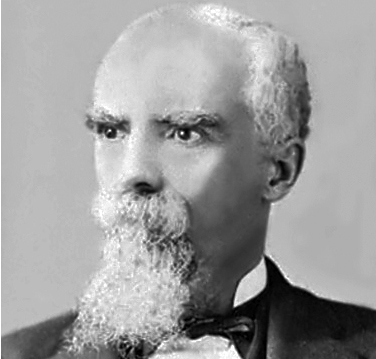
Author
E. M. Bounds
Summary: True prayer is measured not by the number of words, but by perseverance, time, and deep communion with God. Moses, Elijah, Paul, and Jesus Christ sustained their work through long hours of prayer, fasting, and waiting. By contrast, hurried devotions weaken faith, narrow the character, and can become formulas that merely soothe the conscience. We need to firmly set aside our best hours, especially the first hours of the day, to seek God calmly and purposefully. From abiding in his presence, we receive instruction, spiritual strength, and victory. Neither money, preaching, nor organization can replace prayer. We must return to its school, persevere day and night, and recover this nearly lost art.
It is true that the prayers recorded in the Bible are short in printed words, but the godly men of God spent sweet and holy hours in combat. They prevailed with few words but with long waiting. Moses’ prayers seem brief, but Moses prayed to God with fasting and lamentation for forty days and nights. What is said of Elijah’s prayers can be condensed into a few paragraphs, but without doubt Elijah, who “prayed with prayer,” spent many hours in stern struggle and exalted communion with God before he could, with firm boldness, say to Ahab: “There shall be neither rain nor dew in these years, except by my word.” The verbal account of Paul’s prayers is not extensive; nevertheless, Paul “prayed unceasingly day and night.” The “Lord’s Prayer” is a divine epitome for childish lips, but the man Christ Jesus prayed through many entire nights before carrying out his work; and these prolonged and sustained devotions gave his work finish and perfection, and his character the fullness and glory of his divinity.
Spiritual work is overwhelming, and men are reluctant to do it. Prayer—true prayer—means the expenditure of serious attention and time, which flesh and blood reject. Few people are of such strong fiber that they will expend costly effort when superficial work passes easily in the marketplace. We can grow accustomed to our beggarly prayers until they satisfy us; at least we preserve the decent forms and quiet the conscience—what a deadly opiate! We can weaken our prayers and remain unaware of the danger until the foundations disappear. Hasty devotions result in weak faith, stunted conviction, and dubious piety. Spending little time with God means being little for God. Lack of prayer makes the character narrow, miserable, and careless.
It takes time for God to permeate our spirit. Short devotions break the channel of God’s grace. Time is required to obtain the full revelation of God. Scant devotion and haste blur the picture. H. Martyn laments that the “lack of private devotional reading and scant prayer because of being devoted to the incessant preparation of sermons” has produced an estrangement between God and his soul. He considered that he had spent too much time in public ministrations and too little in “private” communion with God. He felt the need to set aside some of his time for fasting and solemn prayer. As a result, he gives the following account: “This morning I was helped to pray for two hours.” William Wilberforce, the Peer of Kings, says: “I must set aside more time for private devotion. I have lived too much devoted to the public. Curtailing private devotions exhausts the soul, weakens it, and discourages it. I have been occupied until very late at night.” Of a failure in Parliament, he says: “Let me tell you of my grief and shame, for it is probably all due to my devotions having been curtailed and God having allowed me to stumble.” More solitude in the early hours of the day was his remedy.
Extended prayer in the early hours of the day works wonders in reviving and invigorating a declining spiritual life; it will also manifest itself in a holy life, which has become so rare and so difficult because of the brevity and haste of our devotions. Christian character, in its sweet and gentle fragrance, would not be such an extraordinary and unexpected inheritance if our devotions were prolonged and intensified. We live narrowly because we pray scantily.
With ample time in our prayer closets, there will be richness in life. Our ability to speak with God in communion with him is the measure of our ability to remain in his company during the other hours of the day. Brief visits deceive and defraud. Not only are they illusory, but they also cause us losses in many ways and deprive us of many rich legacies. From abiding in the prayer closet we derive instruction and triumph. We emerge with new teachings, and great victories are often the result of great and patient waiting, until words and plans are exhausted and the silent, patient vigil wins the crown.
Jesus Christ says with decided emphasis: “And will not God bring justice to his chosen ones, who cry out to him day and night?” Prayer is the most important occupation, and to devote ourselves to it there must be calm, time, and purpose; otherwise, it is degraded until it becomes small and petty. True prayer obtains the greatest results for good, while the effects of poor prayer are of little consequence. We cannot measure the reach of true prayer, nor the deficiencies of its imitation. We need to relearn the value of prayer, to enter the school of prayer again. There is no other subject whose mastery costs so much labor and, if we wish to learn the marvelous art, we must not content ourselves with fragments here and there, with “a little talk with Jesus,” but must demand and retain with an iron grip the best hours of the day for God and for our devotions, or there will be no prayer worthy of the name.
Nevertheless, our age is not distinguished by prayer. There are few men who pray. Prayer is discredited by the preacher. In these days of haste and the clamor of electricity and steam, men do not take time to pray. There are preachers who “say prayers” as part of their program, at regular or fixed times; but who “rouses himself to take hold of God?” Who prays as Jacob prayed, until he is crowned as a prevailing prince of intercession? Who prays as Elijah prayed, until the sealed forces of nature were opened and the famine-stricken earth blossomed like the garden of God?
Who prays as Jesus Christ prayed on the mountain “and spent the night praying to God?” The apostles “continued steadfastly in prayer,” the most difficult task for men and even for preachers.
There are laypeople who give their money—some of them in great abundance—but do not give themselves to prayer, without which their money is a curse. There are multitudes of ministers who preach and develop great and eloquent sermons about the need for revival and for the kingdom of God to spread, but there are not many who pray, without which preaching and organization are worse than vain; this has gone out of fashion and is almost a lost art; therefore, the man who can bring preachers and the church back to prayer will be the greatest benefactor of our age.