Paul Jehle - Psalm 85
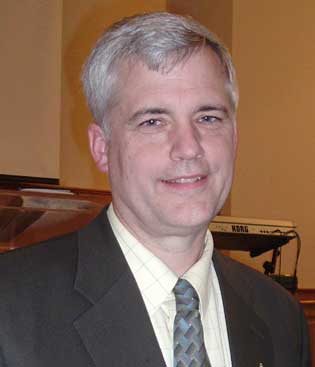
Author
Paul Jehle
Summary: True revival begins when God transforms our hearts through repentance, not when we try to impose our agenda on Him or blame the culture first. To pray is to decrease, align ourselves with His will, and allow Him to work in us so that He may then work through us. This renewal encompasses spirit, soul, and body: it begins within, renews the mind, emotions, and will, and ultimately changes how we live and transforms society. Therefore, it is not enough to pursue spiritual experiences, external reforms, or intellectual education separately.
The church must become the place where mercy and truth, grace and justice meet. We need to love the presence of God and, with equal fervor, renew our minds according to His Word in every area of life. Culture reflects the condition of the church; therefore, its transformation will be the fruit of the Kingdom's arrival, not its cause. As we intercede, we pray: revive my spirit, renew my soul, change my conduct, and cause Your Kingdom to spring forth on the earth. Then God's glory will give greater weight to His ideas, and His justice will reach our homes, communities, and institutions.
Turn with me, if you can, to Psalm 85. It is a psalm that was written as an intercessory prayer, specifically intercession to receive revival. In the Bible we find a pattern that must be followed when praying for revival. God gives us a pattern, a design for how to pray.
How many agree that there is a rising wave of revival here in this state? In New England, imagine that, and in Boston. The wave is rising, the tide is coming in, but we must take responsibility for praying and understanding God’s order and how God brings revival. And that is critical because the Bible tells us that we can pray wrongly. We can pray for the wrong things, or we can pray with the wrong motives. We can pray at the wrong time, in the wrong way.
God wants us to pray according to His will, according to His Word, to pray with Him. You see, the definition of prayer as believers often understand it goes something like this: “It is our responsibility to pray in order to get God to do something. And perhaps God does not want to do it, but when we pray and use the name of Jesus, God has to do it.” That is often how we understand it; we believe that is how it works. So when we pray, if we pray using the name of Jesus and twist His arm, then we believe that we are going to force God to do something according to our timetable, our agenda.
But that is not true prayer. The real meaning and purpose of prayer is to ask God first to do a work in me so that I may decrease and become lower, and He may grow and increase, and so that I may then align myself with God’s timing. I then report for duty and do not merely use the name of Jesus; rather, I would be in the name of Jesus, in His nature, in His will. Prayer changes us first, so that God can move through us and change everything else.
We need revival because we ourselves need revival first, and that is the primary focus of prayer. When Psalm 85 begins to outline what prayer for revival is, we need to see it in its entirety, from the whole perspective. Again, the Bible tells us in the New Testament that every believer is being progressively sanctified. That means that from the moment you are born again, when you come to know Jesus, from the moment you encounter Jesus, you begin to be changed into the image of Christ, every day, every hour, every week. You are not supposed to be the same today as you were yesterday or last year. If you are being sanctified, it means that every day you must become more and more like Jesus. But God tells us that the way we become like Jesus is for our spirit to be sanctified, for that deep part of our heart—and also our soul—to be renewed. Spirit, soul, and body must also be changed. In fact, the Bible uses three tenses to refer to salvation.
When I am born again, my spirit is saved, my spirit is regenerated, my spirit becomes indwelt by the power of God. My soul, then—my mind—is being saved, that is, regenerated; it is being renewed. In other words, it is the progressive present, continual change. And when the Bible says that I am being changed into a new creation, the grammatical tense means that I am being changed daily. In fact, then, your soul is being progressively changed. And then a day will come when the trumpet sounds and my body will be—future tense—changed from corruption to incorruption. So we recognize that sanctification is a threefold, three-stage process.
We need to understand this when we pray for revival to come, because we need to focus on the fact that true revival involves those three areas: spirit, soul, and body. It begins in the spirit, enters the soul, and then flows out from us into the place where we live.
When we define the word culture, the culture of something—of anything—is the atmosphere created as a result of relationships among human beings. Every culture is, above all, religion expressed outwardly, made external, whether Christianity or any other religion. The dominant religion in any society will be reflected in that society’s culture. There is no area of life that is truly neutral; no such thing exists. No law is neutral. Every law in every area of life expresses, whether we like it or not, some kind of religious premise or principle. Therefore, if the culture is to change, then that culture’s dominant philosophy and religion must change, or be changed. And that means that God’s people must be the first to change, because culture merely reflects the temperature of the church.
Throughout church history we have seen movements that emphasized one of these three areas: spirit, soul, and body. Some, for example, have emphasized the external, the outward, and believe that if we change the culture—the outward—then we will change the heart—the inward. So what we do, then, is clean up certain areas of society, hoping that the heart will thereby experience change. But if we focus only on the external, then we miss the central point of the phenomenon of revival. For the Bible tells us that a person is changed from the inside out.
The Word says that we are not supposed to be conformed from the outside in; we are supposed to be transformed from the inside out. Now there are also others, and other movements, that have focused only on the soul—for example, the intellect, the mind, which is part of the soul—and what they want, then, is an intellectual revolution. That is, if we merely change education, if we change, let us say, only what people are taught, and focus solely on that aspect of the soul that is the mind, then what we will have as a result is an intellectual revival, because our main problem, then, is what people understand and know—their minds. So if we teach enough about drugs, for example, and teach enough about sexual promiscuity, then we think that the more people know, the better able they will be to control themselves.
We have decades showing us that this system does not work, just as we also have centuries showing us that the so-called Social Gospel does not work either. Now, there have been movements of Christians who want to see revival, and so they focus, let us say, only on the spiritual, and the goal is to see the spirit experience revival. Amen to that.
But then the goal truly becomes merely having spiritual experiences. And I once asked someone, “What does revival mean to you?” That person replied, “More church meetings, more time at the altar,” or, as one person once told me, “time on the carpets, on the floor”—more time, according to him, before God. And of course, we need more time before God, but that is not the totality of true revival. Christians who have focused merely on the spiritual in order to have an experience have discovered that the river God begins to make flow does not touch the soul, nor does it touch the culture. It then becomes a kind of superficial revival phenomenon. For, you see, God’s goal is for revival to occur in all three dimensions—spirit, soul, and body—and it must happen in His way and His order. We need to obtain a vision, a design for our intercession, so that we can begin to pray for all three to arise according to God’s design and order. We must realize that the revivals that have occurred in American history demonstrate these truths to which I am referring.
For example, in the Second Great Awakening, which began here in the United States in the year 1800 and reached its climax in 1806, two hundred years ago, the phenomenon of revival began by touching people’s hearts. The worldview, the view of the world, the perspective in believers’ minds began to change, to shift, and they began to believe that the purpose of revival was to revive the church but not to touch society. And revival preachers such as Finney, for example, and later Moody as well, wrote about this. It is said that they cried out and pleaded with the church: “Do not allow,” they said, “revival to remain only within the walls of the church. Let us go beyond the church,” these men said. “Let us go to the body; let us go to the soul of society.” But the church as a whole did not listen to these great men, because what happened was that this kind of superficial revival phenomenon began to be so greatly nurtured within the church that the only monuments left from the Second Great Awakening to which I have just referred were large camp meetings and many summer cottages that were built in different rural parts of the country. People went to those rural places to experience the presence of God—the same God, the same river of revival—but the mind was not touched, and so what happened was that this river of revival simply began to turn inward, to flow inward. There were even brigades in the Civil War called “revival-meeting children” because they had been born in those places where people went on vacation. These were the individuals who were born outside of marriage—listen to this—during that time of revival. While the parents attended the services at these camps and were under the power of God, they were out in the woods and hills having a good time. What happened, then, was that we sold the next two generations after that revival into slavery because our concept of revival was simply selfish. And we cannot afford to repeat that.
The church needs a new vision for revival so that, on that day when it comes—Congress in the United States, for example, in the 1850s, turned to the church and spoke to it, saying, “You have not confronted the phenomenon of slavery. You are not preaching against slavery. You, as the church, have not disciplined slave owners. You have not called that phenomenon ‘sin.’” And because the church was unwilling to let that revival touch the culture, society, what could the civil government do when the church failed? For they recognized that this nation had divided within the church itself before it also divided within society.
What the church does is a model for society. We must repent and say, “Never again”—not in our time. We must let the river flow into every area of life; we must allow it to enter every area of society. You and I must say, “Lord God, revive my spirit, renew my soul, and change my body. Change my mindset, how I live, and how I work, and may Your Word, Lord, guide every part of how I see every area of life.” It begins with repentance.
Here in Psalm 85 we have: “Lord, You were favorable to Your land and restored the captivity of Israel. You forgave the iniquity of Your people and covered all their sins. You suppressed all Your anger and turned away from the fierceness of Your wrath. Restore us, O God of our salvation, and cause Your anger toward us to cease. Will You be angry with us forever? Will You prolong Your wrath from generation to generation? Will You not revive us again, so that Your people may rejoice in You?” (Psalm 85)
We see here in this passage that revival begins with God—with God moving in our hearts and spirits, bringing us to repentance, so that we repent of our sins, repenting of our iniquity, which is found in the culture itself as a consequence of the failure to repent of sin. Iniquity is the collective expression of unconfessed, unrepented sin; the sin that the church refuses to acknowledge then becomes the bondage of iniquity in the society outside. We need to understand, brothers and sisters, that it is extremely important for us to repent, because God begins a revival in people’s hearts. Whatever one wants to change in the culture must begin with personal change; I have to change.
When the church of Jesus Christ came together because the Massachusetts Supreme Court issued its ruling, its decree, on same-sex marriage, there was great concern in the church that the Supreme Court of the state of Massachusetts was no longer following the normal rules of law. Its opinions were already becoming laws. The Massachusetts Constitution clearly declares that every decision of the Supreme Court is an opinion. No court has the right to write law or decree law; that is reserved for the legislatures.
The word opinion is a legal term, and it means an opinion, a ruling applying only to the specific case to which it refers. So when Christians began to understand and asked, “What is happening in the culture, over there at the State House, with the judges?” we said, “They are not operating according to the law.” And then we went into prayer, and we began to pray, “Lord Jesus, change the Supreme Court, change the judges, and cause them to begin ruling according to the law.” And do you know what God does in that case? He begins to put pressure on the church, because for 100 years the church has not liked the law.
We think that God has already delivered us from the law; we have said that the law is our enemy and grace is our friend. But the Bible tells us that we were delivered from sin, not from the law. The law is holy, the law is righteous, the law is just, the law speaks and declares the truth. What the law does is expose what is in the believer’s heart. The law does not save you, but what the law does is convince you that you need salvation. And we have—we need the law to convict us of sin. Why are there so many young people and so many adults in our culture who have no fear of God, no fear of the consequences? And the reason is that Christians in the church no longer fear God or the consequences. We need revival first in our own hearts; instead of pointing the finger at people, we recognize that the culture must be changed, but it will change only to the extent that the body of Christ is transformed first. And that is why God says that He will change the heart of God’s people, and it says here that He will restore us to our original destiny. Restore us, Lord.
Here in this section it says, “I will restore Israel, Jacob, from captivity, and I will bring them back to their land,” because God has a covenant, and God has a purpose for every inch of this earth. We need to be brought back in our spirits to this central fact: God is sovereign and owns the earth. The devil does not own the earth; the devil does not own your neighborhood. The devil does not own your street, nor does he own the earth. God owns the earth, and God owns the fullness of the earth. That literally means everything that comes out of the earth, all technology. God owns it; He is the one who causes it and makes it possible in order to advance His kingdom. The people who invent technology may not know or acknowledge it; they do not know who the owner, the Lord, is, but that does not change reality. God is still sovereign.
You and I must reach a destiny because we were saved for a purpose; we were born again for such a time as this. You do not live in your neighborhood by accident; the apartment in which you live, the house where you are, the street where you are—even the very name of that street—is by design, God’s design, for His purpose, because God owns everything.
And then you begin to recognize, to realize, and you ask, “Lord, why am I here? Bring me out of that captivity,” you say to Him, “in my spirit, so that I may know why I am in this place, why You saved me.” And then we immediately think, “Well, I am saved simply to go to heaven—and glory to God, of course we are going to heaven”—and our first thought is, “Well, I want to leave the earth and go to heaven.” That is our final destination, but it is not the primary purpose for which we were born again. If that were God’s main purpose, as soon as a person came forward to be born again, He would immediately cause them to vanish; they would be taken to heaven. “Where did they go?” They were saved, and God’s purpose would simply be to send them to heaven. So the moment they were saved, they would simply disappear. But we know that is not how it is.
When you were saved, it was simply a beginning. Now you receive a vision of why you were saved: to leave a mark, to make an impact here before you go to heaven. This very place where this church is located is called Roxbury; it was founded in the year 1630. It was founded by Christians who walked three miles from Boston, where they were, and came to this narrow neck of land that was here at that time. One could not enter the city of Boston without passing through this strategic place that is now called Roxbury. It was the neck of the city of Boston, which in 1630, in a sense, enabled Boston to turn its head; it was a tremendously strategic place. The Christians gathered and made a covenant to follow God in all His ways and to fulfill their callings and purposes.
And I believe, brothers and sisters, that none of God’s gifts and callings change throughout history, because He owns the earth, and what happens providentially upon the earth happens so that God’s purposes may be accomplished on the earth. And when the enemy ratifies and confirms a covenant, God’s people can annul it; they can destroy and erase it. I have come to understand that the devil’s covenant is a counterfeit version of what God intends. The devil creates nothing; the devil has no sovereign powers; he is bound. He is simply one of the tools God uses.
When I was in Guatemala, in Nicaragua, we were in places where the enemy had established a covenant. When we examined the covenant, we could barely discern God’s original intention in that counterfeit covenant. In your case as a church, let us look at what Roxbury has become: the center of crime, the center of darkness, that demonic neck which, in a sense, governs the intellect of Boston. Because, you understand, this church—not this one that is here now, but the first church founded in Roxbury—was one of six churches that founded Harvard University, because that original church recognized that they needed to raise up people with a vision for the Kingdom of God. The preamble of Harvard University declared that all knowledge, all creation, and all things had to rest upon the foundation of Christ Jesus—the Word of God—because, though they did not know it, they were the neck that was turning the head. The city of Roxbury was a spiritual fervor that symbolically gave life to the intellect throughout the entire city of Boston.
Did you know that the first church in Roxbury published the first book of hymns, the first hymnal, in the year 1640? It started the first school within the church to train young people so that they would not turn away from the God of their fathers. And it was also the first church to become bilingual—and that, of course, is a mere coincidence. No; on the contrary, in this we see a divine purpose.
The pastor of that first church, John Elliot, became the first apostolic missionary to the American Indians. He learned to speak the indigenous language and translated the entire Bible into the indigenous language by the year 1663—without a computer, imagine that. The first Bible published in this colony came out of the church in Roxbury.
God’s destiny has not changed, brothers and sisters, and you are not, of course, the only church in Roxbury, but God has a destiny; He has a purpose, because, you know, these purposes are in our spirits. You are not here by accident. You do not come to this church by accident; you are here by design. God has something for you, in you, and through you.
Therefore, the educational programs you have here to train working-class or lower-class young people, to give them a purpose and a destiny, to let them know that the lies they have heard since birth are lies, and that is all they are—this is more than simply putting a Band-Aid on a problem. You are following in the footsteps of God’s original plan, which is much greater than any one of you.
No church can do everything, but I believe, brothers and sisters, that what God is doing here will once again be brought about prophetically: the neck that gives direction to the city of Boston. You and I need to recognize that, as we repent of our sins and of the iniquity that results from neglecting repentance—for when there is no repentance, it becomes iniquity—we must repent of both things. Then we ask God, “Lord, unite these three aspects: the spirit, the mind, and the soul.” We can shout here; we can be filled with spiritual fervor, but the spirit must touch the soul, touch the mind; we must begin to think differently. Our will, which is also part of the soul, also needs to be changed. Sin has clouded the mind.
The Bible tells us here in verse 7, “Show us Your mercy, O Lord, and grant us Your salvation.” I will hear what the Lord God will speak, for the Lord will speak peace to His people and to His saints; but let His saints not turn back to folly. Surely His salvation is near those who fear Him. Mercy and truth have met together; righteousness and peace have kissed. We will know for certain that revival has come—and in fact I believe that revival has already come, that it has begun—but we will know for sure by the mark of revival: when we see people excited and passionate about the idea of a new way of thinking, and as passionate about the way they think as they are about the way they live.
For example, if I told you, “We are going to have a healing service, and come because the power of God is going to move, and everyone who has an illness will be healed by the power of God, and anyone who is oppressed by the devil—those demons will flee in the name of Jesus,” I am sure people would come; they would be hungry, because this is a revival of the spirit.
Now, if I said, for example, “I am calling all of you to a six-hour seminar on how to think biblically. Bring your notebooks—a really thick one—bring your pens, three pens of different colors, sit down, and together we will discover what God is saying in His Word about every area of life. What is God saying about civil government? Or what does He say about economics? What does He say about how to train your children? What does God say about music? What does God say about the arts, or literature, and science or mathematics?” I am sure just as many people would come as for the first event. Amen.
No, we say, that is too hard. The spirit, yes, definitely; but the soul, no... do not make me work. I want God to do everything. Oh, just lay hands on me, Pastor. Take out that old mind and make up a new mind for my brain. But God says, “I do that with your heart, but not with your mind.” Your mind must be renewed, because, you see, that mercy in your spirit—“Thank You, Lord, for forgiving me. Thank You for saving me”—that is mercy. Oh yes, now I have peace with God. Thank You for Your peace, Lord.
But God says here, in this prayer for revival, that mercy and truth are going to meet, because in the soul—in the mind and the emotions—we need God’s truth, the truth of His Word. The Word of God is truth in every area it addresses, and it speaks to every area of life. Therefore, we must say to the Lord, “God, I want to be the place where those two rivers, truth and spirit, meet: the river of the Spirit, of mercy, of peace, but also the river of truth, the river of righteousness in the things that never change—God’s point of view. Oh Lord, make me as zealous for Your truth as I am zealous to experience Your grace, Your spiritual moving.”
It is not that God is bothered by the hunger you have for His presence, but that hunger, that spiritual part, must kiss and meet with His truth. That is what happened at the cross of Calvary, when Jesus, perfect God, bridged the chasm and made it possible for those two rivers to meet: righteousness and grace. On the one hand was God’s justice, which declared that no one could fulfill the law unless they did so perfectly. And if anyone sinned, they immediately had to die. But God’s mercy decreed, “No, let there be deliverance, freedom for the sinner”; yet His law could not be revoked, could not be eliminated. So Jesus did not come to revoke the law; then what could God do?
A man, fully God, walked perfectly upon this earth, without sinning, and therefore fulfilled God’s demand for righteousness. And that same man said, “I will die on the cross as the wages of sin.” Righteousness and peace kissed each other, and now those two rivers can meet forever: truth and forgiveness, righteousness and mercy.
We must pray, brothers and sisters, “Oh Lord, cause Your church to be the place where those two rivers meet. May we hunger for Your Word, whatever it says. And then, Lord, change me, shape my character so that when I walk in that truth, the same mercy You once gave me when I was a rebel may flow from me.”
How many agree that we need those two rivers? Hallelujah! We cannot simply keep the one we want and start beating people over the head with the Bible, saying, “What is wrong with you? Rebel! This is what the Bible says. Look at the terrible way you are living; you do not even come close to what it says here.” That is true, but you were not a follower of that Word either.
We need both rivers, brothers and sisters. Nor can we be the kind of person who simply tells people, “Oh, I love you. I don’t care what you do.” We definitely know that does not work with children. Oh, son, I love you. I know what you just did: you wrecked your room, you hit your sister—you struck your sister on the head with the toy—but we love you, son, and because we love you, there will be no consequences for your bad behavior. Because, son, we tolerate all things. It’s all right, because we are sensitive people and we do not want to harm your mind or the way you see yourself, your self-esteem. So it’s all right, son; don’t worry. Of course not.
We need both rivers in the home; we need both rivers in the home. Son, don’t you ever dare do that again. But son, even if you do, my love will not change. And because my love will not change, there are consequences for your bad behavior—we tell him with a smile. God bless you, but go to your room right now, so that when I calm down, I can deal with you biblically. Amen.
When those two rivers come together, when they meet, there is an explosion in the earth, in the culture, in the atmosphere. Something is produced when those aspects of God that coexist with one another—law and grace—come together. Grace is God’s ability imparted to us so that we may uphold and keep the law; we need both. When those two things come together, then we can see what happens.
You see, brothers and sisters, in this chapter the Bible tells us that God’s goal is for His glory to fill the whole earth. The word glory means weight. The glory of God is weighty, and its actual meaning is simply this: if the glory of God comes into your life, God’s ideas will carry far more weight than anything else. No other idea carries the weight of God’s ideas; God’s ideas simply blow upon the husk of the wheat.
We need the glory of God to enter the church, and that divine glory is not only His presence drawing us; rather, when we arrive here, God’s ideas must carry more weight than any other idea. So when the wind blows and a shaking comes, only God’s ideas will remain. Amen.
Lastly, let us look at the final three verses of this text. This is what will happen: “Truth will spring out of the earth, and righteousness will look down from heaven. The Lord will also give what is good, and our land will yield its fruit. Righteousness will go before Him, and His footsteps will set us on the way.”
You see, brothers and sisters, God is telling us that when we intercede for revival, we will be asking God—we will not be giving God an order—but we will be saying to the Lord, “Revive our spirit; make us sensitive to repentance.” Let us not begin pointing at people: Oh, the culture is in ruins; it is a mess because of those evil people, or those people over there, or the Supreme Court, or the Legislature. No, God, I am the problem; it is my heart that needs to change first. Lord, before You change the culture, change me first. Do a deeper work in my life, and then we begin to intercede. Lord God, make my life the place, the fortress, the stronghold—or rather, the meeting place of two rivers. Build a mill where Your Word can be finely ground and sifted, so that I may decrease and You, Lord, may increase. The ultimate goal of all this, the result of that process, its effect, will be seen in the culture outside.
The Kingdom of God does not enter through politics; if it did, then the Kingdom would enter from the outside in. But when the Kingdom of God enters, politics changes as an effect, as a result of the entrance of God’s Kingdom. We do not get involved in the community so that the Kingdom may then enter; rather, we get involved in the community as a result of the entrance and opening of the Kingdom of God, because God is victorious, and He is the One who reigns over everything.
Scripture says that righteousness will then look down from heaven. Righteousness means everything that is right. Everything in heaven is righteous. There is nothing unrighteous in heaven. And here is the goal: God says, “The goal of every revival is for heaven to penetrate and fall upon the earth.” Before we go to heaven, may the Kingdom of God—greater than any church—spring out of the earth. Oh, may the Kingdom of God, in all its aspects, spring out of this earth, and out of this ground in Roxbury as well, because it has sprung forth because we have been interceding; we are putting our shoulders to the task, bearing the way God... and You will cause it to happen as You see fit. If you want the Kingdom to come, it will begin first in your heart. It is God moving within us.
I will close with this. The church I am in is, in fact, spiritually connected with this church. John Eliot planted fifteen Native American praying villages here in Massachusetts, and so many thousands came to know the Lord that he found himself needing help. So he trained two disciples, whose names were Thomas Tupper and Richard Bourne. These two men worked with John Eliot, learned the Native language, and were sent to Cape Cod, where we are. They began preaching there and came upon a Native tribe that was carrying out human sacrifices. At that very moment, a white person was being tied to a stake and prepared for sacrifice. Richard Bourne, this disciple of John Eliot, arrived, came upon this scene, and stopped and told those Native people, “Stop, in the name of Jesus.” They looked at him and said, “Get out of here.” And he said, “In the name of Jesus, stop this act.” But they continued. Then he looked up into a completely clear sky and said, “Lord God, King of heaven and earth, I cry out to You this day. Intervene on this occasion. Stop this act.” He said this beneath a completely clear sky, and suddenly a bolt of lightning came out of heaven, struck the rock, and split it into several pieces. The entire tribe was saved that day, and after they were saved, they had their own pastor—a Native pastor discipled by that man, Richard Bourne. That Native pastor passed the heritage from one person to another for 150 years; the Native people remained in revival. And in 1880 they came to the little village of Cedarville, where we are, and there they encountered some fishermen who had turned away from God. They preached the Gospel to those backslidden white people, and a revival arose there in 1880 that lasted for twenty-five years. The result of that revival was the birth of the church I currently pastor. Hallelujah!
So, as you can see, now, after all these centuries, here we are connected with one another. And do you know why? Because His Kingdom is coming progressively, and we are going to see more of one another—not only our two churches, but all the churches—because God is bringing His Kingdom down.
Therefore, Lord Jesus, may Your Kingdom come to us; may Your will be done on earth as it is in heaven. Hallelujah! Glory to God. Amen. Go to English Version