Paul Jehle - Interceding for Revival
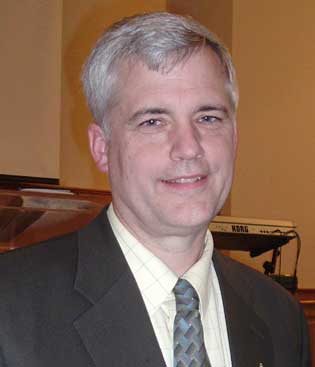
Author
Paul Jehle
Summary: Interceding for revival requires us to pray strategically, in accordance with the will, nature, and Word of Jesus, rather than at random. True revival sanctifies spirit, soul, and body in their entirety: it begins with repentance and inner renewal, transforms the mind, will, and emotions, and ultimately becomes evident in our relationships and culture. We cannot ask God to change society without first allowing him to deal with us, because unconfessed sin can become collective iniquity and affect generations.
Revival originates with God, not with our declarations or efforts. We must listen to him, recognize that we belong to him, and recover the specific purpose for which he placed us in a particular place and time. Spiritual renewal must lead us outward as instruments of his grace and Kingdom.
Psalm 85 guides this intercession: we ask for mercy, salvation, and a renewed mind, so that truth, righteousness, mercy, and peace may meet in Christ. When heart and mind are aligned with God, we can express his intention in every area of life and cry out for his heavenly will to transform the earth.
I want to speak to you about interceding for revival. There is a rising wave of revival in New England. There are more prayer meetings everywhere, more believers who are hungry for revival. We are in a great flood of the Holy Spirit, but we need direction in our prayers. Intercession needs to take on a strategic dimension. We cannot simply continue praying at random and merely ask the Lord to flood the culture. What we need, what we need, is to take His plan, locate it, and direct it; and once we are channeled according to His desires, then we can pray according to His will, His designs for this culture, at this time, for what He wants to do. And that is why we need direction in order to begin to understand what prayer is.
The Bible tells us that we can pray wrongly. We can pray for the wrong things, at the wrong time, in the name of Jesus. And that is why we need to learn to pray not by using the name of Jesus, but by praying in the name of Jesus, in the very nature of Jesus, in the will of Jesus, in the Spirit of Jesus; and therefore, we need direction from the Word of God concerning what it means to intercede for revival.
The Bible tells us that when the Holy Spirit comes to sanctify us, there in the Book of First Thessalonians—you do not have to look it up—but in First Thessalonians, chapter 5, we are told the following: “True sanctification, true holiness, the true moving of the Holy Spirit involves your spirit, your soul, and your body.”
Revival is simply taking the body of Christ and bringing it to a greater measure of sanctification, and this must involve all three of these areas, not merely one. There are many people and many believers who have caught the wind, have heard the sound of revival, and have focused solely on revival of the spirit; and this brings greater zeal, greater enthusiasm, but by itself, on its own, a renewal of the spirit alone will leave us as mere mystics. And then we begin to speak of revelation, we spend hours praying in the prayer closet, but God’s desire, God’s design, when He revives our spirit, is for us to move outward. It is not designed to make us stagnate. It is not designed simply for us to remain standing there.
You and I need to realize that God renews your spirit for a purpose, for a strategy, according to a specific design, and it is so that we may move outward, not merely be revived simply for the sake of revival. You were born again for a purpose. You were saved for a destiny. God has a plan: you were born in this specific era for a purpose, for a reason. You were not born again by accident. You were born again by design.
We need more than a simple revival of the spirit; we need a revival of the soul—the mind, the will, the emotions. All those things need to be renewed; they need to be revived from the spirit into the soul. And for the following reason: in our present day, we need revival through the renewing of the mind. We need to think like Jesus, to think according to the Word of God. We need our thought patterns to be altered so that we can see the world as God sees the world. We need to see everything as God sees it, because the soul is the container of the spirit; it is like taking water and pouring it into a cup. Then it becomes useful; it can be handled, it can be understood, and it can be poured out. But spirit without the soul simply spills the water everywhere, and it simply runs off and quickly disappears; and it is not as useful when we begin to use it to focus the river of God and truly make an impact.
Sanctification is more than merely the spirit; it is also the soul. But it is more than the soul; it is also the body. You see, God is concerned with both the internal and the external, and therefore everything that has to do with your body is also ordained by God to be sanctified in the spirit. But externally, it may reveal, display, emanate, or project an uncertain sound that does not appear to others to be truly sanctified. Therefore, the external is not capable of bearing witness to what is happening internally when the revival is merely simplistic. God’s entire process of sanctification moves from the internal to the external. It involves your spirit, your soul, your mind, your intellect, the way you think; and it also involves your body and everything that goes outward. You see, culture is religion manifested externally.
Every culture is simply an atmosphere created through people’s relationships with one another. For example, the economy is one way in which people relate to one another. Civil government is also a way in which people relate to one another. Every aspect of society is simply an expression of the body—how it is used and how it relates to others—which then collectively produces an atmosphere that becomes the expression of what is inside the people.
In any era of history, in any area of the world you choose, society is a reflection of the heart of God’s people. Do you realize that God has placed us here as stewards? So when we pray and see something happening in the culture that we do not like, and we begin to intercede, then we begin to ask God to change things. But if we are not praying according to the Word of God, what will happen is that we will simply be disappointed in our prayers, because we will begin asking God: change the legislature, change the state house, get rid of the humanists and socialism. But God is a God of order, and He does not answer prayers that way. He answers them according to His Word.
Well then, where does God go to answer that kind of prayer? Right here. Because the internal is reflected in what is happening within us, and if the external, the social conditions, are going to change, the heart of God’s people has to change; and that is where the Holy Spirit works.
We ask God: change the culture. And what He does is begin to put pressure on us, and we say, ‘God, I was asking You to change the culture, not me. What I was asking was for them to change. Why are You putting so much pressure on me?’ Because God says, ‘If you want the culture to be sanctified, you must first be sanctified.’ And that is why God puts that pressure on us.
Now, in Psalm 85 we have three areas; there we are shown three things in a biblical prayer uttered by the psalmist. It is a biblical prayer asking for revival. It is an intercession for revival. And we need the three areas mentioned here: the spirit, the soul, and the body. We need the Holy Spirit to move upon our personal spirit; we need Christ, the living and written Word, to renew our minds; and we need God the Father to bring His Kingdom into the culture. This is how we must pray.
God does not give us the specific words of our prayers, but He does give us the principles that must govern our prayers. Psalm 85 says the following: Lord, You have been favorable; You were gracious to Your land and brought back the captivity of Jacob. You forgave the iniquity of Your people and pardoned all their sins. You have taken away all Your anger and turned from the fierceness of Your wrath. Grant us Your salvation, O God; cause Your anger toward us to cease. Will You be angry with us forever? Will You prolong Your anger from generation to generation? Will You not revive us again, so that Your people may rejoice in You?
We immediately notice certain things in this intercessory psalm. It is a cry to receive spiritual renewal. And that is the first aspect of revival. We need to intercede, to pray for others, to ask for deep repentance from sin so that God can then renew us. Repentance—that cleanses the spirit so that we can then come under the blood of Jesus and thus be renewed, revived from within, from the depths.
Every revival begins with God. Revival does not begin with us. We cannot declare a revival, we cannot command a revival, and we cannot simply ask God to do it tonight, for example. What we need is to listen to God. We need to repent and ask the Lord to make revival possible, because we do not cause it; rather, it comes directly from Him.
God also tells us that the renewal of our spirit is a renewal of belonging, of who truly owns us. God owns you, and God owns the land. The Bible tells us in the first verse here that when God released Israel, His people, from captivity, the land was then blessed as a result. It says that the earth is the Lord’s. The earth does not belong to the devil. Every inch of this earth belongs to God. Every place the devil possesses, he has taken illegitimately simply because God’s people handed it over to him. For the earth belongs to God, and so does all its fullness. The place where you live—your apartment, your house, your room—belongs to God. You do not live there by accident; you live there because God wants it that way. The very street where you live is not an accident.
In your mind, you live there simply because the price is right, because it is the right location, for example, for getting to work and doing what you need to do. But that is not God’s perspective. God says, ‘I placed you there because I have a plan for every inch of the earth, and because I love the earth, I placed you in that specific location so that you would manifest My grace and inhabit the land.’
This church is not here by accident. You are here by design. God brought you here, to this very street, specifically to this place in Roxbury, because God’s calling in the various aspects of what is happening on the earth will be fulfilled in His providence, because God has a global purpose for the earth.
You see, Roxbury, where we are, was originally one of seven villages founded in the year 1630, right here where we are now, 400 years ago; and those seven towns were founded upon the same spiritual vision: to be a city set upon a high hill, a beacon for the Gospel, so that the light of Christianity would defeat the kingdom of darkness. Now, that original vision has not changed in the mind of God; it is still here.
You see, this town of Roxbury, this place, was originally founded by a church; and when the people gathered, they started the first school inside a church in order to train the next generation in the entire new European colony here in the United States, right here in Roxbury. You see, the vision you have for education, for equipping young people, is from God. God had that desire to equip people in His heart even before you arrived here in Roxbury. Glory to God.
You see, God has a special, unique calling upon every part of the globe. And the first church founded here in Roxbury in 1630 was also one of six churches that had a vision to come together, to be united together, and that also founded the first university in the entire colony that was beginning here in the United States. Harvard University came out of Roxbury. Glory to God. Hallelujah!
Not only were you going to train young people, but you were also going to train those who would be in the universities; and I want to remind you that the preamble to the founding of Harvard University stated that its purpose, in its own words, was ‘to place Jesus Christ and His Word as the foundation of all knowledge.’ That was Harvard University’s original covenant.
The First Church of Roxbury was also the first church to send its pastor as a missionary to the Native Americans, the American Indians. That pastor arrived in the year 1631; his name was John Elliot. And when he arrived in 1631, he trained his congregation for 14 years; and after those 14 years, he felt a great hunger in his heart to turn that church into a missionary movement, and he was willing to go. And it became the first bilingual church. And do you know why? Because that pastor studied the language of the American Indians for 25 years, and he published the first Bible in all of New England in the language of the American Indians—the entire New Testament by the year 1663.
I am telling you this not because we are here to give you a history lesson; we are giving a lesson in prophecy. God has not changed. You are not a bilingual church by accident. From all eternity, God has been restoring His covenant, renewing His Spirit, renewing His purpose here, where God did it before you arrived.
Because, you see, this church from 1630 began to understand the native language of the Indians, and John Elliot preached to the Indians in their own language. And every time he preached, he stood upon the platform and said, ‘These platforms have been made by God.’ His platforms were actually rocks, and they came to be known as pulpit rocks because that was how he preached. The original name of Roxbury was actually spelled R O C K, because it had been founded upon rocks. It is the English word ‘rock.’ Later, it was shortened with an x. In fact, you are founded upon rocks.
John Elliot loved the Indian language and also helped publish the first hymnbook. The Book of Psalms, 1640, and it was also here that William Dose began his midnight ride to warn the people that the enemy, the English, were coming toward Boston. And Paul Revere was in Charleston, another part of Boston here. While he was there in Charleston, William Dose also started Roxbury’s first church, because every church had a body of deacons who also guarded the ammunition and kept the rifles in the basement for the war against the English.
Now I want to tell you something: you must realize the following—that when we repent of our sins, we must also repent of iniquity. There is a difference between sin and iniquity. When I repent of my sins, I repent of the wrong things I have done. But when I repent of my sin (singular), I want to die to myself, bind myself to the cross, embrace it, and begin to walk with God.
Iniquity is the result of unrepented sin that resides in the culture at large. Boston’s iniquity, Boston’s sins, those corporate sins of Boston, are the result of sin of which the church has not repented. If we do not repent of our own sins, then what God does with that unconfessed, unrepented sin is carry it to the third and fourth generation, and it becomes something cultural and becomes what the Bible calls iniquity; it is a collective, social manifestation of sin.
Because, in fact, when we repent, repentance is deep, and we are asking God, “Help us to have it in our spirits right now so that,” we say to the Lord, “the unconfessed sin that we refuse to confront does not become collective repentance and then drag others along as well.”
Slavery in America was the iniquity of unconfessed sin in the church. The church did not resolve the problem, and so society suffered, and many people suffered as a consequence. It was a spiritual issue because the church does not repent.
That is why, because there is no repentance in the church, we have abortion in society, for example, and people collectively suffer. It is not the fault of those who are not saved. Yes, they will have to give an account to God, but we must recognize that the first step toward revival, the first place to intercede in prayer, is for God to deal with us and to ask God—we ask God, “Restore our vision of why You placed us here. Restore our vision for the land. Restore us, Lord,” we say to Him. But it does not end there; we move from the spiritual, from repentance, and then we move to the soul.
In verse 7, “Show us Your mercy, O God, and show us Your salvation.” Verse 8: “I will hear what the Lord God will speak, for He will speak peace to His people and to His saints, so that they do not return to their folly. Surely His salvation is near, so that glory may dwell in our land. Mercy and truth have met together,” it says. “Righteousness and peace have kissed.”
You see, it is God’s design, His intention, to bring that zeal of the spirit so that the soul may then be joined with the spirit. Your soul is sinful. You were conceived in sin. For example, your mind, which is part of your soul, is actually at enmity with God. Your will, which is part of your soul, is stubborn toward God. And your emotions, which are part of your soul, are out of control. We laugh when God is weeping. And we weep when God is furious, wrathful. We were conceived in sins and do not naturally reflect our true image, since we were made in the image of God, because we are in sin. But when we repent and ask God, “Lord, give us a new vision,” God then takes that river of His Spirit, and that river begins to flow, and it is a flowing together with the soul.
The word in the original Greek for soul and the word for mind refer to a channel; they are the patterns of thought that flow like water in a channel for the river of the Spirit, but all our mental channels are flowing in different, contrary directions. So God needs to adjust that channel of the mind; the body of Christ cannot take that natural mind and intercede and ask God to anoint that carnal mind. God does not anoint the flesh. God anoints that which operates in alignment with His Spirit. So our intercessory prayer must be, “God, show us why we are here. We repent, Lord, of all the things our stubborn heart has produced through neutrality, even when we did so unintentionally. Lord, we repent for society’s collective iniquity. Now we ask, Lord, change our minds. May righteousness and truth be joined with mercy and peace.”
When Jesus died, He was man and God at the same time. God’s law, God’s truth, and God’s righteousness had to come together—those three things: righteousness, mercy, and truth. Because God does not compromise His righteousness, but we needed mercy, we needed peace with God, we needed the power of the Spirit, so God had a problem: God’s law and His mercy.
And the law said, “You have to pay for your sin with death.” But God’s mercy said, “Be free.” And so, what was the solution? That eternal bridge between the soul and the spirit, between God’s law and God’s mercy. That was the men of God, soul and spirit, the truth, Christ Jesus on the cross. He is the mercy of God also fulfilling the law of God. Jesus said, “It is finished”; it is fully accomplished. Then He said, “Be free,” because righteousness has, in a sense, also kissed peace; there they kissed at the cross of Calvary. And that is why we can now think as God thinks. We can reason as God reasons. We can proclaim what God proclaims. We can change our way of thinking by His power.
And the Bible tells us that you will know when revival comes when you see God bringing together the righteousness of His Word—the way He designed society and culture to function, the plans He had for His land—and the power of God, the mercy of God. When those rivers come together, then you can say that revival has arrived, because those streams come together.
Now, the union of these two things, soul and spirit—the spirit and the soul—is expressed through the physical body, and the results are then very clear. You see, a biblical vision, worldview, a vision of the world, unifies the head and the heart. When you have a merely humanistic point of view, what it does is rebel against God; the mind rebels against God when it is humanistic. That is why we must intercede for every member of the body of Christ to become a student of what God says about every area of life, because every area of life must be submitted to the Word of God.
We must ask God to give us more and more believers who want their minds to be renewed so that they can then be prepared to express the river, the intention of God. And that is what it means to intercede for revival.
For the psalmist says, “May righteousness and peace kiss,” and see what the result of this is.
Verses 10 and 11: “Truth will spring from the earth, and righteousness will look down from the heavens. God will give what is good on the earth, and our land will yield its fruit. Righteousness will go before Him, and His steps will set us on the path.”
Christians need a new vision, they need a new mind, and they need an emphasis on the Kingdom of God. The Kingdom of God is greater than the church; the church makes way for the Kingdom of God, but the Kingdom of Christ over the whole earth, the Word says, will cover the earth as the waters cover the sea.
This last part that I have just read from this psalm cries out for heaven, which looks down upon the earth, to rain down righteousness so that it may rise upon the earth, so that righteousness, which looks downward, may then fall and reign over the people of God whose steps are ordered by the righteousness of God.
When you are renewed in your spirit, when you are born again, then you are filled with courage and joy over the fact that you are going from earth to heaven. But when you obtain a vision of the Kingdom of God, then your heart desires for something from heaven also to come down upon the earth.
The Word says, “May Your Kingdom come; may Your will be done on earth as it is in heaven.” That is what the soul is crying out to God: “O Lord, we intercede; renew our vision, give us that new vision. O Lord, help us to sit at Your feet, learn Your Word, study what it says about every area. Change us, Lord, we say. May Your river touch Your Word in me. Straighten me out so that I may become a vehicle for the Kingdom of God, so that this Kingdom may come down from heaven to earth and so that I may then see the culture at large, the atmosphere, and my relationships change, so that people may be blessed because the Kingdom of God has come down. Hallelujah! Glory to God. Glory to the Lord. Amen. Amen. Go to English Version