Our Faith Must Affect Every Aspect of Our Lives
And his heart took delight in the ways of the LORD; furthermore, he removed the high places and Asherah poles from Judah. — 2 Chronicles 17:6
For anyone who hears the word but does not carry it out is like a man who looks at his face in a mirror, and after observing himself goes away and immediately forgets what he looks like. — James 1:23-24
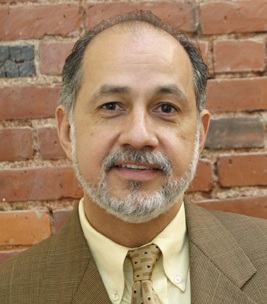
Author
Dr. Roberto Miranda
Summary: Jehoshaphat strengthened himself in the ways of the Lord and tore down places dedicated to false gods, even though that decision could cost him popularity. His example calls us not to separate our spiritual convictions from our public or private lives. Faith should guide our decisions at work, in our relationships, and in every responsibility we take on, including political office. If a role prevents us from acting in accordance with our spiritual identity, we must give it up rather than disobey God. By turning away from sin and living according to the principles we profess, we remove obstacles so that God’s blessing can flow in our lives.
The Bible tells us that one of the first steps King Jehoshaphat took when he assumed the throne was to remove the altars and high places dedicated to the goddess Asherah. Verse 6 tells us that “his heart was encouraged in the ways of the LORD, and he removed the high places and the images of Asherah from the midst of Judah.” In this way, he neutralized the spiritual curse that hung over his nation as a consequence of idolatry
.
That phrase, “his heart was encouraged in the ways of the LORD,” suggests a period of revival in the life of the king of Judah before he began that spiritual reform in his nation. It is possible that at some point Jehoshaphat experienced an awakening in his spiritual life. Perhaps he went from being merely a cultural believer to showing a genuine commitment to God. He may have begun to familiarize himself with the Law of the LORD and to meditate on it. He asked God for guidance to govern his nation wisely. His faith grew firm. He developed a new sensitivity to the sin of his people. A new sense of urgency arose within him in the face of his nation’s growing spiritual apostasy. Jehoshaphat grew strong in the Lord and received the courage he needed to confront the worship of false gods.
Perhaps that decision caused controversy and even outrage among a significant segment of the population. But for Jehoshaphat, the desire to obey and please God was stronger than the fear of falling in the national popularity polls. The young king took courage in his spirit and gave the order to tear down all the statues of false gods. In the committed heart of the king of Judah, there was no room for a “pluralistic” or falsely tolerant stance. He clearly understood that the worship of the Baals was not merely a cultural option without serious consequences. That idolatry toward false gods spiritually contaminated his people and exposed them to demonic oppression.
Consistency in Belief
Here we have a great spiritual lesson: Jehoshaphat could not separate his spiritual convictions from his public or political role. When a leader is possessed by a powerful spiritual conviction, he cannot afford to compartmentalize his life. He cannot artificially separate the different aspects of who he is. He is compelled to establish harmony and coherence among the different parts that make up his personality.
At times I have encountered Christians who hold public or elected office, for example, and yet support laws that are contrary to the principles of Scripture. These people often argue that because they hold public office, they must maintain a wall of separation between their faith and their profession in order to be fair to citizens who hold different beliefs. In the name of supposed pluralistic principles, they support abhorrent practices such as abortion, same-sex marriage, legalized gambling, and unrestricted access to pornography. The truth is that this is a misleading distinction. Our Christian beliefs must take precedence over every other loyalty or commitment.
If a Christian holds political office, he or she will be obliged to apply their moral and spiritual convictions to every decision they make and every judicial measure they support or reject. As in the case of Daniel, who refused to bow before the king’s statue despite holding an important political office in Babylon, God’s servant will have to be consistent with their spiritual beliefs, no matter how high the price they must pay personally or professionally.
A Christian who has adopted the word of God as a guiding principle will have to ensure that every aspect of their life—behavior, relationships, work, recreation, manner of dress—is in keeping with that spiritual foundation. If a political or professional position prevents us from carrying out our responsibilities in keeping with our moral or spiritual identity, the only course consistent with integrity will be to resign from that position. No matter where we find ourselves, our primary commitment must always be to obey God rather than men.
By taking that decisive step of tearing down the statues of Asherah throughout the nation, Jehoshaphat stripped Satan of any legal claim he might have had to bind his nation and keep it oppressed spiritually and materially. That powerful act cleared the air so that God’s blessing could flow unhindered from on high to Judah. Likewise, when we renounce sinful behavior and adopt a way of life that accords with the spiritual principles we profess, we open the doors for God’s blessing to flow into our lives and for his wonderful promises to begin to be fulfilled on our behalf.
What do you think?
What do you think about "Our Faith Must Affect Every Aspect of Our Lives"?
Related Content
The Mirror of the Word: a Call to Courageous and Consequential Faith
2 Chronicles 17:6 • James 1:23-24
Authentic faith transcends mere intellectual understanding or passive listening; it demands a radical, courageous commitment to manifest divine truth ...
The Theological Synthesis of Internal Devotion and External Action: an Exegetical Interplay of 2 Chronicles 17:6 and James 1:23-24
2 Chronicles 17:6 • James 1:23-24
Within the expansive corpus of biblical theology, the profound dialectic between internal spiritual disposition and external orthopraxy remains a cent...
Read in Context
Click to see verses in their full context.