On the Home Stretch
Author
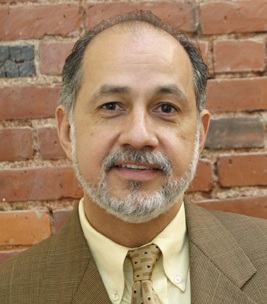
Dr. Roberto Miranda
Summary: The construction of the new sanctuary has entered the home stretch, with the goal of obtaining the certificate of occupancy in December. We give thanks to God and to the congregation: even in times of scarcity, the work has progressed with few difficulties, significant savings, and a stable budget of approximately $4.27 million. We are not facing a crisis or an imminent shutdown; of the remaining construction costs, approximately $822,000 has already been committed, leaving about $270,000. To receive that amount as a short-term bank loan, the church needs to present pledges totaling approximately $400,000.
Second Corinthians 8 teaches us that giving is a grace and a privilege. Like the churches of Macedonia, we must turn our joy, faith, and love into tangible generosity, fulfill what we have promised, and, if we can, give even beyond our means. This includes a final offering to complete the work and provide chairs, carpeting, and audiovisual equipment. We are building more than brick and steel: we are preparing a place to transform lives, serve the city, and spread the Gospel. Let us reach the goal together, with prayer, joy, faith, and generous commitment.
I want to share with you a message that has to do with where we are right now in our construction phase. In November, I started looking through my calendar, my agenda, and I said, when was the last formal presentation to the congregation? You will remember that projection I made, a PowerPoint presentation. Perhaps you will not remember much of it, but you will remember a ship passing through the strait, right? Images often stick in people’s minds; they do not remember what one says, but they remember the illustrations.
That ship spoke of how this construction project was something extremely tight and demanding, and you will also remember the image of some runners, some marathoners, who looked tired and out of breath but kept moving forward in the race. And back in November, I gave you some projections, some things, and I told you that when we reached roughly the five- or four-and-a-half-month mark of construction, I would appear before you again to let you know where we stood, to push forward and finally reach that goal, and I wanted to give you some projections, some things. We have reached that point, thanks to the Lord, and with the Lord’s help we are projecting completion in December of this year; there are still four months of effort remaining.
It is like those marathoners. If you have watched a marathon, the race is decided—let us say a marathon is 26 miles, 26-point-something miles—and the race is generally decided in the final mile. And the great marathoners, the four or five of them, run together at the front; they wait until the last moment to make their final surge. And only the marathoner who has the capacity, in the final stretch of the race, to give it everything and prevail over the pain, over the agony, while his body is screaming at him to stop—that is a matter of sheer, exceptional mental discipline. At that point there is nothing left; the body has simply already given up, and it is all mind, determination, discipline, the ability to withstand the pain and the agony. That is what decides the race; that final stretch is everything. And there in that final stretch, those four, five, six, seven competitors give everything they have to reach the finish line, and the one who reaches that point of giving everything takes the crown, the gold medal.
And that is where we are now. We are already in the home stretch, and we need to give the Lord one final surge of energy, consecration, commitment, everything we have, in order to win that crown, that gold medal that is our sanctuary, amen? I want that to fill you with joy, as talking about it fills me with joy. Sincerely, I want this to be a word of encouragement to you instead, and I do not want any of you to feel like, “Oh, here we go again.” No. We have been at it for a little over two years. We began, we broke ground—I do not know what that is called in Spanish—but we started the work in July, two years ago now. We are already at the end of August, and frankly, if we manage to finish by December as we believe we will, this will have been the fastest project we have undertaken, including this sanctuary, which took us a little over three years. We began building this sanctuary in November of ’94 and finished in November of ’97; this one here took us three years.
And the other one, which seemed smaller and easier to do, took us considerably longer, but glory to God, we finished it too. You and I, the leaders of this church, have been working; we have now spent 17 years building for the glory of God. Every time people enter one of those halls and walk into the wonderful building we have next door, they are truly amazed by what God has allowed us to do over these years. It is something glorious. In the heart of the city of Boston, our congregation, led and empowered by the Holy Spirit, has been able to do something wonderful. We have been able to build these wonderful physical facilities for the transformation of lives, as a glorious testimony throughout the city that results in glory to the Lord and the advancement of the Gospel. Young people are touched daily in this church, families are restored and strengthened, and children are grounded in the Word of the Lord. From the mayor and the governor of Massachusetts, with whom we have met several times, to the city’s representatives and senators, as well as social-service agencies, school departments, and others, they have all been impacted by the ministry and the spiritual life that flow from these places.
I always tell people that we do not build brick, concrete, and steel; we build the Temple of God. We build the Sanctuary of the Holy Spirit, places where God may dwell and, from there, spread His glory throughout the city. And this new sanctuary has actually taken us two years and one month up to this point, and with God’s help we hope to finish it by the end of this year. But we are now reaching the home stretch, and it is time for the athlete that is Lion of Judah to begin breaking away and surging forward, leaving the others behind—not competitors, because we have no competitors—but this is now the final surge of energy, when we give everything in order to reach the finish line.
And that is why I am here to talk to you about where we are, and so forth. But first—let us look, Omar—I just want to put some images in your mind, graphics of the sanctuary. Here are slides from last year up to now; they are all mixed together, but they will give you an idea of the space we have there. We are quite far along, but you can get an idea of what this building is like and of its different stages, right? (Background music begins.)
So look at this, and let it serve to lay the groundwork. I dream about scaffolding, bricks, and concrete. This is the open sanctuary space as it was a few months ago; the balcony, as you can see, is already being filled with various things, systems and all of that, but you can see more or less the view from above. You will remember that large stained-glass window here, and we are continually holding meetings about different things. Cranes are always at work. They are finishing the exterior of the fourth floor while we do other things inside. Air-conditioning and heating ducts are being brought in. The transformer, which is what supplies electrical life to the building, is already in place as well, and we are doing electrical work. It is progressing very, very well. Brother Carlos Beltrán, an electrician from the church, and his son Esmer have done a tremendous job. We have erected scaffolding throughout the building to install the fire-protection system. The ducts for the air-conditioning and heating system are also being installed, and in about six or seven weeks we expect all those ducts to be installed throughout the building. Many things are being done all this time.
The main staircase at the front is already in place; the steps have been filled with concrete, and before long the glass will be installed around that area, right there, completing the enclosure of the entire building with the necessary glass. It is being manufactured, and they will come to install it soon as well. That is the platform, which is now very far along—it is already finished—but this shows the stage it was at a few weeks, a month and a half, ago. There you are looking down at the platform from above, from the second floor. The siding on the fourth floor is also quite far along; we expect to finish that in about three or four weeks as well. A view from the inside toward the projects. One of our local movie stars, Giovanni Chávez; the other one too, Javier Encinas, looks like a Martian who has come from some planet. Brother Roberto Naranjo is also putting up the pieces of siding above. These are some images of our new sanctuary; we are pressing on toward the goal.
God has done a wonderful work, and let us also give a round of applause to the brothers who have worked. The purpose of my presentation this afternoon—and to the brothers and sisters visiting us, I beg you simply to be witnesses of what God is doing in our congregation and to see how a whole congregation completes projects as ambitious as this one—but I want to address the Lion of Judah family, those of us who feel committed to the future of our church and to what God wants to do here in our midst.
Before making a PowerPoint presentation—you can hold it; if you put up the completed presentation now, however you want, show the first slide like that, without the computer issues, as we did this morning. So before I make this presentation, let me establish a biblical foundation for all of this. I want to turn with you to Second Corinthians, chapter 8. Fanny, would you please bring me the little juice that is there? I need all the energy possible. Thank you to the ushers, who are so kind. Second Corinthians, chapter 8.
The apostle Paul was no stranger to financial projects and special offerings. Here in chapters 8 and 9 of Second Corinthians, we see him writing to these congregations in Corinth, and he is encouraging them precisely to complete a fundraising effort that had begun the previous year. Apparently, he had written them another letter. In fact, it seems that Paul wrote three letters to the Corinthians, of which we have only two. Why did the Holy Spirit decide to leave us only two? We do not know. Perhaps the other one was not as doctrinally suitable for our instruction.
Here in this letter of Second Corinthians, he talks about how he wrote to them concerning this fundraising project for a special offering that was to be given to the brothers and sisters in need in Jerusalem. This was a long-term project, and he had mobilized all the churches he had planted so that they would give and collect this offering to take it to the mother church in Jerusalem. So here in Second Corinthians, he writes to the brothers and sisters in Corinth, telling them, “Brothers and sisters, I want you to prepare that offering well, so that when I go to collect it, I will not be put to shame because of you. I want you to decide what you are going to give to the Lord, to make your commitment to the Lord firm, and to fulfill what you have promised, so that when I send Timothy or when I go myself, everything will be ready and we can collect that beautiful offering, which we will then take to our brothers and sisters in Jerusalem for their work there.”
So, as you can see, the apostle Paul was no stranger to these fundraising efforts. This, then, is where we pick up the narrative. Look at what chapter 8 of Second Corinthians says: “Likewise, brothers and sisters, we make known to you the grace of God that has been given to the churches of Macedonia: that in a great trial of tribulation, the abundance of their joy and their deep poverty abounded in riches of generosity. For I testify that they willingly gave according to their means, and even beyond their means, begging us with many pleas to grant them the privilege of participating in this service for the saints. And not as we expected, but they first gave themselves to the Lord and then to us by the will of God. So we urged Titus that, just as he had begun before, he should also complete among you this work of grace.”
The last verse: “Therefore, as you abound in everything—in faith, in speech, in knowledge, in all diligence, and in your love for us—abound also in this grace.” May the Lord bless His holy Word.
Let me draw out a couple of thoughts, as I said, to lay the foundation for this teaching. First of all, take note of this: the great apostle Paul, writer of two-thirds of the New Testament, a man who received extraordinary revelations from God, who had absolutely exceptional encounters with the Holy Spirit, who was called directly by the Lord Jesus Christ, and who planted churches—we see him here putting on his project manager’s hat and writing a letter to these brothers and sisters to raise an offering.
So, brothers and sisters, I say that sometimes I identify with the apostle Paul too. Sometimes, as a pastor, one would like to devote oneself solely to teaching, prayer, the ministry of the Holy Spirit—simple and very sublime things. But sometimes we, as pastors and servants of the Lord, must also put on the hat of attending to the Lord’s business: the simple, concrete matters of the work, the everyday matters of the ministry. And sometimes we have to call upon our congregations to give and to keep pressing forward. That is what I am doing at this moment. I stand before you simply as one more servant among you, to encourage you to complete what we have already begun.
The Church of Jesus Christ has many different tasks, many different kinds of work that we do. It is not all simply praying, singing, and worshiping. Sometimes we also have to work hard, sweat, and talk about money. Many people complain that the church talks too much about money. Well, blame the Bible, which talks so much about money. The Lord Jesus Christ continually spoke about money; many of His parables were about money. God has wanted us to work with Him in the advancement of His Kingdom. And that is why I identify with this. Thank God that Paul left us those models, those precedents, showing that many times we have to talk about these things, because the Kingdom of God sometimes also requires us to speak about the Lord’s business.
Then Paul says here: “Brothers, we want you to know about the grace of God that has been given to the churches of Macedonia.” Paul is using the churches of Macedonia—the church in Thessalonica and the church in Philippi—and he is saying, look at those churches that have already given their offering, that have already fulfilled what they promised, and let us learn from them; let us use their good example to encourage ourselves also to give to the Lord. My brothers and sisters, I tell you that what we are doing is an inspiration to so many in the city. The things the people of God do, they do not do for themselves, but rather to encourage and inspire others. Right now, we are encouraging many congregations to say, “Wow, look at how these people are giving; they are raising that marvelous temple.”
We are a blessing to the city simply through our example. Many brothers and sisters are encouraged by what we are doing, so remember this: we have a great cloud of witnesses around us, and we must complete this work, because this work is already a great inspiration to others and will continue to be as time goes by. Others will be watching us, and they too will say, “Wow, if the people of Lion of Judah did it, we can do it too.” We are blazing a trail; we are setting a precedent.
And Paul says, look at the Macedonians, how they already prepared, and how the grace of God moved in them. Do you know that if it were not for the grace of God, we would give nothing? Why? Because human nature is rather selfish; we want to hold on to things and keep them for ourselves. In times like these, times of great scarcity, who wants to give to a visionary project? I believe that it is God who has moved your heart to give to the Lord; it is the grace of God at work. I am always asking the Lord, “Father, move.” Before giving this sermon, I have been praying to the Lord that my words might serve solely as a projectile filled with the power of the Holy Spirit, one that touches your heart and touches your mind, so that you too may feel that sense of commitment along with me, open your heart, give, and fulfill what you have promised—the grace of God. Do you know that it is a privilege to give to the Lord? And that is why God, in His mercy, gives us His grace so that we may give to the Lord. It is by grace that we give to Him, because He moves within us through His grace.
Paul says that these people gave amid a severe trial of affliction, and we are undertaking this project in one of the most economically distressing times this nation has experienced in recent years. Many people have lost their jobs because of the great crisis that has taken place. Right now in Europe, Spain is in crisis, Italy is in crisis, and Greece—things could not get any worse there. Countries that have been very prosperous, such as China, are now feeling the weight of this worldwide recession. And how marvelous it is that, in the midst of this time of great recession, our church has been able to offer this marvelous offering to the Lord. You know that you have given and given during one of the most difficult times in all of history, and I marvel at how the Lord has moved your hearts so that you continue giving to Him.
And I believe that when we give to Him in times of scarcity and affliction, He is glorified as in no other way, because it is good to give to the Lord, amen. As that chorus says, how beautiful it is to praise God when things are going well for you, but if you praise Him amid your troubles, that holy Christ is glorified within you. The Lord praised the widow’s offering because the widow gave everything she had. He saw those who gave much more than she did, but they gave out of their abundance and excess, and He said that, before the Kingdom of God, she who gave only 75 cents for a cup of coffee had given relatively more than those who gave a thousand times as much, because they gave from what they had, while she gave from what she did not have. So I know that the Lord has chosen this time for us to give, in part so that He may glorify Himself in times of great affliction.
And you know what? I was telling the brothers and sisters this morning that, in these times of great financial scarcity, God has chosen this time for our benefit. Why? Because many of these contractors and companies, as I have told you before, have been much more flexible now than they were before, and we have been able to obtain tremendous savings and economies because this was the right time. Do you know that this building we currently occupy and the land on which we are now building cost less than a studio apartment next door costs? We bought this four-story building and 10,000 square feet of land out here for $235,000 in 1992. Why? Because there was a major recession at that time as well.
This building had been vacant for several years, and when we offered that price to the owner, he said, “Take it.” And look at what a blessing it has been. Today, $235,000 would not buy the carpet laid over the floor—I am exaggerating a little. But what I want to tell you is that what is a crisis for others is abundance and blessing for the children of God. So God knows what He is doing and the times He chooses. When the world was falling apart in 2008—you will remember September, when this crisis began and the banks were collapsing one after another, and it seemed as though the world was going to end—that was when I had to come before you to begin the financial campaign.
I said to the Lord, “Lord, should I shut this down or postpone it?” And God told me, “Keep going.” And glory to God, we have risen to the challenge, and God has been greatly glorified. But we have given amid a severe trial, amid great affliction. And Paul says that the abundance of their joy and their deep poverty abounded in the riches of their generosity. He says, “the abundance of their joy”; that is, the joy they feel because they are saved, because they have God, because they are part of a redeemed family, because they see their sins forgiven, and because they have a new reason to live. That joy was transmuted, transformed into a tangible, concrete offering for their brothers and sisters and for God.
It is not all about praising; it is not all about feeling joy. That must be conveyed; it must be transformed into concrete works. We always worship the Lord with so much passion and such freedom, and I always tell the brothers and sisters, “Well, brother, take that energy God has engendered in you and turn it into concrete works: works of holiness, fruits of righteousness, volunteer work for the Lord, proclamation of the Word of God, service to the Lord, and also giving for the advancement of the Kingdom of God.”
Paul also tells them in verse 7: “Therefore, as you abound in everything.” You know that we abound in everything: there is no lack of joy, no lack of praise, no lack of passion for God, no lack of miracles that God continually performs during times of intercession, or of our children growing up, going to Spain to study, attending university, and the different things God is doing among us. Paul says here: “As you abound in everything—in faith, in speech, in knowledge, in all diligence, and in your love for us—abound in this grace also.” And I likewise tell my brothers and sisters: just as you abound in everything—in so many beautiful things God has placed in this congregation—the gifts of God do not diminish; they are not scarce. Now I tell you to abound in this grace as well, so that we may finish our project. Like that athlete approaching the finish line, I encourage you in the name of the Lord to renew your pledge and give the Lord what remains, so that we can finish our sanctuary.
Paul says that these people gave according to their ability and even beyond their ability. Perhaps I am asking you to give a little beyond your ability. Perhaps some of you have already fulfilled your pledge, and perhaps today I can say to you, “What do you think about making one final surge of generosity toward the Lord and giving one last offering so that we can complete our sanctuary?”
Do you know that it is in that realm of giving to the Lord beyond our ability that God is most glorified? You have heard me speak of giving to the Lord in the zone of discomfort, and I believe that this is where the Lord works miracles in our finances, our families, and our jobs. I tell you, I wish that for a moment you could place your hand on my heart and feel the conviction I feel when I tell you that there is no better way to live than with generosity toward the things of God and toward others. I have learned that the secret to joy, mental health, God’s prosperity, and lightness of spirit and heart is learning to give. That is why Paul says it is better to give than to receive.
There is nothing like living generously toward the Lord, brothers and sisters. That unleashes the blessing of God. When you give, you crucify the flesh; when you give, you bind the devil himself; when you give, you break through the animal shell that asks, asks, asks, that wants to grab, grab, grab, and you become a divine creature who gives as God gives. God is generous; God gives; God gave His Son without sparing Him. It says that if we need wisdom, we should ask God, who gives abundantly and without reproach. When God gives, He gives generously. I have learned that there is no better way to live than the way God lives: giving and giving of Himself. And when you give and forget about yourself, God then remembers you and gives you everything you need.
My request before the Lord is always, “Father, You take care of my finances, my health, and my family, and I will take care of Your business.” Or, to put it another way, “I will take care of Your business, and You take care of my family,” because first things must be put first. Give to the Lord first, and God will take care of your life. There is nothing like living that way, brothers and sisters, with an open hand. God knows how we... I am speaking to you from personal experience. I am not telling you to do something I have not yet done, and I could still give much more to the Lord. But learn to live generously toward God. Give to the heavenly Father, and God will never tire of blessing your life. I believe that. At least two or three of you believe that. Say amen; believe it in the name of the Lord.
We must give beyond our ability. The widow of Zarephath was ready to die. She wanted to eat one final morsel made of flour and oil with her son and then die. She had nothing left. There was famine throughout the land, need throughout the land, deprivation. Elijah arrived, directed by the Lord, and said to her, “Give me some of that oil and flour first—give to me first.” Why to him first? Was he selfish? No. He represented the Kingdom of God there in that house, and he knew that by taking that step of faith and making that sacrifice, she would unleash God’s provision. And he said, “Give to me first, and you will not lack.” And you know what? The Word says that as long as that great famine lasted, there was no lack of flour or oil in that woman’s house, until blessing came to the land again. Glory to the Lord.
You know, brother, that God is perfectly able to provide for His children in times of deprivation and need. The Word says that in Egypt, when there was darkness and there were plagues and diseases, among God’s people in Goshen there was tranquility and peace. God made a kind of island of blessing around the Hebrews in Egypt while the rest of the land suffered need, hunger, death, darkness, and hardship. And that happens. I have always believed that God is more than powerful enough to protect His children when they do what He commands them to do. I want to live by faith all my life. If God asks me for something, I am going to give it to Him—I hope it will always be so—whether it is my money, my life, my talents, my profession, or anything else, because I know that there is nothing better than living in the perfect will of God, giving to God and having Him give to me.
Then Paul says that they gave according to their ability and beyond their ability. It also says that they pleaded earnestly with him to grant them the privilege of taking part in that service for the saints. Oh, brothers and sisters, if God would one day give me the joy of seeing the brothers and sisters say, “Pastor, please let me give to that blessed temple. I need to hand over this $50,000 check; it is burning a hole in my pocket.” May God grant that the day will come when you feel such passion for the Lord that you say, “It is a privilege. Please, Father, give me the opportunity to give to You.” Sometimes it is quite the opposite: people give grudgingly. But God loves a cheerful giver; God loves the person who knows that it is a great privilege to give to the Lord.
With the help of the Holy Spirit, I want to raise up a people who consider it a privilege to give to the Lord. Because when it is done for the Lord—we are not asking here so that I can buy myself a pair of crocodile-skin shoes, if they still make those, I do not know, or a $500 tie, or put a Jacuzzi in my house, or take a vacation in Cancún or wherever. No, we are asking for the work of the Lord. So it is a privilege to work for the Lord’s work—not to exalt anyone, nor for empty or vain projects, but for things that the Holy Spirit is saying, “I need these in this city for the revival that is coming.” You are sowing into the great things God wants to do.
I have not given up on this nation. I believe that the best times are ahead of us, and we are preparing the altar so that the fire of God may fall upon it. That is why it is a privilege to give. So, brothers and sisters, therefore, as you abound in everything—in faith, in speech, in knowledge, in all diligence, and in your love for us—abound in this grace of ours as well.
I’ll pause here for a moment. I want to give you a brief report and make a very specific request of you. I have titled this presentation “Reaching the Finish Line: The Final Push.” Think of those runners nearing the end of their race—that is where we are. The first thing I want to say to you is thank you. To my brothers and sisters who have given so generously, I stand here with a grateful heart. Many pastors sometimes embark on these stages of a financial campaign with pain in their hearts, resentment because people do not give, threats, whippings, emotional manipulation to see whether they can squeeze three or four more dollars out of people. I stand here before you with gratitude in my heart because you have been generous and faithful; you have given to the Lord amid great trial and tribulation.
By the time this congregation has finished this work, it will have given two million dollars, perhaps a little more—one million eight hundred thousand and change, as far as I know, because there are several things that got lost amid so much money coming in and going out and so many things—but you have certainly given more than two million dollars if we start counting from four or five years ago, six years ago, when the designs and all of this began, okay? Give the Lord—and yourselves too—a round of applause. Please accept my gratitude. Some people say, “Oh, Pastor, do not thank the people, because that is their duty.” No. God rejoices in cheerful givers; they honor the Lord, and I thank the Lord for allowing me to participate in the advancement of His work. I thank the brothers and sisters who have given generously, those who have fulfilled their pledges in times of affliction, those who have suffered because they have not been able to give it all and are still willing to give, and the brothers and sisters who have gone beyond their pledges and said months ago, “Pastor, I provided my account number so that a certain amount of money could be withdrawn each month. Do not worry; leave it that way,” just as we have done. I say “we” because I also want to set an example for you; I want to encourage you, not boast or anything like that.
We fulfilled our pledge some time ago, but we kept going. One day I told the brothers, “Forget about that; until this is finished, keep withdrawing money from the account,” and we have also made an additional pledge because we believe in the work of God and must be the first to set the example. So I thank the Lord for you, those who have fulfilled your pledges. I would have liked to go personally to your homes, eat a good meal with you, and thank you for completing your work and your pledge to the Lord. We would have liked to send you a golden card, beautifully written in lovely calligraphy, thanking you. Unfortunately, we have so many things to do and so few staff members that we sent you a letter, a document, or something like that. But all of you who have given and completed your task, please accept the gratitude of this congregation’s leadership. Nevertheless, there is still work ahead.
And I want to make a very important clarification at the outset: right now we are in a good situation, glory to the Lord. This presentation I am making to you comes in the context of a good moment. You know, I thought that by precisely this date things would be more critical than they actually are right now. God has been generous. I have had fewer scares during this construction—which is ten times greater—than during the last two projects we completed. When we began this work, I said, “I know that there will be terrifying moments when I will sweat bullets because something is going to happen.” O man of little faith! But you know, up to this point—and may it remain so until the end—the glory of God has been manifested in this work, and to some extent we may even have taken less time to complete this larger project than the other two. This one took three and a half years; the other took much longer, although we thought the process would be easier. We have been working on this one for two years as of July, and with the Lord’s help we have about five months of work left. Thank God, it has gone quite well, considering that we are constructing a building that costs ten million dollars for 4.3 million. Imagine that: 42% of the normal cost. This is according to estimates from contractors, architects, and an estimating company I consulted. Seven years ago, they prepared an estimate for us of 9.8 million dollars.
And glory to God, we have done this, so we are in a good situation. My request to you today arises from something positive. In the negative scenario I presented to you, I said that by the time we reached this point, the bank’s money would already have run out—and it is about to run out—and then we would have to pay for everything out of our own pockets; we would have to find all the money somewhere. And I expected to come and tell you today, “Brothers and sisters, if you do not give the 300,000 or 400,000 dollars that remain according to the pledges you have made, the building will not be completed. We will have to stop the work.” That was my plan, and I thought, “But no, my church will give.” Thank God, that is not the situation I am presenting to you; things are easier at present.
That is what I want to present to you, but there is still a need nonetheless. What I want to tell you now is that this urgent, critical scenario has not materialized. Another thing: thank God, the budget has remained the same as when we began—4.2 or 4.3 million dollars. Incredible. When we began, we said, “This will probably shoot up a little more; the cost will rise because that happens with every project,” and we expected it to increase. But incredibly—no, not incredibly; God is merciful and faithful—our budget currently remains at 4.27 million. It has not gone beyond that. That is the total amount that has been and will be spent on the construction of this building. That has not changed since November, when I presented our financial situation to you; it has remained the same.
We have saved more on construction costs than anticipated. With great faith, I said that I was committing myself to obtaining cost reductions of about 300,000 dollars. Since November, we have significantly exceeded those savings. God has been more than faithful and merciful to us; it is incredible. I will give you just one example. For the fabrication of the air-conditioning, heating, and ventilation ductwork, the lowest estimate we had received from a company was 70,000 dollars for fabricating the ducts alone; it did not include labor, workmanship, or anything else. You know, we obtained an estimate of 35,000 dollars from an excellent company—exactly half. When we had almost committed ourselves to that company, God opened another door, and between that and the labor, we will have saved more than 60,000 or 70,000 dollars with the people who are doing an extraordinary job.
In fact, they are some Brazilian brothers—thank God for Brazil—very good men, very devoted to the Lord, who are doing an extraordinary job. So we have also been able to save much more money than we anticipated when I gave you the last report. As for operating expenses, you tithe and give offerings, and we have continued following a rather tight spending regimen here at the church. Everything we can spare from the church’s regular finances, we invest in the sanctuary. And one of the things I have seen is that many brothers and sisters, aware that the church is going through a time of great financial need, give more generously. I believe that many of you have also said, “Perhaps I did not make a formal pledge to the church, but I am going to give to the sanctuary anyway,” and you are giving to the Lord without receiving credit for it; that is the kind of people you are. Because many of us Latinos are not always the sort of people who actually make pledges. Some are so spiritual that they say, “Well, the right hand should not know what the left hand is doing. I am never going to say anything; the Lord knows—over here, over there,” right? We are often very spiritual, and so they give, they give generously. They receive no credit for it, but in reality they are giving toward the construction work.
Other brothers and sisters finished giving their offering and have continued to give. Others are like, for example, a dear sister from our church who has been here in the congregation for about 20 years. Some time ago, they received some money they were not expecting—a lot of money, quite a bit of money—and this sister immediately came with her tithe and presented 22,000 dollars. At the end of the service, she told me, “Pastor, I want to speak with you.” I was in a hurry. “I cannot right now.” “I want to give you something.” “Oh, sister, of course! Come here for a moment.” An incredible anointing of pastoral generosity came over me at that point. I invited her into the pastoral anteroom while I ate a little piece of cheese. “What do you want?” “Pastor, I have a little check.” “Of course! Come in, sister; let us pray together.” That sister gave 22,000 dollars toward the work, saying, “I want to give this toward the Lord’s work.” Glory to God for brothers and sisters like her. That is not recorded as part of the financial campaign, but it is for the work on the sanctuary.
So we were able to use all that extra money from here and there for operating expenses and for the building as well. One negative detail—apparently negative, because I also understand what is happening—is the collection of formal pledges. We—the church—pledged 1.4 million, almost a million and a half, in pledges. We began the financial campaign three years ago, in February 2009, I believe, and so far we have collected about one million; 500,000 dollars is still outstanding. Some may have left the church or moved away; others have not had work. Banks know that not everything pledged is ever collected, which is why they always provide only 70% of the amount pledged; experience and statistics have already taught them that. If we had those 500,000 dollars, I assure you that this meditation and sermon would not be necessary. But the fact is that there is a need to complete what was projected and what the bank projected as the combined contribution of the church and the bank.
But what I believe has happened is that you have given in many other ways. God has blessed us here. There is someone here who is not even from a Latin culture. That person gives; her tithe amounts to tens of thousands of dollars every so often, and God has provided. And that person always tells me, “Use it for whatever you want.” I asked whether she wanted to give it to me, but she said no, it was for the church (laughter). So, little sister, how about a tithe for the servant of God, even if only once? “No, brother, it has to be...” The point is that it is also donated toward the work, but it is not recorded. What I want to say is that I understand what often happens, brothers and sisters. Perhaps you have not given formally and have given it in other ways. But I do encourage those who have pledged, as Paul says, to finish what they promised.
Those of you who have made a commitment, my brothers and sisters, in the name of the Lord, give the Lord that final proof. We take credit cards, coupons—whatever you want—but give it somehow. Give us any unused airline tickets, and we will sell them somewhere. The point is, please bring your car keys up here at the end of the service (laughter). Ultimately, what matters is that the congregation has contributed robustly. I thank God; I am not standing here dissatisfied, thank God. But the fact is that we do need one final sum of money so that we can put this behind us and I can go home and sleep peacefully, or enter a sanatorium to recover from the last three years. But we are now close to the finish line.
Thank You, Lord. This project has proceeded with a minimum of difficulties. I give glory to the Lord. Frankly, I am surprised and even frightened. I ask, “Are things going to change at some point?” But no. May God forgive my lack of faith. I believe there is much prayer behind this; there has been much fasting. Do not stop praying. Prayer is the foundation of this project. I believe that God has heard all the prayer that has risen from the people of God and that this is why He has covered us, and because this is for His glory. I hope it will remain this way until the end. Our target date, with much work and strenuous effort, remains December of this year for obtaining our certificate of occupancy.
So now we are getting down to specifics. The vast majority of this money is in sight, and we know where it will come from. To finish this 4.27-million-dollar project, we still have 1,092,000 dollars’ worth of construction ahead of us—all the different aspects of constructing the building. Out of that 1,090,000 dollars, we are already counting on 800,000 dollars. Say, “Glory to God!” We already have part of that money in the church’s bank account. About 172,000 dollars will come from money the bank “owes” us, in quotation marks, from the loan. There are 100,000 dollars that I project we will receive over the next four months through the fulfillment of offerings you have already pledged toward the sanctuary, and 150,000 dollars that the church has already spent on construction during the last month and a half. We are not going to ask the bank to reimburse us for that money; instead, we are going to donate it toward the construction.
A total of $822,000 that is there and fairly secure; I would say there is not much of a problem there. So if you subtract the $822,000 that is already accounted for, we are left needing $270,000 to finish. Brothers and sisters, $270,000 out of a $4.2 million project comes to about three or four percent—do the math. So that is what we need. Now look at this: when I presented the projections to you in November, I thought that my goal, my obligation, would be to come before you and say, “Brothers and sisters, over the next two months, we have to produce $270,000 out of your pockets,” and that would have been entirely legitimate because we pledged more than that. But now we are in a more comfortable situation, and that is what I want to describe to you.
The bank, in a conversation I had with them recently, has offered—because this was included in the loan projections—to give us that money in advance, the $270,000 we need for the final phase of construction. The bank is willing to advance it to us, as it has done with part of the loan funds, to be repaid over three years. That is called a short-term loan; the rest of the loan is long-term. So, for this loan to be repaid over three years—the $270,000 we need to finish the construction with the rest of the money—all that is required is for the church to make pledges; we have to make pledges to the bank. The thing is that, as I was telling you, the bank only gives 70% of what the church pledges. In other words, to obtain $270,000, the mathematicians here know that the church needs to pledge—even if only formally—$400,000. Seventy percent of $400,000 is $280,000, and we need $270,000. So these are pledges. I tell the brothers and sisters: make pledges in faith, because I know that we are going to repay it. I do not have time to describe all the details to you. “Believe the prophets of the Lord, and you shall prosper,” the Word says.
And I am not believing this mystically or anything like that. I practically live immersed in these numbers, I assure you, and so far, thanks to the Lord, all the projections we have made have been fulfilled. I feel confident, both mathematically and in the Lord, that we can repay that loan. But the church must make pledges in faith—that is all, pledges in faith. And how are we going to pay it? The Lord is going to help us; there is no problem. The advantage is that we can have that money right now. Instead of your having to produce that money right now, we say, “We are going to produce it over the next three years, and we are going to pay it that way.” They give us the money in advance, and repayment of that short-term loan begins in January 2013. So there you see it: 70% of $400,000 is approximately the $270,000 we need.
So that is the advantage: we do not have to provide the money up front. The bank provides that money, plus another portion of short-term funds that we have already spent and will repay over three years. And what I want to ask of you, my brothers and sisters, is that you conceive a vision of faith in your spirit, and that your hearts be stirred, as mine has been set ablaze, so that this project lacks nothing. I want my brothers and sisters to do everything possible over the next month or month and a half. Many of you—dozens and dozens of you—should say, “I want to give a thousand-dollar offering,” not only to finish the sanctuary, so that perhaps the church will not even have to use that money, but also so that we can have money for new chairs. We are going to have to buy more than a thousand chairs for that sanctuary, as well as new carpeting. That is not needed to finish the building, but unless you are going to remain standing throughout the services, you need chairs. We need a sound system capable of covering that enormous sanctuary as well. We want an excellent audiovisual system and projectors. This projector can reach twenty feet; over there, we need a projector that can reach a distance of eighty feet or more. So we have many additional expenses ahead of us apart from finishing the construction itself.
The church therefore needs solid backing and a cushion, and I want to encourage you in the name of the Lord, dear brothers and sisters, Lion of Judah, lions of the Lord, to conceive this in your hearts: “I am going to give my church a thousand-dollar offering.” I almost tremble to open the door to an alternative, because then people say, “Oh, I can give less.” If you want to give more, glory to the Lord. If you cannot give a thousand dollars, be generous and give the largest offering you can. And let us fill the coffers of this sanctuary until they overflow, brothers and sisters, so that we can open that building and invite the entire Christian community of Boston, invite the mayor, and even the governor, to come and witness what the people of God do in times of scarcity.
I envision one or two weeks of continuous celebration. I see people sleeping there, day after day, twenty-four hours a day, saturating those walls with prayer and holy ointment in order to activate that sanctuary spiritually. And I see people coming from everywhere to that sanctuary to receive an impartation of the power of God. But that requires the people of God to prepare themselves. I want to encourage you: conceive that generous offering so that the church will have a reserve there that it can use to finish the work, and also for the bank’s purposes. I only ask that you make a pledge and not worry. I am going to say this irresponsibly, because I need to present the bank with pledges from you, and I know those pledges will be paid one way or another. But I need brothers and sisters who will say, “You know what, Pastor? I am going to pledge recklessly.” I am speaking to you in code here, but do not worry. Make a generous, substantial, bold, generous offering—whatever you want to call it—in faith, and the Lord will enable us. Do not worry; put the burden on me. The Bible says that it is better not to make a vow than to make one and fail to fulfill it. I tell you, for our purposes, that it is better to make a pledge than not to make one. That is the Bible according to Roberto Miranda, the 2012 version, where we are now, right? (laughter).
No, for this purpose I need people who will say, “I am going to make my pledge, and I am going to give this money, and I am also going to make a promise in the name of the Lord.” Whether it is fulfilled through your giving a more generous offering or by fulfilling it directly, do that part, and do not worry, because we are on solid ground. We are going to reach the goal. And the last thing I will say is this: I have given this presentation as a prelude to my brothers and sisters who are deacons and to other leaders who will be speaking with you over the coming days to provide that final awareness by giving you the panoramic presentation, okay? But God willing—this morning we had a very beautiful response from the brothers and sisters, and God blessed us—we have some special forms with us, tailored to this phase of the campaign. They are here, and what I am going to ask you to do is take one of them, if you can. Several brothers and sisters gave their checks this morning; glory to God. If you did not come prepared—and obviously this has taken you by surprise, because we did not even give you advance notice—take one of these and make a pledge today, right now, in your heart and in your spirit, directly with God. Do not turn away from that pledge; instead, conceive it there. And if you can give that amount of money, it would be a great blessing.
So make a pledge in the name of the Lord. Think about the fact that the bank simply needs this. They want those pledges so they can release that money, and they are very generous and very open, but it is a formality required because of the contract we have with them. The only way they can release that money is by giving 70% of the pledges presented to them, and they are very generous and very open about that, okay? So there will be ushers and deacons here, ready. Your deacons and your leaders have already committed themselves; we have committed ourselves, and some of them will be speaking with my brothers and sisters. I leave that in your spirit, amen?
Bow your head for a moment, close your eyes, and receive this impartation from the Lord. I plant a seed of faith in your spirit. The Lord is my shepherd; I shall not want. The Lord will make a way for me; He will provide for me. When I am generous with Him, He will not fall short. His faithfulness endures forever. Your generations will be blessed; your family will be blessed; your body, your life, your finances, your work, your path, and your children will be blessed. God’s future will be fulfilled in your life. Give to the Lord, give to His ministry, give to His projects, give to His church, give to His missions, and you will never lack anything. God will create a great opening, a broad path through which His grace and His blessing will flow into your life.
Father, in the name of Jesus, may these words not fall to the ground. May all the effort that has been made, all the anguish endured before You, and all the prayers that have been lifted up come to complete fulfillment. I ask that this morning—this afternoon, Lord—there may be a spirit of celebration among Your children, that they may be made fruitful by You, and that this may be a moment of sublime praise and worship of You. Thank You, thank You, Lord. May we delight in seeing Your glory, as we have seen it thus far. Bless Your people, Father, and open the windows of heaven so that a prosperous, blessed, exemplary, inspiring people may be manifested before this city and this nation. And to You, Lord, we will always give all the glory and all the honor, in the name of Jesus, amen and amen. Brothers and sisters, God bless you.