Men and Women of Prayer
I have called on you, for you will answer me, God: Turn your ear to me. Hear my speech. — Psalms 17:6
Most assuredly I tell you, he who believes in me, the works that I do, he will do also; and greater works than these will he do; because I am going to my Father. — John 14:12
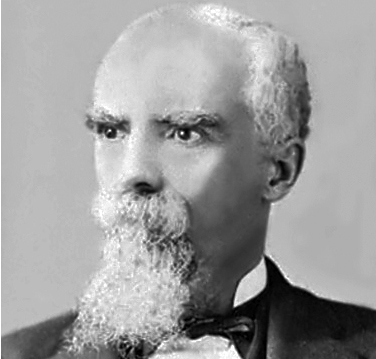
Author
E. M. Bounds
Summary: The Holy Spirit gives prayer a vital and decisive place in the gospel. The church needs leaders who pray and teach others to pray, because resources, education, and plans can become hindrances if they are not sanctified by fervent devotion. We do not need novelty or entertainment, but men and women of powerful faith, holiness, humility, consecration, and complete surrender to God, capable of bringing about true spiritual revolutions through the Word and the power of the Spirit. Natural ability is not what matters most, but rather the ability to pray and seek the fullness of God. We must not live solely on past miracles: let us pray fervently that God will raise up more people like these and fulfill his promise beyond anything we can imagine.
Before Pentecost, the apostles had only glimpses of the importance of prayer. But the Spirit who descended and filled them at Pentecost raises prayer to its vital and decisive position in the gospel of Christ.
The call to prayer addressed to all the faithful constitutes the Spirit’s highest and most demanding requirement. The piety of the saints is refined and perfected through prayer. The gospel advances with slow and timid steps when the saints do not pray at length early in the day.
Where are the Christian leaders who can set modern-day saints to praying and teach them this devotion? Have we realized that we are raising up a collection of prayerless saints? Where are the apostolic leaders who can set the people of God to praying? Let them step forward and do the work; it will be the greatest work they can accomplish. An increase in educational facilities and financial resources would be the most terrible curse if these things were not sanctified by more fervent and frequent prayers. But deep devotion will not come naturally. The campaign for twentieth- or thirtieth-century funds will not benefit our prayers but hinder them if we are not careful. Only specific, well-directed action will have an effect.
The most distinguished members must lead the apostolic effort to establish the vital importance and reality of prayer in the heart and life of the church. Only leaders who pray can have followers in prayer. Leaders who pray will produce saints who pray. A praying pulpit will result in a praying congregation. We greatly need someone to set the saints to the task of praying. We are not a generation of praying saints. Saints who do not pray are a beggarly group who possess neither the fervor, nor the beauty, nor the power of the saints. Who will repair this breach? The greatest of reformers and apostles will be the one who sets the church to praying.
It is our most sober judgment that the great need of the church in this and every age is for men of overwhelming faith, spotless holiness, marked spiritual vigor, and consuming zeal; men whose prayers, faith, life, and ministry are so radical and forceful that they bring about epoch-making spiritual revolutions in individual lives and in the church.
We do not mean men who cause a sensation with their novel plans or attract people with pleasant entertainment, but men who produce movement and upheaval through the preaching of the Word of God and through the power of the Holy Spirit—a revolution that changes the whole course of things.
Natural ability and the advantages of education do not figure as factors in this matter, but rather capacity through faith, the ability to pray, the power of complete consecration, the aptitude for humility, an absolute surrender of self for the glory of God, and a constant, insatiable longing to seek all the fullness of God—men who can kindle the church with fervor for God, not loudly and ostentatiously, but with a quiet fire that melts and moves everything toward God.
God can work wonders with a man of purpose. Men can perform miracles if they come to consent to God’s direction. The full endowment of the Spirit that transformed the world would be eminently useful in these days. The universal need of the church is for men who can mightily stir everything around them for God, whose spiritual revolutions change the entire face of things.
The church has never advanced without such men; they adorn its history. They are the enduring miracles of the church’s divinity; their example and deeds are a source of unceasing inspiration and blessing. Our prayer must be that they increase in number and power. What has been done in spiritual matters can be done again and under better conditions. This was Christ’s view. He said, ‘Truly, truly, I say to you: he who believes in me, the works that I do he will do also; and greater works than these he will do, because I go to the Father.’ The past has not limited either the possibilities or the demands for doing great things for God.
The church that relies solely on its past history for its miracles of power and grace is a fallen church.
God wants chosen men, men for whom self and the world have disappeared through a severe crucifixion, through a bankruptcy that has so completely ruined self and the world that there is neither hope nor desire of recovering them; men who, through this crucifixion, have turned to God with a perfect heart. Let us pray fervently that the promise God has made to prayer may be fulfilled beyond anything we can imagine.