Living According to a Vision
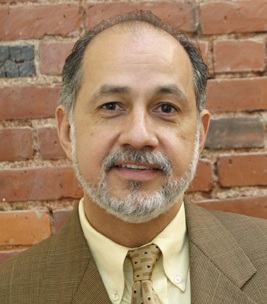
Author
Dr. Roberto Miranda
Summary: God calls us to live with an expansive vision, without allowing barrenness, failure, or fear from the past to limit what we expect from him. Joy does not depend on favorable circumstances; it is a spiritual posture that we cultivate through gratitude, worship, positive confession, rest, and trust in God.
Isaiah 54 presents four principles for an enterprising life. Enlarging the place of the tent means expanding our minds and imaginations to envision great possibilities. Stretching out the curtains requires moving from dreams to concrete action, beginning with what we have at hand, even when we feel afraid. Lengthening the cords represents building strong structures through discipline, planning, persistence, preparation, and self-control. Strengthening the stakes means protecting what has been achieved through prayer, integrity, character, healthy relationships, and personal care, for blessings and greater responsibilities also bring risks and pressures.
We must do our part while trusting that God will make a way. A great vision requires persistent work and deep spiritual defenses. The foundation of this fruitful life is surrendering our lives to Christ and undertaking everything for the glory of God.
I want to speak to you about a visionary life, an enterprising life, a life that conceives great things for the Lord and does what it has to do to bring that vision to fruition, a life of vision, which is something that is talked about so much nowadays, about living according to a vision.
And our church is a visionary church, and that is why we do the things we do; that is why we are always changing something here or there, undertaking new projects, because the Lord wants us investing in his kingdom and undertaking new and daring things.
In chapter 54 of the book of Isaiah, the Lord says to Israel, and by extension he also says to us:
"Rejoice, O barren woman, you who did not bear children; break into song and shout for joy, you who were never in labor. For more are the children of the desolate woman than those of the married woman, says Jehovah." And here the Lord steps in to address us as well as he develops the call he first makes, and he says, "Enlarge the place of your tent"—and he is saying that to you, and he is saying it to me, and he is saying it to Congregation Lion of Judah—"enlarge the place of your tent.
Incidentally, as we continue reading, "tent" in this case means a camping tent, the tent used by Bedouins, nomadic tribes, or Boy Scouts: this idea of a tent where people live, but which is a movable thing, a camping tent. And he is speaking to a people who knew very well what it was to live in the desert and to dwell in tents like that.
So he is using that illustration to reinforce his call in what he is telling them: to break into song, to expect great things from God, and so on. Then he says:
"Enlarge the place of your tent, and let the curtains of your dwellings be stretched out; do not hold back; lengthen your cords and strengthen your stakes, for you will spread out to the right hand and to the left, and your descendants will inherit nations and inhabit the desolate cities."
Amen. Glory to the Lord. How many believe that promise this morning? That is for you, my brother; it is for me; it is for Congregation Lion of Judah. God calls us to live an enterprising life. God calls us to conceive great visions, not to live conformist lives, not to live mediocre lives. If there is anyone on this earth who has no excuse for living a mediocre, comfortable, conventional life, it is the Christian, because we have a great and mighty God who expects from us a life of excellence that glorifies him, a life commensurate with the power he has placed in our hands.
If we live a small, conventional, conservative life, we are dishonoring the great God who has called us and who has deposited such great power within us. And that is why God's call to a person, as an individual, to a church, or to a ministry is always to expect great things from God and to live as though God has great things for you.
And at the beginning of this chapter the Lord says, "Rejoice," and, interestingly, he is speaking figuratively to a barren woman, a woman who has never conceived, never had children, never given birth. And there is something of a contradiction from the very beginning of this passage. There is a surprising call. "Rejoice"—one can understand that: oh yes, God is calling us to rejoice—but, "O barren woman." Wow, in those days a barren woman was considered a person who had failed in her womanhood.
Thank God, I hope that if anyone is here, if there is a sister who has not conceived for whatever reason, she will never feel that she is a failure, because there are many ways to be fruitful. Amen. And let us also continue to hope: if you want to have children, continue to wait on the Lord as well and put your faith in the Lord; but no woman is a failure simply because she cannot have children. Rebuke that thought if it is in you.
But yes, in those days, in that culture, in that Middle Eastern Jewish society, a woman who could not give birth was a troubled woman, a woman considered a failure, a woman who was regarded as barren not only in her womb but throughout her entire life, because a woman's fulfillment at that time was to be a mother.
And so the Lord is speaking to Israel, which, when Isaiah delivers this message to it, is a nation that has been held captive. The Lord had judged Israel for its great sin, its idolatry; he had exiled them, sent them to Babylon. They were captives; it was a nation that was barely beginning to get back on its feet. Israel had also been barren, and that is why the Lord later tells her not to fear, that she will not be put to shame, and that her husband is her Maker.
It says in verse 6, "For Jehovah called you like a woman abandoned and grieved in spirit. For a brief moment I abandoned you, but with great mercies I will gather you."
He is speaking to a failed nation, a fallen nation, a defeated nation, a nation whose God has judged and punished it and which now feels separated from God's goodness. There is no hope for her. Imagine being held captive, taken to another land, with one's own land deserted, completely desolate.
Incidentally, this is not the only time Israel has gone through that situation. When Christ came to earth and was crucified, not long after his resurrection Israel was taken by Rome after rebelling against Rome's might, and Jerusalem was completely destroyed. The Jews were banished from their land, Jews were forbidden to live in Jerusalem, and for almost 2,000 years Israel was scattered.
You have heard of the wandering Jew. In every nation there were Jews who had been banished from their land. Israel was not even a nation; it ceased to be a nation. Jerusalem ceased to be populated by Hebrews. There were always a few, a tiny remnant that remained, but it was not a nation; and one might ask, when has it ever been seen on earth that after 2,000 years a nation rises again? Something unthinkable, and yet that is what happened. It says that it would happen in one day—that was the Lord's promise—and in 1948 Israel became a nation again. And since then the Jews have been returning to their homeland.
And I say that the God who performed that great miracle is also the God who can revive his church in the twenty-first century, here in North America, in Europe, and in other parts of the world. That is why we cannot put anything beyond God's power. If there has been barrenness in your life for some reason, if there has been failure in your life, if there have been times of great drought in your life, never rule out before the Lord the possibility that God can cause you to blossom for the first time or bring those times of prosperity and blessing back into your life.
Never let yourself be defeated by a condition of poverty or failure. If something failed in your life, a little root of life remains there beneath the soil. The plant aboveground may have fallen, but inside is the life of God, which will sprout again. With God there are always possibilities. We cannot lose hope. Perhaps you have never given birth, but you can give birth.
And you know, one of the main things needed to give birth in the world and in life, especially after times of failure and barrenness, one of the most important things is to do what it says here: to sing, to rejoice in the Lord as an active practice, to adopt, so to speak, a policy of spiritual joy, joy in the Lord, rejoicing in the Lord.
I was speaking with the Wednesday congregation, the group that comes on Wednesdays, about Paul's call in Philippians chapter 4: "Rejoice in the Lord. Again I say, rejoice. Let your gentleness be known to all men." In the Bible there are continual calls to joy as a powerful weapon for blessing, prosperity, success, and progress.
One of the things that most kills the power and movement of God in our lives is a pessimistic attitude. It is an attitude of complaint, an attitude of silence concerning good things. When we train ourselves and become accustomed to speaking positively and feeling positively, adopting a militant stance toward life; when we understand that rejoicing in the Lord is not a result, that rejoicing in the Lord is not something that arises because your bills are paid, because you received a raise at work, because the person you loved is finally going to marry you, or because things are going well. For the Christian, rejoicing is a stance that we adopt; it is a spiritual ethic; it is something we embrace as an attitude that breaks down walls and destroys the works of the devil in our lives.
And many times we have to sing even when we do not feel like singing. One can... if we have a pessimistic attitude inside, if we are negative inside, as Christians we must first decide to change that attitude and then begin to train ourselves. Perhaps you cannot change your emotions first, but you can begin to speak positively.
I always say—and we laugh about this in our family—that when my mother, Toñita, was asked, "Doña Toña, how do you feel today?" she would say, "Fine," even though at times she went through terrible periods in her life, suffering from terrible trigeminal nerve pain. There are people here who know what that pain is like, and yet Toña never lost her joy in the Lord. She spoke positively; she always had a smile. Sometimes smiling was difficult for her, but she smiled. Speaking was difficult for her, but she offered someone a word of counsel.
To receive blessing, you have to begin by developing and cultivating a positive spirit in your life. Learn to speak positively. Learn to confess. I have learned in my life that even when something bad is happening, I am going to find that little vein of gold amid the difficulties, and I am going to look for something in my life for which to thank God.
Things such as gratitude are important. Express your thanks to the Lord for the things that happen in your life. Amen. Do not look only at the bad things; look at the good things in the midst of the bad things and thank God for them. Always look for something good for which to give thanks. Sing. I believe worship is important too. Filling our homes with praise and worship, setting aside time during the day to worship the Lord and to confess good things—that is important too. Gratitude, worship, positive confession, speaking good things into your life, and having good counsel to fill your life with good things.
All these things release the possibility of God doing something in your life. That is why I believe that this passage, which speaks of constructing and building, begins with a call to sing and celebrate the good things God is going to do in your life. If God has not done good things in your life lately, begin to anticipate them and to say that God is going to do them. I live my life always expecting new and beautiful things that God is going to do.
I believe that this season we are experiencing as a congregation is one of the best seasons we have ever had, and I cannot wait to see what is going to happen in this church in one or two years, because I believe God has good things in store, and we must speak them, declare them, and celebrate them.
This morning, when we were up here after the time of worship, God had been speaking to me about resting in the Lord and being still in the Lord. This morning, I do not know why—perhaps it was because I lost my glasses this morning and looked everywhere for them, and that rattled me a little. When you are obsessive-compulsive, well, you are always... and there was a voice inside telling me, "Rest, rest in the Lord, be still." And then, when I came up here just now, I was filled with that sense that resting in God and adopting a positive attitude is one of the things we have to do as a congregation. Anxiety often kills us, as does always being in a fencing match with the devil. Sometimes the Lord simply wants you to lower your hands, wait on me and trust in me, commit your cause to the Lord, and let him act, let him work in our lives. That is so important.
"In quietness, the Word says, shall be your strength; in quietness and rest, your salvation. You will keep in perfect peace the one whose mind is steadfast on you." So many passages speak to us about that.
So, that idea of singing to the Lord, of rejoicing in the Lord, of raising shouts of joy... did you know that many women who cannot give birth are able to give birth once they relax? That is a medical phenomenon. I have known women who could not give birth and adopted a child—a couple could not have children, they adopted a child—and since the woman now had a child, it was as though her anxiety about giving birth subsided, and then they were able to have children. Doctors know, obstetricians know, that one of the things a woman has to do is relax in order to give birth. If she is tense and at war, it is counterproductive.
And I believe that as Christians we should use rejoicing, joy in the Lord, as a way to attract good things. God likes to be where there is praise, where there is joy, where his goodness is celebrated.
So first, if you want to live a powerful, positive life, rejoice in the Lord and adopt rejoicing as a spiritual weapon. The second thing the Lord says here in verse 2 is what I call a formula for victory and success in life. There are four things I see here; I am going to state them as quickly as possible.
It says, enlarge the place of your tent; 2. Stretch out the curtains of your dwellings; 3. Lengthen your cords; 4. Strengthen your stakes. They are 4 elements, all connected to this idea. God uses the illustration of a tent that has to be replaced by another one. And what are the elements that make up a tent? There are 4: the site, the curtains, the cords, and the stakes.
And each one of them is an element that we have to take into consideration when we want to build something, when we want to undertake something in our lives, when we want to change our situation; it can also be in a ministry when we want to move to another level. Whatever it may be, I believe these are principles for building throughout all of life.
First, as I already said, is this matter of having a positive expectation, worshiping the Lord, praising him, confessing positively, cultivating an attitude of expectation regarding God’s blessings. Enlarging the site is something people sometimes do not think about: that in construction, one of the most important things is the lot, so to speak, the land, the plot where the building will be constructed. People think only about the building that goes on top, but if you have ever been involved in construction at any point in your life, as I have been throughout all these years of construction here, or if you simply observe, one of the things that takes the most time is planning.
Architects take months to design a building and go through the entire process of obtaining permits and all these other things. Then, once all the documentation is ready, the place where construction will occur has to be prepared. The first thing that has to be done is to clear the site; if there is something on it, tear it down and level everything. Before constructing this building, we spent months filling the site with large quantities of reinforced concrete so that it would serve as the foundation for the columns, the beams, and everything else. We spent months working solely on the lot, on the site.
And to me, the lot, the site, is the mind, the sensitivity, the imagination, the creativity. It is the place where God will put the visions you want to conceive in your life. And if you want to live a creative, powerful life, the first thing you have to do is train your mind to believe great things for the Lord. You have to enlarge your capacity to visualize, imagine, believe, and hope.
Where does God plant great projects? In the soul, in the mind. Many of us do not do great things because we do not dream great things. I encourage you to imagine, to fantasize in the positive sense of the word, to engage in daydreaming, to see yourselves in great spaces, to see yourselves doing great things, to see your children already graduated, studying, married, and doing good things in society; see your life progressing; woman, see yourself, if you are a homemaker, conceiving a new project in your life.
I was speaking with a sister this morning and encouraging her. Hey, she is coming to the 9:00 a.m. service and wants to improve her understanding of English. What a wonderful opportunity for you now to learn the language well. Read books, watch more television in English, study; in other words, there is this idea that we have to visualize ourselves, see ourselves doing great things in the Lord.
And we have to ask the Lord to enlarge our capacity to expect great things from God. And we have to cultivate our imagination. He says, “Enlarge the place of your tent.” Before you begin to build, first prepare the site; make it large enough. Many of us do not dream enough, or our dreams are tiny because that is what we have grown accustomed to.
Conceive visions that frighten you. Conceive visions that terrify you when you contemplate them. And I believe God can lead you to great things. I was speaking with a young woman who was telling me how happy she was because she was pursuing a master’s degree in social work, to become a social worker. I told her, “How wonderful; congratulations.” I rejoiced with her and celebrated that. And I said, “Look, think about how one day God may enable you to earn a doctorate in social sciences, in social work. God can lead you to become a professor at a university.” And I saw her smile, and I saw her eyes fill with expectation. Of course you can do that.
You can expect great things from God. Our problem is often that we do not dream enough and do not ask enough of the Lord. And the first thing we have to do is this: Lord, give me a mind that puts nothing above you. When we came here to Boston, I thought it was simply to serve the Latino community. I promise you that was my sole perception: it was a Hispanic church, and we were going to serve Hispanics.
And from the moment we arrived here, the Lord began to broaden things. In fact, my vision was so small that, with the first building we bought, that sanctuary, my capacity at that time, my faith, allowed me to believe in nothing more than what we needed, which was a box. The box on the first floor: go in there, put in some chairs, and, by the grace of God, have a church—and that was all. I confess it; I am ashamed to say it.
The Lord has continued to broaden—glory to God—my vision, sometimes to the agony of those of you who have to follow me in the visions God gives me. But God has continued to enlarge my capacity to believe him for great things, on a grand scale. And from the moment I arrived there, the Lord immediately began speaking to me. The architects pushed us: “Look, Roberto, you can take this first floor. Why don’t we tear out half the ceiling, put two balconies upstairs, build a larger platform, and do this and do that?” They themselves began advising me, and that is how we began to expand that building and started doing other things.
The Lord began calling us to social work, to get involved in the city, to work on social issues, to speak to the city, to invite people from outside to come, and to conceive the possibility that we could minister not only to Hispanics but also to Americans. We began the English service because we saw that we could also speak to another sector of the city.
The Lord began to enlarge the site and teach me that one can believe for great things. And if we are now undertaking this project of changing the services, I know that is uncomfortable for you, my brothers and sisters. I assure you that it is uncomfortable for me too, and it often inspires a little fear in me, but I will never allow fear to limit me from undertaking great things for God.
So do not worry about that part. Fear is something I live with; I simply take 2 aspirins at the end of the day and keep moving forward. Do not allow fear to prevent you from undertaking great things for God.
But we have to broaden our expectations, and God has given us much more than we think. Ask the Lord to enlighten you so that you can believe in the great things he can do in your life, and do not let your past widowhood, your past barrenness, hold you back. Believe that God can do great things through you, and do not place limits on the Lord. Enlarge the site; enlarge the foundation, the platform of your belief and expectation.
Then the Lord says, “And let the curtains of your dwellings be stretched out.” So this tent already has a larger space, and now, if there is a larger space, the curtains have to be longer. A tent—think about it—the fabric, the leather that forms the body of the tent: get yourself larger curtains because your tent is going to be larger.
Now, there is a contrast between the site—which is something abstract, a foundation, a starting point, something imaginative—and now he says, get yourself the curtains, and get larger curtains. Here I see that at some point one has to move from vision to action, to something concrete. Okay, you have already dreamed, envisioned, prayed, and consulted, but now you have to get out of your seat and begin to work, begin to pursue... Many people dream and dream, but do nothing. They spend years saying, “I want to do this. I want to buy a house. I want to learn English. I want to prepare myself for a better job,” but they do absolutely nothing.
And one of the most difficult things is moving from conception to action. That woman or that man who wants to study at a university has been a laborer all his life—and glory to God for that—but feels that God is calling him to another level and wants to go to college. Look, if God has placed that in your heart, you are going to have to start knocking on doors. One day you are going to have to take half a day off work, and that is the difficult part: when you have to begin doing specific things and move out of the abstract.
You are going to have to say, “On Wednesday I am going to ask my boss for half a day off work, and I am going to Bunker Hill Community College. I am going there, although I do not know where I am supposed to go,” because all those things hold us back. The thought of, Where do I go? What do I do? What do I say? Whom do I speak with? I am going to make a fool of myself; I do not know where to go. No, you simply have to set aside that day. This is stretching out the curtains. You have to take that morning, go to the place, and ask someone in the physical facilities, “Where is the admissions office?” Go there and, with your somewhat broken English, tell them, “I want to apply to the college. What do I have to do...?” Perhaps you will be surprised. You will find a kind person who will see that you are trying to do something positive and will tell you, “No, what you need to do is this; I’ll help you.” And before you know it, little by little, your project begins to come together.
But you have to start somewhere. That is the hardest part. It is moving from the conceptual to the concrete, and that has been the case with all these construction projects. Every time I have had to begin something, I feel a sense of fear and wonder, Will this be possible? This project involving the two services—you know all the considerations that have had to be taken into account, everything we have discussed at length with leaders, with the church’s pastors, and with different groups; so many things, obstacles in one’s mind. And there are still things about this project that one does not understand: How will it turn out? Will it be worth it? Am I destabilizing the congregation? These are questions every leader should ask. It is not that I am obsessive-compulsive or crazy; everyone wonders, Lord, will it be possible?
But one has to begin. We have begun, little by little, gradually speaking with people and consulting them, and little by little the project begins to come together on its own. Often what you have to do is begin, and begin small, and when you begin with what is small, God begins placing you over what is greater, and you learn. As you undertake the project, the project itself teaches you new things, and God opens paths for you, but you have to begin putting up the curtains. You have to make small efforts.
God always asks you, as I have told you before, what you have at hand. And what you have at hand will be the starting point for greater things. What Moses had in his hand was a staff and a hand, and the Lord told him, with those, perform two signs: a hand that became leprous and then was healthy again, and a staff that he threw on the ground and that became a serpent, which he picked up again and it became a staff once more. Signs God gave him to begin the process.
What you have to do is open a path little by little, and God will then show you what you have to do, and you must work in the Lord and let God do the work. I was speaking with Minelia, my sister, telling her about... She had been suffering for a long time from this trigeminal nerve problem, and for months Minelia’s life was slipping away because of a pain that is one of the most terrible pains in the human body—the trigeminal nerve: eye, nose, ear. The pain from this nerve is like a continuous electric shock running through you, one of the most terrible pains.
But the doctors were telling her—the specialist she had was telling her—“No, you should not do it yet because it is dangerous, it is risky,” and this and that. They made her very afraid, telling her that she could not do it, that it was not possible. And because I know what that pain is like from my mother, who went through it, I told her, “Minelia, I am here; I want to help you.” I called her, did some research, and suggested a specialist in Boston, and she took the plunge despite all kinds of fears. “Look, you have nothing to lose. Go and speak with him. The worst that can happen is that he will tell you what you already know and simply say, ‘No, you should not do it,’ confirming what the other doctor has told you.”
But she took the plunge, went there, and had a consultation, and the doctor told her, “You can do it.” And to the glory of the Lord, Minelia is a completely renewed woman. That operation was a total success, to the glory of the Lord, and she went immediately from terrible pain to no pain at all. But she had to dare; she had to take the plunge.
The Bible says that whoever watches the clouds too closely never sows. That is how it is. If you are going on a picnic one day and begin saying, “Oh, but what if it rains and then I lose all this food?” and this and that, you will never sow. One has to dare in the name of the Lord. Enlarge the place of your tent; lengthen your cords—that is, wake up, get up, undertake the task.
Third, it says here, lengthen the ropes. Of course, now you have a larger tent with a large space and large curtains; what else do you have to do? The structural part. The ropes are like the columns and beams in a building. This building is supported—the beauty you see underneath and everywhere rests on steel beams, steel foundations, and steel columns. That balcony is entirely steel, and on top of it are the carpeting, the rugs, everything else, the decoration. But there is a structure.
Our body is flesh and has a certain beauty on the outside—more or less, for many—but inside… Have you ever seen anatomical drawings, how ugly the human being is when the skin is removed? What you find is a skeleton, a nervous system, a whole mass of wiring, veins everywhere, intestines, a stomach, everything. If you think about what makes up that woman you love so much and with whom you are so deeply in love, you will never marry her. That is how it is, because everything is structure. We are structure. We are systems, and then God takes those systems and covers them with something beautiful, but inside there is an anatomy, and that is how it should also be with human life. Everything in the universe requires a structure.
And that is why God speaks not only about the curtains, but now moves into a structural part and considers the ropes that will hold them. The ropes in a tent are those cords that tie that curtain to the ground and keep the wind or the breeze from coming along and moving it everywhere. Imagine if those ropes were not there. The ropes are the structure.
And I believe that, likewise, there must be structure in our lives and in the projects we undertake. And that is one of the hardest things for us to learn as Latinos. I am going to speak among Latinos now. For example, Latino culture, like African culture too, I believe, is a very spontaneous culture. We laugh about everything, we enjoy everything, everything is about friendship. You go into our government offices, and everyone there is talking on the phone; then so-and-so arrives, who is a friend of the woman working at the machine: “Oh, no, you come first,” and they move him ahead of the line. Many times, it is a disaster.
People leave early… Now that has changed a little, but in the past, in our countries, people would leave at twelve and return at two in the afternoon, after taking a nap, having a bath, and eating a meal with rice, beans, meat, and everything else. Who is going to work? Who is going to produce anything? After a nap like that and such a heavy meal, the rest of the day was already lost. Our cultures are cultures that often lack structure, lack government, lack systems, lack protocols. We do not plan, brothers and sisters; it has to be said. Of course there are exceptions; I understand that very well.
But look at the countries on our continent. They are countries that do not function, and… think of Mexico, a country with so many resources—and forgive me if there are any Mexicans here; I am not saying… I love Mexico very much—but it is such a rich country, with so many resources and such a vast geography, and yet there is so much poverty, so much misery, so much dysfunction.
Venezuela right now—how sad it is to say—a country with oil like few other countries in the world, with incredible wealth, is a case of terrible national neurosis. Think of Africa, of those countries that have so many mineral resources, so many natural resources, yet they are nations that live in misery and where corruption takes everything away. Guatemala, El Salvador, Honduras, and, as I say, my own country, the Dominican Republic. Look at Puerto Rico, part of the United States, and right now it has to be rescued from bankruptcy.
What is the problem with our nations and our societies? It is that we have not learned to function according to structures, principles, protocols, and systems. We function on impulse. We will never die of anxiety. It is like Dominicans: even if we are starving, there is always time and always money for a good beer and a merengue. That is how it is. Yes or no?
The American dies of ulcers and anxiety; we do not. We will live to be one hundred, but we will be poor and suffer in other ways. We enjoy ourselves, but we are like wild animals, running freely through the countryside yet no good for carrying a load, being ridden, or anything else. That is how it is, because we lack structure, discipline, protocol, systems, planning, governance, and habits that rise above our impulses.
Many times, if we feel like doing something, we do it; if not, we do not. I tell people that one of the great principles of success is mastering the boring things. If you learn to master what is boring and do it anyway, you are a giant and you will go far. Our young people need to learn to sit down and read. If you have to remain seated for two hours, three hours, read. There are many young people whom you tell, “If you want to study, go to college, and earn good grades, you will have to spend three or four hours reading and studying every day,” and that is like holding a cross up to a vampire. “What? Four hours?” They think that with ten minutes of reading they are already going to…
White people, so to speak, are not more intelligent than we are; they are more disciplined. I have attended the great universities of this land, and I tell you the truth: most of the people who get into Harvard, Princeton, Yale, and all those places are not geniuses, nor are they brilliant. What they have is an incredible capacity to work, to read, to discipline themselves, and to spend a sleepless night doing the work. What those great universities teach you is discipline, persistence, mastery over your impulses and emotions, meticulousness, a systematic approach to things, and analytical thinking.
And we have to learn that part of life. We have to learn to master the little things, to master the boring things, to master what we do not like, and to live by principles, not by feelings, fears, or appetites. No. The man or woman who achieves great things is the one who has learned to be disciplined and to live by principles. You get up at a certain time. If you know that you have to get up at five in the morning, then go to bed at ten at night. Forget the soap opera, forget the movie, stop chattering on the phone, go to bed, get up early, and make good use of those morning minutes. We must discipline ourselves, brothers and sisters.
Be persistent in your work; make yourself indispensable. For those eight hours of work, give your boss nine. Show excellence in what you do. Structure—the ropes that will support your life—must be powerful as well. There is a part that you must do and that God will not do. The problem is that many times it is, “Lord, give me this, give me the job, give me the raise,” but you do nothing on your part. And God says, “You lazy bum,” as Miguel says. “You shameless person, get to work, and in your work I will bless you and move you forward.” There is a part you have to do: discipline, structure, organization, principles, systems—the structural part, the structure that will support your project and your vision.
And finally, it says, “Strengthen your stakes.” Think of a person who gets a much larger piece of fabric, a very large curtain, and a very large space in which to set up a new tent; goes and buys the strongest, thickest ropes possible at Home Depot; and then keeps the tiny little stakes that the tent had when it was originally very small and uses them to tie down everything else. Do you think that, no matter how large those ropes are, if the stakes are not driven in firmly and are not much larger stakes, that tent will stand when all the wind comes…? Because imagine it: now that tent is much larger. There is more fabric to push against, and when the wind comes and gets inside that tent or pushes from the outside, there is more space, more fabric, more things it can move, either from the inside or inward from the outside. So it needs very strong stakes to hold the ropes.
That is why I believe this passage is not merely an illustration. I have found very powerful principles for life in it. Now, what do the stakes correspond to in terms of life? I would say that the stakes speak to me about defense, protection, and things that will guarantee the project’s durability—the defensive aspect, the protective aspect, the protection of a project.
You know that when God blesses you and causes you to prosper and they place you, for example, in a position of greater responsibility or greater influence, then the winds of life begin to blow more fiercely against you. For how many people, for example, has being given greater responsibilities at work meant the collapse of their marriage? They began working more because more hours were required of them. Now they are the supervisor; now they have to work much more. They come home in a bad mood and tense. They have to spend their weekend sending emails, replying… and they forget their home, forget their wife, forget their children. Before they know it, the blessing of that new job, those longer ropes and larger curtains, becomes a curse in their life. They lose their marriage, lose their health, and become neurotic because they did not strengthen the stakes.
What are the stakes? The stakes in our lives are prayer, integrity, character, human relationships, self-control, and mastery of self. When God blesses you, the enemy will want to do harm in your life, and challenges will come as a consequence of the blessing. Every blessing has its negative, dangerous, sinister side—every blessing. Many times, God causes ministries to grow. God gives us growing, larger churches with greater prominence in the city, but greater tensions also come.
Take the English service, for example. If that service—which I believe it will—grows, many secular people will come. Professionals will come who are accustomed to being in charge and wanting everything decided by vote and everything done the way it is done in the world. People with bad secular and social habits will come, and there will be much greater pressure on me as the senior pastor, and on all the church’s leadership, to begin bargaining with the kingdom and preaching a more comfortable gospel, one that is more convenient for those people who are more cultured, better educated, and more secularized.
And the temptation comes to lower the standard of preaching, not to speak about things that offend people. There is greater prominence; yes, the news media are there, and anything said from the pulpit spreads and becomes known. Then one begins to be more conservative and more careful about what one says. It is extremely dangerous. That is why we often need to be careful about desiring greater things. There are greater dangers.
So you have to strengthen the stakes. You have to decide, “Lord, first and foremost I will honor you, come what may. It does not matter who comes. President Obama can come and sit right there, and if you gave me a sermon that I must preach and it offends him, so be it; let it be so. I am going to preach the word of the Lord.” It does not matter who comes. We are not going to change our practices, our message, our faith in God, or our faith in the word of the Gospel.
Because that is the devil’s temptation. The devil wants to seduce you. He offers you the world, as he said to Jesus Christ: “I can give you everything if you simply worship me.” When God blesses you, make sure that you see the dark side and prepare yourself for the blessing. If God gives you a marriage, take care of it and bless it. If God gives you children, care for them. If God gives you a ministry, begin to strengthen your character, your integrity, and your walk with the Lord. Look to see what the weak areas in your life are: anger, extreme sensitivity to criticism, wounds from the past. Now you will need to be more cautious. Your stakes must be larger and go deeper into the ground. If you are going to study, make sure you set aside time for the Lord. Make sure you place all your studies and efforts in the Lord’s hands.
If you are going to start a business, do not stop giving your tithe to the Lord. Do not stop praying for your work. Study good books, take care of your body, rest, take care of your marriage. Stakes. Things that protect the blessing you are receiving from the Lord.
I hope this will be a blessing in your life. Celebrate what God is going to do: gratitude, expectation, positive confession, broaden your vision, and expect great things from the Lord. Launch out to fulfill your dreams, and along the way God will meet you and open new paths for you. Your rope: live a life of discipline, principles, protocols, preparation, self-control, persistence, and attention to detail.
And finally, do not forget the protection of the stakes: prayer, the perfecting of the self, improving yourself in many different areas of your life, protecting what God has given you through spiritual warfare, prayer, integrity, and character.
If you do these things, I guarantee you a powerful life, a life of great blessing, great success, and good and new things that will continue to manifest themselves in your life. Receive this word right now.
Bow your head and say, Lord, I am going to live that powerful life. I am going to live that enterprising life; I am going to pay attention to the principles of good sowing, good cultivation, and believing you. You have made me an instrument in this world; you have made me a channel of energy, of blessing, an example; you have made me a city that others will look to in order to see my progress and my conduct, and I want to be all that I can be, as an inspiration to others and for the glory of the Lord.
And finally, I also want to give an opportunity if anyone has come this afternoon and God has spoken to you in some way through the worship, through the preaching, through the time of intercession we have had here at the front, or through something God has done in your life, and you feel that you want to surrender your life to the Lord, because after all, that is the beginning of all success: having Christ in our hearts, having that electricity that will give life and energy to everything else.
And if you have not yet surrendered your life to Jesus and this afternoon you want to begin walking with Christ as your support and your number one resource, I invite you to accept Jesus as Lord and Savior and to do so in the way prescribed by the word of the Lord, which is by confessing him with your mouth, confessing him before men, and inviting him to be your Lord and your Savior. And what better way to do that than here among your brothers and sisters, in the family of God, in this sacred and safe place where you can make your covenant with the Lord this afternoon and invite him to be your Savior and your Lord.
Is there anyone who would like to take that step this afternoon? And if you have not done so before, I invite you now to raise your hand wherever you are, and we want to pray for you and place you in the hands of Jesus so that you may leave here very, very well prepared to embark upon that powerful life, that creative life.
If there is anyone who would like to do so this afternoon, we open this moment for that. We make room for it. Raise your hand or simply come forward, and I would love to pray for you at this moment. Thank you, Lord; we wait on you. We thank you, Jesus, for what you are doing and for what you are going to do. Amen.
If there is no one… let us place our lives in the hands of the Lord now. I wish you a good weekend in the Lord; enjoy your time, rest, have good times, and let us live those fruitful lives, those creative and enterprising lives in a Christ who wants us to succeed in everything we undertake.
Father, we worship you; we bless you. Thank you because you are the God of triumphs; you are the God of mountains we climb; you are the God of endless horizons; you are the God who surprises us with harvests far greater than we expected. You are the God who has placed all the power of the universe within us; we have the excellent spirit of Christ Jesus.
We ask you to help us see the possibilities for power that we hold within us with Christ. I bless your people this weekend, Lord; I bless our nation. Give us a special time over these next few days, and we will do everything for the glory and honor of your name. In—in the name of Jesus we pray, and the people of God say, Amen.