Interview with Dr. Miranda: Vision—león de Judá in Five Years
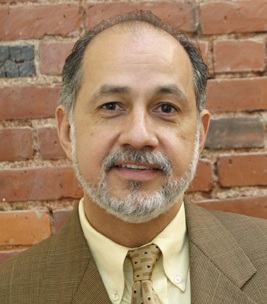
Author
Dr. Roberto Miranda
Summary: In five years, we long to be a church with a larger, modern, and suitable sanctuary where we can welcome more people and freely cultivate worship and the arts. We want to extend our influence beyond the Latino community, sharing with English speakers, African Americans, Asians, and other peoples the family values, hospitality, and passionate spirituality that God has given the Hispanic people. This impact is not intended to exalt a congregation, but to manifest the Kingdom of God and enrich both the community and the church.
We also need to expand our presence on television, radio, and the Internet, because these media allow us to reach millions of people nationally and internationally. Our mission must integrate the spiritual with the educational, economic, political, cultural, and intellectual, overcoming every false separation between the gospel and community service. This includes creating a Christian family counseling center, providing young people with holistic discipleship, and transforming every dimension of life. At the same time, we must continually improve our administration, leadership development, finances, facilities, and support for missions, combining spiritual strength with institutional excellence.
Where would we like our church to be in five years? Well, one of the things I would love to see—if someone were to leave Boston and return five years from now, and this is a great dream that I hold before the Lord—is that, where our parking lot is currently located behind our building, they would find a beautiful sanctuary with a large balcony and a very modern façade that would speak of the church’s relevance in the modern world and of its progressive character. So I am asking the Lord to give us the ability and capacity to build a temple that can accommodate more people and hold somewhat more than the number of people God is helping us bring, with greater comfort and greater freedom to worship the Lord and stage dramas and other things on a platform much larger than the one we currently have.
Second, I would like to see our church having a greater impact, not only in the Latino community but also in the English-speaking world. I believe the Hispanic community in the United States has been called to bless this nation. We are not merely immigrants who come from Latin America to receive from this country; rather, I believe God has also allowed us to bring to this nation a set of cultural and spiritual values and a collective temperament with immense potential to bless the culture in which we find ourselves. Hispanics—with their love for family, their healthy fear of God, their religious and spiritual background, which is embedded in their fundamental sensibilities, their affection, their warm nature, their hospitality, and their inclination toward friendship—possess things that the European world here in the United States greatly needs. Therefore, we have much with which to bless our community.
Another thing is that a growing number of Hispanic evangelical Christians are coming who bring tremendously powerful spiritual values and a spirituality radically committed to the Kingdom of God. They are filled with the Holy Spirit and have an experience of the power of God whose “impartation” a large sector of the English-speaking evangelical community needs to receive. Many Anglo-Saxon churches are dying, drying up spiritually, and do not know how to get out of the predicament in which they find themselves.
We Hispanics may not have many financial resources or large temples, but God has given the Hispanic Christian people a very strong and passionate spirituality, and the Anglo-Saxon world needs to experience and receive that flavor. So I believe that God has also called us to be a blessing here, and that our church can also be a blessing to the English-speaking world. By then, I would like to see our church more involved in the wider world—not only the Latino world, but beyond it—a church with a greater presence in that respect, perhaps with a larger number of African Americans, European Anglos, and Asians united here in our congregation.
In some ways, we have begun to see this at an embryonic level, but I believe God still has a greater level of influence for us as a congregation. And when I say “as a congregation,” I am not so concerned that my congregation itself have that impact; what matters to me is that, through our congregation, the values of the Kingdom of God may reach the community and the church, blessing and enriching them. So that would be a second element that we would also like to see here.
Third, I would love to see our church more involved with the media. I thank the Lord for the ministry of Dr. Ernst Diehl and his wife, Esmeralda Diehl, who are helping us develop ministries in the area of the electronic network and in other audiovisual fields. I believe that the frontier of our church lies precisely in that area. God has given us certain resources and certain elements that I believe can be a blessing to the community, but now we need the means to reach the community and expose it to the things we have received.
That is why I believe one of the areas that excites me most is the idea that, within five years, our church will have achieved a much greater capacity to operate in the electronic sphere of television, radio, the electronic network, and the Internet. These are wonderful areas where, through a single intervention, we can potentially reach millions of people.
Here on Sundays we reach a few hundred people, but through these media our reach can potentially be unlimited. So I ask the Lord very earnestly to help us develop, over the coming months and years, a greater capacity to navigate the currents of communication effectively.
The world has achieved a great deal through communications, so why can’t the church do the same if we have the resources of the Kingdom of God at our disposal? May God therefore help us, within three or five years, to be a church with a much greater impact not only in this city, but perhaps even nationally and internationally, because what is most important above all is that the Kingdom of God be manifested through us.
I would also like our church to be much more involved in different areas of community service because, in reality, I believe that a false dichotomy, a false separation between the community sphere and the spiritual sphere, has developed.
In reality, the Gospel is supposed to permeate everything. It is leaven that is supposed to leaven the whole lump. That includes the educational, economic, political, cultural, and intellectual spheres, as well as, obviously, the clearly spiritual sphere, such as the life of prayer or the study of the Word of God, morality, and ethics.
But all these things, all of this, are part of what the Kingdom of God must impact. There is that idea, that comprehensive vision, that integral vision of the Kingdom of God, of the church exercising its “discipleship” over the nations. When the Lord Jesus Christ told the disciples, “Go into all the world, preaching the Gospel, and make disciples of all nations”—of the ethnic groups, the peoples, and the races—
the idea was, first, that the church should exercise the lordship Christ had given it; that it should disciple the nations, impart the values of the Kingdom of God to the nations, and turn the nations into disciples of the church. That is the word; that is the command of Jesus Christ. And I believe that if the Lord Jesus Christ commanded something, it is because He was also providing the resources for it to be accomplished. For I always see in the Word of God that when the Lord gives a commandment, it presupposes the capacity and the resources required for that commandment to be fulfilled.
The Lord never commands His children to do something without also providing the capacity and the resources to do it. So I believe that within the church’s very spiritual genetics lie not only the commandment but also the capacity to disciple the nations in every dimension, so that the church may impact the world through its spiritual values, its cultural values, even in the scientific realm, in the way people conduct their business, in politics, and in the intellect.
I would love for our church, as the years go by, to become more and more a source of influence in every dimension of the community’s life. For example, I would love to see, within five years, a family counseling center serving the entire community, with several psychologists and even a couple of psychiatrists who are Christians, professionally qualified, but also knowledgeable about the mysteries of the Holy Spirit, ministering to families, ministering to individuals and to people with different kinds of neuroses and emotional needs, and healing them through the values and teachings of the Kingdom of God. A counseling center, for example, would be extraordinary.
I would like the church to be working very intensively with young people, reaching them and transforming their lives—taking a fourteen- or fifteen-year-old who is not doing very well in school and beginning to “disciple” him in matters as fundamental as how he dresses, how he speaks, and what time he gets up in the morning. It would be a regimen that impacts every aspect of his life—his studies, his social relationships, everything—and little by little those young people would be transformed into human beings who have the values of the Kingdom of God infused into their sensibilities. To me, that is extremely important. I believe that this area of the church’s comprehensive, integral involvement is absolutely essential for the future.
May God also help us to continue improving our operational systems and our administrative capacity. I would love for our church, more and more each day, to learn to be not only a spiritual place, a place of sound spiritual values, love for the Lord, and grounding in the Word of God, but also to improve the way we conduct our institutional life: our administrative systems, leadership training, the management of our finances, the way we maintain our physical facilities, and the resources we can contribute to missions through fundraising. In all these things, I ask the Lord to help us improve, improve, improve.
That is to say, if someone comes here five years from now, may that person be amazed at how we, as an institution—viewed purely from an administrative standpoint—have learned to be the church here in the heart of the city.