How Will This Be?
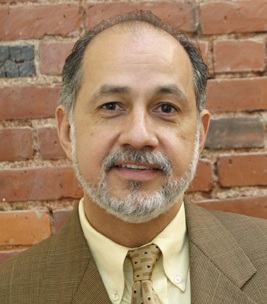
Author
Dr. Roberto Miranda
Summary: Christmas reveals a God who is present and active, who turns barrenness into fruitfulness: he made the conception of John and Jesus possible, and he wants to produce abundant, creative, and blessed life in us. His announcements often come as a desire, a stirring, or an inner prompting that seems out of proportion to our abilities and circumstances. The decisive moment is how we respond. Zechariah questioned out of unbelief, seeking proof despite knowing the Scriptures; Mary asked a legitimate question about how it would happen and, after receiving guidance, surrendered herself to the word of God. We may ask for wisdom, strategy, and clarity, but we must not allow obstacles to paralyze us before we begin. The path will include wildernesses, struggles, and impossibilities, yet God’s purpose remains to lead us to fruitfulness. We must therefore renew our minds, reject mediocrity, expect great things, and take concrete steps of faith. Like that first act of returning to write an abandoned thesis, obeying the prompting opens the way for us to discover that nothing is impossible for God.
Brothers and sisters, I invite you to turn to the word of our Lord Jesus Christ in the Gospel according to Saint Luke. Let us go to Chapter 1, to one of the most famous and beautiful accounts in the entire history of the universe. And we are going to begin—there are two announcements, as we might call them, in Chapter 1, of impossible births. Both are announced by an angel of the Lord, both promising life where there was not supposed to be any life.
Let us begin with verse 11 of Chapter 1 of Saint Luke. It says there:
“…And an angel of the Lord appeared to him, standing at the right side of the altar of incense, and Zechariah was troubled when he saw him, and fear came upon him. But the angel said to him, ‘Do not be afraid, Zechariah, for your prayer has been heard, and your wife Elizabeth will bear you a son, and you shall call his name John. And you will have joy and gladness, and many will rejoice at his birth, for he will be great before God. He will drink neither wine nor strong drink; he will be filled with the Holy Spirit even from his mother’s womb, and he will cause many of the children of Israel to turn to the Lord their God. And he will go before Him in the spirit and power of Elijah, to turn the hearts of the fathers to the children, and the disobedient to the wisdom of the righteous, to prepare a people well disposed for the Lord….”
Now, here comes the important thing in this passage, and it is the point around which the sermon is to revolve; and there is a similar point in the next account as well. Look at how Zechariah reacts to this abundant and beautiful promise of a supernatural being who is going to be born to him and his wife.
“…Zechariah said to the angel, ‘How shall I know this? For I am old, and my wife is advanced in years.’…”
He thought about the obstacle, you see? Do you remember what we were saying last Sunday? This sermon, incidentally, is closely connected with many of the principles we developed last Sunday.
“…‘How shall I know this? For I am old, and my wife is advanced in years.’ And the angel answered him, saying, ‘I am Gabriel, who stands in the presence of God, and I have been sent to speak to you and give you this good news. And now you will be mute and unable to speak until the day when this takes place, because you did not believe my words, which will be fulfilled in their time.’ And the people were waiting for Zechariah and marveled that he delayed in the sanctuary. But when he came out, he could not speak to them, and they understood that he had seen a vision in the sanctuary. He spoke to them with signs and remained mute. And when the days of his ministry were completed, he went home….”
The first account. A question in response to the announcement of a miraculous event that would turn a barren life into a fruitful and abundant life; faced with the complexity of that promise and that work, there is doubt, there is questioning, there is a question: How shall I know this?
So now let us go to the second account. Well, you know the story. The angel—I am going to recount part of it to you—the angel appears to Mary and says to her, “Mary, do not be afraid; you have found favor with God. You are going to bear a son; His name will be Jesus. He will be great, the Son of the Most High, and He will reign over the house of Jacob forever.” In verse 34, in response to that second promise—remember, Mary is a virgin; she is not married yet. She is betrothed to her fiancé, Joseph. They have not had any kind of physical relationship. It is not possible for her to conceive. Biology says that a woman conceives when there is a physical encounter with her husband, with a man, but Mary has not had any kind of physical encounter. And then Mary said to the angel, in verse 34:
“….‘How will this be?’….”—another question. The first question was, “How shall I know this?” And here Mary asks, “How will this be?” Because of the magnitude of what is being announced to her, she is expected to conceive under impossible conditions, and so she asks, well, “‘How will this be, since I know no man?’ And the angel answered her, saying, ‘The Holy Spirit will come upon you, and the power of the Most High will overshadow you; therefore, the holy being who will be born will be called the Son of God. And behold, your relative Elizabeth has also conceived a son in her old age, and this is the sixth month for her who was called barren, for nothing is impossible with God.’…”
I want you to repeat that with me: For nothing—again—for nothing is impossible with God.
“….Then Mary said, ‘Behold the servant of the Lord; let it be done to me according to your word.’ And the angel departed from her presence….”
May the Lord bless His holy word. Thank You, Lord. Help us, Father, to believe what we proclaim, Lord, because You are great, You are powerful, and nothing is impossible for You, Lord. We ask only that You give us the supernatural capacity to believe that what is impossible is possible with You. Help us to believe in fairy tales, Lord. Help us to believe in myths; help us to believe in children’s stories, Lord. Help us to believe in things that only children can believe. Help us to have the imagination and sensitivity of children so that we may believe this word, Father, which is so difficult to believe; but only You, by illuminating our spirit, Lord, can make this possible. Thank You. Amen and amen.
I want to title my sermon this morning, “How Will This Be?” because that is what the Lord placed in my mind this week as I was thinking about a text to share with you that would be related to the Christmas story. And I wanted something different from what one always discusses at Christmastime. That thought came to me—Mary’s question, “How will this be?”—and it has haunted me practically all my life. Many times throughout my ministry, and even before the ministry, when God has placed in my spirit a promise of something He wants to do in my life or through my life, the magnitude of what God tells me in my spirit is often so great and so different from the circumstances I am living in and from my abilities that I always ask, “How is that going to happen? How will it be possible for this to happen?”
I remember when I was working on my doctorate at the university. Years had passed, and I had gone into ministry, into the pastorate, and had lost all contact with the university and with my doctoral dissertation, and there were a number of things still unresolved that I had not been able to work on. About three years had passed, and I had not set foot in a university classroom. My dissertation adviser had gone to another university. I had not touched a literature book in all that time. I had disconnected emotionally and mentally from my doctorate, and I wondered, “How am I going to be able to go back and salvage that investment I made? How will this be?”
And I can tell you that the Lord—one morning, which I still remember well, I was desperate because I knew that if another year or even a few more days passed without my taking up my doctorate again, I was going to lose it. In desperation, I grabbed a bag I used—I remember it well—it was Saturday morning; I put three pencils in it and a sheet of notepaper like the one over there on my seat, and I went desperately to the Harvard library and went down into the basement, where I had a small cubicle. And I said, “I am going to begin writing, and the first thing I write, even if it is only a scribble, I am going to write it.” And that became the first sentence of my doctoral dissertation, which I completed six months later. And about eight months later, I was graduating from the university with my doctorate in hand. And God worked miracles during that time.
I remember that I had a master’s-level Latin requirement that I had to fulfill, and I could not take the classes, so I had to pick up a Latin book, catch up, and take an extremely difficult exam. When I took it, I was sure I had flunked it, that I had not passed. And there were only two or three doctoral candidates who took it that year. When I arrived a few weeks later at Professor Dante Della Terza’s office—I will remember him all my life—so that he could give me the news, I was sure he was going to say to me, “We are sorry, Mr. Miranda, you have to take it again.” And with a mischievous smile, he told me, “You passed.” And I still believe that God put grace in that man’s heart so that he would pass me, because he said, “This is not essential, and he has worked; since the poor man has suffered enough, let us free him from his agony and get him through.” I believe God gave me favor with that person.
And I remember dreams I used to have, those obsessive, compulsive dreams in which I arrived on graduation day and someone said, “There is a requirement you did not complete,” and I did not even remember it. I had that dream several times, because one always wonders, “How will this be?” I was finishing this doctorate; I did not even have a dissertation adviser. I wrote my dissertation believing that God was going to do something, and I submitted it complete. I did not follow the process, and God glorified Himself and gave me my doctorate, which I deeply feared losing because it would have been a great loss in my life. And I believe I simply could not have endured the fear of passing by that university and knowing that I had fallen short, that I had lost that opportunity. And God, in His mercy—every time I pass Harvard University and walk across that campus, and especially when I pass the building that houses my department, I say to Him, “Thank You, Lord, because You were faithful and had mercy on me and blessed me.”
Brothers and sisters, when God promises something, sometimes it seems so difficult and at times impossible that, if you start thinking, “How will this be?” you freeze with fear and do not move forward. And this is precisely what I see in these two: an old man with an elderly wife; they have never had a child, she is barren, and a miraculous being appears to him one day while he is carrying out his priestly role in the sanctuary and says to him, “Your wife is going to have a son, and you are going to have a son with your wife.” And he says, “What? He is crazy! She is barren. I am old, she is too—how is that going to happen?”
Here is the thing: when God tells you that something miraculous like this is going to happen in your life, you have to ask yourself how you are going to react. But let me go back a little now. What does this have to do with the Christmas story? Obviously, it is an account concerning birth, Christmas, and the Incarnation. And Christmas speaks to us, brothers and sisters, of a God who is present, an active God who descends among human beings, interacts with them, takes an interest in their situation, and works miracles among them. That is the essence of the Christmas story: an active, present, miracle-working God who performs wonders among humanity. Christmas, brothers and sisters, is synonymous with miracles. Just imagine: wise men coming from far away, guided by a star—a miracle. Shepherds who see and hear angels and who are guided to a manger where the Son of God lies in the form of a fragile baby—a miracle. Two women who cannot and should not conceive are miraculously made fertile by the power of God. Christmas reminds us that the miracles that happened to Mary and Elizabeth and Zechariah and Joseph can happen to us, to any one of us, because they are ordinary human beings to whom something absolutely extraordinary and unprecedented happens. And therefore, by extension, those miracles can happen to any one of us, just as they happened to Mary, that humble maiden from a tiny village in an insignificant country like Israel.
Brothers and sisters, when God wants to work a miracle in our lives, there is generally an announcement; there is generally an announcement. As we see here in these two accounts, there is an announcement of a miracle. The announcement does not usually come through an angel, as in this case. In most cases, it comes through a little voice, an impulse, a restlessness, a tingling sensation that is born almost imperceptibly deep within our being and begins to grow, just as the babies grew in the wombs of Mary and Elizabeth. There is a spark of life, a conception, an impregnation by the Holy Spirit, and one knows, just as a woman knows, that something has changed within our being. There is an announcement; there is an omen of something magical that has been conceived within us.
And when that announcement comes into our lives—because many times God is going to tell you something; He is going to tell you in some way, “I want to make your life fruitful. I want to cause you to give birth. I want to make you pregnant with something”—it may be the desire to go to college after years of not studying; it may be a homemaker deciding, “I want to learn English,” or, “I want to take up the profession I left behind when I got married and had children”; it may be someone who says, “You know what? I am tired of hearing the people around me talking and not understanding what they are saying to me, so I am going to start learning English. I am going to go to the academic resource center, enroll, and begin taking English classes, even though I do not think I have what it takes to learn any language.” And that desire is born within you one day. You may be looking out the window, listening to a radio program, changing the baby, or washing dishes, and right there that impulse is born in you—a thought that fleetingly passes through your awareness. It is an announcement; it is a declaration of God’s intention for your life.
And when there is an announcement in your life, you have to ask yourself how you are going to react to that announcement. The announcement comes, and it is up to us to recognize it or not recognize it, obey it or not, ignore it or not, let it transform our lives or continue in our normal condition of barrenness and normality, comfortable but lifeless. Mary could have said to the angel, “No, thank you. Thank you, but I am not married yet. There are a lot of gossips in this village, and when I tell them it was the Holy Spirit, they are going to say, ‘Oh, yes, of course.’ And I am going to be disgraced in front of everyone, so no, thank you. Tell the Lord, look, Juanita lives next door, and I think she is crazy enough to believe that, so you had better go over there.” But Mary decided to respond to that miracle.
God wants to come into our lives, brothers and sisters; God wants to come into your life and mine and turn our barrenness into abundance, our lack into fruitfulness. Brothers and sisters, that is the essence of the Christmas message: humanity sunk in sin, oppressed beneath the devil’s boot, without a relationship with God because it has no mediator, condemned to the same thing it has suffered for millennia, without hope, going around in circles about nothing, with no way out, condemned to failure—and then a light breaks in, along with an announcement that this frustrated humanity can give birth, can change its destiny, can cease to be barren and begin to bear fruit for God. That is the essence of Christmas: barrenness turned into fruitfulness. Two barren women giving birth.
God, brothers and sisters, wants to redeem our limited condition and cause us to bear fruit. God wants us to live rich and abundant lives. When the Holy Spirit comes into your life, perhaps you are full of sin, bondage, poverty, and failure; your family has never given birth to anything, there is no hope to suggest that anything can happen in your life, and God comes and says to you, “You know what? I want to turn your barrenness into fruitfulness. I want you to rejoice because, from now on, with Christ, you are going to be something completely different. Before, you were an anonymous, depressed person with no prospects, and now, when my Son enters you, he will make you pregnant, and the Holy Spirit will make you fertile, and your barrenness will be turned into fruitfulness.” That is the essential dynamic of Christmas.
I—I continually see that in the lives of our people. During the years we have been here in this congregation, I have seen people like Wilson and his……, forgive me for putting you on the spot here. These two young people are here; we have known them for many years, and you know these young people. They could be out there right now with shattered lives, lives like those of so many young Latinos who, unfortunately, are living in a dead end, bearing no fruit. Their destiny was probably one of failure, and yet God has blessed them. When I see our brother and sister here, married, with their little daughter and already another one on the way, each of them educated and working as counselors, blessing lives and blessing their church, with the children, with the deacons—wow, I say, those two represent lives that God has made fruitful, miracles God has performed. God has turned the desert into a flowering garden, and I could point to many others.
I think of Ana Andujar, who perhaps cannot hear me; she was up here. Ana came to our church years ago sad, bitter, and frustrated, with a sad and, to some extent, tragic childhood behind her. Then Christ entered her life, and her temperament changed, her outlook on life changed, and God sweetened her relationship with her family, which had been a tortuous, conflict-ridden, and difficult relationship. She is studying, she has a good job, she has learned English, she has become beautiful, and God is blessing her life. And every time I see her, I see a miracle: God making the barren fruitful.
Margarita Brito, who is not here. Margarita was literally demon-possessed when we met her. She had a dark past with many problems. God delivered her from her demonic bondage on Halloween—the first part, because the second part took place later in the church basement over there in Cambridge; I still remember it. And this young woman, who had not studied and had cut her education short, later went back to college and, with limited English, completed her first degree and also earned her master’s degree. She is working for the school department and for a social services center here in Boston. And I see her—I see her married, her children moving forward, with her house and a husband who loves her—and I say, “There is a Mary whom God made fruitful.” When Christ entered, he made an announcement: “I do not want you to live a life of occultism and failure like so many Dominican women. I want you to be happy, to bear fruit, to be blessed. I want to erase your past; I want to make you fruitful; I want to give life through you. My Spirit will come upon you, and what is born of you will be something holy, something wonderful.”
And I want to tell you, and you, and you, that God can do the same thing in your life, that God wants to make you fruitful. God has made an announcement over your life that he does not want you to live a life of anonymity, normality, and mediocrity. I do not care who you are: the more difficult and unpromising your life may be, the more boldly I tell you that God wants to change that situation and that God has already made an announcement. An angel has come to you without your recognizing him as such and has told you, “I want to make you fruitful, and I do not want you to live an anonymous life. I want to bring you out of anonymity and infuse my power into you.”
These people whom I have just pointed out to you have believed God, and God has caused them to bear fruit—and the best is still ahead. The message of Christmas is the message of the Incarnation: Christ has come so that we may have life, and have it abundantly. He has appointed us, as John 15:16 says, to bear fruit and for our fruit to remain.
In the life of every believer, in the womb of every believer—the fertile womb of every believer, and you have a womb if you are a child of God—there is an announcement of life; there is a life from God there that is about to come forth, that wants to come forth, and everything depends on how we respond to that announcement. Every believer in Christ Jesus exists to live a rich, productive, growing, creative, blessed life. That is the destiny God has for you. That is what you were called for; that is what you were created for, just as Mary and Elizabeth were created for one single thing: to give birth to the life of God and enrich the world for the rest of history because they walked upon the earth.
When Christ comes into our lives, he tells us, “You are going to bear fruit; you are going to give birth to the life of God.” And, brothers and sisters, our lives are supposed to be lives of miracles, and, as in the Christmas story, everything depends on how we respond to that promise that miracles are going to happen in connection with us.
I want you to begin cultivating a perspective of abundance in your mind, as I said last Sunday—a perspective that says, “God has called me to something beautiful, something different, something creative, something immense.” Difficulties will come, as in the case of Joshua and Caleb. Of course they will. There are giants we have to fight; there are times in the wilderness. Of course there are. There are times of war, battle, and impossibilities that must be confronted. We have to take up the sword, and we have to fight, but God’s destiny for you is that you enter the Promised Land, eat from the land flowing with milk and honey, drink from wells you did not dig, and live in houses you did not build. That is what God wants.
Now, between here and there lies terrain filled with struggle and complexity. But what beautiful novel does not have that? What adventure story does not have a villain to defeat and two or three Indians out there with spears who want to eat you? But that is what makes the story beautiful, and it is necessary for the story to be a noble tale of adventure.
Now, it is interesting that both Mary and Zechariah react with surprise when the angel tells them that they are going to have a son. And God’s promises and miracles, as I have said, always astonish us; the question always arises: “How will this be?” That housewife I mentioned who, suddenly, one day while washing the dishes, feels that perhaps it would be good for her to learn to speak English asks, “Well, how am I going to do it?” And between that moment of “I want to learn English,” which is the vision, and “How am I going to do it?” there is a journey. So she has to begin walking that path. If, when she says, “I want to learn English,” she says, “Hmm, no way. I cannot do it; I should not do it; I do not have time; where would I go? They are going to laugh at me; I am too busy at home; who is going to take care of the children while I am gone?”—if she starts thinking about all that, she has lost the battle before she even begins; she has died in the movie, right at the beginning. There is no movie. What is more, its hero—the heroine—has died. The announcement—an announcement came, but how am I going to do it? How will this be? The moment of the announcement is the most dangerous moment of all. How we respond to the announcement will determine what follows in the movie.
Now, look at these two people: Mary and Zechariah. Mary asks a technical question; this is important. She asks a technical question, a neutral and, to some extent, legitimate question, and she receives an explanation that satisfies her curiosity. “Well, how will this be?” “Well, the Spirit of the Lord will rest upon you and make you fruitful with his life, and the being who is born will be the Son of God, so do not worry; that is how it will happen.” Mary—because many people have wondered, “Well, why did Mary ask a question and Zechariah ask a question, yet poor Zechariah got the short end of the stick, as they say? He was struck with the hammer, while Mary was let off.” I believe there is a difference between the two questions, and that is very important as well.
It matters how one asks the Lord—whether one asks in unbelief or asks simply seeking a little more of an answer, a little more detail: “Give me an idea of how to do it; give me the strategy; show me the plan you have.” That is what you have to do when a desire to do something great, different, impossible, difficult, or complicated comes into your life. Ask the Lord, “Okay, Father, what strategy are we going to follow?” Sit down and develop the plan. Ask the Lord for illumination. Ask the Lord for wisdom and clarity; there is nothing wrong with that. The land has to be spied out. There is nothing wrong with spying out the land. The important thing is that when you spy it out, you do not come back in unbelief as the ten did.
Now, Zechariah does ask in unbelief, and that is why the account says that the angel told him, “Because you did not believe”—there it is. The angel had some very rigorous psychological training. He took a few psychology classes up there in heaven; they are better than the ones down here. And he understood that Zechariah’s question was an unbelieving question. “Oh, come on! How can that happen if I am old, and so is she?” There was a different discernment. Mary’s question is a technical, neutral question: “Well, how will this be?” Zechariah’s question is, “How can this be? How am I going to know that this is true? And who are you? Where are your angelic credentials? Show me your angelic rank, or prove that you are an angel and that these fellow priests of mine are not playing a nasty joke on me.” Zechariah asks in unbelief, even though he knows the Scriptures, and he asks for a sign. And the sign he is given is that he will be left mute and humiliated until he verifies God’s faithfulness.
Zechariah was a priest—and here is another thing: from everyone who has been given much, much will be demanded. Mary is a simple woman; she is a little maiden. She has not studied the Bible and probably cannot even read or write. She does not know the biblical accounts except casually, in passing. Zechariah is an educated man, a priest; he should—he should know better. He ought to know that, long before, there was an account of another old woman who conceived. Her name was Sarah, and, interestingly, something similar happened to her. Because God loves to make people who cannot give birth fruitful, you know? That is one of the great stories of Scripture, one of its recurring themes, one of the great paradigms of Scripture. God loves to make people who cannot give birth fruitful; that is why he always chooses those who are most clearly marked as incapable of giving birth. And when God wanted another very powerful prophet of his, Abraham, to be a sign to all humanity of his Son—incidentally, Abraham’s life follows certain parallels with the life of Jesus Christ—God appeared to him and said, “You and your wife are going to have a son.”
And look how interesting this other account in Genesis is, hundreds of years earlier, when two angels came to Abraham’s house and said to him, “Where is Sarah, your wife?” And he answered, “Here in the tent.” Then one of the angels said to him, “I will certainly return to you.” This is the angel of the Lord. “And according to the time of life”—that is, the nine months it takes a woman to give birth—“behold, Sarah your wife shall have a son.” And look how interesting this is: Sarah was listening at the entrance of the tent, which was behind him, and Abraham and Sarah were old, advanced in age, and Sarah was past the age of childbearing. And what did Sarah do? She laughed to herself, saying, “After I have grown old, shall I have pleasure, my lord being old also? Ha, ha, ha.” Then the Lord said to Abraham, “Why did Sarah laugh, saying, ‘Shall I truly give birth, now that I am old?’ Is anything too difficult for God? At the appointed time I will return to you, according to the time of life, and Sarah shall have a son.” And Sarah became frightened because the angel was displeased by her unbelief. And Sarah denied it, saying, “I did not laugh,” because she was afraid. And he said, “No, that is not so; you did laugh.”
In other words, the Lord does not like us to say to Him, “No, don’t come to me with that.” You did laugh, and be careful next time. And these are—I see the time; how quickly the time has gone—but amen. I’m going to stop because I want to be prudent. I have already been imprudent; I did not even realize what time it was. But we’ve had a good time; we have had a good time, haven’t we?
But brothers and sisters, my sermon was left half-finished, though perhaps I will continue it next Sunday. But look, leave here today with this very important truth: God wants to make you fruitful first of all. God wants your life to be a life of power and fruit, of abundance, richness, and creativity. Do not settle for those narratives and patterns of infertility, anonymity, and mediocrity. Renounce that; renew your mind. Fill yourself and become imbued with the paradigms of Scripture. Believe that the Lord has something for your life, and when you feel that God is calling you to do something or for something great to happen in your life, do not start thinking, “How can this be? Impossible.” No. If you ask the Lord a question, ask instead, “Okay, Lord, now give me the plan. How will this happen?” Do not harbor doubt because the miracle is so great, so impossible, that it seems to be merely your imagination. Believe the Lord. Expect great things in your life. Live your life with the expectation that God is going to do something great, and live in light of that vision. Dare to take steps of faith; launch out in the name of the Lord. Believe that God has called you to do mighty deeds, and renounce the idea that you have been called simply to live a normal, ordinary life. You are not normal; you are a child of God. The life of God lives within you. That is the announcement; what makes it possible is Christmas—the Incarnation, the coming of Jesus, who was born under the sign of an overwhelming miracle: from nothing to life.
And that is the miracle reduced to its most basic structure: from zero to infinity. There lies the essence of a miracle, and that is for you and for me and for this church. The Lord loves to use very small things to do astonishingly great things. May the Lord bless you.
Stand up. And believe that Christmas is every day for the one who believes. Christmas was not something that happened two thousand years ago; Christmas is today for you and for me. Father, imbue us with Your life and help us to be men and women who do not hinder Your intentions to make us fruitful and bless us. Help us to be like Mary, to open our womb so that You may do in it what You have to do—Your work, Your strange work, Lord.
I bless my sisters and my brothers; I make them fruitful with the blessing of Your Spirit this morning. I declare miracles, miracles, miracles over them. Send them out from here with Your blessing. Lord, seal this word in our spirits, and begin with me.
Father, bless us with the absolute certainty that You are the same yesterday and forever, and that You want to perform miracles of fruitfulness, blessing, and creativity in our lives; that You have incredible things ahead for each one of us. You want to impregnate us with Your glory and Your life. Let us be like Mary, like Elizabeth—men and women whose womb is always ready for You to come in and bring forth the life of Christ in us and through us. We thank You this morning, Father. Lead us now in safety and joy into our normal lives, to live lives that are not normal. We bless You; we glorify You.
Thank You for what You have made possible on this day, Lord. In the name of Jesus. And the people of God say, “Amen.” You are blessed.