Unless One Is Born Again, He Cannot See the Kingdom of God
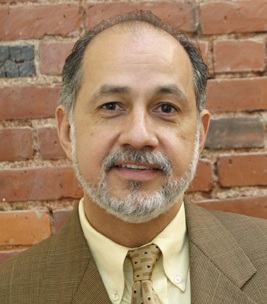
Author
Dr. Roberto Miranda
Summary: Jesus is the source of vitality and effectiveness in evangelism; by abiding in Him, we bear fruit and offer others the simple bread of the Gospel. Nicodemus shows that sincere religiosity, biblical knowledge, and good conduct are not enough: to see the Kingdom, one must be born again by the Spirit. This birth begins an inner re-creation that produces a new identity, mindset, and way of life.
We must patiently receive those who are seeking, for each person comes to Christ through a different process, and some need time to count the cost and let go of their bonds. The Church can open various points of entry without watering down the Gospel: it welcomes people in order to disciple them, confront them, and lead them toward sanctification.
Christ does not demand superficial allegiance, but the whole of our being: our affections, dreams, intellect, money, relationships, and reputation. To be born again means dying to our self-rule, acknowledging the lordship of Jesus, and willingly giving Him the keys to our lives. The Gospel is free, but it touches and transforms every corner; therefore, we must ask God to break us down, remake us, and live through us.
The Gospel according to Saint John, chapter 3. Let us remember that we are on this journey through evangelistic passages and texts, texts that invite us to fix our eyes on Jesus, His ministry, His Word, His saving work, and through this we want to do several things: to catch that evangelistic spirit embodied by the Lord, who came to save the world with love for the lost, with mercy and compassion.
By focusing on Him, we also want to draw strength from Him and receive strength from Him, because He is the source of strength and vitality; He is the source of evangelistic effectiveness. If we remain attached to Him, we will bear fruit. The Lord says it: “Abide in Me, and you will bear much fruit.” So, as we focus on Jesus, I feel that the Lord has called us, has called me, and has told us: if you want to be evangelistically effective, lift Me up, put Me forward. Do not worry about all the devices and scaffolding that men use; simply give people fresh, plain bread: Jesus, Jesus, Jesus. Invite them to look to Me, invite them to surrender to Me, invite them to establish a daily, personal relationship with Me, and I will do the rest.
So, through these teachings and these messages that we will be sharing throughout the year—and I do not know until when, exactly; we are not going to set aside the evangelistic calling just because the year ends, because that will continue—but I feel as though the Lord is taking us on a prophetic journey in which we will visit those places and those biblical, theological aspects that have to do with the essential truth of the Gospel, the call to evangelism and salvation. And as we travel through that prophetic territory, like Abraham traveling through the Promised Land centuries before his people, Israel, had been formed, had come out of Egypt, and entered that land, we are marking these places, marking these themes, and rehearsing them, so to speak, for some purpose God has for them.
I am learning a great deal by taking this intentional journey through these messages and these passages of Scripture, and I feel as though I am simply declaring these things prophetically. And you will see that this is like part of an entire repertoire that is taking shape and has a great deal of internal coherence: these truths, these characters, these themes support one another. And now we will see, for example, in this figure of Nicodemus in chapter 3 of John, the Gospel according to Saint John, which is next to chapter 4, which we looked at some time ago when we addressed the subject of the Samaritan woman.
These characters could not be more different, more opposite in their personal makeup, and yet, interestingly, they have many similarities, many things in common. And that is what I mean when I tell you that this is how the Word of the Lord is: it has an incredible coherence, and we are going to see a little about this. The two of them even have much in common with another character we just studied last Sunday: the rich young ruler. These three characters are wonderfully similar in their spiritual drama and also in the way the Lord deals with them, so that we may see that there are subterranean rivers running through the Word of the Lord, if we have eyes to see and can discern that theme of the Spirit.
So remember the Samaritan woman, Nicodemus, and the rich young ruler in this exposition we have here. There are many themes we could draw from this text, but I would say that one of the main ones, once again, is this idea of the new birth, the new birth. This is like a little spiritual biology.
What constitutes it? When a person is converted, what is supposed to happen? And I would say that Nicodemus, like few others, exemplifies even more than the rich young ruler himself that difference between external, ritual religiosity, even when sincere, and a spirituality that, redundant as it may sound, is born of the Spirit, is born of a spiritual chemistry, is born of an intimate relationship with God, is born of a confrontational experience, is born of an internal explosion that reconstitutes one’s being and gives rise to a new mentality, a new identity, a new spirit, a new way of seeing life, a new perspective, a new birth. As I believe Second Corinthians chapter 5 says: “If anyone is in Christ”—if anyone is in Christ, what happens?—zero miles, a clean slate: “he is a new creation.”
Why is he a new creation? Not because he is biologically, outwardly new, because we continue with all the wrinkles and all the warts of ordinary life, all the defects of the flesh and all the struggles. But something begins; something takes place at that moment of regeneration. An encounter occurs, like when a child is conceived in a woman’s womb, when the man’s life and the woman’s life are joined and a spark occurs when those two essences of life meet in the woman’s womb and a life is born. There is a spark of life that then proceeds to develop for a few months inside the womb and afterward outside the womb, in a process that never ends.
And likewise, that is why the Lord spoke very wisely about being born again, because birth—I am getting ahead of myself, but that is the subject—there is a birth that is gestation, it is the explosion of life, it is when God utters a word that says: let the world be, let there be light. And afterward He proceeds to bring order, and history comes with all its pieces and everything else, the drama humanity experiences throughout century after century. But God uttered a vision, a vision with all its pieces, and that vision is unfolding throughout history, because that is how God works: God declares things and then sees them and delights in watching them progress until they become a reality. And between that moment of gestation and consummation, there is a series of events and processes and things that all work together for the glory of the Lord.
And that is what a person’s spiritual journey is like when they are born again. Not through a religious, cultural, or institutional process, but of water and the Spirit, the Lord says, alluding to a mysterious process. Nicodemus exemplifies that contrast between those two states: the merely religious state, very devout but merely religious, and the magical, mysterious, mystical state of the new and mysterious birth through Jesus Christ and through the Spirit.
So let us turn to the passage here. Look at it through the lenses I have just developed. It says there was a man of the Pharisees. This is very important: he belonged to the strictest, most devoted, most committed sect, perhaps even the most enlightened sect of all the different denominations that existed within Judaism, because they believed in things the Lord believed. They believed in the resurrection of the dead; they believed in angels and in the things of the spirit; they believed in eternity. Meanwhile, the Sadducees, the other sect that was hostile to Jesus to a certain extent, was the enlightened sect; they were the liberal denomination, deeply immersed in Greek culture and the intellect. Therefore, as happens today with those denominations that have gone after culture and science—false science, false wisdom—they had become liberal and denied a number of things.
The Pharisees had the virtue of at least believing certain things. They were extreme legalists, but they had the virtue of believing many things. Yet they were “raw,” as Puerto Ricans say—unripe; they still had a long way to go. But Nicodemus was a member of that denomination.
Then it says that there was a man of the Pharisees named Nicodemus. Another interesting thing: he was a ruler among the Jews, a ruler, an archon. Archon, not lechón; archon means—an archon is a head. He was a leader, a capo, as the Italians say; he was a leader of the Jews, one of the people in charge. He was not only a member of the denomination but also one of the elders of the Pharisaic sect, so he was a man of great authority, great experience, and extensive knowledge of the Old Testament Scriptures, the commandments, and the Jewish rituals. This man had a long history with the teachings of Judaism, and to be a leader and ruler of the Pharisees, he had to be a man who behaved well, at least in public. We did not know what he did when he was on the Internet (laughter), but at least in public he behaved himself, right?
Then it says, “A ruler among the Jews”; it says that “this man came to Jesus by night.” Why does the evangelist mention there that he came by night? Incidentally, John is the only evangelist who records this drama and the person of Nicodemus. None of the other Synoptic writers mentions Nicodemus, but Nicodemus appears three times in the Gospel according to Saint John. He appears in John 7:50—you can look at it there later—and in John 19:39.
But Nicodemus comes by night. There are different interpretations of why he comes by night. Thank God I adopted my interpretation before reading the others, because otherwise I would have become confused, so listen to mine—and I do not think I am the only one who thinks this. I believe John points out that he came by night to emphasize the stealthy and secret way in which he wants to approach Jesus, the discreet, exploratory, tentative way in which he wants to approach Jesus. He does not want people to see him because he is jeopardizing his religious and social status, right?
He does not want people to say, “Hey, do you know whom I saw going into the house where Rabbi Jesus is? Nicodemus! Oh!” No. He comes very quietly and stealthily. I imagine he got out of his car and dove headfirst straight into the house where Jesus was. He came by night. And it is interesting, isn’t it?
Brothers and sisters, there are many people—one of the things I felt while trying to get inside Nicodemus, to put myself inside him and inside his psychology, is that Nicodemus is the perpetual seeker; he is the explorer, the one who is searching. And I am going to talk about seeker-sensitive churches, churches that are sensitive to those who are searching and exploring the faith. I believe Nicodemus is the quintessential example of a person who is in a process of exploration, restlessness, and searching, who knows that he has to sacrifice certain things and is in the process of asking: Do I get married or not? Do I take the plunge or not?
Jesus has undoubtedly made an impact on him. There are things about this mysterious being called Rabbi Jesus that intrigue and captivate him, but he knows that if he takes a step of total affiliation with this mysterious being, that is the end of it. Just imagine: they take away his Pharisee membership card, his position as a ruler of the synagogue; they cast him out of respectable society. There were many things he was potentially sacrificing as he contemplated the idea of surrendering to this person and accepting Him as the Messiah, with all the absolute claims this man made.
So I think that seeing this helps me, right? The person who is in process. Brothers and sisters, I believe that if we want to be evangelistic, if we want to be a truly evangelistic church and want to be evangelistic people, one of the things we have to learn is to broaden our parameters and also our capacity to be patient, to adopt a long-term attitude, to be flexible, and to wait for God’s timing before setting the hook. Because many times, as soon as the fish bites, we feel: Wow, it is so heavy. We feel that it is heavy, and we fall in love and yank it like this, and all that comes out is the fish’s mouth because the fish is too heavy and has remained in the water. And sometimes there are fish that have to be tired out.
Did you know that with large fish such as tuna, mahi-mahi, and all these large fish, there is an entire sport of fishing that consists of fishing for these big fish? And catching those fish requires a very fast boat, because when those fish bite, they are so strong that if you try to pull them in right away, your bait breaks off and they pull you into the water; the whole thing gets away. So what you have to do is, when the fish bites, it becomes frightened and begins to flee, and then you let out the line. I mean, I have never done this, but they tell me this is what happens, and you hear me talking as though I were an expert. But it is a good image. Listen, believe me, that is how it is, okay?
So, with these fish, you need a high-speed boat because they swim very fast. Then the boat follows the fish, and you have to let out the line until it bucks and jumps and runs. And when it is finally tired and cannot go anywhere else, then you can pull it in and bring it into the boat. Wow, that was good. Give me a round of applause, at least—come on!
And let me tell you, I believe some people are like that. Sometimes they are very cultured people, for example, highly educated people. I am not necessarily talking about lawyers, doctors, or businesspeople, no. I am talking about extremely cultured people, people who are highly developed rationally, intellectually, and culturally: university professors, intellectuals, politicians, people who have traveled to Europe, or at least to the Amazon, or wherever.
But this kind of person, who has drunk the milk of culture and the intellect in very powerful ways, is so hardened, so saturated with intellectual and cultural knowledge, that a lengthy detoxification process first has to take place before they can truly begin to process the things of the Spirit.
And that is why I believe churches are sometimes very good at attracting lawyers, doctors, businessmen—these kinds of people who are already successful and have a lot of money—but intellectuals, the people who dominate art, film, literature, the media, newspapers, ideas, the world of ideas and academia, are so hardened in their world that a long-term vision is required; a high-speed boat is required—there it is, all right—as you can see, nobody catches that fish so easily. Man, I climb on top of it, but I do not try to haul it in (laughter).
But I also believe that the Church, in this age when culture has reached a level of development unlike anything seen before in all of history, requires a high-speed boat and even a high-speed message—the same message. Someone is saying amen, glory to God; that child is enlightened by the Holy Spirit. The same primitive, first-century Gospel, but wearing highly potent attire and fueled by gasoline very different from what we so often use.
A Church with a much broader vision and preaching that is agile and different is required. People must be willing to let that person come with all their toxins and sit there, and they have to be simmered slowly, with a little water added and the heat kept very low so that all that intellectual and cultural poison gradually comes out; then perhaps they may come to understand. And that is why we—especially those of us in Pentecostal and charismatic churches—are so often no good at attracting the kind of people whom I believe God wants to attract, and will attract, at this time in history: we are simply too impatient. We want to create saints overnight. You do not catch a person who has drunk from the waters of the intellect throughout their life in the same way that you catch a laborer. Glory to God, both are souls that are ontologically equal and valuable before the Father, but different bait is needed.
The devil knows that, and that is why he casts every kind of bait, and we have to do the same; we have to be very agile, very discerning. Why do you think, for example, that we have this Anglican ministry? I know many of you will say, “Uh-oh, the Pastor is turning liberal—people with clerical collars, priests who are called Fathers, Father Ryan Morelli.” Brothers and sisters, there are people for whom seeing a clerical collar is like seeing the devil see a cross: their eyes bulge out of their sockets, and they begin to... Brother, study the history of the Church; study the different cultures; study the different countries where clerical collars are worn by people of God.
Many times it is not discernment but ignorance that makes us feel those fears. And I believe it is important for the Church to open different entry points for different seekers of the faith. For many high-speed fish, perhaps, walking through the doors of a church where what happened today happened would make them flee faster than a horse bucking away when a gate is opened, never to be seen again. Perhaps they need something more aesthetically pleasing and quieter, but which has the Spirit and the Word of God, openness to the things of God, integrity, holiness and biblical orthodoxy. But brothers and sisters, as people say—how does the saying go?—the clothes do not make the monk. It is not what is on the outside, but what is in the heart, the mind and the spirit.
So my desire is to open every door necessary for seekers to enter and come into the house of the Lord, and churches are needed that are willing to understand that and pay the price. I know that for many of us it is a stretch; it stretches us a little, but it is necessary if we want to be intellectually—or rather, spiritually—effective and evangelistically effective. We have to broaden our parameters.
There are people who will take years, even, to truly understand the mathematics or physics of the spirit, and people are needed who are willing to do that and let the Lord do the work. Nicodemus—returning to Nicodemus—is one of those figures. This is only one aspect of this very interesting man, because Nicodemus approaches the Lord in this way, doesn’t he? He knows that there is something mysterious, and we will see whether there is time to explore that a little more; there is a restlessness in his heart.
The rich young ruler approaches the Lord, and he too has knowledge of the Bible. He has behaved well throughout his youth; he is a man with healthy spiritual concerns, but he is not yet ready to dive headfirst into the sea that is Jesus Christ and His demands for the death and crucifixion of every appetite and every material love, and for complete surrender to the claims of the lordship of Jesus Christ. I would like to think that God rewarded the rich young ruler for being a guinea pig, entering the pages of the Bible and blessing so many people through a negative example, and that He ultimately rewarded him with a conversion. Perhaps years later he realized it and said, “Wow, how foolish I was,” and surrendered himself to the Lord Jesus and gave away all his possessions. I think we could write a novel about the story of this rich young ruler.
There are people to whom you give an altar call, and they will not come to the Lord that day, but they will do so later. In fact, there are others who will come on their knees, in tears and with mucus running from their noses, but the next day they forget what happened and never return. Others may take longer, but they return and give themselves completely. There are others who do not move at all or say a word, yet they are pillars of commitment to the Lord. You see others dancing and shouting over there, but they are like chameleons: they change overnight; they change color according to the light surrounding them.
There are many different processes in the Gospel. So look at how the Lord deals with each of these people: He deals with Nicodemus one way and with the Samaritan woman another. He does not allow this woman’s outward garb of bad behavior and sensuality to draw His gaze away from the treasure hidden in her heart—a heart that, when she truly comes to know the Son of God, will pour itself out before Him, and she will become a first-rate evangelist, as the Samaritan woman did.
And the Lord takes her through a gradual dialogue, leading her little by little in a religious conversation, while she tries to distract the Lord by talking about Jacob’s well and about how we worship here and you worship there. Look, none of that is what matters. What matters is that you know a day is coming when the Lord will seek worshipers who worship Him in spirit and in truth. It will not be in Rome or at the Vatican; it will not be in Tulsa, Oklahoma; it will not be Guatemala City, Guatemala. It is in the virtual realm of the spirit, where there is neither time nor space nor sequence nor anything else, but eternity—and we can live there, and that is what God seeks.
So God deals with all these people in different ways. I ask you, and I ask myself, to be that way. People take time; there are different ways in which people come to Jesus and to the Gospel, and many have to count the cost. There is something they have to let go of: sensuality; an overly active and rich intellectual life; a destructive relationship; a habit of speaking and destroying; ill-gotten money; luxuries they do not want to release; a business that earns them a great deal of money but that, if they leave it, will force them to start again from nothing; an intellectual reputation they will lose; a position of great influence they will have to sacrifice. But it takes time.
And we have to understand this. I think it is so interesting how Jesus treats this man, isn’t it? This seeker, this explorer intrigued by Jesus, approaches Him at night. And you will see that once again—because I know I will not have time to discuss all of this—Nicodemus is there at the end, when Jesus dies and has to be buried. Nicodemus, who also seems to have been a very wealthy man—there are secular sources suggesting that Nicodemus, a Nicodemus mentioned, brothers and sisters, by Josephus, who wrote those nonbiblical but historical books about that period of Jewish history—at the end, when Jesus dies, donates a significant quantity of spices to anoint and prepare the body of Jesus Christ. He is there at the end.
I believe he is convinced by then, but perhaps he is still struggling; he still cannot abandon everything completely, but he is already like a converted Naaman after seeing the miracle Elisha performs to heal him through the power of God. Yet Naaman now has to return to his position as a general serving the king who sent him to be healed with a letter of authority. And now Naaman, still a general in the army of this pagan king, has to return; and when this king enters the temple of his god Rimmon, he often asks his chief general to accompany him as an act of respect. And Naaman says to Elisha, “Look, Elisha, when I return, my king often invites me to go to the temple, and he bows before this god. I have to bow too because my arm is supporting him, and I also have to lower my head. What should I do?”
Elisha says, “Relax, do not worry. What is in your heart?” Many of us would say, “No, let them cut off your head; do not be foolish. Glory to God, hallelujah,” and we shake our heads. Elisha tells him, “Relax, do not worry; the Lord will work those things out.” And that is why I believe the Church does not have more people of power and influence in different places today: because we put people in a straitjacket, offering a Gospel too narrow for the greatness and vastness of God’s vision. And I am not talking here about liberalism and—no, no, no, listen to me carefully. No one is holier than Jesus, and yet I see that flexibility that breathes. Everything alive breathes; it expands and contracts; it has some give. If it is too rigid, it breaks because it has no flexibility.
So I believe Nicodemus was simmering slowly; he was a deep-sea fish, a big fish who needed that. The seekers—there are people who are not going to spend twenty-four hours a day inside the church, but they will sometimes occupy positions of governmental, political or intellectual authority, and they will do many things in favor of the Church. Their ministry will be more powerful, more influential and more beneficial than that of ten or twenty ushers, deacons or pastors confined to a circumscribed, very limited sphere.
And those people are needed in the White House; they are needed in Boston City Hall. Yesterday I met with three Catholic leaders in a meeting that will eventually be posted online. When you speak with them, they are evangelical—more evangelical than I am, more evangelistic than I am—and yet they are Catholics. And they are there, I believe, in part as undercover agents, although I believe they are sincere Catholics. But evangelicals are still needed in Rome, brothers and sisters, illuminating those places, and God has strange things in store.
Listen to me, I am telling you this; I am announcing it so that when it appears in the newspaper, you will say, “Oh no, I already read it in the Lion of Judah newspaper.” The time is coming when God will unite Rome and Geneva—Geneva and Rome. Evangelicals and Catholics will be united, not by anyone, but directly by the Holy Spirit. It is coming; it is coming. And listen: that will be something from God, not from men.
But sometimes people of influence are needed in different places—people who perhaps have not obtained their evangelical membership card, but who already are evangelical in their hearts. And they have to be allowed, they have to be allowed to simmer slowly. But there are times when those people can be useful; they can exert influence in favor of the Church; they can open up spaces.
Look at Nicodemus, for example. When spices are needed to anoint the Lord’s body, is there no money? Well, do not worry; I will write a check. Go to the store and ask for everything that is needed—no problem. When people are murmuring about Jesus in John chapter 7 and the Pharisees are plotting, Nicodemus says, “Hey, what is this? Before judging a man, don’t we ask him to come and defend himself?” He is in exactly the right place, exercising influence in a place of influence.
That is one of the things I see in this man, isn’t it? One of the many things he teaches us. But in this dialogue with Jesus, this man comes at night, doesn’t he? That is what the reflection emphasizes: he comes at night and with a very imperfect understanding of Jesus Christ, because he says, “Rabbi, we know that You have come from God”—first mistake. “We know that You have come from God.” Look, brother, Jesus did not merely come from God; He is God. Yet Nicodemus still sees Him through his limited eyes, like the rich young ruler, like the Samaritan woman who says to Him, “Look, Lord, it seems to me that You are a prophet.” It is interesting: the woman moves from rabbi, to prophet, to Messiah.
And here Nicodemus is still at that stage; that is why Jesus reacts. Do you remember when the rich young ruler said to Him, “Good Teacher, what must I do to inherit eternal life?” He was giving things away everywhere as he spoke: “Good Teacher,” first of all. And the Lord responds, “Why do you call Me good?” Whenever the Lord responds abruptly to someone, it is because there is something He does not like, something that has to be corrected.
And it is not that the Lord accepts everything either; He wanted to take Nicodemus where He needed to take him. There are churches that say, “Oh, let’s be welcoming, let’s be affirming.” No, I want to be welcoming and affirming so I can hit him over the head at some point, because there are people who stop at: let’s welcome people and affirm them with their problems and their bondages. But no, you have to draw people in and then remove their bondages. If you leave them in their bondages all the time and bless them, forget it: as the saying goes, even if you dress a monkey in silk, it is still a monkey. Sin is sin no matter how much you welcome and affirm it, or whatever else you do.
We have to bring people in, but then they must be discipled, corrected, and confronted. We have to open the door for them to come in, sit down, and listen; we have to give them time and talk to them about everything. But there is a plan, there is a vision, and that is sanctification, the surrender of one’s being, the acknowledgment of Jesus’ lordship over sexuality, money, culture, and all these things. Ultimately, He is Lord, and ultimately what matters is that every head bow before the Lordship of Christ, every knee bow and every tongue confess; that every principality, every power, every thought, every system, every cultural movement, and every institution bow before the greatness and Lordship of Jesus Christ. Now we are going to open the door so that they may come and be exposed to the radioactivity of the Kingdom and of the Spirit.
So the Lord begins; He welcomes him, knows what his weak spot is, and from the moment the man opens his mouth, he is already saying a whole lot of nonsense. He sounds respectful: “Rabbi, we know that You have come from God as a teacher.” The Lord was not a teacher; He did not come merely to be a teacher. If the Lord were a teacher, we would have placed Him in the ranks of Confucius, Buddha, and the other spiritual teachers of humanity; the Dalai Lama was a great teacher. No, what distinguishes Jesus Christ is what He is: God Himself, Son of God, Lord of lords, King of kings, God of gods. Power—He baptizes with fire. It is not merely a ritual institution. John says, “I baptize with water, but One is coming who baptizes with the fire of the Spirit.”
So the Lord embodied the power of God. We saw it with this woman who had the issue of blood: she approaches Him, and when she touches Him, it is as though she touches a high-voltage electrical cable; power comes out of Jesus, runs through her, and heals her. Jesus’ energy goes straight to the place. He did not have to go to a doctor so the doctor could tell Him, “Look, where do You want Me to act?” No, He knows: right there, in that flow of blood. He dries it up instantly, because that is what the power of God is like; that is the power that was in Christ. Christ is power. I am not ashamed of the Gospel, because it is the power of God.
Paul says, “The Gospel does not consist in words but in power.” Jesus was power, not words, not merely teaching. The Gospel is an exalted system of truths, but it is much more than that. So: “We know that You have come from God as a teacher, because no one can perform these signs that You perform unless God is with him.” In the beginning was the Word, and the Word was with God, and the Word was God. It is not enough to say to Jesus, “God is with You.” The Lord has to dismantle, decode, and deconstruct that statement by Nicodemus, because it is a statement revealing that he has not had a true head-on encounter with the Lordship and deity of Jesus Christ.
And ultimately, brothers and sisters, that is the only thing that satisfies the divine bloodhound that smells heresies from the moment they emerge from the innermost being. It is total surrender, an acknowledgment of His lordship, a pouring out and melting before the greatness of Christ Jesus; that is the only thing. So Nicodemus is like a soft-boiled egg; he still has a long way to go, he is still a little raw, and he makes that clear—he reveals it through his confession. And that is why the Lord responds as He does: Nicodemus does not know the Being who is standing there; he does not know who He truly is. Nicodemus is working with arithmetic, and Christ wants to take him into subatomic physics, and that is why He confronts him and stops him dead in his tracks.
He says to him, “Look, Nicodemus, enough of this nonsense.” I would use another word that should not be used here in this—Dominicans who may be speaking know the word. It says, “Jesus answered and said to him, ‘Truly, truly, I say to you, unless a person is born again, he cannot see the Kingdom of God.’” Boom! He shoots him right in the forehead.
Notice how abrupt the Lord is. He does not say, “Oh, thank you, Nicodemus. How nice; how courteous you are.” He tells him, “No, enough of this nonsense, and let’s get to the point.” This is not going to be resolved through a respectful dialogue between two theologians, with Me representing one theological system and you another, and then the two of us engaging in theological fencing here. No. You know too much and are already too old to come to Me with that. Unless you are born again, you cannot see the Kingdom of God, period, right? He left him breathless so that from there they could go back and travel the path forward once again.
Brothers and sisters, that is the Gospel, and I am running out of time, but every one of us here has to understand this. God is speaking clearly to me; that is why I tell you that I learn so much through these teachings. One of the things God emphasizes to me so very, very much is that we have to speak to people about the new birth, about what conversion is, about the 180-degree turn that is the Gospel. The Church is full of people who believe that by exposing themselves to the evangelical atmosphere, somehow it will make them evangelical. This is not a matter of exposing yourself to an atmosphere; it is a matter of getting Christ inside you so that He explodes within you, breaks you down, and reconfigures you.
It is radical sanctification; it is the surrender of one’s being. God wants a Church—God is calling for a Church—not one that has been reconstructed, because when you reconstruct something, you use the existing parts. No. He wants a Church that has been melted down and remade. He wants men and women who are sold out and totally surrendered to the Kingdom of God. God is calling us to the total consecration of our being.
Many of us come to Church and punch our time cards, and we believe that we have already worshiped, that we already know Christ, that God is already in us and with us. Brother, God is calling this Church, and His Church in general, to a reconstitution of its being. God is calling you to die, to surrender everything to the Lord: all your loves, your affections, your dreams, and your hopes. Everything you love most, God says to you, “Give it to Me; surrender it to Me,” just as He said to the rich young ruler. “Give Me everything you love most.” Brothers and sisters, God wants people with a fire inside them, people passionate for Christ, whom others will see and say, “Look, there goes a crazy evangelical.”
People truly sold out to the Kingdom of God. I am not referring simply to going around in a long skirt with unshaven legs; I am referring to something deeper, because again, it is the heart—it is the heart, brothers and sisters. It means looking at the driving force, the driving force that animates you, okay?—the very essence of your being—and having it bear a seal that says, “Jesus is there.” You must not have anything about which you say, “This is mine, and this is for the Kingdom.” Rather, everything you are, everything you have, and everything you may ever become belongs to Christ. You have a seal on your forehead that says, “Property of the Kingdom of God,” and whatever God asks of you, you give it to Him without asking questions. Whatever the Kingdom asks of you, you give it without asking questions, except, “Lord, what do You want?” If God tells you, “Jump,” you say, “Okay, how high, and how long do I have to stay in the air?” You do not ask Him why or anything else. No. You are a slave of Jesus Christ.
That is what Paul says: dolos, slave. We soften it to be politically correct and say servant. No, it is slave. You do not have an identity of your own; you do not rule yourself; you do not decide whether you will be in one city tomorrow or another city the following day. You are a robot—no, I am not going to use that word, because God does not take away either your identity or your individuality. But gladly, joyfully, and voluntarily, you have handed over the keys to the safe of your life. How beautifully that came out—write it down there for me so I do not forget it. You have handed the Lord the keys to the most intimate part of your being and have acknowledged that He is your Lord.
The way you dress, the way you speak, the way you think, the way you entertain yourself, the way you treat your husband or your wife, the vocabulary you use—you are a clown for Jesus Christ, and you live for Him and through Him, and you do not care what people think of you. The Lord will not be satisfied with anything less than that. Remember the rich young ruler again: “Take everything you have, sell it, and give the money to the poor; then come and follow Me.” And he could not do it because he had too much.
Evangelicals of Lion of Judah looking at your pastor, God is calling us to a radical commitment to the Kingdom of God, to total surrender. We do not want evangelicals of convenience. Well, if you are a seeker, stay there, but know that this is the goal and this is still God’s call. In the end, you have to end up like Nicodemus—I hope he did, and it seems that he did—drawing closer and closer to Jesus and identifying with His death, which is what he did at the end. You have to be like that; that is what God requires of you, okay?
If Nicodemus teaches us anything among the many things he teaches us, I think that the next time I preach, we are going to talk a little more about this implication of Nicodemus: What does it mean to be born again? And we have to invite people to that commitment, to that total surrender of their lives.
We are not going to sell a cheap Gospel. On the contrary, we are going to sell a very costly Gospel—incredibly free, yet costly. It is free because when you enter it, it is free; but once you get inside it, it does not leave a single place untouched, without inscribing on it and planting its flag there. The Lord wants the whole of your being, just as He did with Nicodemus. Coming to Church on a Sunday is not enough. That is why I believe the Lord is making the Gospel disreputable in this time, because wherever evangelical Christianity becomes respectable and culturally acceptable, the spiritual death of the Church and its decline follow. It is only where there is martyrdom, where it is ridiculous to be a Christian, where it is scandalous to be a Christian, that the power of God is manifested.
And in this time, God wants people like that: martyrs who do not care if the world laughs at us or if we say strange, counterintuitive, and countercultural things. We are going to have to tell people, “Do you want to come to Christ? Come with us; let us die together with Him so that He may then raise us from the dead and give us eternal life.”
How many of us still have something of Nicodemus inside us? I have to raise my hand. Look, here is the ruler of the synagogue, but there are still things I have to surrender to the Lord; I am in process. I’m not welcoming and affirming of myself. I know what I need to let go of. There’s a lot of stuff that I don’t want to say “welcome” to. I want to say, “Get the hell out of here”—excuse me—(laughs). Yeah, get the hell out of me. Hell is exactly what needs to come out of us.
No, we have to surrender many things to the Lord, and we must not be complacent. I invite you to examine your heart. Bow your head for a moment; let us die together. Come, brother, we are going to have a great celebration and die together; we are going to let the Lord kill us. We are not going to say that we are going to commit suicide, because that does not sound good, but let us die together. Surrender your life to the Lord right now.
Tell Him, “Lord, forgive me for being cheap with You, stingy with You. I have held on to a number of secret possessions. Like Ananias and Sapphira, I told You that I had given You everything, but no—I still kept a property for myself somewhere, several properties. Today I surrender them to You, Lord; I surrender my entire being to You: my appetites, intellect, mental life, hopes, loves, business affairs, and self-image. I surrender it all to You; I surrender it to You, Lord. Begin with me up here on this platform. Kill me and remake me. Remove everything that is not of You, Lord; we surrender it to You. Allow this Church to have the privilege of dying for You and being reconstituted as a new creature, a new being, born again of the water of the Spirit, Lord, through a chemistry that only You can formulate.
Have mercy. We cannot do it, but You can do it. You, Lord, can recreate us and reconstitute us, and we acknowledge Your Lordship. Father, Lion of Judah belongs to You, down to the atoms that make up its chairs and its members; its vision belongs to You, Son of God, Lord of lords. Have Your way in us and through us, Lord. Kill us, then give us life again, and then use us and live through us. Help us die, Father. Do not let us cheapen the Gospel; do not let us diminish this sublime Gospel that You have given us, Lord.
We renounce every impulse to falsify a single letter of Your Truth. Instead, we pour ourselves out in surrender before You, Lord Jesus. Take control of our lives and help us die like the grain of wheat so that we may bear fruit. This Church, Lord, is dying with longing for You and longing for You, as with Mary, to take our closed womb and open it so that the life of God may be born through us, Lord. Rest upon us and give us life, Lord, and make us new in You, Lord Jesus, Lord Jesus.
Brothers and sisters, if there is anyone who has not yet given his or her life to Jesus, I want to offer a moment now for us to surrender our lives to the Lord. If anyone feels in their heart that God is calling them—God is calling you—and you want to surrender your life to Christ. Please remain seated for a moment. Do not start moving around, because people begin to move and then it breaks the concentration. Please remain still for a moment.
If anyone has not yet given their life to Christ, I want to invite you now to take a step of faith and place your hand in the hand of Jesus Christ. Is there anyone who has not done so yet and wants to take that step and say, “Lord, I want to be born again in Christ,” and has not done so before? If you want to do it now, raise your hand; we want to pray for you. Is there anyone who does not want to leave here without taking that step of faith? Wherever you may be, we open this moment to any Nicodemus who may be among us.
Haven’t you done it before, and do you want to do it now? We invite you. The Lord invites Himself to your table and invites you to say to Him, “Come, Lord Jesus, and enter my life; I receive You as my Lord and Savior.” Is there anyone who has not done it before and wants to do it now? Amen, amen.
Father, we give You our whole being; we give You our lives; we bless You, Lord. Father, help us to be what You want us to be. Thank You, Lord, because You have a beautiful table prepared before us, and we already look forward to it. We praise and glorify Your Name. Thank You for Your mercy, Your compassion, and Your great love. Father, send us forth with the blessing of Your Spirit, in the Name of Jesus. Amen and amen. God bless you, my brothers and sisters; God bless you.