Halfway There
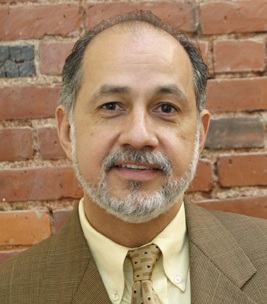
Author
Dr. Roberto Miranda
Summary: God gives his promises as a certain reality, but their fulfillment requires our cooperation: faith, courage, planning, discipline, and attention to detail. Like Israel before Canaan, we must not deny the promised abundance by focusing on the giants. A scarcity mindset sees weakness and obstacles; a mindset of sufficiency remembers God’s faithfulness and moves forward even in fear. As we reach the halfway point of the sanctuary project, we can acknowledge that God has sustained the work, although work, expenses, and risks still remain. Therefore, we must renew our collective commitment: pray, fulfill our financial pledges or pay them ahead of schedule, participate generously, and manage resources with creativity and prudence. Miracles do not replace human effort; God works in cooperation with a willing people. We cannot miss his appointed moment through unbelief or passivity. Like a ship navigating a narrow passage, we will reach our goal through coordinated work, with each person doing their part and trusting that the one who began the work will be faithful to complete it.
Let us turn to Numbers, and you will notice in this passage that God’s people, the Hebrew people, are going through a process—an undertaking of a scope and magnitude certainly much greater than ours. But they are involved in something composed of many different parts, many different facets, different stages, just as we are in our construction project. The Hebrews were involved in a project to move a nation of a million or more people through an inhospitable land and then bring them into an even more inhospitable land, because they had to take possession of and conquer that land. Essentially, although it may sound bloodthirsty, they had to destroy nations, displace nations. God’s processes are often violent. And that is the truth: it requires courage, it requires vision, it requires perseverance, it requires faith in the power of the Lord.
And these Hebrews had to cross this land; it had been a long and difficult process. And they were already reaching the point of entering the Promised Land. And at this moment we find them here, in Numbers chapter 13, and allow me to begin with verse 1. It says:
“...The Lord spoke to Moses, saying, ‘Send men to spy out the land of Canaan, which I give to the children of Israel’...”
Before going any farther, God says, “which I give to you.” Doesn’t that grammatical form captivate you? Instead of saying, “which I will give them,” or “which I intend to give them,” he says, “which I give to the children of Israel.” When God speaks, God speaks in the present; God speaks definitively. When God entrusts a project to his people, that project has to be accomplished, if his people have the faith to believe God and to go beyond the obstacles. I believe God has called us to the endeavor of building this sanctuary, and he tells us: Make an effort; spy out the land to make sure you know everything you need to know about this project that I have entrusted to you. I have given it to you. In God’s mind, that building is finished.
How many believe that is so? In God’s mind, it is already complete. On earth, there is a process that has to be carried out.
So, the second thing you have to see here is that it is God who tells them, “Go and spy out the land.” You know, when God gives us things, he does not do all the work for us. There is an element of clear thinking, an element of planning, an element of exploration, an element of examining details, an element of counting the cost, an element of examining the tasks that lie ahead. There is an element of breaking down the processes and seeing the pieces that make them up.
I believe that, very often, God’s people—who believe above all in the power of God, who believe in supernatural vision—suffer from a lack of clear thinking. We believe so strongly in Almighty God that we think God is going to do everything. And so we are somewhat careless about the details, careless in investigating things, careless in strategic planning and in the discipline that is required.
Notice that it is God who tells them, “Go and explore the land,” because there were going to be battles, struggles, and confrontations with the enemy. I remember a preacher who preached at our church many years ago—in fact, when we were in Cambridge. I remember him clearly because what he said made an impression on me: that Moses had sinned when he sent the people, the spies, to spy out the land, because that reflected doubt on Moses’ part. Apparently he did not remember that it was God who told Moses to go and spy out the land.
God’s miracles do not preclude human effort. Amen. The two go together.
Then it says here, in verse 18, that Moses sent them and said:
“...See what the land is like, and whether the people who dwell in it are strong or weak, few or many; whether the land they dwell in is good or bad; and what the cities they dwell in are like, whether they are camps or fortified strongholds; and what the soil is like, whether it is fertile or barren, and whether there are trees in it or not. Be of good courage and bring back some of the fruit of the land.” And it was the season for grapes...
These spies went to spy out the land. They were a kind of recon team, like those teams of soldiers who specialize in disguising themselves and entering enemy territory, exploring it, and bringing intelligence back to the army that will later go in to conquer. These were advance spies, battle-hardened men, courageous men, men perhaps trained to conceal their presence, and they were sent on a very risky mission. Verse 23 says:
“...They returned from spying out the land after 40 days...”
You know something I realized? I know I had read it before, but I had missed it. Why were God’s people in the wilderness for 40 years? If anyone ever asks you that in a Bible trivia test—why did God determine 40 years and not 50, or 30, or 20? Because God sentenced them for their doubt, their lack of faith, and their insult to God’s promises. God sentenced them to one year for every day they had spent exploring the land.
That is, they spent 40 days exploring the land, doubted the Lord’s promises, denied God’s faithfulness, and then God said, “You know what? For every day you spent exploring that land I promised you, you are going to spend one year wandering in the wilderness.”
You know something else? Many times we imagine that this wilderness was something like the Sahara, or a stretch of land thousands of kilometers long, or something like that. Look, those of us who have been to Israel and know the Negev Desert and that entire area outlined in the Bible know that it is a little piece of land whose size is truly disappointing. Sometimes, when one reads all these stories from the Bible, the Old Testament, and the Gospels, one thinks they involve immense stretches of land and great mountains. No, brothers and sisters, these are little pieces of land. These people could have crossed it in a few weeks. Nevertheless, because of their wicked hearts, their poor understanding of God’s promises, and their lack of faith, they were condemned to wander around the wilderness, unable to receive God’s green light to enter the Promised Land, for 40 years—one year for each day of doubt and rejection of God’s word.
Now, don’t get upset or anything; I’m not talking about you, just in case. I am simply saying that we have to believe God, because not believing God in our lives—now forget about Lion of Judah, forget about the projects—no, in your life and in my life, failing to believe God’s promises is costly. When God puts something in your heart and you are sure it is from God, even if you see many obstacles before you, strengthen yourself in faith, speak positively, and fill yourself with courage. Remember the times God has brought you out of worse things and has shown his faithfulness, and keep moving forward in the name of the Lord. Do not make the mistake of denying what God has told you, because many times, if we deny the promises God has given us and do not move forward with them, you know what? It costs us dearly.
Many times we lose the opportunity, and then we have to spend a long time going around in circles and trying to regain the momentum God placed in our hands, and then things become much more difficult. You have to seize the moment. If you are sure about something, if God has spoken clearly to you, you have sought counsel from others, you have read the Word, you have prayed, you have waited, you have received confirmation, you have done everything within your power, and there is still a green light before you, then launch out in the name of the Lord. Even if your legs are trembling, even if your heart is afraid, even if your flesh tells you, “You are going to perish,” keep moving forward in the name of the Lord, and God will give you the victory.
It may take a little longer than you thought, but believe the Lord. He was powerful enough to fulfill his promise. These people saw the land—you know the story. They saw clusters of grapes so thick that two men had to carry one. I would like to know where they sell those grapes. In fact, they named the place “Cluster” because the grapes they found there impressed them so much. The land was flowing. In other words, the metaphor “flowing with milk and honey” makes it sound as though there were streams of milk and honey.
For the Hebrews, milk and honey were signs of blessing, life, and prosperity. And that land was generous. They saw all of that, but what happened? When they returned, look at the report they gave Moses. These 12 spies returned, and verse 27 says:
“...And they told them, saying, ‘We came to the land to which you sent us, and it certainly flows with milk and honey, and this is its fruit...’
When they tell me, “It certainly flows with milk and honey,” they have already put me on alert. They are saying that one has to admit it flows with milk and honey. They were already preparing their complaint about the flaws. They say, “Well, it is true; it is definitely a fertile and generous land, but,” it says:
“...Nevertheless, the people who dwell in that land are strong, and the cities are very large and fortified; and we also saw the descendants of Anak there...”
These were basketball players—they were 6.8, 6.4, 7.2, 6.6—and these little Jews were 5.3, 5.4, 5.5. Imagine that, more than three thousand years ago. And they saw these huge giants, who appear to have been a mysterious race. I think some of these African American basketball players come from there. The point is that these men were giants compared with the average height of a Jew at that time. And so they literally fixed their eyes on these men, whose clubs were probably taller than they were, and then said, “These people are really tough guys. They are going to beat us badly, so we are not going over there.”
It says here: “...Then Caleb quieted the people before Moses and said, ‘Let us go up at once and take possession of it, for we are well able to overcome them.’ But the men who had gone up with him said, ‘We are not able to go up against those people, for they are stronger than we are.’ And they gave the children of Israel a bad report about the land they had spied out, saying, ‘The land through which we passed to spy it out is a land that devours its inhabitants.’”
And the second part of verse 33 is very revealing. It says, “...and we were like grasshoppers in our own sight, and so we were in their sight...”
If they had been the lobsters we eat at Legal Seafood, it would not have been a problem, because they taste good, they are expensive, and they are high quality. But these “lobsters” were the tiny insects that devastate the lands of the Middle East—minuscule, little things.
In other words, when we saw their height, we thought we were like insects, and that is how we felt. Let us leave it there for a moment, because I am going to come back to it. This passage excites me so much that I would like to plunge fully into it. But I will come back to it in a moment. Right now, however, I want to be more specific and take you through a presentation that I actually gave to our leaders last Saturday, and I want to share it with you as well.
Here is the situation: a year and a month and a half—two months—ago, we began our construction work in earnest. You know that this has already been a process spanning several years, ever since God placed in me the vision of planting a new sanctuary, because I knew that, with time, our church would grow with the Lord’s help, and you know the story. I felt in my spirit that when we completely filled two services, I would know it was time to have another sanctuary.
And you cannot wait until that moment arrives and then... Imagine if we were only now beginning to think about and plan the construction of a new sanctuary. We would not be able to do it. This neighborhood has already become so complex, and it is so surrounded by secular people who are very protective of their properties, that the sanctuary would no longer be possible, unless God—as he always can—were to do something mysterious and miraculous. But it would not be possible. Thank God we began in faith about—believe this—8 years ago, thinking about that sanctuary.
In fact, there is a man who, together with his workers, built the two block towers and the elevator tower, as well as part of the walls they are building now, and he is also going to do the brickwork later. This man, who has become a friend, is named Gio Forte. He is an Italian Argentine and lives near my house in Sommerville. Eight years ago, he was doing a job with his men across from my house, on a woman’s porch, and I liked the brickwork he had done. I approached him and asked what he did, and it turned out that he lived on the corner. He told me about his work, and I asked him for a business card. I said to him, ‘Look, I liked the work you do. Would you dare take on a larger-scale job? Do you have the experience?’ He gave me his résumé, which was very impressive, and I said, ‘Don’t worry; who knows, maybe one day I’ll call you.’
Eight years passed, and this man almost fell over backward when I called him one day and said, ‘Look, I would like to meet with you.’ I went to his house, knocked on his door, and said, ‘Do you remember me?’ He said, ‘Yes, I remember you.’ I told him, ‘The time has come. I would like to talk with you. Come by the church.’
He says he still cannot believe that I remembered. I kept that little card for 8 years and found it, because we have to think, brothers and sisters; we have to believe. And if God puts something in your heart, you have to let it mature there and do everything you have to do.
During that time we have spoken with architects, crossed the city, appeared before city officials, city boards of different kinds, neighbors; 18 times Glenn, the architect, and I went to different neighborhoods and agencies to present the project. Some were hostile, but the Lord delivered us from everything, from the lions’ mouths.
And many things have happened during that time. Why? Because you have to lay out a long-term vision for yourself. Let me say this: if you want a successful life, always live with the long term in mind; do not remain focused only on little things. Always think long-term. It is very important because great tasks take time to develop.
The fact is that, glory to the Lord, there are two towers there, and there are things that demonstrate that God has been faithful during that time. We have worked, and now I want to... I knew that once some time had passed, when we were halfway there—each stage of a project has its own challenge, its own particular features—and you, brothers and sisters, are the body. Christ is the head; I do not know whether I am an ear or something, but I receive instructions from the head, and you carry them out, and you are part of this process.
Later I am going to share a very beautiful image that Brother Fernando Cortés, who has been a sailor, shared with me. He corrected something I said yesterday, and I am glad, because the truth is that it enriches my understanding of this.
Well, we are a year and a half in. We began the actual construction in July of last year; we broke ground there, and there are photographs showing when we began this project in July of last year. We have now been at it for 14 months, and we still have a year, 15 months, ahead of us. I hope it will not be more than that; who knows, perhaps we can even do it in a year.
God has blessed us thus far, and, incidentally, I want to frame everything I am sharing with you, everything I am saying, within a positive perspective. Everyone say, “Positive.” Look, brothers and sisters, God has been more than generous with us during this past year and more; we have seen the hand of God, the blessing of God. We undertook something risky. Experts have said that we cannot do it because of the price... this is an eight-million-dollar project, and we are attempting to do it for 4.3 million, saving 3.7 million—almost four million dollars. You do not hear of that anywhere.
Nevertheless, we set that goal for ourselves in the name of the Lord, because we could not afford any more. We even had to give the bank a lower figure, because the bank winked at us and said, “Give us a lower figure, because we cannot lend you that much money.” We put down 3.7, but in reality this project requires 4.3 million dollars, apart from the other 3.7 million that we are simply deducting by faith.
But look, after 14 years of construction and having passed through some of the most dangerous aspects of construction—all the groundwork, excavating foundations, discovering that there was a little contamination in the soil, incurring additional expenses we had not expected, digging 42 holes measuring eight feet by twelve feet and eight or ten feet deep, filling them with concrete ourselves alongside the brothers who worked there, using companies to install steel foundations and then running electrical cables and plumbing underground, installing an entire drainage system and a number of other things, erecting two towers, all the work that has been done there, preliminarily paving the base, which will later receive the finished pavement, and building the elevator tower, with all the steel that has been installed—many things.
The messy and most difficult part, glory to the Lord, is already behind us. And now the work is becoming increasingly refined. There are many things we must do now, and we have already planned the other things. But I can tell you, brothers and sisters, glory to the Lord, I can stand here and tell you: brothers and sisters, we are doing well. Listen to that, because the other things I am going to tell you are simply within that framework: we are doing well, thanks to the Lord. The task has been carried out wonderfully; we have had very, very good strategic support and a combination of elements that we...
Did you know that Lion of Judah is a contracting company? We are a company called Temple Contracting, so know that as well. We are also a contracting company, and I have had to learn as never before. If I learned a great deal from these two buildings, I have learned much more now from something built entirely from scratch.
But glory to God, we are seeing it. Yet we still have a great deal of work ahead of us. You remember that lovely parking lot, when you could come in on Sunday and park there—the first one to arrive would get it...
We have gone through a process, brothers and sisters. You can see some of the stages there: the first beams, the frame, a little more clearly defined; and this, I believe, is where we are right now. There we already have the steel frame; it is finished. The steel frame took us a little longer than we wanted. Although the company we hired was by far the least expensive, it was not entirely competent in getting things done on time. There were complications—not on our part, but on theirs—and unfortunately that process set us back by about three months. But thanks to the Lord, it is finished.
There is a little notch you can see up there in the last section. It does not mean that the project is unfinished; rather, there is a balcony there that has to be set back to give some space to the neighbors next door, because they demanded it, and during the negotiations we had to do it that way. But the fact is that you can now see the entire steel frame there.
These are the major pieces of this project. The fact is that we have reached that point in the project. Thank God, after 14 months of arduous labor, we have used a combination of a construction company, our own workers, and outside people whom we have hired; and now we are like these runners, halfway through the marathon. A marathon is 26 and some miles long, and when a marathon runner reaches mile 13—although I have never run a marathon, you read a lot about marathon runners and you know that... if you have run recreationally, you know that when you reach that halfway point, even in a two- or three-mile race, halfway there, you still have energy to keep going, but your body is already feeling the strain. You already feel the burden of the exertion, but you know that you still have farther to go, and with every mile you advance, your body feels more and more tired. That is more or less where we are right now. We are halfway there, and those runners still... I chose that photograph because they convey energy, but they also convey the strain of the process.
And Lion of Judah is there. We have reached the halfway point, but we still have a longer stretch ahead of us. And the goal is that building. The steel you saw there, the skeleton, will be a properly raised, well-built, well-designed building, with all its parts in place, beautifying this city and giving glory to the Lord through its beauty. That is the goal of the runner called Lion of Judah, the marathon runner called Lion of Judah.
What will take us from the skeleton to the fully and properly formed body? It will take a mixture of faith—believing the Lord, believing that he is the one who has called us, believing that he is faithful to complete the work he began—faith to give, faith to believe that if I take from my assets, from my bank account, from my personal money, from the plans I have for this and that, to enjoy myself, to go on vacation, to do whatever I please, to drink all the cappuccinos I want—but if I do my part, I believe the Lord, and I invest in the Lord and in his work, because this is God’s work. God is moving among his people. God is doing wonderful things among us, and it is only the beginning. We have seen wonders. Who would have thought, when we moved here in 1997, where God was going to take us? When I set out to come here, I never imagined that God would give us as many blessings as we have received, that we would have an extraordinary church like the one we have, that we would have an impact on the entire city, that there would be so many good things for which we could give glory to the Lord, and that there would be so many beautiful people—say amen—among us. And it is still only the beginning of what God wants to do.
But it requires faith; it requires financial resources, because God does not do the work for us. God works in cooperation with his people. God never creates parasites; God creates warriors and puts them to work and to strive so that they may learn what warfare is. I hope that our children, the young adults among us, our youth, will see the efforts their parents have made and that they will be able to carry that same kind of valiant and hardworking heart into their own lives and the life of their church, that they will give generously and labor diligently for God’s projects.
God had a project to create a nation, bring it out of Egypt, take it into an inhospitable land, and give them that land. In the same way, God has a project to bring multitudes out of our communities and bring them to the feet of Jesus Christ. Healing families is a project of God, and he has called us and has done mighty deeds among us. We cannot doubt that God, who thus far has shown himself absolutely faithful, beyond what we expected.
Financial resources are needed, and for the next stage... we have spent approximately 1.8 million dollars—one million seven hundred thousand and something—thus far, and we still have 2.6 million dollars in expenses ahead of us, according to all our projections concerning everything that has been done and everything that remains to be done. There are still 2.6 million dollars in expenses for this project.
Please do not be alarmed. We are going to explain it to you. Now, where will that money come from? That money will come from about four different sources. Number one: the bank loan we have received. There is still a good portion of money that the bank will release to us as we move forward with the project. Humanly speaking, that money is secure, because it has already been contracted and committed by a sound bank; and amid all the things that can happen in an economy like this one, it is very secure. It is a sound, very strong bank, with people of tremendous Christian vision. They love our church, believe in this community God has given us, and are committed to providing those funds.
Second, savings on construction costs. I have determined that even within that dry, skeletal being that is the budget we have drawn up, there is still a little flesh in there that I have to go and find. And I believe, with the Lord’s help—and we have already achieved almost half of that—that we have saved one hundred thousand dollars in construction projections from the budget still ahead of us. I have to... I am going to show you later: at least 250,000 dollars more in construction savings. I already know for a fact that on bricks alone, we have achieved savings of 65,000 dollars—just on the bricks that will be installed there. Because God has been wonderful.
And you know what? Desperation sometimes also makes us think very creatively. The fact is that we still have to save a little more on construction costs.
Third, we have also set a goal—we have spoken with the finance office—of saving on operations. We have tightened our belts in every way, and during these coming months we intend to save a certain amount of money from income received through tithes and offerings. We are trimming down the church’s operations, and we also want to save a certain amount of money, which I know is feasible, and with the Lord’s help we are going to plan it that way.
Fourth—and this is the key—this is something for those of you who are there. I have to tell this same story with the same passion to the brothers and sisters at the twelve o’clock service, so pray for me. The fourth source is the pledges from the financial campaign. You know what, brothers and sisters? I thank the Lord that I do not have to come here right now—although it would certainly help tremendously—and ask the church for more than the church has already pledged. The blessing is that thus far we are doing well in terms of the construction expenses and the project cost we projected. But the church still has money it owes the Lord from its pledges.
I feel as though the air suddenly went out of this place. There is money that you have pledged, that we have pledged to the Lord, and we have to fulfill those pledges. That is why I do not want to wait until the last moment to make this appeal. I want this month to be a month of reconsecration for us, a time to revisit the passion we felt when we made our pledge to the Lord almost two years ago, so that we may make a fresh commitment to renew our vision and give generously to the Lord.
I know that among us there are brothers and sisters who have only recently arrived at Lion of Judah, and I want to encourage them as well—to encourage those brothers and sisters to join us, to grasp the vision of what it means to participate in something sacred and to see the glory of God manifested.
So, to be even more specific, there you have some of the figures I have mentioned, but now you have the exact numbers. In terms of bank loans, we still have 1.46 million dollars that the bank has to give us under the loan: 1,464,000 dollars.
Savings on construction costs: with the Lord’s help, doing my part as a leader and as a person who is intimately involved in the construction every day, I am aiming for another $250,000. To the extent that I reach or exceed that goal, or fail to reach it, there will either be a surplus or a small deficit that will have to be covered. But that is the goal, and I believe it is realistic, and with the Lord’s help we are going to reach it.
There is also some money that is very secure: we have about $250,000 available in the bank. By now there may even be a little more, because a couple of weeks—or some time—have passed since I made the last projection, but we have about $250,000 in our church’s bank account, from our financial campaign, because a great deal of the financial campaign’s money has already been spent, but we have that money in the bank.
In other words, with that bank loan and the available money we have—those two, 1.4 and .25—we have only $1.7 million available there. So the fourth line item is savings in operating expenses: over the next year, we intend to save about $100,000 from the church’s operations and put that money toward the cost of construction.
Are you falling asleep on me, or are you with me? Are you with me? It is a privilege, brothers and sisters, to talk about these things. This is the Bible; this is the Bible. Because many times we talk about very ethereal, mystical, and spiritual things, but this is faith; this is faith—this is what faith is. The other is mysticism.
And, by the way, let me tell you something, brothers and sisters; I shared this with the brothers and sisters yesterday. Our church is a generous church. I thank the Lord because you are a people who give, and yet, as that letter in Revelation says, I have something against you. There is always something.
I believe we can be even better, brothers and sisters. God has blessed this community. Look, we have not suffered the way other churches often suffer during construction projects of this magnitude. There are pastors, poor things, who have to be taken to a sanatorium halfway through or at the end because… you know that many pastors leave their churches about a year after completing construction projects. I have no such plans, but it is an anecdotal fact, because they burn out, become fed up, and so many things happen during the process that they reach the finish line embittered.
Thanks be to the Lord, you see me here; I am happy, I give glory to the Lord, and I feel well. Amen. It has been hard, very hard, but no—what I want to tell you is—and I am taking this opportunity to digress for a moment and speak with you about the broader vision—our church has grown greatly in recent years; it has increased in size, and our church has also grown in the quality of its services. When I look at Jonathan, for example, and at Sara Gautier, two young people who are now working with the youth and children, and you see the quality of the I Wanna program and the church’s education program, see our discipleship program, the academic counseling program, Worth the Wait, Alpha, and all the social services the church offers. Our physical facility is absolutely exemplary, in the center of the city and accessible by every means of transportation; our internet program, radio program—so many beautiful things. Every day the church’s public profile grows larger, and expectations concerning León de Judá grow higher.
More and more people identify with our church, and when they need to get married, hold a funeral, present a child, or resolve a marital problem, where do they come? To León de Judá. Even though they are often not even church members. Because someone referred them, because they love the church, because they have come a few times—this is their parish, so to speak.
León de Judá is like a parish church. And that means that the demands on León de Judá’s systems increase every day. The quality of our programs increases every day, and every day people expect more because, you know what? When people are exposed to quality and begin to think in terms of excellence, they expect more from the congregation and its leaders. So people expect more programs, more pastors, more pastoral care, more weddings, and what is happening is a problem that, if it is not resolved in the long term, will cause us a serious problem—and it is already causing us a serious problem.
The issue is that the demands, expectations, and services increase, but the financial base of our church does not increase proportionally. So, here is what you see: when I was in California, a Korean pastor with whom I was teaching said to me, “Wow, your church is a large church; it has a great many people, and with the number of pastors you have, I cannot understand how you manage to do it, because you ought to have many more pastors.”
Well, we have many leaders who work hard, laboring diligently, and we have a very solid pastoral team who also work extremely hard. But the truth is that, yes, we ought to have three times as many pastors as we have for the number of people we serve and the public profile this congregation has.
So what happens? As people begin to expect and ask more of our church, parents want more services for their children, more specialized programs offered by the church, and quality in everything. That requires money, and so, if the congregation does not increase its giving, if the new people who come do not sign up to give generously to the Lord and grasp the vision of tithing and generous offerings, our church will continue…
And I was telling the brothers and sisters to imagine a little man with a very large basket on his head, and people come and put bricks in it, one brick at a time, one brick at a time. What is going to happen? One day, the poor man will collapse because the weight keeps increasing and he does not become stronger, nor does anyone else come and get underneath it to help him.
If León de Judá does not expand its financial capacity at the same rate as the demands and expectations increase, we are going to face a serious structural problem. It will cause severe difficulties and unmet expectations; people often do not understand these things. And that is why I am sharing this. This is a sermon—one of the best sermons I have ever preached, by the way.
So I hope you are benefiting from this, because you can also apply it to your family life, your marriage, and your work—considerations of this kind.
So what happens? I was delighted this morning. I stopped by the basement for a moment, and a sister whom I imagine is here—I will not mention her name—asked me about how she should tithe, whether she should put it in a little envelope. I told her, “Look, sister, if you want, you can even hand it to me right now and I will take it, before you change your mind.” No. But this sister has grasped the vision of tithing and wants to join in, and glory to God for her. I hope that many more women and men will likewise join in, giving to the Lord, grasping the vision of what it means to give generously to the Lord, and believing God that he blesses those who are generous with him.
But brothers and sisters—those who are now visiting us, who are joining the Lord’s ranks, and who intend to walk with God for the long term, for their entire lives—join the ranks of the men and women who throughout history have given generously to the Lord and have seen God bless them again and again. Do not miss the blessing of entering into God’s glory and living a life of faith, principles, and vision, because that will align your life with the Word of God in an incredible way.
I encourage you, brothers and sisters, over the long term, to be generous with your church. This church blesses your children, blesses your young people, blesses the community, and exemplifies the excellence of the Gospel and the excellence of the Latino community, which God has called to be a redemptive influence in this nation. We are the head in that respect, and to whom much is given, much is required. So we must increase our capacity to give to the Lord. I need extraordinarily gifted people of faith—not merely to complete this work, but to become the great church God wants us to be, for the glory of his name.
So I encourage you in the name of the Lord: unite in faith, believe God; do not believe me. Do not do it for León de Judá; do it for yourselves, for your children, and for this community, which needs a powerful force defending lives. So it is important.
Savings in operating expenses, and finally, the financial campaign pledges. If you add all of that up, it comes to $2,664,000, which is $64,000 more than what we still need to finish. As I have told you, much of that money is secure. To me, the key point in all of this is you. The rest of us are doing everything we can to honor your faith and your effort. But now we need—our church pledged 1.3-something million dollars two years and a bit ago, when we began the campaign.
Up to this point, we have given about $750,000, which means that about $550,000 remains. If you give $600,000—amen, give the Lord a round of applause, because that is a great deal. If we fulfill what we have promised the Lord—I know that in these processes people leave the church, some die, others move to another state. Forgive me if I sound a little insensitive, but as a pastor one becomes sort of… and it is the truth. Glory to God; they are with the Lord, and we must give glory to God for that.
Different things happen: some become disillusioned, some lose their nerve, some forget, some play dumb, whatever. But the truth is that if we fulfill what the León de Judá Congregation promised, we are going to reach the goal. Amen. And I want to encourage you, brothers and sisters. Thank God I am not coming here with a crisis appeal. Thank God I am not coming here to tell you, “Brothers and sisters, you know what? We made a mistake; it is another $500,000.” And look, if I had said that, it really would not have been a lack of integrity, because these projects are extremely dangerous, and the extent to which we got ourselves into this is incredible. But no, glory to God; I am simply coming to tell you, brothers and sisters, fulfill what you have promised. Let us fulfill what we have promised, because I know it is there in your pockets. If I grab you right now and shake you upside down like this, I am going to find $600,000. It is there.
Look at your brother; it is there. I am joking. The money is there. Point to his pocket and tell him, “It is there.” Let us mercifully move on to the next one.
How can you honor the faith of your leaders, the Lord, and yourself? First, catch up. I understand; there are brothers and sisters who… I also know what happens. Often, use dulls the blades, and we have talked so much about this and have been caught up in this mess for so long that you begin to… No, renew your commitment. Catch up. Number one: those who have fallen behind, catch up.
Number two, make a commitment. If you are new to the church, if you did not make a commitment before, if you did not grasp the vision before, or if you have just arrived at the church, or came a few months ago and have not been part of this whole process, make a commitment. Amen. Amen. Make a commitment; it is another way to bless.
Another way, too: if you have already fulfilled your pledge and—you know what?—the Lord gives you the strength to say, “You know what? I do not want Pastor Miranda to sweat anymore, so now I am going to bless him,” and you… look, keep going. Renew a portion of it, or renew your pledge, and say, “You know what? If it has not hurt me up to this point, I have survived, and I have not lacked food, I am going to bless my church and keep giving.” Brothers and sisters, God is going to bless you. We must give in the zone of discomfort.
Many of us have given in the zone of, “Well, it does not hurt me much, and I am going to give this because we are reasonable, sober, and restrained people,” and so we give sparingly. But you know what? Again and again, the offerings that move God’s heart are risky offerings, uncomfortable offerings, those that make you suffer a little, those that crucify your flesh. That is the level at which the power of God is released: at the level of crucifixion. Crucifixions unleash graces; that is a law of the Kingdom of God. Until you squeal a little, you are not being blessed. That is the truth.
I have always learned that: I have to go beyond. So keep going, because we are going to need some people of faith and vision to commit themselves.
And finally, pay your pledge ahead of time. Why? Because we cannot wait until the last moment, because with these things you need to have money in reserve to buy materials, pay people, and all of that, so it blesses us tremendously. Look, if you have a little money in the bank and you know that at some point it is going to be taken out for the pledge, stop suffering, as I say, and give it now; give it right away. Write a check before your mind realizes what you are doing, and hand it over right away so that your church will have a reserve.
You know what? Every dollar we pay from our own money means less interest that we have to pay the bank in advance. That helps us tremendously. Someone suggested something very interesting to us yesterday: Brother Rupert Smith, a very Hispanic man, Rupert Smith. I always tell the same corny joke about Rupert.
The point is that he said, look, I was thinking—Rupert works in finance, a very talented young man from the church—he told me, Pastor, I was running the numbers: if we simply gave an extra 20 dollars each week, and I think it was 600 people giving an extra 20 dollars a week, we would have the money right there in the offering basket, just like that. Imagine that.
It’s true. There are many ways to skin this cat, brothers and sisters. There are many ways to bless. Sometimes you have an extra 20 dollars, and why not make a sacrifice to the Lord? Give it. I’m telling you, all money beyond the modest expenses we have set for ourselves this year will go toward the construction. So whether it is identified or not, that is where it will go. So if you do not have time to put it in an envelope—look, I would prefer that you put it in an envelope so it can be identified—but if not, do not worry, because it will go into this construction hole; eventually it will get there. I should not put it that way, but it is a corny joke anyway.
It will go there, to the construction. Somehow, I told Brother Gonzalo Alvarez, we are going to assign it to him—he is an excellent cabinetmaker—we are going to make a nice offering box; I am going to call him, so that the brothers and sisters will feel free. Look, make a special offering to the Lord. If God has blessed you in some way, if God has placed something generous in your heart, a generous impulse, take something out and put it in there as an offering.
There are many ways to give toward this and reach the goal. I believe God can do it if we set our minds to it. Talk to your friends, your acquaintances, people of influence, and people whom you influence. Tell them about the project. There are people who benefit from León de Judá in many ways; they are blessed. Tell them, “My church—I want to ask for a special offering for the construction.” If we do it for so many other things, why not for this?
Catch up, commit yourself, continue fulfilling your pledge, and even pay it ahead of time. And the Lord had given me a verse that is in Titus, I believe, chapter 2, where it tells us not to keep people waiting for us, not to make people beg us about… Psalm 32:9, excuse me, where it says:
“…do not be like the horse or like the mule, without understanding, which must be restrained with bit and bridle, or else they will not come near you…”
Let us not be indolent, brothers and sisters; let us not be resistant. There are brothers and sisters who sometimes resist; these things go right over their heads, and they say, “Oh, no, I am going to wait and see what happens, whether it moves farther along, whether this, whether that.” Brothers and sisters, do not make us beg you. God is moving, and you do not want to miss God’s movement or His blessing.
I will close with this image of what we are like. That is the Corinth Canal, near Greece. There you see a ship crossing an extremely narrow passage. I asked Yosmar to find me a picture; there you can see where we are right now. That ship can pass through, and it will pass through, and it did pass through because the picture is there; otherwise, there would have been wreckage there. But it requires an extremely precise operation.
Given the type of operation we have, we are in a position that leaves no room for error. I cannot afford to make many mistakes or miscalculations in this process, and neither can you afford not to do your part.
Brother Fernando was telling me—I had told him, “I see myself as the helmsman of that ship, who has to guide it”—and Brother Fernando, who has been a sailor for many years of his life, said, “You know what, Roberto? I want to give you something that might help you with the metaphor you used. It is not like that. The helmsman is not the only one guiding the ship.” I know that, but I did not use… He said, “When the helmsman is there, the captain is also giving orders; there are people along the sides of the ship reporting on how the ship is moving; and down below, in the engine room, there are people working to make sure there is the proper amount of play, so that the ship does not veer to one side or the other. It is teamwork.”
I have to direct it, but you have to keep those engines running and moving; I need people’s advice and commitment.
Moses was there—thank God I am not like Moses. Poor Moses was alone, with an unbelieving people, struggling to get this people into a land. God wanted to bless them, but they did not have enough faith to believe God, and so they had to pay the price.
Because we cannot miss God’s moments. I say that there are two mindsets in the Christian life and in the church of Jesus Christ: a mindset of sufficiency and a mindset of scarcity. Joshua and Caleb had a mindset of sufficiency. They would surely have said, “I can do all things through Christ who strengthens me.” They always saw the glass as half full.
The other ten spies had a mindset of scarcity. They saw themselves as few, inadequate, weak, and small. They saw the obstacles; they did not see the possibilities. They saw the enemy; they did not see the God who had brought them out time and again—from Egypt, from other places, and from other tight spots—and who had always given them the victory. They saw the fruit of the land, but they did not see the blessing and the struggle that fruit required, or the blessing that fruit represented. They saw the disadvantages, but they did not see the advantages.
Joshua and Caleb said, “You know what? God has given us the victory; we will devour them like bread.” Joshua said, “If God is with us, we will win those battles,” and God blessed them. Joshua and Caleb entered the Promised Land; no one else from that generation entered except those two.
Those who entered were the children and young people who were not morally responsible at that time. It was a new generation, except for Joshua and Caleb from the old generation, because they had a different spirit.
I would like to ask you what kind of spirit you have: that of those who look at the obstacles and dangers and say, “I am going to come up short,” or that of those who believe God and say, “No, in the name of the Lord, we are going to do it; we are going to succeed. I am going to commit myself, and I am going to give more than is expected of me.” I want to ask you, in the name of Jesus, to believe God, to bless your life, your family, and your church, and to keep moving forward in this process.
Amen. Let us stand. Glory to the name of the Lord. This is spiritual teaching, brothers and sisters. I believe it is a privilege for you to be living through this time. You will be able to tell your grandchildren and your children what God has done, and we give glory to the Lord because thus far the Lord has brought us. Thus far God has been faithful to us, and I trust that He will remain so until the very last moment.
Pray for your pastors, pray for the church, pray for this project, and pray for everyone working on the construction. Thanks be to the Lord, God has kept us safe and secure, and I hope it will always be so. God has given us favor in different ways with the authorities and with the neighborhood, and I trust that it will remain so until the very last moment. So pray and bless us.
Father, once again, we consecrate ourselves to You, Lord, this morning. Thank You for this people. Thank You for allowing us to be part of a noble, heroic undertaking. Thank You because You have been more than faithful throughout this process, and because we have come this far and will continue, Lord, until we reach the goal, giving You the glory and the honor. May Your name be glorified. May Your name be glorified, Lord. Bless Your children, seal their hearts, give us the victory, Father, and may we one day sit in that beautiful sanctuary and worship You and acknowledge that You did it, and that all the glory and all the honor belong exclusively to You. Thank You, Lord. Thank You, in the name of Jesus. And the people of God say, Amen. God bless you, my brothers and sisters. Amen.