Galatians 2:20
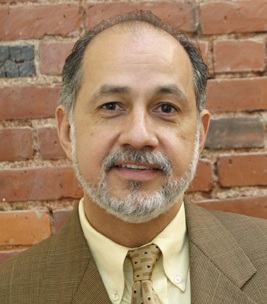
Author
Dr. Roberto Miranda
Summary: We have been crucified with Christ: we no longer live for our former priorities; rather, Christ lives in us. Receiving him means dying to selfishness and rising again with a new identity, new values, and new purposes. It is not enough to cover our former life with religiosity; God seeks men and women who are wholly consecrated, purified, and prepared to serve as his instruments.
The cities of Latin America, with their mixture of wealth, poverty, wounds, sin, and religiosity without a personal relationship with Christ, need credible churches that serve as places of refuge where people receive the Gospel, teaching, love, and support. In the face of this urgency, we must not pursue personal greatness like Baruch, but offer our talents, time, money, and other resources. This does not require us to live without anything, but it does mean reducing our own demands in order to devote as much as possible to the advancement of the Kingdom.
We must also prepare workers, structures, and spaces to receive and disciple the harvest that God brings. Let us surrender even the hidden roots of our will and ask to be made new, because only by dying to ourselves can we bear much fruit and truly live for Christ.
Galatians 2:20 and 21. Verse 20 says: “With Christ, say.... I am crucified together with Him.... and I no longer live...... but Christ lives in me.... and the life I now live..... in the flesh..... I live.... by faith in the Son of God, ..... who loved me..... and gave Himself for me.....” Let’s leave it there.
I chose this verse as a starting point for my meditation this morning. As you know, I just told you that I came back from visiting the city of Medellín, in Colombia, and it was a great experience, a very beautiful experience, and I am very grateful to Brother Fabio Alsate, to his family there, to the Alsate family, who sponsored me and blessed us with their support and with all the help they gave us there. But one of the things I experienced..... Medellín is a quintessentially Latin American city; it is as though it were a sort of microcosm of the Latin American continent. There you can see all the beauty of our continent and also all its broken aspects. Medellín is a city that is—imagine a great mountain, and a finger comes and presses down on the summit of the mountain and pushes it in like this; imagine a mountain made of rubber, right? And that finger comes, presses the mountain in the middle, and makes a hollow in the center, and there is the city of Medellín, in the center. And then, all across the expanse of that mountain around it—great mountains all around—the city has grown and spread out over all the slopes of those mountains, and that is a beautiful view of the city of Medellín. On those mountain slopes there is everything: there are very expensive and luxurious buildings, and homes worth a great deal of money, with country estates and vast tracts of land for the very wealthy; and there are condominiums like here in the United States, and there are also immense expanses of poverty. Families are crowded together, one on top of another, and there is also extreme poverty, as there is in every country in Latin America. It is just like Latin America, because we know that everywhere in Latin America—it is my understanding that Brazil is like that; in the Dominican Republic, where I come from, it is definitely like that. Many times you are on a very luxurious street, and two blocks away you find yourself in the midst of the most extreme poverty. And that is how it is in every country in Latin America. It is the same everywhere. If you go to Thailand, Indonesia, Asia, or Africa, there is that incredible mixture of great wealth and great poverty.
Another thing that strikes me about Medellín is the great spiritual sensitivity of its people; the people love God. And yet one also notices a great spiritual barrenness. A lot of dead religion, a lot of dead religiosity, a lot of spiritual formalism, a lot of people who actually know about God but do not know God; they have not had a personal experience with Jesus Christ. Taxi drivers pass by a church and make the sign of the cross, crossing themselves, and everyone is very respectful. And Medellín, like all the cities of Latin America, is also a city of great sensuality and much sin, like every city; that does not distinguish it in absolutely any way from any other city in Latin America. As you know, Medellín has been the home of the famous Medellín cartel, but it could have been any other country in Latin America, I assure you. The devil chose that place for reasons he knows well, but in that sense Medellín was nothing extraordinary; rather, it was the place where an evil settled for a time. But the sensuality seen there in that city exists in every other country in Latin America. Medellín needs God’s healing. The culture of drugs and death has left the people of Antioquia with a sense of pain and mourning, and many people are wounded; they are like refugees who have been through a war, and they speak about the war, which has just ended, and there is a great deal of pain, many people who lost their children, and the city was, as it were, under an evil power for many years. Thank God, that has been broken to a considerable extent, but do not think that the roots appear to have been completely torn out yet. The evil is still there, crouching, ready to rise again if given the opportunity, and there is a great need for spiritual healing.
And all of that made me think, brothers and sisters, about the great need for Jesus Christ that exists on our continent—including Brazil, that great expanse of Latin American land—on our continent. I thought about it a great deal while I was there, looking at those masses of people. The hotel where I was staying was right in the center of the city, and I discovered a little balcony in a hallway. I would take a chair there—sometimes they thought I was stealing the chair from the room—and I would carry it over to that corner and sit there looking out over the entire city. I believe God gave me that place from which to observe both the mountains where the city lay and the street where there were all kinds of vendors selling absolutely everything. And as I looked, I saw a cell representing what Latin America is, with its souls so deeply in need of the Gospel. And I remembered the words of Jesus Christ, who, when He saw the crowds, it says, “had compassion on them because they were like sheep without a shepherd.” When you speak with the pastors of Medellín and with the people, you realize that although there are many churches, many more churches are still needed, and there are churches that—how can I put it without sounding critical?—but.... the churches are not doing everything that can be done. They are not giving the witness that ought to be given. There are many dissatisfied people and many pastors who themselves understand that, well, a great deal is still lacking. What is needed is a church that gives a credible witness, a solid witness to the Gospel, so that those masses of people in need can find somewhere to go. Churches are needed; people are needed who can serve to shore up the need in our countries, places of refuge, places where people can be shepherded, can be taught, can receive instruction from the Word of God, can receive love, can receive support, where there can be a solid community in which they feel: Okay, I have arrived at a peaceful place where I can rest, put my life back together, and move forward with what God wants for me. And that is the point I want to emphasize today.
I have given all that background by way of information, but also as a way of preparing for the word God has for us. The essence of this meditation is, brothers and sisters: well, who will go? Who will go? God needs—God needs men and women who will go to those cities, and right here in Boston as well. I am going to use Medellín simply as an illustration, but who will go if not us? Who will preach the Gospel if not us? Who will be the resource for humanity if not us?
God is reminding us that there is a great need and that God needs workers. God needs churches that will be resource churches, churches of refuge. He needs men and women who are willing to die, surrender everything, give their lives, consecrate their resources, and, in a sense, live on the bare minimum, dedicating to the Lord all that remains beyond that. The way we reckon and calculate in life is: well, first I take care of myself; first I make sure that all my needs are generously met, that I have everything I need to satisfy myself and live in great comfort, and then I will give the Lord whatever I have left. That is the way it is, isn’t it? The largest portion for me and the minimum for the Lord. And God wants us to turn that pyramid upside down, to do the opposite. I am going to live on what I can, right? It is not that we are going to live in rags and have nothing, either, but I am going to minimize the demands of my life and give the Lord the maximum so that His work may advance, so that His work may continue. That is what I believe God wants. And that is why, when I read what the Apostle Paul says here—Paul says: “I am crucified together with Christ, and I no longer live, but Christ lives in me.” Paul was a man who had seen the need and had said to the Lord: Lord, I will go. The Lord told Saul that He needed him, and Saul surrendered everything: he surrendered his career, he surrendered his Pharisaic knowledge, he surrendered his prestige. He says that he counted it all as rubbish, in order to gain what Christ had for him. Paul said, “The life I now live, I live by faith in the Son of God.” In other words, Paul was no longer the man trying to make a life for himself; rather, he was Paul the crucified man, who lived as an instrument of God for the salvation of humanity. He lived as a means through which God could carry His message and channel His resources so that humanity could come to know Jesus Christ.
Brothers and sisters, God needs us to make a commitment, for us to come here as the living dead. When each one of us comes to church, let a ghost arrive. In other words, whenever any one of us receives Jesus Christ as Lord and Savior, brothers and sisters, we have to understand this: what we are doing is dying in order to rise again with a new identity. And I believe that is the problem with many Christians: we do not understand what it truly means to surrender our lives to Jesus Christ. It means that we must die to our personal priorities and be born again into a new life in Jesus Christ—a new identity, with new values, with new priorities. What most people want is to come in; they simply pass through, apply a little evangelical varnish to themselves, but remain the same, with the same priorities. Their priority is the world, the self, personal gain, money, work, what people think. But they do not know that what Christ calls us to do is to die and assume the new identity of a dead person who no longer lives for the world but lives only for Jesus Christ.
You know, the Palestinians, the suicide terrorists, are often put into a coffin and buried alive for a while so that they can visualize what it means to die and prepare themselves better to explode as a bomb, because in that way they can, as it were, visualize it and go through the process. And that is what we must do when we die in Christ: we have to understand that what we are doing is losing our merely human identity and rising again with a new identity.
Look with me at Romans for a moment, and there we can see this a little more clearly. Romans chapter 6, where the Apostle Paul speaks about this in relation to baptism. It says: “... Or do you not know that all of us who have been baptized into Christ Jesus have been baptized into His death? For we are buried with Him into death through baptism, so that just as Christ rose from the dead by the glory of the Father, we too may walk in newness of life.” That is the meaning of baptism. In baptism, when you enter the waters, you die symbolically. And when you come out of the waters, you rise to a new life. That is the meaning of baptism. Baptism tells us: you have died; you have risen to a new life, to a new identity, and now you must live in that way, with new priorities. Christ needs people like that, who have already taken that step and now live solely to do whatever He needs them to do. Brothers and sisters, any kind of Christian existence that is not an existence completely dedicated to Jesus Christ and to the needs of the Kingdom of God is not authentic. It is false; it is a false, fictitious Christianity. I hope that you and I can ask the Lord: Lord, kill me so that I may live only for You.
The Lord has been speaking to me a great deal these days about dying—about finally dying and surrendering to the Lord whatever remains. That is something very personal that God has been speaking to me about, and I believe He is speaking to the entire congregation about dying so that God can truly use us. Many of us believe that we have given everything to the Lord, but do you know what? Little pieces still remain; roots remain, and unless we surrender them to the Lord as well, God cannot do what He wants to do through us. He wants us to surrender everything, everything, everything to the Lord so that He can then do with us what He wants to do. We have to die. The Lord Jesus Christ says that unless the grain of wheat falls to the ground and dies, it remains alone; but if it dies, it bears much fruit.
There are many passages that speak to us about this. For example, in Second Timothy, there in chapter 2, verse 21, it says: “... Therefore, if anyone cleanses himself from these things, he will be an instrument for honor, sanctified, useful to the Lord, and prepared for every good work.” There has to be a process. God needs workers, brothers and sisters, but He needs sanctified workers, prepared workers, workers who have been dealt with and worked on. The Apostle Paul says that if someone purifies and sanctifies himself, then he will be useful; he will be prepared for every good work. What the Apostle Paul is saying is that if you purify yourself, sanctify yourself, surrender yourself to the Lord, die to Him, and allow your mind to be conformed to the mind of Jesus Christ, then you will be prepared for every good work. So God needs men and women who sanctify themselves, men and women who give their entire being to the Lord so that He can then use them.
That reminded me of another passage in Jeremiah chapter 15 where the Lord says to Jeremiah: “...Therefore thus says the LORD: If you return, I will restore you.” He says this to a prophet who is already consecrated, a man who has suffered greatly and whom one would think needs nothing more, but He says: “If you return, I will restore you, and you shall stand before Me; and if you bring out the precious from the vile, you shall be as My mouth. Let them return to you, but you must not return to them.” In other words, brothers and sisters, if we separate what is holy, Christ-centered, biblical, and of God within us from what is commonplace, secular, carnal, personal, and merely biological—if we separate those two things and keep the gold of the Spirit—then it says that God will use us in such a way that when we speak, it will be as though His mouth were speaking. What power! Why do we sometimes not have the authority we desire? Because we lack that intimate union with Jesus Christ that enables us to speak with the Father’s authority. Then we can say, as Elijah did: “As the LORD lives, before whom I stand, there shall be no rain”—or whatever it may be—or there shall be rain, except by my word, because then our mouth becomes the mouth of God. We must pay the price so that God can use us in a society that needs God but also needs men and women—sanctified, prepared instruments who have done the hard work of dying and who are willing to live the Christian life authentically.
As I meditated on this, the Lord spoke to me about another character in the Scriptures, and I am sure you do not even... I would be very surprised if you know who the character Baruch is. He is also found in Jeremiah, chapter 45, which speaks directly to what I am saying about consecrated men and women in a context of great need. It says—these are the words that the prophet Jeremiah spoke to Baruch when he wrote these words from Jeremiah’s mouth—verse 2: “Thus says the LORD, the God of Israel, to you, O Baruch: You said, ‘Woe is me now! For the LORD has added sorrow to my pain. I am weary with my groaning and have found no rest.’ Thus you shall say to him, ‘Thus says the LORD: Behold, what I have built I am tearing down, and what I have planted I am uprooting—even this whole land. And do you seek great things for yourself? Do not seek them, for behold, I am bringing disaster upon all flesh,’ says the LORD, ‘but I will give you your life as plunder wherever you go.’” That is profound, isn’t it? We must understand that the Lord had this passage written—Jeremiah is a book written in the context of a very great destruction that God was going to bring upon Judah because of its sin. The Lord sent Jeremiah as a prophet to tell and warn the Hebrews in Judah that He was going to destroy the city. The destruction was already imminent, and the Babylonians were about to destroy Judah and carry the Hebrews away into captivity. That is the context in which this passage occurs.
In other words, Baruch was an apparently successful man, a scribe, and it seems that Baruch was thinking about the destruction that was going to occur and about himself—what he was going to lose, his own glory, his career, and perhaps his dreams of greatness and personal fulfillment. And God says to him: Look, man, I am preparing to destroy everything I love and to bring an apocalypse upon this city, and you are thinking about personal greatness. And brothers and sisters, that is how many of us are, you know? We live in a world that God is preparing to destroy and to radically change humanity’s way of life. These are terrible times in which we live. Great things await humanity in this time, along with much destruction and much judgment from God. God is going to break humanity because He wants to bring people to repentance, and there are many lives that need to be saved. But you know what? Many of us, like Baruch, are thinking about what we need, our own careers, and our own money, while God is saying: I want to use you as My instrument. I want you to give Me your talents, your money, and your time, and to prepare yourself because I want to use you. Do not be thinking about great things, because these are difficult times, and there are people in Medellín; in Lima, Peru; in São Paulo, Brazil; and in Roxbury, Massachusetts, who need the Gospel and need men and women who will make themselves instruments whom God can use.
God needs, brothers and sisters—God needs men and women like Paul and like others who will prepare themselves for the harvest.
I am going to ask the worship team to come up here for a moment. But brothers and sisters, we have to take a step of faith. We have to take a step of faith so that the Lord can do what He wants to do. And let me give the bull—which is you—one last thrust; I am going to be very, very specific here. Much of this meditation applies to this church building that we want to build. There is a dimension to this: our church—our church is going to begin a campaign at some point because we need a church building now. I believe that God is going to bring a great harvest to our congregation, and I know that God needs us to have a larger place because God works in orderly ways, you know? God works in orderly ways, and He always prepares the place. God does not want... Where are we going to put the souls? That is why I have been agonizing these past months, fighting with the devil himself so that the city would grant us this permit. That is why my soul was afraid, even though I have said: Lord, You know all things; if it is not here, it will be somewhere else. But I was afraid because I know how necessary it is for us to have a larger church building prepared for what God wants to do. And that building is going to cost a great deal of money. We are not doing it for luxury or anything like that. You know that we have endured here, and we have never sought anything luxurious or anything of the sort. We are not seeking to build a mausoleum for the Lion of Judah Church, for any pastor, or for anyone else. It is a place where there will be room for the souls God wants to bring in these last days, and we need men and women who are willing, brothers and sisters, to give what is needed. Do you understand? I am not manipulating anyone here; I am bringing a need before my congregation, and I want you to begin thinking about it because at some point we will speak about it in greater depth.
Do you understand, brothers and sisters? At some point... our church has never had to bleed for its buildings; God has always handed them to us, practically given them to us as a gift. Others have bled many times, but it is time for us to begin thinking about this, because our church is mature now and will need to be able to give to the Lord. And when that call comes, I want you to remember Baruch, when the Lord says to him: Look, I have a need; there is great urgency. Do not think about great things for yourself. Give to Me. God wants that church building to be raised, and God wants workers to be prepared to disciple those people, with sanctified people ready to be used by God. All of that is part of a plan that God is... I know something of God’s plans, and I know that the Spirit of the Lord is putting the pieces in place because God always works in order. First the soldiers must be prepared, the warriors must be prepared, and the place and the structures must be prepared, so that the blessing God wants to bring may then rest upon them.
The Lord wants us, brothers and sisters, to prepare and consecrate ourselves so that He may have what He needs. How many want to die for Christ? I hope you can say: Yes, I want to. I want to surrender my life to the Lord, so that whatever the Lord wants from me, whatever the Lord asks of me, I may do it in this time.
Let us bow our heads, and if you want to stand, then stand and say to the Lord: Lord, I surrender myself to You. I surrender my whole being to You. I give You my mind; I give You my heart. Surrender your life to the Lord, as I want to do right now, and say to the Lord: Lord, kill me. Say to Him as well: Lord, destroy me and make me anew. Bury me and raise me up again in Your image and likeness. Surrender your life to the Lord. Father, we consecrate ourselves to You. We consecrate this church to You. We consecrate ourselves to Your purposes. Use us, Lord. Use us, Lord. Kill us, Lord. Kill us so that we may live a new life. Forgive us, Lord, because it is so difficult to die. And we cling to life, so You, Lord, take the knife and do the work Yourself, Father. Consecrate us to Yourself, Lord. Hallelujah! Thank You, Lord.