Facing Challenges with Our Eyes Fixed on God
Author
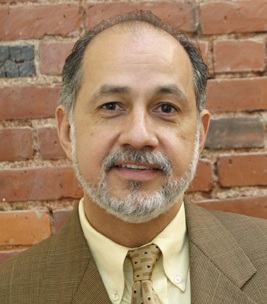
Dr. Roberto Miranda
Summary: When faced with a great and difficult undertaking, we can adopt a scarcity mindset focused on the obstacles, or an abundance mindset that views the vision through God’s eyes and trusts in his provision. The ten spies acknowledged the goodness of the land, but fear of its inhabitants and fortifications made them feel like grasshoppers. Joshua and Caleb, by contrast, affirmed that God could give them what he had promised.
Building the sanctuary requires that same faith. Even when delays, expenses, uncertainties, or natural complications arise, we must not grumble, grow discouraged, or doubt. We must keep our eyes fixed on God, intensify our prayers, support those leading the work, and speak words of encouragement and blessing. The experience of constructing previous buildings confirms that God has provided and that these efforts have strengthened the congregation’s generosity, faith, and vision for ministry.
The new sanctuary has more than a practical purpose: it is a prophetic declaration that God’s people do not retreat, but build for his glory. God will be pleased with his people’s trust; therefore, we move forward without fear, believing that he will bring the work to victory.
There is a passage that I have commented on in times past, but I want to leave it here at this time, as we undertake a difficult work that challenges us, that compels us to be visionary and to trust that this has to be from God, because of the magnitude of what lies before us. I have always said that among the people of God there are only two kinds of mindsets: what I would call a scarcity mindset and what I would call an abundance mindset.
I know that I have spoken about that before, but I want to engrave it upon your heart in light of what we are doing. And I have also said that in every great undertaking that challenges the intellect and challenges one’s sense of sufficiency, the people of God seem to divide into two camps: those who look at the obstacles and at the difficulty of the work and the potential threats and hindrances ahead, and those who see the vision through the eyes of God, become part of that effort so that God may be glorified, and set their eyes and their trust upon divine provision.
And I believe that the Book of Numbers, the passage about Joshua and Caleb and the spies, reveals this in a special way. I want to place this briefly upon your heart before we leave. In Numbers chapter 13, verse 25, it says that after Moses sent the spies to spy out the land, they returned from exploring the land at the end of forty days. And ten of the spies gave the following report. It says, “We came to the land to which you sent us,” they told Moses, “and it certainly flows with milk and honey, and this is its fruit.” They brought back some immense clusters, very abundant samples of the fruit that was in that land and of the promise contained in that land to which God had sent them.
But what happened? Against that confirmation of what God had told them—that the land flowed with milk and honey—they set the difficulty, hardship, and danger of the undertaking. It says, “But the people who dwell in that land are strong, and the cities are very large and fortified. And we also saw the descendants of Anak there.” And then they mention a list of all the fearsome tribes that were there.
Then Caleb quieted the people before Moses and said, “Let us go up at once and take possession of it, for we are more than able to overcome them.” But the men who had gone up with him said, “We cannot go up against those people, for they are stronger than we are.” And they spread a bad report among the children of Israel about the land they had explored, saying, “The land through which we passed to explore it is a land that devours its inhabitants, and all the people we saw in it are men of great stature. We also saw giants there, the descendants of Anak, a race of giants; and in our own sight we were like grasshoppers, and so we seemed to them.”
You see, when one looks at the great tasks God places before us, it is very easy to see only with material eyes, rational eyes, the eyes of the intellect, and to see only the obstacles before us—the giants, so to speak, the hindrances. I recognize that what we intend to accomplish is a very great task. We have to build an eight-million-and-some-dollar sanctuary for four million dollars. And God has placed it in my heart that we can do it. Amen.
God has already enabled us to construct two buildings and completely renovate them, and He has been our provider. We have never been put to shame; God has been our support, our foundation. And you have given generously and have committed yourselves. We have spent practically fifteen years building and working to establish a place to which so many people come from different places. Not only Hispanics, but North Americans, African Americans, Asians, charismatics, evangelicals, fundamentalists—all the groups within the church of Christ come to this place.
And not only that, but social-service agencies and city politicians come here and are blessed and challenged. They see a community of faith that serves the Lord; they see honest, hardworking immigrants moving forward, carrying out the work needed to raise their children and take them to a new level, people who are contributing to the well-being of this country. And, for the glory of God, this congregation has been an example to many. And instead of being merely recipients of favors and of the mercy of those who have resources, we have given; we have always been generous people; we have shared.
God has given to us not only so that we may receive, but also so that we may share with others. And I believe we have been generous in giving our spaces, our money, our energy, and our talents to bless the city. And that has been because we have had the vision to believe God, to believe that God is powerful, to believe that God uses the weak things of the earth to humble the rich and to humble the powerful. And God has been with us at all times.
This first group of spies saw only, as I say, the challenge; they saw only the difficulty of the undertaking. Brothers and sisters, I want to encourage you at this time: set aside what is rational. Set aside your fear that you do not have enough to contribute to this sanctuary. Set aside your doubt that the church can accomplish this. And even if at some point in this process—listen carefully to this, which the Lord is placing in my heart right now—you should see any delay or any complication, remember that complexities always arise in every undertaking, in every work effort; that is natural.
That is part of the glory of God. God always likes complex processes so that He may glorify Himself even more greatly. Even if you should see some complication arise, do not let your heart be afraid. Amen. Amen.
Let your heart remain focused on the God who has called us. Do not allow doubt, discouragement, or questioning to enter your heart. Do not be like the people of Israel who, whenever a complication arose during their journey through the wilderness—what did they do? They murmured. They complained—they complained about God, they complained about Moses as their leader, and they lost heart, as Sister Olga Martínez was saying this morning, right? They allowed their spirits to sink.
Keep your eyes fixed; intensify your prayers. Pray for those of us who are leading this work. Encourage others, declare God’s blessing, and put a prophetic smile on your face. Amen. Speak words of encouragement and speak words of blessing over the work. That will be part of giving glory to the Lord.
When we finished this first building in 1997, and as I now look at where we are and where it has taken us spiritually, I find it difficult to remember the small congregation, so much less mature in the things of the Spirit, that began this work, compared with what we are today. It is not that we do not still have far to go, because we have a long road ahead of us, but I thank the Lord that through these labors and these efforts, this church has continued to grow stronger.
By being tested in war, by being seasoned on the battlefield, our vision as a congregation has broadened. Many of us have grown; we have learned to give to the Lord; we have learned that God is faithful. We have learned that when one is generous toward God, God does not shorten His hand, but blesses and gives more and more. Our faith has grown; our ministry vision has become greater. For the glory of the Lord, the name of the Lion of Judah Congregation has become greater.
I believe that is fitting; there is room for us to feel, “Thank You, Lord! Thank You because this tribe has been blessed and has given You glory and honor; it has brought glory to Your name.” God has used our efforts to bless this congregation and to bless this community. And when we worked on the other building next door, the labor was also arduous. It took longer than we thought; the challenges were great. Money was spent, people worked hard, and there were moments of uncertainty, but glory to God that we have a wonderful building that serves to sustain the efforts of this church and to provide space for the groups and ministries that this congregation supports.
And we finished our building, and with great joy we invited members of the secular community, members of the city, of the city and state governments, and members of various social and public agencies. They came, and we were able to celebrate the completion of that place. And I believe that the chief jewel in that crown is in that place. I have told people that I build with my people while looking toward what God will bring in the future.
And let me tell you something—and I have said it before—I do not believe that building marks the end of the race for Lion of Judah. Amen.
Someone here said a little while ago that he saw a stadium, and I do not see one stadium; I see stadiums. Listen... I see—for me, that building is simply so that Scripture may be fulfilled; listen to me. So that Scripture may be fulfilled—that is all. God wants that empty space filled with a place, but to me that is simply a prophetic act.
That sanctuary is merely a prophetic declaration that the people of God are not retreating or moving backward, but are aggressively building for the glory of God. Amen. Amid all the reports of disaster and the decline of the church in the United States and in the West, God is building sanctuaries. God is raising up places for His glory. To me, that place is simply—listen—a prophetic act. That is all.
I believe that the glory of God will come after that place has been built in faith, and then I know that what God has for this congregation—not because we are anything, but because we are the smallest body, the smallest tribe; not because we deserve it, but because God gives it to whomever He chooses—the harvest will be great. It will be great, so great that we will forget about that sanctuary, because that sanctuary is simply, as I say, for the glory of God.
We cannot look at what the people of God do only in utilitarian terms, do you understand? There are things God does simply so that He may be glorified, a burnt offering rising before Him. It is an altar that He delights simply to look upon. What purpose does a rose serve except to bring pleasure and delight to the one who looks at it and inhales its fragrance? That alone justifies the existence of a rose.
I believe that what justifies the construction of that place is that when God looks upon it, God will be pleased with the faith of His people. And God will be pleased that His people had the confidence to believe that He could lead them forward to victory. So I want to encourage you. Joshua and Caleb had the vision God wanted, and Joshua said, “The land through which we passed to explore it is an exceedingly good land. If the Lord delights in us, He will bring us into this land and give it to us, a land flowing with milk and honey. Therefore, let us not rebel against the Lord, nor fear the people of this land, for we will devour them like bread. Their protection has departed from them, and the Lord is with us.” Amen.
Let us not be afraid, brothers and sisters; the joy of the Lord is our strength. Let us stand, and I am going to ask that we prepare to leave. We are going to divide into two groups. One group will go out this way; we will do it in a very orderly manner, as we did this morning. This morning we had not even planned it, because it was only going to happen at the end of this service, but the Lord also placed it in my heart to invite the people from the first service to be part of that ceremony.
Today, right now, we are going to do it with even greater order and resolve, so I invite you to get ready. And David, do you want to say something? Yes, yes. Let us say that roughly half will go out this way, in line, in order, like a well-formed, well-disciplined army, and the other half will go out this way. We will meet at the back of the parking lot so that we can celebrate a brief but eloquent ceremony for the glory of the Lord. Amen.
Okay, so we are going to conclude with a word of prayer, and then you will proceed in a very orderly manner, precisely and quickly as well, so that we can meet over there.
So, Father, in the name of Jesus, we prepare this time for You, and we ask that Your Holy Spirit bless what we are going to do, Lord. And may You receive, Father, this worship and this declaration of faith that we offer to You. Thank You, Lord, in the name of Jesus. Amen and amen.