Empty Yourself and You Will Receive
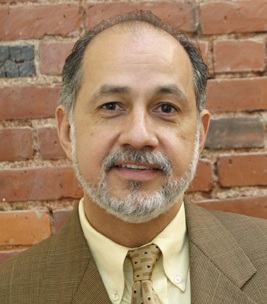
Author
Dr. Roberto Miranda
Summary: Philippians 2 presents Christ’s exaltation as the foundation for Christian conduct marked by humility, unity, and service. We must put aside strife, vainglory, and attachment to our rights, value the virtues of others, and actively seek their well-being. This does not require us to despise ourselves or cultivate low self-esteem, but rather to stop placing ourselves at the center.
The mind of Christ is not a passing emotion but an enduring principle: although He was God, He did not cling to His privileges, but emptied Himself, took the form of a servant, and became obedient to the point of death on the cross. Therefore, God exalted Him, gave Him the name above every name, and established His universal lordship. Resurrection comes after crucifixion; exaltation, after self-emptying.
That same pattern should govern our family, work, and church life: we descend in order to ascend, give in order to receive, and acknowledge our weakness in order to live in the power of God. By serving, forgiving, and caring for others, we allow His grace, His gifts, and His authority to be manifested in us. Let us live for God and for His creatures, trusting that He will care for us.
In Philippians chapter 2, verse 3 begins what some consider the first hymn, or one of the first hymns, of the church. There in verse 5, it is believed that this is a hymn that was sung at the gatherings of the early Christians. For the early Christians, the Resurrection of Jesus was essential; it was the exaltation of Jesus, His exalted state, His rising from the tomb. His establishment as the Lord of lords, the King of kings. The fact that God raised Him from His state of humiliation, when He emptied Himself of His Glory and assumed the form of a mere man—He was not a mere man, but He had the appearance of a man, though He was human—but He was much more than simply human.
And then, how God raised Him from the dead and placed Him in a place that is above every other place. And it seems that, in its exaltation of the Risen Christ, the Lordship of Christ, His Messianic character, this is one of the earliest signs. It speaks about that process Christ went through. But before the Apostle Paul enters into the Hymn, which is in verse 5, he begins with some practical words, words of application and explanations about life for Christian conduct. In reality, this is what is important. Notice that wonderful hymn, that wonderful theological exaltation, because that text beginning with verse 5 is one of the key texts concerning the deity of Jesus Christ and His superiority over every other figure we might mention in the economy of faith.
But what motivates the Apostle Paul, guided by the Holy Spirit, to exalt and point out that superior, Messianic character of Christ is the two preceding verses, where he is calling his readers—and we are part of that generation and of that church to which the Holy Spirit directs this passage. He is calling them to a way of life, to a pattern of behavior, to a way of relating to one another. And that is really what is on the Apostle Paul’s mind: behavior. The Apostle was not interested merely in giving a theological—although that is always important—doctrinal exposition. What interested the Apostle Paul was what implications the Resurrection has for the Christian life.
And how must we live our lives? What kind of conduct? What kind of ethics must we live by as members of the family of the Christian faith? So he begins in verse 3 with an exhortation to each one of us. Listen to that exhortation, because it is for you and for me. It says here: “Do nothing through strife or vainglory.” What is it that sometimes causes so many problems in Christian life and in congregations? Precisely two things: pride and conflict. And sometimes pride leads to conflict.
And many times throughout his writings, the Apostle Paul calls Christians to account because, you know what? Conflict and pride are not diseases of the twenty-first century or of the León de Judá Congregation. That is something that goes back to humanity itself, but certainly the early church had its own problems and difficulties, its conflicts. In First Corinthians chapter 2—and in chapter 3 as well—the Apostle Paul speaks precisely about the conflicts among Christians, about their filing lawsuits against one another, and about the struggles and all these kinds of things.
In the Epistle of the Apostle James, he also speaks about the things that rage within us, the inner conflicts that lead to wars, divisions, and fights among the people of God and in the world in general. And in other letters as well, the Apostle Paul was always calling the communities to which he wrote to put aside quarrels and the pursuit of personal glory. I am thinking, for example, of Romans, I believe it is in chapter 12, if I am not mistaken, where Paul speaks precisely about preferring one another. About not thinking more highly of ourselves than we ought to think.
Instead, we should think of ourselves with sound judgment, with a sober mind. We should not exalt ourselves beyond measure, but should prefer one another, putting others before ourselves. Because conflict has always existed in the churches, and conflict has always existed in humanity. So the Apostle Paul says, “Do nothing through strife or vainglory.” How many of us have done things simply to show someone that we can do it, or that they cannot get their own way? Or that we have something, right? Because we have something to prove. Strife, vainglory.
He says, “But rather—with what?—with humility. Each esteeming others as better than himself.” In other words, not looking to our own glory, our own preference, but being humble. Indeed, even reaching the point of seeing the good in others and greatly appreciating the virtues found in other people. I believe that if we spent more time looking at the good things people possess instead of the bad, we would solve at least fifty percent of the problems of the human race.
If we managed to focus on the gift of God in a person whom we sometimes dislike, or a person who is always putting their foot in it somehow at church or something like that, and if we looked at their good intentions, their good desire, their love for God—look, I believe half of the annoyances we experience would vanish immediately. So there is this idea of esteeming others. Of course, that does not mean that we should regard ourselves as the lowest thing on Earth. It is also possible for us to have low self-esteem, heap dirt on our heads, and think, “I am worth nothing,” “I am nobody,” and “everyone is better than I am.” That is not the idea.
The idea is, “Look, look at the virtues found in others. Emphasize what a blessing others are.” Let each person look not only to his own interests, but also to the interests of others. Always thinking about the good of other people. Always attending to and making sure that the people around us are blessed. Whether there is some need, whether there is some deficiency in their lives, whether I can in some way be an agent of God’s blessing. An agent of grace, an antenna through which God’s grace and blessing and generosity can come down; in any setting—whether at my workplace, my home, the church, the street, on the bus, on the train, wherever it may be—always watching out for the well-being of other people.
Not thinking about my own good, but about the good of other people. By the way, let me tell you, there are illustrations of this. On a day like today, when there are so many people in the church and the first service was tremendously crowded—listen to me, how important it is that on occasions like this we Christians keep that in mind! How easily we forget Christianity when someone steps on our corns a little! Or when someone takes our favorite space, or someone is sitting where we regularly sit.
Or we are asked to give up a seat so that a person or a family can be more comfortable. How lovely it is when, as a Pastor, one can ask the brothers and sisters, “Brothers and sisters, could you squeeze together a little?” And with such a pleasant expression, they say, “Of course, Pastor.” I saw two or three examples of that during the Service, and what joy that gives us, right? Because we are experiencing and carrying out what the Word of the Lord says here.
But look, that practical call from the Apostle Paul is what leads him to give an illustration of it. It is interesting that one of the most exalted declarations of Christ’s deity, His lordship, and His exaltation came as the result of a humble meditation on Christian behavior, on Christian ethics; on how relationships among the children of God should be, and also their relationships with the rest of humanity. And it came about because the Apostle Paul wanted to give an example of that attitude. He is saying, “Brothers and sisters, behave in this manner; relate to one another in this manner.”
“This is the attitude each one of you should have; this is the way you should relate to one another.” And I am going to give you an example of this; I am going to illustrate that attitude for you. Feel what I am going to describe to you. Then he says: “Let this mind be in you which was also in Christ Jesus.” That is, brothers and sisters, may that attitude which was in Christ Jesus dwell in each one of us. Look, you know something? The word translated into Spanish as “feeling” is actually closer to “mind” in the original Greek. “Let the same mind be in you which was in Jesus Christ.” We could say the same mentality, the same attitude, the same conviction, the same way of thinking that was in Christ Jesus.
In other words, for Christ, what He did in emptying Himself of His glory, obeying the Father, and making Himself uncomfortable for our sake was the product of an essential attitude within Him. A governing principle of His person. And I believe it is important to insist on that because sometimes, when we say, “Let the same feeling be in you,” one thinks of an emotion, right? And sometimes emotions can be fleeting. One day I may feel that I want to be generous, and another day I am in a bad mood and say, “Look, they can go back where they came from. I’m going to do what I have to do,” and we do not concern ourselves with other people, right?
But what it says here is that there must be within us a mentality, an ethic, a way of thinking, a system that governs our lives, whether we want it to or not. Whether we feel like doing it or not, whether we like the person or not, whether we get along with them or not. It is a principle, because that is what Christ did. Christ did not think about whether He wanted to empty Himself of His glory, come to Earth, become man, and relinquish His divine benefits and privileges. He did it because the Father—so to speak; this is the complexity of the Trinity, right?—He did it because He wanted to resolve the dilemma of this human race and His own dilemma of Justice and Mercy and the Sin of Humanity, all of this.
And the Lord Jesus, as we said last Friday in our meditation, Christ was the answer, and in obedience He simply humbled Himself and set His privileges aside. He did not think about what He wanted to do; He thought about the need of a humanity that was lost in sin, condemned to death, abandoned. Because there was a separation between God and that sinful humanity. And humanity was completely devoid of hope, at the mercy of the enemy.
[Ushers, there is a sister over there—please attend to her—] At the mercy of the enemy. And one of the passages says, I believe it is in Ephesians, “But God, when we were sunk in sin, Christ died for us.” Notice, it was not as though we deserved it. We did not deserve to be saved. It was not as though God said, “This poor humanity, which is so eager to be reconciled with Me and needs Me to send them a Savior.” It was not as though humanity was crying out to God for a Savior. It was not as though humanity had evolved to a point where God said, “You know what? Now they deserve a special work.” No.
At the most undeserving moment in the history of humanity, at that moment Christ died for us. Christ emptied Himself of His glory. That is to say, what God did was purely out of His objective love; it was not because we deserved it. God decided to do it, and Christ decided to obey the Father. I think about that: within us there is that mentality, that attitude, that governing principle of the Christian life that led Christ to empty Himself of His glory. When I see Jesus in the Garden of Gethsemane praying to the Father, He says to Him, “Lord, if You are willing, if it is possible, let this cup pass from Me.”
Do you remember that passage? It is a passage often preached on Good Friday: He was sweating drops of blood because the tension He felt was so terrible, because He knew what awaited Him on that cross. He knew the Via Crucis, the suffering that lay before Him. And He said, “Lord, if it is possible, deliver Me from this. I do not want this. The idea of going up on that cross terrifies Me”—the Lord said in His humanity. But then He said, “Nevertheless, let Your will be done, and not Mine.” In other words, He set His preferences aside, He set His terror aside, He set His feelings aside, and He simply surrendered Himself to a principle.
The principle of obeying the Father, humbling Himself, being a servant, and doing what the Lord wanted Him to do, what the Father wanted Him to do, right? That is why it says, “Let this same mind be in you,” this same mentality that was in Christ Jesus. Who, being in the form of God, did not consider equality with God something “to be grasped.” Do you know that Jesus Christ is God Himself? That is one of the great truths of the Christian faith. Jesus Christ is God Himself. In the mystery of the Trinity and the Incarnation, the Bible says again and again that Jesus Christ is God. He was not created. The Son in that mystery we call the Trinity was not created; He has neither beginning nor end; He is the very essence, made of the very same essence as the Father.
He is God Himself. Do not let anyone deceive you. Never let anyone cast doubt on the fact that Jesus Christ is God Himself. I understand very well that we cannot comprehend or explain that in rational terms, but not everything pertaining to God is necessarily subject to reason. By faith, we believe what the Bible says. But Jesus Christ was God, is God, and when He came into the world, something magical—I do not know how to put it—happened, and that was that He emptied Himself of His glory. He did not empty Himself of His deity, because He continued to be God in man, but He emptied Himself of all the privileges, and the glory and radiance of being God were not…
In His pure deity He was not subject to time, space, or anything. That is, He was God Himself, with all the privileges and all the powers of deity, “who, being in the form of God, did not consider equality with God something to be grasped.” The word grasped is a word that means “as something He coveted,” something to steal, something to seize, something so valuable that you want to cling to it and say, “No one is going to take it away from me, because it is mine.” And it says, “Even though He was equal to God, He did not cling to that unlimited glory, to that absolute, total comfort.”
How many of us cling to things, huh? And that is where the problems come, isn’t it? We cling to our rights, we cling to our prerogatives, we cling to what we have studied, we cling to that person we love so much, we cling to a profession, to a house, to a car. In the church we cling to our positions as leaders; we cling to the treatment we are supposedly owed because of everything we do for the church, or we cling to what we believe God has to do for us because we serve and give, etc.
We cling to many things. We become attached to things that are not valuable, and I believe that part of Christian growth—maturity—begins when we begin to detach ourselves from things we love. Do you understand? When you believe that you are owed a certain kind of treatment and sometimes you do not receive it, you say, “You know what? Amen. More was lost in the flood.” And you do not cling to it; you do not feel offended. When they do not give you that little Christmas gift that you knew they were supposed to give you, you say, “Amen. It doesn’t matter; I am going to give even if they do not give to me.” If they do not celebrate your birthday, you do not take offense, feel as though they do not love you, and scowl at the people around you for the next year.
Instead, you do not become attached to those things; you do not cling to them. If you were sick and the pastor did not call you, you do not scowl at him the next Sunday when you see him. Amen? How many of us confess that we cling to and become attached to the things we do? “They owe me that; they have to give me that.” There are so many ways. In the family, in the home, in relationships between husband and wife, at work. How often do problems and conflict come from the fact that we are secretly clinging to something? We say, “No, this is mine; it is mine by right, and if they do not give it to me, there is going to be a problem.” Then we react in one way or another.
The Bible says, “Do not become attached to the things you believe you are owed. Detach yourself from them as Christ detached Himself from His glory.” It says, “Therefore, being in a form equal to God, He did not cling to any of these things”; instead, what did He do? He emptied Himself. That phrase “emptied Himself” means He poured Himself out, hollowed Himself out. It is like taking a spoon and taking a piece of fruit and scooping out all the seeds inside it. I don’t know—well, an avocado; I can use another one. Does everyone know what a squash or an uyama is? Dominicans call it uyama; the others call it squash, right? In fact, this week I was told that if you take a squash—sisters, this is a recipe. I am not going to charge you for this. [Laughter]. You know that squash spoils quickly, don’t you? But I understand that if you remove all the seeds inside, which spoil more easily, the squash will last much longer. So there is a secret for you.
I had a lovely piece of uyama, of squash, there at my house, and I decided to do that. I took a spoon and scraped out the entire inside. I removed all the seeds, and the squash was left nice and clean. I would say that this is something like what Christ did, right? He took Himself and emptied Himself of everything He had inside, all His deity, all His glory—or the privileges. He emptied Himself, scraped all of that out, and was left simply like a pruned tree, and He assumed human form. Ekenōsen is the word. It is a very powerful theological word. He emptied Himself; He robbed Himself, we might say, in a sense.
He took away from Himself the things He could have and surrendered them out of love for man, for humanity, and out of love for the Father. Because He lived under that principle of serving, of giving to others. But look, what is happening here, and the connection I see between Resurrection Day, which is what we are celebrating today, and this process I am describing, is that, brothers and sisters, the wonderful thing is that the apostle Paul describes this entire process of the Christ who emptied Himself, who stripped Himself of His glory, who poured Himself out and stripped Himself of everything He had that gave Him His comfort and His glory, because that is what we are talking about when we speak of the incarnation.
During these days we commemorate Friday, when the Lord was crucified; and before He was crucified, He was scourged, He was shamed, He was left alone. We were all offended because of Him; all His disciples left. He was alone to suffer—all of this. And before this, He spent about thirty years on Earth living like Clark Kent; quite simply, no one knew—very few people knew—that He was God. He walked through the streets, and people said, “Oh! He is the son—yes—of Mary and Joseph the carpenter. I know Him.” He was so unimpressive that people could not believe He was who He was. And when He performed miracles, they were amazed. His own brothers could not believe that He…
Mary, His mother, apparently never fully understood what He truly was. It was a mystery. He walked through those years simply, humbly, plainly. When He entered Jerusalem, He did not enter on an enormous warhorse. He entered on a donkey, humble in heart. He lived His entire life that way. The Bible says, “With no attractiveness” that would make us say, “Wow! How attractive!” Those paintings of Jesus as though He were Clark Gable or Robert Redford or one of those other handsome, very attractive actors… I don’t think so.
When He emptied Himself, He emptied Himself. He walked through the streets. What people saw was an average, ordinary Jew. That was all. He spent more than thirty years in that existence, confined in the straitjacket of His humanity, yet within Him pulsed the power of God, the life of God. He was God too; He was God, but confined—in some mysterious way—within a fully human framework. God and humanity, there within, in perfect unity. And that ended on the Cross. And that is why the apostle Paul says, “He emptied Himself, taking the form of a servant, being made in the likeness of men; and being found in human form”—that is, it was not enough simply for Him to be a man, but while in that condition—“He humbled Himself, becoming obedient unto death.”
Not just any death, but death on what? Death on a cross. The worst death a person could experience. That is, what are we saying here? Jesus’ self-emptying, His disregard for Himself, was absolutely total. There could be no greater way for someone to lower himself than what Christ did. And remember what we were saying earlier: what does the apostle Paul say? “Look, let that same attitude be in you. That same mindset that led Christ to do all of this.” And that is why he says, “I cannot think”—it is as though he were saying—“of any other example except Christ.”
If you want to know what I mean, look at Christ and look at what He went through. Now, brothers and sisters, here is the thing. This is important; listen to this. What the apostle Paul is describing here is, for me, the central principle of the Christian life. Listen to this: it is what, for me, distinguishes Christianity above every other religion. And it is the most mysterious, most contradictory, and apparently most paradoxical thing I know among all humanity’s philosophical and theological principles. And it is this. The apostle Paul says, “If you do that, and if you live that way, and if you allow your life to be governed by that principle of emptying yourselves of what belongs to you, of what you have a right to possess, of what you love, of what you value, and of what people owe you.”
“If you are willing to empty yourselves of that, to detach yourselves from it, to surrender it out of love for others and for the well-being of others, the same thing that happened to Jesus Christ will happen to you as well. You too will experience in your own lives the same result Jesus Christ received as a consequence of His conduct, His obedience, and His living according to that principle.” And what was the result Jesus Christ received? Look at it here. After describing Friday—the process, the abasement, the suffering—it says; look at verse 9: “Therefore”—say “therefore” with me; in other words, as a consequence, as a result of that behavior, that action, that conduct—“God also”—that is, God did one thing, but He also did the other.
God humbled Him, brought Him low, confined Him in a straitjacket, allowed Him to be raised upon the cross, allowed Him to enter the depths of the Earth and experience death and feel all the sin of humanity, to be soiled with the totality of humanity’s sin throughout all history. He did that. But He also did the following: He exalted Him to the highest place. He exalted Him to the highest place. He raised Him up and glorified Him in the most extreme way we can conceive. God exalted Him to the highest place and gave Him a name that “is above every name.”
In ancient times, and always, a name represented dignity, represented authority, represented the power of a family, of a person. That is still true. When you sign, what do you sign? You sign your name. The name embodies the person. When you put your name on a check, a contract, or a legal document, you are saying, “My person is in there. My life is bound up in that name I am putting on that document.” In other words, everything you are is contained there. So that is what it says here: God gave Him a name. In other words, He gave Him authority, He gave Him power, He gave Him a persona, He gave Him a representative character that is above every other representation.
In other words, you can take all the reality that exists; potentially, it has a name. It may be a galaxy, it may be a star or a superstar, it may be a fish, it may be an elephant, it may be a disease. Satan has a name; the principalities and powers of hell have names; angels have names; the atoms at the very heart of matter have names. The cells of the body have their name: cells. Everything has a name, and if it does not have a name, it is because it has not yet been discovered. But everything in the universe has a name.
The Word says that Christ was given a name, and that no matter what is mentioned, His name is always more powerful, always higher. For example, all the diseases we know have a name. You know what? The name of Christ is more powerful than any disease, and that is why we pray for healing in the name of Jesus. [Applause]. Satan has a name—may the Lord rebuke him. You know what? The name of Christ is more powerful than Satan, and that is why, when you use the name of Jesus, you are connecting yourself to the greatest power that exists in the universe, more powerful than ten thousand or one hundred thousand or billions of atomic bombs, or any energy man could imagine.
When you are plugged into the name of Jesus, you are potentially infinitely powerful. When you live your life in the name of Jesus, there is no concept, no problem, no difficulty, no challenge, no tragedy that can stand above you, because you have the name of Jesus on your side. You are moving in the mighty name of Jesus. God gave Him a name that is above every name, every concept, every principle, every being, every force, every energy, every situation: the name of Jesus.
As a consequence of His abasement, His humiliation, His self-emptying, His pouring Himself out, the Lord said to Him, “You know what? As a consequence of all that, I am going to give You something that is above everything. I am going to give You glory, I am going to give You Your power, I am going to give back to You everything You supposedly lost.” You know what? Let me even say this: when Christ ascended, He had something He did not have when He descended. One might wonder, how can God have more? Because if He is God, there is nothing more that could be added to Him. If I were a philosopher, I would say: God is the sum total of everything, and nothing can be added to God or taken away from Him. That is what a philosopher would say, right?
But you know what? When God came down and became man, He acquired something He did not have: humanity. Yes or no? God was God; He is God. But when Christ came down, He assumed the form of a man. When He ascended, He did not leave His humanity behind like a wrinkled suit He no longer needed. Christ’s skin did not remain down there like in “Men in Black,” with the skin left lying there. His humanity did not remain below; His humanity ascended with Him. The One who ascended is God and man; He is seated at the right hand of God the Father, and He bears the marks of His crucifixion that prove it. When He rose again, He ate fish to say, “I am a man too.” [Applause].
So, I believe that the privileges… God gave the Lord something that—wow!—I cannot even imagine how great it was. When the Lord was raised from the dead, He had experienced something incomprehensible. God exalted Him to the highest place and gave Him “a name that is above every name,” so that at the name of Jesus every knee should bow, of those in Heaven, and on Earth, and under the Earth. If He could have said anything more—within the Earth, around the Earth, beyond the Earth—He would have said it.
But he said, “what is in Heaven, on Earth, and under the Earth”—whether it is hell or whatever it may be, it is included there. One name. There is no other name greater than the name of Jesus, and every tongue shall confess that Jesus Christ is Lord, to the glory of God the Father. You know what? Not every tongue has yet confessed, nor does every tongue confess, that Jesus Christ is Lord. Here in the South End there are some people who do not believe that Jesus Christ is Lord, and there are also people throughout Boston and the United States—and throughout human history there have been nations and people who…
But you know what? It says that “one day every tongue will confess, every knee will bow, and will confess that Jesus Christ is Lord.” [Applause]. And how wonderful that those of us who are here have gone ahead of that; we know. And when it says that Jesus Christ is the Lord—Kyrios in the original Greek; that is the word translated as Lord—it is borrowing from the name the Hebrews gave to Jehovah. The Hebrews believe that the name of God is so sacred that they do not utter it with their mouths. So what they say is “the Lord.” Kyrios is the translation of the original Hebrew word for Lord. The Jews speak of the Lord.
For example, when Isaiah saw the vision of God, he said, “I saw the Lord.” So when it says here that “Jesus Christ is Lord,” it is saying that He is God in His capacity as sovereign, as ruler of everything that exists. He rules over everything; He has power over everything; He governs the visible, the invisible, the microcosm, and the macrocosm. Everything is under the control and lordship of Jesus Christ. Jesus Christ is God. It says that He has entrusted everything to the Son. And one day, when the Son has taken everything and subjected every authority, every principality, and every nation to His dominion, it says that He will take it all and hand it over to the Father, so that everything may be one in one, and there history will have reached its complete fulfillment.
But God gave that right to the Son. But look, with this I promise you that I will bring the story to a close: God says, “If you submit to the same dynamic to which Christ submitted, the same thing that happened to Jesus—of course, in a lesser way, as a human being, in the human dimension, on the human scale—will happen to you too.” Because remember, that is how the Apostle Paul began his meditation: “Let this same mind be in you that was in Christ Jesus. Love one another, do not think about yourselves, do not cling to things, do not go around making demands of people.” Do not think first about your own comfort or your own advantage; think about others. Do not think of yourself as though, “I am such a big deal.”
No! Think about what others have. I believe that if we thought about others and their attributes, there would be fewer self-assured people in the world. I believe that many people have the blessing of possessing a confidence that I, unfortunately, do not have, because anyone who knows himself knows. Hey! I have no right to be so confident in myself. You know what you are, and when you look around, you see so many people with more talent than you.
But some people are so ignorant that they think they are the greatest thing in the world—the last Coca-Cola in the desert—and they go around with such assurance and confidence, steamrolling over everyone. But that is because they are ignorant, not because they know a lot, you know? Because I believe that the more you know, the more insecure you become, to a certain extent. You understand that you know less, that you are capable of less, that the world is more dangerous, that you are clumsier, and how many mistakes we can make in the world! You feel more fragile.
I believe that this is the maturity of the Christian faith: the more you grow, the more you know, and the stronger you become in the Lord, the more you diminish, brothers and sisters. That is why Paul says, “I will boast all the more in my weaknesses,” because when I am weak, then I am strong. The Lord told him, “My grace is sufficient for you”; “My power is made perfect”—in what?—“in weakness.” That is why, brothers and sisters, I told you—listen—when I said a moment ago that the key principle of the Christian life, the number-one principle, I would say the principle that runs from Genesis to Revelation, the principle that you will find in every book of the Bible, in every character—I believe—in the Bible, in every great account in the Bible, is this principle: when we make ourselves small, when we strip ourselves of our rights and our glory, when we think about others and not about ourselves, the power and grace of God are manifested more fully in our lives. Things go better for us.
We have more success, we have more power, we have more authority against the devil, God covers us more with His grace, and we find more mercy when we make mistakes. The gifts of the Holy Spirit are manifested more through our lives, and we receive more glory. Because that is the key to everything. When I said that Christ emptied Himself out of love for others, something immediately came to mind… Look at an example, for instance, chosen almost at random. The Old Testament—because we think these things belong to the New Testament, that God had already become a little more mature and therefore came up with the New Testament. No, I believe it was there from the very beginning.
Look, for example, at the life of King Solomon. When Solomon ascends the throne, God appears to him in a dream and says, “Son, ask Me for whatever you want. Because of My love for your father David, I will grant you whatever you ask of Me.” What did Solomon ask Him for? He asked for wisdom: “Look, Lord, I am an ignorant young man, and I have a large and difficult people to govern. I face great affairs of state, and I do not have a doctorate in politics, international relations, or economics. I feel inadequate to do this job; I want to govern them well. So I ask You only this: ‘Give me wisdom.’” And you know what? Solomon’s request pleased God so much, because God saw Solomon’s heart. It is a shame that later, in his old age, he strayed from that truth.
There it is: he went after women, he went after power and glory, and because he lost that truth, he ended up a ruined man. He destroyed all the reputation and all the glory he had attained as a young man. But when he remained within the essential dynamic of Christ, the essential dynamic of God’s heart, when he asked God for that, God told him, “You know what, Solomon? I am pleased by what you have asked of Me. Since you did not ask Me for riches, you did not ask Me for power—which is what a man would normally have asked of Me—you did not ask Me for the heads of your enemies—which is what a king who is just beginning his reign would ask for—you know what, Solomon? I am going to give you what you asked for. I am going to give you wisdom such as I have given to no other human being. I am going to give you knowledge; I am going to give you understanding. But you know what? Not only that: I am also going to give you money, I am going to give you glory, and I am going to give you power, more than any other man.”
Throughout history, proportionally speaking, Solomon was the richest and most powerful man. His kingdom reached such a lofty level. God gave to him—why? Because he did not think about himself; he thought about his people, he thought about pleasing God, and he thought about doing a good job. He was concerned about his nation. And when God saw that dynamic—because that is what moves God’s heart, that is what captivates God—when a man or a woman lives according to that principle: “Not I, but God and others.” When you live your life to please God, and when you know that what pleases God most is for us to care about His creatures. When you care for someone because he is a son of God or she is a daughter of God, that is what pleases God.
And you know what? When you live that way, God can hardly contain Himself in His desire to bless you. He will find a thousand ways to bless you. If only we understood that and lived every day by descending in order to rise, dying in order to live eternally, emptying ourselves in order to receive glory; making ourselves small in order to be great, asking for nothing in order to have everything, stripping ourselves of our rights in order to have people’s esteem. Listen to me: you and I—I am preaching this sermon, and sometimes I preach things that even I myself find hard to believe, brother; I preach them because I know it is the Bible. Sometimes I say, “I am preaching something very lofty.” I say, “Lord, help me live it.”
Because I assure you that if we understood that, we would be the most powerful, happiest, and most successful people in the world. Today, brothers and sisters, I desire in the name of the Lord that each one of us, that our church, this community of faith, and Christianity in general understand this basic truth. If you, as a father, live not to live vicariously through your children—how many parents want to find fulfillment through their children?—and we use our children as instruments for our dreams and to resolve the problems of our past. If you live so that your children may become what God wants them to be, and you give yourself to them; husband, you are the head of the home, you are the spiritual leader of your family. But if you live so that your wife may reach her full potential in Christ Jesus, if you serve her, if you minister to her, if you bless her, if you love her as Christ loved the church.
If you become a spiritual leader, a mentor, a Jesus who serves and washes his wife’s feet, how much glory you will receive! Son, if you submit to your father as Christ submitted to the Father, and you honor your father or your mother, and you obey your father and your mother because they are your father and your mother, because the Bible says, “Honor your father and your mother,” and if you obey them even though you are not entirely convinced by everything they are telling you, but you give them preference, care for them, treat them well, and serve them, you know what? One day, when you are a father, your children will bless you and serve you. And you will know what true glory is.
Head of an office, manager of a factory, or owner of a company: if you serve your employees—not in the sense of letting them do whatever they want with you; that is not what I am talking about—but if you understand that you have a commitment to care for them, treat them well, respect the dignity within them, and even help them receive training, grow, and develop further professionally, you will have people who are loyal and devoted to you. Unless they are scoundrels—and there are some of those every now and then—but God will defend you from them because you are doing things according to what God says.
Brothers and sisters, if we in the church treated one another with that care, that attentiveness, that affection, that consideration. If you were not thinking about how they are treating you or what they are giving you; if you simply gave, if you were a servant. You are here to bless your community, you are here to bless your church, to bless your pastors, to bless the kingdom of God; you live that way. You do not worry so much about yourself, your own rights, or your own nature that demands consideration, and you simply live like an innocent child; let God worry about you. Concern yourself with others out of love for God, and God will always be defending you. You will have the esteem of others.
Do you know why we so often have so much anxiety and insomnia? Because there is something secret within us that we have not resolved. Something of which we have not emptied ourselves. Strip yourself of everything; surrender it all to God. Live for God, live in God, live for others, and you will have mental and emotional health. And psychiatrists will starve to death. Glory to God for psychiatrists. [Applause] Because you will have peace in your heart. No one can take anything away from you because you have nothing; everything belongs to God. You will have esteem, you will have respect, you will have influence.
People will come to you because the world longs to find teachers, mentors, and role models, and they will seek you out. They will want you to teach them and advise them. Look, God will provide for you materially; you will lack nothing, because God will make sure that what you give is returned to you many times over. You will have knowledge of the things of the Word and of the mysteries of the Gospel. Because the mysteries of the Gospel depend upon that central principle: “Empty yourself and you will receive; die and you will live; make yourself weak and you will be powerful; give and you will receive more and more each day. Believe that you know nothing, and you will know everything. Move in the power of God, and you will have the power of the universe—not in your own power.”
It is the central principle. Throughout all Scripture, that is the principle. It is not by swords, it is not by armies; it is by the Spirit. It is not by your strength, it is not by your talent, it is not by your skill; it is in the power of God. And the more you empty yourself, the more you strip yourself, the more you hollow yourself out within, the more God can place His anointing within you, His glory within you, His gifts within you. And you will experience the blessing. That is the key, brothers and sisters. I believe that many of Christianity’s problems exist because we have not understood that truth. Many of its sufferings as well. And that is why we will have to insist on it again and again and again and again in this church and throughout all Christianity.
I believe we have to keep emphasizing that truth, emphasizing it, emphasizing it. Because I tell you, I believe the problem with Christians throughout the centuries has been that we priests and pastors have failed in this. And now we have churches everywhere, and we have an evangelical or Catholic, semi-Christian culture in which we teach people all kinds of things, but we are not teaching them the most important thing of all, which is to live life as Christ lived it. To feel what Christ felt, to think as Christ thought, to approach life and human relationships as Christ did. In that dynamic of, “The smaller I make myself, the greater I am. The more I give, the more I receive; the more I love, the more I am loved; the more I empty myself, the more I have. The weaker I make myself, the stronger I am; the more I care about others, the more God cares about me.”
If we learn that, brothers and sisters, you do not have to come to church. Stay home, and you will be a spiritual giant. I am joking, just in case. But it is the essential word. The real thing is that resurrection depends on crucifixion. The power of Resurrection Sunday can be reached only through Crucifixion Friday. It can be reached only through thirty years of anonymity, self-emptying, and poverty. But then you will have glory; God will give you a name. Do you want a name? Many people want a name, and they kill themselves trying to obtain one. Let God give you the name. If God gives you the name, that name will be exalted, beautiful, wonderful. God grant that, at least in this congregation, among us today, a desire may be born—or may increase—to have the same mind Christ had. The same way of acting, the same governing principle of not thinking about myself but thinking about others, and thinking about God above all.
I would like to live up to that teaching, and I want you to join me in that desire this afternoon. Amen. Let us bow our heads for a moment, and let us ask the Lord to bring that principle to birth, or strengthen it, in our hearts, in our minds, in our whole being. Lord, I want to think like Christ; I want to think like Christ. I want to have the mind, the attitude of Christ; I want to be Christ walking upon the Earth. People will simply see an ordinary human being, but Christ will be walking in me with His power, His authority, His discernment, His wisdom, and I will receive from You what I long for and need.
You will give it to me. I want to be that way; I want to be like Christ; I want to live life as Christ did. I would like to ask whether there is anyone visiting us this afternoon, or anyone who has not yet taken the step of faith of surrendering their life to the Lord Jesus. I do not want anyone to leave here without perhaps a desire to be reconciled to the Lord, to place their life in Jesus’ hands, or to invite that Christ to enter their heart. If you have not done so before and want to do it now, we are going to take a moment to invite you to consider placing your life in Jesus’ hands, inviting Him to enter your heart, and making the Lord your life, so that He may teach you how to live as He lived and to have the power that He has and had.
I want to ask whether there is anyone here this afternoon who would like to invite Christ into their heart, if they have not done so before. We would like to pray for you this afternoon before you leave. Is there anyone who has not done so before and would like to give their life to Jesus this afternoon? The Lord says, “The one who comes to Me I will never cast out.” [Come this way.] Glory to God. Perhaps there is still someone else who has not surrendered their life to the Lord and would like to do so now. It takes courage to be the first, you know? Is there anyone—a brother, a sister, a young person, anyone else—who would like to take a step of faith this afternoon? I invite you to come forward and begin to walk the way Christ walked. This is a long journey. If you have not done so before, I invite you to come forward for a moment, and on a day like today, which is Resurrection Day, perhaps you would like to take that step.
I invite you to come here. Is there anyone else who has not taken that step and would like to do so now? [Applause.] Glory to God. Amen. Glory to God. There is still time if anyone would like to do it. If you are feeling restless there in your seat, perhaps it is the Holy Spirit telling you, “You are going to feel uncomfortable, but it is part of the process Pastor Miranda is describing in his sermon. You must act not according to emotions, but according to spiritual principles.” Is there anyone else who has not yet taken that step and would like to do so now, this afternoon? We extend an invitation. Is there anyone else up there or down here? We will wait if you are in the balconies or in the last rows of the place. Is there anyone else? Let us pray for these brothers and sisters.
Let us thank God for them. Lord, we thank You for these wonderful men who have given their lives to You. We bless this young woman. Lord, we also thank You for this young woman we have here before us. Would a couple of sisters please come here with me as well. And we give thanks, Lord; thank You for these lives—they are precious before You. They are worth stars; they are worth galaxies; they are worth worlds, Lord. They are infinitely valuable to You. I bless each one of them in the name of Jesus. And, Lord Jesus, we offer them to You as trophies of Your Resurrection. We offer them to You as trophies of Your Crucifixion and of Your life of suffering and sacrifice. We ask You to enter their hearts, as Your Word promises that You will do, Lord—to go in to them, sit with them, and have fellowship with them.
I bless them and declare Your lordship, Your healing, Your blessing, and Your name over their lives; and over this church, Lord, we also establish the principles of the Kingdom of God. In Your name, Lord, I want this church—I will say it this way—I want this church to exemplify that central principle of the Christian life: love, humility, devotion to others, obedience to the Father, mutual submission, mercy, goodness, meekness, forgiveness, grace, patience, kindness. We embrace those principles, Lord, as men and women and God. We will not live for ourselves; we will live for You and for Your creatures. We will be instruments of Your grace. We want this church, this family, to be characterized by these principles. Begin with me and continue through every person, Lord.
And so we ask that Your church throughout the Earth may know that He served others, even though He is Lord of lords and King of kings. Establish Your person, Lord, in this place and in this family of faith. Today we ask it, and we commit ourselves to living in this way for the glory of Your name. To You be the glory, not to us. Thank You, thank You. Continue with this family of faith, Father. And thank You for everything we have experienced on this day, Lord. Seal it in our hearts and in our lives. Thank You, Lord. We love You. In the name of Jesus. Amen and amen.