Don’t Take Your Paralyzed Friend Back Home
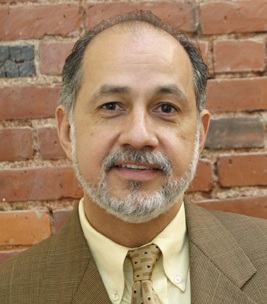
Author
Dr. Roberto Miranda
Summary: God first prepares and transforms the people he wants to use. Therefore, we must allow him to broaden our minds, abandon rigid patterns, and become like soft clay or new wineskins, capable of receiving his unexpected work. The faith of those who carried the paralyzed man to Jesus demonstrates a bold trust that overcomes obstacles and makes up for our shortcomings through the power of God. Although the crowd blocked the way, they did not take their friend back home; they opened the roof and placed him before Christ.
Faith dares to attempt the improbable, perseveres when the answer is delayed, and accepts risks. At times, it requires prayer, fasting, sacrifice, flexibility, and a persistence that seems reckless to others. We must not allow routine, control, respectability, or programs to stifle the flow of the Spirit. God always has a way out, even when the situation seems impossible.
To be used by God, we must surrender our possessions, relationships, plans, habits, resentments, and thought patterns to the Lord. When we recognize that everything belongs to him, we are free to obey. This surrendered faith is the platform for his miracles; therefore, let us give our lives to Jesus Christ and allow him to establish his rule within us.
Luke, chapter 5, verse 17. I am also going to be disciplined with the time, in the name of the Lord, but at least I want to plant a word, a seed of faith, there in your spirit, in your heart. The Word of the Lord says, Luke 5:17, “One day, as he, Jesus, was teaching, Pharisees and teachers of the law were sitting there, who had come from every village of Galilee and Judea and Jerusalem. And the power of the Lord was with him to heal”—please take note, Meches, thank you. “And it happened that some men were carrying on a bed a man who was paralyzed, and they tried to bring him in and lay him before him, but finding no way to do it”—here is the obstacle—“but finding no way to do it because of the crowd, they went up on top of the house and through the roof,” that is, through the ceiling, “they lowered him on his bed, placing him in the middle, before Jesus.
When He saw their faith, He said to him, ‘Man...’”—in the other two passages it says “son”; in the parallel passages in Matthew and Mark—“‘Man, your sins are forgiven you.’ Then the scribes and the Pharisees began to reason,” that is, to... to question in their minds, saying, “Who is this who speaks blasphemies? Who can forgive sins but God alone?” Jesus then, knowing their thoughts, answered and said to them, “Why are you reasoning in your hearts? Which is easier, to say, ‘Your sins are forgiven you,’ or to say, ‘Rise and walk’? But so that you may know that the Son of Man has authority on earth to forgive sins”—He said to the paralytic—“I say to you, rise, take up your bed, and go to your house.” Immediately, rising in their presence and taking up the bed on which he had been lying, he went to his house, glorifying God. And they were all overwhelmed with amazement and glorified God, and, filled with fear, said, “Today we have seen wonders.” May the Lord bless His Holy Word.
Brothers and sisters, as you know, during these weeks we are preaching on the subject of faith, and our goal is that throughout this entire year, 2009, we may fill ourselves with those principles of faith; that we may dig there into the depths of the Word of God, go deep, mine, do the work of miners in order to extract from deep within God’s soil those truths that have to do with the subject of faith.
I feel that God wants to anoint and prepare our congregation. When God wants to do something, He always first prepares the instruments He is going to use. When the Lord was about to begin performing miracles among Israel in order to bring them into the Promised Land, He called Joshua and told him, “Tomorrow I am going to begin performing miracles among you,” and then He said, “Command the men to be circumcised; let all the people purify themselves, let all the people purify themselves.”
When God wants to do something, He first has to work on the instruments; He has to cleanse the vessels; He has to prepare the instruments He is going to use. And He wants you to prepare yourself, He wants me to prepare myself, He wants us to purify ourselves... to seek God’s anointing, to allow God to transform the structures of our minds, our spiritual sensitivity, because when our structures are not prepared, they will not be able to contain God’s anointing.
The first thing that has to be prepared—and this is why I feel that this year is a year of preparation and teaching in the area of faith. God gave me that word on New Year’s Eve concerning a year for speaking about, meditating on, and living out principles of faith, and everything begins precisely by preparing our minds, our conception, our understanding... I was telling the brothers and sisters this morning, at the nine o’clock service—the first time in many years this has happened to me—I forgot to change the clock. As soon as I forgot this... uh-huh... even at twelve I still did not know; that means I was asleep, and at 11:45. But I forgot to change the clock, even though I had been very mindful of it. And you know what is interesting? Well... I arrived here with my tongue hanging out; I arrived here at 9:14, 9:15... praying that one of those Boston state troopers would not see me. And you know what? I looked at my computer four or five times and saw the clock, because you know that computers have... and they update themselves; that is, they are not like your wristwatch, which you have to change—no. Cell phones and computer clocks immediately change to the new time, but I looked at it four or five times, because I was working on it, and so on. And you know what? I looked at it, but I did not see the actual time.
And at 7:57 I was perfectly happy because I still had a little time left to finish and come to church; I did not know that it was 8:57. There was tremendous panic when I suddenly realized the terrible truth, but you know, what I want to tell you is this: Why did I not see the time on the clock? Because, in my mind, I was still on the old time. Do you understand? Say, “Hmm, that sounded good...” I was on the old time; that is, my mind was stuck... I still had not made the adjustment. The time had changed, reality had changed, but my mind had not changed. So when your mind does not change, you see what you want to see and what you believe you ought to see. That is how the mind works. You project what you believe, what you think—the paradigms, to use a big philosophical word. Your life will unfold according to the paradigms you have. If your mind is not prepared, if it has not been widened so that God’s new wine can fit into your life, you will not be able to receive what God wants to do, because you will be seeing things... you will be looking at them, but you will not be seeing them. And this is what happened to those Pharisees, and, incidentally, to those theologians who had a flawed theology that was not prepared to understand all the wondrous and powerful truth God had in store through the person of Jesus.
One of the problems with faith is precisely that, brothers and sisters: our minds have to change, and many times we have to be humble enough so that, when God wants to do something that does not fit within the parameters we have established, we have the humility to say, “You know what? I am going to widen the walls a little so that God’s truth can fit into my life.”
The mind has to change, and that is why I put forth these teachings as a way of widening our parameters, of expanding our vision and our capacity to see. Because these men, these Pharisees, as you see here, when the Lord was there at that moment—the Son of God, the One sent by God, God Himself before them—they could not understand what God wanted to do and was doing at that moment, because their theological parameters did not include the idea that God Himself would descend in human form and do what Jesus had come to do. Their theological teachings were different; their theological bag was too small to contain everything God had enclosed in the person of Jesus. That is why, when the Lord Jesus Christ says, “Your sins are forgiven,” it was as though He were baiting them, because He knew... He wanted to see what they would do when He said that. Why? Because their theology said, “Only God can forgive sins.” And the Lord was saying, “Exactly.”
And that is why He said, “Your sins are forgiven,” to see what they thought. And of course, suddenly the fuses in their Pharisaic theology blew, because they could not... the computer began to smoke. What do you do with that? They reasoned in their hearts because they were not prepared; their minds were not prepared to receive the very presence of God made man. That was not in the... look in Isaiah; it is there. But again, the lenses you put on either allow you to see many things in life or prevent you from seeing them. I ask the Lord, “Father, widen my mental and spiritual concepts.”
Brothers and sisters, look, this is not even where I was going to begin, but if this is what God wants for you, amen. Be humble and let God... how could I put it? God wants to do something new, different, unexpected, and He needs flexible people, people who are willing to let themselves be molded. We often sing, “Take my life and make it anew; by Your power, I want to be a new vessel.” Right? That is, soft clay in the potter’s hands... when clay dries and hardens, nothing can be done with it anymore. And God needs people who are willing to go to another level, who are willing to... look, whatever God asks of you, give it to Him. If God has something new for your life, something you did not expect, something that is even scandalous, do not... but... look, give it to the Lord; it is worth it. If God is speaking to you at this time in your life, if God wants you to surrender anything at all to Him—a relationship, a profession, a dream, plans for the future, an understanding of what He wants for your life and what you think He is going to do in five or ten years—place it all in the Lord’s hands. Tell Him, “Father, whatever You want from me, that is what I will do.”
If You want me to walk like a beggar along all the roads of the earth, preaching Your Word, here I am. As Mary said, “Behold the servant of the Lord; do with me as You please.” That is always the word of a son of God... of a daughter of God. Because unless you have that open, simple, soft, malleable vision, God will not be able to do what He wants to do with your life.
I ask the Lord, “Father, truly make us like children, so that we may believe anything that comes from Your mouth.” Let us ask the Lord to create a congregation of spiritual children here, in the good sense of the word: moldable people, teachable people, people who are innocent in spirit, people who are there with open spirits to see what God wants, so that He may do the work He wants to do... I feel that He wants to work in this church and do truly great things. I see young people, young adults; I see people who are already mature, chronologically and also in the Lord; I see professionals; I see hardworking people; I see people who have not had much education and others who have had a great deal of education... Look, God wants to turn every one of you into a powerful worker, an evangelist, a warrior, a prophet, a preacher, a teacher, but He needs us to be open to what He wants to do.
May we be those new wineskins, capable of having the suppleness to expand when the wine expands within us, because if we are like that old wineskin leather, what happens? The old leather is already dry; it cannot expand. When the wine... with the wine’s effervescence and the chemical processes of the new wine, it begins to expand... it cannot. It finds no room to widen. And so, many times God has revelations for our lives; God wants to reveal a powerful Jesus, a wonderfully new Jesus who nevertheless remains the same. And our frameworks are so small; our frameworks are confined within religious patterns: coming to church on Sundays, punching the time clock, and then leaving again to live like pagans for the rest of the week. And God says, “No, I want everything. I want the whole of your life. I want you to live like a Levite, like a priestess dwelling in My house—even while you are out on the street, yet dwelling in My house in spirit—worshiping Me, serving Me, changing your paradigms, changing your patterns, so that I can use you. Change your mind, change your attitude, because otherwise you will not be able to understand.”
God wants a vision based on faith, because faith is the platform, as we have said, on which God can carry out His miraculous processes. Faith is what is here... “Man, your sins are forgiven you.” These men exemplify that element of faith that God wants to impart to our lives, that element of courage, daring, and boldness that characterizes it. One of the characteristics of faith... one of the characteristics you will see throughout all of Scripture, which identifies people as people of faith, is that they are bold, they are daring. They are improper; many times they are politically incorrect as well. And these men, like the woman with the flow of blood, exemplify that sharp quality of impropriety. In a sense, it is a lack of orthodoxy, a departure from what is expected. They operate outside the box, as they say in English.
And this... much of faith has to do with overcoming obstacles. Many of the people you see throughout Scripture who are people of faith overcome obstacles; they overcome difficulties. Mountains are often a symbol of an obstacle, and that is why I believe the Lord said, “If you had faith like a mustard seed,” what would happen? You would say to that mountain, “Move and cast yourself into the depths of the sea,” and it would obey. That was a hyperbole the Lord used, but, hey, I believe that before the world passes away, someone will have to come along who can fulfill that word of the Lord, and that person will have to move a mountain. I do not know how God will do it, or perhaps God has already done it and we do not even know. But the Lord Jesus Christ said, “If you have faith like a mustard seed,” any obstacle—that mountain represents obstacles, difficulties. Faith specializes in removing obstacles. Just as these men removed the obstacle: a crowd kept them from reaching Jesus; the house was full of people; they had this paralytic whom they wanted to expose to the power of Christ, and they did not know how to do it.
Faith always confronts and overcomes obstacles; much of faith has to do with overcoming deficiencies, overcoming deficiencies. If you look throughout Scripture, that is one of its areas. That is why faith is so often associated with weak people, people far too weak for the task ahead of them. Because faith has a great deal to do with weaknesses that are offset and overcome through the belief that God is powerful enough to supply what is lacking. That is why, whenever you see faith, you will probably see some deficiency that is leveled out, balanced, or counterbalanced by faith. The classic case, the classic graphic image, is the image of David and Goliath. David, a young little boy, inexperienced in warfare, tender—though not so tender, because he told Saul that when he was a shepherd and a bear came to kill a sheep, he would grab it by the jaw, so he was not so tender after all—but he was not an experienced warrior. Notice what happens when Saul wants to put his own armor on him, since Saul was a strong and imposing man of war. The armor hangs loosely on poor David because apparently he was not a very big man. And David says to him, “You know what? Better put that aside, because I have other weapons you know nothing about.” What does the Word say? It says that our armor is not… it says that the weapons of our warfare are not carnal, but mighty in God—say, “In God”—for the destruction of strongholds.
But David in his smallness, and Goliath in his more-than-sufficiency, exemplify that, don’t they? God makes up the difference. I remember telling you last Sunday about the woman with the issue of blood and Jairus. Jairus was a successful, influential, powerful man with influential social connections. This anonymous woman, ceremonially unclean and now without resources because she had spent everything she had—but when her faith springs into action, she cuts in line and moves to the front, because faith makes up for deficiencies.
The giant is then reduced to his true size, and the small person is raised to a level that is more than sufficient, because faith is what levels the terms of the struggle in the spiritual world. So faith means overcoming deficiencies. Faith means daring to attempt the improbable. There are things that seem impossible in the eyes of man, but for God, it says, everything is possible; all things are possible for the one who believes. That is what the Lord told Martha. It seemed impossible that a man who had been dead for four days, I believe it was, and already smelled in that Middle Eastern heat—just imagine poor Lazarus inside a tomb, in a cave, wrapped in every strip of cloth they had lying around. Dead for four days, and the Lord tells her, “Your brother will rise again.” And Martha’s faith only goes far enough for her to say to Him, “Yes, Lord, I know he will rise again on the day of the resurrection of the dead.” And the Lord says, “No, no. He is going to rise now. Even though it does not seem possible, even though it does not seem probable, I am going to raise him now.” In fact, sometimes the Lord allows things to reach the point of improbability before performing the miracle, because He needs it to seem impossible for it to be faith. If it were possible, then it would not be faith; it would be sight, it would be something else. The Lord allowed poor Lazarus to get thoroughly cooked there in the cave, to ripen fully—forgive the expression; I do not want to spoil your meal… and then He performed the miracle.
Because the Lord moves in the realm of the improbable. And you know what? God allows many matters in our lives to reach that realm, and He is there bringing things to maturity while we are crying out, “Look, Lord, it is already up to my neck; it is reaching my nose. Father, do something!” And sometimes the Lord waits until the very last second to intervene, to show that He is the One at work. Do not be defeated by the passage of time or because you have cried out or waited so long. Sometimes God specifically wants things to look really grim before He does His work in your life. So faith overcomes deficiencies; faith dares to attempt the improbable. This paralytic—just imagine: a paralyzed man who cannot move, a quadriplegic on a stretcher. Jesus does not know them; the house is full of people, full of dignitaries. It says here that priests, scribes, Levites, and people with theological knowledge had come from all the surrounding towns to examine Jesus. They were there. These men were common people; they had no theological education, no letter of introduction that could get them in to see Jesus. The house is full of people; there is no way in.
If it had been me, I would have taken my paralytic back home. I would have said, “Another day. We tried; you saw that we tried, right? Well, we will see what happens. Maybe another campaign will come along, and then we can take you.” It was improbable that anything would happen. It was improbable because physically they could not do it, but they rose above that and looked for a way out, looked for an answer, and found it on the roof of the house. “Ahh, okay, let’s remove a few roof tiles and see what happens.”
I would always tell the brothers and sisters: there is always a way out in God. I am one of those who believe there is always an option, always a solution. God always has an answer; never give up. Winston Churchill—I believe I mentioned this some time ago, didn’t I?—at the darkest time in England’s history, that little island that is England, because people think it is an immense country, but it is an island. And all the Nazi war machinery, with all its might and all its power, had its sights set on that island. It seemed impossible; all of Europe was blanketed by the Nazi army. They seemed invincible. And in one of his speeches, Winston Churchill spoke those famous words to the English people. He told them, “Never, never, never give up.” And they stood firm in their faith and conviction, and that Nazi machinery had to collapse under the faith of the English people and the Allies. Because, brothers and sisters, look: sometimes the enemy seems to come like water, like a raging, irresistible river. But at that moment, the only thing that can deliver a man or woman from the predicament is to stand firmly upon what God has declared and believe that, even if it seems improbable or impossible, there is always a way out with God.
That is why I say, brothers and sisters, that this financial and economic season in this nation and throughout the entire world seems like the walls of Jericho—shut tight, securely closed. Who can get humanity out of the mess into which man has gotten it at this time? Only a miracle from God. How are we going to make it through these times? Look, by clinging to the horns of the altar, crying out to God, and believing that God always has a solution, that God always has a way out. Sometimes things seem impossible, everything seems closed off, but that is why those examples are there in Scripture. There is no wall God cannot tear down, cannot cause to fall. And what brought down the walls of Jericho? Praise, worship, prophetic declaration, the seige, the siege… the circling of God’s people as they walked around and around until they bound it and caused it to fall to pieces.
God always has an answer; God has something He can do in your life. I tell Him, “Lord, help me believe in You, because I realize that my faith is insufficient, brothers and sisters, for what God needs to do.” We need a transformation, a surgical operation from God. May God Himself put His scalpel into our brains and do whatever He has to do. May He make some new connections so that we can have enough faith to believe that He can do what He wants to do. The miracle God wants to perform is great, brothers and sisters. The thing is great; there is something in the Bible that says it just like that: “The thing is great.” At some point I will remember where that is, but yes, the thing is great; what God has is great. And preparation is needed. The baby weighs fourteen pounds, brothers and sisters, and we have to ask the Lord to give the woman strength. The church has to give birth; the church has to give birth. The church is ready to give birth, but it lacks strength. It is like a woman who has to give birth but is exhausted, and there is no strength to push the baby out. If the baby stays in too long, it will kill her, and the baby will die.
That will not happen, because God is more powerful than that. But, brothers and sisters, we need to ask the Lord to give us strength, to broaden our structures, our minds, our spiritual framework, so that we can give birth to the life of God. It is important for us to rise to the level of what God wants to do, to believe that God can do what seems impossible, what seems improbable, and to cry out to the Lord and pay the price.
Faith always puts things at risk, brothers and sisters. Throughout Scripture, you always see that the person who is going to do something, some feat of faith, has to risk something. You remember what I said in one of my previous sermons about all those people who risked something. You always have to risk something; faith is risk’s sister. If there is no risk, I would say that somehow or other there is no faith. There again, for example, is the story of Esther. Esther had to risk something in order to be used by God. When the moment of truth came, no one had given her the right to enter the king’s chamber. She did not have an appointment, a scheduled meeting, even though she was the chief concubine, the king’s wife. And the law said that anyone who entered that place without being invited was subject to the death penalty. But there was a need; God wanted to do something, and Esther’s uncle told her, “Look, who knows whether you were placed here for such a time as this? And you are going to have to decide. If you do not do it, someone else will probably do it. But you will miss the glory of being the one.”
“So watch what you do.” And she dared. It says that she had her friends pray and fast for three days. Three days. She fasted, and her friends, her companions, fasted. Three days. Brothers and sisters, there are times when the things God wants to do require sustained fasting, sustained prayer. We must say, “Stop,” to the world, to reality, to our busyness, obligations, and the things of life, and make room. To me, fasting is a symbol of making room, yes or no? Because when you fast, you make room in your schedule, since you know how much time one sometimes spends eating. The time spent sitting at the table, talking about this and that three times a day, is incredible. Sometimes much more than that, far more each day than we should. The first thing that happens when you set aside time to fast is that you dedicate that time to the Lord; and second, you make room inside yourself as well. I believe it opens up—that is, room opens up. The space that would have been filled with food is now empty.
And sometimes God can speak in those empty spaces that we open up for the Lord. And certainly, there is something else that has also been proven medically and experientially: when there is fasting, there is mental lucidity; there is an opening of the mind. There is hunger, many times, but the mind is clear. I can tell you that from my own experience. Many years ago—twenty years ago—the Lord put me on a fast that I did not seek, did not ask for, and did not want. It was contrary to my nature, and for almost a year I fasted from every kind of meat, except perhaps seafood from time to time. And I… was the most carnivorous person in the world—not carnal, but carnivorous; there is a difference. And God put me on that fast; He restrained me from eating meat because I had to write my doctoral dissertation, and I was pastoring and working, and I had no time to stop doing any of those things. And I needed food like Elijah’s, so that I could continue working and also write a doctoral dissertation without a dissertation adviser or anything else, all by myself there. Just God and me.
And God put me on a fast, and as a result of beginning that fast, which came out of nowhere, the mental vitality I needed to write, write, write then began. Meches is right there; she knows—we were already married. In six months, God enabled me to produce a five-hundred-page dissertation and submit it to a relentless panel of judges, and God allowed me to come through successfully. And He also enabled me to complete other requirements in less than a year, for the glory of the Lord, because of Him—and the mental lucidity and clarity I had at that time, that incredible mental clarity. Because fasting does that; fasting opens up spaces in which God can work. It clears the landscape. That is why fasting has so much power; it is something mysterious. But sometimes, brothers and sisters, if we want… depending on what we want God to do, sometimes we have to pay a price. Salvation is free, but everything else… not even that is free, because the Lord had to pay a great price. God paid a great price for salvation; there is always something to pay.
Now, if you want to enter a higher level of anointing, pay the price: pray, fast, seek the face of God. Esther had to cry out to God, and she had to tell her friends, “Join me; let us pray, let us cry out.” In fact, she said, “Tell all the Jews in the area to pray and fast as well,” because the thing was great; what had to be done was great. The miracle required was to change a decree of the king, which was impossible under the Medo-Persian system of that time. Once the king gave his word—and he had decreed that on a certain day the Jews were to be exterminated… You know, the war against the Jews did not only happen under Nazism in the twentieth century; it has continued throughout all the centuries because the devil hates the people of God. And also because the people of God have not done their part; they have always been stubborn. I am almost finished, but the point is that she said, “Have everyone pray and fast, and when that time is over, I will go into the king’s court.” And when she did that, God did what He had to do. And she risked something.
We have to risk something, brothers and sisters. Depending on the miracle you want to happen, you have to risk something. If it costs you nothing, it is not enough. Many times, you have to risk something so that God can do the work He wants to do in your life. Sometimes, brothers and sisters, faith is reckless. Faith is often mixed with recklessness. It is interesting that many times there is a certain discourtesy associated with faith, or sometimes there is a lack of wisdom according to the way people judge wisdom. Sometimes people of faith are not very courteous. They are daring, impulsive, enterprising; they are warriors, and they do things they are not supposed to do. Look at these men here. They had to bring their paralytic before the Lord; there was no way in, so they broke through the roof, exposing themselves to a lawsuit for property damage. They intruded upon Jesus’ preaching; they were discourteous to all the people who had come to hear a sermon from the Lord. But they said, “We have a need. We have come, and we are not leaving here without seeing that man carrying his mat.”
They were reckless. They were discourteous. Many times, you have to be that way to receive something from the Lord. Many of the people who received from God were discourteous; they were reckless. That includes the woman with the issue of blood and Bartimaeus, who shouted and shouted and shouted while everyone said, “Be quiet already—you are bothering the neighbors!” And he said, “No! Lord, Son of David, have mercy on me!” The Lord stopped and attended to him, and that man left there healed because he was persistent. Think about the neighbor who goes to his neighbor’s house at midnight. Guests had arrived at his house; they had not sent him an email saying, “We are going to arrive at 11:45 at night, or at 12:00.” They just showed up, the way people have shown up like that in our countries, right? How many times have people arrived at your house when you least expected it? Because they are used to doing that. How many times does someone say to you, “Look, I’m going to visit you this summer,” but they do not tell you when, and then they show up there with all their bundles to stay at your house for two weeks? Has that ever happened to anyone in your country? Confess it—of course it has.
And in Israel in those days, that was how it was. People had no way to communicate when they would arrive, so they could just show up; if their horse broke a horseshoe, they arrived whenever they arrived. People show up unexpectedly at midnight. He has no sugar or coffee to offer them at that moment, and he does not want to suffer the embarrassment of having nothing to give them, so he says, “Wait—Agapito next door, of course! Let me go and see. He has coffee; I know because I smelled it this afternoon when he was brewing it.” He goes over there and knocks on his door. Agapito is exhausted, snoring away soundly, and he does not want to open the door. He hears him, but pretends he cannot. But this man’s urgency is so great, and the pressure he feels not to be embarrassed is so intense, that he keeps knocking and knocking and knocking until Agapito finally says, “You know what? So I don’t grab him by the hair and give him a good slap, I’m going to give him that blessed coffee.” He opens the door and gives him what he wants, and the man goes off with a big smile to tend to his guests. And the Lord says that this is how we must be to receive from God.
We must be persistent; we must be insistent. Sometimes we have to be bothersome; we have to be reckless. There are times, brothers and sisters, when God will ask something of you, expect something of you, and you will have to say, “Look, no matter what the neighbors may think, no matter if my family says I am crazy, I am going to do it because that is what the Lord has placed in my heart.” And many times, you get your way—or God’s way, depending on how you look at it—because you dared to be reckless in the Lord. The foolishness of God is wiser than the wisdom of men, says the Word of the Lord. God needs people. Look, sometimes our problem is that we are too prudent. There are people to whom I say, “Look, you definitely need to develop prudence within yourself.” There are others to whom I say, “You have to be reckless.” Some of us are so courteous, so proper, so correct, so wise in our conduct, so conservative, and such planners that God cannot move through us because we are—I was going to say constipated... We are restricted... and we need God to make us more fluid.
That is why, brothers and sisters, what we did here this afternoon is something you know we do from time to time. We set aside time and say, “You know what? The program, that chorus—we toss it out; the other thing over here, the plan we had...” And we say, “Lord, You do whatever You want.” Because that not only glorifies the Lord, not only allows God to be glorified as He desires, but I also believe it is a mental and spiritual exercise for this congregation, a way of telling ourselves: “We are a people who flow according to the Spirit of God.” And when the Holy Spirit says, “I want them to worship Me and take time to be with Me...” The children are here, brothers and sisters.
The children have arrived. Go ahead—how do they say it around here...? Who is here...? The point is, brothers and sisters, look, thank God that they are upstairs most of the time. What happened is that we ran over time, but glory to God.
What I am saying, brothers and sisters, is this: look, sometimes we need to break the mold. We need to step outside what is considered proper. Okay. It is two thirty; we are supposed to be out by two, but every once in a while we have to give the Lord a little more time. Amen. Yes or no?
That is one way of keeping this church within its Pentecostal, charismatic, spiritual paradigms. Because many times, you know, as time passes, churches and pastors become accustomed to the program, to elegance, to a middle-class, bourgeois mentality. Not “burgers,” but “bourgeois.” You know, and then what happens? The program becomes a straitjacket that brings the flow of the Holy Spirit to a standstill. Then everything is about the program, the exact minute, finishing at the time we said we were going to finish, and singing the little chorus we said a week and a half ago that we were going to sing. And, brothers and sisters, the people of God are a warrior people, a Bedouin people, a pilgrim people—a people who, like the Hebrews, move when the cloud rises and remain when the cloud settles. That is a paradigm God established so that you would remember: the people of God always flow when the Spirit flows, not according to what you or I want.
And sometimes we have to—every once in a while, I myself have to take a Pentecostal pill to remind myself... Why? Because when one gets used to things... We like—people like me and others—we like to stay current and up-to-date, to plan, to do the things we set out to do, to follow the plan, to be strategic. And you know what? Sometimes that turns into pride. There is a spiritual arrogance there. There is a spirit of control that takes over, and then sometimes God wants us to remember, “I am in control,” and to offer the Lord that appetite for control. Let us say, “Father, today I want to acknowledge You. I want to offer You this burnt offering. Let the devil wag his tail all he wants, but we are going to worship You and give You glory and honor.” And that is beautiful, brothers and sisters.
There are times when we have to broaden our paradigms; we have to be reckless; we have to be a little disorganized. Look, there is no organization more beautiful than that of the Holy Spirit. There is no worship more beautiful and harmonious than when the Spirit cooks it, when the Spirit adds that seasoning no one else knows. That brings glory; that is beautiful, beautiful, beautiful. So sometimes we have to be reckless. These men were reckless; they intruded upon other people’s agenda and property.
One last thing: many times, faith requires desperate actions. Sometimes faith requires desperate actions and requires us to put everything, everything on the table. And to say, “Look, if I lose everything, then let it perish, but...” God does not ask that very often, but there will be occasions in your life when you will have to make a desperate decision, and may God help you and have mercy on you so that you can enter into what God has for your life. Sometimes you will have to sacrifice what you love most, and you will have to be radical, and you will have to risk everything. Everything for everything. Stake everything on it, so that God can do what He wants to do in your life. God loves desperate people who have nothing to lose. The problem is that many of us have a great deal to lose. And because of that, sometimes God cannot work with us and do what He wants to do in our lives.
We are like the rich young man who comes before Jesus in desperation because he has a depression that is killing him, despite being a very religious man. And he says to Him, “Lord, what must I do to be saved?” And the Lord already knows where his weakness lies, so He says to him, “Well, nothing—keep the commandments...” “Ah, but I have already done that. I am an expert at keeping commandments.” He says, “Ah, well then, look, you are lacking only one little thing. Take all your possessions, all your wealth, sell them, give the money to the poor, strip yourself of everything you have, and then come and follow Me.” As if that were nothing.
And the Bible says that this man became depressed; he grew sad. Why? Because he had many possessions. And the Lord said, “Oh, how difficult it is for rich people to enter the kingdom of heaven.” And you know what? You do not have to be a millionaire to be rich sometimes. Sometimes we are rich in other things. We are rich in human relationships; we are rich in sleep; we are rich in a sense of humor that does not please the Lord; we are rich in habits that impoverish the flow of God in our lives; we are rich in resentment; we are rich in a mouth that should not say the things we say... We are rich in many things, and God says, “Give that to Me, and you will see how I work in your life. Give that to Me, and you will see how I move powerfully in your life.” And you know what? Many times, secretly, we do as the rich young man did: we slip away and say, “We will talk again another day, Lord. Perhaps one of these days You will lower the price, and perhaps You and I can make a deal.”
There are many things... Wealth is what you love. Wealth is that to which you are attached. Wealth is that which you think you cannot live without if you do not have it. That is wealth; it is not only money. And many times, the Lord requires you to strip yourself of everything and to go through the mental exercise of losing everything so that God can then give you everything. Sometimes we have to perform a mental exercise. I say it is one of the most fruitful exercises of all: you are going to imagine that you have lost everything, and if you have lost everything, whatever remains is a blessing, the icing on the cake. We have to live as though we had lost everything. Everything belongs to the Lord, and when you are in that state of having nothing, God can use you.
Like those four lepers who had nothing to lose when that terrible famine struck Israel. And they said, “You know what? Look, let us go to this Syrian camp. If they kill us, we are just some old lepers who are good for nothing. And we are going to starve to death anyway because there is famine throughout the land. So if we stay inside, we die; and if we go to the Syrians, perhaps they will have mercy on us and give us something to eat. Then they can cut off our heads, but at least we will die with full stomachs.” They had nothing to lose, and you know what? When they arrived there, what happened? They found that the camp was completely empty. The enemy army had fled because God had caused them to flee the night before. They had left everything behind. The rest of the people were shut up behind the walls over there, and God had already solved the problem. But those desperate people were the ones who were able to discover what God had done.
Because people like that are needed: reckless people, desperate people, people who have nothing to lose, like these men. They said, “Well, so what? If they put us in jail, it does not matter. We are going to do what we have to do.” Brothers and sisters, that is what the Lord wants. Let us stand. Samuel, come over here for a moment. Faith is overcoming deficiencies; faith is daring to do the improbable. Faith is risking things for God. Faith is sometimes being reckless. Faith is being desperate and having nothing to lose because you have already lost everything; you have already surrendered everything to the Lord. That is the platform God wants to use to perform His miracles.
The Lord wants to raise up a people like that, beginning with the one speaking to you. Father, we surrender everything to You; we lay everything at Your feet, Lord. Everything I have, everything I am, I surrender to You today. Father, I preach this without knowing what I am talking about, but You can enlighten us and give us understanding. Create for Yourself a people, Lord—a people, a people, a people who please You, a people worthy of the treasure You have entrusted to our hands. Lord, we are tired of normality; we are tired of respectability. We are tired of the predictable; we are tired of religion; we are tired of routine; we are tired of the predictable... and we want, Lord, the wind of the Holy Spirit to break in with power and turn the whole house upside down, Lord.
Spirit of God, we surrender to you all our riches, all the things we love, including our thought patterns, the way of thinking in which we are trapped—we surrender it to you… our habits, Lord. We reject the autistic attitudes that hinder the free flow of your Spirit; we renounce them, we renounce what we think is indispensable to us, and we surrender it to you, Lord. We surrender it to you. Create for yourself a different people, Father. Lord, if you have to remove us and put another people in our place, let your will be done, Lord. Your will be done; may your kingdom come to us, Lord, may your kingdom come to us, Father.
Your kingdom is more important than any one of us, but, Father, we offer you the beams of this building, we offer you its foundation, we offer you its rooms, Lord. We offer you its roof; we offer you every resource this church has; we offer you the souls, Lord, who belong to this community. We offer you the talents that you have created and bequeathed, Lord, in this family. We lay everything at your feet. Every treasure, every crown, every talent, every possession, Lord, at your feet. All the treasure at your feet, and do not let us fall from your glory, Lord; do not let us fall from where you have placed us, Lord, on this day. Bind us to your truth, bind us to your principles, Lord, bind us to your glory and your presence, Lord; please, do not let us turn away from your glory, Father. We glorify your name; we bless this people, Lord, every depth, every depth, Lord, in our lives.
We surrender to you, Lord, everything we have. I plead with you: if you have not received Jesus as your Lord and Savior before today, do it today. Right where you are, right where you are at this very moment, say to Jesus: Lord Jesus, I surrender my life to you. Surrender your life to the Lord right now. Surrender to the Lord what you love most; say, Father, I surrender my life to Jesus Christ right now. Say it to him like that, with authority, conviction, and faith; say to the Lord: Come into my life, Jesus, right now. Come into my life and fill me. For the Lord says that if you open your heart, he will come in and dine with you, and you will converse with him. So, in the name of Jesus, surrender your life to the Lord right now and confess him as Lord and Savior. Leave here renewed, leave here transformed, leave here confronted. Whoever needs to make their covenant with Christ, surrender your life to the Lord right now. He will hear; he will know what you are doing there in your heart at this very moment. And afterward you will do it publicly, but for now I challenge you to give your life to the Lord, and I assure you that if you do, you will not be the same man or woman from this day forward.
The Lord is here; the Lord is speaking with authority, with clarity. Surrender your life to the Lord. Say to him: Lord Jesus, come into my heart, come into my life, and establish your throne within me. Whether you are young, a woman, a man, whatever you may be, surrender your life to the Lord, surrender your life to the Lord right now. Thank you, thank you, thank you, Lord; we worship you. I surrender my life to you; I surrender this church, this ministry—everything is yours, Lord. Thank you, thank you, Jesus. Bless this church, and may these words have their effect in our lives. We worship you, Lord; we bless you. Praised be your name, Lord. Thank you.