Do Not Cling to Anything (1 Timothy 6:6)
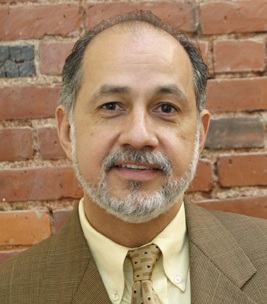
Author
Dr. Roberto Miranda
Summary: True gain does not consist in accumulating possessions, but in living with godliness and contentment. Everything—life, time, talents, money, and relationships—belongs to God; therefore, we must steward what we have received without clinging to it. Material possessions do not satisfy the soul, and when they determine our identity or our peace, they give rise to endless greed. This does not rule out a healthy desire to make progress, but it requires us to rest in God and always prefer spiritual things. Good stewardship is evident when we devote time to the Lord, support His work, discerningly help those in genuine need, and practice joyful generosity without expecting anything in return. It also means making financial decisions in light of eternity, being willing to sacrifice comfort or professional advancement for the sake of obedience, and serving without resentment. Since we can take nothing with us when we die, we must hold everything loosely, acknowledge the fragility of life, and seek the Kingdom first. By letting go inwardly and surrendering everything to God, we find freedom, peace, and a truly abundant life.
I said that I was going to continue the thoughts I was unable to finish last Sunday in this study we are doing about the rich fool.
Beginning with verse 6. “But godliness with contentment is great gain, because we brought nothing into this world, and without a doubt we can take nothing out of it. So, having food and clothing, let us be content with these, because those who want to become rich fall into temptation and a snare and into many foolish and harmful desires that plunge men into destruction and perdition. For the love of money is the root of all evils; by coveting it, some have strayed from the faith and have been pierced through with many sorrows.”
Let us continue with verse 11. “But you, O man (and the women should not get too comfortable, because it also refers to you), but you, O woman of God, flee from these things and pursue righteousness, godliness, faith, love, patience, gentleness. Fight the good fight of faith. Take hold of eternal life, to which you were also called, having made the good confession before many witnesses.”
Let us skip to verse 17. “Command those who are rich in this present age not to be haughty or to set their hope on riches, which are uncertain, but on the living God, who gives us all things abundantly for our enjoyment. Let them do good, let them be rich in good works, ready to give, generous, storing up for themselves a good foundation for the time to come. Let them take hold of eternal life.” May the Lord bless His holy Word.
Last Sunday we studied the parable of the rich fool. We see that this man made many mistakes, many mistakes concerning important matters that teach us how not to approach wealth. We conducted this study in light of the concept of stewardship: the idea that everything belongs to God—life, our money, everything belongs to God. When we give the Lord time, energy, or talent, we are not really giving something to the Lord; we are simply returning to Him part of what belongs entirely to Him. We saw the mistakes this man made. Let me remind you of the mistakes of this foolish man:
1. He does not acknowledge God at any time; everything is about him at all times.
2. He has no sense of stewardship. Everything is his, nothing belongs to God, and he believes he has the right to manage everything he has.
3. A purely horizontal vision. By that we mean that all he did was redistribute things; everything remained in this world. He had no vertical vision, no vision of eternity.
4. He believes that his soul will be satisfied with purely material things. We know that the soul is not satisfied by material things; it is satisfied by the Lord, by the Spirit, by His Word. “Rejoice, soul; drink, eat, enjoy yourself.” He does not know that those things cannot reach the soul.
5. He plans for the future without considering God. He says, “I will do this; I have many years to live and enjoy myself,” and he does not ask the Lord, “What do You want me to do with my wealth?” We must always put God first, brothers and sisters. Whatever you do, commit your life to the Lord. Never do anything without first asking, “Lord, what is Your will concerning this?”
6. This man does not recognize the frailty of life. The Bible says, “Man is like the flower of the field; the wind passed over it, and it perished, and its place will know it no more.” And that is what human life is like. We must be aware that we are frail, that life is fleeting, and that we must have our affairs settled with God for the moment when we must give an account to Him. So he does not prepare for eternity. He does not plan for eternity. Eternity catches him in his underwear—forgive the expression—unexpectedly, completely at a loss as to what to do. How terrible that is. We work so hard for the present time and forget that eternity is much longer than this life. That is the idea.
And now, here in this passage from Timothy, there is a prescription for how to relate positively to money and wealth. Here the apostle Paul writes to Timothy, and by extension to us, about what our attitude toward wealth, money, and possessions should be.
I like what it says here: “But godliness with contentment is great gain.” To me, that is one of the most profound statements in the Bible: “Godliness with contentment is great gain.” Why, brothers and sisters? Because there are many people in the churches, holy people who love the Lord, but who do not have contentment. Holiness, if it is not balanced by a sense of peace in the Lord and by entrusting our lives to the Lord’s grace, can become something neurotic and harmful. There are many neurotic people in the world hovering around holiness, and that is not from God, because where there is no peace, the Holy Spirit is not present. There must be balance.
Do you know what the Word says? It says that “mercy triumphs over judgment.” In God’s heart there is a very great appetite for justice and also mercy, and when those two things come up against each other, mercy seems always to have a slight advantage and prevails over God’s justice.
And why does Paul say this here? Because many people are in the church but have not quieted their appetite for money, and they are always anxious about material things. That tension is like the rich young ruler. The rich young ruler loved God, the rich young ruler needed God, and he kept the commandments; but when Christ told him, “Well, look, if you want to be happy, take your money, give it to the poor, and follow Me,” the young man loved money and possessions so much that he could not choose what Christ was telling him, and he went away sad. This young man revealed that his love for riches was greater than his love for the Lord.
Brothers and sisters, I ask the Lord that if I have a comfortable little rag to put on and a plantain with olive oil—because I do at least ask for olive oil—and a glass of water, if I cannot have an Orangina or a horchata, that I will be content with that. Now, if You want to give me some filet mignon every now and then, glory to God. Who does not like that, as the Dominican merengue says?
If you have a clean little two-bedroom apartment and do not have that four-bedroom house you see when you pass through the neighborhood where you work in Newton or Welsley, do not envy it; do not let it rob you of your peace. Because there are people who get the house, who buy the house in Sommerville or Midport, and once they have the house of their dreams, they go to Wellesley and pass by those mansions. They forget that they once wanted a house and that God gave it to them, and now they want that house, and now their day is ruined because they do not have “that house.”
With material things, the more you scratch, the more it itches—forgive the expression. You will never be satisfied, because whenever you have something, you will want something more; you will want to add a little more to it. The 25-inch television will no longer be enough; you will want a 59-inch one, and the devil will make sure that once you have the 59-inch one, you add HDL TV or one of those things—three-dimensional, where the giant comes out of the screen and touches you, ruffles your hair or whatever, and smells and flavors come out of the screen—and you will want that.
A time must come when you say, “No more. I am not going to keep beating myself up; I am not going to keep tearing off my skin because I do not have this or do not have that.” A time comes when you must say, “I am going to be content with what I have.” Now, will I want something more? Glory to God, because it is not that we should not have a healthy desire to make progress, brothers and sisters, but we must do so in peace. Let me take a deep breath and say, “Lord, I am going to live in peace, and whatever You want to give me will be added unto me!” What we must not do is connect our hearts and plug them into material things, allowing our sense of identity and personal worth to be tied in some way to the things we have or do not have.
You are more than the television you own or the suits you own. You are an eternal soul, and when you leave this world, you will take nothing with you. You will not even take with you the body you are wearing. You will have to leave it here on earth because you borrowed it from the elements.
Someone once said that he had never seen a hearse pulling a moving truck, and that is true. For godliness with contentment is great gain, because we brought nothing into this world and without a doubt can take nothing out of it.
I want to leave the text for a moment and read you something I wrote. For your benefit and mine, I want to give you a few indications or signs of having a good attitude toward money and possessions, of having good stewardship, as we were saying.
How can I know whether I am more or less properly oriented regarding material possessions?
If you can answer affirmatively that this applies to you, that is very good.
1. I acknowledge that God is the source and owner of my life and my possessions. That is a good way to know whether one has a sense of stewardship regarding life. Do you know that everything you are and everything you have comes from God? “The earth is the Lord’s, and all its fullness,” says the Word, because when you know that everything was created by God, you cannot say, “Ah! This is mine, or that is mine.” My wife is not mine, my children are not mine, my money is not mine, my time is not mine, my talent is not mine; it belongs to God.
The man or woman who has attained a clear awareness, a conviction, holds everything tentatively and lightly in their hand and does not grip anything tightly. I acknowledge that God is the source and owner of my life and my possessions.
2. I devote a good portion of my time to the things of God. For example, attending church, studying the Word, praying, serving the Lord, doing good works, and bearing good fruit. Devoting a good amount of time. How much time do you devote to the Lord? “Oh, well, I go to church on Sundays.”
Look, brother, the week has 168 hours. If you give the Lord two hours, that is not even 1 percent; that is not enough for a God who has given you everything. Brothers and sisters, we should give the Lord everything He asks of us. Saturday is the Lord’s day, Sunday is the Lord’s day, every day is the Lord’s day. Give to the Lord generously. When you have an opportunity to do something for God—to devote time to prayer, to seeking God, to the Word, to spiritual things—give that time to the Lord.
It tells us that the spiritual man or woman thinks about the things of the Spirit; their priority is the things of the Spirit. How much time do you give the Lord? How much energy do you give the Lord? Brothers and sisters, I beg you in the name of Jesus: give to God, give generously to the Lord, and God will bless you beyond anything you can imagine. Give the Lord everything you can; give with full hands, give desperately, give passionately, give madly, and the Lord will give to you, and give to you, and give to you, and He will bless you, and you will find the peace your soul needs. Give to the Lord.
3. I give a portion of my money to the Lord’s work (at least the tithe). Why the tithe? Because the Word of the Lord speaks many times about giving the Lord that 10 percent of our money, which is a symbolic deposit and an implicit acknowledgment of His lordship over our lives.
Brothers and sisters, I believe there is a much more sophisticated spirituality in the New Testament, because it is a spirituality that recognizes that man has developed from the time of the Old Testament to the New Testament. And now, in light of the fuller revelation of Jesus, God relates to man in a much more sophisticated, much more comprehensive way, and God expects us to give Him more than the tithe. Because you cannot say, “Well, I gave the Lord my 10 percent on Sunday,” and then suddenly there is a needy person in your neighborhood and you say, “Well, I have already given to the Lord, so fend for yourself however you can.”
And the Lord says, “No, no, you give them something to eat.” Whatever God asks of you, give it to Him. The person who loves God, knowing that one has lost oneself in God, has lost the barriers and the boundary between what is mine and what is God’s. Now God is everything, and I am in God, and God possesses my whole being, and I possess everything of God; the distinction between the beloved and the lover has become blurred, and now everything is one. That is how the person who is in God lives.
4. I am generous with my money in helping those in need. Because giving to God is one thing, but we must also give to others; we must be generous with our relatives, our friends, and those in the family of faith.
If you see someone in need, brother, give generously. There must be balance, because some people are exploitative; some people lean on others. And I believe we must have a healthy balance, even out of love, so as not to encourage abusive behavior that harms those who practice it. Therefore, we must be discerning and prudent.
The Word says, “If anyone will not work, neither shall he eat.” When we see genuine need, brothers and sisters—genuine need in someone—give generously. Be a cheerful giver; give to the Lord, but also give to your neighbor, and you will see that God will bless you. Give of your time and your money, and God will bless your life.
The happiest people on earth are those who give generously, people who are not tightfisted, who are not stingy; those people are happy. And they have something like a magnet that attracts more. One of these days, brother, start giving away things that are precious to you. Give them away as an exercise, and it is going to hurt.
Some of us are going to feel as though our arm is creaking when we reach out to give something away, because we are not used to it. It is all moldy in there, and we have to loosen it up. Put a little 3-IN-ONE oil right here on the elbow so that it loosens up properly, and practice generosity, practice generosity.
Sometimes we have to do it as an exercise of faith. We have to tell the mind: Give! And the arm: Reach out! And the hand: Open up! And the pocket: Let go! I rebuke you in the name of the Lord; be free now! The idea is to give, and for a moment you enjoy what God gives you, and you hold it, and you breathe it in, and you enjoy it, and then you let it go so that someone else may have it, and then God gives you more. And it will remain in your life for a little while, bless you, and keep flowing. Glory to God for that! How wonderful it is when God manages the flow of our possessions instead of us. There is a great difference in that, brothers and sisters, and that is why we must be generous with others.
5. I also trust that if I am generous toward God, He will bless me and give me much more than I invest in Him. That is the key to generosity in life, brother. It is knowing that when you give in the Lord, God is watching and God blesses you. Now, it is not that you give mechanically so that God will give you more, but you give knowing that this is so. That is a law of the universe. When you give something precious to you in His name, the Lord says, “Do not worry. You will never feel the pain of what you have lost. I am going to bless you; I am going to give you more, and perhaps what I will do is give it to you in a different form. I will not give you this in exchange for that, but I will give you something that, if you knew about it at the time, you would ask Me for. But I am going to give it to you without your even asking for it, without your even knowing what it is that you desire.”
6. Eternal life is a reality for me, and I make my financial decisions in light of the coming Kingdom. The key here is that “eternal life is a reality.” It is this idea that the spirit is something real to me. Many people are merely religious, and the truths and values of the Kingdom of God and the Word are simply beautiful concepts that they handle poetically, but they are not real things that they feel in their gut. They are not powerful feelings that govern their lives. The writer of Hebrews says in chapter eleven, the chapter on faith, “that many died without seeing the Promised Land, but they died greeting it and seeing it,” because it was a reality to them. Brothers and sisters, how real is eternal life to you? How real is God to you? How real are spiritual things to you? How real is eternal life to you? We must ask the Lord: Lord, make me feel eternal life. Why? Because when eternal life, the spirit, and the Kingdom of God are real, this world pales and loses its intensity and its ability to govern and control your decisions. You are now a citizen of the Kingdom of God; you are a pilgrim and a foreigner who is only passing through here, and you hold the things of life lightly, if possible, but you know that your true residence is in eternity. Eternal life is a reality for me, and I make my financial decisions in light of the coming Kingdom.
7. The things of the spirit are a priority for me. If I have to choose between the spiritual and the material, I choose the spiritual. One of the clearest passages illustrating this is the passage we discussed some time ago, the passage about Daniel. You remember that when the time came for Daniel to choose the food, which is a symbol of the material, he chose instead not to eat the king’s food and simply to keep himself clean and pure and not partake of food that was defiled and offered to idols. But Daniel was also choosing between the food and his future, because when he rebelled against eating the king’s food, they were going to think, Oh, you think you are better than we are, or you are showing contempt for the king’s food, or you are not a team player and therefore cannot be part of our team. Daniel was putting his professional future at risk. Are we willing to compromise our professional future for God? If you truly had to choose—and perhaps someday we will have to—if you had to choose between your professional future and honoring God, are you sure what you would choose? I am not sure of my answer; I am like Peter when the Lord asked him, “Peter, do you love Me?” and he answered, “Lord, You know all things.” Brothers and sisters, sometimes choosing between the material and the spiritual is not so dramatic; sometimes it is simply choosing between the soap opera and the Wednesday service at 7:30. The difference lies in tending to that sister who is depressed and is calling you for the third time so that you will listen to her and give her some advice, so that she may know there is an ear listening to her, rather than sleeping an extra hour or doing something else. And you do it: Lord, I place myself like the slaughtered ram upon the sacrificial table. All right, tell me what you need. And you comfort her and listen to her and give her a word of affirmation, because you are an instrument of God, and your time belongs to God, and your life belongs to God. When I was in college—and I do not say this so that you will admire me or anything—even as pagan as I was, I was a young man who loved God and all of that, and I always said to God: “Father, if there is some young person...” Many times at universities there are many young people who are depressed, especially at high-pressure schools. Many young people become depressed and even take their own lives because they do not get good grades, and there is a great deal of neurosis at the great universities in this country. I always said to the Lord, “It does not matter whether I have an exam or whatever it may be; if someone needs me, I will be available to offer that person comfort or counsel.” And that is what we must do. God always blessed me academically; I never lacked the time that I gave to someone for the Lord. 8. It does not pain me to part with my possessions if it is for a noble and good cause, especially if it is to advance the Kingdom of God. We can say that in particular—that it does not pain me—because one thing is that sometimes we do good things, but at times we do them with pain and a sense of annoyance. I confess, brothers and sisters, that there are things I do in ministry while kicking and grumbling along the way and complaining to God because I have to do something for the ministry. I raise my hand: I am guilty. Afterward, when I do it, I say, Wow, I am so glad I did it, and God blesses me. And we will end there, because as Scripture says, “Godliness accompanied by contentment is great gain.” Look, if you are going to serve the Lord, serve Him joyfully. If you can be used to advance the Kingdom of God or to bless someone in a noble cause, consider yourself fortunate and blessed; consider it a privilege. I thank God because God chose to use me to bless lives, and I do not consider myself a hero; on the contrary, I consider myself privileged because God could have chosen someone else. And to handle the truths of God, the principles of God, and the affairs of the Kingdom—what a tremendous privilege! How can I complain about that? Sometimes when I complain, I am aware that this is my problem and not God’s problem, so sooner or later I have to reconcile with God and return to my biblical clarity, which is to know what a privilege it is to spend myself for God, invest my energies for God, burn as a living sacrifice before God, and leave everything here, investing it in lives. That is a privilege, brothers and sisters, and we should thank God. So, brothers and sisters, let us be good stewards. Let us learn to love God above all things. Happiness is found there—you want to be happy. Strip yourself of everything you have; strip yourself of it in your heart, let go inwardly, and give it all to God, and then let Him return to you whatever He wishes to leave with you. The less you have, the more you will be. I will leave that with you to chew on for a little while. The less we have, the more we are. The more we empty ourselves, the more we acquire. The less we grasp, the more we live. The more we love, the more we experience the love of God. The less we worry about ourselves, the more family we have and the more we receive. The less we think about the future we want to create, the more God takes care to give us the future our heart longs for. That is the truth, as simple as that.
May God grant that today we can say, Father, I will prefer You above all things; I will prefer Your Kingdom above all things; I will love You above all things. I will serve You and give with joy in my heart, because it is a privilege to burn for You, to live for You.
Bow your head for a moment and acknowledge with me: Lord, may my life serve to advance Your Kingdom. May I be a living sacrifice burning for You. May I always love You above all things. Receive right now that touch from the Lord that severs that umbilical cord between you and the world, and promise yourself that you will think of Him first, think of the Kingdom of God: seek first the Kingdom of God and His righteousness, and all these other things will be added to you, says the Lord. Seek first the Kingdom of God, and all these other things will be added to you. Thank You, Father; we receive Your call, we receive Your challenge this morning. Praised and glorified be Your name. Glory to God. Amen, amen. Glory to the Lord. Glory to God. May we live up to that revelation this morning.