Disciples Radically Committed to God
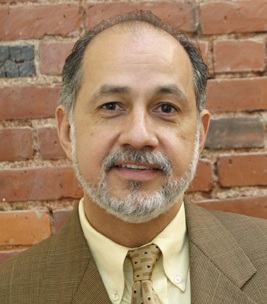
Author
Dr. Roberto Miranda
Summary: Being disciples means submitting to the lordship and authority of Jesus Christ in every area of life. It is not enough to call ourselves Christians, attend church, or perform religious acts: Christ died and rose again to be Lord, and we no longer live for ourselves. Discipleship requires us to let go of family, money, career, plans, prestige, and even our own lives when they compete with our loyalty to Christ. This does not require us to live without possessions, but rather not to allow them to control us and to place them at the service of the Kingdom.
As apprentices who imitate their master, we follow Jesus, serve as he did, and renounce everything that prevents us from knowing him. When we surrender control to him, we receive power, peace, joy, provision, and authority for a fruitful life. This commitment transforms how we handle money, marriage, family, and community, bringing our words into harmony with our conduct. Although learning to live this way is a lifelong process, we must recognize the call, surrender each day, and ask for the courage to be disciples radically committed to God.
There is a key word that helps us understand how to see ourselves in relation to Jesus Christ and the Kingdom of God, and that word is disciple. We are disciples, and being disciples means that we are subject to the Lordship and authority of Jesus Christ in every area of our lives.
And before getting fully into it, one more thing, so that you know how to properly situate yourselves in this meditation. Those of you who were here last Sunday will remember that we had Dr. Dennis Peacocke with us, a man who is deeply involved in leadership ministry and global strategic thinking and whom God has used during 35 years of ministry in many parts of the world. And Dennis left us with a challenge—do you remember?—to be disciples. How many of you remember that passage and that message? In fact, he said something intriguing and also somewhat unsettling: Christians are not going to change the world, nor are they capable of changing the world. And that sort of runs counter to what we are normally accustomed to hearing. It is not Christians who are going to change the world, but whom? Disciples.
Why this distinction? Because there are many people who continually come to church, who arrive and visit a church, but whose hearts are not completely surrendered to Christ, to the Kingdom of God, and to God’s dominion over their lives. And so, in reality, they cannot truly call themselves followers of Jesus Christ. Statistics indicate that supposedly 40% of the inhabitants of the United States, 40% of the U.S. population, go to church on Sundays. Just imagine: supposedly—although that figure is being questioned—40% of Americans, including the immigrants who are here, go to a church every week.
And yet this society continues to deteriorate morally, spiritually, and socially. And one wonders, goodness, how can that be? Forty percent, almost half of this nation, supposedly goes to church? And on a day like today, the number would probably have to be much higher. So where is the difference? Where is the impact?
Because I tell you, if 40% of a nation were Christians—disciples—they would take the whole thing, brothers and sisters, if they truly were disciples. That is to say, there is a disconnect.
There’s a disconnection between the claim to being Christian and really being yielded over to the Kingdom of God.
There is a disconnect between people who call themselves Christians and actually being Christians. That distinction struck me, and I thought it would be good for León de Judá, during these days when we are fasting and praying and God is manifesting Himself in a beautiful way among us, to sink our roots deeply into what it means to be a Christian. Because do you know what? The vision of our church includes the idea of producing Christians who are, as it says, radically committed to the Kingdom of God.
Listen to that: radically committed to the Kingdom of God. My vision as your senior pastor, and the vision of this church, is that every person who considers himself or herself a member of our León de Judá community be a Christian committed to the Kingdom of God. And not merely committed, but radically committed, which is not the same thing. The word radical means root; it comes from the Greek “radix,” meaning root. May our very root, the foundation of our being, be committed to the Kingdom of God.
And it is good for us to visit that concept for a moment today. I know that many of us come on Resurrection Sunday wanting a very light, very gentle sermon, so that we can go home and eat the ham we are going to put in the oven, or whatever, and so that you, Pastor, will not complicate our lives too much. Save that sermon for another day, when it is raining outside and the weather is bad and we can all get depressed together.
But today I want to challenge all of you, because this is one of the days when I will have the greatest number of you here. I want you to leave... and I do not want to depress you or anything like that; rather, I want to challenge you in the name of the Lord. I want to encourage you; I want to stir you to grasp the vision of what the Christian life truly is.
And I do not want to lose the momentum of the last sermon; I want to take advantage of it to bring you to another level. You may say that this is a long introduction. Let us turn to Romans, Chapter 14. Do not worry; if you do not have your Bible, simply pay close attention.
Romans, Chapter 14, verses 7 through 9. We are going to use a couple of passages as a foundation so that we can begin to dig into... I am not going to exhaust all the material I have, but at least I want to leave you with a few things. Romans 14:7—look at what the Apostle Paul says: “For none of us”—that includes you—“none of us lives for himself.”
What Paul is saying there is that you do not belong to yourself. You do not live for your own pleasure. If you truly are a Christian, do not say that you govern yourself. Do not think even for a moment that your life belongs to you, that you have the right to do whatever you please, to decide where you are going to live, whom you are going to marry, or what your profession is going to be.
The Apostle Paul says, “None of us Christians has the right to say, ‘I live for myself, by myself, or under my own authority.’” Do you understand that clearly? “...and no one dies for himself.” That is to say, as Christians, even our dying is not ours to decide, nor do we have any say in it. Rather, it is now in the Lord’s hands, and we must bring ourselves under that Lordship of God.
So none of us lives for himself, and no one dies for himself, “for if we live, we live for the Lord.” And I ask you this morning: Can you say affirmatively, conclusively, and with certainty that the life you are now living, you live for the Lord and in the Lord? Can you say yes to that truth? Do we live for the Lord?
“...and if we die, we die for the Lord. Therefore, whether we live or die, we belong to the Lord.” And look here at the connection between Christ’s resurrection and Christ’s Lordship over our lives.
It says, “...for this reason Christ died and”—what?—and... say it again... “died and rose again and returned to life.” Why? “So that He might be Lord of both the dead and the living.” In other words, understand me clearly: Christ’s death and resurrection were meant to give Him the right to have dominion, control, Lordship, and rule over all creation, and that includes you, Christian. In fact, we could say that even those who are not Christians will have to submit to Christ’s Lordship sooner or later.
The Word says that one day every knee will bow and every tongue will confess that Jesus Christ is Lord. And He won that on the cross and through His resurrection.
When we read the Book of Acts, we see that the early Christians repeatedly emphasized—for example, in Peter’s sermon to that Jewish multitude in the first and second chapters of the Book of Acts—the fact that this man whom you killed and crucified had been raised by God and made Lord. And through the resurrection, the Lordship of Christ was essential to the mindset of the early Christians.
That is to say, when we come to church on Resurrection Day—you see, brothers and sisters—many people come simply to have a feel-good time, to enjoy themselves, to have an excuse to put on a new suit and be seen by many people. That is why they come to church, and they go to church on Palm Sunday to pick up a little palm branch and fulfill a purely ritualistic and religious duty. But they do not understand what it truly means.
What matters much more to me is that when we come to celebrate days like Christmas, Good Friday, and Resurrection Day, we meditate on the consequences and implications those days we are celebrating have for our lives. Because what good does it do me to have a group of superficially spiritual people coming here simply to perform a completely formulaic and superficial act while inwardly their lives fail to grasp the meaning of what they are doing?
Last Friday we spoke about the crucifixion of Jesus in the passage from Philippians, Chapter 2, and we said that the essence of Good Friday is Jesus’ servant-hearted disposition, the ministry of serving others, and that we therefore should also serve and give ourselves as He gave Himself. And that, to me, is the meaning of Good Friday.
For me, then, the meaning of Resurrection Sunday is to acknowledge Christ’s Lordship in my life through the resurrection He experienced. So you are here this morning so that, by the Lord’s grace, I may help you become aware that Christ is the owner of your life. And if you want to consider yourself a true Christian—whether a man or a woman—you must be able to answer that question affirmatively.
Does the Lord control, does the Lord have dominion, does the Lord rule over every aspect of my life? Am I truly a disciple of Jesus Christ, whether a woman or a man? That is the concept.
Let us turn to another passage that can help us understand this a little better. The Gospel according to Saint Luke, Chapter 14. There we will find something similar, where the Lord Jesus Christ speaks to His disciples and tells them what it truly means to be His servant. I want to awaken your conscience.
Luke, Chapter 14, verse 25. It says, “...great multitudes went with Him”—and that is very important, that clarification by Luke the evangelist: great multitudes. Because do you know something? At the beginning of Jesus Christ’s ministry, many people followed Him because He healed the sick, gave people food, and preached to them a positive Gospel about the love of God, and so on. So who would not like that, as people say? Everyone came, and great multitudes flocked to the Lord, but they did not understand what it truly meant to be a follower of Jesus Christ. Then the Lord, in His honesty, called them to account and said, “Wait a moment, folks. This is not as easy as it seems; there is a cost to being a Christian.”
That is why Luke the evangelist points out, “Great multitudes went with Him, and turning around”—He saw that great multitude of people and turned to them with His characteristic honesty—“He said to them, ‘If anyone comes to Me’”—listen to this—“‘if anyone comes to Me, as you have come to the house of God today, or as you once came and said, “Lord, I want to receive You as my Lord and Savior, and I want to follow You”’—‘if anyone comes to Me and does not hate his father and mother, wife and children, brothers and sisters, and even his own life also, he cannot be My disciple.’”
When the Lord uses that word “hate,” He is using what is called hyperbole in the art of rhetoric. Hyperbole is an exaggeration intended to make an impression on the listener’s heart. The Lord is saying the following: “If anyone says that he is My follower but in his heart has not let go of his family, his profession, his money, his time, his desire to enjoy life, or his character that needs to change—if he does not let go of those things so completely that it is as though he hated them—he is not worthy to be My disciple.”
In other words, Christ is not asking you to suddenly begin hating your father and mother, but He is telling you to let go of them, to detach yourself from them emotionally in relation to your attachment to Jesus Christ. Your attachment to Christ must be so great, so powerful, so passionate, that your love for your parents looks as though you hate them. Do you understand the difference?
The Lord wants us to let go of every material attachment in this world. You will remember that on Friday I told you that in the passage from Philippians, Chapter 2, the writer, the Apostle Paul, says that the Lord did not consider equality with God something to—what?—cling to or hold on to; rather, He emptied Himself and stripped Himself. And I told you that this means, in the words of the Apostle Paul, that we are to have the same mind and do the same thing: We cannot be attached to or cling to anything in this world, because the Bible says that we are—what?—pilgrims and strangers in this world. We are only passing through.
If you are attached to life, if you love this world, if your emotions rise and fall as your fortunes rise and fall, depending on the balance in your ATM account—when you go and insert your card, if there is plenty of money, then... wow... you are happy and content, but if there is not, then you are depressed all the way down to the ground—if you love this world so much that it is your priority, you are not worthy to call yourself a disciple. I have bad news for you.
Because the Lord says, “No, you have to detach yourself from everything.” You cannot cling to anything. Whatever the Lord asks of you, you must be willing to surrender it and give it to Him—even your father, your mother; no matter what it is, you have to let go of everything. And that is one of the most important characteristics of a disciple, a true follower of Jesus Christ.
It is a life of total detachment. You have to let go of everything that people who do not know God normally consider absolutely essential in their lives. And we must ask the Lord, “Father, each day detach me more and more from this world. Detach me from the love of money, from the love of others, and from concern about what people think.”
You know that many times the root of neurosis is precisely that: what will people say? Many people live imprisoned by, “Oh, if I make this decision, what will they say? If I do the other thing, what will they...?” Those are human bonds, and the Lord says, “You have to ask yourself what God thinks, what God’s opinion is instead,” because we are detached from everything people may think and from the normal affections of the world.
The Christian life is a life of complete renunciation. Look at verse 33, right there in Luke, chapter 14. It says, “...So likewise, whoever among you does not renounce everything he possesses cannot be my disciple.”
In other words, that does not mean that you are going to live like a beggar. You can have your house, and you can have your nice, shiny little car. There is no problem with that. And you can have your beautiful condominium and a healthy bank account, and even plan for your retirement and take your vacations in the Bahamas, et cetera. There is no problem with that.
But what the Lord says is, “Be careful not to cling to those things and not to let those things dominate your life, control your life, or cause you to make decisions according to those values. You have to simply regard those things as secondary; they are not the center and foundation of your life. In your heart, you have to renounce these things.”
This idea of a discipleship that lets go refers above all to the emotional level. Christ wants us to detach ourselves from all those things that cause us so much anxiety in life. Some people do not sleep because they are attached to money, and they are always calculating how much money they have in the bank account, how much they are going to earn, how much Friday’s check will be, and they are always thinking about material things. And the Lord says, “No, you have to detach yourself from those things. The one who has must live as though he did not have.”
Today at least two people agree with me. Amen. And we have to live that way. And you know something, brother? The wonderful thing is this: when a person lives that way, do you know what happens? The Lord never tires of blessing us, and he gives us much more than when we live clinging to things. The detached person, the person who is generous with his possessions for the Kingdom of God—look, God is always giving him more and more and blessing him more and more.
The Word says that whoever sows generously will reap generously from the Lord. The key to happiness lies in emotionally detaching yourself from material things and placing your affection and loyalty in the Kingdom of God and in the Lord Jesus Christ, who purchased you with his precious blood and whom the Lord appointed Messiah and King of everything that exists.
When a person learns to let go and to live as a disciple, then he can experience true happiness. So the Lord calls you to be a disciple, whether a man or a woman. In fact, regarding the word disciple, let me also give you a little etymological background on the word. In the original Greek, the word translated into Spanish as “disciple” is “matetes.” And in the time when Christ walked the earth, in the Greco-Roman era, the first century of this age, a disciple was generally a young person who entered into an apprentice relationship with a master who had mastered a subject.
That disciple would therefore live with the master, eat with the master, often sleep in the master’s house, and wherever the master went, the disciple followed him. If the master was, for example, a carpenter, that disciple was always observing how the master carpenter measured the wood, how he cut it, how he handled the tools, how he made the corners and angle cuts, how he made a chair; and the disciple was always watching, imitating, and following his master in everything. And the master had complete control over the disciple throughout his life, especially in the religious aspect.
When a rabbi took a disciple under his instruction, that disciple suddenly became a total imitator of his master and a complete servant of his master. Therefore, when the Bible applies the word disciple to us, it is saying that the relationship that should exist between you and Jesus Christ is the same one that existed between a physical, flesh-and-blood disciple and a rabbi, a teacher: a relationship of complete surrender and submission in every aspect of our lives.
So, brothers and sisters, I call you in the name of the Lord to ask yourselves again: Is my life with the Lord like that? The apostle Paul was a man who exemplified that relationship of a disciple, and look at how the apostle Paul thought. I invite you to turn to Philippians, in the letter to the Philippians, chapter 3, verses 7 through 11. Look at the attitude of a disciple like the apostle Paul. The apostle Paul says in Philippians 3:7, “...But whatever things were gain to me, I have counted them as”—what?—“loss for the sake of Christ.”
In other words, Paul experienced a radical conversion in his life. Paul was a Pharisee, a persecutor of the church, a Jew who hated Christians until he had an encounter with the risen Christ on the road to Damascus. And the risen Christ knocked him off his horse, and Paul was left blind and heard only a voice saying to him, “Saul, why are you persecuting me?” And there the Lord marked Saul with his seal of ownership, and that changed Saul’s life by 180 degrees; even his name was changed from Saul to Paul.
His entire profession and all his academic and religious training—he had to throw all of that away because it was of no use to him in light of what Christ had just revealed to him. So he had to let go of his profession, he had to let go of his name, he had to let go of his purpose for living and his self-esteem, and of the prestige he had among the other Jews, because he was a man who had attained a great level of knowledge and prestige in society. He had to throw all of that away and renounce it in order to become a follower of Jesus Christ.
That is why he says, “...But whatever things were gain to me, I have counted them as loss for the sake of Christ.” And we have to do the same in our lives, brothers and sisters.
What do you consider gain in your life? It could be a profession; it could be a romantic relationship with someone who is not good for you. For some, gain may be a character trait that does not please the Lord but gives you an advantage and benefits you. Gain may be a business you conduct that harms others and harms your life, or that prevents you from going deeper in your relationship with God. Gain may be plans you have to achieve great things in a profession or in a social relationship or whatever it may be, and the Lord says, “Are you willing, if I ask you, to renounce that so that you and I may have a true relationship of intimacy?”
The apostle Paul says, “...Whatever things were gain to me, I have counted them as loss for the sake of Christ. Indeed, I still count all things as loss because of the excellence of the love, of the knowledge of Christ Jesus, my Lord, for whose sake I have lost everything and count it as rubbish, that I may gain Christ.” Glory to the name of the Lord.
And look at what he says: “...That I may know him”—in verse 10—“that I may know him and the power of his resurrection and the fellowship of his sufferings.”
You know, brother, there is something about the Christian life: in order for us to truly come to know Jesus, we first have to remove everything that distracts us, every love, every affection that competes with our love for Jesus Christ. If you want to come to know the true power of Jesus, of his resurrection, you have to remove every interaction from your mind and your emotions.
Many people wonder, “Why doesn’t the Gospel excite me? How is it that during a time of worship some people jump and laugh or cry?” Some people come forward and have an enthusiasm for the Gospel, while you are standing there cold and indifferent. You feel nothing; someone could stick a needle into you and prick you, and you would be completely insensitive, and the Holy Spirit does not touch you. Why? Because you are not taking Christ Jesus seriously. Because you have not died to yourself; there is a part of yourself that you still want to preserve. Because you think, “If I surrender my life to the Lord, I don’t know what will happen.” You lose control, and we are “control freaks.” We like being in control, so we are afraid. “If I yield control of my life to the Lord, then I will not know what is going to happen.”
But you know what happens, brother? That control you retain prevents you from truly knowing Christ Jesus; it prevents you from knowing the power of his resurrection; it prevents Christ’s power from moving in your life and bringing you joy, peace, gladness, even material blessing, and emotional liberation.
Not everything in the disciple’s life is negative; it is not all letting go, leaving behind, abandoning, and renouncing. No, the Word tells me that when I renounce those things, I receive blessing for my life. Then I can know Christ. The scales fall from my eyes, and I can know him in his power, in his resurrection, in his promises, in his faithfulness, in his ability to provide for every situation in my life, and in his ability to give me peace, joy, and hope. But first I have to let go so that I can receive from the Lord.
And that is why Paul says, “Everything I considered gain I have left behind so that I may know Jesus, know the power of his resurrection, and become like him.” By leaving things behind, the disciple also receives the opportunity to gain many things with the Lord. And the apostle Paul is a very powerful example of this.
Do you know something else? When you have left many things behind and given up much for the Lord, you also receive power and spiritual authority. Let us turn, for example, to John, chapter 14, the Gospel according to Saint John, chapter 14, verses 12 through 14.
The Lord Jesus Christ says there, “Truly I tell you, whoever believes in me will also do the works that I do, and will do even greater works, because I am going to the Father. And whatever you ask the Father in my name, I will do it, so that the Father may be glorified in the Son. If you ask anything in my name, I will do it.”
What a wonderful promise from the Lord for his followers! Whoever follows Jesus Christ has access to the power of Jesus Christ; whoever surrenders his life to the Lord receives power from God in return.
Look at another passage that clarifies this idea considerably for us. Mark, chapter 16, verses 17 and 18. It says there, “...Whoever believes and is baptized will be saved, but whoever does not believe will be condemned. And these signs will follow those who believe: In my name they will cast out demons; they will speak in new tongues; they will pick up serpents in their hands; and if they drink anything deadly, it will not harm them. They will lay their hands on the sick, and they will recover.”
In other words, there is a relationship between everyone who believes and the power we receive. When we surrender our lives to the Lord, then all the power that is in Christ Jesus also becomes power for us—power to live fruitful lives, powerful lives.
In Matthew, chapter 10, verses 1 through 7: “Then, calling his 12 disciples, he gave them authority over unclean spirits, to cast them out, and to heal every disease and every affliction.”
Brothers and sisters, if we are willing to live as disciples, the Lord will bring about a change in our lives and will give us that power promised by the Word. The Lord said that whoever believes in me—he also says—rivers of living water will flow from within him.
How can we experience that abundant life to which God has called us? How can we experience that life in which we pray and see the hand of God move, and pray for a need and see the Lord answer?
Yesterday afternoon, at the English service, one of the young men who helps us lead worship came to me and said, “Pastor, during this time of fasting and prayer, I am learning to see the power of Christ manifested in my life.” And he told me about his family, who had a debt of 30,000 dollars. Unfortunately, his mother’s credit had been ruined because of a family situation that is very difficult to explain. Although they owned a house, they could not obtain even a loan to get out of the bind they were in, and they had a very pressing need. And during that time of fasting, one of the things he asked the Lord was, “Father, please allow my family’s financial-debt situation to be resolved somehow.”
The fact is that he rejoiced as he testified to me about how the Lord opened the doors so that his mother found favor with a financial institution—a bank that gave her all the money they needed to get out of this pressing debt, which otherwise would have led to a serious legal problem, and at an extremely low interest rate. She was able to bring her debts up to date, place everything under the mortgage on the house, and resolve that situation.
And he said, “I was amazed because I saw exactly what I asked the Lord for.” And this young man spoke about how God is bringing about transformations in his family life. He invested in fasting, in praying, and in seeking God, and he is now seeing an aspect of the Christian life that he did not know before: the power to resolve situations.
There are Christians who have problems with their children, in their marriages, and in other situations, but many times—not always, but many times—we are living double lives. We have not surrendered everything to the Lord, and the Lord says, ‘Son, daughter, why don’t you surrender your life to me? Why don’t you become my disciple and give me everything you have, and I will manage it? Then I will tell you—I will put you on a diet, I will give you your little allowance each day, your food each day, your decisions each day—and I will take control of your life.’
I want to ask you a question. Whom do you want controlling your life? Yourself, or the Lord Jesus Christ, the Holy Spirit? Who can direct your life better? Who can manage your money better? Who can manage your family relationships better? Who can manage your marriage better? Who can manage your emotions and your thoughts better? You or the Holy Spirit?
The Lord says, ‘Give me control.’ You see, brother, discipleship has to do with control—with who is at the wheel of your life. And do you have enough faith to say, ‘Lord, I surrender everything I have, everything I am, to you; I place it in your hands, and I am going to trust that you will lead and that you know how to do things better’?
The Lord is hungry for people who will live the Christian life at the level at which they must live it.
I am going to ask the musicians to come up here quickly, because we are finished with this.
Brother, the Lord is challenging you this morning, on this Resurrection Day. The Lord is saying to you, ‘Are you willing to live as my disciple? Are you willing to give me the place that belongs to me because of my resurrection—my lordship?’ Do not miss the opportunity to be a genuine and authentic follower of Christ Jesus. The time for empty religiosity has passed, and now we need to live out a genuine Christianity.
As your pastor, brothers and sisters, I hunger to raise up a community of men and women filled with the Holy Spirit, of men and women surrendered to the Lord Jesus. My desire—and this is solely for the glory of God—is that when people look at this church, they may see a model of what the Christian life is: men and women who have united their rhetoric with the way they live, their words with their conduct. Men and women who have put their hand to the plow and who say, ‘I will not turn back.’
May we live like the first Christians whom we see portrayed in the Book of Acts. It says that they sold everything and surrendered everything to the Lord, so that there was no one among them who suffered hunger or need.
Brothers and sisters, what would happen in the United States? What would happen in Europe if everyone who calls themselves a Christian—all these millionaires who do not know what to do with their money, who have... I believe that if they spent one hundred thousand dollars a day and lived for thirty years, they could not spend all the money they have.
What would happen if those people whom you see in very large, elegant churches on Sundays—and on a Sunday like today—said, ‘I am going to live as a disciple, and I am going to give my money to bless others. I am going to give my money so that churches can preach the Gospel throughout the world. I am going to give my money so that little children in Africa who are suffering from hunger can eat and get back on their feet. I am going to give my money so that, in the cities of the United States, no young person has to give up going to college for lack of money or a scholarship.’
If people truly began to live as disciples; if, in marriages where Christians come to church yet fight with and abuse one another, or where the man dominates or the woman often dominates covertly, they said, ‘Stop! I am going to begin living as a disciple of Jesus Christ. I am going to obey the principles of serving my spouse, of loving my spouse as Christ loved the church—not exploiting him, not oppressing her, not abusing her, not oppressing her emotionally, but serving her as Christ served others.’
What would happen, brothers and sisters? Suddenly there would be no counseling ministry, because it would not be necessary, because there would be blessing for everyone. Amen. What would happen, brothers and sisters, if we lived as disciples of Jesus Christ? What if parents began to set an example for their children at home, and there were more prayer and more genuine spiritual living? And what if children began to honor the word that says, ‘Honor your father and your mother,’ so that it may go well with you and you may live many days on the earth? If young people began to make life easier for their parents, to obey them, and to submit to them as is expected of a disciple, what would happen? It would be the glory of God.
If León de Judá begins to live as disciples of Christ, and we pay attention to the Word of God and die to self, die to the flesh, die to our appetites, and surrender everything to the Lord—our money, our time, our property, our dreams, our plans, our professions—if we place everything at the disposal of the Kingdom of God, brothers and sisters, the people out there would be dying to get into this church every time we have a service. We would not even have to make an altar call. People would say, ‘I need what you have,’ and they would run to have us pray for them to receive the Lord Jesus Christ, because such power would be unleashed in this community that we would revolutionize all of Massachusetts, even though we are a group of Latinos like us.
The newspapers would begin writing articles about this church if this church decided, ‘We are going to live as disciples and followers of Christ Jesus.’ What a tremendous challenge, brothers and sisters! What a beautiful vision! What power the Lord has for our congregation if today, on Resurrection Day, we say, ‘I am signing up as an aspiring disciple of Jesus Christ, and I am going to place everything I have at the Lord’s feet.’
Please, brothers and sisters. Let us stand. Let us accept this challenge from the Lord Jesus Christ. Let us ask the Lord Jesus this morning to give us the spiritual courage to be disciples and followers of Jesus.
Place your life at the Lord’s feet right now. I want to ask Jesus Christ to forgive me because I do not live as a disciple. If I lived as a disciple, I don’t know... things would be very different. I want to live as a disciple, and I know that the Lord is calling me and that there is a challenge for my life. And I ask him, ‘Father, convince me more each day, and put a fire within me so that I may surrender my life to you completely.’ I want you to do the same this morning.
There is a change when you at least recognize that this is what God wants from you. You will not necessarily already be living it, because that is a lifelong process. But when you simply recognize, ‘Yes, now I understand. This is what it means to be a Christian; this is what it means to be a follower. I am not there yet, but I am going to try; I am going to aspire to be one,’ then a transaction takes place within your being, and the power of Christ begins to be unleashed to bring you to that place.
Let us invite the Lord this morning: Father, I ask you in the name of Jesus, make us disciples; make us followers of Jesus Christ; make us people who are surrendered to you, Lord. Make us radical people, committed people.
Father, we want to be disciples of Jesus. We want to be followers; we don’t want to be people who just pay lip service to Christianity. Lord, we know that religion never saved anyone; religion never touched or impacted the world. It was people radically committed to the values of the Kingdom of God, and we want to be like that. We want to be committed to the lordship, the claims of Jesus over our lives.
Lord, you have the right to enter every area of our being. We ask you to make this congregation a congregation of people radically committed to you.
I want to make one final call. A little while ago, during the time of worship, Gonzalo invited anyone who had not surrendered their life to the Lord and wanted to take a step of faith to come forward. Several brothers and sisters came forward, and it was a time of great blessing. And in light of what I have just preached, perhaps there is still someone here who came today and needs to place Christ in their soul and heart as Lord. You want to take a step of faith this morning and say, ‘Lord, I understand what you are asking of me, and I invite you to take control of my life.’
Would you like to come forward? Glory to God. Is there anyone else who would like to come forward this morning, surrender their life to the Lord Jesus, and offer their life, saying, ‘Father, I commit myself to living as your disciple’?
Come forward this morning, and the Lord will give you strength. How beautiful it is to see these two young women come forward! You do not have to be perfect. The Lord says that he will come and enter into you, and he will give you the power and strength to honor him and please him. What he needs is a contrite and humble heart, a heart that humbles itself and surrenders to him. That is the most important part: a person yielded to the Lord.
And I know that perhaps there are others who have felt the touch of the Holy Spirit this morning, and I want to bless you and cover you with the Lord’s grace.
Come forward; do not be afraid. Even if you came forward before and want to plunge into the blessing again, do it; do not worry. Come here. Let us surrender our lives to the Lord. Let us surrender our possessions to the Lord Jesus Christ on this occasion.
Anyone else? Glory to the name of the Lord. Luis, please, if you can... someone needs to come over here. Come here for a moment. We are going to pray for you.
Is there anyone else? Oh Lord, we bless you, we glorify you, we give you thanks. You are the Lord. Say that in your heart: You are the Lord. Say to Jesus Christ, ‘You are the Lord; you are the owner; you have control of my life. I surrender everything I am to you. My life belongs to you, Lord. I want to live radically committed to you.’
Father, I bless your servants who have come forward, Lord, and I ask you to strengthen them and give them the authority and ability to live as your servants, Lord, surrendered and yielded to you, experiencing your power, experiencing your provision and your grace, Lord. We surrender their lives to you. You know exactly what you will do in their hearts today. Use them for your glory and give them the ability to surrender to you, Lord. Thank you, Lord Jesus.
Make León de Judá an exemplary congregation, an exemplary church, Father—a church of men and women who live consistently and authentically as Christians, as disciples, as followers committed to the lordship of Jesus. We praise you and bless you, Lord. Thank you, Jesus. Thank you. Amen and amen. Thank you, Lord. Thank you, Christ. Hallelujah! Give glory and honor to the Lord. We are disciples of Jesus, followers of Jesus, and that is what this day is all about.