Christians and the Affairs of Caesar (Esther 4:13)
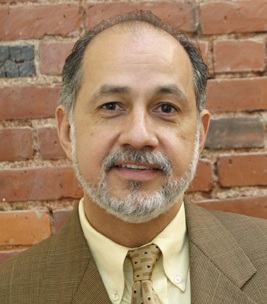
Author
Dr. Roberto Miranda
Summary: Our identity as the people of God includes both earthly citizenship and belonging to the Kingdom; we must not radically separate spiritual life from our social and political participation. We are to respect the laws and the established order, but when human demands contradict the Word of God, our primary loyalty belongs to God. Resistance is a last resort and must be exercised with reverence, humility, discernment, and a love free from aggression.
Esther shows that God can place us in positions from which we must act. Although God can bring deliverance through other means, he often works through natural means and makes us his voice, his hands, and his agents in history. Therefore, we cannot remain neutral: we must participate, vote, and express our convictions.
When making political decisions, we must not be guided by personal convenience, charisma, rhetoric, or immediate promises, but should evaluate whether principles and actions agree with the Word of God and further his Kingdom. In urgent times, it may be necessary to confront others respectfully and firmly, trusting that justice, love, truth, and the divine will may prevail.
I want to read a couple of verses from the Book of Esther. Let’s go to Chapter 4. Let’s go to verse 13. And it is a passage that many of us have heard before. It is a passage we know, and it has been applied in many different ways, but I want to apply it in the context of this subject that concerns me this morning. It says here:
“... Then Mordecai told them to answer Esther: ‘Do not think that you will escape in the king’s house any more than any other Jew. For if you remain completely silent at this time, relief and deliverance will come to the Jews from some other place; but you and your father’s house will perish. And who knows whether you have come to the kingdom for such a time as this?’”
Father, we commend ourselves to you, Lord, concerning a delicate subject, and we ask for your wisdom and your direction. Guide us as we deliberate, as we meditate on your word, Lord. May it be with your blessing. Guard our mouths, Lord, from excesses or from any spirit that would not be fitting, Lord, in your place of worship. Help us to speak soberly and humbly, Father, for your glory and for the blessing of your people. In Jesus’ name. Amen.
This is the first time in 20 years of ministry with this church that I have spoken about this subject of the political participation of the son of God, of the daughter of God. And I say this perhaps to my shame, because it is a very important subject for the people of God. Because I believe that the participation of the son or daughter of God in the secular process is actually something that should permeate every aspect of life; it should be integrated with everything else. I believe that Christian participation in the political process is something that is almost taken for granted to a certain extent, and that we have to be involved in every... I have preached about that in many different sermons, and I believe that our church’s involvement in community work, its growing involvement in different areas of community life, expresses that sense, and that is perhaps why I have never devoted a specific message to this matter. But I believe that, in the times in which we live, it is important for the church to take time to reflect on these things in a specific and deliberate way.
I believe that the church’s duty in this case, in times of great polarization, when there are clearly defined positions, and when there is much struggle and conflict among different groups, and also so much confusion in our time—I believe that God’s call to his church is for us as spiritual leaders to provide the people with guidance and counsel, at least as far as we are able, wherever we have light, and that means that perhaps we will make mistakes.
7:16 We have to speak; we have to do it humbly. I know that you, as people who are mature in the Lord, will feel free to form your own thoughts and to disagree or agree. That is why it is so important to know the word of God, because it is absolute; it is never wrong.
8:54 I believe that the word of the Lord is not conditioned by history, events, or people’s hearts. It contains elements that have been added, but the word of God is absolute and eternal and trustworthy, and once we know what the word of the Lord says, we have no right to disagree with it. Once we know what the word of the Lord is, we have to submit to it. Ultimately, I believe that much of the division in the Christian world and in society today revolves, in one way or another, around that basic element. What are we going to do with the word of God? Are we going to relativize it and turn it into something subjective and open to question, or are we going to submit to it and believe? This is the word of the Lord, and therefore let us be silent and submit to it.
11:33 What do we do when the word of the Lord asks us to do something that is not pleasant for us? Do we cast it aside, or do we submit to it? The first thing I want to say, brothers and sisters, is that we are called as the people of God to participate in human processes. Yes or no?
Christ said that we are in the world even though we are not of the world. Christ said that we are in the world, and that means that while we are here, we have to participate in certain things. He said, “Render to Caesar the things that are Caesar’s, and to God the things that are God’s.” Sometimes that is interpreted to mean that those who belong to Caesar should deal with Caesar’s affairs, while we concentrate on the things of God. I do not believe that is what Christ meant. Rather, what he said is... It is like that other passage that says that honor should be given to the one to whom honor is due. Owe no one anything. To whom honor is due, honor; to whom respect is due, respect, and so forth. There are things that must be given to Caesar because they belong to him, and God is a God who submits, brothers and sisters, to his own decrees, and he has established a social system, a political system, within which people are to function. God has established order, he has established a society, and he has also established eternal spiritual principles, and we have to know when to operate in one world and when to operate in the other.
So sometimes our human identity will call us to be citizens, to respect the laws, and to participate in social and political processes, while on other occasions, as members of the Kingdom of God, we will have to participate in spiritual things. But, brothers and sisters, let us abandon this schizophrenic idea of a sharp division between one thing and the other. Both are part of our calling and our identity.
15:51 Now, there is one important thing, another important point, and it is this: when the claims of God and of the Spirit conflict with the claims of Caesar, where will our loyalty lie? With God, with the word of God, and with the Spirit.
When we find ourselves in a situation in which Caesar’s claims conflict with God’s claims, with fear and trembling we have to say, “I will not obey.” As the Apostle Peter told the members of the Sanhedrin who wanted them to stop preaching, he said, “It is more important to obey God than men.” As far as possible, brothers and sisters, as citizens, as people who function in the material, human realm, we should have great respect for the laws, as long as those laws do not contradict higher laws that come from the Kingdom of God. We must always obey the principles of the Kingdom of God, and that is why we must be people who respect the laws. The Apostle Paul speaks about our respecting the laws. I believe that the Christian chooses rebellion only as a position of last resort. I believe that the innocence God gives us is an innocence that is not stupidity. We can judge. The word says that the spiritual man judges all things, but the love of God—the point is that the Christian’s discernment is sound discernment tempered by the love of God; it has no barbs, and that is the difference.
21:1 So we have to discern all things. Another very important thing is that there are occasions when, with pain in our hearts, we will have to break the laws.
Daniel had to resist the king when the king asked him not to pray to the Lord. This man was part of the system, but he also had a great, great deal of integrity. We have to vote; that is why it is important to vote. The political system we are in is a representative system, and if we want that system to function well, we have to participate in it. We have to make our opinion known; we have to participate. I believe that this is part of respecting the laws. I do not believe it is optional; I believe that, in order for us to respect the system, we must make our position known. We cannot be neutral.
23:35 This is what I see here in the Book of Esther. Esther was in a very difficult situation. It was an extreme situation in which Esther had to make a decision: Do I participate in the political process, or do I simply refrain from doing so? You know the story. A decree had been issued by the king without his knowing what he was doing; he had been manipulated into issuing this decree that all the Jews had to be exterminated. You know that hatred against the Jews is not something from the twentieth century; it is something that has existed for thousands of years. Spiritual principles are involved in that hatred against the Jews.
It was a law of the land. It was a decree that was already part of the system; Caesar had declared that the Jews had to die. At first, Esther did nothing about the matter. Esther’s uncle was praying and asking for a solution, and he sent Esther a message that said, “Esther, you have to do something.” And he tells her, “Look, even if you do nothing, God, in his mercy, will find a way, because he is the Lord. But you will have missed an opportunity to help, and who knows? In the first massacres they carry out, you may die as well. Do not think that because you are the queen you will escape. So it is in your own interest as well to take part in this matter.” And he says, “And who knows whether you have come to the kingdom for a moment such as this?” And he adds these famous words. Why? Because Mordecai saw this woman in a position of power, with direct access to the king. She could speak in a way that no one—none of us—could. And who knows whether God had placed her there for that very purpose?
There is something wonderful about the Book of Esther. It is not a book of supernatural events; nevertheless, it is a book that shows divine intervention at every moment. God’s presence is there, working continually throughout the story, because God often works naturally to carry out supernatural processes. Many times, we will be God’s agents in history. Let us not believe that God will always open the Red Sea, send plagues, or perform immense miracles to carry out his work. Many times, we will have to be God’s agents; we will have to be God’s voice, God’s hands, God’s mind.
29:16 My point is that you and I are Esther in this time. That expression, “at an hour such as this,” “at a time such as this,” is important. It was a time of urgency; it was a time of great danger; it was a time when everything was at stake. It was a time when no one could afford to overthink this thing or that, to look for five legs on a cat. Action had to be taken; something had to be done. There are times in human history, brothers and sisters, when one has to stand up and say, “This is what must be done.” And as Martin Luther said, “...this is what I believe, and I cannot believe otherwise. May God have mercy on me.”
I believe that we are at a crossroads in history in this country, and I believe in all humanity, where humanity has to decide how we are going to live over the next 50 years. I believe that we have to discern the times. And we have to understand that we are not dealing only with same-sex marriage, or abortion, or cloning, or these issues. These matters are simply illustrations; they are simply issues that spring from a much broader matrix. I believe that the discernment God wants from us is for us to be more concerned about the process we are going through than about this issue, or that one, or another. The question I continually ask myself is: How does my participation in the secular sphere affect the process that humanity is going through right now? If I influence the process, all the specific things will fall into place in due time. Right now, I believe that there are two worldviews competing with each other. One worldview is human, secular, historical; its god is reason.
35:12 And the other worldview is a vision that is still shaped by the Spirit and by the word of God, that seeks divine revelation, that thinks in absolute terms, that submits human understanding to divine understanding, and that has an essential fear of God. There is a fear of the word of God, and its orientation is more spiritual than earthly. I believe that this is what is being debated in our time right now. Which of those two options will we choose? I believe that when we vote or move in the political world, we have to ask ourselves questions. I am not here to tell you, “Vote for this one,” or, “Vote for the other.” But I am here to tell you that if you are going to choose whom to vote for and how to participate,........ do the positions of that candidate, or that party, or that movement express the essential spirit that I see in the word of God, or not?
We have to ask ourselves: Do the actions and positions of those candidates advance the interests of the Kingdom of God in the end? Do they have love for the church of Jesus Christ? Do they respect the church of Jesus Christ? Do not worry about other things. No matter how concerned a candidate may be about social justice, brothers and sisters, if that candidate’s position conflicts with the word of God, no matter how many good intentions they may have, in the long run they will fail, and we will not benefit.
If politicians’ principles are not grounded in the word of the Lord, do not say, “It does not matter because they want to do good for Hispanics or Americans”; in the long run, that will not benefit us. When a candidate has the fear of God in his heart and is aligned with divine principles, even if he makes serious mistakes, in the long run God will guide his heart toward what is right and will bless us in the end. Never choose a candidate because it is in your own interest. Perhaps you will lose in the short term, but in the long term God will bless you. That is important. Nor should you judge a candidate by charisma, by how attractive he is, or by how well he speaks. Judge him by his principles. Do not judge by rhetoric alone, but judge by the word of God.
42:55 Thank you, Lord. Esther did what she had to do. Esther used her position. Esther spoke to the king; she used her position. In a sense, she cast her vote: she confronted the king respectfully, and the king changed his position. There are times, brothers and sisters, when we have to be very confrontational, and the world will not like our being confrontational. Many times, brothers and sisters, we will have to come into conflict with people we love in this world. They will say that we hate. How many times did they say to me, “You are full of hate,” when I was there at the State House? They continually told us, “You hate.” But sometimes, brothers and sisters, in order to do what is right, we have to confront; we have to be decisive because the times are difficult.
This is a time when God calls us, like Esther, to be firm, to be clear, and to make a clear decision. But above all, brothers and sisters, let us participate in the process if we can. We want to help you in every way possible. If you need information, we will try to give it to you. If you need anything at all, I want our church to make sure that it does what it has to do.
That is the only thing that matters to me, and your part will be to take a step of faith. You are going to enter into something you may never have done before. Perhaps you do not speak English well, and I want to help you in every way possible over the next few weeks. If you do not feel comfortable, still take a step of faith—even if all you do is register today—and then we will see how we can help you with everything else.
We want to help you with that, brothers and sisters. Let us bow our heads for a moment. If I have made you uneasy, that is good; it is good. Perhaps I have not done so with all the grace I would have liked, but this is an urgent time. Father, we ask for your wisdom. Lord, just as those atmospheric masses are now colliding with one another in those hurricanes, we ask you to help us discern the essence of one from the other and to put everything in its proper place. Give wisdom to your people. Give wisdom to the United States at this time. May your kingdom advance; may your kingdom be established. That is what we ask, Lord. May the man of your choosing be the one in power. Lord, in these elections, we ask that your will be done on earth as it is in heaven. And change our hearts. Father, we ask that justice, love, and truth prevail in this nation and in these elections, and give us wisdom. Thank you. We give you the glory and the honor in the name of Jesus, and we say, Amen. Amen.