Changing Patterns of Thought
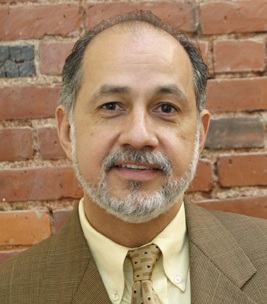
Author
Dr. Roberto Miranda
Summary: Conversion is the beginning of a profound and ongoing transformation, not a static or merely religious experience. Simon believed and was baptized, but he still interpreted the power of God through his old patterns of magic, money, influence, and control. He needed to learn that the Kingdom operates according to God’s sovereignty, humility, love, and service, not according to the logic of the world. In the same way, we must renew our minds and allow God to transform our desires, wounds, relationships, ambitions, and ways of treating others.
We must also seek the fullness of the Holy Spirit as empowerment to serve, live in holiness, and exercise the gifts, recognizing that God works in different ways. The church must disciple with clarity, without diluting the demands of the Gospel, but also without casting aside those who fail while they are being formed. We may make serious mistakes and still receive correction and mercy. Therefore, we must surrender our whole lives to the Lord, know his Word, and accept his patient work until the mind and character of Christ are formed in us.
Acts, Chapter 8. We are going to continue with the passage we began discussing last Sunday. There were so many things left unsaid that I really cannot resist the idea of spending a little more time in that Chapter 8, which contains so much material that is very important for our spiritual lives.
Miguel, please, our walk with the Lord—there is so much teaching, very positive and very important teaching, that we cannot pass it by. Sometimes, in our desire to move quickly, we miss the opportunity to be edified by topics that are very important for our Christian walk and for knowing the word of the Lord.
I hope you are taking these teachings and meditating on them in your own time as well, especially the new believers who are just beginning to learn about these very important topics, people, and interventions. I do not believe there is a more important book in Scripture than the book of Acts, for many different reasons. So I encourage you to take this time of reflection very seriously and to continue reflecting, in your own time at home, on these passages and engraving them on your heart.
Let us turn quickly, then, to Acts Chapter 8, verses 18 through 25, and I am going to give a very brief summary so that we can continue. It says here:
“…when Simon saw that the Holy Spirit was given through the laying on of the Apostles’ hands, he offered them money…”
Now, let me go back a little, since perhaps you were not here last week or do not remember who this Simon is. Go with me to verse 9 of that same Chapter. It says that when Philip the evangelist went to Samaria, many people were converted, and verse 9 says:
“…there was a man named Simon, who had previously practiced magic in that city and had deceived the people of Samaria, claiming to be someone great, a great person, a great figure. Everyone, from the least to the greatest, listened to him attentively, saying, ‘This man is the great power of God,’ and they paid attention to him because he had deceived them for a long time with his magic arts—his tricks, you could put there—his magic arts. But when they believed Philip as he proclaimed the Gospel of the Kingdom of God and the name of Jesus Christ, both men and women were baptized…”
Notice something interesting here: these people were baptized as soon as they were converted. That is a challenge for many of us, because sometimes we think that people have to… and I do believe it is good—do not misunderstand me—to instruct them, and I am going to talk a little about that as well, and that sometimes a long time must pass before they are baptized; we have to put them through fire and water to see whether they are truly Christians and have truly been converted.
Many times in the book of Acts, you see that people were converted and were immediately put into the water. Now, I believe that what is important in that case is sincerity of heart and conviction. Many times in our day, people come forward and make a profession of faith without understanding what they are doing. And it is good for people to have awareness, conviction, understanding, and discernment concerning what they are doing when they surrender their lives to Jesus Christ.
But I believe that if a person is sincere, convinced, and clear about his surrender to the Lord, I would say the same thing Philip said to the eunuch, whom we may discuss a little later. Well, the eunuch said, ‘Here is water; what prevents you from baptizing me?’ Amen, let’s move forward. Go for it—that is the Roberto Miranda translation. So we see here that many people were converted and were immediately baptized, just in case—you do not know what is going to happen.
So many people were baptized, and verse 13 says, ‘…Simon himself also believed…’
Underline the word ‘believed,’ because I am going to come back to that.
“…Simon himself also believed. And after being baptized, he stayed constantly with Philip, and when he saw the signs and great miracles that were being performed, his mouth hung open; he was astonished…”
Now let us go to verse 18, where it says: “…when Simon saw…”—remember what we said: the Samaritans had been converted, but they had not yet received the baptism of the Holy Spirit, and a delegation of the Apostles in Jerusalem, Peter and John—the dynamic duo—came to pray for these new believers.
By the way, here is a question for those of us who are hearing different… Notice how interesting it is that these believers and the evangelist, and perhaps other Christians who had fled the persecution in Jerusalem and were in Samaria, waited for the Apostles to come and lay hands on the Samaritans.
Well, first we emphasize the fact that, according to the disciples and the Apostles, it was not enough simply for these people to be converted to Jesus Christ. Rather, they knew that these people needed something like a seal, an imprimatur directly from God, which was that baptism of the Holy Spirit.
And again, as the Pentecostal, charismatic church that we are, we also believe, as I said last Sunday, that in addition to having Christ in his heart, the believer needs something like that activation of the presence of the Holy Spirit in his life. There may be no term capable of expressing what the baptism of the Holy Spirit is without making it problematic.
But we are not going to discuss the complexities right now. It is important for us to understand that, as believers in Scripture, the scriptural model is that this experience—just as we believe that baptism in water is an experience subsequent to conversion, which does not save but is important—we also believe that the baptism of the Holy Spirit is an endowment of power and ability for service, for holiness, for the activation of God’s gifts in the believer’s life, and for living a truly supernatural life. And that requires, so to speak, a transaction of faith in the life of that son or daughter of God.
And I encourage God’s people to seek that experience. As a Congregation, we try to facilitate it in many ways here, but it does not necessarily have to happen only when someone comes and lays hands on you; there are many different ways. It does not have to be during a formal Sunday service for you to receive and have that encounter with God.
One of the things we see in the book of Acts is that there is a diversity of experiences.
Peter had not even finished the three points and the poem in his sermon when the Holy Spirit fell and baptized him and his family. So God is sovereign, and we have to be open in that way. But it is indeed important to seek that.
Now, I have talked so much that I have even forgotten what I was going to say about this. But the important thing is that Simon is there among that group of people. Simon believes…
Oh, yes, I just remembered what I was going to say. Do not tell me it is because I am 55 years old, because it happens to you too… What I wanted to emphasize is the fact that Simon receives, believes in the Lord Jesus Christ, and is baptized, and yet there is still an additional experience that must take place in his life as well. There is a change in his life, a transaction that must also take place in his life, which is very interesting. Just as those disciples have to receive the baptism of the Holy Spirit, Simon also has to experience what I would call not a second conversion, but a transformation of his inner being.
Let us see why. And this is something we must seek as well. Just as we seek the baptism of the Holy Spirit in our lives, when we enter the ways of the Lord, I believe that this is simply the beginning of a long journey of experiences. And if we stop at merely saying… I was converted, I received the baptism of the Holy Spirit, now everything is fine—and we remain there, we run the risk of becoming stagnant and losing the opportunity to go much farther, as God wants us to go.
Because what happens? Look here—how interesting. That is why I could not simply pass over this passage. It says:
“…when Simon saw that the Holy Spirit was given through the laying on of the Apostles’ hands, he offered them money…”
By the way, there is a word—for example, ‘simony’ in English, and ‘simonía’ in Spanish, if I am not mistaken—that comes from this man, Simon. It is the idea of profiting from the Gospel, using the Gospel to make money and extract money.
So Simon sees what is happening; he sees hands being laid on the Samaritans. Now, this is interesting too. Notice: how does Simon know that this is something miraculous? Something was happening; there was some kind of manifestation. Because otherwise it would simply have been a matter of laying hands on them and then going home, as a ritual way of doing things. But evidently something was happening to these Samaritans. It does not say specifically that they spoke in tongues, but perhaps there were tears, perhaps there was an emotional infusion of the Spirit, perhaps they prophesied and gave glory to God. But there was something this man could see happening when the Apostles laid hands on them.
Now, something else we have to see here is this: think also about how the institutional identity of the church was developing during this time. That is also one of the themes of the book of Acts. As we move through the Chapters of this book, it is as though we are watching the brain of a baby grow and become more complex.
I believe we are witnessing the formation of the church’s theological and institutional identity. These are precious passages because these Apostles are clearly laying hands on these people. Now, I do not believe that those laying hands necessarily had to be Apostles. In the case of Saul, as we will see later, Ananias, an ordinary believer, is sent by God to lay hands on him, and I believe that there we begin to see this idea developing. Perhaps these believers thought that it had to be the Apostles, as so often happens, right? Only the pastor can pray for the sick; only the anointed ones, those who hold a missionary position in the church, those who have a missionary ID card, can pray for the sick or for people who are depressed and visit people in the hospital.
Nowadays, we know that there is such a thing as the priesthood of every believer, through which you have all the authority of the Holy Spirit in your life. You too can pray. But in this case, the Apostles prayed for these people, and evidently something happened. Simon had been converted; he had believed, and when he sees this happen, he wants to offer them money so they will give him the same power they have.
He says, ‘…give me this power also, so that anyone on whom I lay my hands may receive the Holy Spirit.’ Then Peter said to him, ‘May your money perish with you, because you thought that the gift of God could be obtained with money…’
This Peter was no pushover. I do not know how many of us would dare to react in such a forceful way. One of the things about the book of Acts that also always strikes me is that tone of seriousness that matters in the Gospel sometimes have.
Nowadays, in our culture, we have adopted—and I understand this well—a more relational tone, and every day you see more and more talk in the evangelical world in America about this friendly image of the church that we have to present in order to win people over. And sometimes that reaches the point where we sacrifice important elements of the church’s teaching and doctrine so as not to offend people when they come to church. We remove the cross from the front of the church because many people are offended by the cross. We remove the denominational name or unusual names.
I remember how difficult the name Lion of Judah was when God placed it on my heart, because of course it is jarring. Lion of Judah—what is that? Is it a zoo or what? And sometimes people say Lion of Judas—and which Judas, Judas Iscariot or which one? But God placed that on my heart. The truth is that the Bible contains many things that are strange, countercultural, and different, and if we begin to sanitize or culturally cleanse the distinctive features of the Gospel, listen, we will end up like Hare Krishna or I do not know what, but we will lose…
I believe there comes a point when one has to say, no, this is… let them come toward us, not us toward them. Let them turn to you, and not you to them. You see? Nor are we going to make the Gospel mysterious simply to make it difficult for people to enter. No. But I also believe we have to bear in mind that sometimes we must be clear about things in the Gospel. I have seen that when the Holy Spirit moves, brothers and sisters, and when a person has that fullness of the Holy Spirit, that person is not necessarily concerned about being likable. It is good to be likable, of course, but sometimes the things of God are matters of life or death, and we have to be clear; sometimes confrontation is necessary.
Now, I am not telling you that to give you permission to be a jerk toward people. I know many are saying, ‘Ah, amen, I knew I was right.’ Not that either, right? But there are times when you have to make certain things clear to people. The Gospel is holiness, and people cannot simply do whatever they feel like doing. The Gospel is serious.
Many people enter the Gospel. That is why Simon fascinated me, and I said, wow, it would be a great injustice if I did not speak about this character. I find him fascinating. Simon is one of the most complex characters, and I believe he tells us many things about the believer’s journey in the Gospel.
Then Peter confronts him. What I see here is a clash of cultures and mindsets. I will tell you why in this case. And Peter says, “May lightning strike you!”
“…Do you think that I am going to give for money—that I am going to give—the gifts of God, which can be bought with money? You have neither part nor lot in this matter, because your heart is not right before God. Repent, therefore, of this wickedness of yours, and pray to God, and perhaps the thought of your heart may be forgiven you, because I see that you are in the gall of bitterness and in the bondage of wickedness…”
I think this man was already lying on the floor trembling and was almost having a heart attack.
“…Then Simon the magician answered and said, ‘Pray to the Lord for me, so that none of these things you have spoken may come upon me…’”
How beautiful humility is. He let his guard down. A wise man—even if he was not humble, at least he was wise.
“…And they, after testifying and speaking the word of God, returned to Jerusalem, and in many Samaritan towns they preached the Gospel…”
What do I see here, brothers and sisters? Again, notice why Simon is important to me. Because what I see here is the need to disciple people when they enter the ways of the Lord—the need to show them that things in the Kingdom of God are not done the way they are done in the world they come from. When a person believes in Christ Jesus as Lord and Savior and accepts Jesus, I believe that immediately—or even beforehand—there is a clash of powers, a clash of mindsets, a clash of cultures, a clash of paradigms or models of thought. The world sees things very differently from the way the Kingdom of God sees them.
That is why the Bible says, “Do not conform to this culture, but be transformed by the renewing of your mind, of your understanding…”
Metanoia: a change of mind, a change in the way one thinks. When a person passes through the invisible curtain of the Gospel and receives Christ as Lord and Savior, that person must immediately understand that they are entering a universe completely different from the one they occupied before. There are things that once seemed just to that person but are not necessarily just to God. There are things that seemed ethical to that person that they will now have to see differently. There are freedoms that person once allowed themselves that they can no longer allow themselves. There are lines of reasoning in which this person once participated that must now change. That person has to take a whole array of things—tools, resources, ways of thinking and processing life—and now, when they pass through that atrium of the Gospel, a whole… a journey of transformation begins in their life: a change of mind, a change in their ways of thinking and seeing life.
And unfortunately, I believe that the church of Jesus Christ does not do the work it ought to do to make every person who enters the Gospel aware of this. And I believe that now, more than ever, at this point in history when the world has become so secularized, when human reason has taken so much control over culture and human beings, the Gospel today is more countercultural than ever. The Gospel is scandalous—to use a biblical word—it is the scandal of the cross of Jesus Christ.
And just as in the days, I would say, of the Greeks and Romans, when the culture was also pagan and tremendously rationalistic and humanistic, so today people will enter the Gospel with a damaged mind, a corrupt mind, a twisted mind, as the Apostle Paul says in the book of Romans—I believe it is chapter 2. Because they did not acknowledge God so as to give him the glory he deserved, and they turned him into an object of idolatrous worship, changing his form into the form of animals and reptiles, and became involved in practices that were unclean and abhorrent to God, it says that God gave them over to a reprobate mind. That means a faulty mind, a damaged mind, to do things that are not fitting.
The mind of a person without God, the mind of a secular person, the mind of someone who has not been touched by the presence of the Holy Spirit, is like a computer with a virus. A computer can have a virus and still do several things properly; the problem is that you do not know when it is going to produce something like gibberish, a whole bunch of strange things. You cannot trust it. It does very good things, but it also does terrible things, and you cannot trust it.
And the same thing happens with modern man without God. Man can send people to the moon; he can send people into the depths of the sea; he can explore the minute nature of matter. But he can also make terrible decisions, such as killing millions of lives in a woman’s womb because that is her territory and she has the right to do whatever she wants because that is her lot, her yard, and therefore she can do…. Faulty reasoning.
So that faulty reasoning leads that person to say, “I can get rid of that life without any reproach from my conscience,” while fighting for a dolphin dying on some beach, or for a whale, and spending ten million dollars to save that whale, because whales must be saved.
So it is a reprobate mind, a faulty mind, a mind that processes things in a strange and confused way. Therefore, when that person comes to the Gospel, a process of dressing and undressing must begin; a new way of seeing life must begin to be developed. And that is you, and it is me, because even if you say, “Well, I have never been a scientist, a secularist, a rationalist, a humanist, a communist, any of those things, a leftist,” there are other things in your life. There is sensuality; there is selfishness in all of us; there are different things: bad ways of treating people, manipulation, materialism, love of money, all sorts of things, rebellion against God, grudges we hold, hunger for power and control, resentment—a whole array of things we possess. We bring that baggage into the pure world of the Gospel, and God says, “You know what? You may enter my Kingdom, but now a process of transformation must begin in your life. There must be change in your life, and you and I are going to walk this road together. It will take your entire lifetime, but I am going to keep changing your mind, and I am going to put my fingers, so to speak, again and again into your cobweb-filled brain and pull them out one by one until I leave you with the mind of my Son Jesus Christ.”
Indeed, because the Bible says that we have the mind of Christ. But I believe we have it as a declaration from God, and then we have to make that mind of Christ real and effective in our lives: learn to think as Christ thinks, learn to feel as Christ feels, learn to hate what Christ hates and to love what Christ loves, speak as Christ speaks, treat people as Christ treats them, and sacrifice ourselves for others as Christ sacrificed himself for others.
There is a change of mind. Now, you may ask, “Where does Pastor Miranda get all that from?” Simon the magician. A great injustice has been done to Simon the magician, namely, saying that he was not truly converted. In fact, there are legends in ancient texts claiming that Simon the magician later created an entire false religion and opposed the Apostles. None of that has any biblical basis or, apparently, any basis in history, but some believers thought it necessary to invent all of this. Because the truth is that he was a magician—just imagine! That alone made him a somewhat sinister person, right? And because of his behavior, it is difficult to believe this man, so what do people do? “No, this man obviously was not a believer; he was a fraud. What he wanted was to make money.”
And I insist, brothers and sisters, that this is why the church of Jesus Christ must also change its patterns of thought to a certain extent, because, interestingly enough, we too have worldly patterns concerning what holiness and conversion are, and so forth. We say that if a person is converted—well, some people believe that this person is immediately a paragon of virtue and should already do certain things, think in a certain way, and so forth.
I believe an injustice has been done to poor Simon, because evidently Simon’s problem was that he did convert. Look at what it says there:
“…Simon himself also believed…”
The Bible does not qualify that statement. He also believed, along with the others who believed. He believed. He was baptized; he was astonished by the things he saw. But what was Simon’s problem? Simon’s problem was that no process of inner conversion, of transformation of his mind, had taken place. And unfortunately, I do not see anywhere that they took him aside and gave him the four discipleship courses at Lion of Judah. So what happens? This man is converted and immediately gets involved… Because look, what happens is that Simon believes in Jesus Christ, but his way of thinking remains that of a businessman, an entrepreneur, a showman, a manipulator who is used to getting his own way. What does he do? Once he converts, where is the power? With the Apostles. And what does a businessman, a shrewd and skillful person in dealing with people, do? Get in with those who hold the power. So he attaches himself to the Apostles and goes with them everywhere. He wants to be wherever things are happening, right? And he is trying to learn. Why? Because a magician says, “There is always a trick.” These people must be doing something; they must be slipping them a pill without their noticing, giving them an injection, or whatever, but something is happening here. He is processing the Christian experience through his own way of thinking. He has spent his whole life deceiving people, devising tricks behind the scenes. He believes that everything can be solved with money; he is used to wielding influence.
So, of course, when he sees this happening, he is thinking like a magician, like a person who performs tricks, like a person who believes that everything can be bought with money. Perhaps he bought some tricks from other magicians so that they would teach them to him and he could then add them to his repertoire. So naturally, almost “innocently,” I might say—put quotation marks around that word—he goes to Peter and says, “Hey, I can pay you to teach me how to do that.” And he asked the wrong person. Peter barks at him and says, “Go to hell! How dare you think that the things of God can be bought with money?” Do you see?
So, I would say the problem was not Simon. I believe Simon believed, but he needed a change of mind, a change of culture. But I think poor Simon would have needed someone to tell him, “Look, that is not how it works. Go to Lion of Judah’s discipleship course number one so they can teach you how things are done in the Kingdom of God. It is not through money; it is through humility, through the sovereignty of God, through asking the Lord, through serving others, and so forth and so on. It is through love. It is not through material things. That is how the world does it, but things are not done that way in the Gospel.”
So my point, brothers and sisters, is that when a person is converted, the church of Jesus Christ—and you, if you have recently entered the ways of the Lord—I encourage you, I urge you, to seek to know the Word of God better, to learn more about how things are done in the Kingdom of God. Do not be content merely to come to church, cross yourself, and go home. “Okay, the pastor did what he had to do; I sang, put a coin in the basket, and now I am going home.” No. The Gospel is terribly close-quarters; it is an inner struggle; it is sacrifice. God takes his sword, cuts you into twenty thousand pieces, and makes you all over again. He puts you through the sugarcane press like a piece of cane, crushes you, and then remakes you. You are a clay vessel whose form God does not like, so he breaks it down, like the potter working the clay, and forms it again as he desires.
The Gospel is tremendously dynamic, my brothers and sisters. I believe that when a man or woman of God understands that, their life changes completely. Because most of us are accustomed to thinking that the Gospel is simply this: sitting down, coming to church, sitting there on Sundays, listening, and tithing. Everything is external, artificial, religious. But when the light bulb comes on and you understand that, look, when you enter the Gospel, you enter the most dangerous zone in the universe. God is going to take you and possibly kill you and then remake you, you know? God is sinister. And we have to be willing to enter that risky zone of the Christian life.
If you are not suffering and bleeding in the Gospel, you are in the wrong place, you know? Because the Gospel is a tremendous close-quarters struggle, God wrestling with the man or woman in order to shape them, work on them, remove everything that is not of God, and leave what belongs to him, what belongs to his Kingdom.
You have to come to the Gospel thinking, “Lord, I am a clumsy, foolish child, and now I need you to teach me how to do things,” because many people come to the Gospel and immediately want to get involved; they want to be assigned something to do, to lead, to sing. They are shrewd. You see them—their eyes are practically popping out. They want to change things; they want things done their way; they want to jump in immediately. That is not how it works. The Gospel is very different; it is a very, very different process. And there are changes that must take place in your life, in your marriage, in your emotional life, in the wounds from your past, the distortions from your past, your appetites, your bondages, your depression and anxiety and worries and obsessions, resentments—all those things.
Your mind is a swarm of evil. I don’t want to depress you, but that is the... glory to God, because that is simply a diagnosis, and immediately God tells you, “But you know what? There is a cure for you. There is hope for you.”
I believe we need to understand that. I believe there is no more beautiful position for a human being than to acknowledge, “I need God to change and transform me,” because that is the moment God is waiting for in order to come with all his resources and begin working in your life, transforming you, and taking you where he wants to take you. But you have to understand this: in the Gospel, you cannot live the way people live in the world.
And perhaps you have been in the Gospel for 30 years, and perhaps today you need to hear, “I have to surrender to the Lord.” We sing, “Have your way in me,” “Do whatever you want with me.” And that is real. When we come, we have to sign a blank note over to the Lord, and God is going to say, “You know what? I don’t like that aspect of your character. I don’t like this; I don’t like that,” and God will devise an entire treatment plan exclusively for you. He will take you through painful experiences. He will take you where you do not want to go, as the Lord Jesus Christ told Peter.
“Peter, Peter, when you were young, you dressed yourself and fastened your belt as you pleased, but when you are old, someone else will dress you and take you where you do not want to go.”
I believe that is a perfect picture of the life of discipleship, the life of Christian formation. It is a process in which God gives you things you do not want and does not give you things you do want. He takes you to places while you kick and protest, and he takes you out of others where you would literally give your life to remain a little longer. It is where God establishes himself as the sovereign of your life, as the mental, emotional, and spiritual surgeon who enters whatever region of your being he pleases and does things there that only he knows why he does.
And when we enter the Gospel, we have to understand that, because otherwise we remain like Simon. The church of Jesus Christ is full even of ministers and ministries that leave people in simony, including through money, power, manipulation, and control. We have imported all these things, which are things of the world, into the church, and there are many people who go to church so that God will bless them, so they can have a better, newer car, a bigger house, a beautiful wife, or whatever, because they have been told that this is where you get those things. Witchcraft! They come to church for Santería and witchcraft. The church has become a place of witchcraft, magic, and Santería, where if people give money to God, they pull a lever, as in one of those casinos, and four lemons come up, and then a sum of money comes out that they can take home. And we participate in that magic, brothers and sisters, when what people need to be told is, “No, come to Christ, and perhaps you will lose your house, your health, and your car, and then you will be saved, you will discover eternal life, and you will be truly happy.”
It is a different way of seeing things, brothers and sisters, very different. And the church has to help people understand that. The Kingdom of God is not like the kingdom of the world. And there is no more beautiful place for a son or daughter of God than when we submit ourselves to God’s operating table. We lower our guard and our hands and say, “Okay, Lord, do whatever you want. Impose your will upon my life. And for the rest of my days, I will live by letting you come and go whenever you please. You are the engineer of my life. You are the divine architect; you are the sovereign. And I believe that what you do is, by definition, good, even when it does not seem so to me.”
I want to believe that Simon repented and became a great evangelist and perhaps a teacher. Because with those talents as a magician that he had, he would have been a great evangelist, I think, you know? I persist in believing that Simon was saved and learned his lesson; they do not tell us what happened. I want to be optimistic. I believe there was genuine repentance there; suddenly he realized, “This is different.”
You see? The problem, brothers and sisters, is that we are accustomed to a static Gospel. Okay, what he did is scandalous. Peter rebuked him, which means this man is no good; let’s cast him aside. No. We have to see the Gospel in a different way... In the Gospel, while God is dealing with people, they do horrible things; we do horrible and scandalous things. The Gospel is dynamic; the Gospel is a process.
In the case of Ananias and Sapphira, I personally, personally believe that Ananias and Sapphira were saved. When God killed them, he did not condemn them; he disciplined them. Some tremendous discipline—he killed them—but it was discipline from God. Because I believe that in the Gospel things are not black or white; sometimes they are gray. There are complexities we do not understand, and a person can be saved and love God tremendously while also making serious mistakes as God disciplines and prepares that person. Look at Peter, look at David, look at Paul, look at the great heroes of the faith.
So we have to understand that we are entering a dynamic, explosive world, where substances are created and destroyed and new and different ones emerge. That is your life. God is working with you. You are Simon the magician. I am Simon the magician. And we are learning; we will make serious mistakes along the way, but we will have a merciful God who will tell us, “Don’t worry, you are still being formed. Keep going; I am with you until Christ is formed in you, until the image of Jesus is made manifest in your life.”
Welcome to God’s workshop. Glory to the name of Jesus. Let’s bow our heads for a moment, brothers and sisters, and we want to take this opportunity to give anyone here today a chance. If you are visiting us this morning and you feel God’s touch upon your life through the music that has been played, the choruses we have sung, the word that has been proclaimed, or simply the sweet presence of God and of the Holy Spirit in your heart while you have been in this holy place, dedicated to worship and praise of the Lord, and you feel that you want to begin that same journey Simon began, discovering new and different things, and you want to entrust yourself to that merciful and gracious God who says, “You know what? Come with me, and we will work together. I will take you by the hand and lead you through a process, and failure will not be possible, because I will not let you fail.”
So if you sense a call from God this morning to place your hand in the hand of Jesus, I invite you to consider it. And if God has touched your life and you want to raise your hand right now where you are, I would like to pray for you and say, “Welcome to God’s workshop; welcome to the company of people in formation, saints who are in the process of being conformed to the image of Christ Jesus.”
Two hands are being raised over there. Is there anyone else who wants to place their hand in the hand of the merciful discipler who is Christ Jesus? Another hand is being raised over there. Anyone else? It is beautiful to enter that magical realm of the Gospel. God bless you; here to my left as well. It is a realm where there is no loss, you know? As I say, it is a dangerous realm, but it is also a realm of knights-errant and dragons that we defeat with the power of God’s magical sword. There is no failure in the Kingdom of God if we remain close to the Lord.
And I invite you—I want to invite you not to miss that opportunity. I want to invite you to come up here. Could you come forward for a moment, and could someone accompany these brothers and sisters? Someone please accompany my brothers and sisters. Come; we want to pray for you this morning and entrust you to the mercies of God, a loving and kind God. Thank God that God is more merciful than Peter, you know? God loves you and has good purposes for your life, and he will not be scandalized if you occasionally make a mistake and sin against him. He will tell you, “Okay, let’s begin again. Let’s start the record over from the beginning, and let’s keep going.” God is calling you. God is calling you, and you have said yes. And the Lord says, “If I knock at the door and you open the door, I will come in,” says the Lord. It is not, “Perhaps I may possibly come in.” No, he says, “I will come in.”
If you have opened the door of your life to the Lord, then right now the Lord—believe it—is already inside you. He is seating himself upon the throne of your life and is already beginning to run electrical lines through every part of your being, and he will send transforming messages and impulses to your brain, your heart, your body, your emotions, and every part of your being. He will begin transforming and recalibrating your life, because that is what he does. He specializes in it.
And do not enter the Gospel merely to warm a pew; enter the Gospel so that God may transform you, change you, and make you new, a creature who shines as the angels shine. So say yes to the Lord. Say, “Yes, Lord. Come into my life. You are my Lord and my King, my master; you will control my life. I give you permission. Do whatever you want with my life. You are my God, my Savior; my sins are forgiven by you on the cross of Calvary.”
“Thank you for being my God and my Lord. I receive you and surrender myself to you this morning, Lord Jesus.” Hallelujah! I bless you. Father, I bless my brothers and sisters in the name of Jesus this morning. I declare grace upon grace over them. Every one of them is precious before you, Lord. They are princes and princesses who are worth the blood of the Son of God, and I bless them in the name of Jesus. And with your sword, Lord, I cut the devil’s bonds from their lives.
Satan, we inform you that these creatures belong to the Christ who purchased them with his blood. And every accusation is neutralized, every charge against their lives is dismissed, and we declare, Lord, that new territory is opening before them, adventures they will experience with you, Father, and blessings they will experience on this new and fascinating journey, which is the way of the Gospel. Change their minds, Lord; change their hearts, Father. We seal this, and we bind them to your mercy and your faithfulness, Father, and we declare that nothing will snatch them out of your hand, Lord, because they will be more than conquerors in Christ Jesus. We bless their lives. Thank you, Father; thank you, thank you, Lord. Thank you because you have done it with me; thank you because you will do it with many more; and thank you because this is real, Lord—it is real. We bless their lives and declare the anointing of your Spirit upon them.
Remember, brothers and sisters, you are now entering an adventure with the Holy Spirit as well. I want to ask you to say the following with me; repeat this after me: “Holy Spirit, I invite you to enter my life, take control of me, baptize me, and fill me with your presence.” Tell him, “Fill me, Holy Spirit. Pour out your anointing upon my life. I believe that you are real, Spirit of God. Baptize me with your fire; baptize me with your fire. Thank you, Lord, thank you, in the name of Jesus.”