An All-Encompassing Gospel
The earth is the Lord's, with its fullness; the world, and those who dwell therein. For he has founded it on the seas, and established it on the floods. — Psalms 24:1-2
And every creature which is in heaven, and on the earth, and under the earth, and such as are in the sea, and all that are in them, heard I saying, Blessing, and honour, and glory, and power, be unto him that sitteth upon the throne, and unto the Lamb for ever and ever. — Revelation 5:13
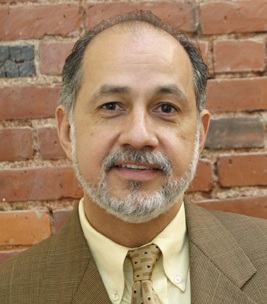
Author
Dr. Roberto Miranda
Summary: Christian faith cannot be confined to the church, the home, or private life. Although some seek to separate public decisions from spiritual convictions, our deepest beliefs influence our practical decisions. The whole earth belongs to God, and Christ’s lordship extends to social, political, economic, scientific, intellectual, and moral life. Therefore, Christianity offers a comprehensive view of reality, not a truth limited to religion. Let us live according to the principles of the Gospel in every sphere, from public decisions to the most intimate aspects of our lives.
In a world that grows more secular every day, some want to relegate religion and spirituality to the merely private sphere. According to that model, the influence of religion should be confined to the church or the home and never extend into the public sphere.
Society’s major decisions—its politics, economy, education, even its morality—should be determined by supposedly objective considerations, not by the uncertain and subjective standards of religion or spirituality. At least, that is what liberal and secularizing groups in many Western societies contend.
The truth is that, in the end, it is impossible to establish an absolute separation between the moral and spiritual tenets of religion and the purely practical and secular considerations of the state. As we have noted before, an individual’s spiritual beliefs, if they are close to their heart, will always profoundly affect their practical decisions. The principles of the Christian faith cannot easily be isolated from the other aspects of human life.
The Bible affirms that “the earth is Jehovah’s, and all its fullness, the world and those who dwell in it” (Ps. 24:1). If this is so, then the whole of life—social, economic, political, scientific, moral, intellectual—must necessarily reflect that divine lordship. The Dutch theologian and statesman Abraham Kuyper declares: “No individual element of our mental universe should be hermetically sealed off from the others; and there is not a single square inch in the whole domain of human existence over which Christ, who is sovereign over all, does not declare: ‘Mine!’”
Christianity is a comprehensive and organic worldview that encompasses every dimension of life. It has something to say about every aspect of human life—political, judicial, cultural, scientific, and economic. According to Nancy Pearcey, in her book Total Truth, “We must find ways to overcome the dichotomy between the sacred and the secular, the public and the private, facts and values—demonstrating to the world that only a Christian worldview offers an integral and comprehensive truth. That vision is true not only with respect to one limited aspect of reality, but with respect to all of reality. It is a total truth” (p. 121).
As Christians, we must live that way—recognizing and establishing the lordship of Christ in every aspect of our lives. From the greatest things to the smallest, from the most public to the most intimate, our lives must reflect the complete dominion of the principles of the Gospel. Surely, there must not be a single part of our being over which Christ cannot confidently declare: “Mine!