Already, but Not Yet!
Now Joshua was old and well along in years, and the LORD said to him, “You are old and well along in years, but very much of the land remains to be possessed." — Joshua 13:1
Therefore we do not lose heart. Though our outer self is wasting away, yet our inner self is being renewed day by day. — 2 Corinthians 4:16
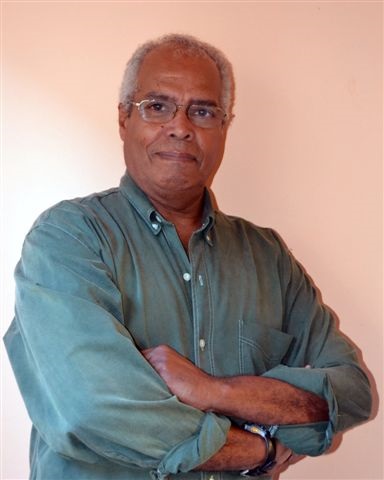
Author
Faustino de Jesús Zamora Vargas
Summary: God’s promises call us to live in hope, even when they are not fulfilled as we expect or we do not receive everything at once. After Joshua’s victories, land still remained to be conquered. Now an old man, he was to divide the territory among the tribes; they would continue the task while God directed the conquest. The work belongs to God, not to any indispensable leader. When our strength wanes, we can serve in other ways and prepare those who follow us. As a church, we must not cling to leadership or rely on our own self-sufficiency. Our calling is to persevere in faith, obedience, humility, love, and patience, trusting that God will fulfill his promise.
If God’s promises do not motivate us to keep living in hope, then we have a false understanding of faith. What matters is being certain of what we hope for, “seeing” with spiritual eyes what has yet to happen, while living in such a state of grace that there can be no doubt it will become reality.
What happens (and often dismays us) is that the Lord does not always fulfill his promises according to our expectations. Holding fast to God’s promises makes sense only if you take up faith as a spiritual shield (Ephesians 6:16). God does not give us everything he promises all at once. As we have seen in previous meditations, he expects his children to obey his Word, humble themselves, pray, and have a passion for feeling each day that they depend on a relationship of mutual love.
Joshua and the army of God’s people had laid low 31 kingdoms and their 31 defeated kings. It seemed that the Lord would now bring the longed-for peace. God ordered Joshua to distribute the conquered land among the tribes; his plans for continuing the conquest were different. For Joshua, too. Let us remember that the work is not ours, but God’s. He is the author and Lord of the work. We are merely instruments of his grace. The aged Joshua no longer had the vigor of years past.
When Joshua was quite old, `…the Lord said to him: “You are very old, and much territory still remains to be conquered”` (Joshua 13:1). The Lord then instructs him to divide the conquered territory among the tribes that had taken part in the conquest up to that point (Joshua 13:7). God was changing his tactics; now the tribes would settle in their own districts and, from there, continue the conquest of all the promised land that remained to be subdued. Joshua’s old age would prevent him from continuing to lead in battle. From then on, the Lord would take the reins of the conquest: “…All these I will drive out from before the children of Israel.” (Joshua 13:6). Joshua’s strength is failing him because of his age, but the eternal God has strength to spare.
This is a hopeful message for the church of Jesus Christ. Leaders grow old; their strength can no longer withstand the rigors of the daily, unavoidable battles, but the work continues, the advance of the Kingdom does not stop, and the conquests of God’s people become realities… if we place our responsibilities under the Lord’s direction. He must reign; he knows who the next leader is who will carry on his work; he has a complete vision of the scope of his purposes; he has already prepared the hearts of those who will serve him in a new stage. Joshua will move to another area of the church to continue serving the Lord. To counseling, perhaps, which is as necessary today as discipleship; to preparing younger people to learn how to wield the sword of God’s Word in a world overflowing with material things and with demands for “what can be seen” before people will believe.
Not yet. We have not reached the promised land, so we must keep conquering. God’s promise remains a promise; more is still required of us: more obedience, more loyalty, more humility, more consecration, more sacrifice and love for others, more relationship with God. Even so, there may be a certain sense of satisfaction in having humbly done the part that fell to us. Others will come after us. Better than we are. It is disastrous when a leader is unaware of this and clings to leadership like ivy to a wall, or when the church considers itself capable on its own of carrying forward conquests that only God can bring about, because he is the Lord of history and the Lord of the church.
Church, much land still remains to be conquered, but God has promised that he will take care of his work: “I will drive them out...” (v. 1). We are not indispensable to the work, but servants, ministers, “oarsmen” aboard the Lord’s Galleon, which sails the world’s turbulent seas with patience until it brings us safely into port. God is not slow in keeping his promise (2 Peter 3:9), and he is patient. We must be patient too. Others will take on our responsibilities. We have already reached some goals in Christ, but we must color the sky with the hue of hope so that, at last, with the help of those who come after us, we may see the face of our Lord.
May God bless his Word!
Suggested reading: Joshua 13
What do you think?
What do you think about "Already, but Not Yet!"?
Related Content
Our Finitude, God's Infinite Faithfulness: a Call to Shared Vocation and Renewed Hope
Joshua 13:1 • 2 Corinthians 4:16
Life often presents us with a profound tension: our undeniable human limitations confronting the vast, unfinished work God has entrusted to us. This s...
The Grace of Unfinished Vocation: Aging, Renewal, and the Work That Outlives Us
Joshua 13:1 • 2 Corinthians 4:16
Joshua 13:1 and 2 Corinthians 4:16 3026-09-19 There is a severe mercy in the Lord’s word to Joshua: “You are old and advanced in years, and there rema...
Read in Context
Click to see verses in their full context.