A Year of Decision
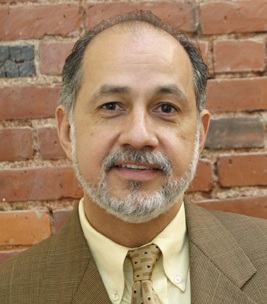
Author
Dr. Roberto Miranda
Summary: God calls us to stop wavering between two opinions and decide to whom we belong. If the Lord is God, we must follow him with a commitment made visible in our convictions, priorities, conduct, relationships, marriage, work, money, time, and service. Grace and the process of growth are necessary: holiness must not be imposed as an outward appearance but must arise genuinely from within. However, allowing room for growth does not mean prolonging indecision indefinitely.
We also need clarity and commitment as a church: to know biblically what we believe, to remain open to examining different interpretations without concluding that they are all the same, and to combine confidence in supernatural gifts with the recognition that God can also work through medicine. Like Esther, we must overcome our excuses, embrace our identity, and use the gifts and positions we have received to fulfill God’s purpose, even when it is costly.
Our entire life belongs to the Lord. Therefore, we are to present ourselves as a living sacrifice, reject conformity to the world, speak truthfully, honor our commitments, and generously support our shared work. By taking a clear stand and consecrating ourselves radically, we will be able to mature, experience the will of God, and become a Spirit-filled, powerful, and exemplary church.
I want to share with you a thought from the Word of God for this year that I feel God has entrusted to me. In the book of First Kings, chapter 18, verse 20. This is the word of the Lord for all of us at this time, in this year—a call from God to us as a congregation, to my life, and specifically to your life. It says:
“…So Ahab summoned all the children of Israel and gathered the prophets together on Mount Carmel. And Elijah came near to all the people and said—here begins what I believe is the word of the Lord for each one of us—‘How long will you waver between two opinions? If Jehovah is God, follow Him; but if Baal, then follow him.’ And the people did not answer him a word…”
The Lord’s call to our lives tonight and during the months ahead of us is framed as a question, and it is a weighty question: How long will you waver between two opinions? The implication, the conclusion that we must draw from this word, is that we do not want to continue wavering. What does the word waver mean? It means struggling between two things. It means hesitating: How long will you hesitate?
To waver also carries a tone of insincerity, a lack of definition, a lack of determination. It is as though I want to do one thing, but something holds me back, and so I do something else. I oscillate, I struggle, I move between two opinions. There is indecision in my life; there is a lack of clarity and definition.
I was washing dishes a couple of days ago, and the Lord spoke to me. I was thinking, Lord, give me a word for Your people, for us, this year; give me a word for my own life as well and for what I should focus on in the coming year. And that word came to me: definition.
And I believe that this year, my petition before God, my petition before the Lord for my life and for my congregation—I want you to take that call with you for your own life. If you are involved in a ministry, if you are in a situation in your life where you have to make a decision, in your marriage or regarding something God has placed in your life, I beg you to ask the Lord: Father, help me to define where I stand. I want definition in my life.
Because Elijah is speaking to a people who are undecided and struggling between two—he calls them opinions, but they are not merely opinions; they are two systems, two worldviews, something like two sets of convictions, two religions, two approaches to life. And Elijah confronts the people of God and says to them, How long are you going to sit on the fence? How long are you going to play around with God and with the devil? You have to define where you stand and adopt a clear position in your life.
Elijah tells them, if God is God, then commit yourselves to God, embrace everything that is of God in your life, and accept God’s call, God’s responsibilities, and God’s demands for your life. Now, if Baal is your god, then look, go off with Baal and plunge into that abyss, but do not try to be with God and with the god—with God and with the world. God is my King, my Sovereign, my Lord, my Owner; I live for Him. I confess it through the hymns I sing and the choruses I sing when I go to church, but there is no definition in my mind, there is no definition in my lifestyle, there is no definition in my priorities, there is no definition in my heart. I am in the church, but the church is not within me. I carry the Word of God, but the Word of God does not carry me. I read the Bible, but does the Bible not read me, does it not search me?
And so we are as Israel was; we are like so many people out there. On Sunday they go to church, cross themselves, do this and that, and on Monday they go to the folk healer, the witch, the Santería priest, just in case God is not as reliable as they think, so they can cover themselves with a second possibility. And that is how we live, wavering between two opinions.
Again and again, I see in the Word of the Lord a call to define where we stand. Israel had to define where it stood, because God did not bless that behavior. That was why their enemies took control of them and did whatever they wanted; that was why the plagues came; that was why the suffering came; that was why the blessings God had promised Israel when He brought them into the land of Canaan could not be fulfilled—the blessings He spoke of when He said that the diseases of the Egyptians would not manifest among them, that God would bless their going out and their coming in, that God would give them peace and protection from their enemies, that there would be no barren woman among them, that they would enjoy this land flowing with milk and honey, that He would give them that land forever, and that no one would be able to take it away from them.
And the Word of the Lord records many other blessings, but those blessings had not been able to be perfectly fulfilled in the lives of the people of Israel. Why? Because they loved the spiritual fashions of the tribes around them too much. They were unable to serve and consecrate themselves to the true God, and so they followed the religious ritual but did not serve God wholeheartedly.
And a moment comes when a decision must be made. That is why Elijah confronts the people and tells them, Hey, define where you stand once and for all. Whose are you? For whom do you live, and who is your God, and who is your Lord?
I believe that moment has to come in the life of every one of us. And you know, one of the things that also strengthened my conviction that God was leading us in that direction of definition, as a point of meditation for this year, was the last sermons I shared before the Christmas sermons we preached. We were talking about what kind of church we are. Why are we the way we are?
Why do we handle the things of the Spirit as we do—although the Spirit evidently handles us as well? God gives His people certain truths in Scripture, and each people handles those truths in subtly different ways. Why do we approach the Spirit in the way we do as a church?
We are a Pentecostal people; we believe in the gifts of the Holy Spirit, we believe in the manifestations of the Holy Spirit, and we believe in a life energized and empowered by the power of the Holy Spirit. But we are also a church that is a little more complex than that, and we believe in other things as well. For example, we believe that medicine is a blessing from God. And we believe in the gifts, but I also believe that sometimes God works through medicine.
There are times when God wants to heal you through a radical, supernatural, incontrovertibly supernatural miracle, and sometimes God is going to tell you, You know what? Go to the doctor, and I am going to work through the doctor; I am going to strengthen that intervention, and I am going to put power into that medicine, and it will do you more good than it normally would. And God also heals us through medicine. I believe that. There are many Pentecostal churches that deny this completely, and I believe we are ungrateful to doctors.
We go to the doctors, they bless us with the skills God has given them, and then we say, No, I do not give the doctors any credit; God was the one who healed me. Amen. God healed you, but the doctor also had something to do with it; thank God for the doctor. I believe in that complexity of the Christian life.
So God led me this year—and He is going to continue leading me in the coming sermons as well—to ask: What are we as a church? Because we have to define who we are and let people know who we are. I have also spoken to you about my faith because, hopefully for the better, I am the senior pastor of this church, and my faith and my way of viewing the things of the Spirit will determine to a great extent what this church is and how it expresses itself. I have also wanted to define where I stand before you and open my heart so that you may often see the different forces I wrestle with within the faith, the different truths and issues, so that you may understand my heart, why I do the things I do, why I do not do the things I do not do, why I deal with you in this particular way as your pastor, and why I do not deal with you in another way.
I have wanted to lay that aspect of my life before you. And so all of that led me to see that we are defining who we are. I have struggled greatly with many of the things I have shared with you because I always say, Lord, I do not want to dilute the faith of my people. When I speak about the complexity of Scripture and about how we often cannot be one hundred percent certain about everything, and how we must be open to other interpretations and other perspectives within the people of God, I do not want to imply that there is no truth, that everything is the same, or that we cannot have conviction. Of course not. But we have to believe certain things, take a stand, and say, This is what I believe. Amen.
And many times you are going to hear me say certain things, and you are going to say—well, pastor, in your heart you will say—You know what? I am going to take that and chew it over; I am going to let the Lord make clear to me whether what you are saying is true or not. And you have the right to do that. Many times I may say certain things, and I believe you are mature people, and I hope you know the Word, and you will be able to judge in the Spirit whether Pastor Miranda is right or not and whether you can embrace what he has declared. Amen.
Because we also have to be people who know where we stand. I do not know everything. Nevertheless, I believe in expressing what God places in my heart, but it is as though He has been calling us, in a certain way, to define ourselves before the world, and during this time God has been compelling me to define what it is that I believe. And at times I have agonized before God; I tell Him, Lord, help me, because I want to believe what You want me to believe. I want to see the Word as You see it. I do not want to fall into a mediocre, lukewarm Christian life. I want a people who are fervent, a people of conviction, a people filled with the Holy Spirit, so that we can worship the Lord as we have done tonight.
But I am also a complex person, and God has been saying to me, Define where you stand, and define your beliefs before your people. And I believe it is as though God is calling us because I sense that God has a magnificent purpose for this community and that we have not yet entered into our spiritual maturity. We have not entered into everything He wants to do through this people. But first, before God can use us as He desires, we must define who we are and know why we confess what we confess, know what we believe, know what we are, and live out what we are.
And I think that perhaps God has wanted us to enter this time of reflection about what we believe as a way of also preparing us for what lies ahead. And it is important for you to know why we allow certain things, why we do not allow certain things, and for you to know our biblical starting point and what God wants from us.
That is to say, I believe God has brought us into a process of defining ourselves, of definition in that sense: What do we believe? What are we? And this, I believe, should continue going forward. But defining ourselves definitely goes beyond merely a biblical, theological definition; it also speaks to defining ourselves in terms of our attitude and our position before the Lord.
We have to define ourselves as individuals, to take a clear position concerning, for example, how we are going to live—whether we are going to consecrate our lives to the Lord or continue wavering between two opinions, living with one foot in each camp. We are a congregation of very diverse people. We have simple people with little education who love the Lord, who have given their lives to the Lord, and who are a very special blessing. We also have highly educated professionals. We have people among us who are also highly developed intellectually. And we have people who are new to the faith, who are only beginning to walk in the ways of the Lord.
This is a very evangelistic church. If you look around, there are many new families here, people who come through our radio program or through the internet, or who are invited by others. This is a church where a good number of people are always coming into the church. And God is doing works in their lives. Sometimes they pull away for a while; God gives them an initial jolt, weakens them, leaves them dizzy, but they come back, get to their feet, and press on again. Then they come back once more, and they need another whipping until they finally come in. And sometimes it takes years and months.
And I also believe in a church of process, a church that allows a little room. A couple of very well-educated young adults with two daughters told me, “I like this church.” And they said to me, “Pastor, one thing: we come from a Catholic background, and one of the things we like about this church is that you do not force people.” I know that is a problem for other people in the church who would like us to be a little tougher on people. But for better or for worse—and I believe it is for the better—we are a church that allows people a little room so that God can do His work in them.
But with that also comes the danger that people might think we are somehow undefined in terms of our values. No, I believe we are clear about the values of holiness, commitment to God, and a moral, ethical life in accordance with the Word of God, one that affects every dimension of our lives. But there are different people at different stages of seeking the Lord, and they are here; this is a swarm of different individuals at different stages of their growth and of defining themselves. Yet amid all of that, the Lord says to them: wherever you are in that walk with God, at whatever stage you are, God says to you, look, define yourself. Do not drag it out too long either. Do not waver between two sides for too long. You have to plunge headlong into the things of the Lord, because otherwise you run the risk of spending your entire life being, as Guatemalans say, neither chicha nor lemonade—neither one thing nor the other. And that is not good either.
You have to define yourself. A moment has to come in our lives when we say, you know what? Enough. I am going to plunge all the way into the waters of the Lord, and well, I am an evangelical Christian—so what? Amen. And then you have made a decision. Stop playing undercover agent. Many of us are like that with water: we put our foot in, the big toe first, and then the rest, to see whether it is cold. No, no. A moment comes when you have to dive in, take the plunge, and God is also calling you to define yourself in your life.
I want you to know that we are clear about this. As a church, we have to define ourselves, and the Lord is calling you this year to define your life once and for all, because we take many liberties with the Lord. I believe in a merciful God, a God of grace, a forgiving God, but I also believe in a God who is a consuming fire, a God who, in order to deal with us, requires us to purify and cleanse ourselves, to draw nearer to Him each day, and to live more fully within His commandments.
And brothers and sisters, that affects every area of our lives: the way we dress, the way we entertain ourselves, our conversations, our working lives, the sincerity with which we treat one another, our transparency, the truthfulness of our speech, saying no to lies, saying no to hypocrisy, saying no to gossip, being honest workers, laborers, and professionals, and also letting people know what we believe. We must not go around concealing it. This is a corrupt society with values that are terribly corrosive to the health of the soul, and we are put under great pressure in our workplaces not to take a clear position or stand.
And we have to say, no, Lord, when I am asked what I believe, I will be ready to say what I believe, whether it turns out to be a duck or a coot, as we say. Whatever happens, happens, but I will not lie or conceal it. Brothers and sisters, I see so many people doing that. To avoid causing problems for themselves with others, they do not take a clear position.
So, brothers and sisters, what I mean is that we live in a society where the easiest thing is to follow the path of least resistance. It is to refrain from declaring where we stand, but we have to declare it. And many of us say, “I am not going to declare where I stand, because if I offend the Lord, then I do not want to bring the Gospel into disrepute.” But I believe that when you declare where you stand, that obliges you to behave better. I have two stickers on the windows of my car that say, “Lion of Judah Congregation,” and because I have a minivan, those windows are large and the stickers can be seen very clearly. That always pricks my conscience when I am driving, because I know that if I do something wrong, people can see “Lion of Judah Congregation” on both sides, and I have to give a good testimony and honor what is displayed there.
Every now and then I forget that I have the stickers, and you know what happens. I say, “Oh, I hope they did not see it.” I have even thought about taking them off, but no, I am going to leave them there, because just imagine: if this is how I am with them there, what would I be like if I did not have them? Sometimes you have to define yourself in life, brothers and sisters. If you are at war, you often have to take radical positions, because in war, if you are not completely clear about why you are fighting and whom you are fighting against, they will run right over you and make a meal of you.
You have to know where you stand, and we are at war. I think of Esther, and these times are very similar: the devil, just as he was embodied in that man who hated God’s people, Haman, hates us and wants to destroy us, and he wants to destroy the church. Esther was a very special woman whom God had placed in a position of great influence, and she was in a position that gave her direct access to the king. She could intercede for her Jewish nation, against which a decree of death and extermination had been issued. Esther was inside the palace and potentially had access to the king so that she could intercede for her people, but she did not dare. She did not want to identify herself because she too was Jewish, and the king did not know; no one in the palace knew that she was Jewish. And if she identified herself, it could cost her both her life and her privileged position. She was not sure whether the king would grant her request.
So she did not want to identify herself. And you remember the story: her uncle Mordecai came to her and challenged her to take a stand. Here in Esther chapter 4, it says:
“…All the king’s servants—this was what she told Mordecai to be told—and the people of the king’s provinces know that any man or woman who enters the inner court to see the king without being summoned is subject to one law: that person must die, except the one to whom the king extends the golden scepter, who shall live; and I have not been summoned to see the king for these thirty days…”
Esther is telling him, look, what you are asking me to do—to intercede for the people—is dangerous. You need special permission to enter the king’s presence, and I have not received that permission, and he has not summoned me for a long time. The king had many different concubines. She was saying, I have no legal permission, and the decree states that if someone appears before the king without authorization, that person must die. It was a valid excuse.
Sometimes in life there are many areas of our lives in which we have not defined where we stand. There are situations, relationships, practices, customs, and priorities in which we have not taken a stand. That is why I say that a church like ours is characterized by this—by not putting pressure on people.
By the way, do you know why I do not put so much pressure on you? There is a kind of pressure that is like putting people into a straitjacket. Look, you can create people who are artificially holy, but inwardly they are eating themselves alive and burning up inside. They may wear a dress that reaches down to the soles of their feet, but inwardly they are eating themselves alive. And I believe that things must be genuine; they have to come from within.
Now, the danger with that, as I say, brothers and sisters, is that many people continue without defining where they stand. And I believe there are many people in our church—a church where the pastor is not always beating people over the head with holiness, holiness, holiness—and perhaps at some point I will speak about my own definition and the complexity of holiness; but the danger is that, I fear, there often is not sufficient clarity in the call to that conviction and that decisive commitment.
Esther loved God. She was a good young woman and had a special character, but she had not identified herself as a Jew, as a member of the people of God. She had not taken a stand or decided to use the position and the gifts God had given her to make a decisive intervention. And many of us have an opportunity to do something decisive in our workplace, with a male or female friend—things we have to do in order to define where we stand.
So Esther offered him an excuse: look, I cannot do it; the circumstances are not favorable. Look at Mordecai’s response. It says that Esther’s words were reported to Mordecai—
“…Then Mordecai told them to answer Esther, ‘Do not think that you will escape in the king’s house any more than any other Jew. For if you remain completely silent at this time, relief and deliverance will arise for the Jews from some other place, but you and your father’s house will perish. And who knows whether you have come to the kingdom for such a time as this…’
You have to take a stand—that is what Mordecai tells her. God has called you; God has called us as a people. Thank the Lord, Esther took the words of her uncle Mordecai seriously and took a step of faith, and God honored her far more than she could ever have imagined. And God used her.
And I believe that for God to use us this year, for God’s blessings to flow through my life, so that God can do something, we must define ourselves. I see this couple here; God is bringing definition to your lives. How good your prayer was. You have paid a price, and that is a blessing that enables God to fulfill His purposes. We have to define ourselves; we have to stop wavering between two sides. And the blessing makes itself felt.
You have to pay a price. In marriage you have to pay a price. I have heard of people, even in the church, who do not understand what commitment means when you give someone your word. Nowadays there are people who grow tired of their husband or wife, and they begin to waver, and you can see it months beforehand; you already know where they are headed. They are looking for a way to escape the commitment they made—mostly men, but nowadays women too. On both sides. No, when you give your word, you give your word. Marriages today will not prosper and will not endure unless, many times, they endure on the strength of one’s word, because cheap physical passion will often not be there all the time. It will come and go, or there will be something new out there that attracts you more. If you do not make a long-term, lifelong commitment to faithfulness, it will not endure. You have to define yourself.
God is calling us to take a definite stand so that His power can flow in our lives, so that this can be the church God wants it to be—a church of power. We still need to define ourselves more. I have to define myself more; we all have to define ourselves more. The weight of the Lord is upon us, saying, “Church, Lion of Judah Congregation, people of God”—put your name there—“define yourself, define yourself.” Let us define ourselves. It is getting close to midnight, and I know that I have to finish within a couple more minutes, but I want to mark your life and mine.
This year I fervently desire that it be a year of definition, also regarding our sanctuary, so that we may finish that temple this year. Amen. I say to the Lord, “Lord, we have to settle this,” because it is a very great burden that I carry emotionally on my shoulders and in my mind. And I ask you to pray for me, because it is a battle. I have to remain continually alert, and I have to keep encouraging the engineers, the architects, and everyone else, and sometimes I have to call them to account. At times this brings me into conflict with people I love and requires me to speak plainly in ways that are often painful to me. And that is a form of suffering. I do not say that so you will feel sorry for me, because it is my privilege to be a warrior before God; that is a privilege. I do not shrink from it, but it is a burden. And my desire is to bring that to completion too.
And to you, brothers and sisters, God says, look, define where you stand, because I gave you certain clarifications during these campaigns, and every one of those clarifications remains valid. What I promised we would do, we have fulfilled. You have a commitment before the Lord. God has done His part, the bank is doing its part, and we are doing our part in the construction. We have reduced costs; we have done many tremendous things. I believe that now you have to define where you stand.
But you know what, brothers and sisters? Look, how you define yourself in the larger realm will determine how you define yourself in specific matters. In other words, whom do you live for? Whose is your money? Whose is your time? Whose is your property? Whose is your bank account? Whose is your work? What do you live for in this life? Because the way you answer those questions will enable you to be generous toward God, toward His work, and toward the plans and visions of God’s people and God’s church.
When you are called upon to give and to be generous because there is a legitimate need, you will not stand there saying, “When are they going to stop talking about money? I am tired of it.” No. This is the family; they are speaking to me; I am part of the family. I am not a customer out there; I am part of this work. And I am not going to take offense, because we are all involved in this, and we live for the Lord.
And the answer lies within you. I ask the Lord, “Help us finish this sanctuary this year, finish it and obtain our certificate of occupancy. Give us definition. Help us define ourselves through this process and this burden.” The Lord brought to me these words from Romans; it says:
“…And if we live, we live for Him; if we die, we die for Him. Whether we live or die, we belong to the Lord…”
That is definition. In other words, my life is simply whatever God wants. If I live, I live for the Lord; if I work, I work for the Lord. My talents belong to the Lord; my profession belongs to the Lord. My money belongs to the Lord; my marriage belongs to the Lord; my children belong to the Lord; my time belongs to the Lord; my body belongs to the Lord. If I live, I live for Him; if I die, may I die for Him. Everything belongs to God. I know where I stand; I am clear.
The Lord’s final word is in Romans chapter 12, where God says:
“…I beseech you to present your bodies as a living sacrifice, holy, acceptable to God, which is your reasonable service…”
God says, make up your mind, offer your body, live your life as a sacrifice before God, being consumed daily, continually. How are you living your life? Preserving your life, or willing to surrender it for God? Is your life a continual offering being consumed before God? Are you like meat placed over the embers, slowly cooking little by little over that low fire? Because that is the life of a Christian: it is a living sacrifice.
I have not reached that level, I believe. I would like to reach it. I invite you to live that way, desiring your life to be a living sacrifice. Make up your mind.
It says, as a holy sacrifice, acceptable to God, which is our reasonable service. It says, do not conform to this age, but be transformed by the renewing of your mind, so that you may prove the good, acceptable, and perfect will of God.
In other words, our benefit will be in accordance with how firmly we define ourselves. To be able to confirm God’s good will, to confirm God’s promises for our lives, we have to make up our minds; we have to live as a living sacrifice. We have to choose not to conform to this world. Is that understood? That is God’s call to us tonight.
People of God, make up your minds. How long will we waver? Frankly, brothers and sisters, I get tired of myself. Sometimes I grow impatient with myself, and I get tired of telling the Lord the same things, asking the Lord for the same things, confessing the same things. God says, make up your mind. Let us make up our minds.
Whom are we going to serve? Of which kingdom are we going to be citizens? To whom are we going to give our loyalty? People of God, I tell you, I hope this year will be a year of decision, and God says to you, make up your mind. God willing, may this be a year of decision for many of us. Amen.
May we move to another level. I want to be more passionate about God. I want more of the gifts of the Holy Spirit. I want to think less and believe more. I want to move more in the power of the Spirit of God. I want to live a life closer to the Lord and reflect more of the character of Jesus, and I ardently desire an exemplary church, a church that reflects the best values of the Kingdom of God, a radically committed church.
Why are we here tonight? Do you know how many people say, “You are holding a New Year’s Eve service when tomorrow is Sunday”? Remember that. How many know that tomorrow is Sunday? You know, there was a moment when we wondered, “Should we hold this service or cancel it?” I said, “No, we are going to hold it.” And look, how wonderful it is to see this place filled with God’s people. There are churches that have canceled tonight’s service and tomorrow’s. May the Lord rebuke the devil. I rejoice in the Lord that there is a people who—do you know what?—instead of watching television right now, say, “Let’s go to the house of God to give glory to the Lord.” That is radical. Amen. We must live radically before God. We must seek the glory of God in our lives. And God delights in a people like that, brothers and sisters.
Let us be radical for the Lord. Give the Lord the best of your life. Surrender your life to the Lord. Hallelujah! Give glory to the Lord. Tell Him, “Lord, I surrender myself to You again. I surrender myself to You again. I want to live radically before You, Lord.” Glorify the name of the Lord. Consecrate yourself anew to the Lord right now; consecrate yourself anew to the Lord. I surrender myself to the Lord right now. I say, “Lord, I consecrate myself to You. I surrender my life to You.”