A People Attentive to Detail
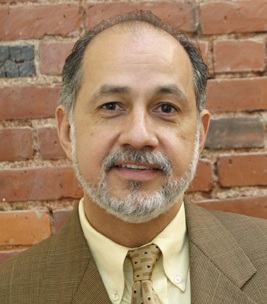
Author
Dr. Roberto Miranda
Summary: Small details can sustain or ruin great works; therefore, we must not settle for doing only the basics. Simon welcomed Jesus properly, but without any special devotion, while the sinful woman honored him with tears, kisses, and perfume. Her abundant love revealed the gratitude of someone who recognizes how much she has been forgiven, and she received a personal blessing. In the same way, God receives our service, but he calls us to move from mediocrity to excellence.
This attentiveness must extend to every area of life: character, marriage, parenting, work, and ministry. Punctuality, preparation, discipline, consistency, and care in seemingly mechanical tasks distinguish the ordinary from the outstanding. Spiritual anointing does not justify disorder or replace responsible effort.
Although we may have made great progress, there may still be habits, omissions, or small failings that hinder God’s work and damage what has been built. We must ask him to examine us, identify those strategic areas, and surrender them to him. Let us press on toward the goal, offering God our best and living with an excellence worthy of him.
The text for this meditation is found in Luke, Chapter 7. Let us go to verse 40, Luke 7:40. I would like to speak about a people who pay attention to detail, a detail-oriented people—the details, the importance of detail. Perhaps that is not a topic you have heard many times in a sermon, and I myself have neither heard nor preached it, but let us see what the Lord has: details, the importance of details in life, of being attentive to detail, which also has to do with excellence.
I also want to address this word to all our leaders who work in the congregation, to the ushers; I want to address it to the worship team, whom I hope are listening as well, and to the brothers who work with the sound and the transparencies. I want to address it to the teachers in the congregation; I want to address it to our deacons and church elders, to those who work with the youth as well, and to our pastors and leaders—and, of course, to myself too, because it applies to me, and I already know which part of this sermon applies to me. I have already processed it, I assure you. And the Lord has already given me my two or three lashes as well, so I am also preaching the Lord’s word as a wounded healer.
It says there in Luke, Chapter 7, verse 40: “Then Jesus answered and said to him, ‘Simon, I have something to say to you.’ And he said, ‘Say it, Teacher.’ A creditor had two debtors”—this is now a parable, a story, an account the Lord tells Simon the Pharisee.
“A creditor—that is, a person who lends money or to whom money is owed—had two debtors. One owed him 500 denarii—a very large amount—and the other 50. And since they had nothing with which to pay, he forgave them both. Tell me, then, which of them will love him more?” Simon answered, “Well, I suppose the one whom he forgave more—that is, the one who owed him 500 denarii, right?” And he said to him, “You have judged rightly.” Then, turning toward the woman, he said to Simon, “Do you see this woman?”—he is referring to this woman of ill repute who showed the Lord these special attentions, right?
“Do you see this woman?” he says to him. “I entered your house, and you gave me no water for my feet, but she has wet my feet with her tears and wiped them with her hair. You gave me no kiss, but since I came in, she has not ceased kissing my feet. You did not anoint my head with oil, but she has anointed my feet with perfume. Therefore, I tell you, her many sins are forgiven, because she loved much; but he who is forgiven little loves little.” And he said to her, “Your sins are forgiven.” And those who were sitting at the table with him began to say among themselves, “Who is this who even forgives sins?” But he said to the woman, “Your faith has saved you; go in peace.” Amen.
Father, thank you for your word, which comes from you, Lord, passes through us, and returns to you after having blessed us and deposited its sediment of life and joy and hope and richness within us. Open your word before us, Lord. We open our mouths believing that you will certainly fill them with good thoughts, edifying thoughts, Father, which will result in health and edification for your people. We ask it in Jesus’ name. Amen and amen.
As I was sitting there, I actually had another topic to share with you, but suddenly it came to mind how important details are in life. Someone has said in English that the devil is in the details, “the devil is in the details,” and that is true, brothers and sisters. One small detail can destroy an entire great building.
The space shuttle Challenger, which was destroyed some time ago, that great rocket as well, years ago, with that teacher—you will remember, about 10 years ago, perhaps more than that—which exploded in the air, causing a tremendous tragedy, traumatic for this entire nation, which in one sense did terrible damage to the space program for a long time and which still remains in the American psyche: these great accidents that cost billions of dollars were caused by tiny little details.
That spacecraft that was destroyed in the air just after takeoff was brought down by a little rubber ring, a simple thing that I think would cost 79 cents in a hardware store if we bought it for ordinary use. But it developed a series of defects that multiplied throughout the entire structure of that craft, causing it to explode under the pressure of takeoff and resulting in billions of dollars in losses.
So a detail, brothers and sisters, something that seems minimal in life, in conduct, in character, in our relationship with God, can undo everything else we do to serve the Lord and please the Lord. And it is frustrating to me that so much can be lost because of one tiny thing.
The Bible says that an entire life of good works and good testimony can be undone by a single thing. I did not find the reference because, as I tell you, this thought came to me this morning while I was sitting there, but that is how it is. You can build an entire life of good works, and one single act, one single event, can destroy and ruin all of it.
How many times have we helped people in our lives, for example, and invested in them and done many things to serve and help them, and then something happens—a tiny detail, a disagreement, or whatever it may be—and everything seems to come crashing down because of that one small thing.
How many times, as a pastor, have I seen this over more than twenty years of ministry—and the other pastors here may not have been serving as long as I have, but they have served long enough to know—that many times you can sow a great deal into someone’s life and spend years enjoying blessing and fellowship in the church, and then one day something happens, some tiny thing: someone offended them, something happened that they did not like, you made a mistake, or you simply told them something pastorally that they did not like, and there went the whole building, all those years of edification.
In other words, life is filled with this idea that details are important. Things that seem small and insignificant have very, very great meaning and importance.
Wise Solomon also says that one fly can spoil an entire costly perfume. And it is true. There are people who, if one tiny ant gets into their food, forget it—they will not even touch it anymore. That little insect is so tiny, but it can ruin a mountain of food.
Because details are important. Never judge the importance of something simply because it is tiny or because it seems disproportionately insignificant compared with everything else. Let us adjust our minds, brothers and sisters; let us train our minds to think about the small things. I believe that what truly distinguishes extraordinary people from basic, mediocre, average people is attention to detail.
When you enter Olympic competition, for example, the differences there actually come down to hundredths of a second. A world record is set at the Olympics by one tenth of a second. All the athletes there run, for example, in sprints or something similar, or even in long-distance races; in reality, a great athlete is defined by one tenth of a second, or by one second. They all run at an extremely advanced level, one any athlete in the world would envy, but when those athletes reach that level of greatness, what distinguishes them is a matter of....
That is why you see Olympic athletes do things that might seem ridiculous to strengthen their performance, to improve it ever so slightly. Swimmers, for example, shave their entire bodies because even those little hairs, the body hair, rubbing against the water, the friction of the water, can mean that thousandth of a second, that hundredth of a second that makes the difference in whether they reach the finish line first and win the gold medal or not.
Runners likewise wear suits that are completely aerodynamic, very tight, made from a certain type of fabric, because friction with the wind can, incredibly, make a difference in their performance.
In other words, details, brothers and sisters—that is what came to mind, and certain ideas came to me.... Why did I choose this passage as an illustration of this? Because... and I am going to give other illustrations so that this idea of the importance of details and of the small things in life will remain graphically engraved in our minds.
Let me say something else, because I know I am going to forget it. I do not have notes, so... Once again, cultures are characterized—and I believe the greatness of cultures is defined—by attention to detail, attention to the concrete things of life. Success in life, I believe, is defined by that ability to go down to that level.
Nations like the United States and Israel, for example—which is a... as has been said so often these days, it is a nation the size of New Jersey, one of the smallest states in the United States. Nevertheless, Israel can do battle and fight against all those great nations around it that are far more numerous and, in terms of land, much larger, because Israel has very advanced technology, and that technology depends on attention to detail, on scientists who develop computers, and who train their soldiers very well, and who are continually drilling and rehearsing the same things again and again and again until they have created an efficient army with highly advanced technology....
You cannot have advanced technology without attention to detail, without people who pay attention to the smallest things, to concrete things, who can repeat the same thing again and again and again, who can do things repeatedly out of discipline. Those are the things that determine whether or not a nation is great.
In this country, it is not that people are more intelligent than in Latin America. On the contrary, objectively observing things, I know so many Latinos, for example, or people from other ethnic groups, who are just as intelligent and often more sophisticated in their culture and in their way of viewing life than many of the people one sees in these Anglo-Saxon and European nations.
But the difference I have seen, for example, while attending these great universities where the Lord allowed me to study, is that there are people there who are not geniuses, who are not brilliant in the strict sense of the word, and who are not necessarily creative in the way they think, but they are able to discipline themselves and spend 8, 10, or 12 hours over a book, wearing their eyes out, writing notes, and disciplining themselves to read and research; and through sheer force of will, they master a discipline and get ahead. It is not that they are necessarily naturally gifted; it is not that their minds are brilliant, but they are disciplined and pay attention to details.
And that is why these nations surpass and rise far above other nations. If only, for example, our leaders in Latin America and Africa and other parts of the developing world understood this: it is not about how flashy a person is; it is not about how much charisma he has. Why do we choose our presidents? Because they talk a lot, make grand speeches, are very macho or attractive or whatever else, and that is what leads people to elect leaders.
Sometimes the best leaders are extremely boring people who look as though they would not hurt a fly, but they pay attention to detail. Recently I was reading a book, and there is a chapter called “Level 5 Leadership,” the highest level of leadership according to these researchers. It explains that the greatest executives of the largest, best, and most excellent companies in the United States—companies that have enjoyed 50 years of success, for example, and have attained true corporate greatness—the great executives who built and established those companies and brought them to their level of greatness, almost none of them seemed very promising. They are not necessarily attractive people.
Someone like Lee Iacocca, for example—you saw him everywhere, in the news, even in movies and on television—and you might think, “Wow, that man really eats children raw.” Well, in the end, he did have moments of greatness, but because he lacked that steadiness and attention to detail, when he left his automobile company and all that, it fell into crisis because he turned his attention to other things; he went off to buy vineyards in Italy, write books, and all that. He did not have that marathon runner’s mentality of staying right there, paying attention to detail, point by point.
Other great leaders of multibillion-dollar corporations that have endured have been very sober, calm, quiet people who have not been in the news very much; they did not appear.... Look at Vice President Cheney. Regardless of what you think of him politically, whether or not he is a saint in your book, you look at Vice President Cheney and see that this man would not win any popularity, attractiveness, or charisma contest anywhere in the world. But he is a brilliant, highly competent fellow who has had a career in which he has accumulated different kinds of skills and knowledge. That is why, no matter what anyone says, he is one of the most influential and pivotal vice presidents this nation has ever had. Vice presidents in this country are generally more ceremonial; they are symbolic and do not have much influence. But this man has had it, quietly there in the background; many times no one notices, but he has incredible influence over President Bush. Because he is a man who pays.... and that is what defines greatness in life.
That is what defines greatness in marriage, in fatherhood or motherhood: those details, persistence, staying there through things and doing the things that do not please us, that we do not like, and simply doing them on principle, just because; that is what takes something from mediocre to excellent, to outstanding.
Again, look here at this passage, because I want to make the connection before continuing. This passage speaks of Simon the Pharisee and the woman who anointed the Lord Jesus. We are not told her name here; she is called a woman who was a sinner—that is all that is said about her name. This woman arrives at the home of Simon the Pharisee, where Jesus is being attended to. Simon has invited him to his home, and this woman enters uninvited, because she is a woman of ill repute in the city, and she breaks a jar of very expensive perfume and pours the perfume over the Lord’s head, bathing his body with that extremely expensive perfume, and everyone is astonished by what they are seeing there. She did not ask permission to enter; she simply came in, and she wants to honor the Lord.
It says that she anointed the Lord, and that passage says—this is the part we did not read—that, “standing behind him at his feet—verse 38—weeping, she began to wet his feet with her tears, and wiped them with her hair, and kissed his feet and anointed them with the perfume.” And the Pharisee, who is a well-behaved, decent, respectable man, sees... He does things right, up to a point. That is what I mean: 90% of his life is very good. He invited Jesus; he did something many Pharisees did not do. He invited him into his home, gave him a place to sit, and attended to him. He is a man who has most of his life in order. Now this woman comes and, with her passionate love, honors the Lord in an extravagant and extraordinary way.
Hello, brothers and sisters. I have just realized that you are up there. Forgive me. God bless you. I always have to make myself do this. It is so good to have you. We are glad to see you there.
And this woman honors the Lord through the details. Then Simon is scandalized that the Lord allows this woman to touch him, and since she is a woman of ill repute, what are people going to think of him, right? Then Jesus says to him, “Simon, let me tell you something.” Or rather, the Lord discerned that this was happening; he discerned his heart and said, “Look, I am going to tell you a story.” There was a man who had two people who owed him money. One owed him 100,000 dollars, and the other owed him 10,000. He forgave the debt of both. Which of the two do you think will love the Lord more and be more grateful to him? Well, the one who was forgiven more. Then he says, “Simon, when I entered your house, you gave me a basic welcome. You had me there in your home and gave me a seat, but you did nothing else. You did not do anything out of the ordinary or inconvenience yourself very much.
Notice something, brothers and sisters: the Lord receives what we offer him and sometimes says nothing to us, but if you press him, you will discover that there are things he would like to receive from you that you are not giving him. And this is one of the things we need to understand in our lives. We come to church, sometimes look at a bill in the offering plate, pray from time to time, do not commit any major improprieties in life, and have put the basic things in our lives in order. Some of us give more than that: we work hard in the church, serve among the ushers, in the music ministry, as teachers, or whatever it may be, and we have reached a certain level.
That is what I mean: we have reached a certain level of competence in our moral and spiritual lives, and the Lord receives all of that and is pleased, and we are blessed as a result of having given to the Lord up to a certain basic level. But sometimes the Lord would like us to give him more, and he does not say anything to us, yet his heart longs for us to move forward, to leave behind the mediocre and the average and move on to the excellent, to the great.
Most Christians remain there. And brothers and sisters, I would say that 90% of us Christians remain at the basic level. We go to church, get dressed on Sundays—and that is good. Instead of sleeping off a bender, as the Mexicans say, and being hungover after getting into trouble the night before, we go to church. Glory to God. We take our children and live decent lives. Amen. But sometimes we remain there and say, “Well, that is enough. It is fine. I have already given the Lord what I had to give him. Let him be satisfied with that, because I am not a spiritual genius either.” But the Lord would like more. The Lord would like us, as it were, to leave mediocrity behind and enter that level occupied by the top 10% of Olympic athletes.
This woman did that. Simon remained at the basic level, and so the Lord says to him, “Simon, when I came into your house, you did not give me water for my feet, but she has wet my feet with tears—not with water, but with tears—and has wiped them, not with a towel, but with her hair. You did not even give me a welcoming kiss.” Why? Because he was a Pharisee who regarded the Lord with a certain distance. “But from the time I came in, she has not stopped kissing my feet. You did not anoint my head with oil.” And all these things, brothers and sisters, were signs of respect for a special person, given when someone came into your home as a sign of preference and care.
He gave the Lord Jesus nothing more than the basic reception he would have given any other person. You cannot treat the Lord that way; you must do much more than that. This woman went much further and gave to the Lord to the utmost, and the Lord blessed her greatly.
You see, that is the illustration in this passage. You and I can be like Simon, giving the Lord only the very basics, but what draws the greatest blessings from the Lord, the greatest revelations for our lives, what takes us into the realm of miracles and abundant life, of joy, of the restoration of our relationships, of the healing of our emotions, our memories, and our marriages, what allows us to have enough oil to share not only for ourselves but also with our children, so that they too may enter into the same love of the Lord that we have—
What guarantees that abundant life God has for us is entering that level. Otherwise, we simply remain with a stamped passport for going to heaven when we die, but here on earth we do not enjoy the greatness God wants for us, because we have not given at that level—that superabundant, generous, let us say ambitious, level that God desires.
I encourage you in the name of the Lord, brothers and sisters, to look at that. The Lord noticed this woman’s attention to detail, and those details drew from him that extra measure which Simon did not receive.
It says, “Therefore, because this woman loved much, her sins are forgiven.” That woman left there having received a direct, personal touch from Jesus Christ because she invested much and paid attention to the details.
Now, that is one level. I do not want to speak only about the spiritual aspect because, what is more, I am even more interested in the practical aspect of life, brothers and sisters. For I also want to encourage you to pay attention to detail in other areas of your lives.
My nephew Omar, who may be listening to this message, because he listens to them—and he does not merely tell me that he listens; he speaks in a way that lets me know he listens—starts tomorrow, and so I congratulate him and, in that sense, feel very proud of him. Tomorrow he begins an extraordinary job in New York after a great deal of hard work, study, and interviews everywhere. The Lord has given him a good job, an extraordinarily good and lucrative job, and so on. And we were talking... We spent a few days together recently, and he was asking me, “Well, what advice would you give me now that I am starting my job at this large corporation, and what advice could you give me about my conduct and my performance there in that corporation?”
And one of the things I spoke to him about was precisely attention to detail: when he prepared a report, he should look at the spelling—the way words were spelled, the orthography—and make sure the formatting was done well; that his bosses should see someone who arrived at meetings on time and knew the history... And I told him, “Look, the first thing you have to do is study the history of the corporation where you are. Read everything you can about that corporation.” Something as... and I am going to take a small liberty with him for a moment. It is a company with initials—let us say HSPP—and that is how everyone knows it.
It is like these corporations, such as HP, where many people do not even know that it stands for Hewlett-Packard, because the letters themselves have become what distinguishes it, right? And when he told me that he was interviewing with a company and gave me the letters, the company’s initials, I asked him, “Well, what do the initials stand for?” And he said, “Whew...” He was not sure at that moment. I told him, “Well, look, the first thing you have to do, before going to the next interview, is make sure that if someone asks you, you can say exactly...” They were Chinese names, in fact. “But make sure you know exactly what each letter stands for, and go and study the history of that company: who founded it, which countries it has branches in, and what things characterize it, because that might be the place where you end up working and where you may have to... And if one day a boss is around and asks you and hears that you do not know, that could... It is not fatal, but it lowers their opinion of you because, if one is working, let us say, in banking and finance, it would be better...”
I look here at my brother, Dr. Luis Valles, and I think of a doctor who pays attention to detail. Imagine a doctor performing surgery who removes your right lung instead of your left. A tiny error—nothing at all; lungs are all alike. But, oh, if he removes it... How many medical errors there are, and how many millions of dollars lawyers extract because of one tiny error in an operation. Imagine, in one of those extremely delicate operations, where one-thousandth of a millimeter can mean the loss of an eye or a life. Details.
So I told him that details are very important. And I believe that this is what enables an employee, for example, to rise to a certain level in a corporation: that attention to detail, that punctuality, those well-chosen clothes. It does not necessarily mean wearing a suit, but at least a presentable shirt; and if he is going to wear a tie, at least make sure the knot is straight, right? Sometimes it is a poorly prepared report, or a person who has to keep looking and asking, “What was it that I said?” and then goes back to the notes, and all that... Do that two or three times and forget it—you have lost out. In an interview, you... Competition today is so intense that if you do not have everything properly ironed out, do not even get dressed, because you are not going, as they say.
Details, brothers and sisters. At work—and we do not have to talk about large corporations—in your own job, in an office, in a plant, wherever it may be, in a factory, if you wish, you can spend your entire life as a basic, average worker, or you can attain greatness, become a supervisor, or earn the trust of your bosses by paying attention to detail. Otherwise, rest assured that they will simply place you in the category of the vast majority: mediocrity.
It must be the same in ministry. Here comes the screwdriver; I am driving it into the flesh. Our fellow leaders who serve in every area: worship, the transparencies, sound. You know that I definitely make many mistakes, but one of the things I am—I will not say a perfectionist, because I do not believe I am a perfectionist—but I do like excellence, and it drives me out of my mind when the details... The Holy Spirit may be here, the angels floating above my head, but there are things that rob me of the blessing. Details.
And once again, I want a church of excellence because I know that this results in blessing for the people of God, because we are an exercise. When you come here to this church, I know there are many things you are receiving subliminally, without realizing it, in your subconscious. Therefore, we have to do everything possible... We have to represent the very best because we have the Spirit of God; we have all the blessings of the kingdom of God—God has given them to us. We have the mind of Christ, the Word says. We have the gifts of the Holy Spirit, brothers and sisters. How, then, is it possible for us to be mediocre when we have all these things? It is a contradiction of the kingdom of God. The children of God must be the best. But do you know what happens? The problem is that, many times, the more we emphasize power and anointing, the more careless we become about the details.
You see those evangelicals out there who do not even believe in electric light, yet they have beautiful, clean churches; all their processes are in order, the people are disciplined, their services are impeccable, their finances are richly blessed, and their cars shine. Meanwhile, we who emphasize the glory of God, the anointing, and the power of the Holy Spirit live ramshackle lives, with churches in complete disarray, disorderly church services, and programs that do not work, because we... believe that God will do everything, and we do not apply our energy to the details, to the little things.
If you are assigned something, make sure you become the best person in that small area. The person who leads, for example, the ushers... I love the ushers because they are people who make an effort; every day I ask them to try harder, to make sure that when the time comes to collect the offering, they are already there, ready to collect it. Be attentive to detail; let things always be the same in the positive sense of the word.
If on Sundays we are supposed to have those sheets to give to the visitors, those sheets should be in their hands, because if we do it two Sundays, by the third we are already falling off. That is what happens many times; the world—the Third World—is like that. We in the developing world are like that. We start, but three weeks later we have forgotten everything we had promised and everything we had done, and someone has to come back and turn the crank again to pump us up once more so that... oh yes, forgive me, I remembered.
Brothers and sisters, the details. Details are so important in life. Trying to do the best possible job. If you are going to lead, you have to make sure that you know... you have to sit down first, because it is not only a matter of praying; I believe in praying. I believe in seeking the Lord’s anointing, I believe in... all of that, but besides that, once you have done all of that, which is the main thing, then memorize every chorus and make sure you already know the sequence of every chorus perfectly; when one ends, you already know what comes next. While you are singing one, you are thinking about which one you are going to sing next, and you are already looking for it.
Those mechanical aspects that we, the people of God, have not learned to attend to in our lives: the mechanical side of things—making sure that the transparencies are in place, that we know which one will come next; that we have gone up there and that the person working with us knows exactly the signals we give them, that we understand each other well, and if not, we are going to meet to talk about it, so that when we come to the house of God and the Holy Spirit is flowing, the details have already been ironed out and we do not have to worry about them. That is what leads to excellence, my brothers and sisters, to the beauty of the Kingdom of God.
I have been watching our neighbors next door; in fact, there is a family that... well, I am not going to go into many details... the point is that I have been watching an experiment here involving a truck on which they are putting—they are building—a box on the truck for carrying things, and so on. The truck had nothing but simply the bed; it was small, and they hired a carpenter.
First of all, all that wood is going to be exposed to the elements, and it is not treated wood, so in a year that wood is going to be mush, because the elements are going to destroy it; he is not even thinking about what kind of wood to use. And the box is 85% well made, but the sections do not look very good, things are rickety and a little battered, and it will do what it is supposed to do, but it will not reflect well on that carpenter. He is obviously not a detail-oriented person. Everything he has done, all the energy he has invested, cannot be seen because he has not paid attention to the details; the basic things that will determine whether that contraption works well or not, or whether it looks good, have not been attended to. Rather, he did 90% of it well, but that 10% makes the entire 90% look bad because he did not pay attention or devote time to the small things.
The last example that comes to mind is in the kitchen. If you—look, for example, at chicken and rice. I am not going to get into culinary matters here. Look, 80% of a chicken-and-rice dish—I use that because everyone knows what chicken and rice is; all our countries have it. Eighty-five percent of a chicken-and-rice dish is made the same way by everyone, up to a point. It has the main ingredients, rice and chicken, whether they cut it into little pieces or whether you use a whole chicken, or breast meat, or whatever; it is the same. All homemakers, or the people who cook, add to the rice... chicken and rice has rice, it has chicken, they usually add a little salt, they will add a little garlic and onion, and probably tomato sauce in one form or another. Everyone uses the basic things and essentially does the same thing: they put the rice together with the chicken and those basic ingredients.
So 85% of chicken-and-rice dishes will be the same, even up to almost 90%, but there are some homemakers for whom the details... and that is what will make the difference between a memorable chicken-and-rice dish, one you remember and for which you manage to get yourself invited back to the house, and a chicken-and-rice dish that filled you up and did the job, but was simply one more among the many you have eaten. What made the difference? The excellent homemaker takes, for example, some bouillon cubes and adds them so that all the rice will be seasoned better, right? She takes a little cilantro, chops it, and adds it; she takes one of those little packets of Accent seasoning and adds that too. She perhaps rinses the chicken with lemon before adding the other seasonings, and then perhaps takes the chicken and sautés it a little to seal it so that it does not lose all its flavor, right? So that the flavor does not seep out into the water, because that is what happens with a lot of meat. You boil it, so all the flavor seeps out, and the rice has flavor but the meat has lost it; so what you do is seal it, sauté it a little. That is why people sauté meat: so that the outside is sealed and it retains its juices.
So, as you can see, I like cooking, and I like food too. So those little details from that homemaker are what make that chicken and rice a memorable, Olympic chicken-and-rice dish, or a mediocre, basic chicken-and-rice dish, right? The details, brothers and sisters. That is what great cooks know, which is why people say, ‘What did you do, sister?’ ‘Well, I don’t know, I just threw it in there...’ No, that woman pays attention to details; she knows what she is doing. She learned.
So, brothers and sisters, that is how it is in life. It is the efforts we make, the ability to discipline ourselves at work, at home, in human relationships. How beautiful the details in a person are when that person thinks about the small things in their personality. Many of us have already reached a certain level of spiritual maturity in our lives, but still, it is as though we have grown tired; we have already cast out the major demons, and now we think, as it were, that we have nothing else to work on. Brothers and sisters, we must be as the Apostle Paul says: I press on toward the mark, toward the high calling.
I imagine that every day of his life, until his last breath, until his final sigh, Paul was polishing his life, polishing his relationship with the Lord, polishing his character.
There will always be small things in our lives; there will be things we will have to look at in ourselves. There are details of our personality, defects in ourselves; there are little things that destroy the life of a man, of a woman, or a relationship—those little habits, that way of speaking that kills love, those omissions in relationships. That is what destroys human relationships, and we do not pay attention to them because we say, ‘But I have already done a good job. Look, I am not a criminal, I am not a child abuser, I am not committing adultery or smoking or drinking away the money or gambling, so what more does God want from me?’
There are small things that will determine whether or not you attain spiritual greatness, and whether you press on there toward the goal, day by day, always searching within yourself: ‘What more can I offer the Lord? How can I better improve my life, my way of being, my conduct at work, in the church, in my ministry? What other little details can I add to beautify my life, my human profile?’ That is what will take you to the next level.
The Lord looks at the details and wants you to devote time to them. Those aspects of your life, those flaws in your character that seem unimportant, are absolutely crucial, and very often they are what obstruct the full manifestation of the Spirit of God in your life. And you have to ask the Lord, ‘Examine me, Lord, and give me the clarity to understand what other area I am lacking, where the area is to which I must add something so that my profile in every area of my life may be excellent, great, beautiful, Olympic.’
We want to live Olympic lives. If you want a title for this sermon, ‘Olympic Lives.’ Earlier I said ‘A Detail-Oriented People’; well, now I say ‘Olympic Lives,’ better still. Olympic lives—that is what God wants from you. Do not settle for the minimum. For a person who, just a little while ago, had doubts about what he was going to preach, I have gone on quite a bit.
One last thing: look at Revelation chapter 2, the letters to the churches, which the Lord wrote to the churches. I am struck by how many times the Lord repeats this phrase to the churches. Look, for example, at the church—in chapter 2, the church in Ephesus, the message to Ephesus—Revelation chapter 2, verse 2. The Lord says: ‘...I know your works,’ he says to the church in Ephesus, ‘and your hard work and patience, and that you cannot bear those who are evil, and you have tested those who say they are Apostles and are not, and have found them to be liars, and you have endured and have been patient and have worked hard for the sake of my name, and have not fainted...’
Look at how he praises the church in Ephesus, how he says, ‘You have done things well. You have suffered, you have been persecuted, you have put your life on the line, you have done things that others have not done.’ Now look at what verse 4 says:
‘...but I have this against you: you have left your first love.’ One detail, after all the great things that church has done: ‘But I have something against you. I have this against you.’
Let us go to another passage, the message to the church in Pergamum, chapter 2, verse 13, Revelation 2:13: ‘I know your works,’ he says to the church in Pergamum, ‘and where you dwell, where Satan’s throne is; but you hold fast to my name and have not denied my faith, even in the days when Antipas, my faithful witness, was killed among you, where Satan dwells...’
Good, great things: you have allowed yourself to be sacrificed; you are right in the midst of where the devil himself is, and you have persisted in your faith. You have not denied your faith, ‘...but I have a few things against you...’ But I have a few things against you.
Those little details marred the great and beautiful profile of this church, which had suffered and given so much for the Lord.
Look at the message to Thyatira, verse 19, 2:19: ‘...I know your works and love and faith and service and your patience, and that your latter works are greater than the first; but I have a few things against you...’ It is the same idea.
To how many of us would the Lord say that? I know that you serve me, I know that you give, I know that you have cleansed yourself of many things, I know that you have sacrificed much for me, you even serve me in the church and witness to others, and you have cleansed many areas of your life; but I still have a few things against you that you need to change, that you need to polish, that you need to perfect in your life.
So that is the word of the Lord for us this morning. What are the few things? What are the little foxes that spoil your vineyard, as the writer of Ecclesiastes—or rather, the Song of Songs—says? What are the little foxes, what are the small details in your professional life, in your work, in your life as a homemaker, in your marital relationships, in the way you treat your children, in your ministerial performance in the area where you are serving? What are those few little things? What are the little details that you still need to work on so that everything else, the entire framework, may have good finishing touches—the finishing touches—because that is where great carpenters distinguish themselves: in the finishing touches; great artists, always in the finishing touches, in the details.
The Lord is calling us to pay attention to those things. Let us not settle for simply doing 90% well. Let us press on toward the goal, toward the mark, with excellence. Let us give the Lord the best of the best of the best, because he deserves it. Let us offer him lives that do justice to that powerful and perfect God whom we have. Do not think that because you simply gave the Lord 90%, he is not looking; give him 100%, and seek to be the best, the best offering to the Lord, an offering pleasing to the Lord.
Let us stand and make a vow of excellence to the Lord, and of a life lived in honor of God. And ask the Lord, ‘Father, what area of my life is still loose? Where is that nut that could destroy the whole ship if I do not attend to it in time? Where is the detail? Where is the area of my life that I have to surrender to you, that stronghold where the enemy is entrenched and says, “I am not going to leave you; I am not going to let go of that, because if I let go of that, I have lost you completely. So, all right, I cannot prevent you from doing all the other things, but I am going to hold on to that one, because as long as I have that foothold in your life, at least I have an entry point, and from there, one day, when you let your guard down, I can destroy everything else, so I am not going to let it go.”’ And he is there struggling over that point, and you have become comfortable and accustomed to it, and that is the strategic point which, when you give it to the Lord and surrender it, is where the great blessing will come into your life. What is that strategic area in your life? Tiny, but strategic—so tiny that it seems unimportant, and that is why you neglect it, but it is precisely the point of support for every other area of your life. Surrender it to the Lord, and do not underestimate the importance of details.
We worship you, Lord. We bless you this morning. Father, deal with us. Cleanse us. Examine us, O God. Examine me, know my heart, and see if there is anything in me that displeases you, and remove it, Lord, and give us the strength to uproot it from our lives. We love you, Lord. We worship you; we bless you this morning. Remove everything that is not of you, Father, everything that is not fitting. We surrender it to you. Help us to be attentive to details, Lord, in the name of Jesus. Amen.