God First—riches and Everything Else Second (Luke 12:13)
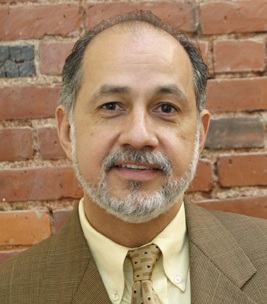
Author
Dr. Roberto Miranda
Summary: From the parable of the rich fool, we understand that life is not measured by the abundance of possessions. Greed is an excessive attachment to created things that displaces the Creator, feeds our selfishness, and turns money, recognition, the body, or other desires into idols. In contrast to the rich man who thinks only of himself, we must live under the lordship of Christ and embrace our stewardship: everything we are and possess belongs to God. This awareness transforms how we use our money, time, talents, and energy, directing them toward the Kingdom. We must abandon a horizontal perspective limited to accumulating and redistributing temporal things and adopt a vertical perspective that seeks eternal consequences. Possessions cannot satisfy our souls, for our souls find rest in God alone. Moreover, the fragility of life, health, and riches requires us to abandon false security and entrust ourselves to the Lord today. Our practical response is to seek the Kingdom first, make decisions according to the Word, surrender our entire lives to Christ, and not postpone our personal covenant with him.
The Gospel According to Saint Luke—Chapter 12, beginning with verse 13: “Someone in the crowd said to him, ‘Teacher, tell my brother to divide the inheritance with me.’ But he said to him, ‘Man, who appointed me judge or arbitrator over you?’ And he said to them, ‘Watch out and guard yourselves against every kind of greed, because a man’s life does not consist in the abundance of the possessions he owns.’”
He also told them a parable, saying: “The land of a rich man had produced abundantly, and he thought to himself, ‘What shall I do, since I have nowhere to store my crops?’ And he said, ‘This is what I will do: I will tear down my barns and build larger ones, and there I will store all my crops and my goods. And I will say to my soul: Soul, you have many goods stored up for many years. Take your ease; eat, drink, and be merry.’ But God said to him, ‘Fool, tonight they will demand your soul from you; then who will own what you have provided?’ So it is with the one who lays up treasure for himself and is not rich toward God.”
Brothers and sisters, this passage speaks to us about what our attitude toward material possessions should be. On many occasions, the Lord referred to the matter of money and possessions, and he always did so by radically calling God’s children to rid themselves of love and excessive attachment to money and material things.
One of the things the Lord Jesus Christ spoke about most was money. I remember that when I was beginning in ministry, I greatly disliked having to talk about money. And if I had to ask for money—for example, for the construction of this building—I would sweat profusely before standing in front of the people to make an appeal. And sometimes I made so many excuses that, by the time I finished, even I could not remember what I was asking for.
But over time I began to realize that the Lord Jesus Christ was not ashamed to talk about money and about the need for us to use our money and possessions radically in support of the Kingdom of God. In fact, the Lord considered that, in a sense, our attitude toward money and material possessions determined the level of blessing we could receive from God, both here on earth and in the life to come.
It is easy for us to understand that in this life God may give us more or less blessing according to our conduct here on earth. But the Bible also suggests that there are different degrees of reward and glory that we will enjoy in the life to come, according to the level of our investment in the Kingdom of God here on earth. Now, I do not know how that distinction will work in the life to come. I do not know whether God will give some people a mansion with many rooms and others a two-bedroom condominium. I do not know; I am not sure. Or perhaps we will reflect more or less light according to our conduct.
I am not sure, but what the Word does suggest to me is that, according to what we invest here for the Kingdom of God, we will enjoy the Kingdom of Heaven to a greater or lesser degree. The Lord always took advantage of circumstantial opportunities to speak about eternal principles. And here we see him doing that. He is on his way when a very upset man approaches him because his brother does not want to share the inheritance that legitimately belongs to him as well. And he asks Jesus, as a rabbi and teacher, to force his brother to give him his share of the money. And instead of doing what this man asks, the Lord reacts with displeasure, somewhat offended by what he is being asked to do.
Instead, he uses this opportunity to direct his listeners, and all of us as well, toward universal principles that we must apply in every material situation. What the Lord did was go to the root of the problem. He did not remain at the superficial, symptomatic level of the situation; rather, he went to the attitude that produces situations like the one before him.
We know that greed is often an excessive attachment to money; it is what produces conflicts among human beings. How many of us know of situations, perhaps within our own family, where the body of the father or mother is not even cold yet and the children are already fighting over the money? And how many families have been divided by these things? How many marriages have problems over the issue of money?
I believe that at the root of all these situations lies the element of selfishness and excessive attachment to material things. That is why, instead of getting sidetracked and expending his glory on resolving a minor dispute, the Lord used that moment to give principles capable of resolving any dispute into which we might fall regarding material things.
That is why, in verse 15, we see him say to them: “Watch out and guard yourselves against every kind of greed.” Think about how serious the Lord’s warning is. He says, “Watch out,” meaning: be careful; pay attention. And he also says, “Guard yourselves,” that is, protect yourselves from it. And he says, “against every kind of greed.” In other words, it is not merely some little thing here and another there, but the heart’s fundamental attitude of greed.
In the original Greek, the word translated into Spanish as greed is “pleonexia.” Everyone say, “Pleonexia.” Guard yourselves against pleonexia, my brothers and sisters of the Lion of Judah congregation.
What is greed? What is pleonexia? I would define greed as an excessive attachment to material things, an exaggerated love of money and matter. Now, I could also say that greed is an excessive attachment to anything in this world. I believe people can be greedy for recognition from others. There are people who can be greedy for sleep, I think. In fact, there are people who can feel greedy for a well-built, muscular body. Indeed, I believe that in this twenty-first-century culture there is an excessive glorification of the human body. And billions of dollars are invested in staying very muscular and buffed up—I do not know whether that word exists, but you know what I mean. And all this speaks of excessive attachment to what has been created and of taking our eyes off the Creator.
For I believe, brothers and sisters, that at the root of greed there is also idolatry. Greed and idolatry are siblings and have the same roots. Greed is born from an exaggerated awareness of the here and now, of time and space. When a person loves the present life too much—the world in which he lives—his values and investments are determined by a focus on what happens here on earth, in this life. And when he takes his eyes off the Creator and eternity, he fixes them solely on time and space and thus becomes a worshiper of what is temporal and limited instead of worshiping the One who made all of it possible. And in a moment we will see how this rich man exemplifies this kind of attitude.
But look for a moment at Job chapter 31 and see how the attitude of a person who loves money excessively links that love of money with idolatry. Job 31:24 says: “If I put my hope in gold and said to gold, ‘You are my confidence’; if I rejoiced because my wealth had multiplied and because my hand had acquired much.”
Up to this point, it is easy to understand how this exemplifies greed. But look at the association Job’s mind now makes. It says: “Whenever I looked at the sun when it shone, or at the moon moving in splendor.”
What are we beginning to see here? I believe there is a connection between the worship of creation and the love of gold and material things. Job’s mind is making that spiritual association—or, in reality, the mind of the Holy Spirit is.
“And if my heart was secretly enticed and my mouth kissed my hand, this also would be an iniquity to be judged, because I would have denied the sovereign God.” You see, greed is intertwined with the worship of nature and creation, as well as with self-worship and the denial of God. All these things are interwoven with one another.
Now, perhaps you say, “Well, I am definitely not a greedy person, so thank God I can go to sleep while the pastor finishes the sermon, because this does not apply to me.” But brothers and sisters, I suggest to you that it is not so easy to escape the teachings of Jesus and their moral implications.
Here the Lord speaks and uses the rich, greedy man as an extreme case of greed, but I believe we can recognize within every one of us the elements that drive him. Look at some of the mistakes this foolish man makes. First of all, he never acknowledges God at any point; all the time he is thinking only about his money, himself, and how to make his money grow. Throughout the passage there is an excessive use of “I” or the possessive “my.” He says, “I will tear down my barns.” He says, “There I will store all my crops and my goods, and I will say to my soul.” It is always I, I, I.
He does not consult God at any time before making important decisions concerning his possessions. How often do we make material decisions about a job or a relationship, or any other romantic decision, without asking ourselves, “Lord, what specifically is your will regarding this matter in my life?”
In every decision we make in our lives, whether that decision is great or small, there should always be, as a kind of background in our minds, the desire that God permeate every aspect of that decision. Seeking God’s wisdom in all our decisions should be so important that at times it does not even need to be consciously mentioned. Our sensitivity should be so thoroughly permeated by an awareness of God’s lordship over our lives that everything we do should obey this consideration: What does God want me to do? And to me, this is one of the signs of a mature believer who is conscious of Christ’s lordship over his life. Another thing is that this man has no sense of stewardship whatsoever. Everything is his. He is not managing anything; he owns everything.
And the idea of stewardship in Scripture tells us something very important. It is one of the most important truths in Scripture. And it is this: “Everything I have and everything I am belongs to God.” Repeat after me: “Everything I have, everything I am, belongs to the Lord.”
And if that is a part of our lives, it means that every decision we make and everything we manage must always be handled with the awareness that this is not mine. When I give the Lord my tithe, for example, I am not giving him some of my money. I am simply setting aside for the Lord ten percent of the one hundred percent that he deserves. I did not hear many amens when I said that.
I am going to be honest with you: when I give my tithe, I do not spend too much time thinking about what I am doing. First, because if I think about it too much, I will not give it. But secondly, it is because I have understood that I have no discretion or authority to decide concerning that ten percent. Everything I have belongs to the Lord, and the Lord has said, “Set apart for me ten percent of what I have given you.” And I simply obey.
And when we serve the Lord, for example in ministry, and give our lives to the Lord full-time, in reality we are not doing anything extraordinary or heroic. We are simply making a personal acknowledgment of a fact: my life, my talents, my time, and my energies belong to God.
When you see this, it revolutionizes the way you make decisions about the things in your life. Your mind no longer thinks so much about matter, but about the God of matter. Your priorities become spiritual rather than material. You are more concerned about how your life can be useful to the Lord; how your money can advance the interests of the Kingdom of God; how your body’s energies can be used for God’s glory. For you know that God is the owner of your life and that everything you have has come from his generosity and his hand. And your life is consumed by a sense of gratitude toward the Lord who has given you everything. Then you know that every little thing you give the Lord is minimal compared with the totality of what he has given you. He gave us his all when he gave us Christ Jesus on the cross of Calvary.
How can we be stingy and tightfisted when we give to the One who gave everything for us? I tell you, brothers and sisters, many times we do not experience the glory of God in our lives or the joy of being believers because we are deceiving ourselves about who is Lord of our lives. To experience the joy of the Lord, we must first surrender ourselves completely to the Lord.
And this is not a poetic image; it is an image that resonates in every moment and every situation in life. When I choose to sleep one hour less so that I can speak on the phone with a person who needs a word of affirmation and counsel, that is living our lives in light of Christ’s lordship. When you decide to share your privacy with someone who needs lodging for a day or a night, that is acknowledging that Christ is the Lord of your life. When a woman or a man decides to sacrifice the joy of being in the service in order to bless children in the children’s service upstairs or downstairs at twelve o’clock, that is acknowledging the stewardship and lordship of Christ in our lives.
In other words, brothers and sisters, these sublime principles have very concrete and sometimes painful consequences.
Romans 8:5 says: “For those who are of the flesh set their minds on the things of the flesh, but those who are of the Spirit on the things of the Spirit.” The person who recognizes the lordship of Christ—their mind and priorities, the investments of their time and energy, and above all their affections—are always focused on how that advances the Kingdom of God.
A third thing about this man is that he has what I call a lateral vision. You see, all he wants to do is distribute and rearrange things. He is as though enclosed in a large bubble and cannot get out of it, so what he does is simply redistribute the possessions he has. And he says: “What shall I do, because I no longer have anywhere to put my goods? Ah! What I am going to do is build something bigger, and then I will put them there.”
You see, it is an entirely horizontal vision. Everything he does has to be done only on that level, right at ground level. The image that comes to mind is of people playing dominoes: they take the dominoes and move them with both hands across the board and simply rearrange them, but they do not lift them or take them out or anything; they merely redistribute them. The life of the person who does not live for God is reduced to that alone. Their life is reduced to making decisions that have no vertical resonance toward God. It is a poor and petty life. It is a life of symbolic advances, but not real ones. It is simply like a ball game or any sporting event, in which for a while the players take what they are doing seriously and invest all their energy in it, but when the game is over, what has really changed in the universe? Everything has remained the same. It is a serious game, but that is all. It is simply a game.
And how many human beings spend their lives precisely by getting involved in the game others have defined for them? That game includes, for example, going to college and pursuing a career. Or, like Donald Trump, acquiring a great deal of money, marrying many times, being envied by many men, and appearing in the news and on television—but in the end, what is changing in the universe? What eternal or moral implications does the game people are involved in have? When we die and the music stops, what meaning and what effect did our life itself have, brothers and sisters?
When they drove the nails into your coffin and put you six feet underground, what impact did your life have on the world? And what implications did the little game you were involved in during that time have for eternity? We must be thinking about how my life can affect eternity. How can my life help save someone from eternal hell? How can my life build up the soul of someone who is dull and brutish in moral and spiritual terms? How can I grow and develop morally and spiritually so that during my time here on earth I may become more and more like Christ Jesus? How can I use my possessions and goods and invest them for eternal life and for the Kingdom of God?
Do you see the difference between a horizontal perspective and a vertical perspective? Do you see the difference between an animalistic, earthly mentality and a spiritual, eternal mentality? Brothers and sisters, unfortunately the churches, including ours, are full of people who are deceiving themselves. We come to church, but our hearts are still attached to that horizontal mentality. We have not cut the umbilical cord that binds us to this earth and its cares and vanities.
I suddenly remember the words of the apostle John in First John, where he speaks about loving the world and the things of the world. And I think it is in First John, but if not, it is in one of John’s books, and we are going to find it. It says there: “My brothers and sisters, let us not love the world or the things that are in the world.” 2:15—“Do not love the world or the things that are in the world. If anyone loves the world, the love of the Father is not in him. For everything that is in the world—the desires of the flesh, the desires of the eyes, and the pride of life—does not come from the Father but from the world.”
There are only two attitudes that God recognizes: one that is attached to the world and one that sets its affection on God. That is all. I want to ask you—and you, and myself as well, each one of us who is here—which of those two attitudes, in a moment of supreme honesty, defines my behavior at this point in my life? Can I truly say that my affection resides in the Kingdom of God and the interests of the Kingdom of God? I know that we will never be able to answer one hundred percent one way or the other, but I believe we can discern when we are at least drawing near to the posture God desires. I beg you to spend a little time today reflecting on that question. Above all, I want to address the young people who are here in the congregation this morning.
You have your whole life ahead of you, and depending on the attitude you adopt, you may or may not avoid many mistakes and many bitter experiences into which we fall because we do not understand this word. Decide once and for all to place all your affection, your love, your passion, and your loyalty in the Lord and in nothing else.
Another mistake this man makes is that he believes his soul will be satisfied with material things. In verse 19 he says: “And I will say to my soul, ‘Soul, you have many goods stored up for many years; rest, eat, drink, and be merry.’” The image that comes to mind is Casper, that “friendly ghost,” drinking water while the water falls to the ground because he cannot drink it. Brothers and sisters, that is what happens to a person who tries to fill an essential need present in every human being with material things.
Human beings have been programmed by God to find satisfaction only in God. We human beings enjoy great freedom because God has made us free, but our own mental, emotional, physical, and spiritual makeup imposes certain needs and certain conditions upon our enjoyment of life.
A great Christian sage said: “Our hearts, our soul, seek rest, and they will find their rest only in You.”
God has formed a hollow in our heart, at the center of our being, and that hollow is shaped like God and can be filled only when the form of God enters that hollow and fits perfectly.
The image that comes to my mind is that of a thirsty person—that essential thirst present in every human being—opening their heart, and the form of God entering that hollow. You can almost see it, as in the movie “Star Trek”: this giant form entering that hollow, filling the whole screen, and sounding with a metallic noise, like a hatch closing. It arrived; it fit perfectly where it was supposed to go.
And brothers and sisters, people go through life seeking satisfaction in money, prestige, sensual pleasures, and fame, but none of those things can fulfill the program God has established within us. It is because our programming does not allow it to be so; that is, even if we want it, we will not be able to achieve it because we have been made the way God made us. And the wisest thing is for us to stop fighting against this reality of our being, submit ourselves, and seek first things first.
If you want to be happy, the first thing you must do is fill that opening whose hollow bears the inscription “God.” Satisfy that first, and then seek the other things. For God has nothing against wealth or prosperity, romantic love, or the enjoyment of life. What offends God and causes harm is when we put those things first and forget that they should simply come as a second or third priority. For we recognize that the matrix of everything we experience and do must first be one of stability and sufficiency in God. And if that precondition is not met, everything else we experience will take place within the context of a great dissatisfaction that will not allow us to enjoy whatever comes to us.
Have you ever tried to eat a good meal with a toothache? No matter how succulent that meal may be, that pain permeates your whole being and will prevent you from enjoying that delicious meal. Have you ever been depressed and had someone suggest that you go to an amusement park? Can you truly enjoy all of that if your whole being is permeated by a negative attitude?
And that is how human beings are: they try to find satisfaction in events and objects while the essence of their being—the context within which all those events or objects occur—is contaminated by emptiness and the sense of impending punishment that will come someday. So let us understand clearly: first, the Word says, “Seek first the Kingdom of God and His righteousness, and all these things will be added unto you.” If you want to be truly happy, discipline your flesh, resist the impulse to pursue what is urgent and intense, decide according to eternal principles, consult the manual rather than your feelings, choose to follow God’s instructions and not those of your body, your nervous system, your emotions, your wounds, or your physical appetites, and decide according to the instructions in the manual, which is God. And you will find rest for your soul. Resist the deceptions of your mind, because the mind is the most deceptive thing in the world. The heart is terribly deceitful, and we must learn to control it and to decide and prioritize according to the values established by the Word.
Another thing this man does is fail to recognize the fragility of life. He does not recognize the inherent fragility of life. This man says: “Soul, you have many goods amassed; store them up for many years.” He believes he has many years ahead of him. Perhaps he is a man of forty or forty-five, and he is thinking that he has at least forty or forty-five years left to enjoy all his wealth and his professional and financial achievements. He is full of physical health; people respect and fear him because of all the power and money he has. His financial success has given him a sense of self-sufficiency and permanence, but he does not understand that in the eternal and spiritual realm, a decision has been made for him.
He does not understand that ultimately he has no right to decide the course of his life. In the spiritual realm, a declaration has been made that his life will come to an end that very night. Brothers and sisters, how many of us—particularly the young people once again, people full of health, life, and vigor—have a great future before them? Perhaps some are here who have just graduated from college, for example, or from high school, and they have a bright future before them. They feel as though, “I am going to live for the many decades I have ahead of me,” and the idea is: There will be time in the future to decide to live for God. As much as I can, I will give God a little; I will go to church from time to time. I will refrain from the major sins, but every now and then I will wink at God, and He understands. I will enjoy the many years I have, and when I am more wrinkled and my skin is sagging a little more, then I will begin to cultivate the religious life.—
Brothers and sisters, if there is one thing in Scripture, it is that human life is fragile; it is unpredictable. The Word says that human life is like the flower of the field, which bloomed for a moment but then perished because the wind came and swept it away. Afterward, people look and do not know where it was. And we need not think only of death to see the fragility of life. Riches are fragile: one day we may have them, and the next day we may lose them. Health is fragile: one day we may have it, and the next day it is lost. Youth and its beauty are fragile: one day our skin is smooth, vigorous, and radiant, and another day we must resort to creams to maintain that same glow. And emotions are the same way: one day we may be full of joy and optimism, and another day we may feel depressed and downcast.
Brothers and sisters, we live in a minefield, in a world full of dangers. The Lord Jesus Christ said: “In the world you will find one thing only: affliction.” Woe to the person who does not take their fragility into account. Indeed, I believe that the root of our wisdom is the awareness of our mortality. The Bible says: “Teach us to number our days in such a way that we may gain a heart of wisdom.” Paradoxically, the awareness of our fragility is not a source of weakness but quite the opposite: it is a source of strength.
Being aware that we are weak and that we need God every day makes us conscious of our fragility and moves us to seek the protection that we can find only in God. Then we understand that I cannot manage and defend my own life. My only defense and my only hope is to take my fragile life and place it in the mighty arms and hands of the Lord—to entrust my life to the Lord. To say to Him: “Father, I want You to administer and manage my hours, my days, and my talent. Give me whatever You wish and take away whatever You wish. I surrender the management and interests of my life and place them in Your hands. I place my weakness in Your infinite strength. Lead me wherever You wish.” Brothers and sisters, therein lies the root of joy and happiness.
God wants us to enjoy that rest. God wants us to stop being anxious about the problems and uncertainties of life and to find our rest in Him alone. And everything begins by surrendering our life to the Lord, surrendering our heart to the Lord, and surrendering our future, our past, and our present to the Lord.
Saying to him, “Father, all my riches, whatever they may be, I place in your hands; manage them today.”
I want us to bow our heads for a moment now and meditate on the word God has placed in our hearts. Let the weight of the Lord’s message settle deep within your heart. And let us examine our consciences. How important are the things of this world to me, including material things? To what extent do they influence the eternal decisions I make? Where are my priorities? This morning, I want all of us here to be able to decide: I am going to place my life in the Lord’s hands. I am going to live for God. I am going to live for the Kingdom of God. I am going to be a radical disciple of Jesus, completely surrendered to the Lord. I surrender my life to you, Jesus.
I want to ask whether there is anyone here today who not only understands this matter of surrendering our hearts to the Lord once we are Christians, but I also want to ask whether there is anyone in this place who has not yet given their life to Jesus, has not made a personal covenant with Christ, and would like to do so this morning and say to the Lord Jesus: “Lord, I surrender myself to you today. I surrender myself to you today, and I ask you to take control of my life and guide me for the rest of my days.” And if there is anyone who would like to give their life to the Lord Jesus Christ, I would like to pray for you this morning. I am going to ask you, right there where you are, to say to the Lord Jesus: “Lord, enter my heart right now. I acknowledge that I still do not have a good personal relationship with you, and I want to establish one this morning, and I want you to take lordship and control of my life.” And do that there in your spirit, in your heart.
I would encourage you to take one more step and raise your hand to confess Jesus publicly as your Lord and Savior, because he says that whoever confesses him before men, he will also confess before his Father who is in heaven. I want to ask whether there is anyone here this morning who would like to give their life to Jesus, invite him into their heart, and make him Lord of their life. I would like you to raise your hand so I can pray for you this morning. Is there anyone who would like to surrender their life to Jesus Christ before leaving this place? It may be a young person, a child, an adult, or an elderly person. You know that you are not living for Christ, and you want to take that step of faith this morning. I would like to place you before the altar of Jesus and pray for you, that the Lord may cover and fill your life. Is there anyone? Raise your hand this morning. It can be up high or down low—someone who has not done it before. Is there anyone who would like to give their life to the Lord? God bless you; take my hand, amen. Is there anyone else who would like to surrender their life to the Lord Jesus Christ?
Do not leave here. Do not be like this rich man who thought, “Well, there is time to do it. I will do it another time.” And it was precisely that attitude that brought the Lord’s judgment upon him, and there was no other opportunity for him or for her. The time is now, the Bible says; it is today and it is here, where the Lord is speaking to you. We invite you to take that step of faith and not resist the touch of the Holy Spirit. Is there anyone else who would like to take this step of faith this morning? Raise your hand; I would like to pray for you before we leave. Stand up, brother, there, and accompany him there as a sign of spiritual support, right where he is. Let us pray for him. Let us bless his life and entrust him to the Lord this morning. And if you still feel that desire to take that step, you can do so by rising and standing to your feet; we will acknowledge you and pray for you as well.
Thank you, Lord Father. I bless this brother and place his life in your hands. You know his heart; you know his needs. He is taking that step of faith this morning. Cover him with your grace and strengthen him, Lord. I ask that his heart be revolutionized on this day and, as you promise, Lord Jesus, enter into him, dine with him, be intimate with him, speak into his life. And, Father, we declare that today he becomes the property of your kingdom and that you establish your lordship at the center of his heart. Father, I bless him and all his loved ones, and every one of us this morning acknowledges that, to one degree or another, this word touches us.
We bless your name this morning, Lord Jesus. Thank you for your word. Thank you, Lord. Hallelujah. Thank you, Jesus. Amen. Amen. Glory in the name of Jesus. Amen.