When the Eternal Touches the Inner Life, It Transforms the Outward Life
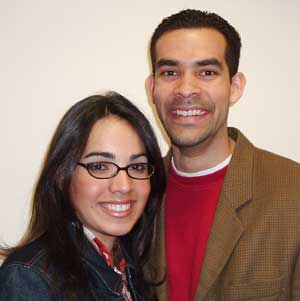
Author
Omar Soto
Summary: God is eternal: he does not grow weary, his understanding is unfathomable, and his mercy restores. He desires to enter our inner world, marked by a deceitful heart and by the struggle between the flesh and the spirit. Whatever we feed grows stronger; when we allow God to work in us, his light grows within us and gradually transforms our conduct, priorities, and way of seeing life. God accepts us as we are, but a genuine encounter with him produces change.
As a church, we are called to open ourselves to new levels of service and revelation, even when the process is uncomfortable and demands surrender. We must discern prophetic and apostolic gifts with caution, always seeking to build up the body, prayerfully supporting the leadership, and humbly receiving teaching, encouragement, and correction. Submission is not passivity, but a willingness to give up pride, habits, comforts, or agendas that hinder God’s work. Being the church continues beyond the building: inner transformation must be expressed in integrity, prayer, obedience, practical help for those in need, and a holy influence in the community. When the eternal touches the inner life, it transforms the outward life.
Isaiah chapter 40, verse 28. I am sure it is a passage many of us know, but Scripture says: “Do you not know? Have you not heard—I am reading from the New International Version, in case you see different words up there—that the Lord is the everlasting God, the Creator of the ends of the earth. He will not grow tired or weary, and his understanding is unfathomable.”
Let me read that part again: “The Lord is the everlasting God.”
I want you to say the following to the person beside you; tell them: “When the eternal touches the internal, it transforms the external.” It sounds like a tongue twister, I know, but it is right here, so do not get confused. Once again, pay close attention: “When the eternal touches the internal, it transforms the external.” Okay. You may be seated.
Wow! You are full of energy today. I feel energized now. Thank you, Lord.
Look, brothers and sisters, this is a subject the Lord has been cooking up in my mind and heart for several weeks now, and it arose from one of the sermons I preached on a Wednesday night.
In fact, let me make a parenthetical remark, brothers and sisters: those of you who can come to the Wednesday night prayer service—my brothers and sisters, the Lord is moving here in an incredible, extraordinary way, so to speak. So if you have the opportunity to set aside an hour, an hour and a half, look, it is a blessing. It is something that recharges your batteries during the week. So keep that in mind. End of parenthesis.
But through those messages I have been preaching, the Lord placed this on my heart, and there is something very important that I want to share with you in the time I have left. But within this phrase there is a secret embedded in it—perhaps it is not such a secret—but it is something very simple and profound at the same time. Yet this dynamic—that “when the eternal touches the internal, it transforms the external”—is a dynamic that comes from the heart of God.
What do I mean? What is the implication of all this? Look, the eternal is everything that pertains to God. That is the eternal. If you look up the definition of the word “eternal” in the dictionary, eternal means something that has neither beginning nor end, something persistent, something constant, something that does not give up, something that is constantly pursuing its purpose, and nothing and no one can stop it. That is the meaning of the eternal.
And as far as I know, in the entire world in which we live, the only thing—or the only One—that possesses that capacity or fits that definition is God. God’s attributes distinguish him as an eternal God. That passage we just read in Isaiah is the basis of everything. The Lord Jehovah is the eternal God.
There is another passage that says, “With everlasting mercy I remembered you; I gathered you, restored you, and raised you up”... God’s mercies are new every morning. All this implies that it is something new and constant, something that endures and remains, and that even though perhaps for a moment someone kind of “messes up” and the Lord is like, “There he goes again,” nevertheless, with everlasting mercy he comes back once more, picks that person up, restores them, and encourages them to keep moving forward.
Those are the characteristics of God. What is more, what does John 3:16 mean? I mean, how does John 3:16 go? “For God so loved the world that he gave his one and only Son, that whoever believes in him shall not perish but have eternal life.”
No one can give eternal life except him. So these are attributes that encompass who God is. God is an eternal being. But despite being an eternal being, he has the desire and intention to invade the internal world. Whose internal world? Yours and mine. The internal world of the human being. That is God’s desire: to invade everything we are.
Now, this internal world also has a series of attributes and characteristics. Jeremiah says, “The heart is more deceitful than anything else”; who can understand it? Only the eternal God can understand it. Today you may be thinking one thing, and by the time you walk out that door, you will be thinking something entirely different.
Today you may say to your husband or wife, “My love, you look so beautiful!” and in the afternoon you will say, “Sheesh! What happened?” Or in the morning, rather, when one wakes up with all those morning smells, right? You yawn and say, “My love, how are you?” “Ugh! Yes, I love you.” The heart is more deceitful than anything else. Thank God that God is the only one who understands it.
What is more, in our inner being, brothers and sisters, sometimes something happens that I have identified as “schizophrenia of the soul,” so to speak. I am not using the term negatively, but it demonstrates what happens within our inner being. How many of you remember Paul’s words in Romans chapter 7, where Paul speaks about the internal struggle within him? He says: “I do not understand what is happening to me, for I do not do what I want to do, but instead I do those things I hate.”
And if I continue reading: “Now, if I do what I do not want to do, I agree that the law is good. But in that case, it is no longer I who do it, but the sinner who is in me. Now I know that in me—that is, in my sinful nature—there is nothing good. Although I desire to do what is good, I am not capable of doing what is good.” I do not know, but just reading these words, I get confused myself. What a mess this man has inside his head!
But this demonstrates, brothers and sisters, what happens within the inner being, within the inner world of each one of us: today we say yes and tomorrow we say no; today we are so-so, and I do not know what happens afterward. But these are things that happen within our inner being. It is a dynamic that is there. And obviously, when I speak of the “external,” by the external I mean the world in which we live, the society in which we live, the jobs we find ourselves in, the corner stores where we shop, the schools where our children study or where you prepare for college, and the bank where you stand in line to cash your check. All those things make up the world around us.
The music we listen to—“Stuck to Christ”—that sounds like the “crispy rice stuck to Christ.” I had to use an expression like that. But that is what happens in the world we live in, brothers and sisters; the music we listen to—all of that influences our lives.
Now, there is something I want to apply because I am going somewhere with this. There is a dynamic at work among these worlds. In the eternal world—and I want to make this very visual so you can understand what I am saying—the eternal world has always had this desire to connect with the internal world of our lives.
If you notice, this white light emanates from the center of that circle, and to me that represents what the Word says: “We are created and made in the image of God.” Therefore, there is something in us, an essence within us, and that is why I depicted it as that light right there in the center.
But now, what is in the outer circle? A black shadow. Those are the black and dark areas of our sinful nature, where, in one way or another, that dynamic of “schizophrenia of the soul” can be seen: these two personalities are constantly struggling and fighting over which one will dominate the other.
This morning I was saying that it is like having two puppies in my house, and whichever one I feed the most is the one that will win and grow stronger. If I feed my flesh, then my flesh is what will dominate, and that black circle will grow larger while the light in the center gradually goes out. But if I feed that spirit, that essence of God within me, that light will shine and keep growing in such a way that the sinful influence within me will be pushed closer and closer to the edges until it disappears completely.
Now, what is interesting is—that yellow arrow you see there—that there is a constant struggle between the eternal and the internal. There is always a struggle between the intentions God has for each one of us and how we respond to those intentions of God. And this is where I say the fire burns, so to speak, because it is within that struggle, brothers and sisters, that we can see whether the light inside us grows or becomes weaker.
It depends on how we respond to God’s dealings in our lives, on how God is able to work within us in one way or another. That is where we will see whether the inner being that is there truly longs and desires to follow what is stored up in the eternal, or whether it will simply allow itself to be swept along by the influences of the external world in which we live. And this is something that is in constant communication.
Within that eternal world, brothers and sisters, there are a number of secrets and mysteries that God longs and desires to reveal to each one of us in some aspect or stage of our lives.
If you look at the parable of the sower—I do not know how many of you are familiar with the parable of the sower—but when Jesus first spoke the parable of the sower, and I am referring to Matthew chapter 13, the first time he told that parable, his disciples came to him privately and asked him, “Jesus, why do you speak to the people in parables? The people do not understand you.” And Jesus answered his disciples: “To you”—that is, the disciples—“it has been given to know the secrets of the kingdom of God, but they are hidden from those who have not wanted to receive that truth.”
Therefore, brothers and sisters, when I hear a word like that, I give glory to God because to those of us who have decided to receive God’s dealings, God makes known and reveals those secrets he has stored in his heart for each one of us.
But our dynamic... the beauty of our being able to live in the light of those secrets will depend on how we respond to God’s dealings.
Are you following me so far? Let me make this a little more concrete. What does this mean for us as Lion of Judah? What is Pastor Omar talking about? Look, without a doubt, throughout these past 25 years of the history of Congregation Lion of Judah, God has dealt very directly with our church.
God has dealt very directly with each one of us. From the time this church began in its earliest days over at the Corpus Centre, then moved from there to Cambridge, and from Cambridge crossed the river and came here, God has dealt with this church in certain ways. God has allowed this church to reach depths in the spiritual dimension that others have not been able to enjoy or experience.
And I want you to understand this very clearly, brothers and sisters: when I speak of the church, I am not talking about the structure of this building. When I speak of the church, I mean each one of us, because you are the ones who make up the church... You, right here, just as you are, in your present condition—you are the church. With your shortcomings and your virtues, you are the church.
When you walk out through those doors, the church does not end; the church continues because you are the church. So engrave that firmly on your mind: you are the church.
Therefore, throughout all these years, God has dealt with Congregation Lion of Judah. In different facets and different areas of our lives, God has been ministering in your lives. I can look around this room, and I know that different people here have experienced transformation from God in one way or another.
You have experienced the blessing and touch of God in your lives in one way or another. Perhaps it involved something as simple as having no food to eat and then suddenly someone showed up and left groceries at your front door. Or perhaps it was something as great and powerful as being on the verge of eviction from your home, only for God to act miraculously so that you were given permission to remain there—and not only that, but you were also allowed to buy a car. I don’t know. Just an example.
Things as beautiful and precious as seeing families arrive here when they were falling to pieces—the wife leaving her husband bald because she was pulling out his hair, and the husband perhaps unable to put up with his wife anymore—and then seeing those families come here and be transformed and renewed, so that they are now strong, beautiful, precious families who grace the life of this church and adorn the kingdom of God.
God is doing things, and I have no doubt about that. But there is more that the Lord wants to do. There is something more to which the Lord wants to bring this church, and here, brothers and sisters, I want to refer to the message Pastor Miranda preached last Sunday. I am sure most of you were able to hear that message if you were here. If you have not heard it, please go online and listen to last Sunday’s message.
But that message, brothers and sisters, made my knees tremble, and I am going to explain why. The mere fact that I heard our pastor say that this church has not yet reached the level God wants it to reach—and, on top of that, that this church is not prepared to receive what God has in store—means that we need to pay attention.
Do you know why I say this, my brothers and sisters? Because if I look at everything this church has managed to accomplish, I am going to say to myself, “How am I going to do it?” Everything this church does, the people this church has managed to bless, the people who have been restored. So many things come to mind, and then I hear that we are still not there yet? Wow! That is intense, my brothers and sisters, because it requires a level of surrender, a level of submission on our part to what God wants to do and, so to speak, venturing into the mysteries and secrets God has stored in his mind and heart for us, even though we do not know them.
Look, there is a very beautiful passage in Isaiah 42 where the Lord says through the prophet: “I announce new things to you; soon they will come to light. You do not know them, but they are already on their way to happening.” And it is very interesting, my brothers and sisters, because when I hear words like that, I ask myself, “What, then, has happened up to this day?”
And I liked the illustration Pastor Miranda used last Sunday when he said that everything we have lived through and experienced up to this day has all been through a veil. You put a veil over your face, and perhaps you can see to the other side, but only in a blurry, hazy way; you do not see things as they truly are.
Now, once that veil is taken away and removed, our eyes open to a totally clear, new dimension in which we can see things with a new level of detail, with a new level of perfection. And when you do that, your life then feels much more complete; in a certain sense, your life even feels more useful because, when you are able to discern things better, you can then proceed more confidently with what you need to do.
And I understand, my brothers and sisters, that this is part of the work God wants to do in us today, and no matter how exciting and adventurous it may sound, it is not going to be easy at all, my brothers and sisters. And I am saying this with great caution, with great respect for each one of you and with reverence before God, but I believe, my brothers and sisters, that this church is going to be stretched to a completely new level, beginning with the Pastor’s leadership.
Let me tell you why. Having known Pastor Miranda during these last ten years that I have worked with him—and I say this with certainty; I know that he does not like people to talk too much about him—but I want to mention this because it can help us as a church process certain things. When I heard the Pastor say in last Sunday’s message that God’s calling for his life is a prophetic and apostolic one, it made me cry when I heard it.
But I did not cry out of doubt; I cried because, finally—at last, so to speak—a door is opening here. Do you know why I understand that this was difficult for the Pastor to mention? Because, knowing our Pastor—and I say this so that you may know him—he is very cautious. He does not like to say many things like that about himself, but when he reaches the point of saying something, it is because he understands that it is God’s time to say it and that, if he says it, it is because he also recognizes the challenge and responsibility it entails.
You know, this is something I say very carefully, but there are many people out there in the world we live in today who portray themselves as prophets and apostles. And you know what? I understand that some of those people have a genuine calling from God to carry out that kind of ministry, that kind of calling, in the time in which we are living today. But there are others, my brothers and sisters, who do not measure up. They have appointed themselves without God ever truly declaring it—so to speak—in the spiritual realms so that it might become a reality in the world in which we live today.
I want to give you an overview, my brothers and sisters, because as part of this work God is doing in us as a church, all of us are going to play a role in this, my brothers and sisters. All of us will have to support our Pastor in prayer now more than ever. If you used to pray for the Pastor two or three days a week, I suggest that you now pray for him seven days a week; in fact, pray for the Pastor eight days a week now.
Because I understand that the new dimension into which God is moving him is not easy. And he is going to need all the discernment there is in the spiritual world to know how to move within it. And why am I saying this, my brothers and sisters? Because as he moves in that direction, there will also be implications for us as a church.
We as a church will have a responsibility to know how to respond to that new calling, to that new level into which God is moving not only our Pastor, but also us as a church. This church has always been very careful not to abuse the gifts of the Holy Spirit, but rather to allow the gifts of the Holy Spirit to operate freely, genuinely, and with great discernment, because we understand that those gifts are for the edification of the body and not for the destruction of the body.
And when we speak of the prophetic and the apostolic, we are speaking of ministries that have been ordained by Christ Jesus for the functioning of the church. And that is why, my brothers and sisters, we are going to have to endure the process; we are going to have to withstand the process and allow God’s work to operate in the midst of our lives.
How does God do his work among us? Look, my brothers and sisters, God can deal with you individually, and God can also deal with you through the authorities he has established here today. I made this comment this morning, and I recognize, my brothers and sisters, that part of God’s work in us also comes through the pastors we have here and through how receptive we are to the teaching, correction, and encouragement we receive from our pastors.
I said this morning that, in a meeting I attended with the deacons and the Pastor, where he was beginning to communicate this entire vision of where he understands the Lord is leading him, at one point he mentioned in that meeting—and I laugh, but it is serious—that for many years there have been times when he has held back from saying things he feels in his heart in order to avoid problems with people, to avoid problems with us, because he does not want, so to speak, to “step on our toes.” But he has come to understand that, by not doing so, he has held back the blessing God wants to bring to many people.
But he has now recognized that: “Look, I am sure that”—these are his words—“if I tell you some of the things the Lord lays on my heart, I know that some of you who are here are going to run away because you will not be able to bear what I am going to have to tell you. You will get upset, you will become frustrated, you will misunderstand me, and because of that, some of you will leave. And I understand that.”
And when I heard that, I sank into my seat because I said to myself, “Wow! What are you going to want to tell me through the Pastor?” I used this example this morning—it is just an example—but I said to myself, look, what if the Pastor sits me down one day and says, “Look, Omar, I know that you really like to exercise, you like to ride your bicycle, you take part in competitions and all that, but I believe, Omar, that for a season you should hold back, abstain from all that, and devote that time instead to praying, seeking the Lord’s presence, and studying the Word.”
I am sure that if the Pastor says that to me, I am sure I will grind my teeth. Because he would be taking away something that is so valuable to me; I mean, I love that, I love exercising. It entertains me, keeps my body physically active and energized, and I love taking part in all of it. If at some point he tells me, “I believe you need to take that off your plate and incorporate this other thing,” I know I am going to get upset. And I am speaking plainly to you, and who knows whether I am even preparing myself to hear that at some point.
I am preaching to myself. Lord, please have mercy. Even if it is only going out for a bike ride two or three times a year, please. But do you understand what I am telling you, my brothers and sisters? I believe that God’s work in us sometimes gets into the areas we like the most and the places where it hurts us the most. Think about it: what is something in your life that, for one reason or another, God has tried to get into, but because you like it so much and feel so comfortable—“Do not touch me here; touch me over there”—the blessing is not getting in through there?
And in one way or another, my brothers and sisters, it is like a word God revealed through a brother here in the church. Through those things, we are stealing God’s time. We rob him of the time in which God wants to do his work in us. We do not allow God, that dimension of the eternal, to truly enter our lives and make the changes that need to be made.
And look, my brother, my sister, even if it hurts, I am speaking to you right now and my heart hurts because of what I am saying, because I know I am preaching to myself. But even if it hurts, my brothers and sisters, God’s blessing does not bring shame; God’s blessing is meant to prosper our lives so that we may truly move into those dimensions God has stored up for each one of us.
And brothers and sisters, moving into that dimension does not mean that I will walk around with two little angel wings and a halo; that is not what it means. But it does mean that my personal life will be much more genuine and more active regarding the things God wants me to do, so that if he tells me, “Omar, jump,” I will say to him, “How high do you want me to jump, and how long should I stay in the air?” Rather than God saying, “Omar, I need us to do this,” and me starting to grumble about it as though it were nothing.
And brothers and sisters, I tell you that this is serious, something very serious that I still cannot fully comprehend. But I am sure, my brothers and sisters, that if we submit to that work of God as a church, if we submit to that work of God that comes not only directly from him—so that when he places an impression upon our hearts, we do not say, “No, no. I am making that up. That does not come from God.”
But look, receive it as something from God. In fact, you know what? Sometimes—and I have said this before, but I will mention it again—people come to me and say, “Oh, Pastor Omar, if I come to Christ, Christ has to accept me just as I am. I do not have to change anything because he accepts me just as I am.”
And you know what? I agree with that person. God accepts you just as you are. If you like to have two or three beers in an hour, have two or three beers, however you like. If you like going to Vincent’s at night and enjoying yourself there—I have not seen anyone there, by the way—but do you like going clubbing or something like that? It is just that I live nearby, my brothers and sisters; every day I have to pass Vincent’s to get home, so that is why I say I have not seen anyone when I pass through the parking lot.
But look, if that is what you like, if you were one of those people who smoked three packs of cigarettes a day, come with your three packs of cigarettes. I do not care; come just as you are, but come with the desire to truly know that eternal God.
Do you know why I emphasize that, my brothers and sisters? Because if you come with a genuine desire to encounter that eternal God, to connect with all those mysteries and secrets that exist on that eternal level, look, you will change by osmosis. Well, not by osmosis—rather, through that connection with the eternal, your life will change. You yourself will come to me and say, “Look, Pastor, I am no longer smoking three packs; I am smoking one.” Fantastic, amen. I did not have to tell you to change, but God is bringing about that change in you.
Look, if before you “went to Vincent’s four nights a week, and now I am going only once…” Amen, may God bring about that change in you! “I used to buy six-packs of beer, and now I have cut it down to just one pack!” Amen, so be it. “Before, four curse words would come out in a single sentence, and now only one comes out—and even that one is only sort of a curse word—look, amen!” The point is that God is bringing about change in you. Why? Because you have decided to submit to that work of God.
“Pastor, I used to pray for five minutes. Now I pray for fifteen.” Amen, glory to God. Or, “I used to pray once a week, and now I pray three times a week.” Amen. Glory to God.
God produces those changes in you.
Before, you saw your life through a very specific pair of lenses. When you come into the presence of God, what God is going to tell you is, “I have to change your prescription. Will you allow me to change your glasses?” And he will take them off and put another pair of lenses on you so that you can see life from his perspective.
Look, my brothers and sisters, I share these things with you with great fear, my brothers and sisters, because I know that once God decides to begin interrupting the course of our lives in order to insert his agenda among us, things will change. Things will change.
The miracles we have seen up to this day will pale in comparison with what God is going to be doing. The restorations in the lives of individuals, couples, and families that we have seen will be nothing compared with what God is going to be doing from that moment on.
And I tell you, my brothers and sisters, for me this is an adventure; for me this is something very exciting, and I want you to receive this message that way. I am not saying this so that you will leave here saying, “Ah! That church, Lion of Judah, is going to get into the apostolic now; they are going to be a bunch of crazy people saying all sorts of things. I’m not going back to that church.”
Look, do not think that way, because that is not what is going to happen. Let me ask you: Do you understand what an apostolic ministry is? Do we understand what a genuine apostolic ministry is? Look, an apostle is not necessarily someone who stands here at the altar and begins to say, “Thus says the Lord, thus says the Lord,” giving prophetic words everywhere. No, no. If you look at apostolic ministry biblically, apostolic ministries are those in which prophetic words do indeed flow, but whose leaders are established by God to provide covering for other leaders.
Wherever the Apostle Paul opened and planted a church, what did he do? He left a leader, a pastor, in charge of those churches. One of the best examples we have is Timothy. He is one of the perfect examples we have of that. What did Paul do? Paul—how can I put it?—provided spiritual covering for each of those leaders who were in charge of each of those churches, and that covering was also seen through a prophetic word in which God spoke contextually to each of those churches and brought specific messages for each one of them.
If God moves this church into that sphere right now, on the one hand, I would not be surprised, because there are many pastors today who call this office asking for the covering of our Pastor Roberto Miranda. Many pastors come and want to take shelter under his wings because they understand that God has placed an authority upon him.
Now, this is not something easy to understand or receive, my brothers and sisters. But this is where I see the connection in all of this. Because if it is something God intends not only for our pastor but also for our lives as a church, then we have to say, “Lord, look...—in fact, as last Sunday’s biblical text said—Lord, I do not know what to do. I am facing this new challenge, and I do not know what to do. But I look to you because I know that you are the one who has the answer to all of this.”
In the same way, my brothers and sisters, each one of us, at this stage of our lives as a church, at this stage of your personal life, wherever you may be, may be saying the same thing: “Lord, here I am. I do not know what to do; I do not know what this means; I do not know what new challenge this will bring to our church. But you are up there and I am down here. I will choose to trust in you; I will choose to trust in your word; I will choose to trust in whatever you want to do.”
My brothers and sisters, one final point, and let me underline this here. A great part of the blessing this church may experience will be seen in the way we submit to the authority of the principal leader God has established here. There is a very important principle here, my brothers and sisters, and it is the principle of learning to submit to that authority.
If you look at biblical examples throughout Scripture, the most tangible one I can think of is King David. King David—well, David, because he... had been anointed king, but he was not yet king. Saul was still in power—what was Saul trying to do? He was trying to eliminate David. He was searching high and low for him, trying to kill the man who was going to take his position.
And how many times did David have the opportunity to eliminate King Saul? Three times David was right there, even able to drive a spear into Saul’s head, but he did not do it. Why? Because he knew that even though Saul was crazy, deranged, and wanted to kill him, Saul had been chosen by God, and David respected that. And because he respected that, he was able to protect his ministry when it was his turn to ascend to the throne. That is why there has never been another king like David in the history of Israel.
Likewise, my brothers and sisters, if we today learn to submit to those authorities God has established among us, we—I am certain—will be able to experience God’s blessing in a more tangible way and see it flow more freely in our lives.
Look, what is one of the first authorities God established for us? You tell me; think, quickly. Think back to when you were born: What is one of the first authorities we have in our lives? Our parents. What does one of the commandments say? Honor Daddy and Mommy so that things may go well with you and you may have a long life in this world where you live. That is the first commandment with a promise.
Think: Have you had an abundant life? Can you look back over however many years you have lived and say, “Yes, my life has been abundant, pleasant, cool—wow”? If you cannot say that, examine how you have conducted your relationship with your parents.
Have you honored your parents in everything? A rhetorical question.
But that is the point, my brothers and sisters. I believe that God’s dealings with us as a church—God’s intention—is that this church may continue to be a solid influence on the community and society in which we have been called to live. Not only here in this state, but also through the Internet, wherever this church may reach.
God is calling us to continue being the transmitters of his blessing, so that this center within our lives, this light that the Lord has placed in our lives, may continue to grow and grow, even though the process may hurt, even though there may be things that have to change in my life. If I have to change the way I dress and dress differently just so God can move through me in a totally new and different way, then look: I will do it.
If I have to handle my checkbook differently in order to experience God’s blessing, then look, let me handle my checkbook differently in order to experience God’s blessing. If, instead of throwing knives into someone else’s back, I have to throw those knives at myself, then look, I will do it, so that I can experience God’s blessing.
If I have to lower my level of pride because I am admiring the diplomas I have hanging on the wall of my house, and humble myself to the level of another person God has placed beside me, then look, I will do it for the sheer sake of experiencing God’s blessing in my life and continuing to pass it on to others around me.
Brothers and sisters, this is something serious and profound, and it is beautiful at the same time. The mere fact that God has this church on his radar is already exciting: God is keeping a very close eye on this church; he is looking at it under a microscope and saying, “Look, there is Françoise. I see Françoise there; I have taken the precise measure of her life. And there is Rosa. I am watching Rosa; I see her clearly. And there are María and Pedro and Juan.”
And God sees all of us, each and every one of us: “And that is my church, a church I have chosen and for which I have purposes.” Look, I am going to tell you something. There are many people today whom, when you ask, “What church do you attend?” answer, “Oh, I go to Lion of Judah Congregation, and that is my church.” They tell you, “That is my church,” but they show up here no more than two or three times a year. And they proudly declare that this is their church. Look, amen, let them say this is their church. Fine.
But I believe the time is coming when God will begin to say, “You say that you belong to Lion of Judah Congregation. Let’s prove it! Let’s test it and see whether you truly belong to Lion of Judah Congregation. Let’s see whether you are living according to all the principles conveyed through the word preached at Lion of Judah.”
If someone asks you what church you belong to and you say, “I truly belong to Lion of Judah,” why is that? Because this, this, this, and this are preached at Lion of Judah, and I am living according to every one of those things preached in that church, and I can list them for you from A to Z and from Z back to A again. I can list them for you. If someone cannot answer that, unfortunately, I do not think we are going to acknowledge that you attend Lion of Judah. Really? As Jesus would say, “I do not know you.”
Exciting times are coming, my brothers and sisters. Solid moments are approaching for this church; transformative moments are approaching. Look, I am praying to God that there will be Sundays when, just by coming through those doors, people will break down in tears, break forth in joy, and be freed from any chains they may have; that they will already be surrendering their lives to the Lord and will come through there walking on their knees because they cannot bear the glory that is in this place.
Amen.
I am praying, my brothers and sisters, that if God puts something on our hearts—and by “our,” I mean us as pastoral authorities—to communicate to you, we will not have to come saying, “Oh! Bless you, my brother, but if you could please do this...” Instead, the mere fact that one of us sits down at a table with you will be enough for you to say, “I know I have to work on this.” Amen. You are going to spare us a huge headache, without our having to break the news to you, because you are already submitting to God’s dealings with you.
Look, if a call is made here, we have to pray; we have to help. May the church become so packed that people are throwing themselves over the balconies because there is no room for us all—but only after we are there intensely seeking the presence of God.
If some kind of impact needs to be made within the city where we live, look, may we not hesitate to do it, but as God determines for each one of us, may we each do our part. If I have to go from Randolph to Burlington because a woman in need has to be helped, then look, may I travel from Randolph to Burlington to buy her groceries, take them to her house, put them in the refrigerator, and then return home again. And even if that takes two hours out of my day, I will have used them to build up the life of a daughter or son of God. Amen.
I want to bring this time to a close. Wow! I went long. I want to take a moment to pray.
Let us stand; let us pray. When the eternal touches the internal, it transforms the external. Lord, you are an eternal God. You are the same yesterday, today, and forever, and there is nothing and no one who can compare with you, Lord. And that is why I give you all the glory and all the honor, God, because you alone deserve it. We are nothing, Jesus; we are dust; we are a grain of sand, as Ramón sang a few minutes ago.
And yet, from that grain of sand, Lord, you have decided to build a people for yourself, to build an army for yourself, Lord, that you can use and work with. And Father, we recognize that you are moving Lion of Judah Congregation and all its members, all those parts of its body. You are moving us to new levels where, on the one hand, we do not know how we will move within those dimensions, but we know and believe that the words of life come from you.
From you come those words that will show us the way so that we may walk in it. I ask you, Lord, that when the time comes for you to begin making demands and requiring things of us—not because you are an authoritarian God, but because you are a God who loves us, a God who is all love—we, as sons and daughters, may align ourselves with the calling you have placed upon our lives, Jesus; may we not be rebellious or stubborn, but sensitive to your voice.
Create in us, Lord, a noble spirit, an upright spirit, a teachable spirit. Give us hearts that are open and sensitive to you, Lord, so that we may receive this word, my God, and respond affirmatively, Jesus.
Father, in a special way, as a church we want to pray and intercede for our Pastor Roberto Miranda, Lord. Father, we say amen to what you have in store for him and for his family, Lord. Above all, we ask for your covering over all of them, Lord; we ask for your provision; we ask for your peace throughout this process, Lord. May you teach them; may you bring revelation to Roberto and Mercedes, and to their daughters, Lord Jesus. May you bring revelation of the plans you have stored up there in eternity for each one of them.
Show them the way in which they should walk, and teach us as a church how to be a supporting stone for our pastor, Jesus, in this ministry. May we not be stumbling blocks, Lord; may we not hinder what you want to do in this season. Instead, may all of us, my God, be ready and willing to respond to whatever you have for us and whatever you want to impart to our lives through him, Jesus.
Father, we declare new times over the life of this church. This is what I declare, Jesus. I declare a new time; I declare that wind, that fresh air, that renewing water that you are bringing to this church, Lord. We open the doors for you to enter; enter as the King that you are of this church, as the Lord that you are of this church. And at least for those who feel this way, Lord, I declare this: We give you permission to work in those areas of our lives that need to be dealt with by you.
Lord, even if it hurts, even if it bothers us, even if it makes us uncomfortable, if it comes from you, Lord, we receive it with open arms. You know how to deal with us; you do not shame us, you do not shame us, Lord, but you bring conviction to build up our lives and raise us to the level you have for us.
Lord, I declare your blessing over your people, Jesus. I declare your blessing over your people, Lord. Teach us, teach us. Once again I ask you, Lord: teach us how to cooperate with you in this time and not be obstacles to you.
Teach us how to cooperate with you, with that eternal God. Interrupt the agenda within us so that we can be those lights on the outside that you call us to be. Father, fill us with your presence; fill us with your Spirit, Lord. May we not go around dreaming about little birds in the air, Lord, but may we know how to bring your word into every one of those corners of our lives, so that we may know how to live a righteous life, a worthy, upright life before you and before those other people we have around us.
Allow this house, Lord, to be a house where your glory is manifested. If there are things that need to be cleansed in this house, Lord, teach us how to cleanse it, how to discard those things that must be discarded in order to bring in those vessels, my God, that you are bringing once again—those gifts that you want to bring into the midst of your people, Lord.
Fill, fill your church; fill your sons and daughters, Lord. I ask you in the name of your Son Jesus. You who began that work in us, Lord, we declare that you will be faithful to complete it. Our desire is to honor you, Lord. Our desire is to honor you with our hearts, with our actions, with our thoughts, with our words; we want to bring honor and glory to your name. Be exalted above all things.
In the name of your Son Jesus, we worship you, Lord. Amen. Amen. Thank you, Jesus. Thank you, God.